


Enquire Today!
If you have any questions, requests or general enquiries, please do not hesitate to email us and we will get back to you as soon as possible regarding your enquiry.
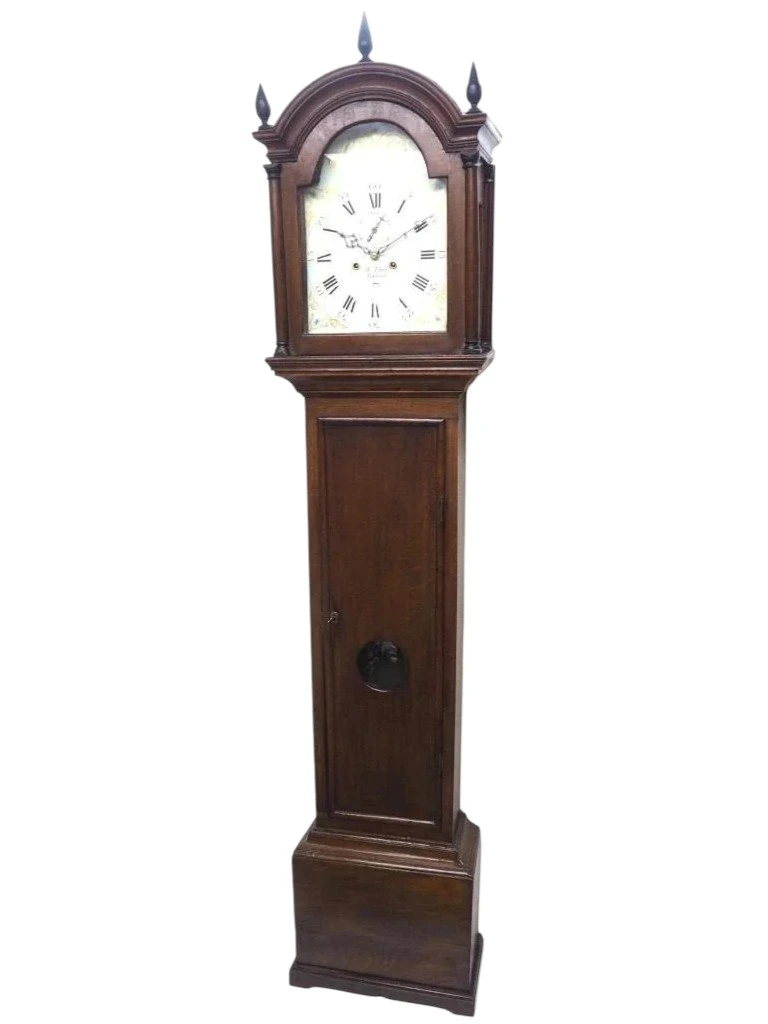

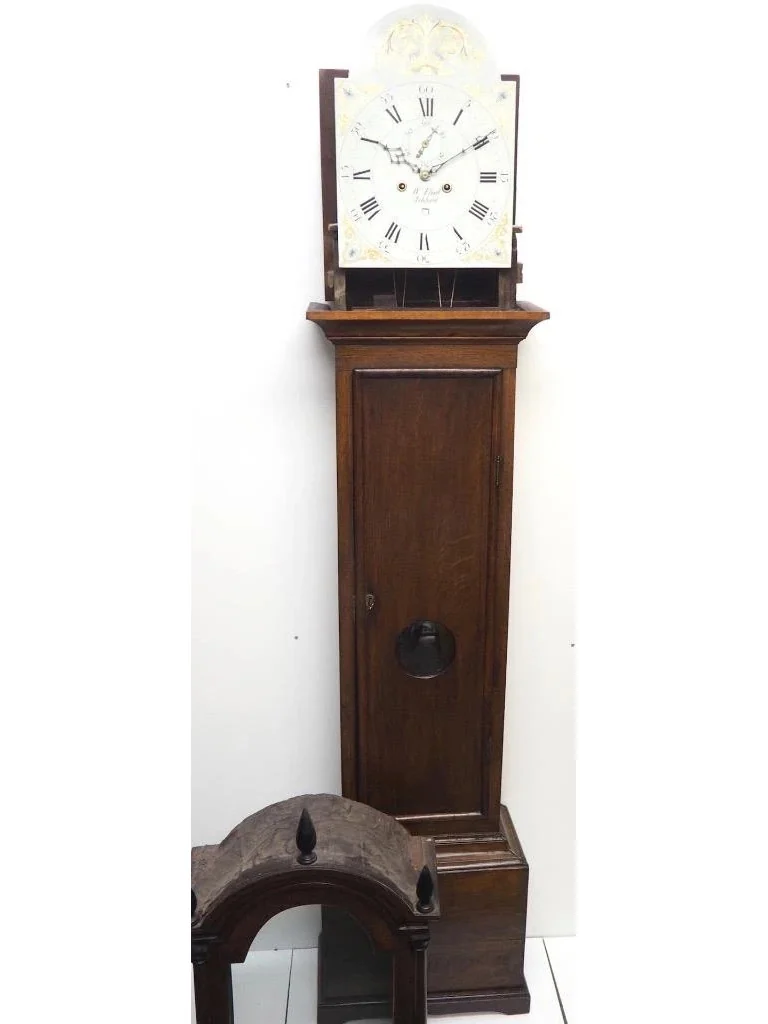
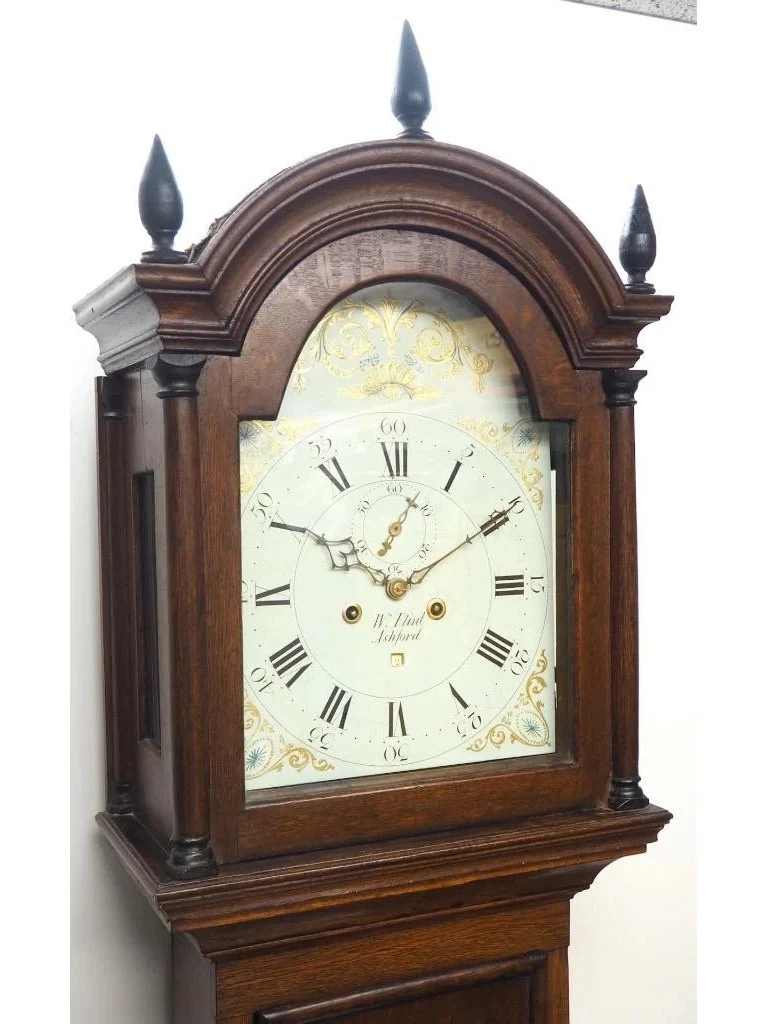
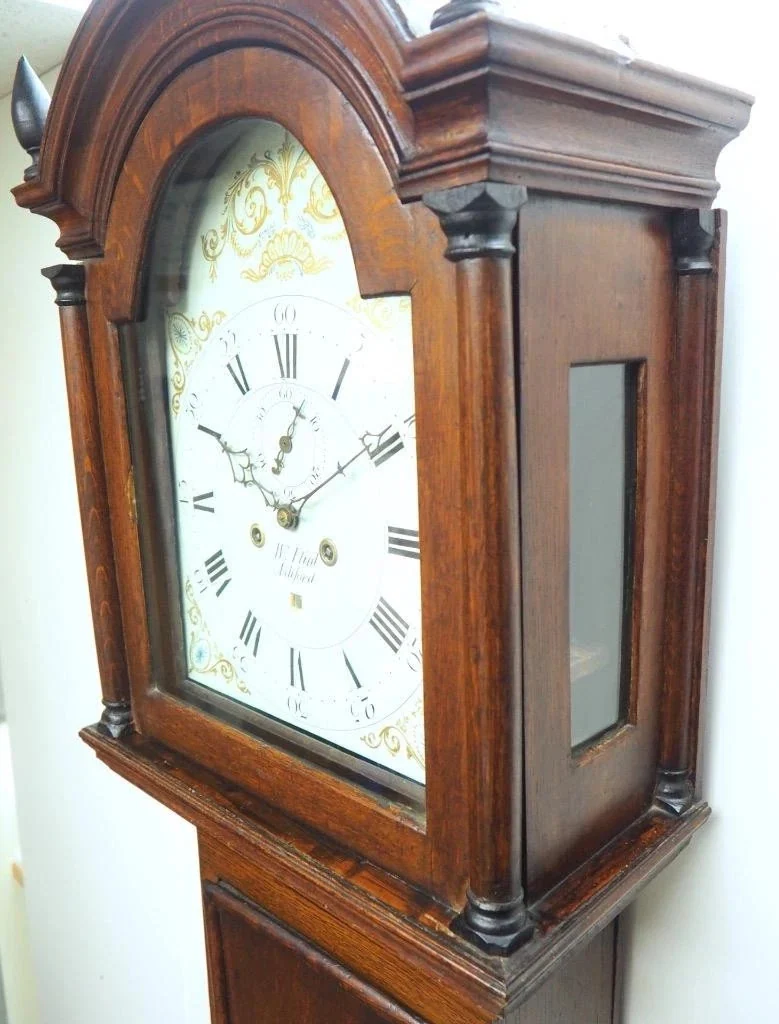
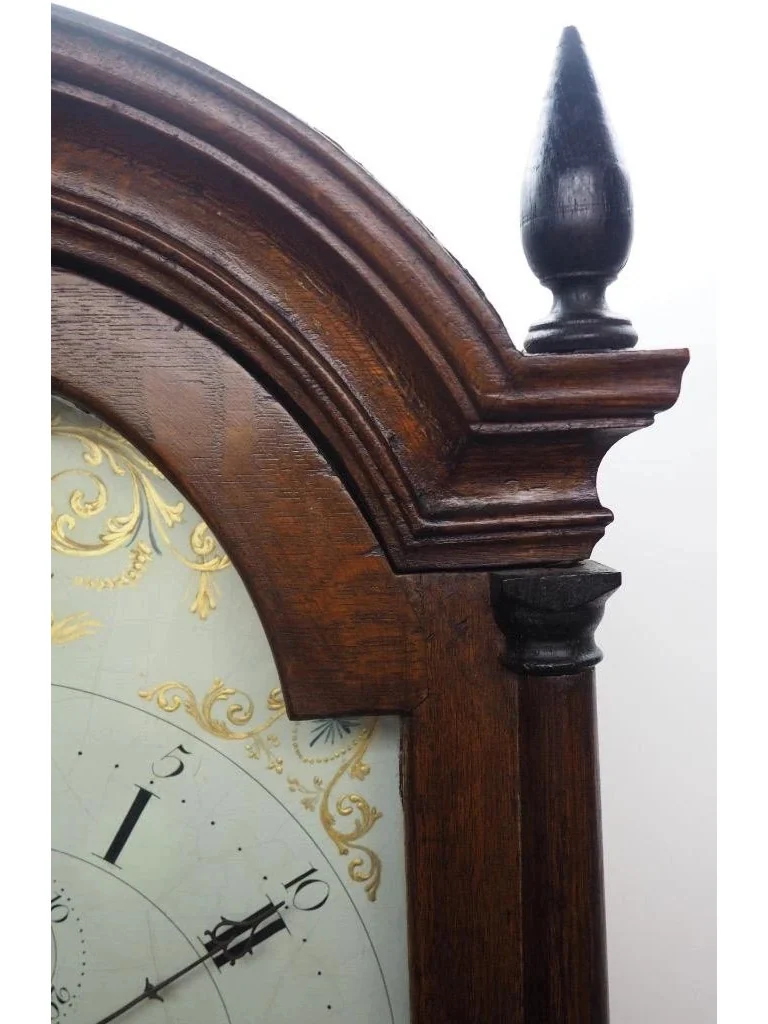


A moulded arched pediment mounted with three turned finials surmounts the hood of this British oak longcase clock. The hood incorporates classic flanking columns with turned capitals and bases, framing an arched glazed door alongside narrow rectangular viewing windows set into the side returns. The upper hood lifts off cleanly from the trunk to provide direct access to the movement and dial assembly.
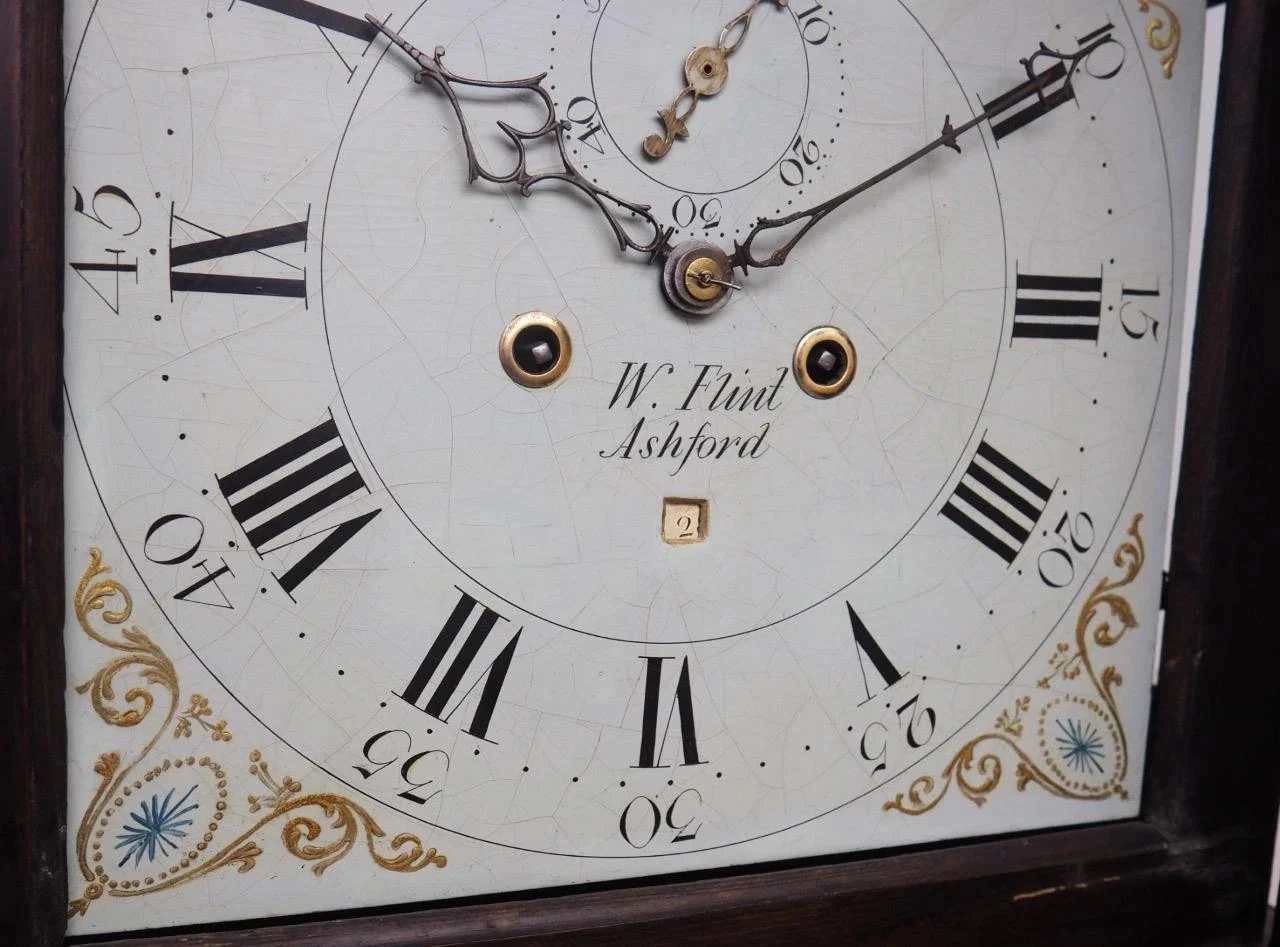
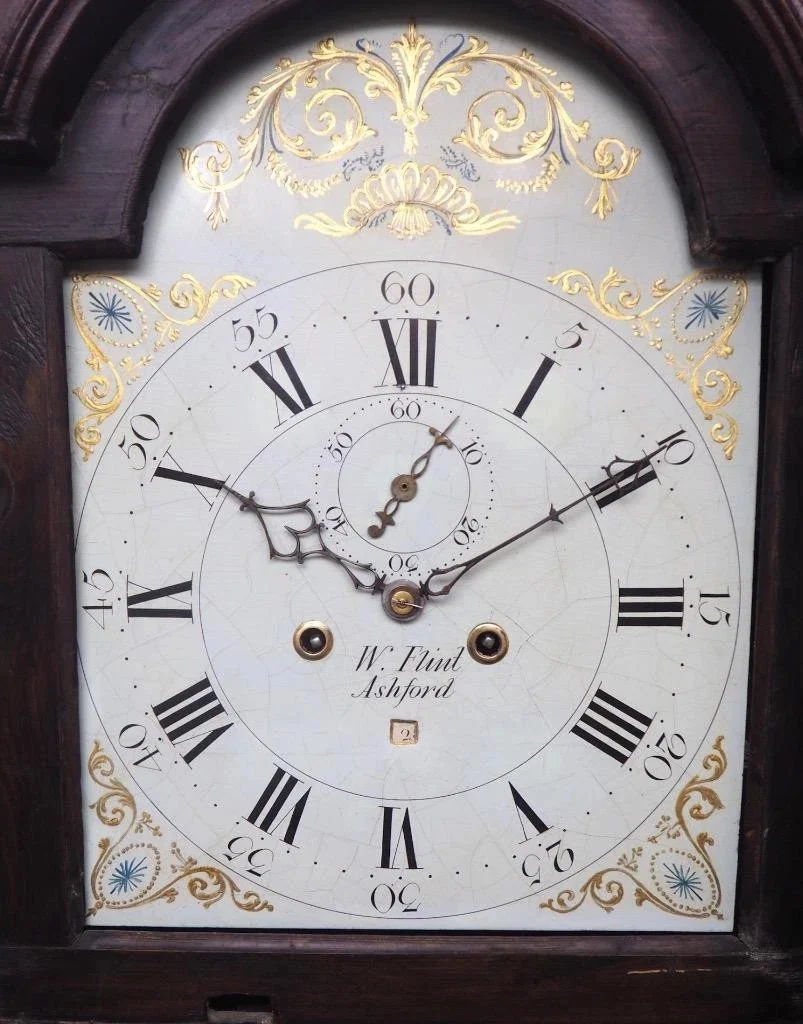
The painted iron dial is inscribed ‘W. Flint Ashford’ beneath the winding arbors. Decorated in gilt and polychrome enamel, the dial face features scrolling foliate spandrels around a clear chapter ring marked with black Roman hour numerals and Arabic five-minute indicators. Pierced cut-steel hands indicate the time, complemented by an upper subsidiary seconds dial and a square calendar date aperture positioned above the six. Behind the face sits an eight-day striking movement wound via twin brass arbors.
Below the cavetto throat moulding, the tall oak trunk is fitted with a full-length hinged door. A distinctive circular glazed lenticle is inset towards the lower half, offering a view of the swinging pendulum bob. The door retains its working lock and key, closing flush above a plain stepped plinth base. The oak timber exhibits a straight, even grain with a rich medium-brown patina across the case surfaces.
Likely dating from the early nineteenth century, the clock measures 208 cm in total height, 46 cm in width, and 23 cm in depth. The twin-train movement is reported to be in working order and strikes on an internal bell.
Condition Case and movement are well preserved with minor surface knocks, light timber shrinkage, and gentle age-related craquelure across the painted dial face. Reported to be in working order and includes a functioning trunk key.
Dimensions 208 cm x 46 cm x 23 cm
| Dimensions | 23 × 46 cm |
|---|---|
| Period | 18th Century |
| Style | Georgian |
| Colour | Brown |
| material | Oak |
| Origin | England |
| Maker | W. Flint |
| Price range | £2000+ |
| Collection Era | Antique & Vintage |
Only logged in customers who have purchased this product may leave a review.
Reviews
There are no reviews yet.