


Enquire Today!
If you have any questions, requests or general enquiries, please do not hesitate to email us and we will get back to you as soon as possible regarding your enquiry.

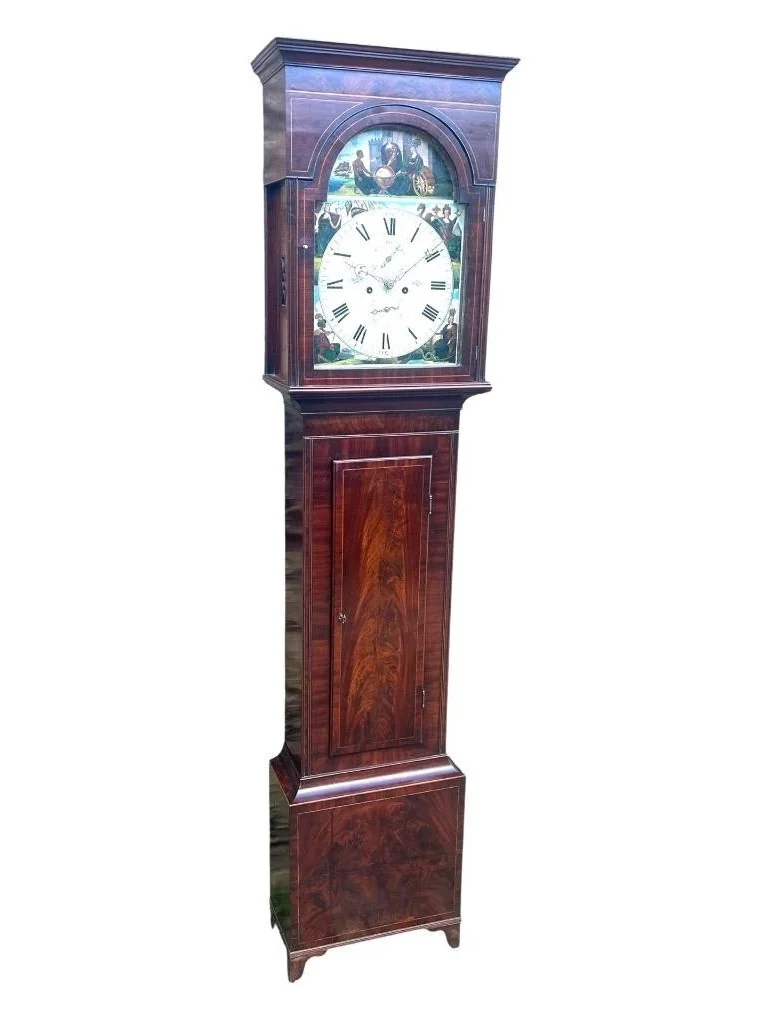
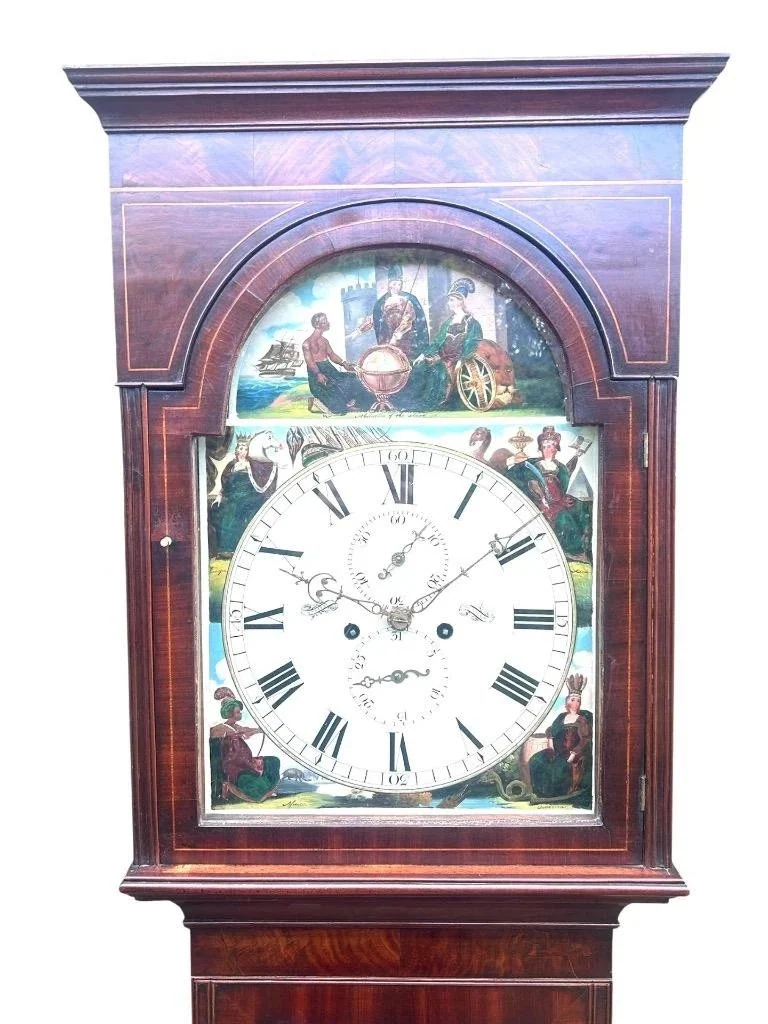
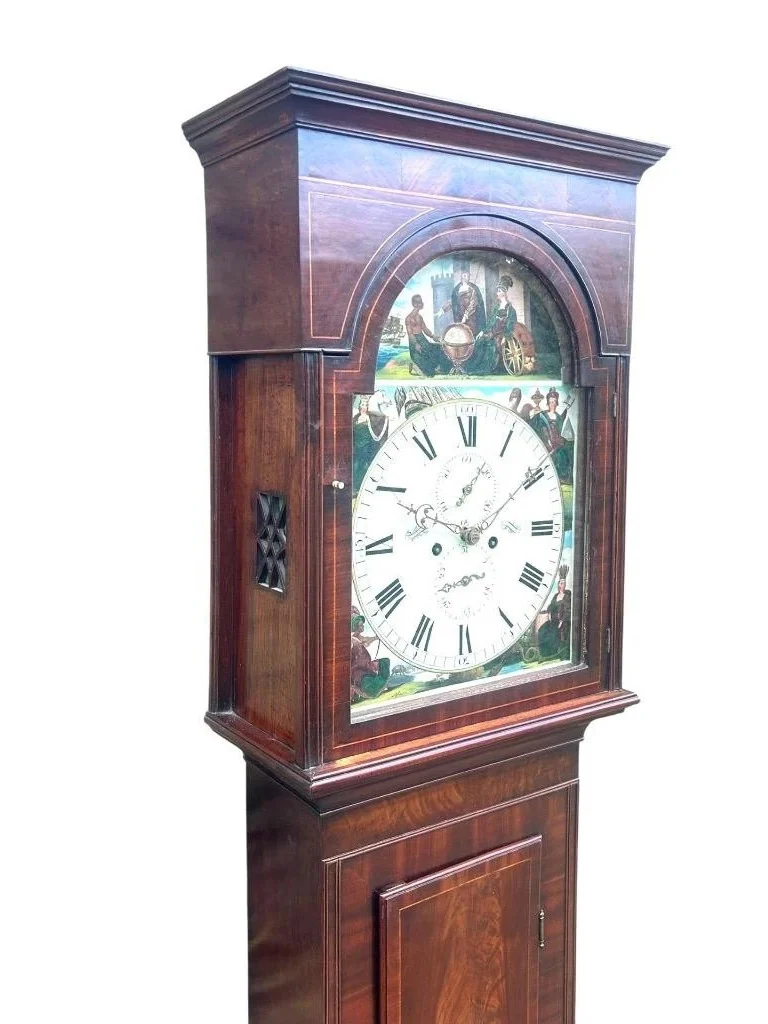
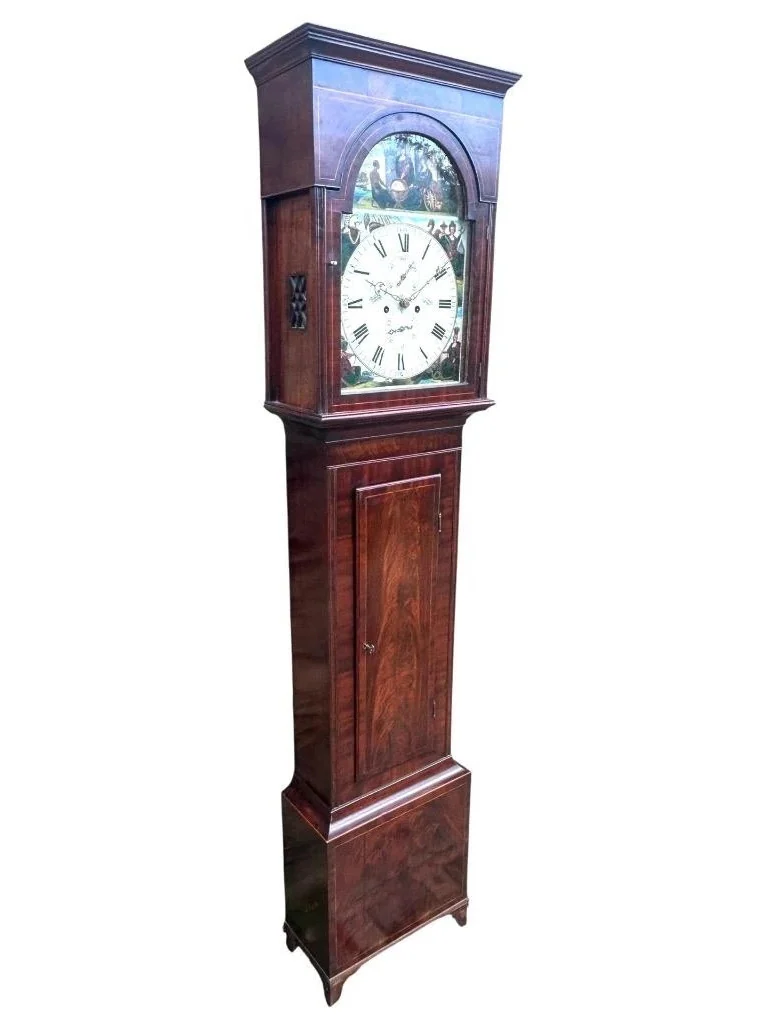
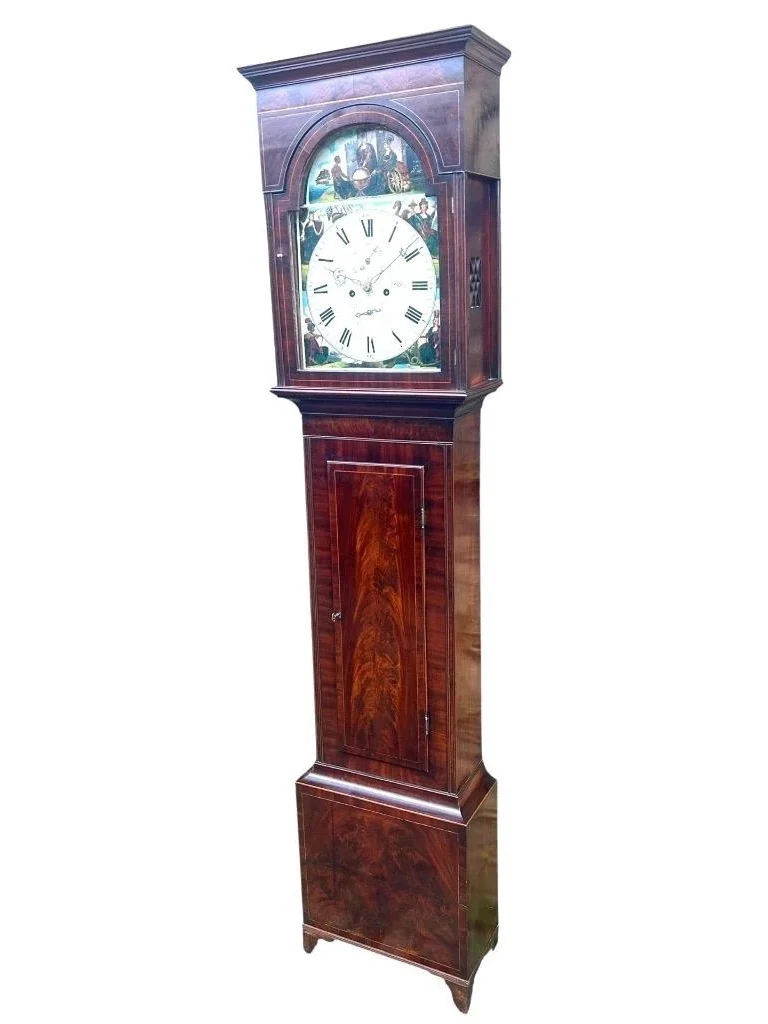

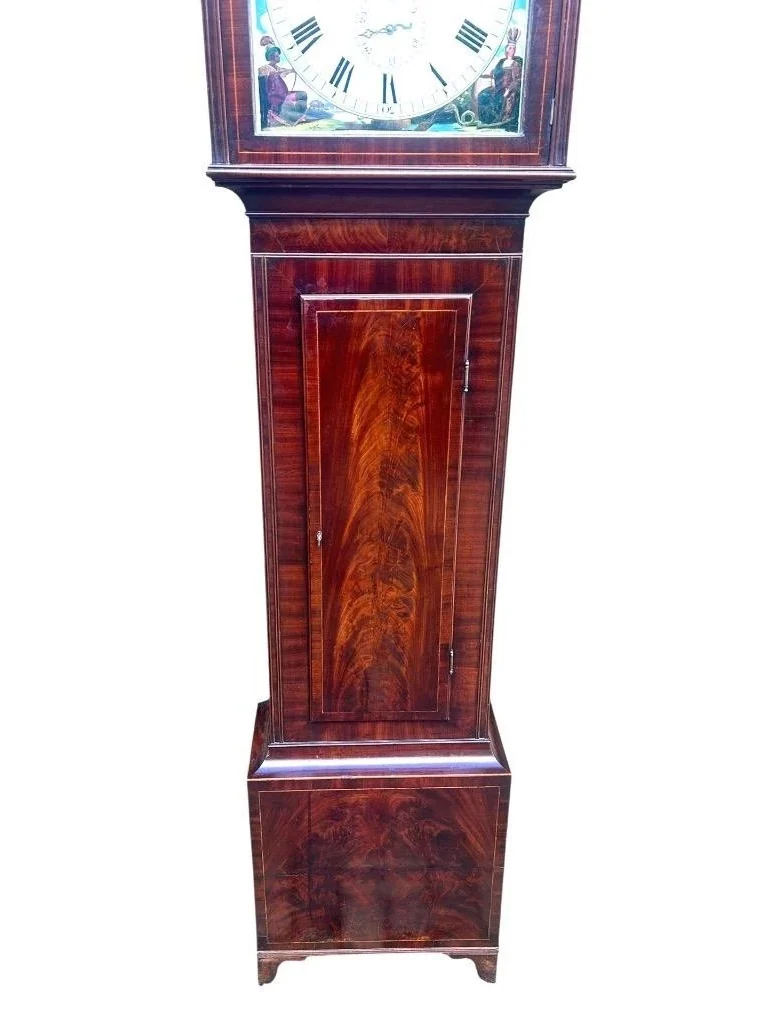

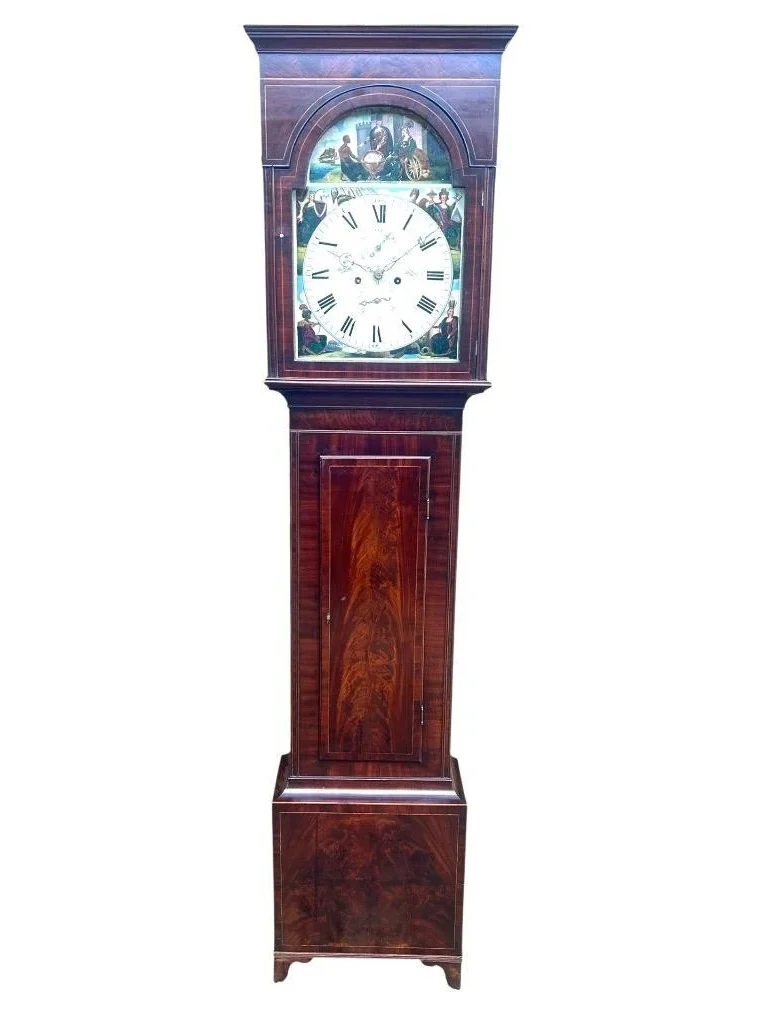


An architectural flat-topped hood with a stepped, cavetto-moulded cornice frames the glazed arched door. Beneath the glass sits an iron dial painted in polychrome enamels, centring Roman hour numerals, an outer five-minute track, pierced hands, and two subsidiary displays: a running seconds dial below XII and a semi-circular calendar aperture above VI. The arch depicts a seated allegorical group with a globe and maritime scene, while the four spandrels display personifications of the continents in colourful robes.
The case is constructed from mahogany with richly figured flame veneers across the trunk door and base panel. Fine string-inlaid banding accents the upper hood, trunk perimeter, and plinth. The slender trunk features a full-length locking door framed by clean mouldings, revealing the pendulum and twin weight channels within, set above a raised plinth base resting on shaped bracket feet. Fretwork sound vents are set into each flank of the hood to allow the hourly strike to carry clearly.
Driven by weights, the brass eight-day movement strikes each hour on an internal bell, wound weekly using the twin winding arbors flanking the center pinion. Built in Scotland, the clock was produced in the early nineteenth century, showcasing the characteristic Northern preference for broad, straight-topped cornices combined with traditional painted arched dials.
Standing at a height of 218 cm, the proportions allow the piece to sit comfortably beneath standard residential ceiling heights, making it a substantial addition to an entrance hall, landing, or reception room.
Dimensions Height: 218 cm
| Dimensions | 218 cm |
|---|---|
| Period | 19th Century, Early 19Th Century |
| Style | Georgian |
| Colour | Brown, Multicoloured, White |
| material | Brass, Enamelled Iron, Flame Mahogany, Glass |
| Origin | Scotland |
| Maker | Unbranded |
| Price range | £2000+ |
| Collection Era | Antique & Vintage |
Only logged in customers who have purchased this product may leave a review.
Reviews
There are no reviews yet.