


Enquire Today!
If you have any questions, requests or general enquiries, please do not hesitate to email us and we will get back to you as soon as possible regarding your enquiry.
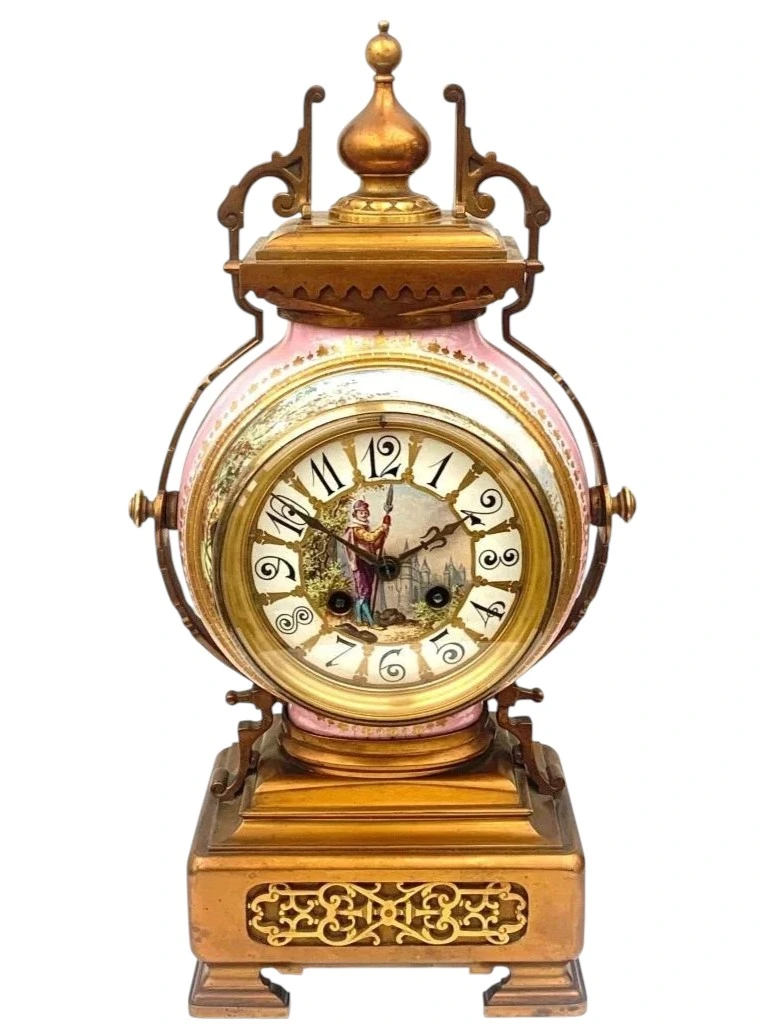


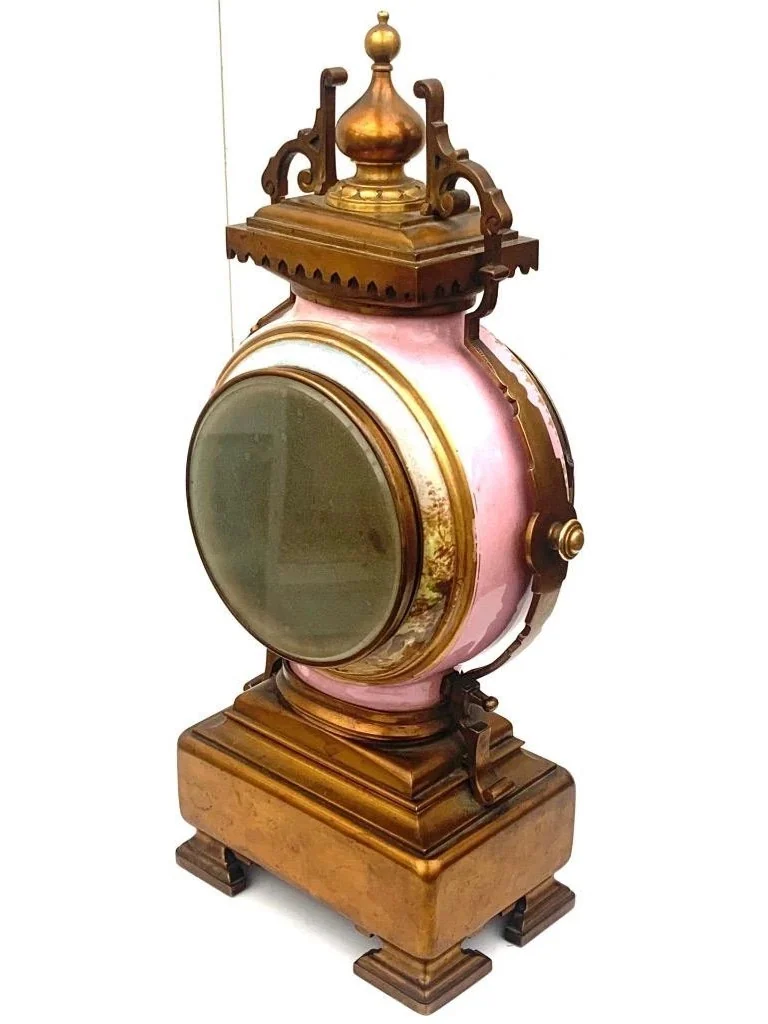


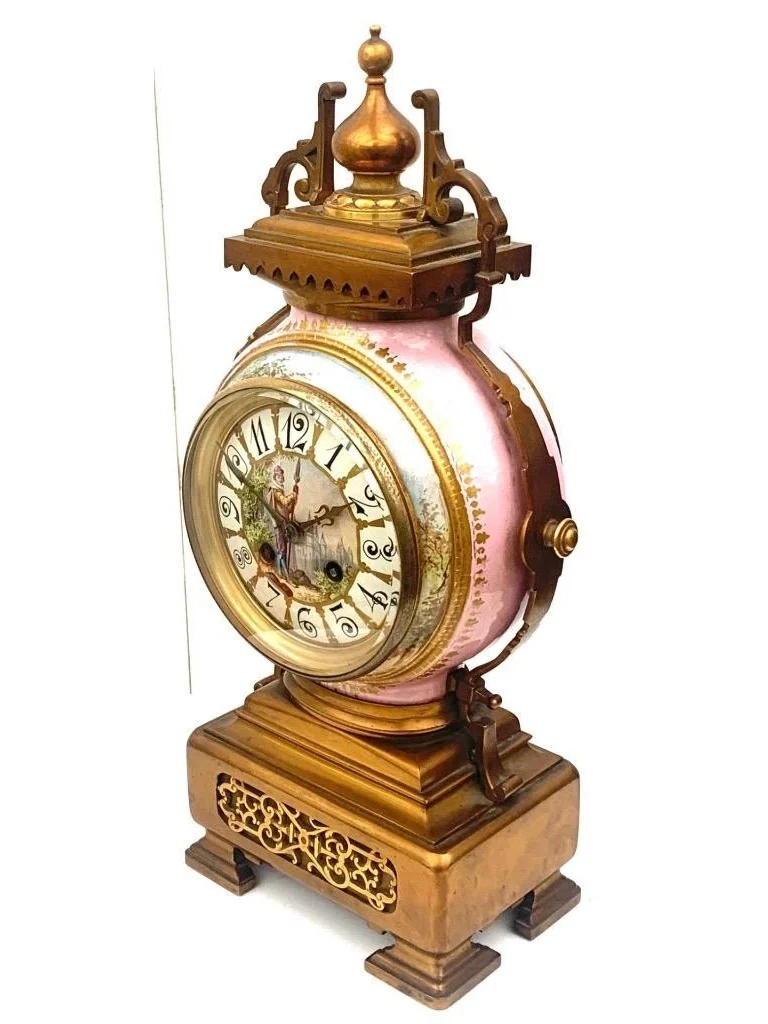
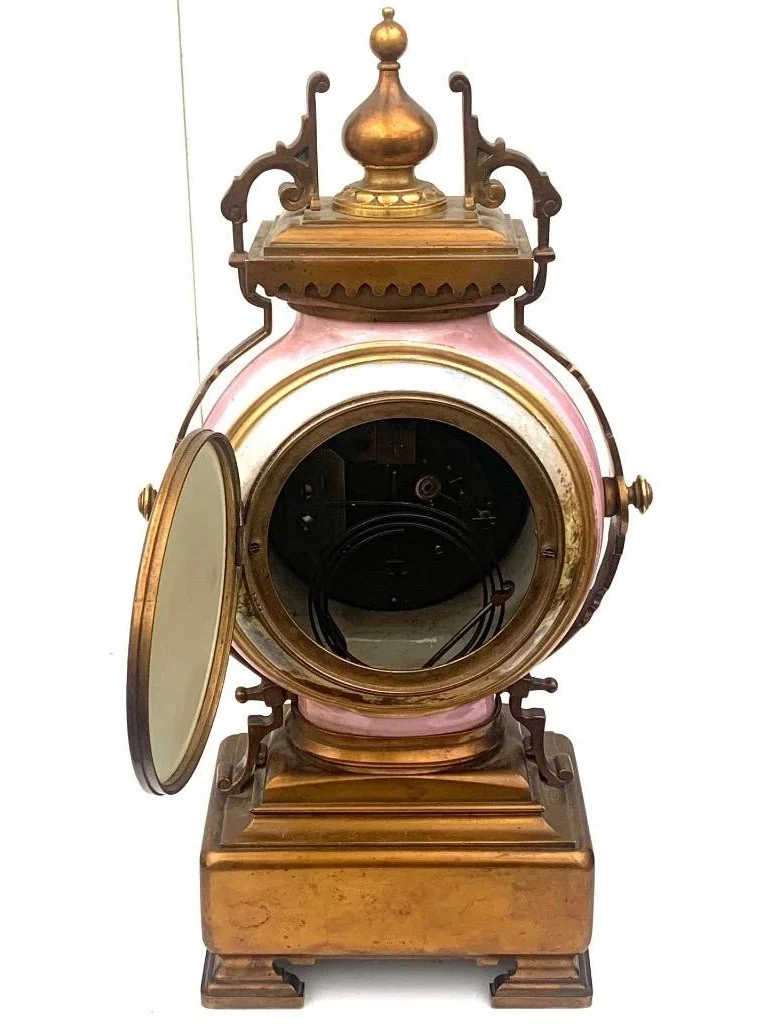


A baluster urn-form porcelain drum set within a cast gilded architectural framework defines this French striking mantel clock, made circa 1870. The upper structure is crowned with a fluted onion finial and openwork scroll buttresses resting above a dentil cornice. Supporting the central drum, scroll brackets flank the sides and meet a substantial plinth base fitted with a pierced arabesque fretwork panel and raised on stepped bracket feet.
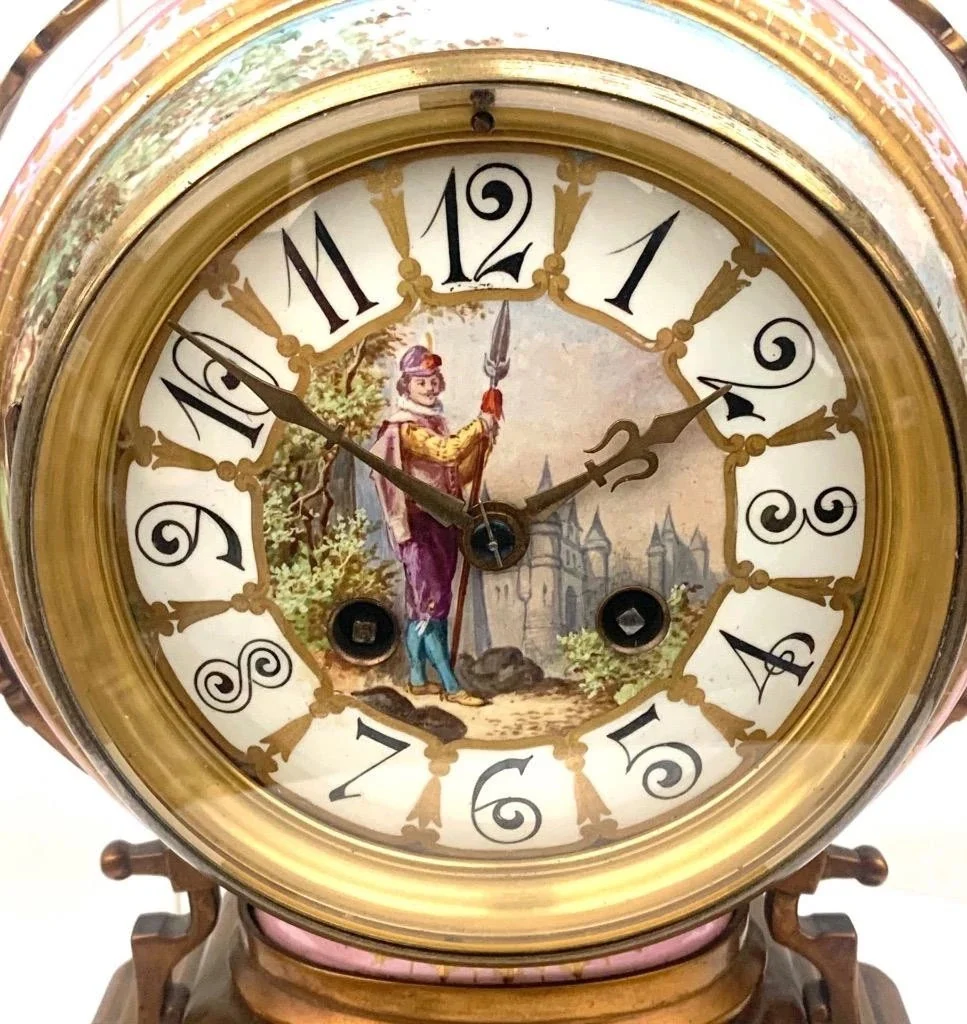
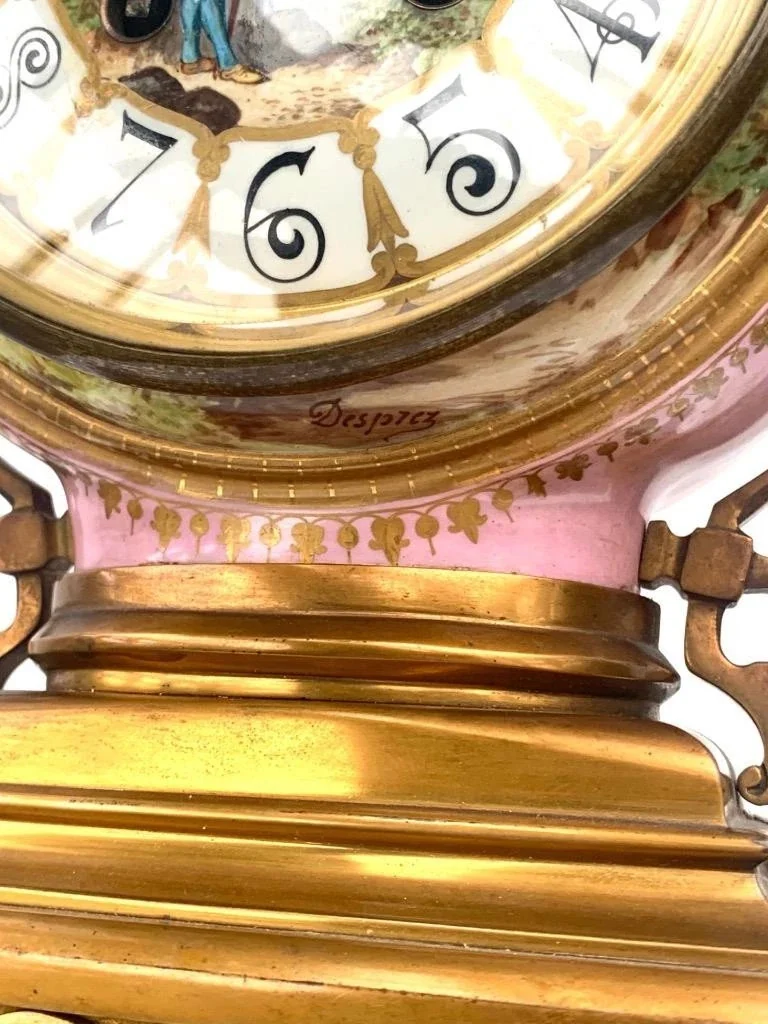
The central body features a soft rose-pink ground enriched with delicate gilded scrollwork and beaded borders. Under a hinged brass bezel with a bevelled crystal, the hand-painted porcelain dial presents a halberdier in sixteenth-century dress standing in a wooded landscape before distant fortified towers. Twelve ivory-ground cartouches encircle the scene, displaying ornate Arabic numerals swept by pierced hands.
Two winding apertures flank the figure on the dial, powering an eight-day twin-train movement that strikes on the hour and half-hour. The movement is reported to be in working order. The rear of the porcelain drum is enclosed by a hinged circular brass door with a glass pane, allowing inspection of the internal mechanism. Overall dimensions are 33 cm high, 26 cm wide, and 5.5 cm deep.
Combining classical gilt-bronze mounts with Sèvres-style painted porcelain, the clock demonstrates the eclectic historicist taste favoured during the French Third Republic and late Victorian eras. The ormolu surfaces retain an authentic warm patina, showing minor surface oxidation and rubbing from age while retaining crisp cast detailing across the mounts and fretwork.
Condition Light surface wear, minor tarnishing, and rubbing to the gilt finish consistent with age; dial and porcelain elements appear well preserved, and the movement is reported to be running and striking.
Dimensions Height 33 cm, Width 26 cm, Depth 5.5 cm
| Dimensions | 5.5 × 26 × 33 cm |
|---|---|
| Period | 19th Century |
| Style | Napoleon III |
| Colour | Gold, Pink |
| material | Brass, Gilt bronze, Glass, Porcelain |
| Origin | France |
| Maker | Unbranded |
| Price range | £2000+ |
| Collection Era | Antique & Vintage |
Only logged in customers who have purchased this product may leave a review.
Reviews
There are no reviews yet.