


Enquire Today!
If you have any questions, requests or general enquiries, please do not hesitate to email us and we will get back to you as soon as possible regarding your enquiry.
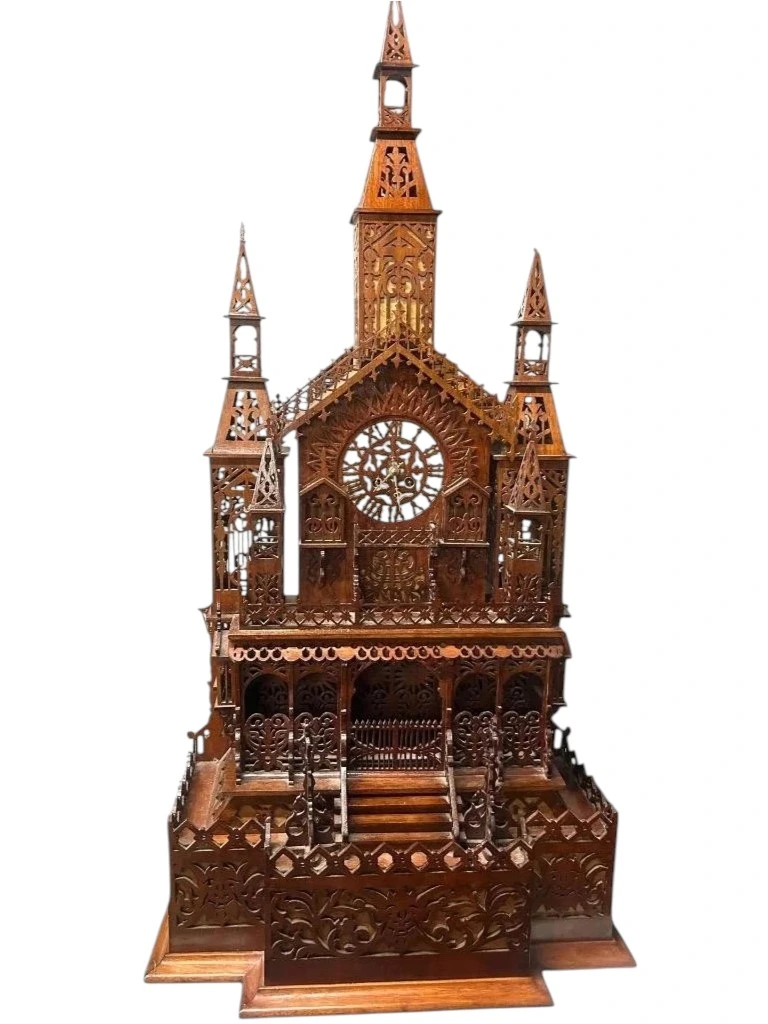
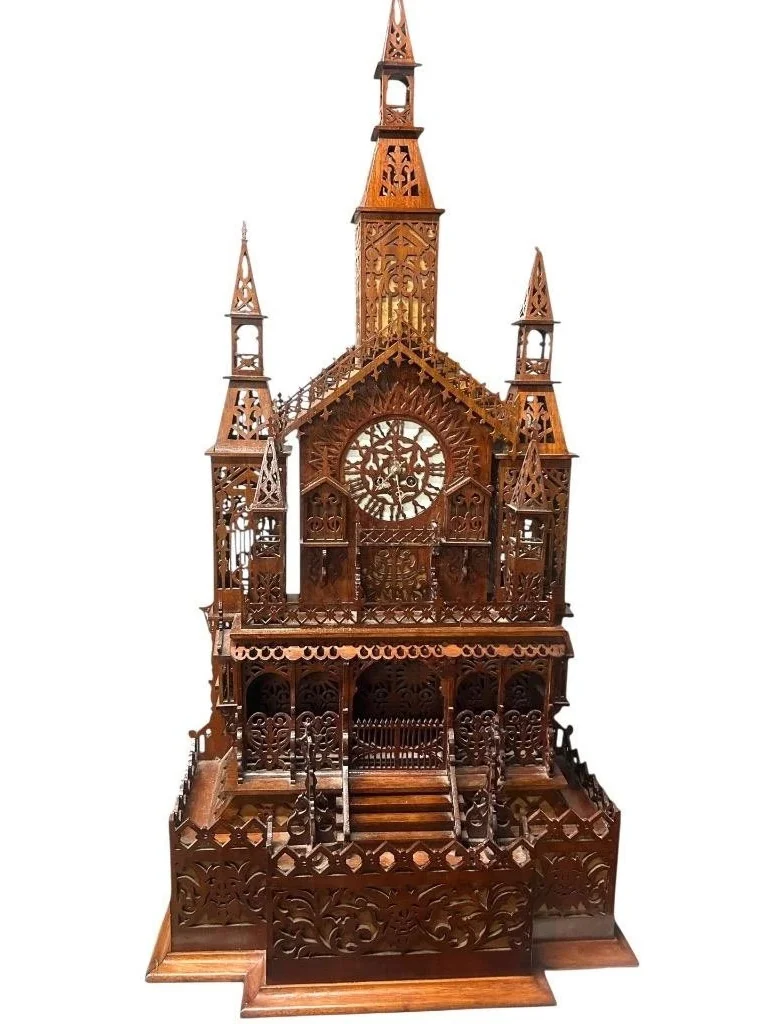

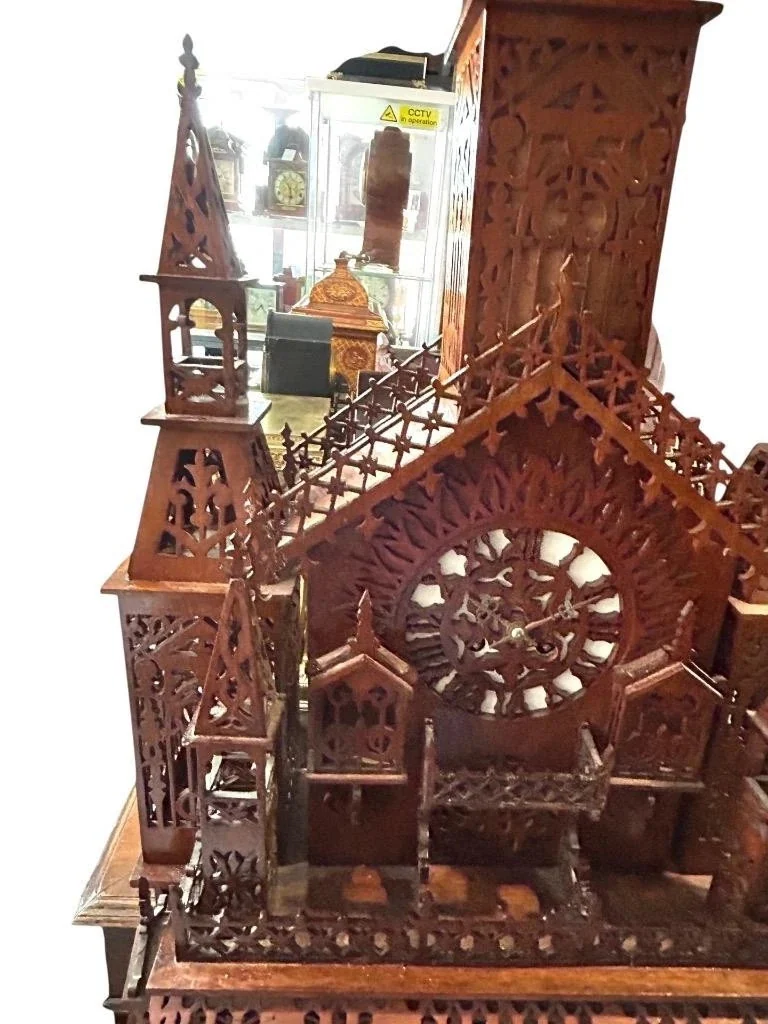
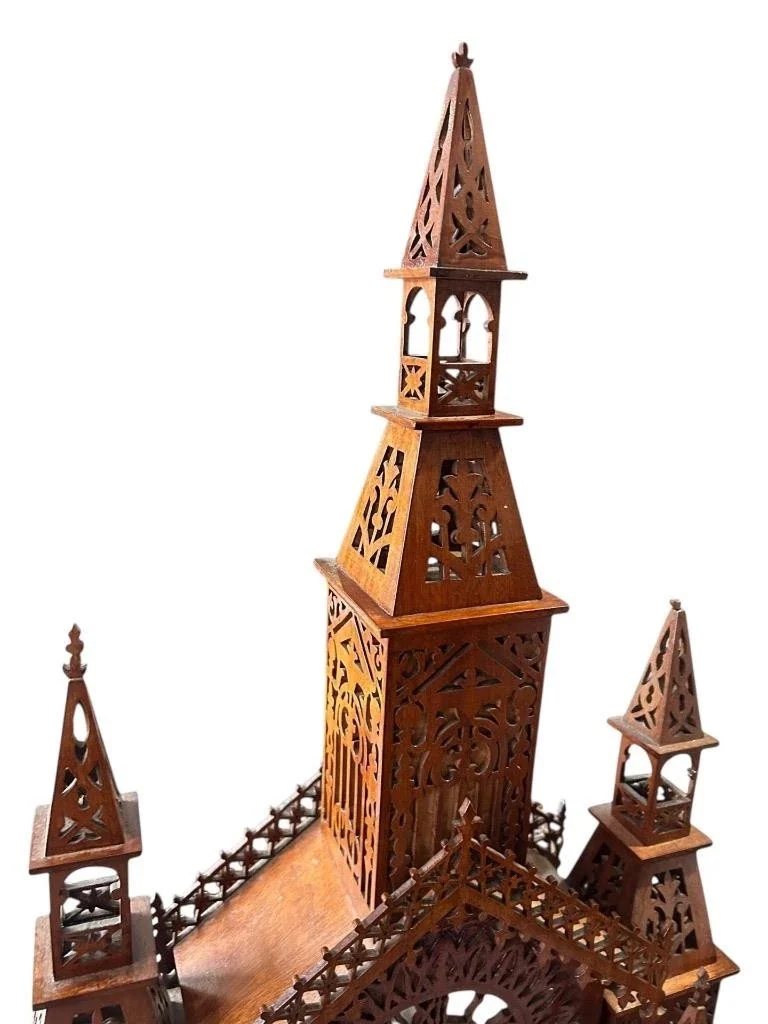

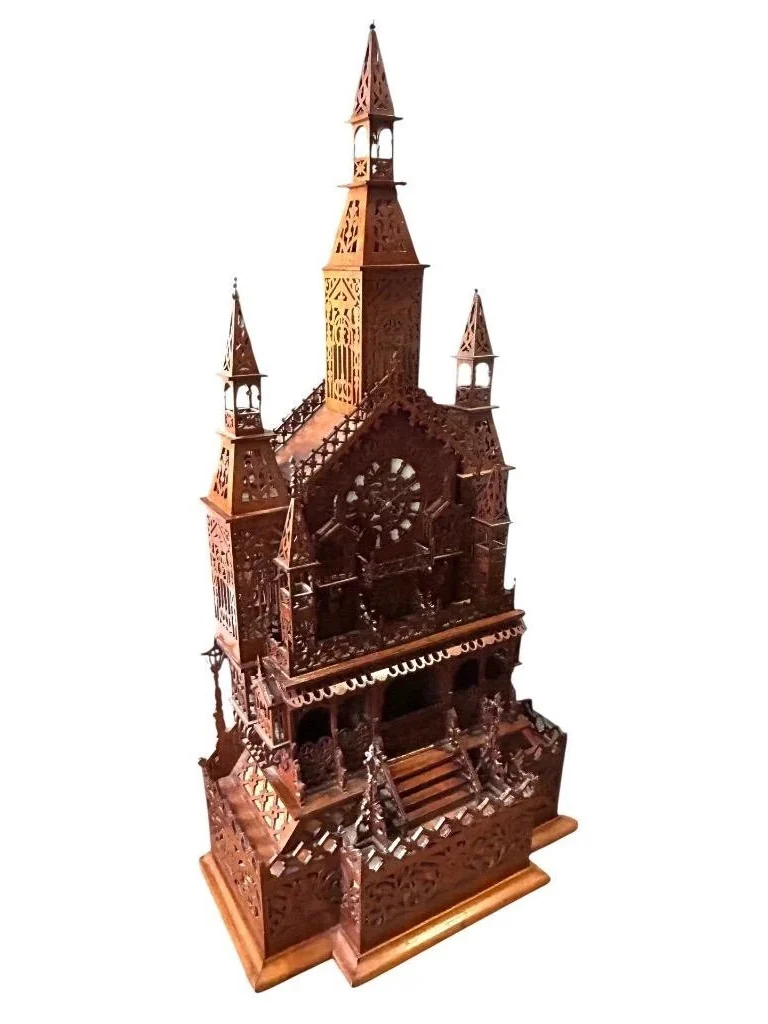
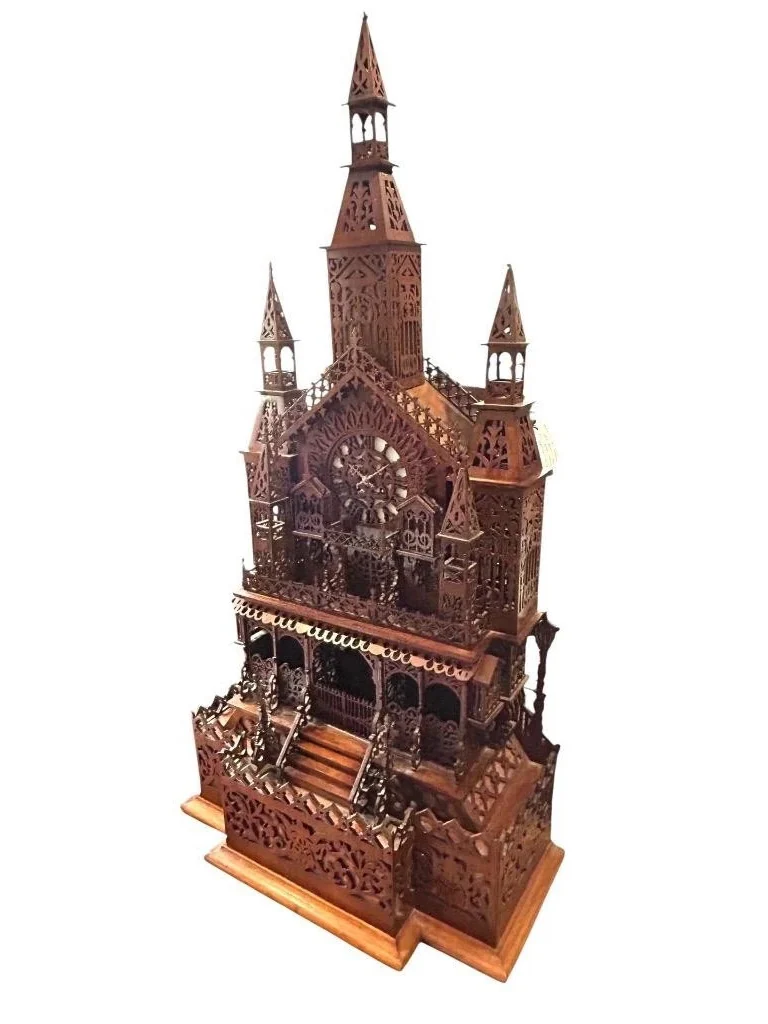


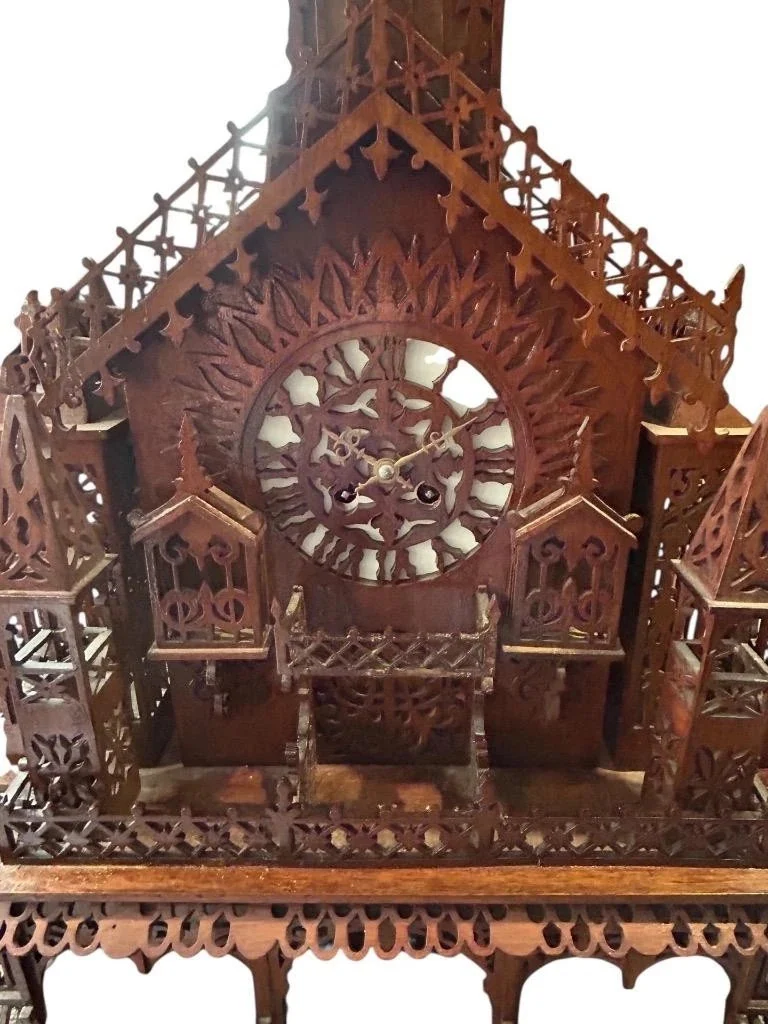
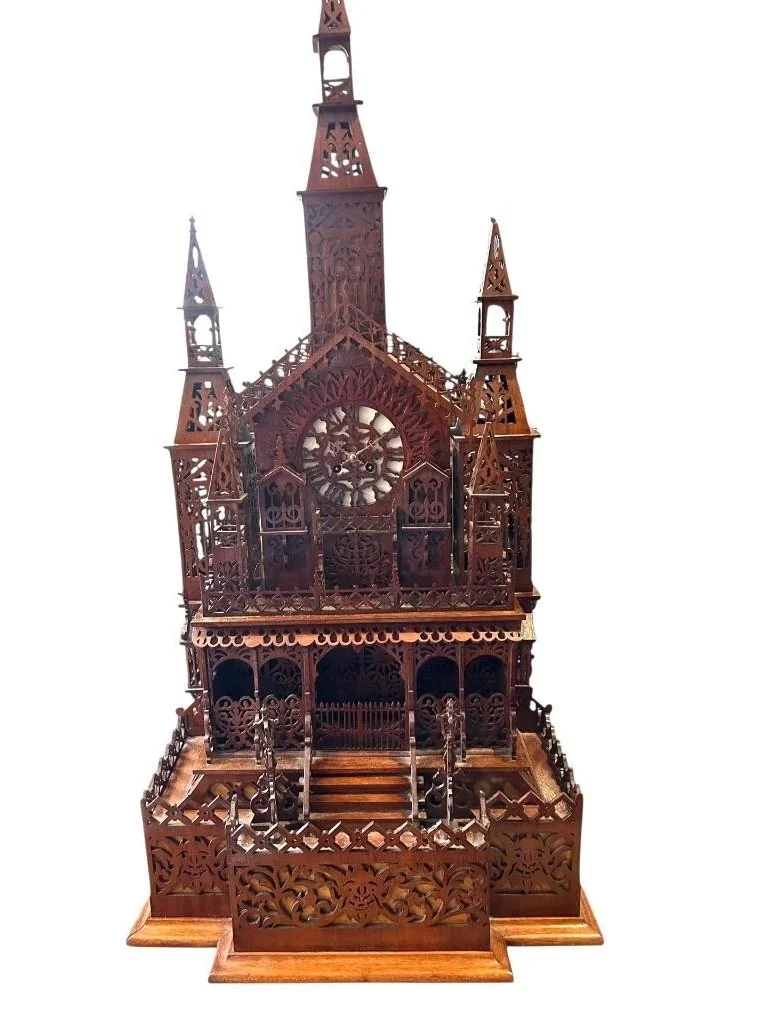


Detailed architectural fretwork defines this elaborate wooden clock case, constructed in the form of a multi-tiered Gothic cathedral. Pierced scrollwork, pointed arches, tracery screens and miniature pinnacles rise from an extended plinth, culminating in a soaring central spire flanked by corner belfries. At the core of the facade, a cut fretwork rose window serves as the dial, displaying Roman numerals around pierced hands.
Below the dial, the lower tier features an open arcaded loggia set with delicate balustrades, timber rail gates and a central flight of stairs flanked by railed banisters. The side elevations and upper towers continue this intricate fret-cut treatment with pierced quatrefoils, lancet openings and gallery parapets. Two winding squares pierce the lower portion of the fretwork dial face, indicating a twin-train mechanical movement housed within the timber structure.
Produced during the late nineteenth century, architectural fretwork clocks of this monumental scale were ambitious exhibition or demonstration pieces, either built by dedicated woodworkers using specialist fretsaw patterns or created as bespoke cabinetmaker showpieces. The historical reference to the Chimes of Normandy corresponds to Robert Planquette’s popular opera Les Cloches de Corneville, a chime melody that enjoyed wide appeal in domestic clockmaking.
Constructed from polished hardwood, the case retains an even, rich brown tone across its pierced surfaces. While conflicting measurements appear in the listing text, the stated 102 cm height corresponds with the grand verticality of the multi-level spire and multi-stepped base. It stands as an impressive testament to the Gothic Revival fascination with intricate, miniature church architecture.
Condition The clock case displays light surface dust and minor age-related wear to the fine fretwork edges, with the pierced wooden components and spires appearing largely intact.
Dimensions Height: approximately 102 cm
| Dimensions | 22 × 14.5 cm |
|---|---|
| Period | 19th Century, Late 19Th Century |
| Style | Gothic Revival |
| Colour | Brown |
| material | Hardwood |
| Maker | Unbranded |
| Price range | £2000+ |
| Collection Era | Antique & Vintage |
Only logged in customers who have purchased this product may leave a review.
Reviews
There are no reviews yet.