


Enquire Today!
If you have any questions, requests or general enquiries, please do not hesitate to email us and we will get back to you as soon as possible regarding your enquiry.
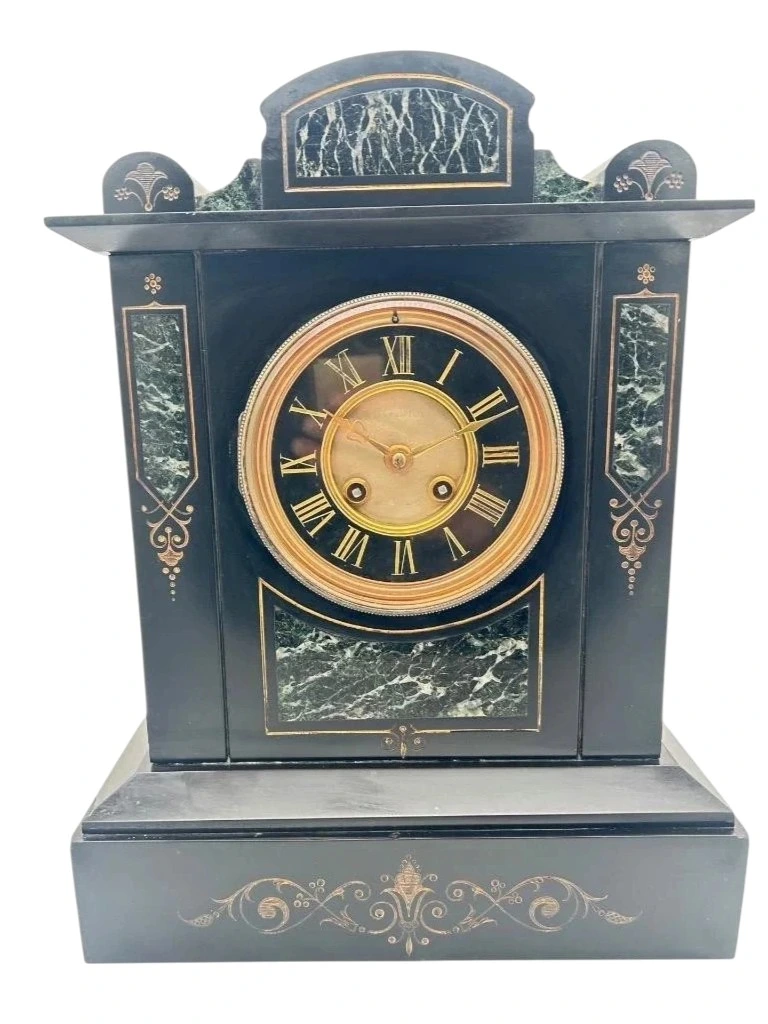
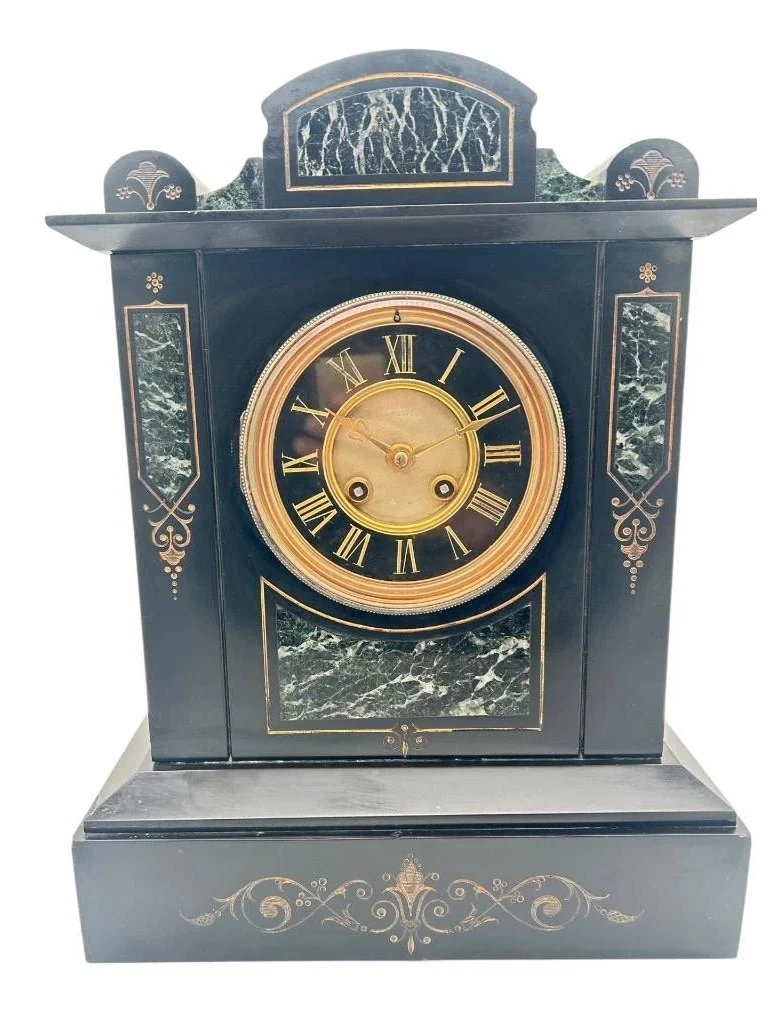
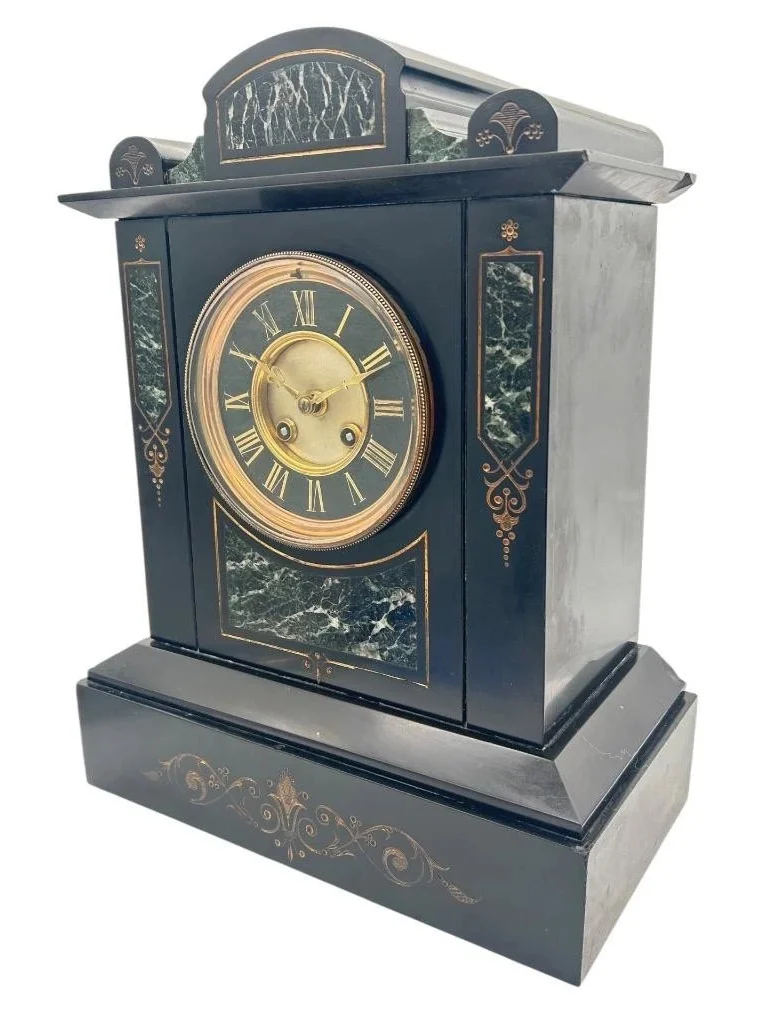
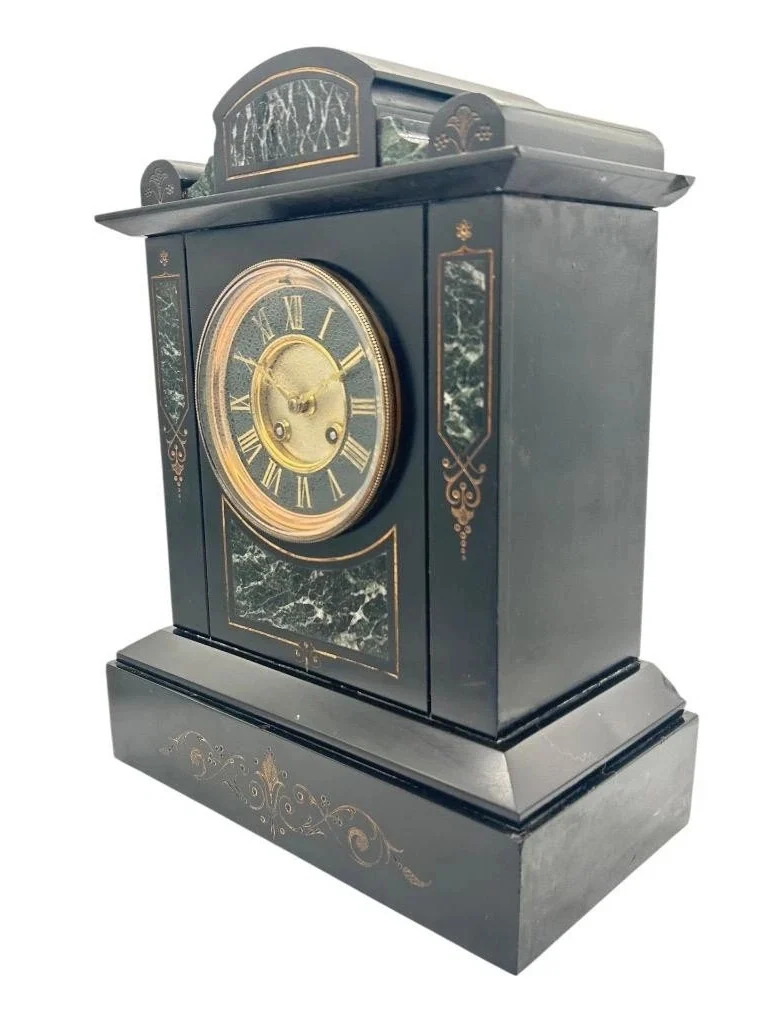
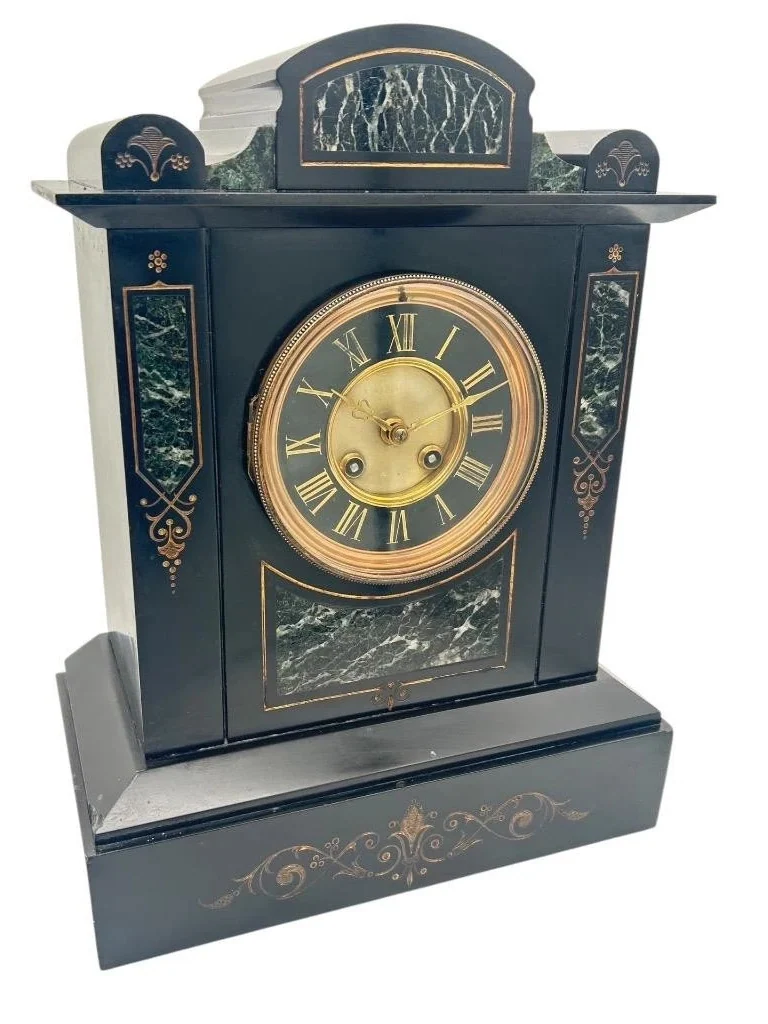

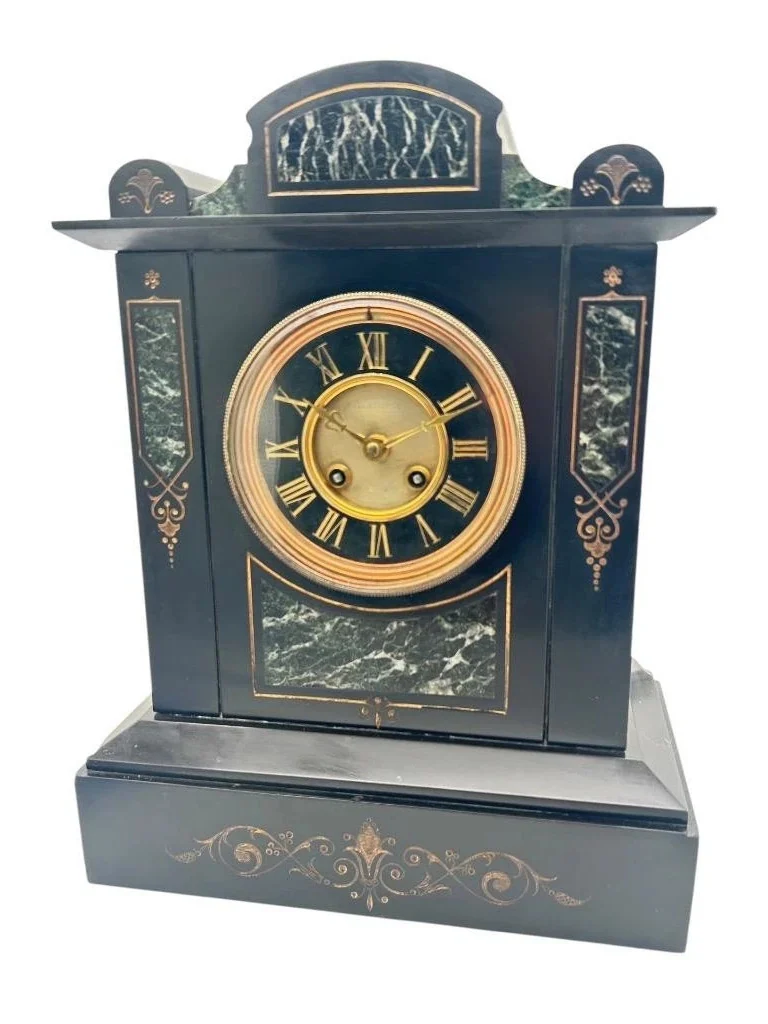


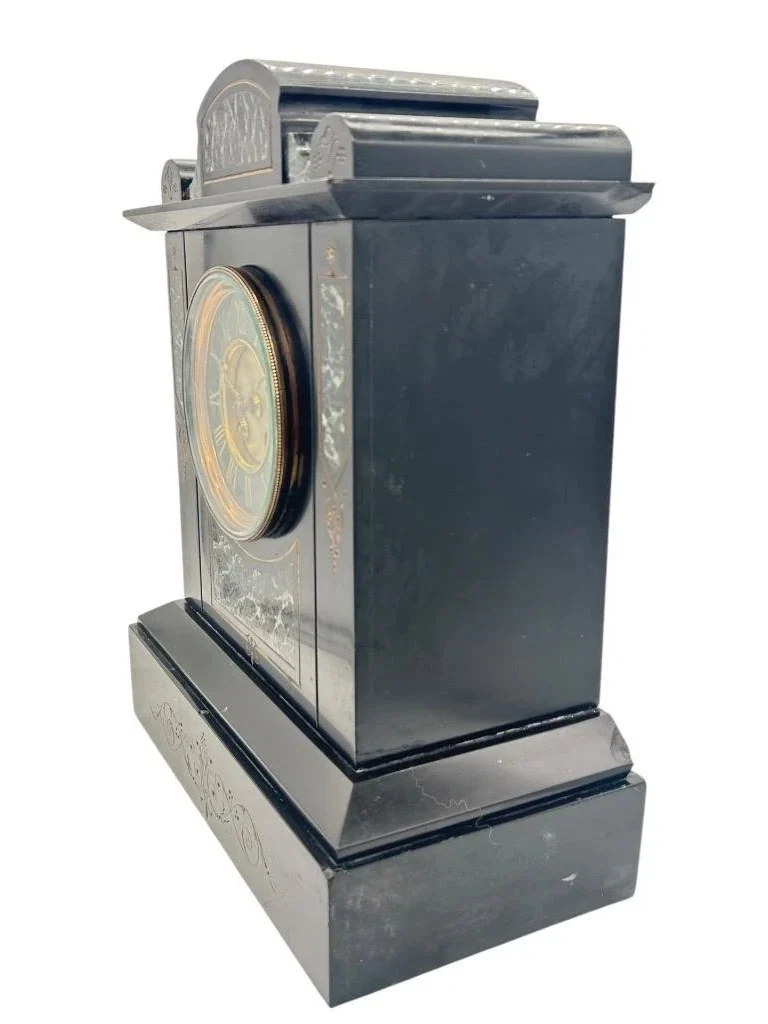


An architectural pediment with an arched cresting sits above a substantial black slate case enriched with panels of deeply figured dark green marble. Below the moulded cornice, inset upright panels flank the clock face, complemented by an oblong marble plaque beneath the bezel and further incised scrollwork across the stepped plinth base. Gilt-highlighted engraving runs across the frontage, introducing palmette motifs and acanthus arabesques that stand out clearly against the polished black stone.
At the centre, a matching black slate chapter ring displays recessed, gilded Roman numerals and outer track markings. This surrounds a sunken matted brass centre with twin winding arbors and pierced gilt metal hands, all framed within a cast, beaded brass bezel fitted with protective bevelled glass.
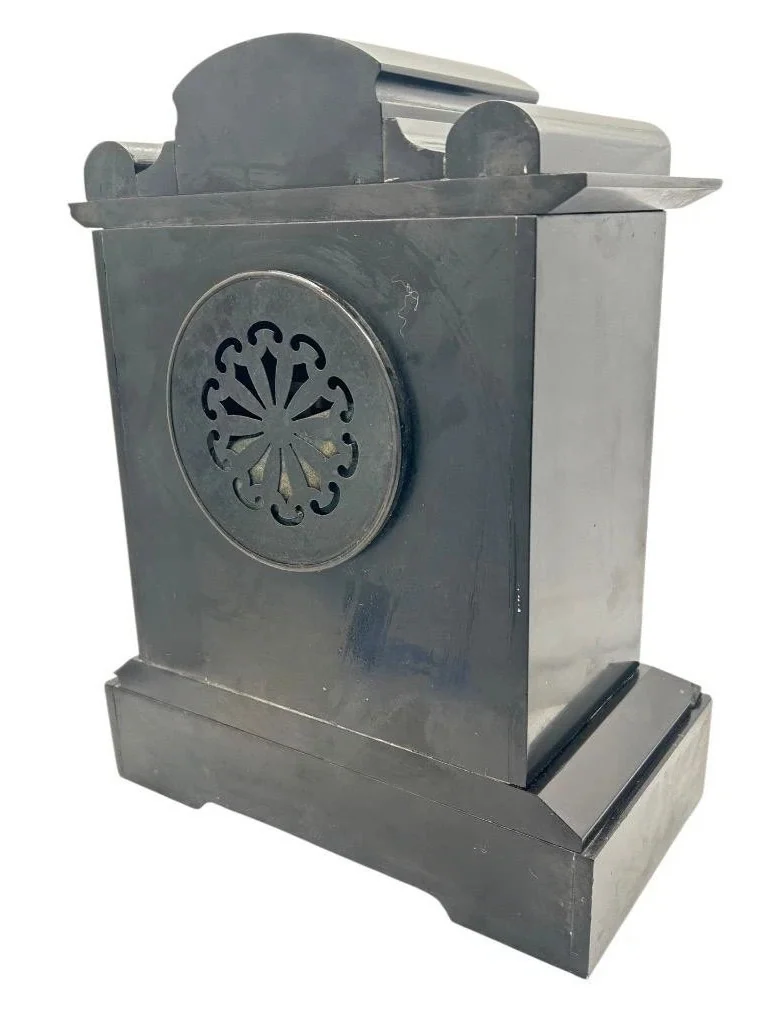
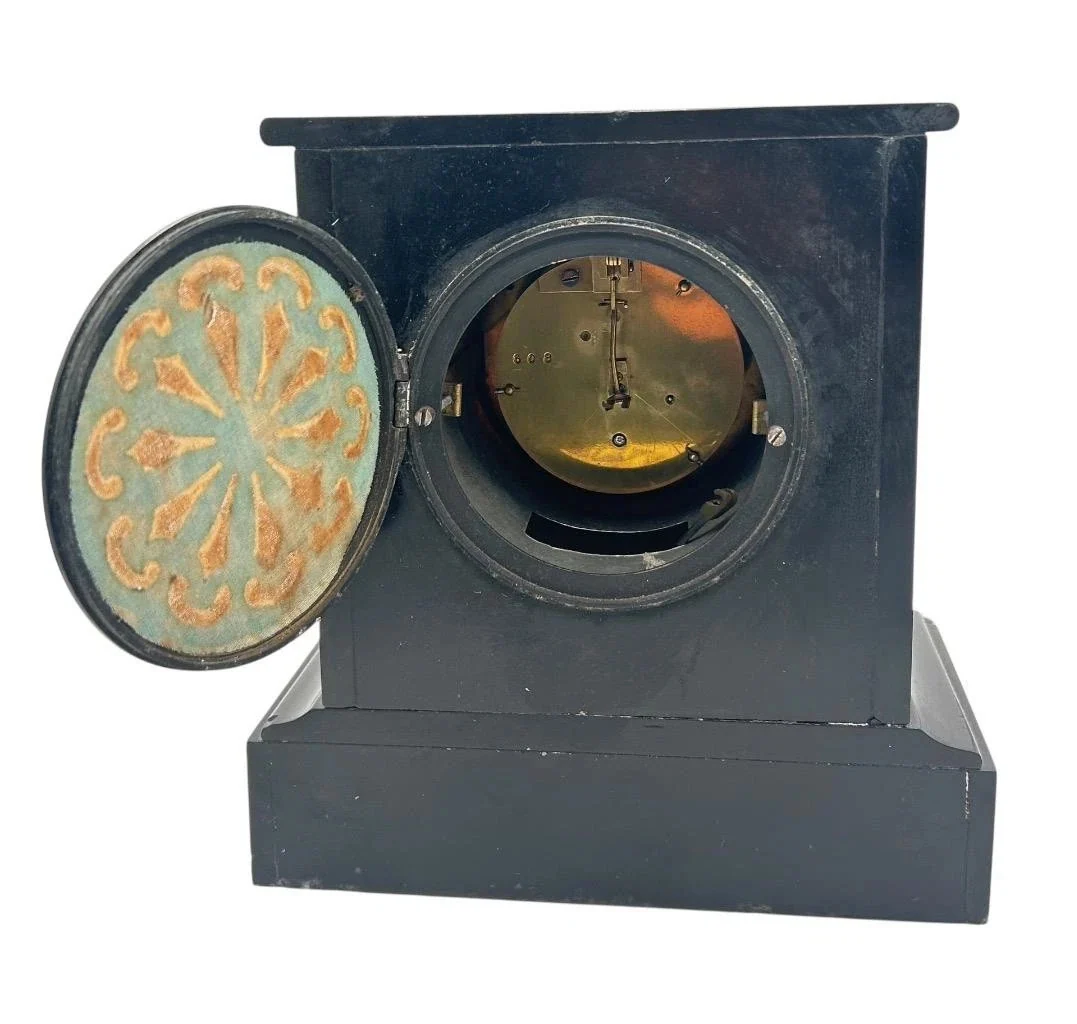
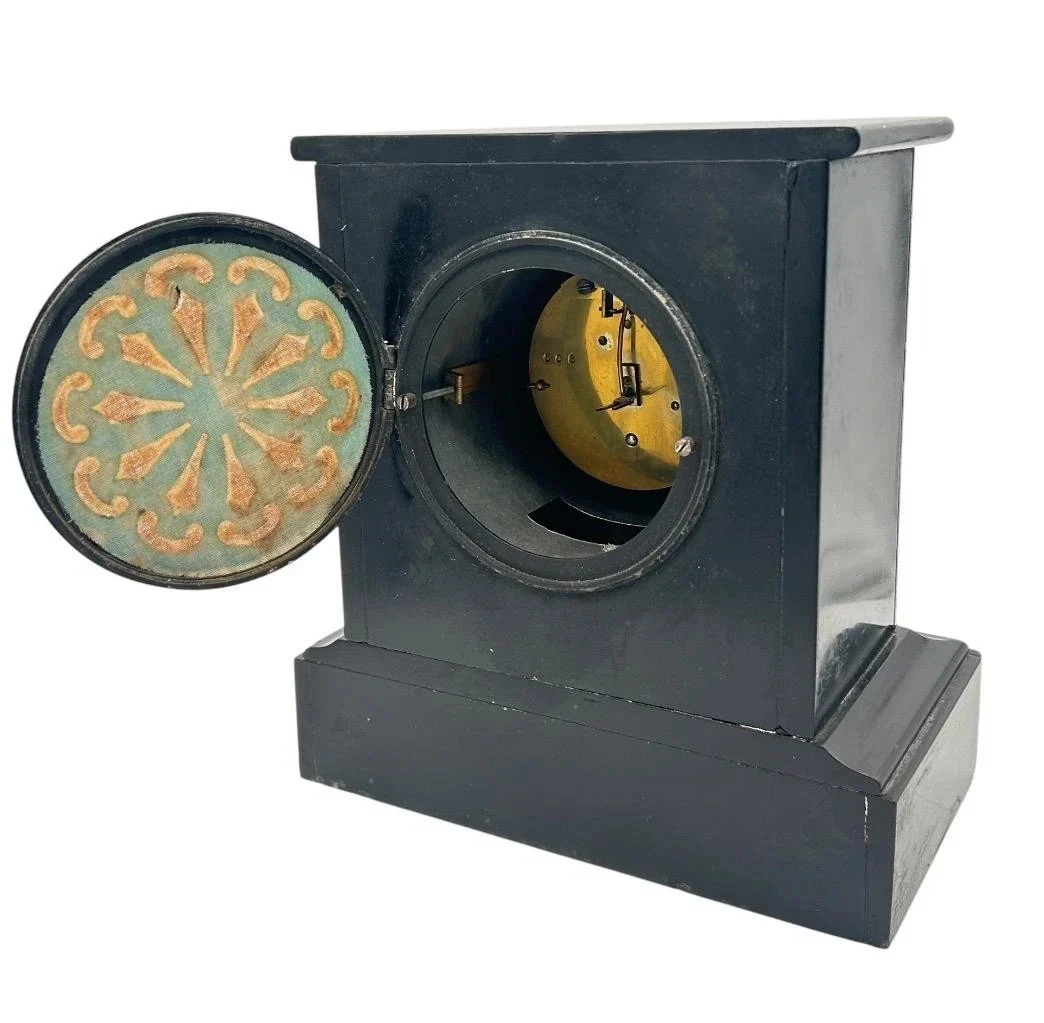
Housed within the heavy stone casing is an eight-day brass movement, accessed through a pierced circular sound fret door at the rear. The twin-train mechanism bears serial number 608 stamped on the backplate, operating with a pendulum suspension and striking the hours and half-hours on a gong or bell. The movement is reported to be in working order and retains its pendulum and winding key.
Originating from the late Victorian period, probably around 1880, this freestanding timepiece measures 38 cm in height, 29 cm in width, and 16 cm in depth. The substantial construction and clean classical lines make it well suited to a drawing room chimney piece or study sideboard.
Condition The slate and marble case shows light surface wear and minor edge rubbing consistent with age. Gilt engraving remains legible throughout. Movement is reported to be running and complete with pendulum and key.
Dimensions 38 cm H x 29 cm W x 16 cm D
| Dimensions | 16 × 29 × 38 cm |
|---|---|
| Period | 19th Century |
| Style | Victorian |
| Colour | Black, Gold, Green |
| material | Brass, Glass, Marble, slate |
| Origin | France |
| Price range | £2000+ |
| Collection Era | Antique & Vintage |
Only logged in customers who have purchased this product may leave a review.
Reviews
There are no reviews yet.