


Enquire Today!
If you have any questions, requests or general enquiries, please do not hesitate to email us and we will get back to you as soon as possible regarding your enquiry.

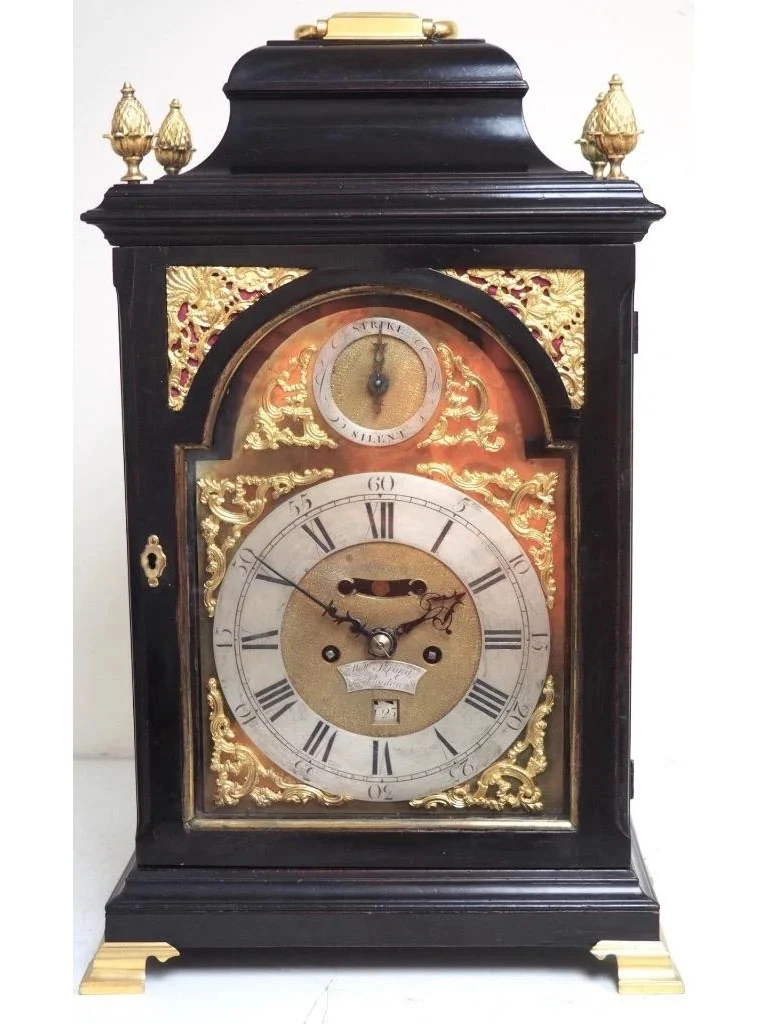


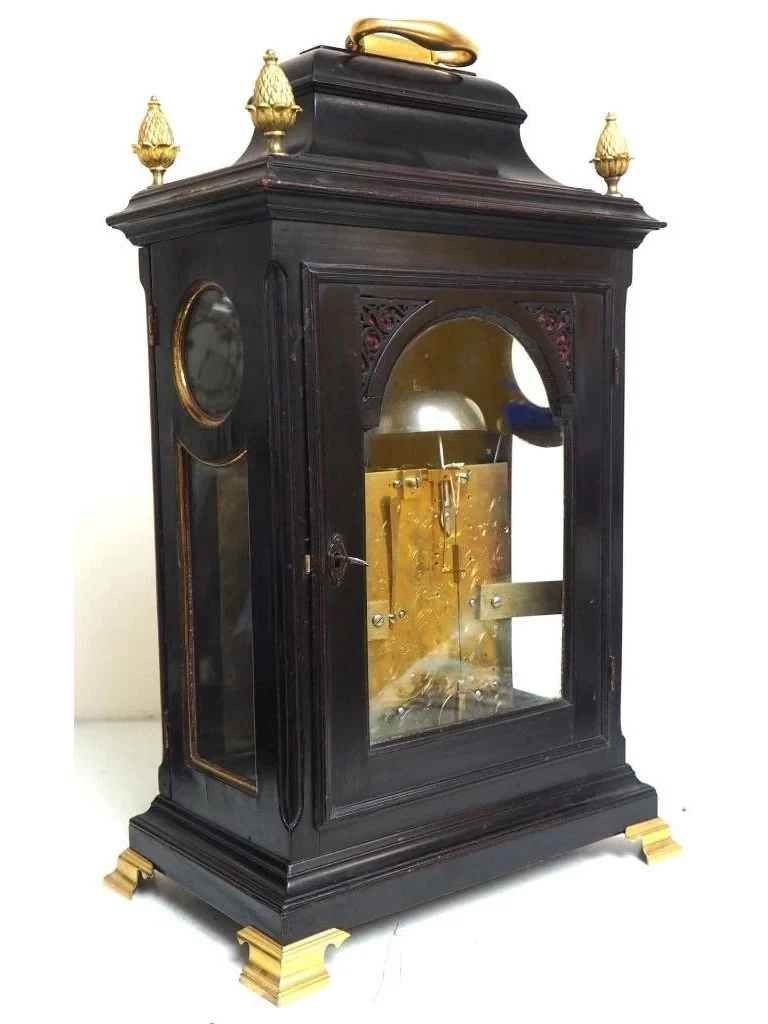

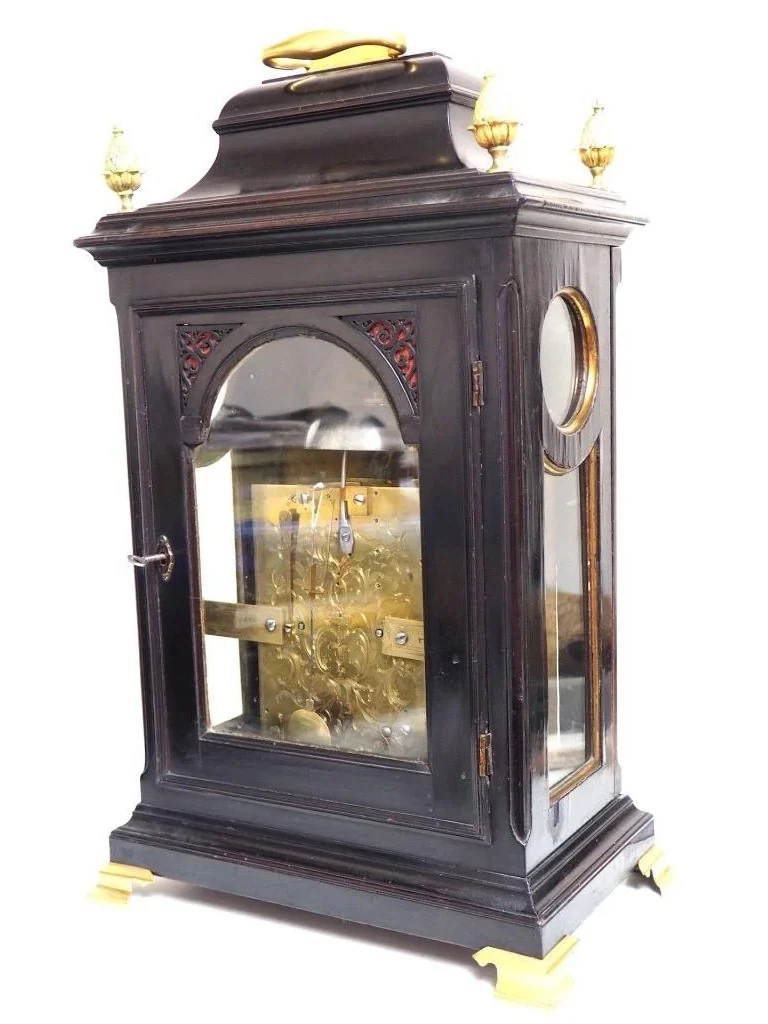
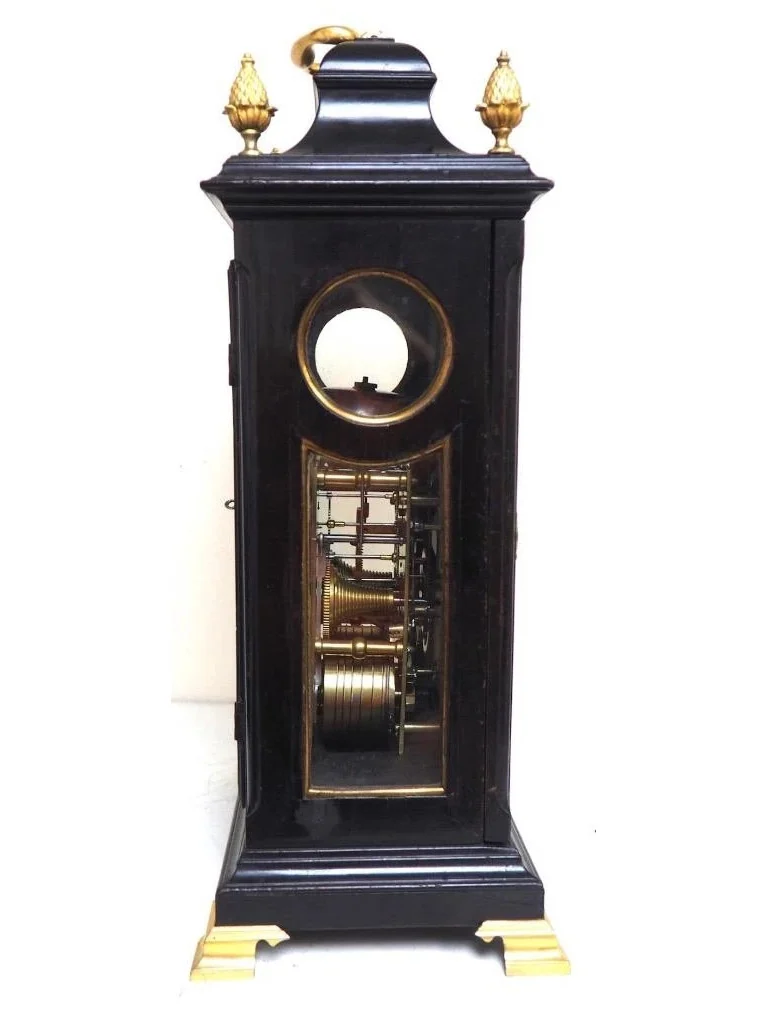


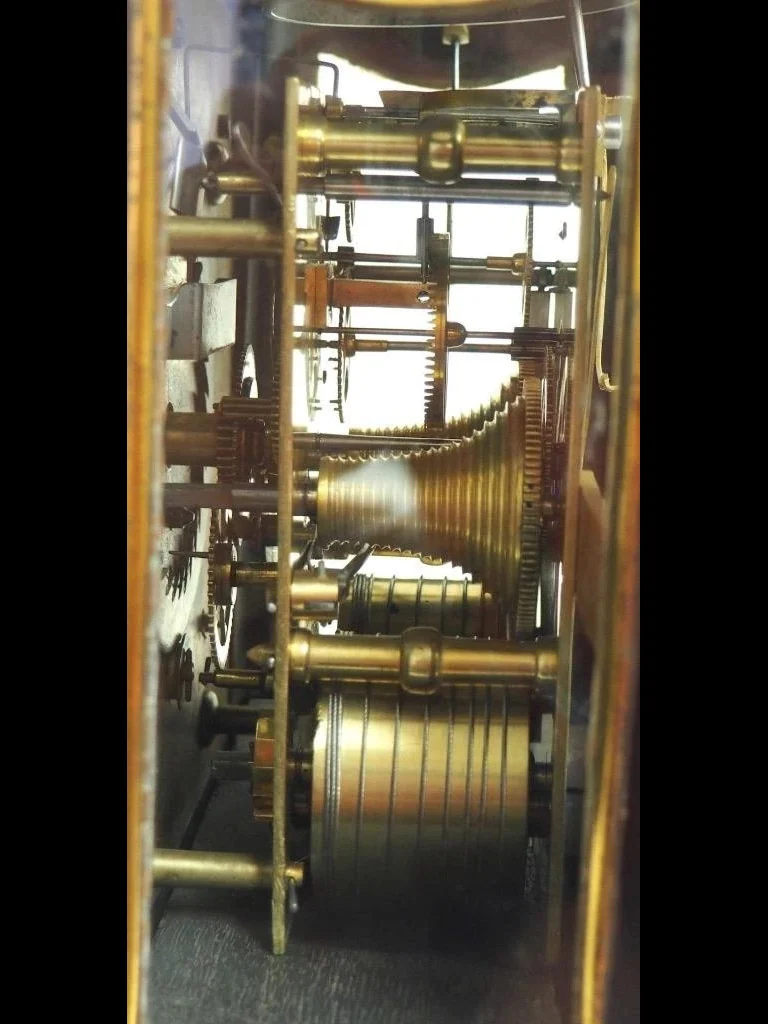


A bell-top caddy roof adorned with four cast brass pineapple finials and a hinged brass carrying handle distinguishes this late eighteenth-century English bracket clock. Constructed with an ebonised case, the cabinet features stepped architectural mouldings, a plinth base, and shaped gilt-brass bracket feet. Both sides of the case incorporate glazed aperture windows—comprising an upper roundel and a lower rectangular pane framed with a gilt slip—providing clear views of the inner mechanism and escapement. The glazed rear door follows the arch of the main dial and is fitted with pierced wood frets backed in red cloth to allow the chime of the bell to project cleanly.
The brass break-arch dial measures eight inches in diameter and is embellished with pierced rococo scroll spandrels at the corners and arch. Its silvered chapter ring displays Roman hour numerals and an outer track of Arabic five-minute numerals, indicated by pierced steel hands. Within the textured, matted dial centre, a curved aperture displays the mock pendulum bob swing above a square calendar aperture showing the date. A silvered plaque positioned below the centre arbor is engraved with the signature “Wm Strong, London”. The upper arch houses a secondary silvered subsidiary dial for strike and silent selection.
Power is provided by an eight-day double fusee movement that retains its traditional verge escapement. The mechanism operates timekeeping alongside an hour-striking train that sounds against a top-mounted bell, controlled via the strike-silent selector. Inspection through the rear door reveals an intricately hand-engraved brass backplate decorated with foliate scrolls, as well as a shaped holdfast bracket used to secure the pendulum during transit. The mechanism is reported to be in working order and retains its pendulum, winding key, and cabinet key.
Measuring 58 cm in total height with the handle extended, 32 cm across the base, and 20 cm deep, the clock displays classic Georgian proportions suitable for a mantelpiece or bracket table. Historical research into the maker published by horological writer Brian Loomes in the September 2020 issue of Clocks magazine places the production of this timepiece at circa 1796.
Condition The ebonised case displays age-consistent wear, including light surface rubbing, minor abrasions to corners, and faint checking to the finish. Gilt-brass mounts, finials, and feet retain an aged patina with minor oxidation. The silvered dial and chapter ring show subtle age-related tarnishing. The double fusee movement is reported to be in working order and recently serviced.
Dimensions 58 cm high x 32 cm wide x 20 cm deep
| Dimensions | 20 × 32 × 58 cm |
|---|---|
| Period | 18th Century |
| Style | Georgian |
| Colour | Black, Gold |
| material | Brass, Glass, Steel, Wood |
| Origin | England |
| Maker | William Strong |
| Price range | £2000+ |
| Collection Era | Antique & Vintage |
Only logged in customers who have purchased this product may leave a review.
Reviews
There are no reviews yet.