


Enquire Today!
If you have any questions, requests or general enquiries, please do not hesitate to email us and we will get back to you as soon as possible regarding your enquiry.
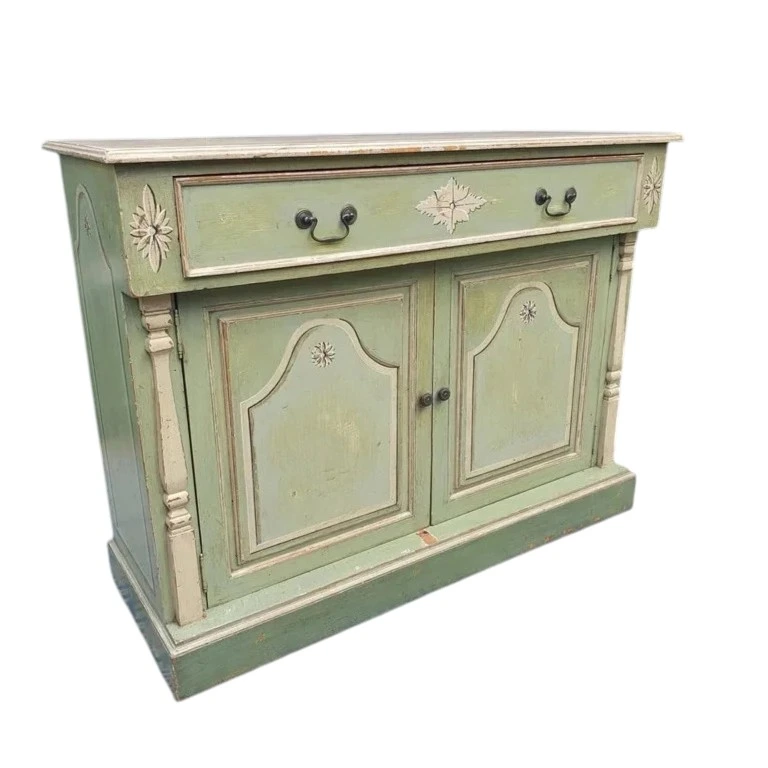

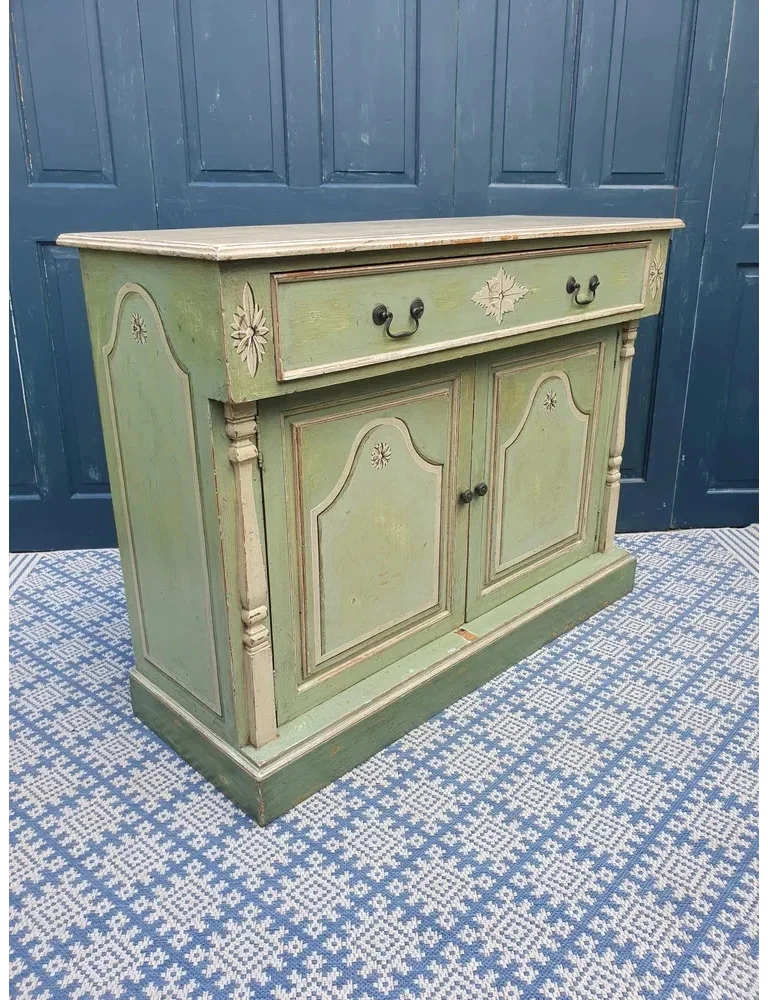
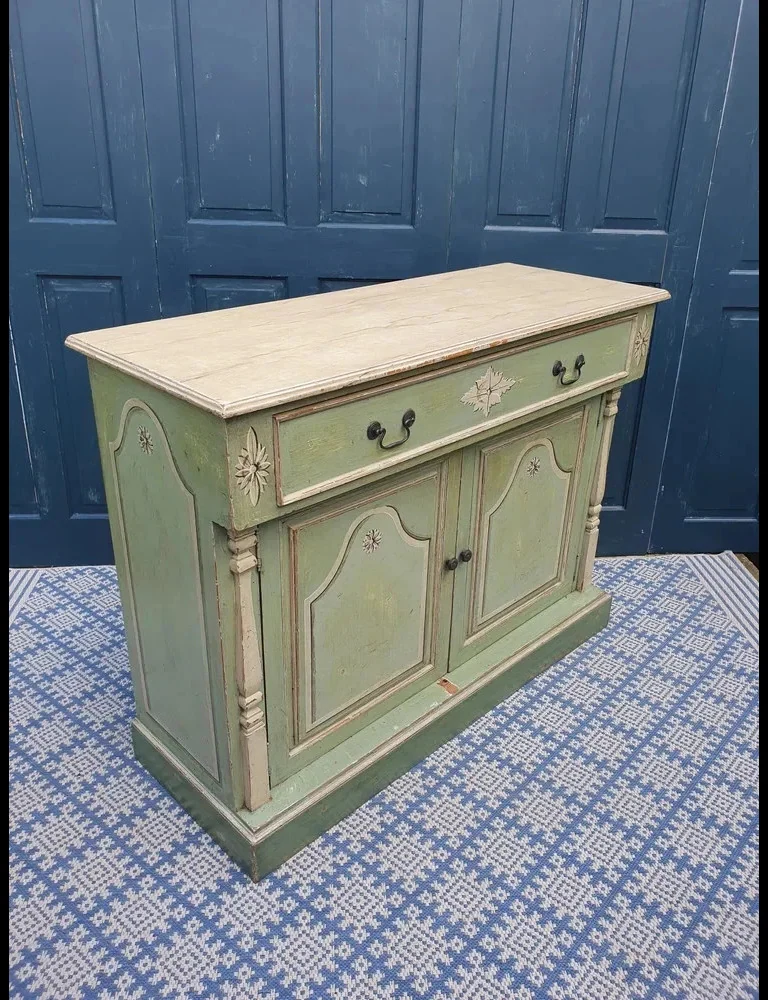
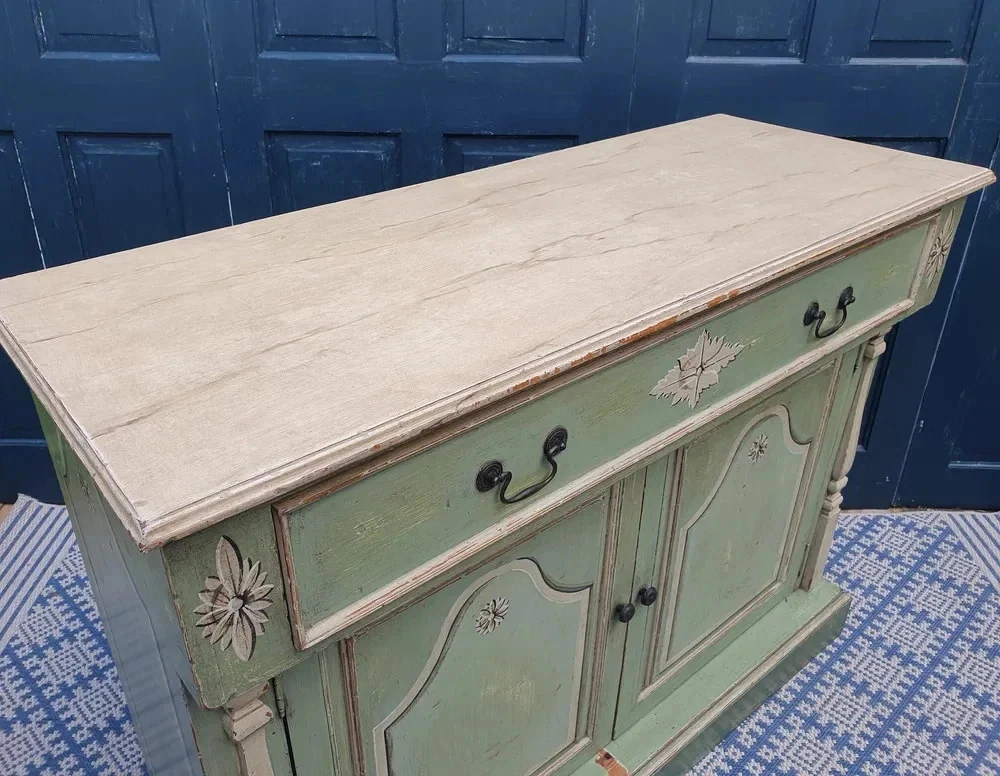
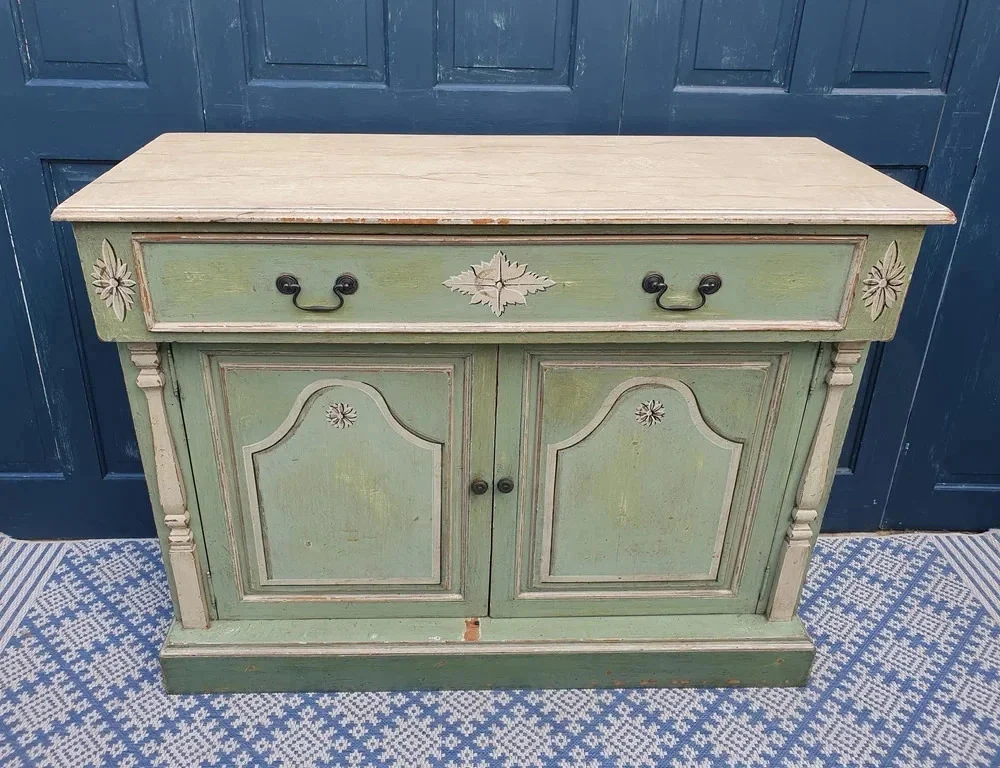
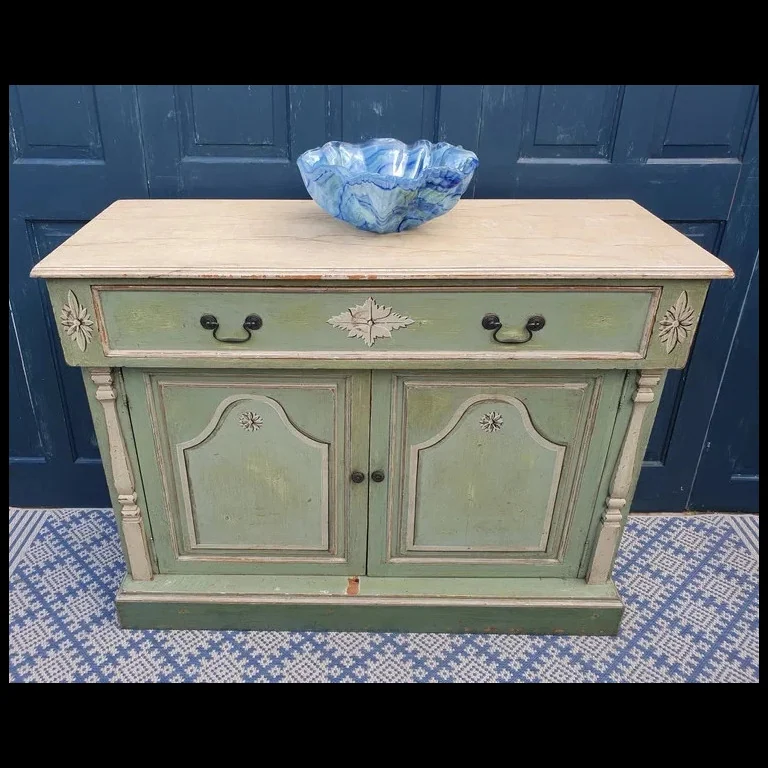

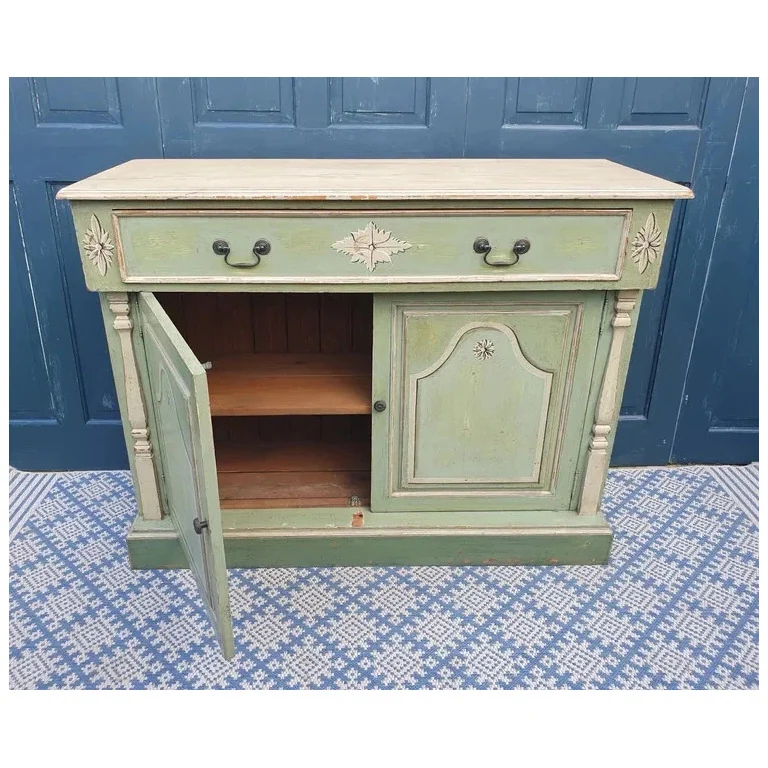
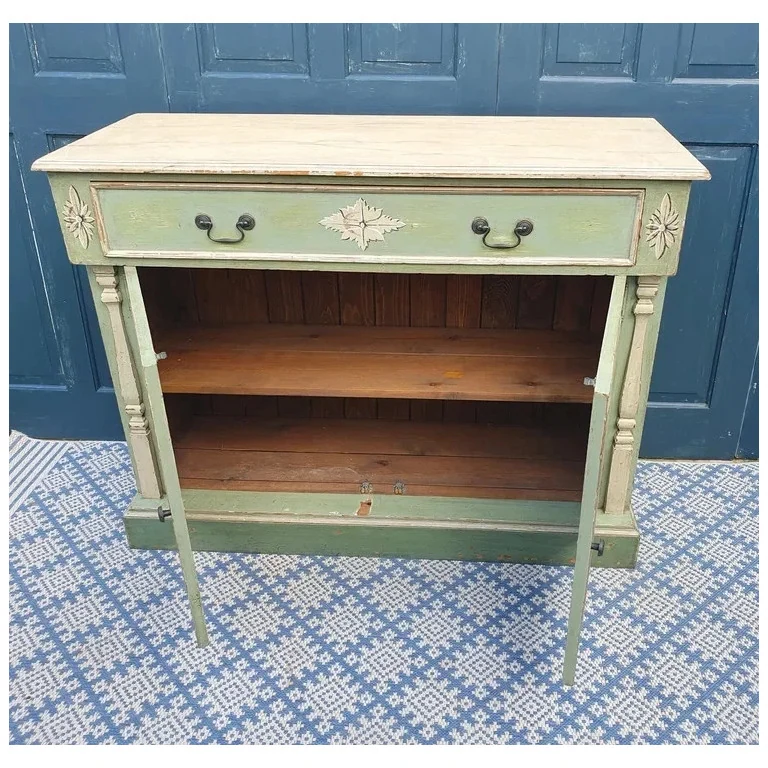
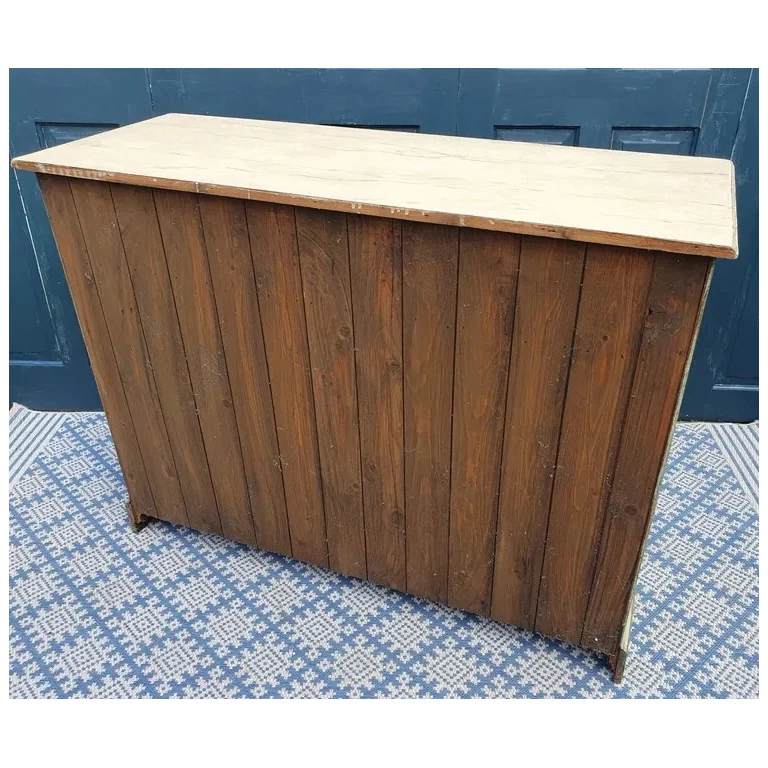


A faux-marble top with subtle grey veining sets off the mellow painted surfaces of this nineteenth-century pine cabinet. Built with robust solid timber framing, the carcass combines practical proportions with traditional joinery, resting upon a substantial enclosed plinth base. The rectangular top provides a generous display surface above a protruding upper frieze, framing the piece with classical architectural definition. Below the overhanging edge, a full-width frieze drawer is mounted with twin dark metal swan-neck handles and centred by a hand-painted acanthus motif. Flanking the drawer front, carved corner blocks are decorated with radiating floral roundels. The lower section features a pair of cupboard doors set between turned, painted pilasters. Each door incorporates an arched, fielded panel highlighted in ivory against the pale olive-green ground, centred with a painted flowerhead and opened by modest turned knobs. Matching decorative panels adorn the outer flanks of the pine carcass. Opening the double doors reveals a clean, untreated natural pine interior divided by a fixed mid-height shelf. This generous storage space provides versatile accommodation for tableware, linens, or general household storage, while the long upper drawer accommodates smaller utensils or stationery. The reverse of the cabinet retains its original vertically boarded pine back, demonstrating honest Victorian utility and vernacular workshop construction. This example carries an attribution to the decorative painting workshop of Graham Carr near Marlborough, where it is understood to have been painted by an apprentice in his studio. The piece retains its characteristic distressed decorative palette, harmonising chalky greens and soft creams with deliberate antiquing. In terms of dimensions, the cabinet stands 89 cm high, measures 116 cm across the widest points of the top, and has a depth of 42 cm, making it well-suited for a dining area, kitchen, or entrance hallway.
Condition The cabinet displays authentic surface wear throughout the later hand-painted finish, including rubbing along the edges, softened corners, and light paint losses exposing the pine beneath. The timber carcass, joints, and interior shelving remain structurally sound, with smooth drawer action and properly hung doors.
Dimensions 89 cm high x 116 cm wide x 42 cm deep
| Dimensions | 42 × 116 × 89 cm |
|---|---|
| Period | 19th Century, Late 19Th Century |
| Colour | Cream, Green |
| material | Pine |
| Origin | England |
| Maker | Attributed to the workshop of Graham Carr |
| Price range | £2000+ |
| Style | Victorian |
| Collection Era | Antique & Vintage |
Only logged in customers who have purchased this product may leave a review.
Reviews
There are no reviews yet.