


Enquire Today!
If you have any questions, requests or general enquiries, please do not hesitate to email us and we will get back to you as soon as possible regarding your enquiry.
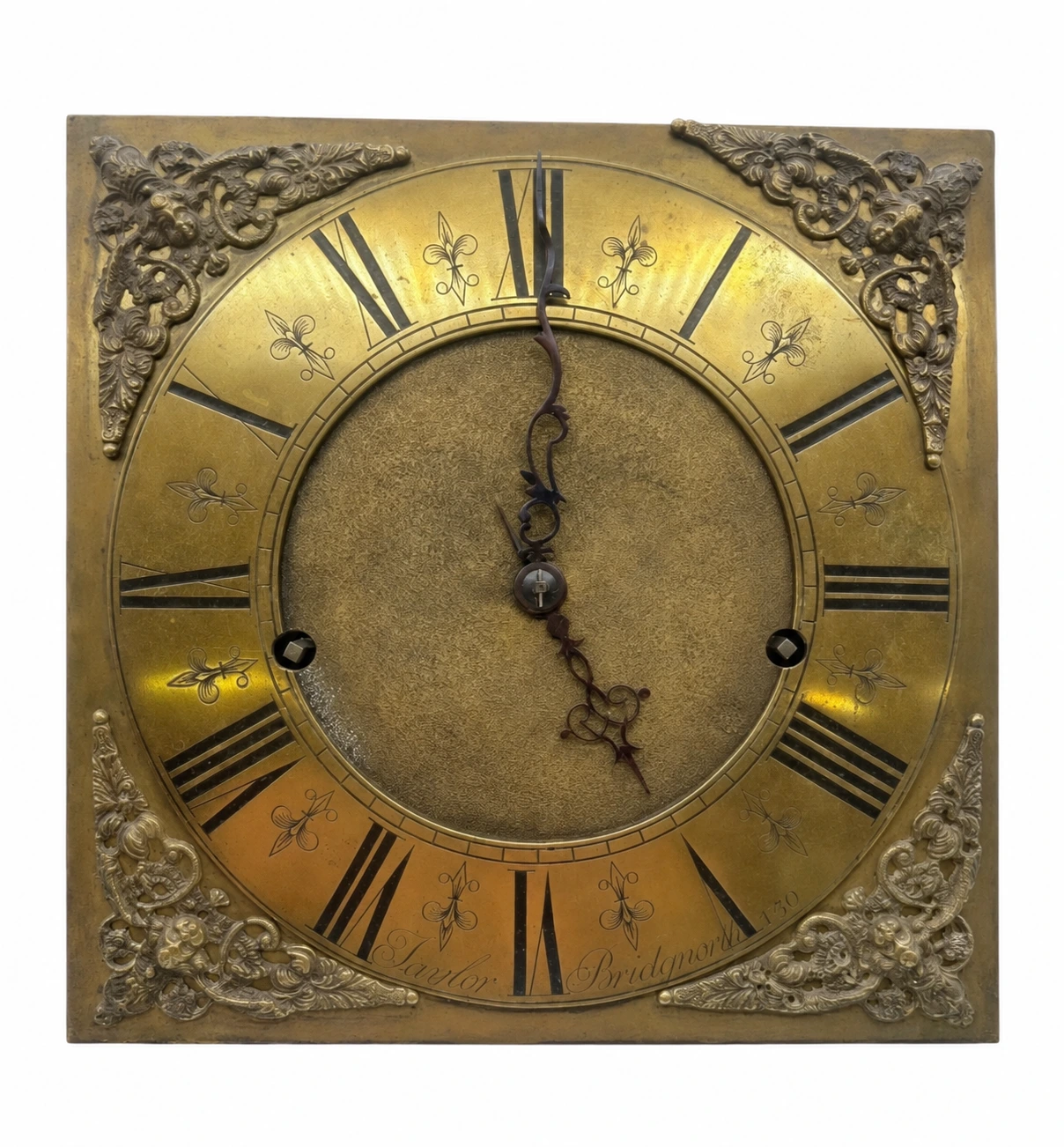
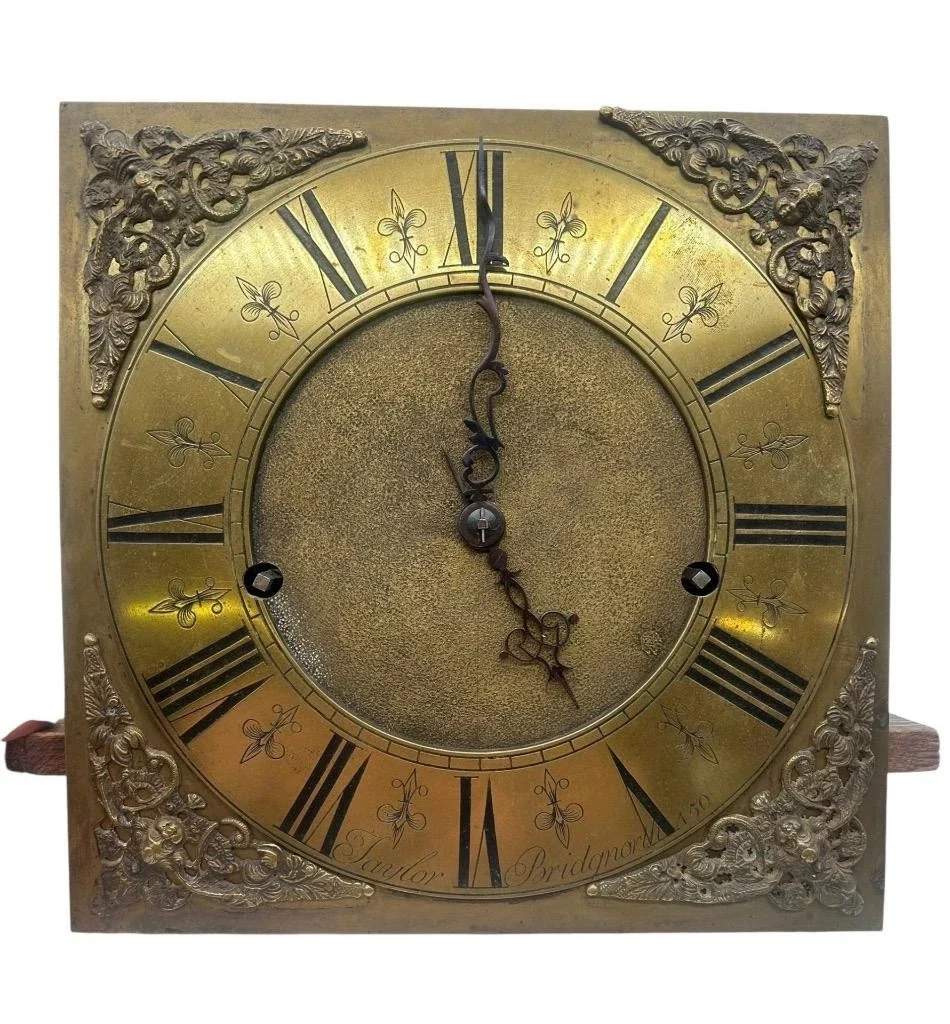
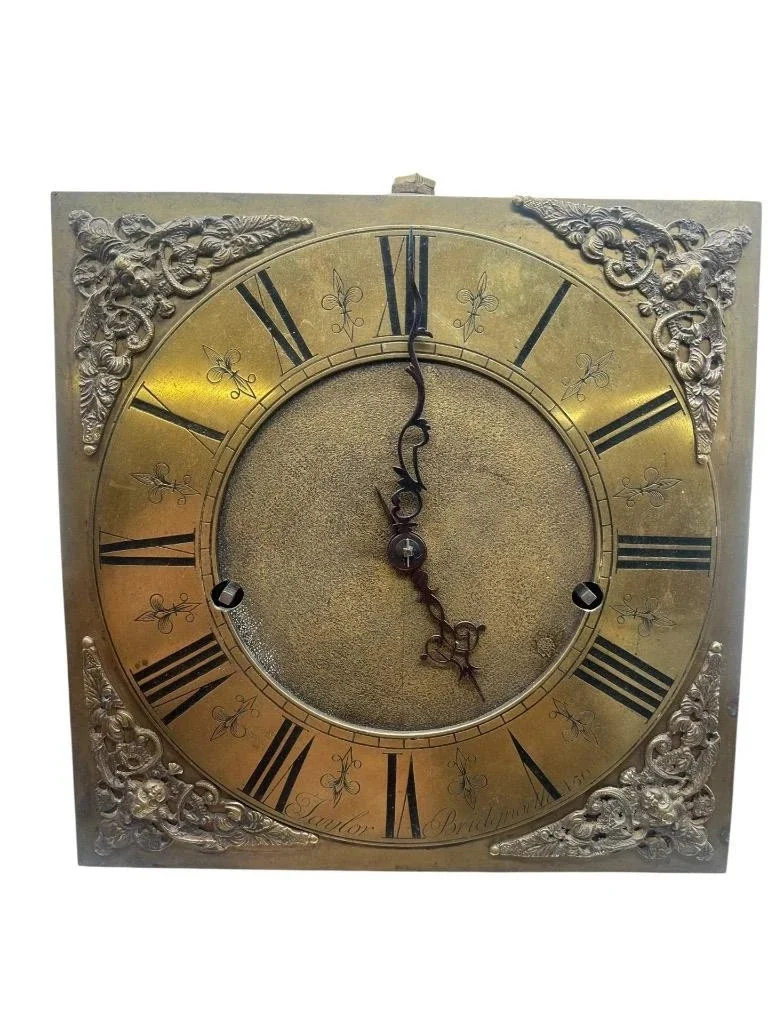
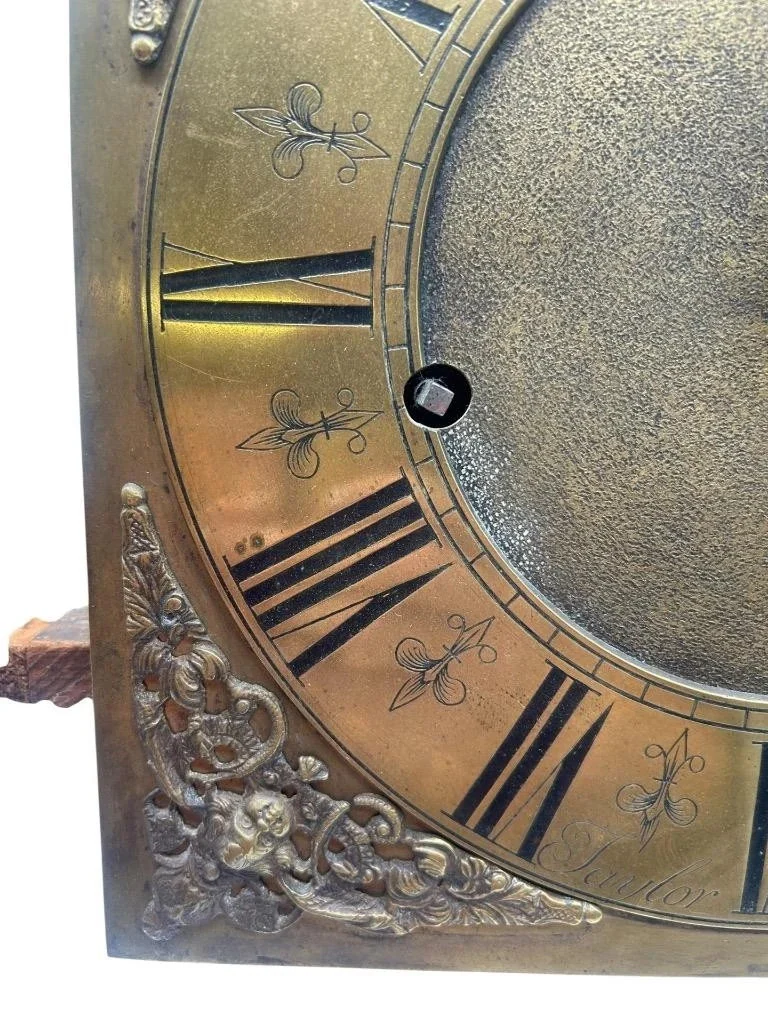



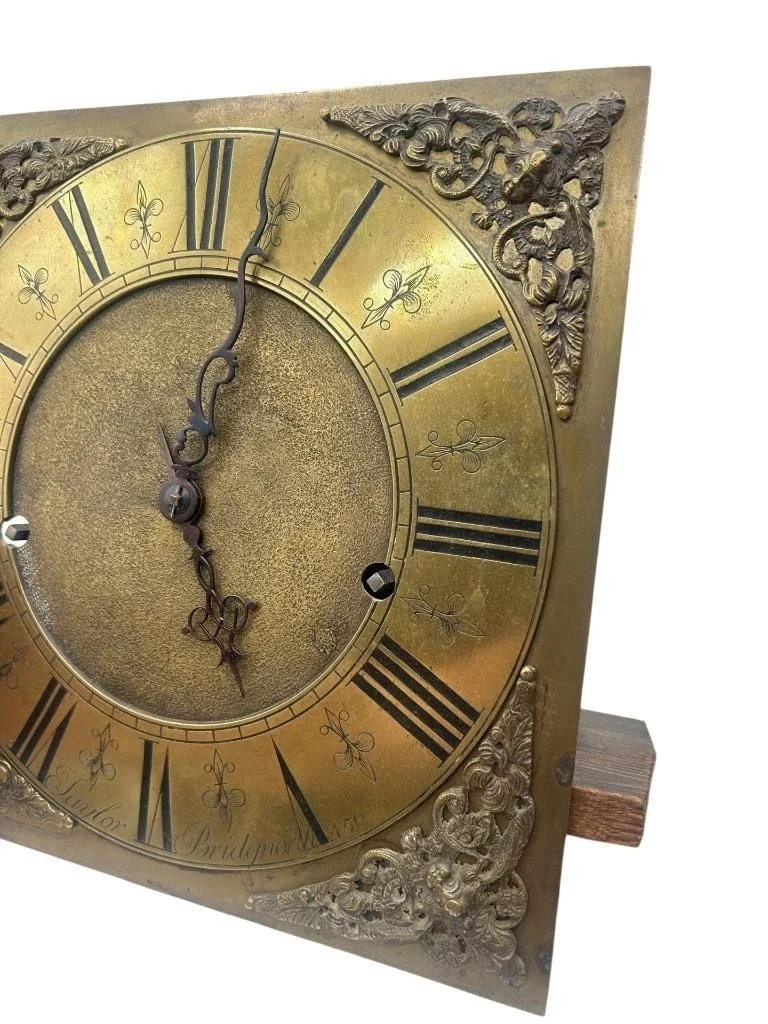


Cast brass corner spandrels depicting winged cherub masks amidst scrolling foliate work frame the square dial plate, surrounding a textured matted brass centre. The dial features an engraved chapter ring marked with Roman numerals for the hours, an outer track for the minutes, and stylised fleur-de-lis half-hour motifs. An ornate pair of pierced steel hands is pinned at the centre arbor above twin winding apertures.
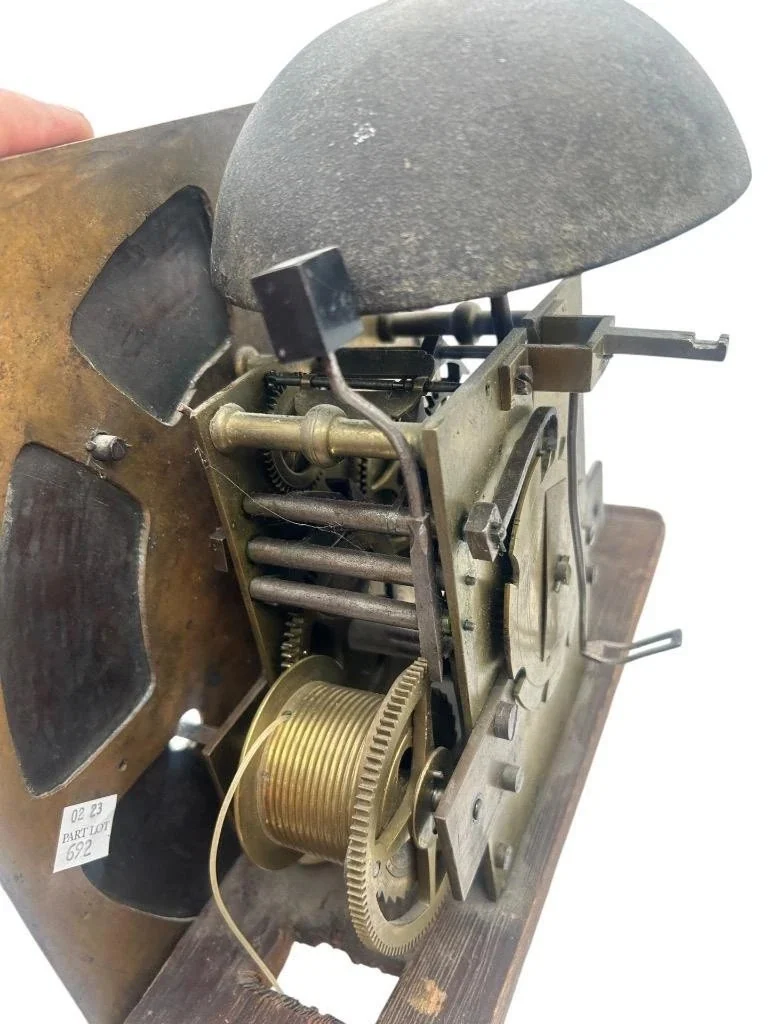
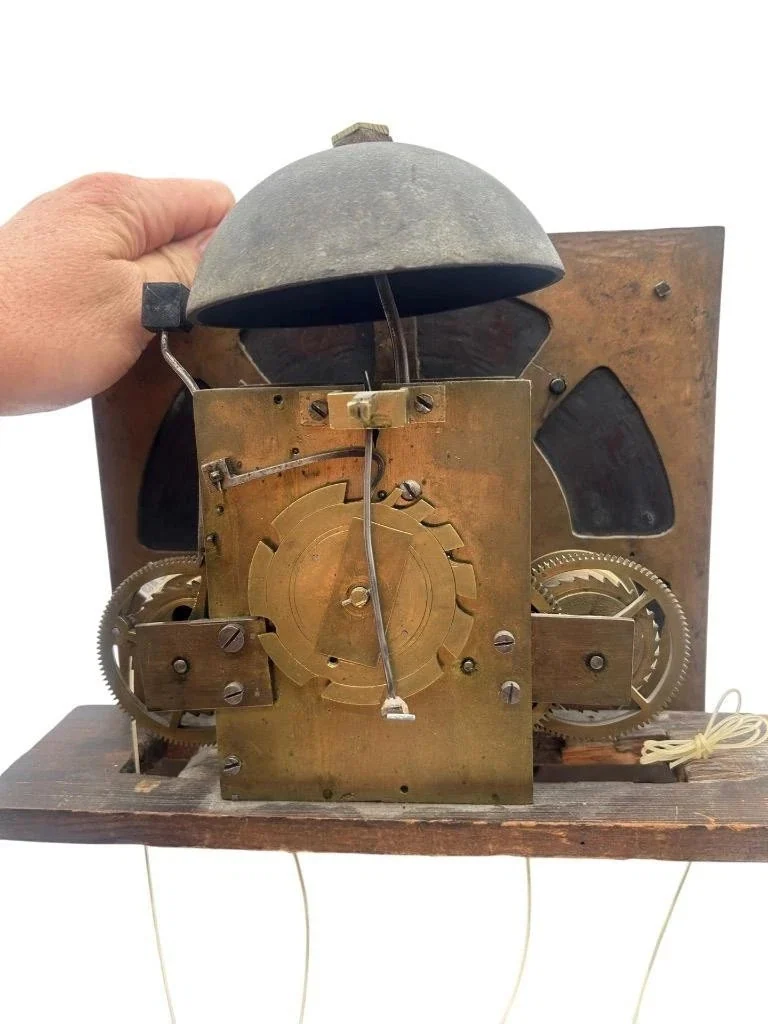
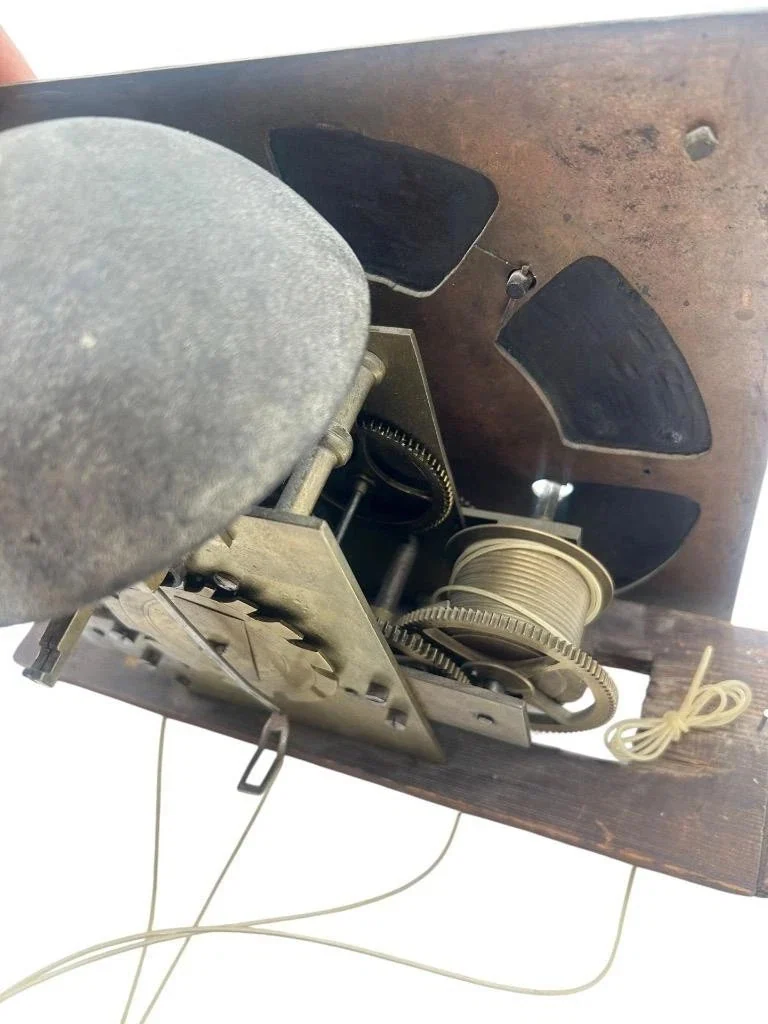
Behind the dial plate sits a twin-train brass movement mounted on a solid timber seatboard. The mechanism features turned brass pillars between the plates, a grooved winding barrel, and a top-mounted bell with hammer striking assembly. Built as an eight-day striking movement, it shows indications of conversion from an earlier 30-hour layout, an adaptation common in the Georgian period to extend winding intervals.
The base of the chapter ring between the numerals VII and V is neatly engraved with the clockmaker’s signature and production serial number, reading ‘Taylor Bridgnorth 450’. Bridgnorth in Shropshire sustained a noted regional clockmaking community throughout the 18th century, with makers customarily numbering their individual works.
The square dial plate measures 28.5 cm high by 28.5 cm wide, with the complete mechanism extending to a depth of approximately 11.5 cm to the back edge of the seatboard. The movement dates to around 1780 and displays honest, untouched patination across the dial face, steelwork and movement plates.
Condition Intact antique movement and dial showing general surface patination, oxidation, and tarnishing consistent with age. Converted from 30-hour to 8-day configuration; offered without pendulum, weights, or winding key.
Dimensions 28.5 cm W x 28.5 cm H x 11.5 cm D
| Dimensions | 11.5 × 28.5 × 28.5 cm |
|---|---|
| Period | 18th Century |
| material | Brass, steel and wood |
| Origin | Bridgnorth, England, Shropshire |
| Maker | Taylor of Bridgnorth |
| Price range | Under £2000 |
| Collection Era | Antique & Vintage |
| Style | George III |
| Colour | Brown, Gold |
Only logged in customers who have purchased this product may leave a review.
Reviews
There are no reviews yet.