


Enquire Today!
If you have any questions, requests or general enquiries, please do not hesitate to email us and we will get back to you as soon as possible regarding your enquiry.
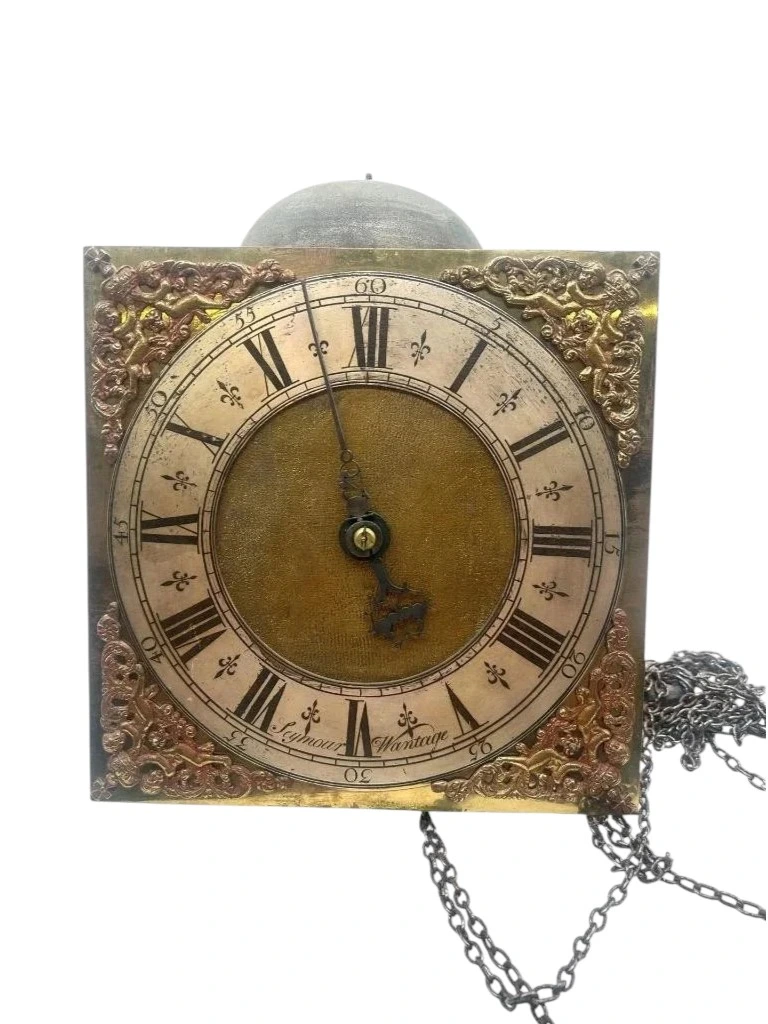
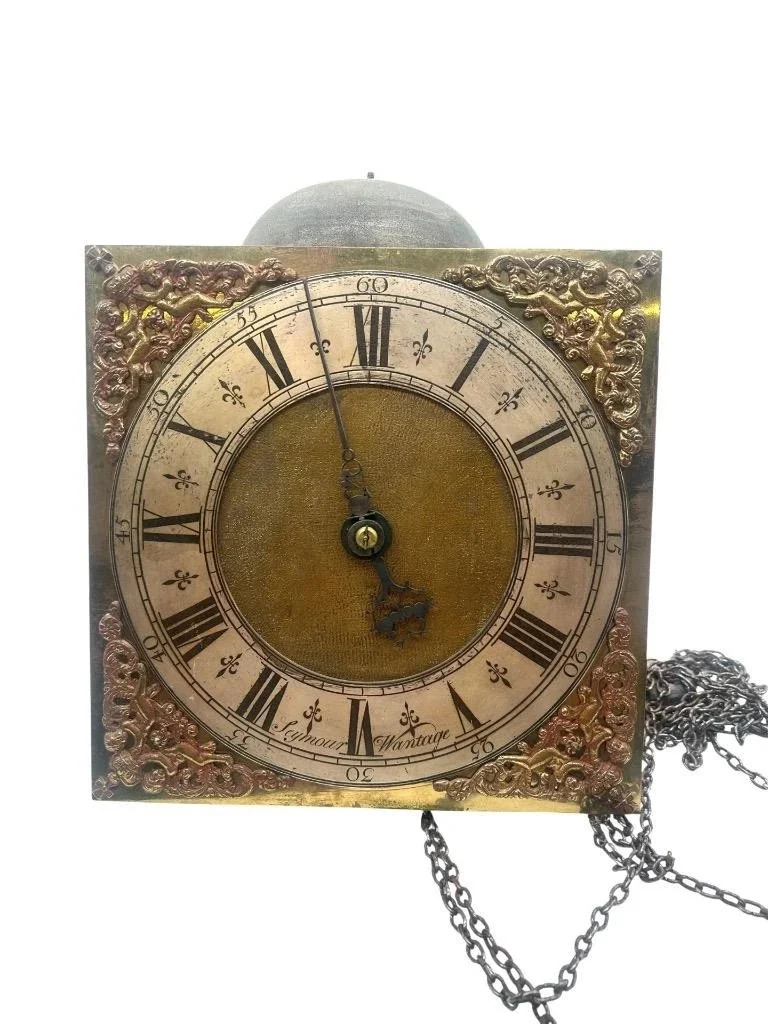
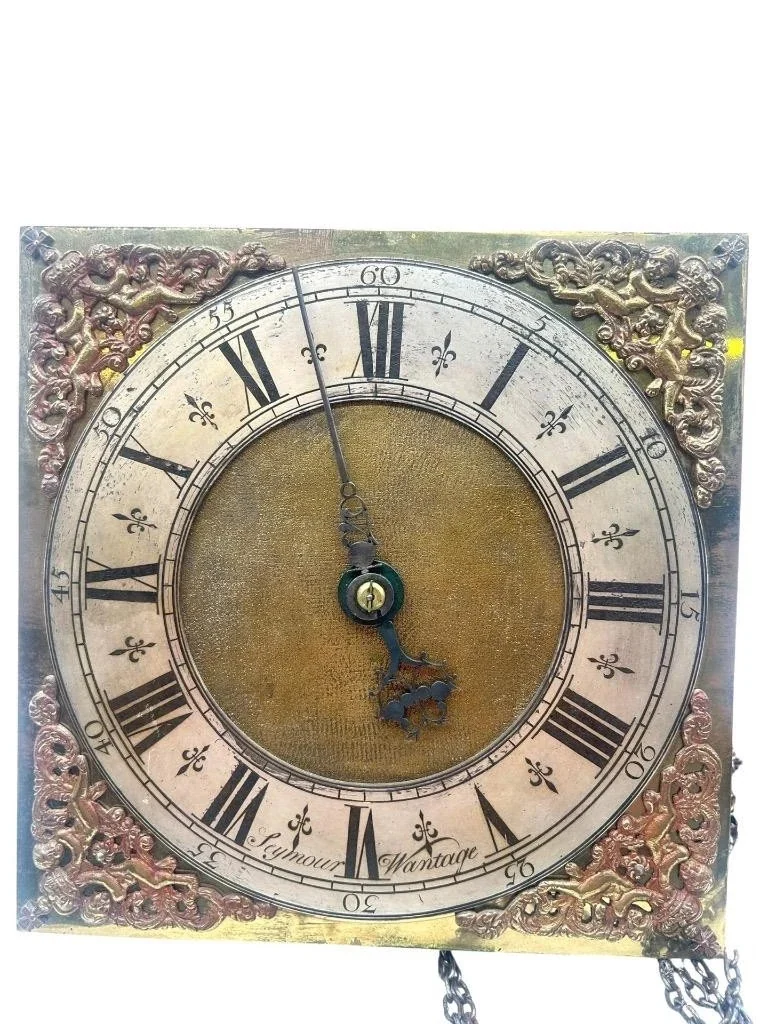





Cast brass corner spandrels depicting twin cherubs supporting a crown flank a ten-inch square brass dial plate with a finely matted centre. The engraved silvered chapter ring displays bold Roman numerals punctuated by fleur-de-lis half-hour markers, bordered by an outer track of Arabic five-minute divisions. The lower edge between the numerals is neatly signed ‘Seymour Wantage’.
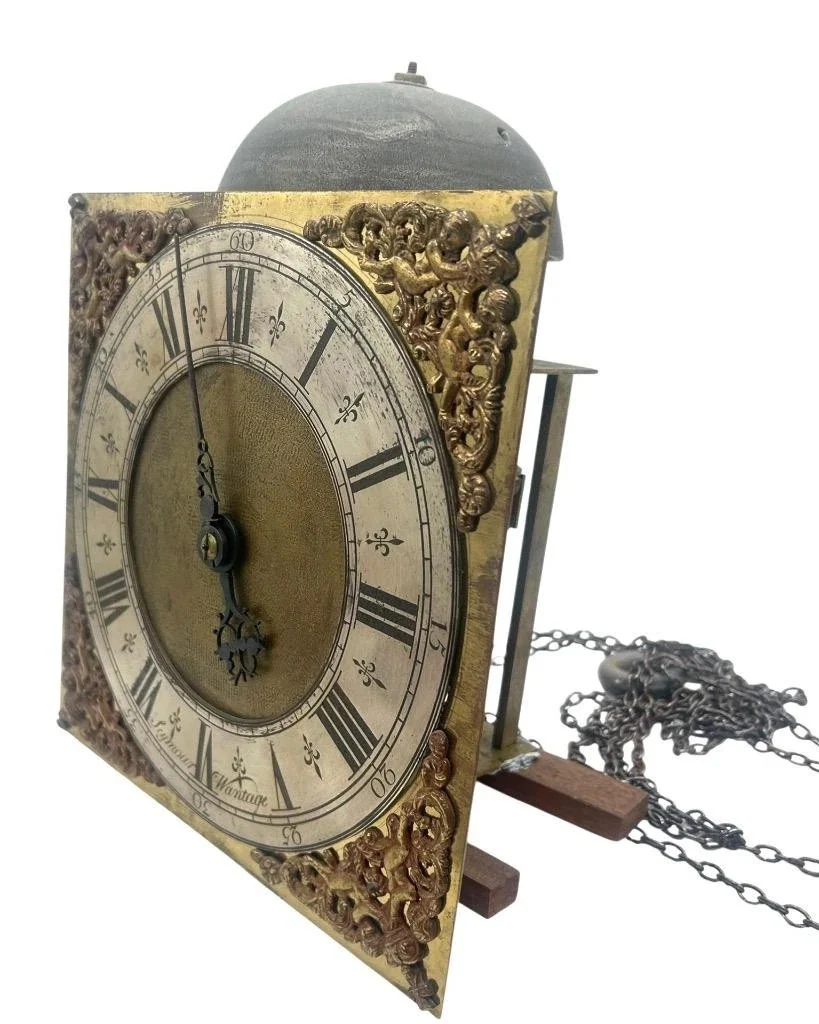
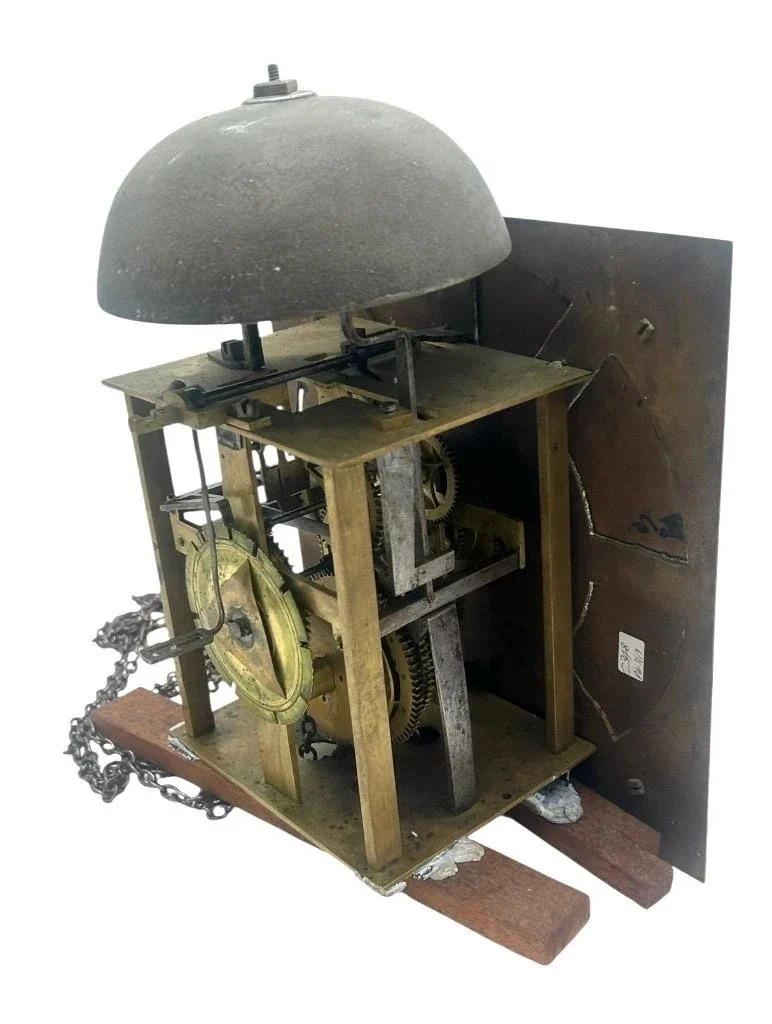
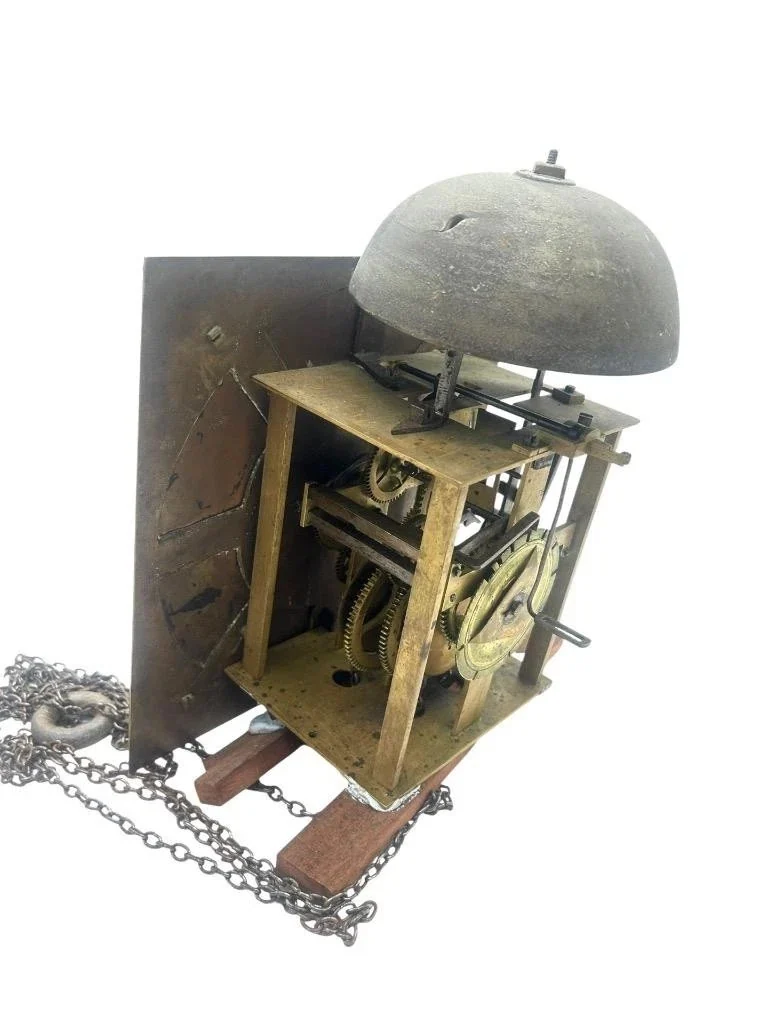
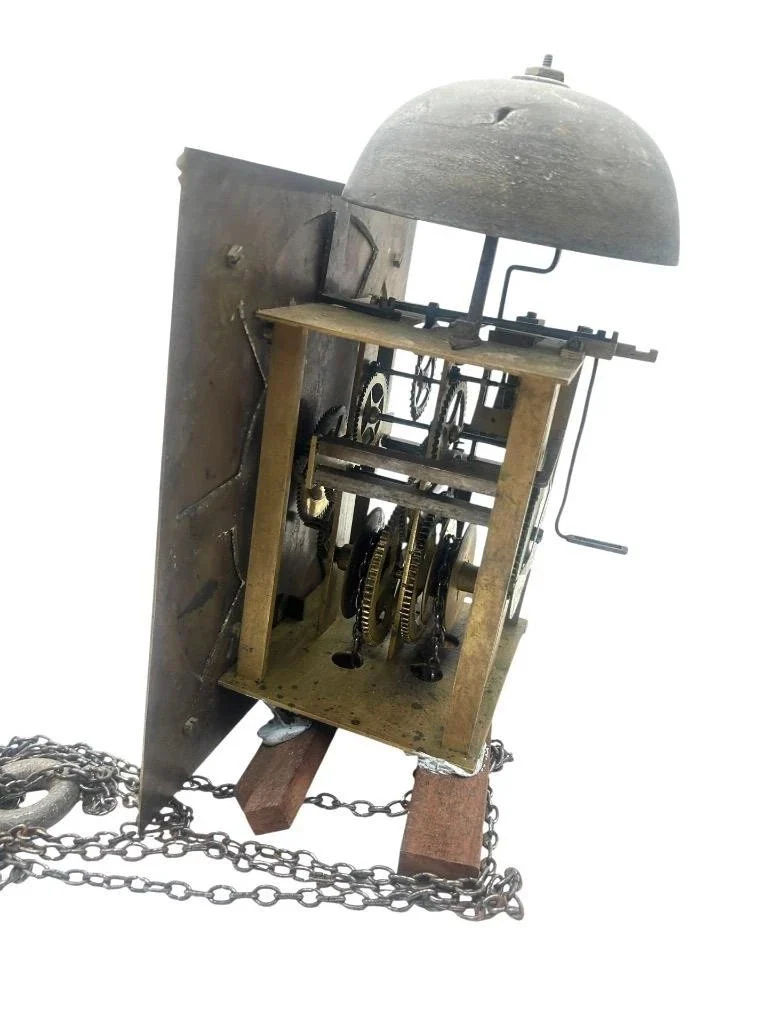
Behind the dial sits a 30-hour posted-frame mechanism, traditionally termed a birdcage movement. Heavy brass top and bottom plates are united by upright corner posts that house the going and striking wheel trains. The movement features an anchor escapement for the timekeeping train, alongside an hourly striking train controlled by a rear-facing external locking plate countwheel that sounds upon an overhead dome bell.
Originating from Wantage, then in Berkshire, probably during the first half of the eighteenth century, movements of this posted construction represent a direct horological evolution from seventeenth-century lantern clock designs adapted for provincial tall cases. Members of the Seymour family were established makers producing durable regional clocks throughout the period.
The assembly measures 25 cm high by 25 cm wide, with a movement depth of approximately 14 cm. The movement is accompanied by its iron chains and is shown supported on a temporary wooden workbench stand. Patination and natural oxidisation are evident across the dial sheet, steelwork, and wheelwork, preserving an honest antique surface.
Condition Shows aged patina, oxidisation, and general surface tarnishing across the brass dial plate, spandrels, and movement components. Untested mechanically; includes chains and rests on a temporary wooden block stand.
Dimensions 25 cm high x 25 cm wide x 14 cm deep
| Dimensions | 14 × 25 × 25 cm |
|---|---|
| Period | 18th Century |
| material | Brass, iron, Steel |
| Origin | England |
| Maker | Seymour, Wantage |
| Price range | Under £2000 |
| Collection Era | Antique & Vintage |
| Style | Georgian |
| Colour | Gold, Grey, Silver |
Only logged in customers who have purchased this product may leave a review.
Reviews
There are no reviews yet.