


Enquire Today!
If you have any questions, requests or general enquiries, please do not hesitate to email us and we will get back to you as soon as possible regarding your enquiry.

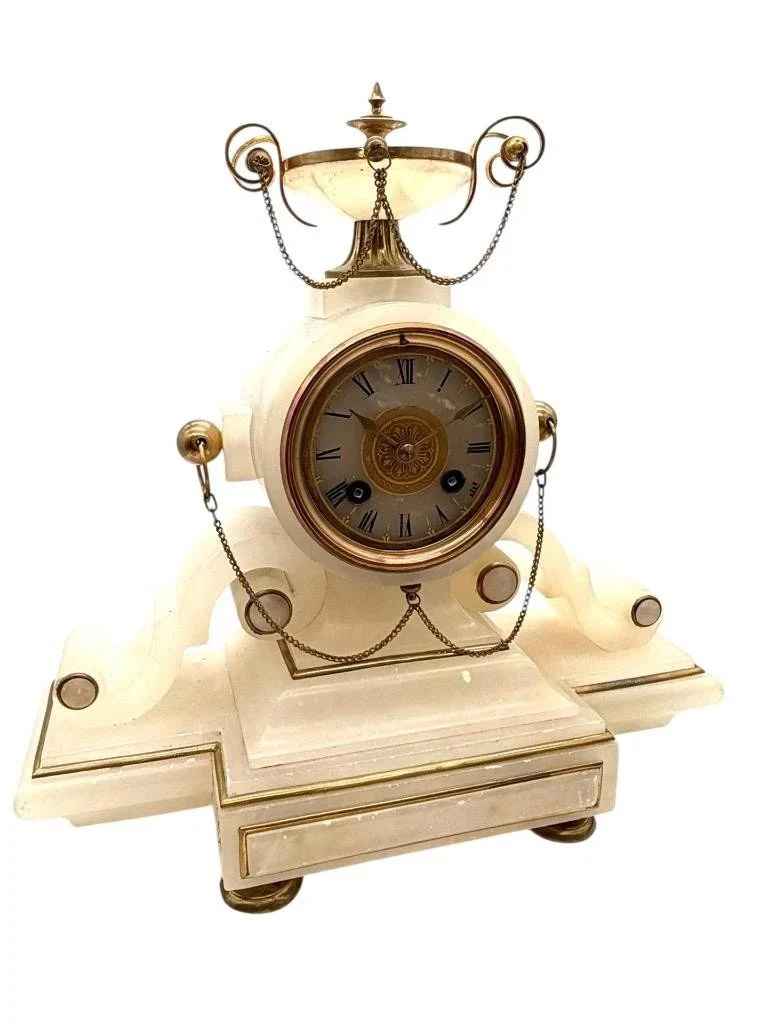
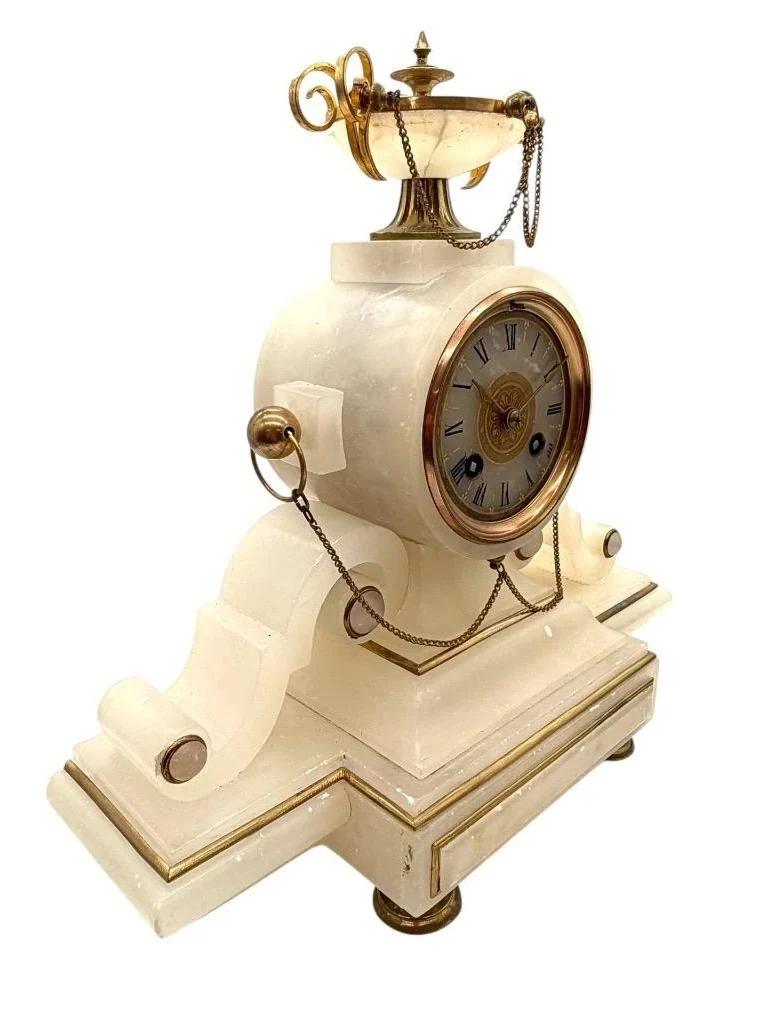
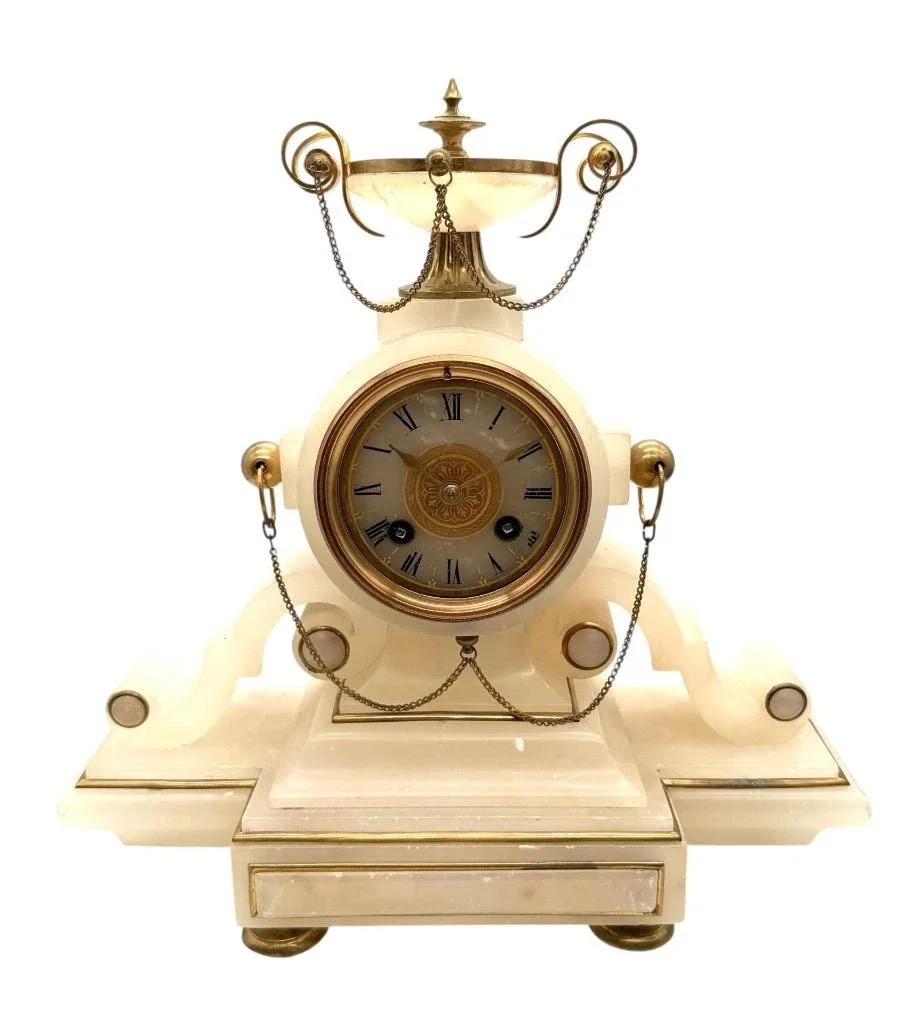
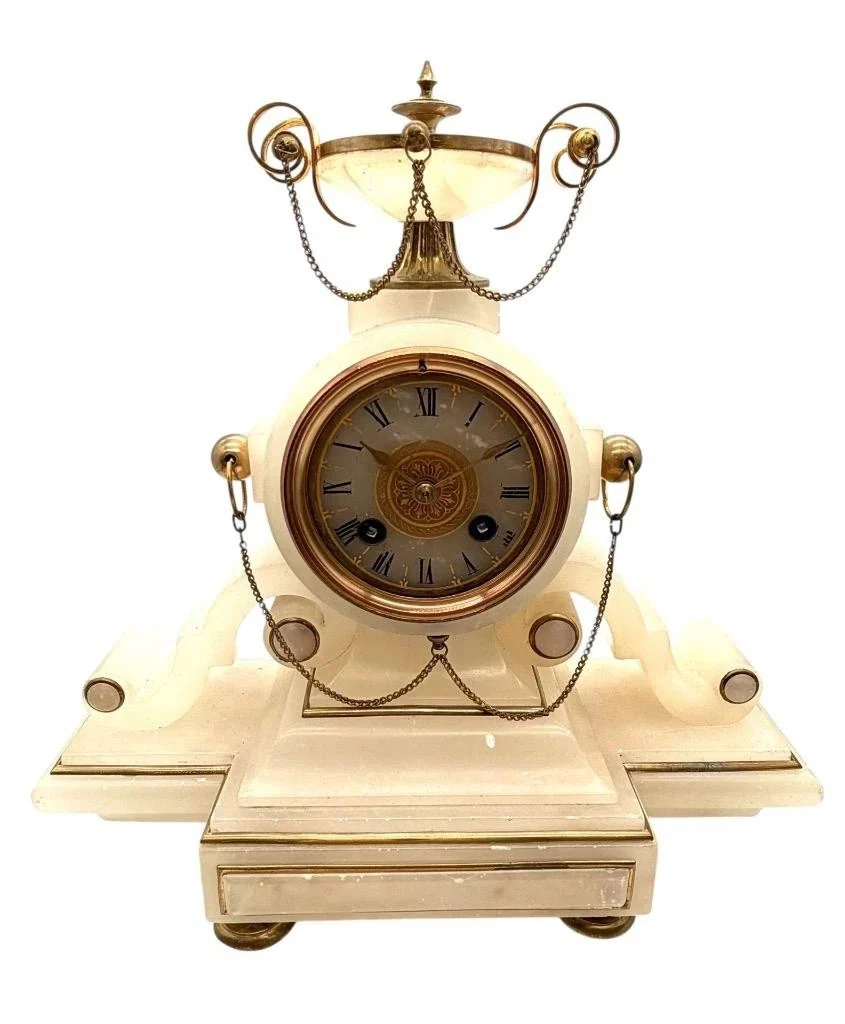


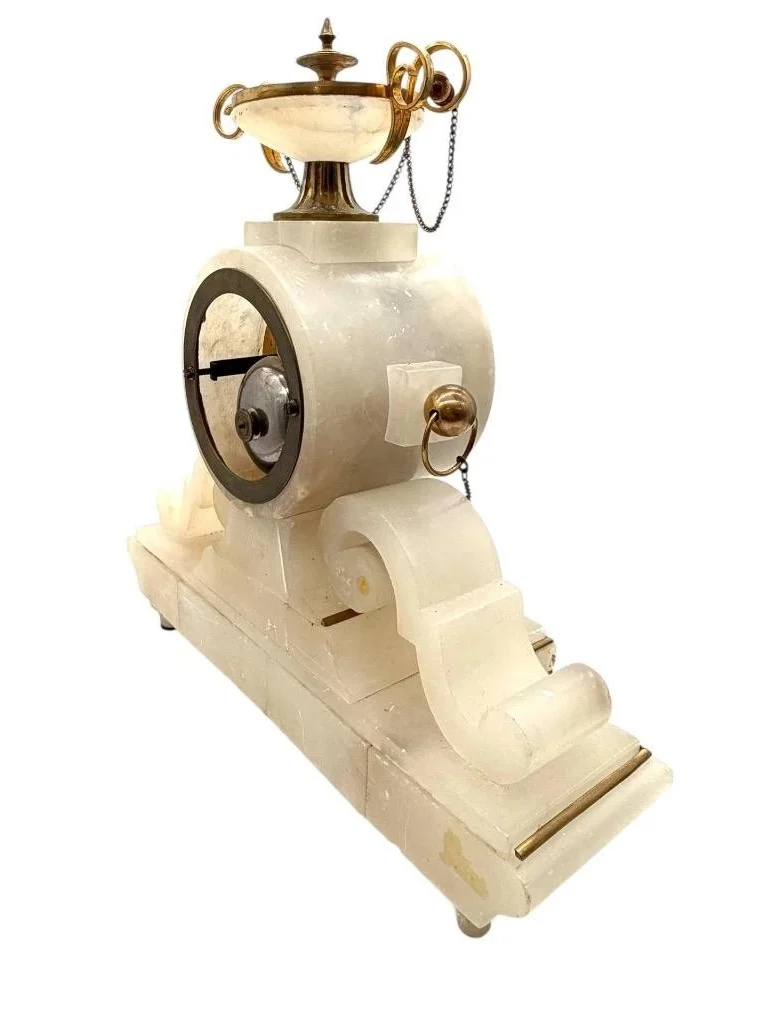


A sculpted classical tazza finial with scrolled twin handles surmounts this architectural mantel clock, carved from translucent pale white alabaster and accented with gilded brass mounts. The cylindrical central drum housing rests upon swept scroll supports flanked by decorative bosses, standing over a stepped breakfront plinth. Ormolu link chains drape elegantly across the facade, complementing delicate gilt fillet mouldings and turned ormolu bun feet.
The white dial presents crisp black Roman numerals set within an alabaster chapter ring, surrounding an engine-turned rosette centre boss with a beaded ormolu bezel. Delicate gilt spade hands track the hours and minutes, balanced by dual winding arbors positioned at four and eight o’clock. Both the front and rear apertures feature hinged circular brass bezels allowing easy access to the hands and interior mechanism.
Housed within the alabaster cylinder is a traditional French eight-day spring-driven brass movement, which sounds the passing hours and half hours upon a resonant bell. Dating to around 1870, the clock comes complete with its regulation pendulum and winding key, and is reported to be in running order. The rear circular opening exposes the striking bell and pendulum assembly set securely inside the stone case.
In overall dimensions, the case stands 33 cm high, 31 cm wide, and 12 cm deep. The combination of cool, veined alabaster, decorative ormolu swags, and balanced classical proportions makes it an eye-catching decorative clock well suited to a fireplace mantelpiece, credenza, or library console.
Condition The alabaster case shows minor surface abrasions, scattered tiny edge nibbles, and historic discoloration commensurate with age. Gilt-metal mounts exhibit light surface tarnish. The movement is reported to be in working order with its pendulum and key.
Dimensions 33 cm x 31 cm x 12 cm
| Dimensions | 12 × 31 × 33 cm |
|---|---|
| Period | 19th Century |
| Style | Victorian |
| Colour | White |
| material | alabaster, Ormolu |
| Origin | France |
| Price range | £2000+ |
| Collection Era | Antique & Vintage |
Only logged in customers who have purchased this product may leave a review.
Reviews
There are no reviews yet.