


Enquire Today!
If you have any questions, requests or general enquiries, please do not hesitate to email us and we will get back to you as soon as possible regarding your enquiry.
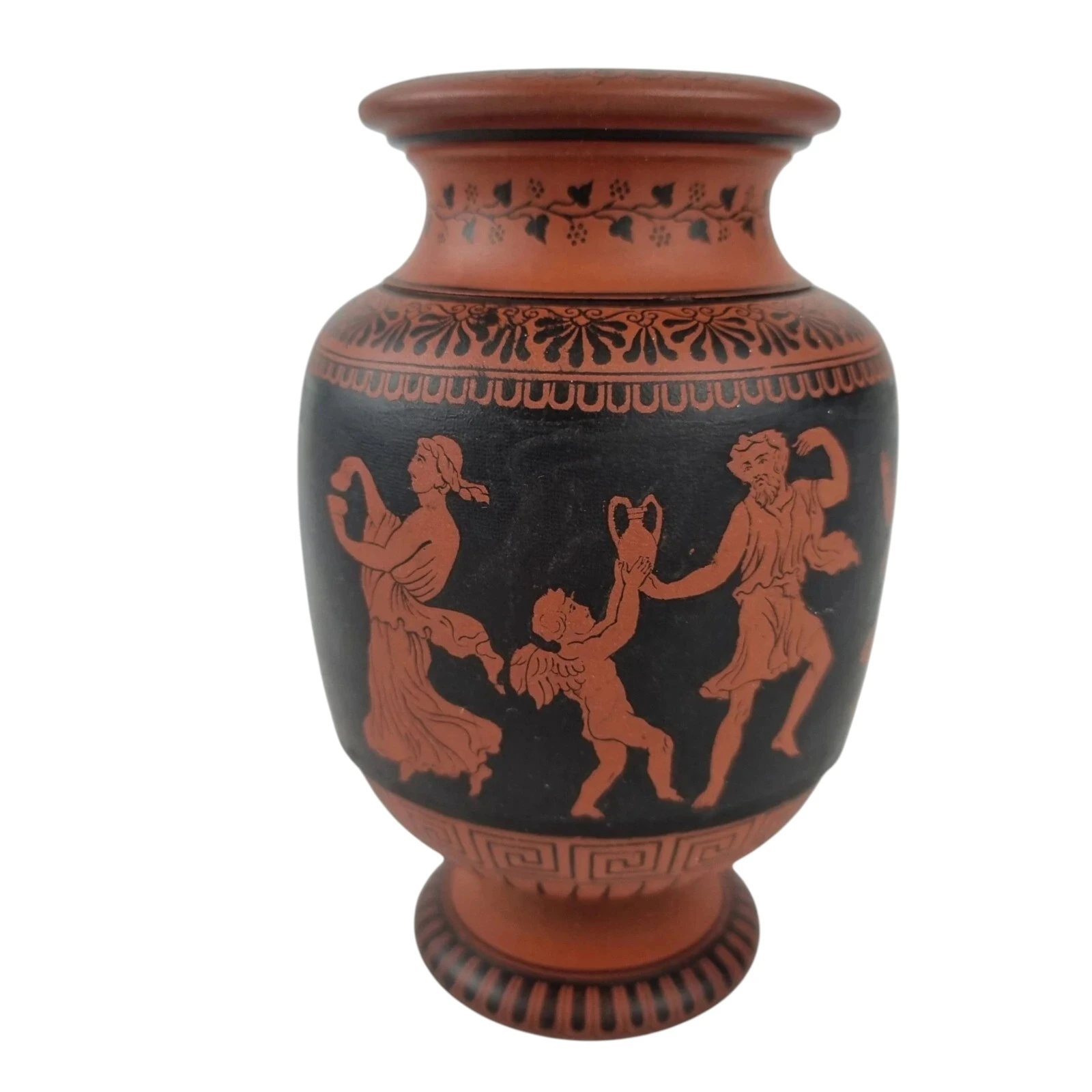
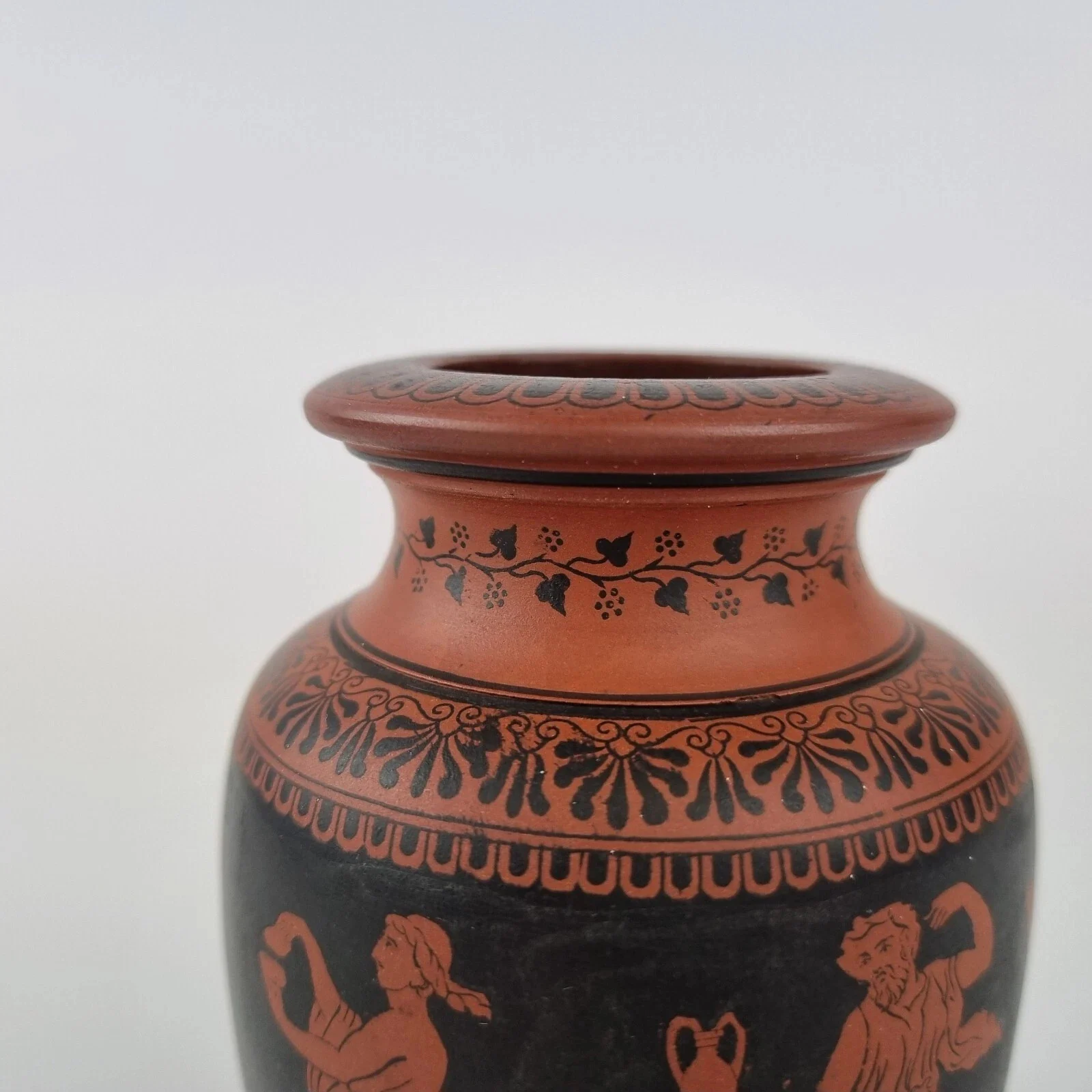
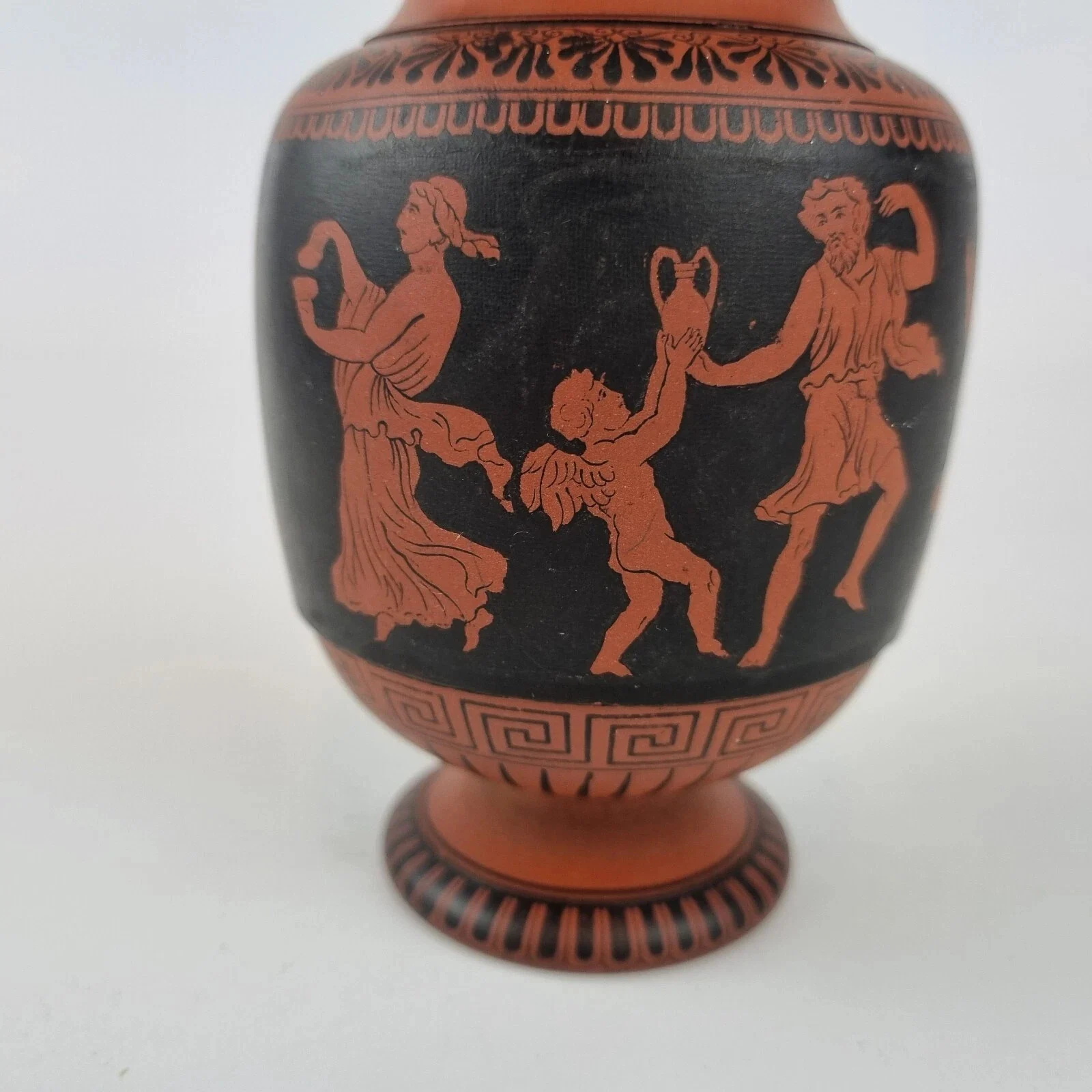
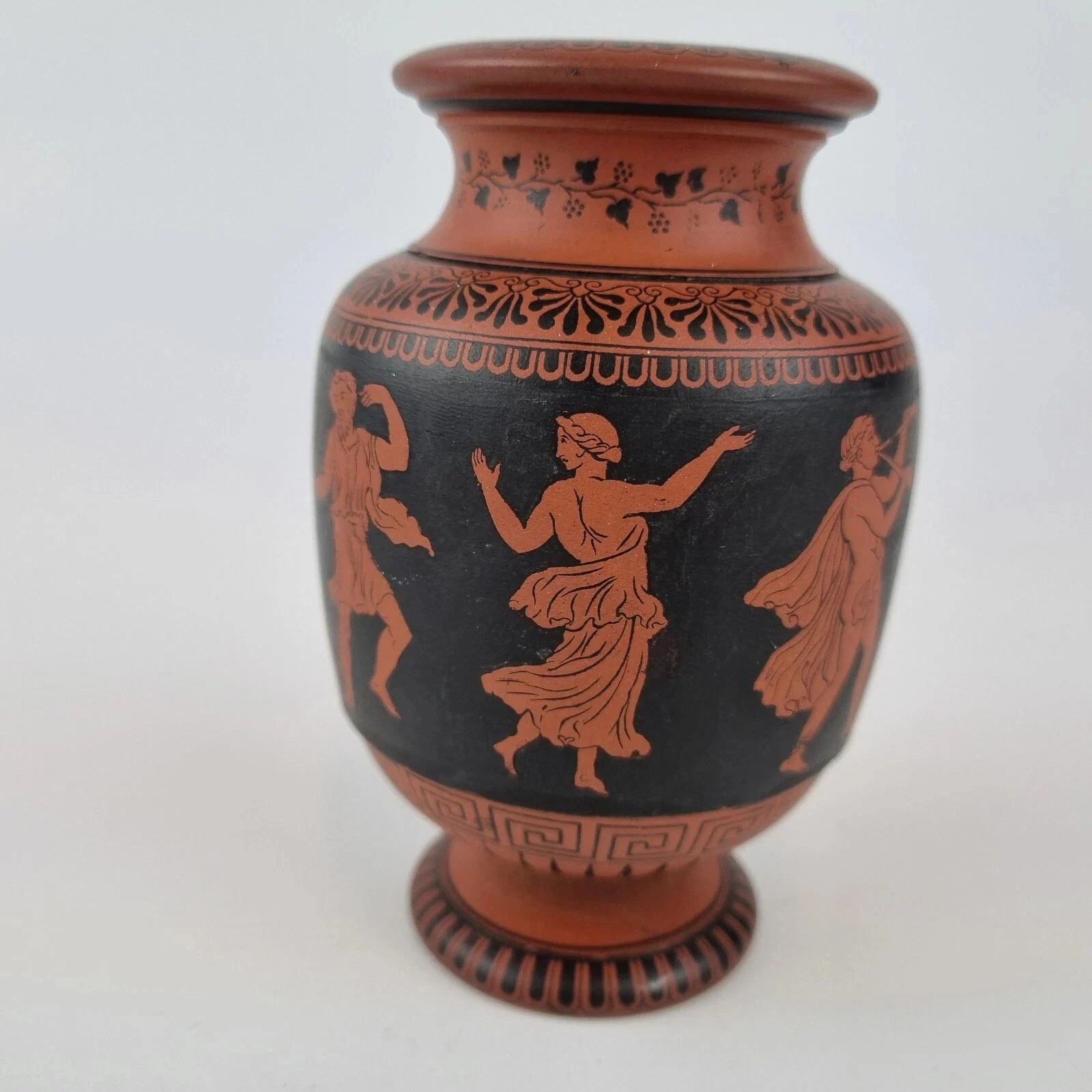
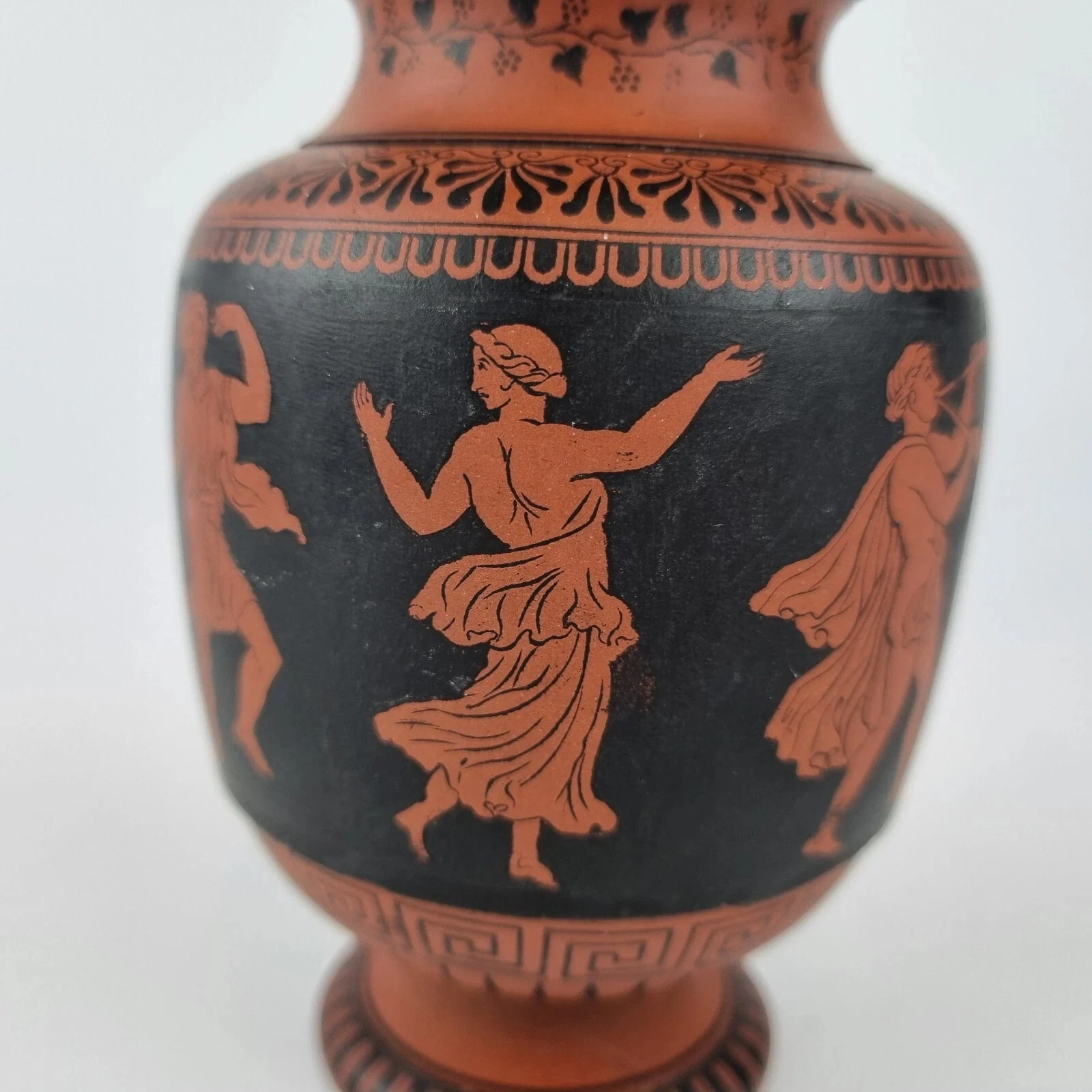

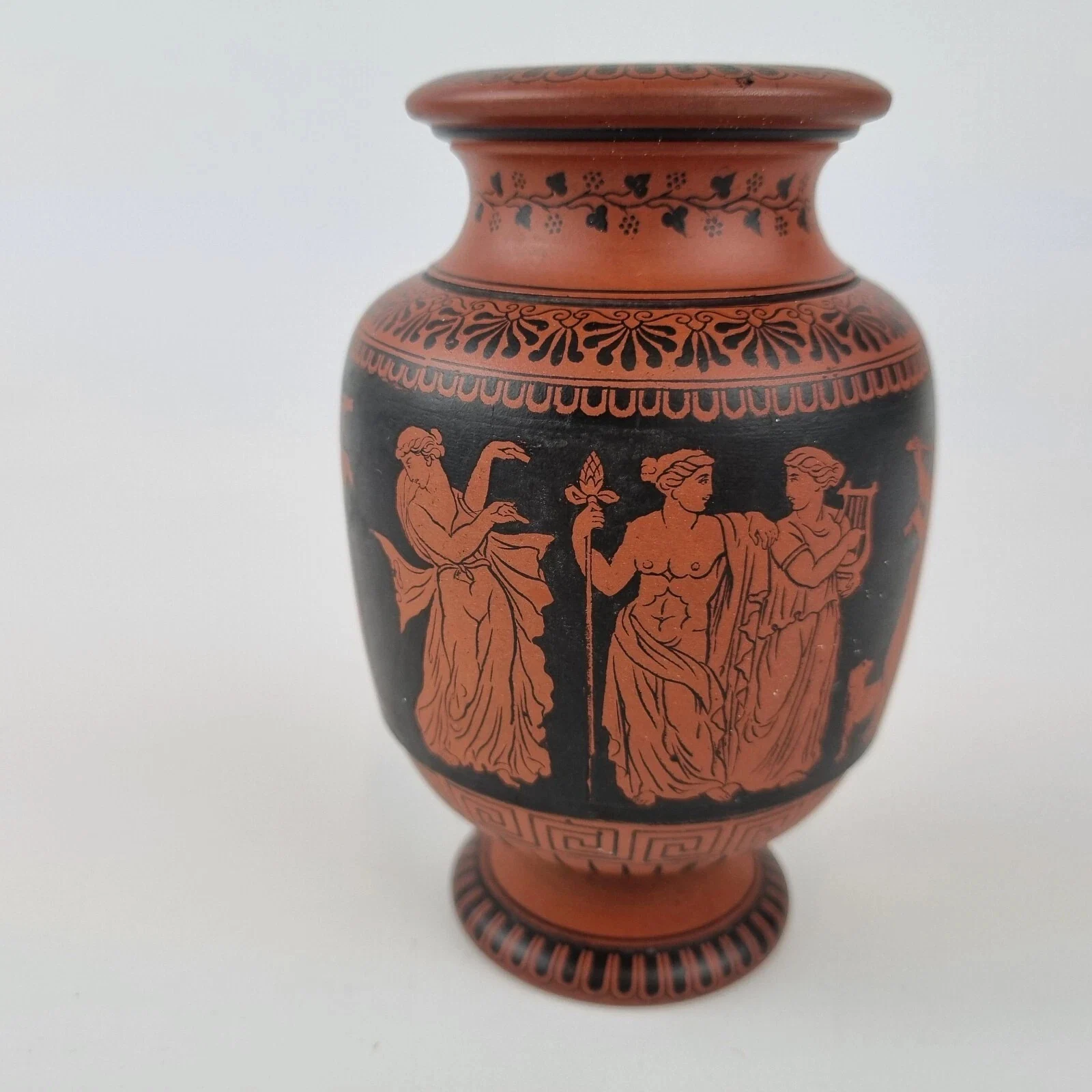
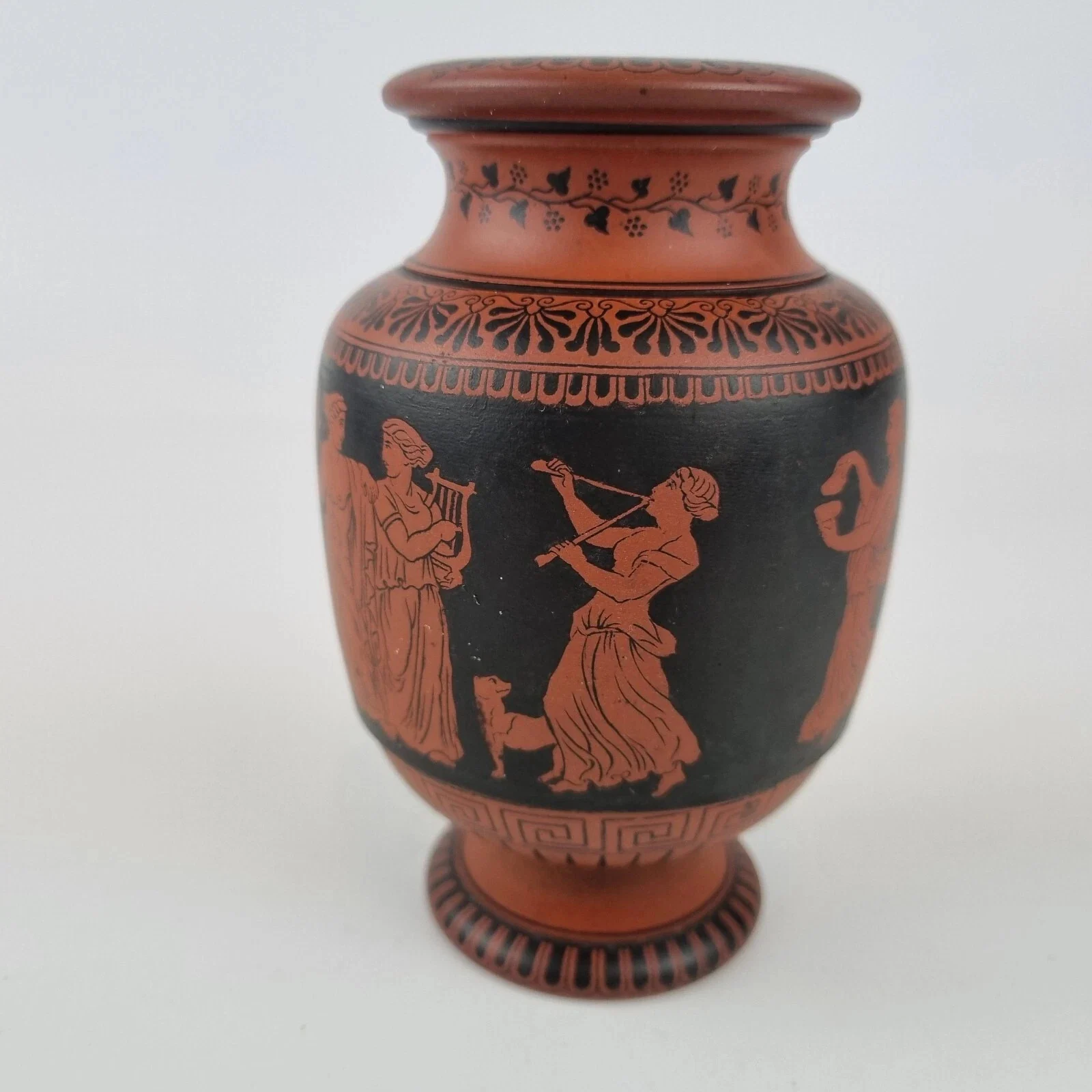
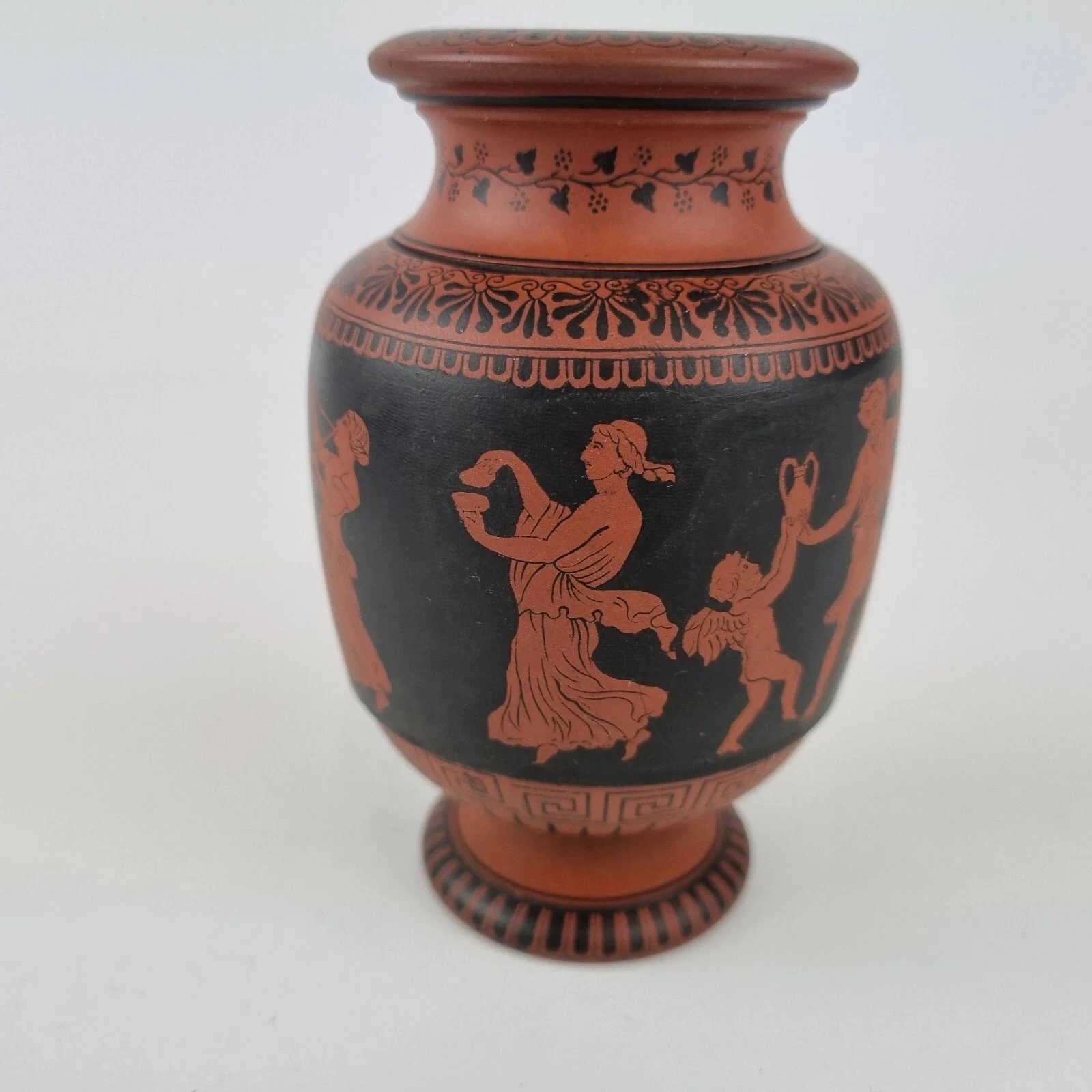
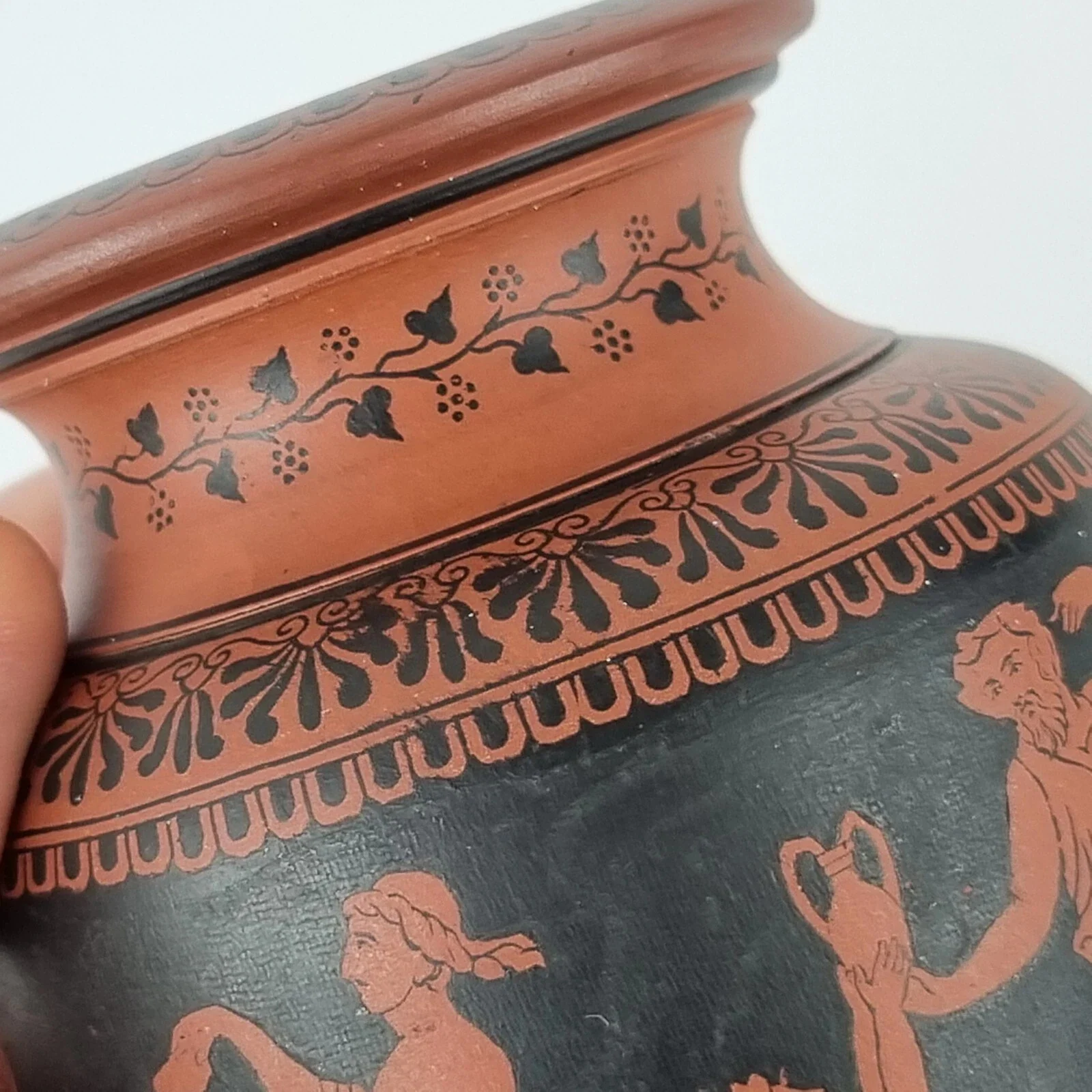
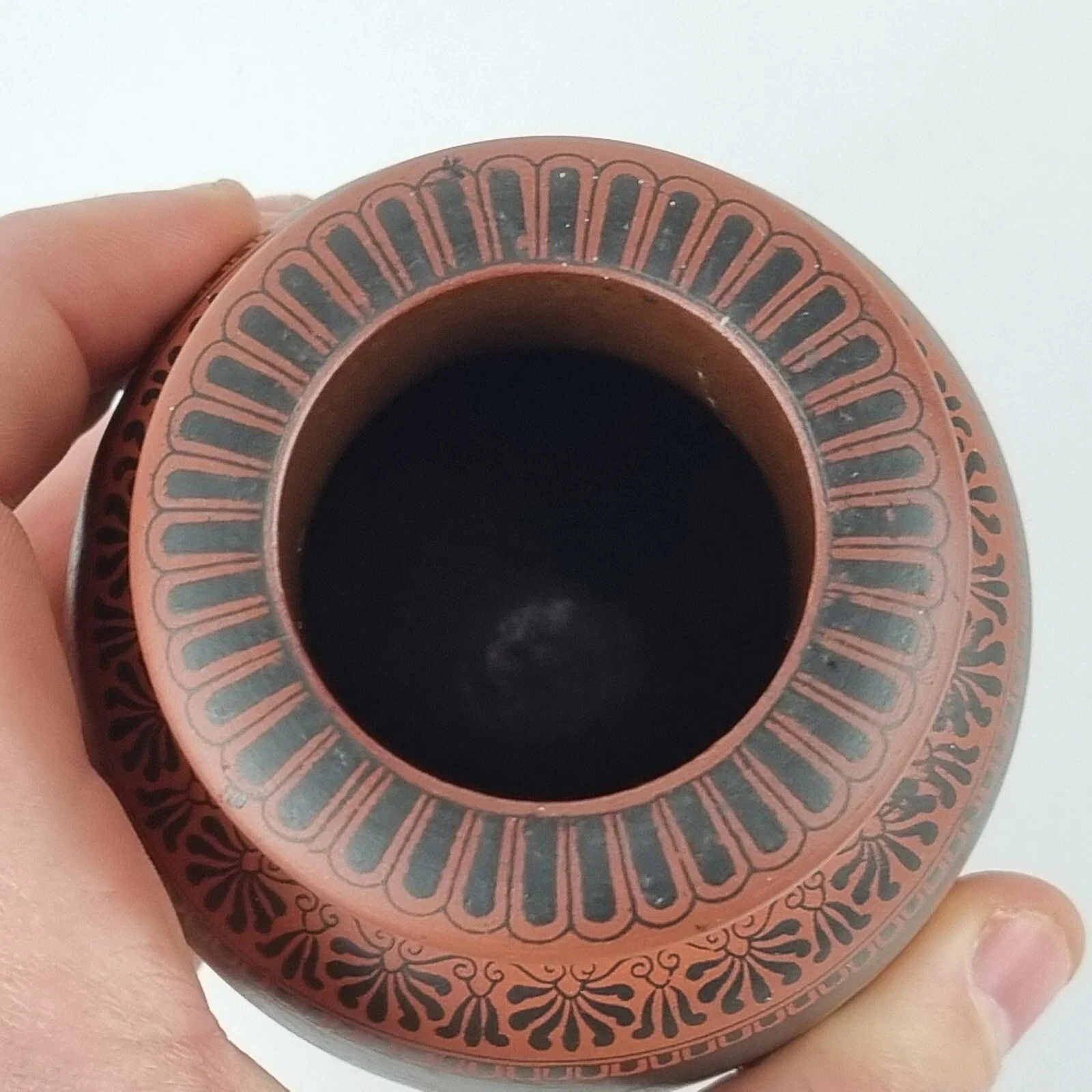
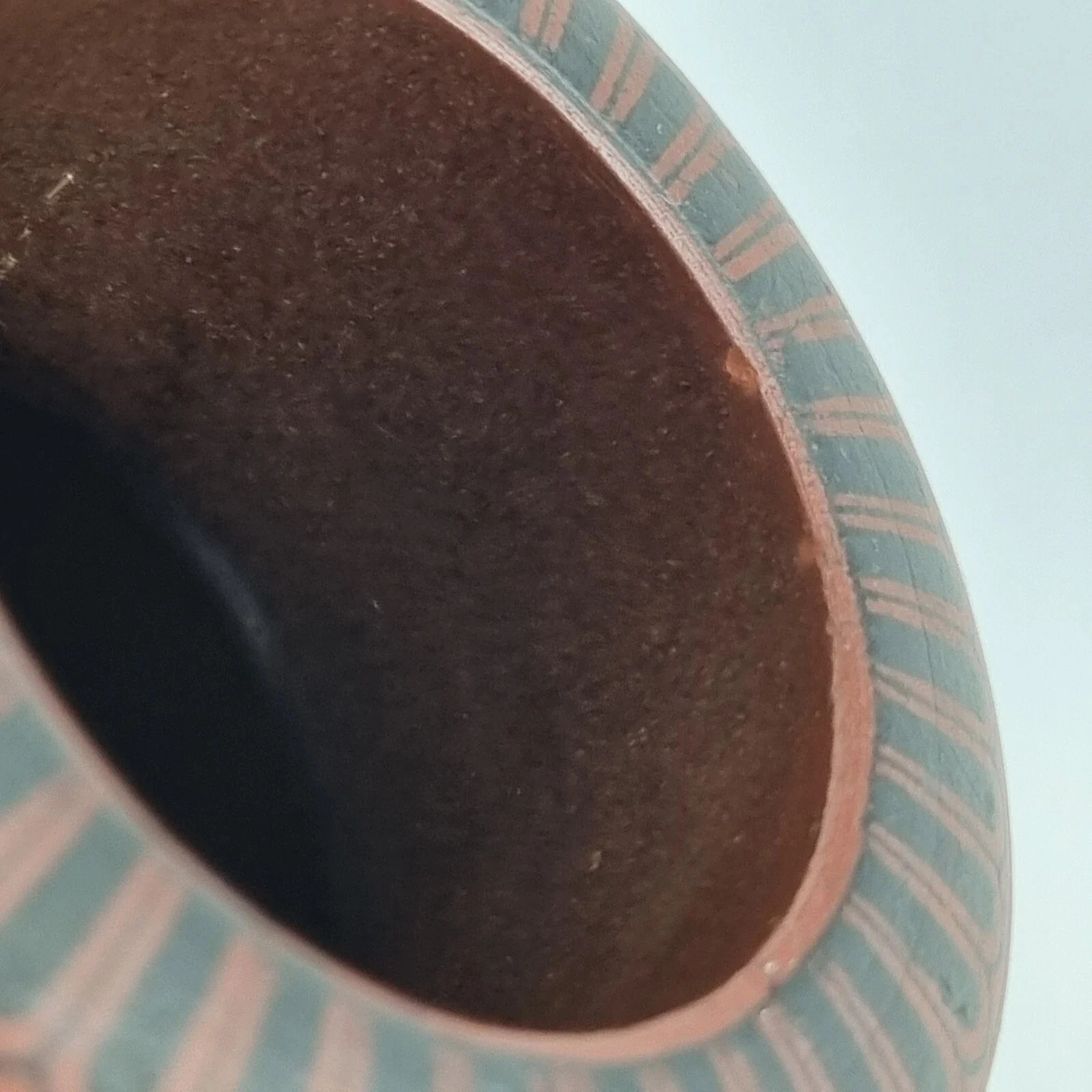
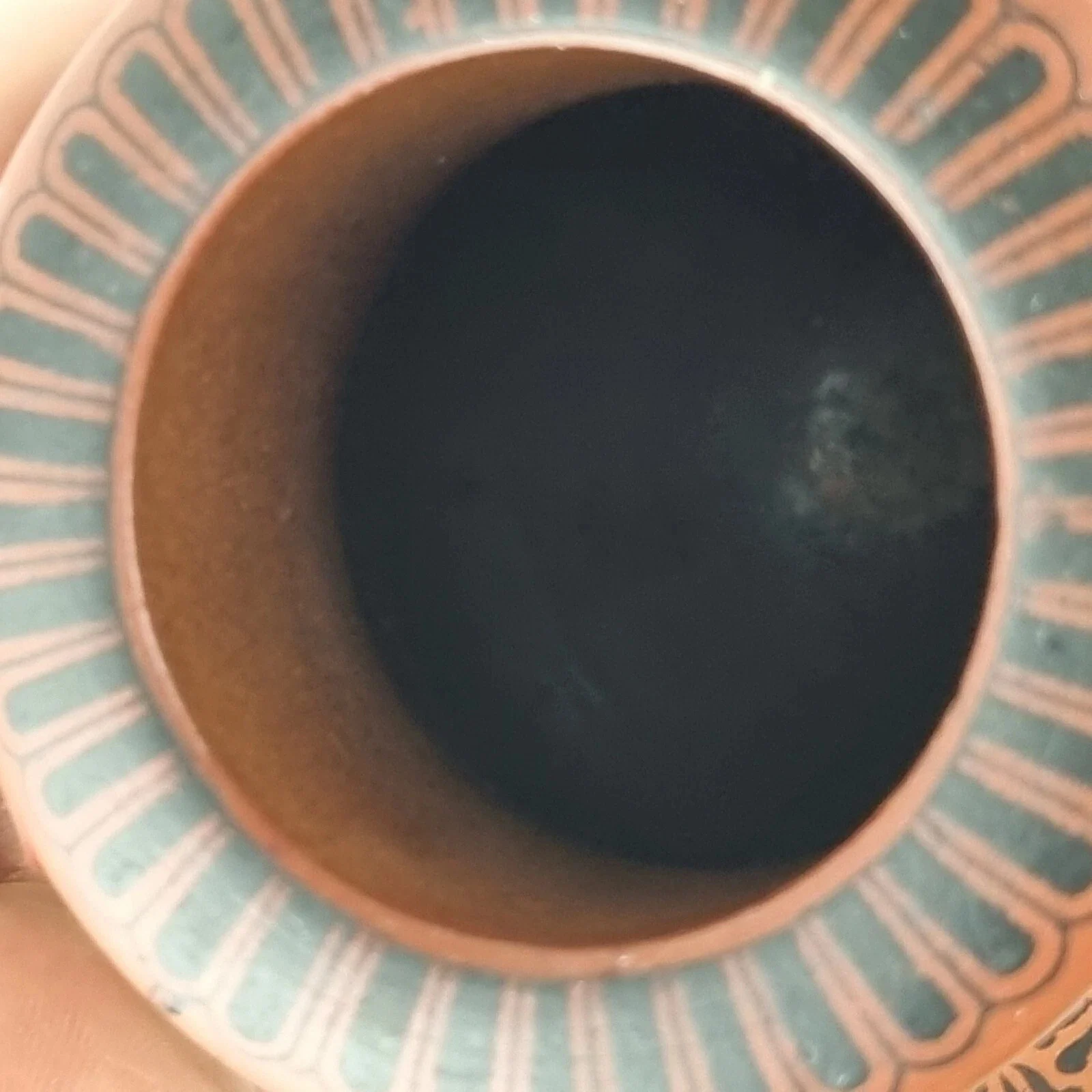
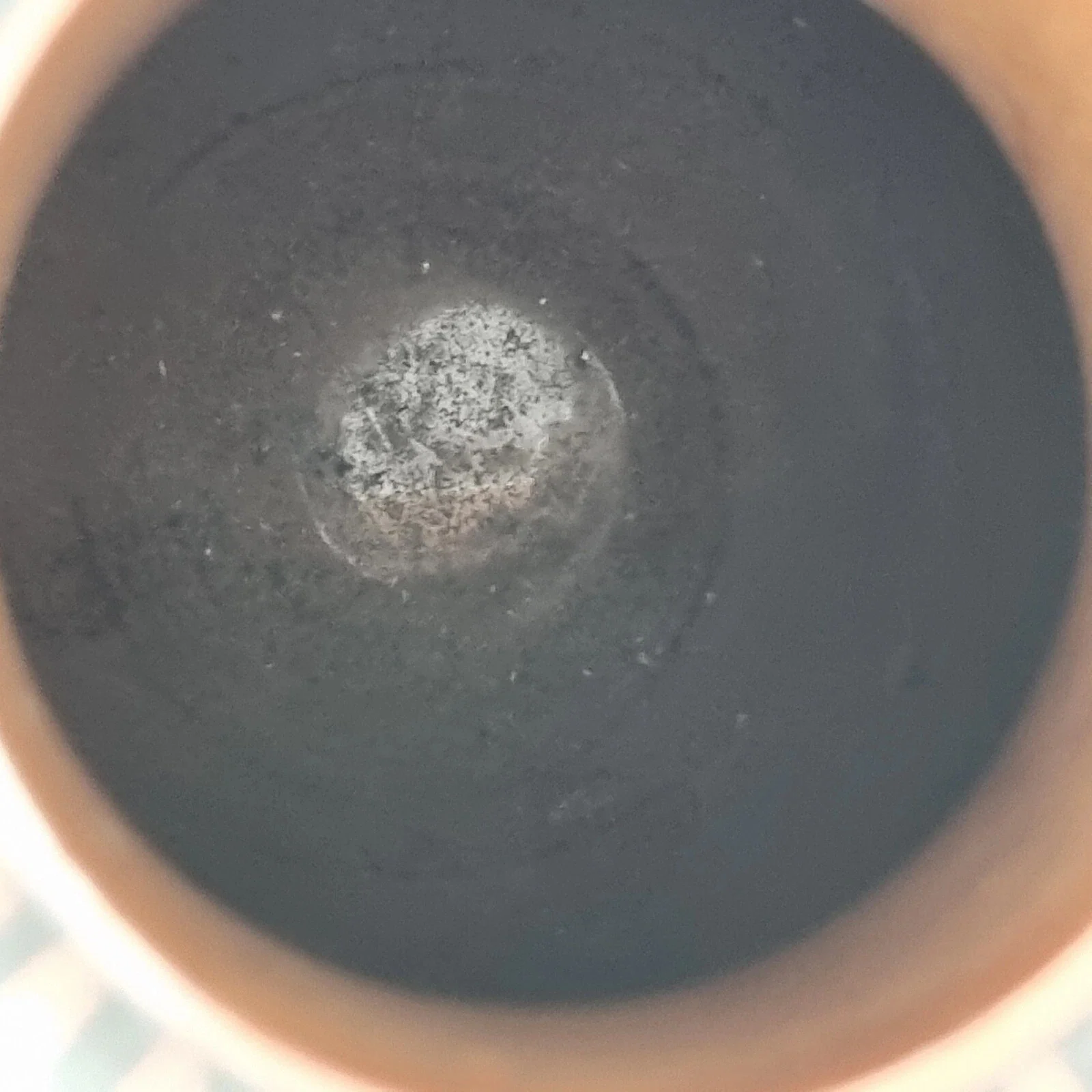

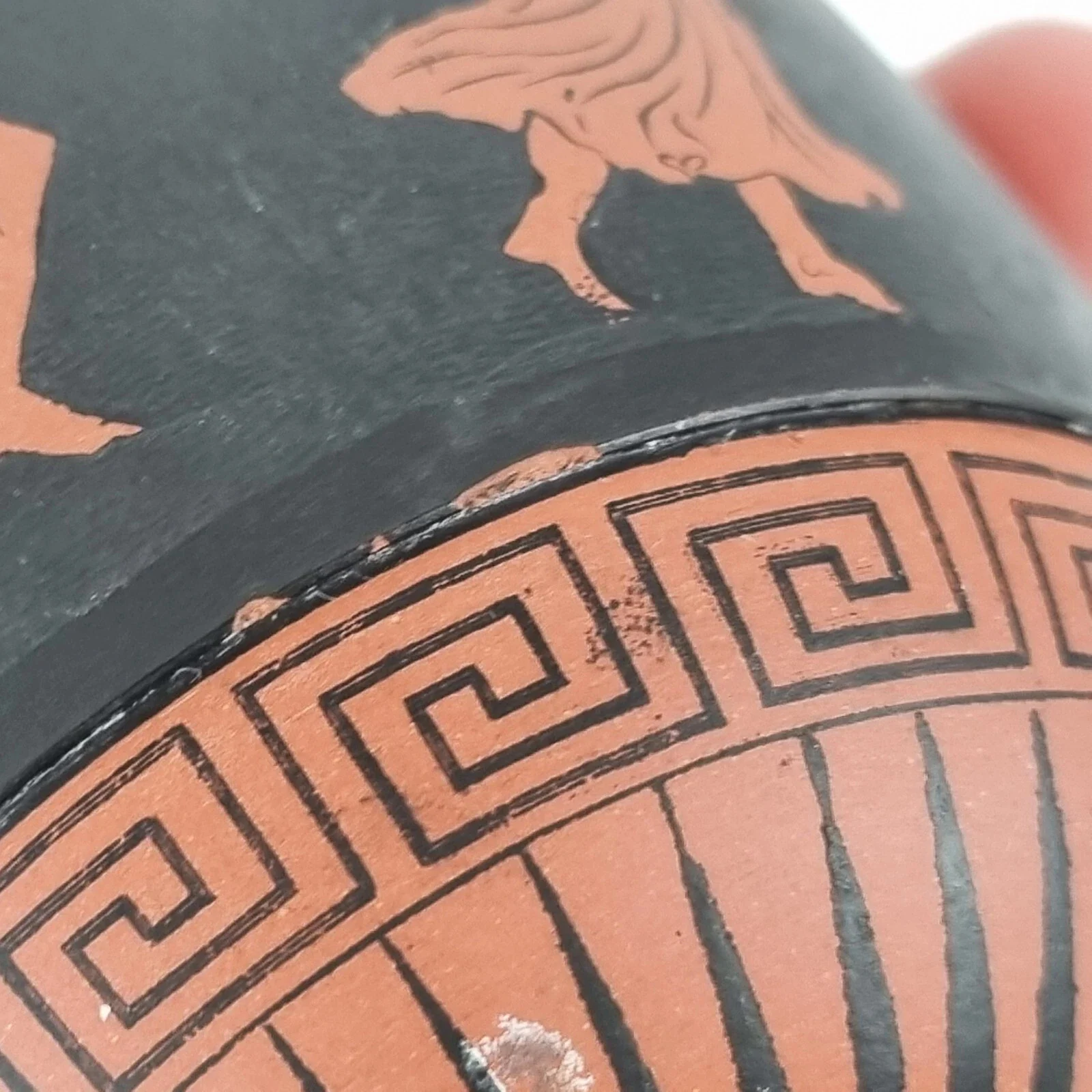
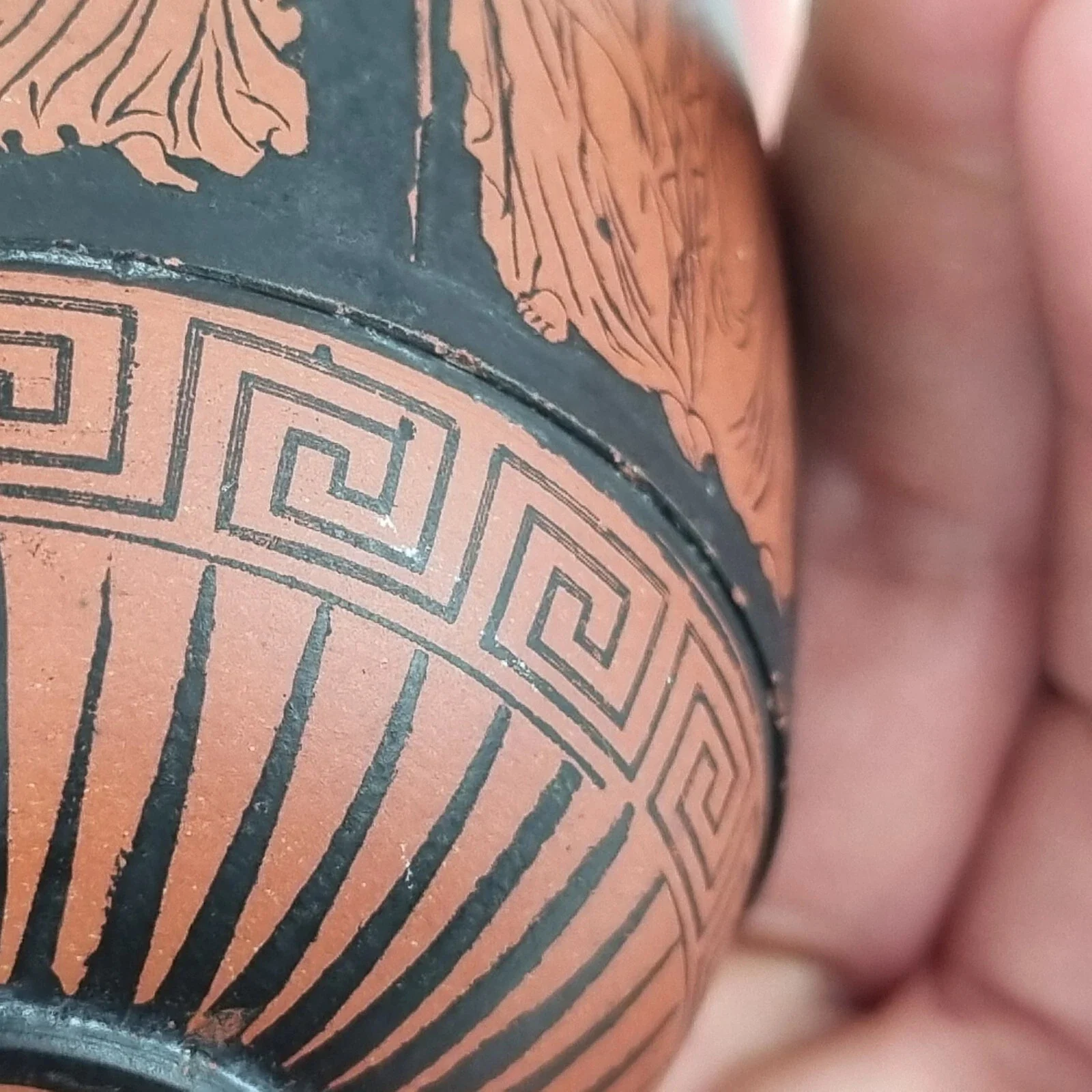
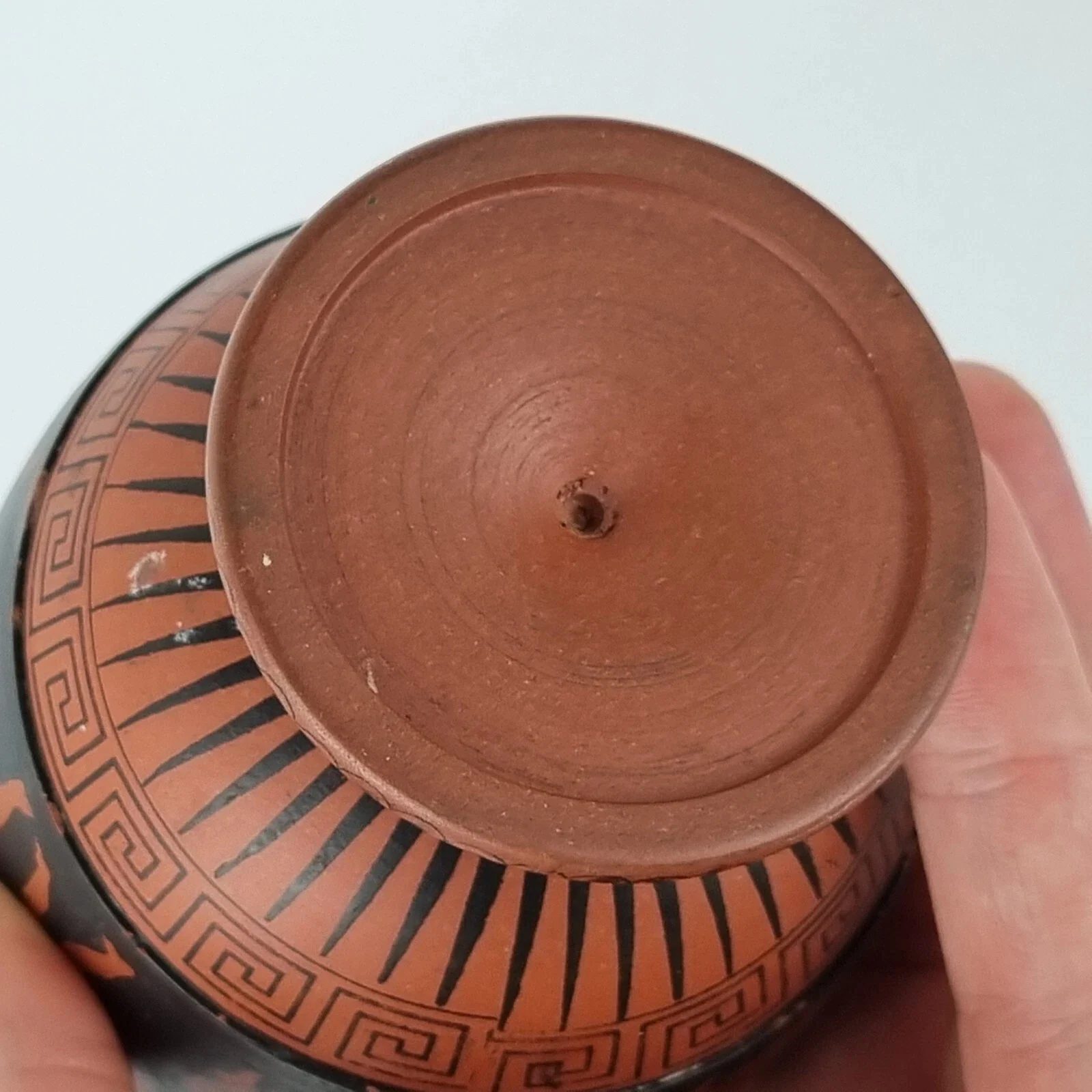


A continuous frieze of classical figures rendered in reserved red against a matt black ground encircles the baluster body of this terracotta earthenware vase. Inspired directly by ancient Greek red-figure vessels, the figurative scene depicts draped dancers, a musician playing the double pipes with a small dog at her feet, a lyre player, and a bearded figure dancing alongside a winged cherub hoisting an amphora. Geometric and botanical bands frame the central narrative. A delicate trailing ivy vine accents the concave neck, while stylized palmettes and egg-and-dart borders define the shoulder. Around the tapered lower section, a traditional Greek key meander runs above radiating vertical rays leading down to a stepped, gadrooned pedestal foot. Produced in South Wales by Lewis Weston Dillwyn’s Cambrian Pottery during the late 1840s, these distinctive wares answered the high Victorian demand for authentic archaeological revivals. The body is turned from smooth, unglazed terracotta clay with a warm brick-red tone. The black background slip provides a sharp graphic contrast, closely mimicking the volcanic red-and-black contrast found on excavated antiquities from Etruria and Magna Graecia. The turned underside reveals concentric turning rings around a neat central indentation, while the broad flat lip features stamped radiating tongue ornament. Standing 12 cm high, the vase remains structurally sound. Light historic wear is visible across the surfaces, including faint scratches and small nibbles along the inner lip and the lower perimeter of the black frieze. It presents a notable survival of nineteenth-century classical ceramic design.
Condition Shows minor nibbles to the inner rim and small flakes along the bottom edge of the black decorated band, alongside light surface scratches and age-related wear.
Dimensions Height: 12 cm
| Dimensions | 12 cm |
|---|---|
| Period | 19th Century |
| Style | Victorian |
| Colour | Black |
| material | Earthenware |
| Origin | United Kingdom |
| Price range | Under £1000, Under £2000 |
| Collection Era | Antique & Vintage |
| Maker | Dillwyn & Co. |
Only logged in customers who have purchased this product may leave a review.
Reviews
There are no reviews yet.