


Enquire Today!
If you have any questions, requests or general enquiries, please do not hesitate to email us and we will get back to you as soon as possible regarding your enquiry.
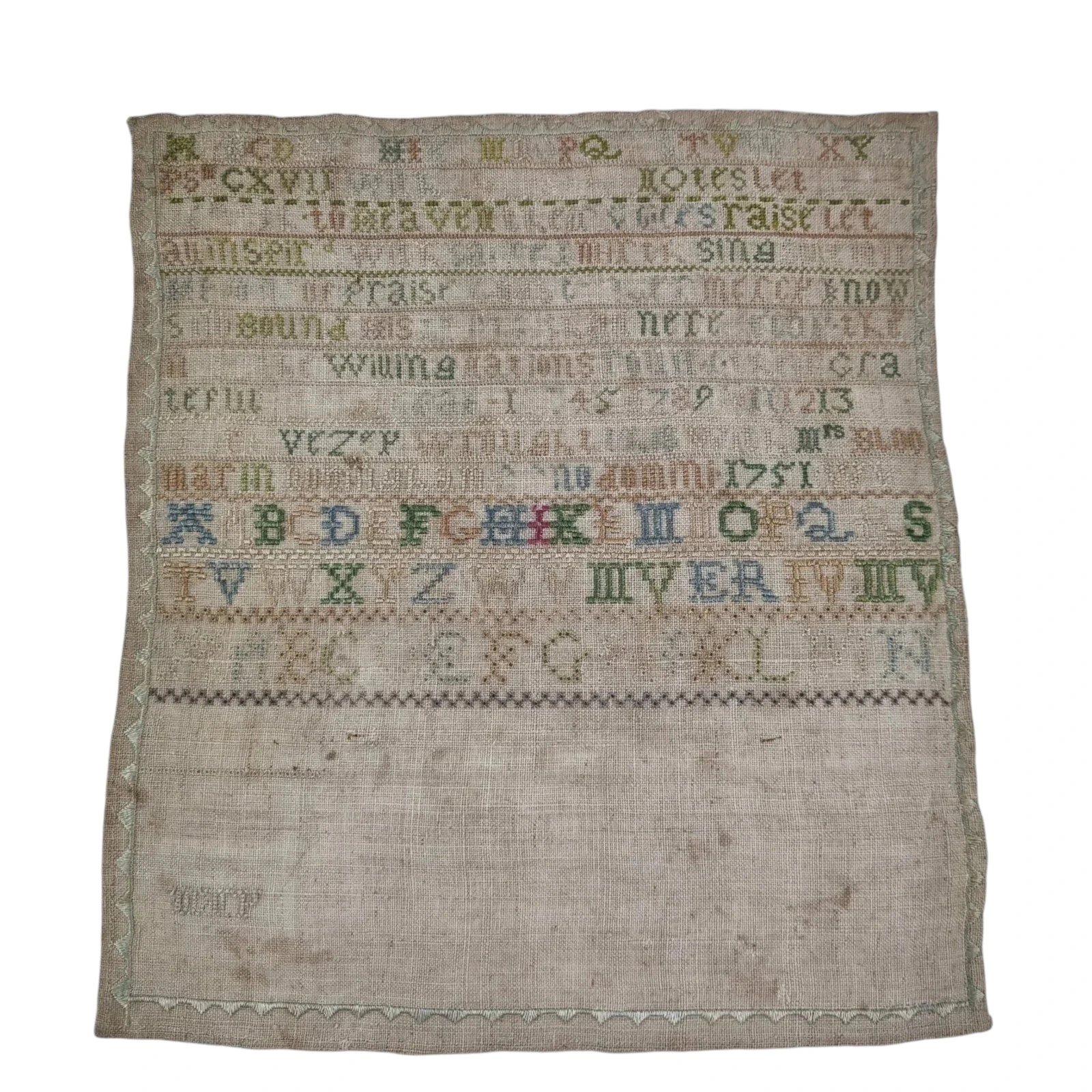
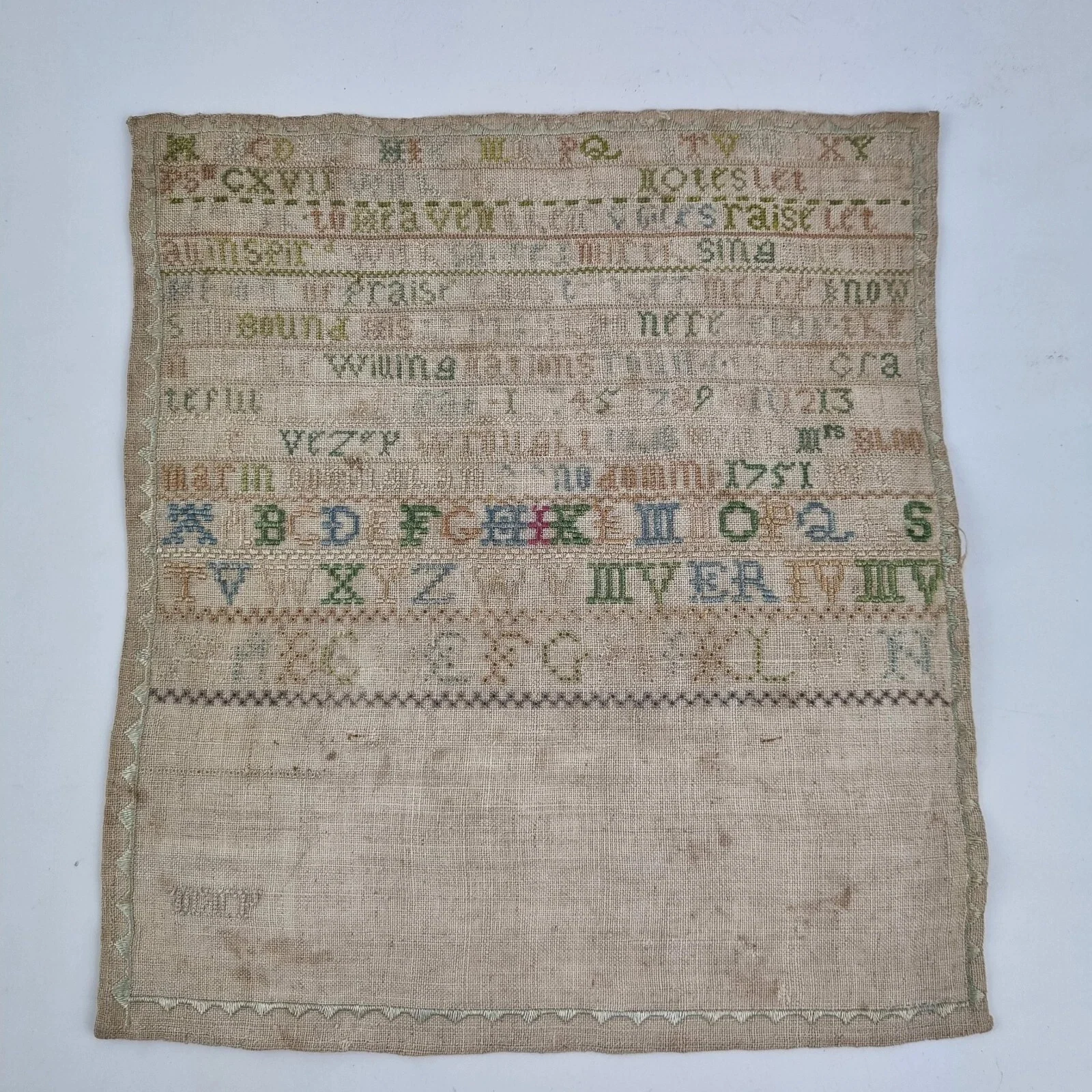
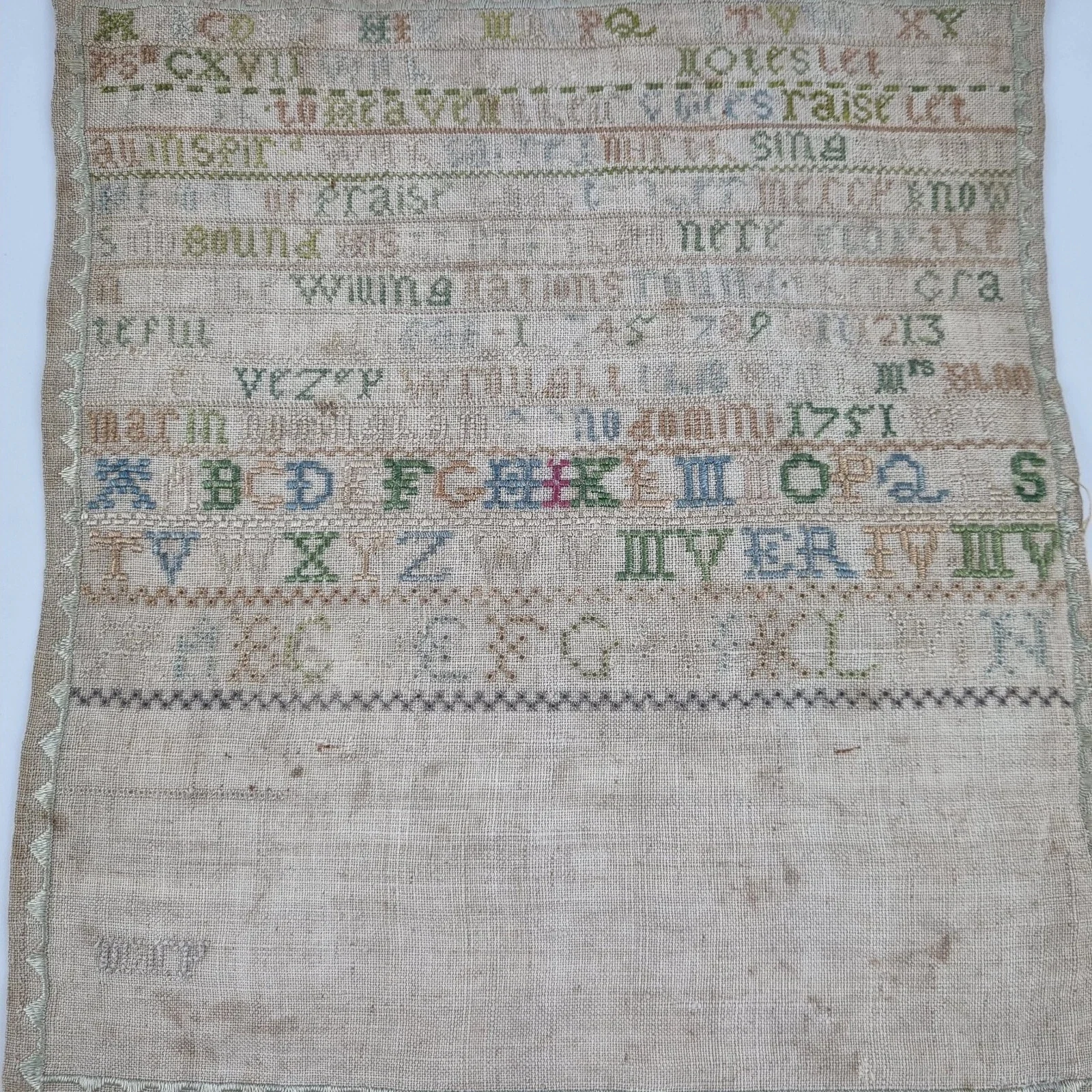
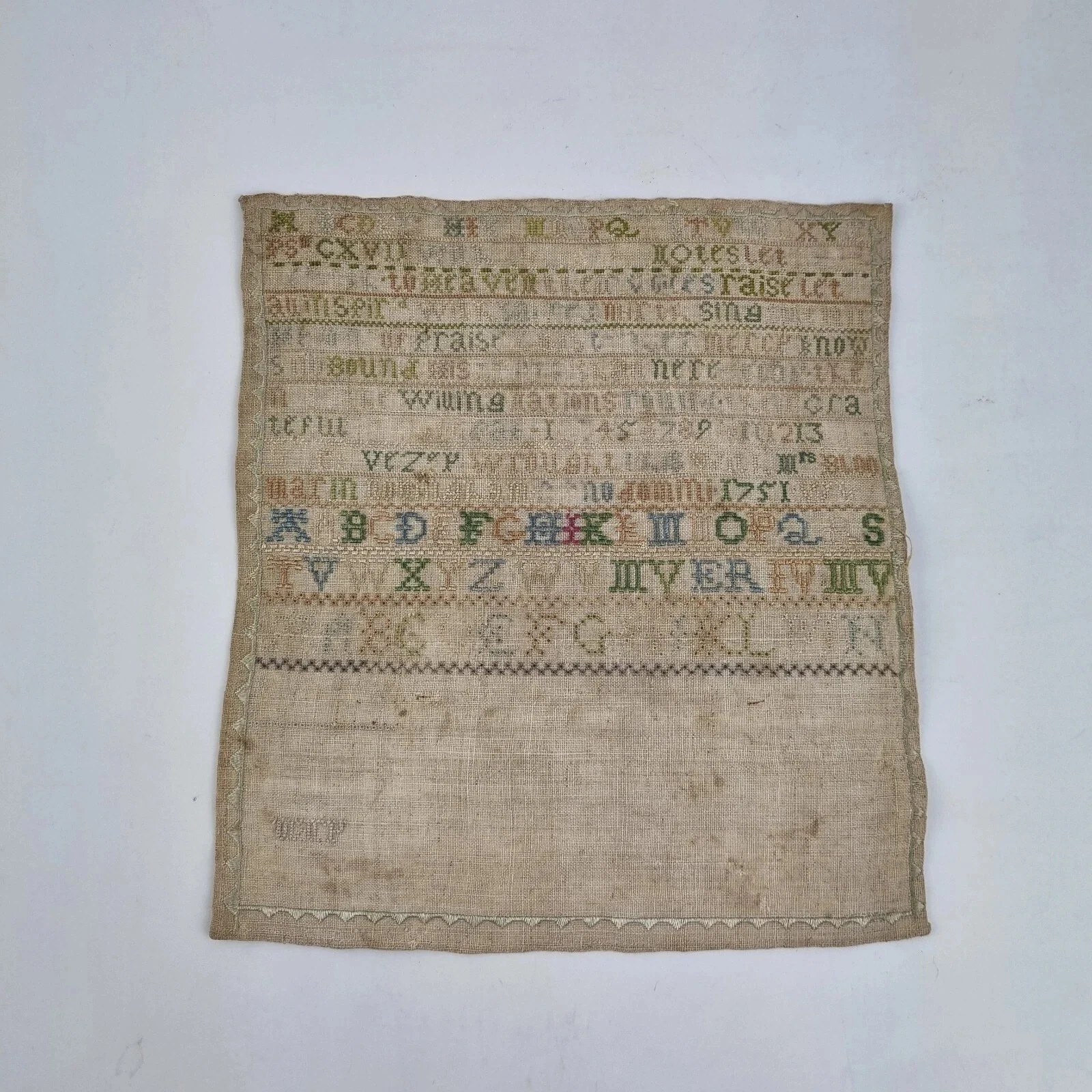
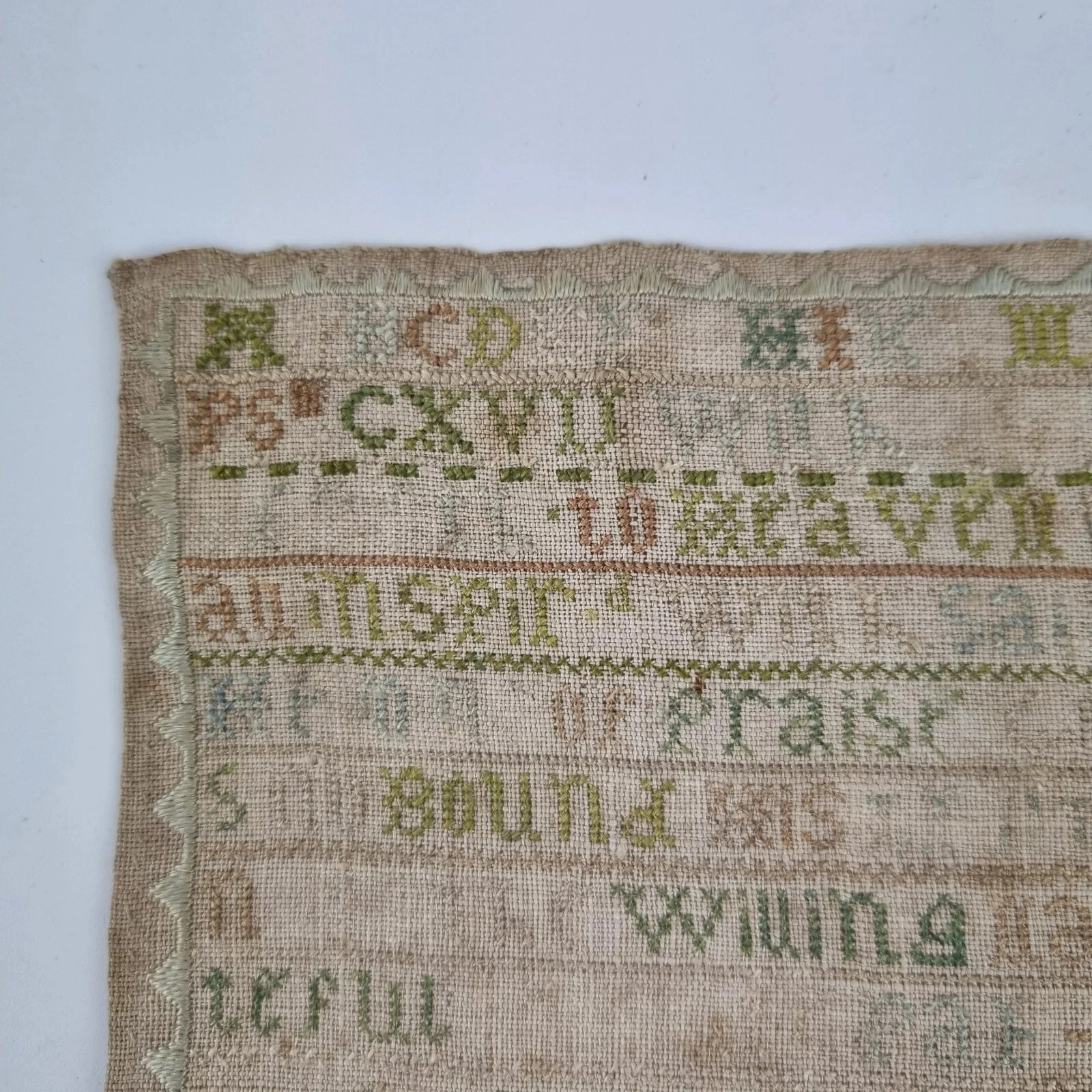

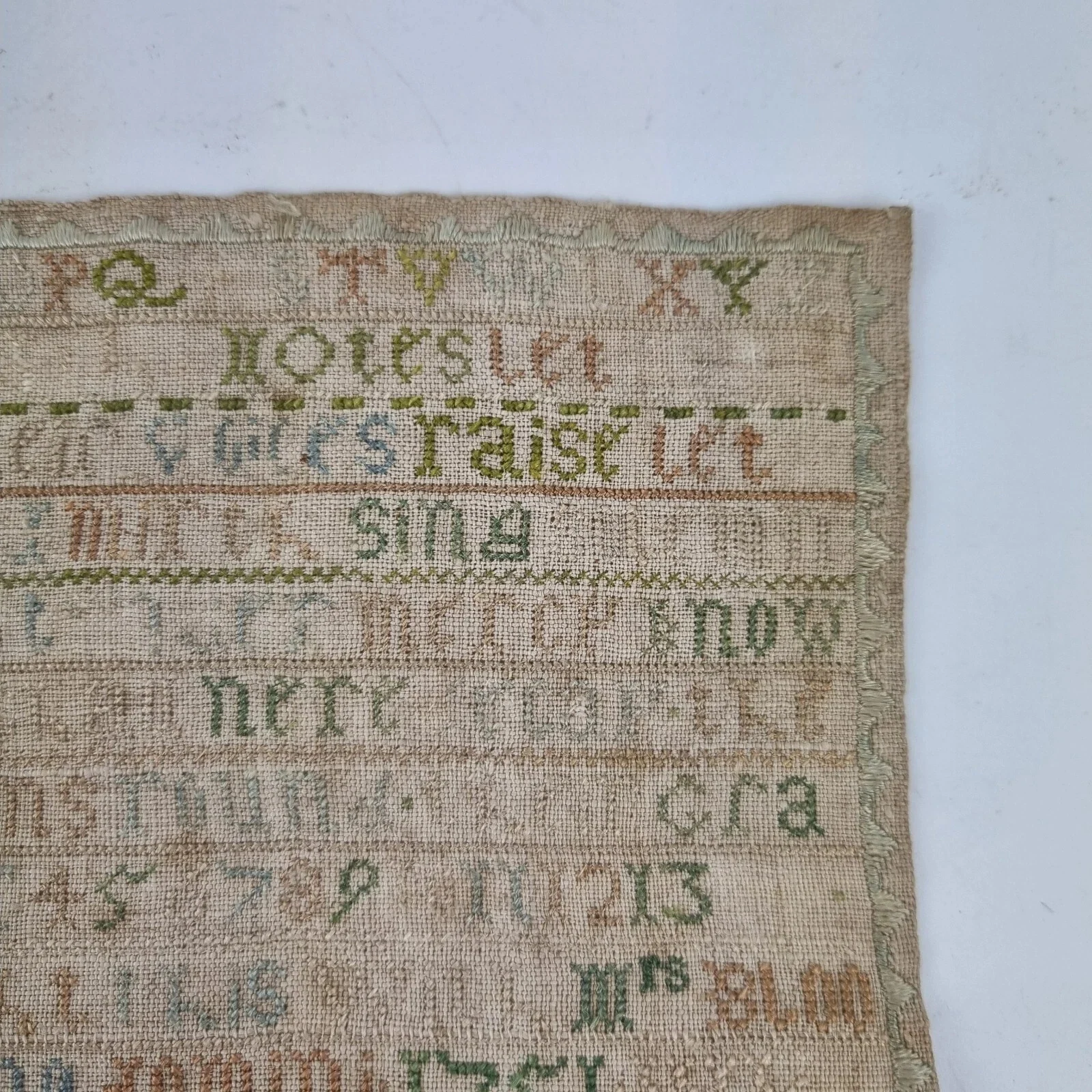


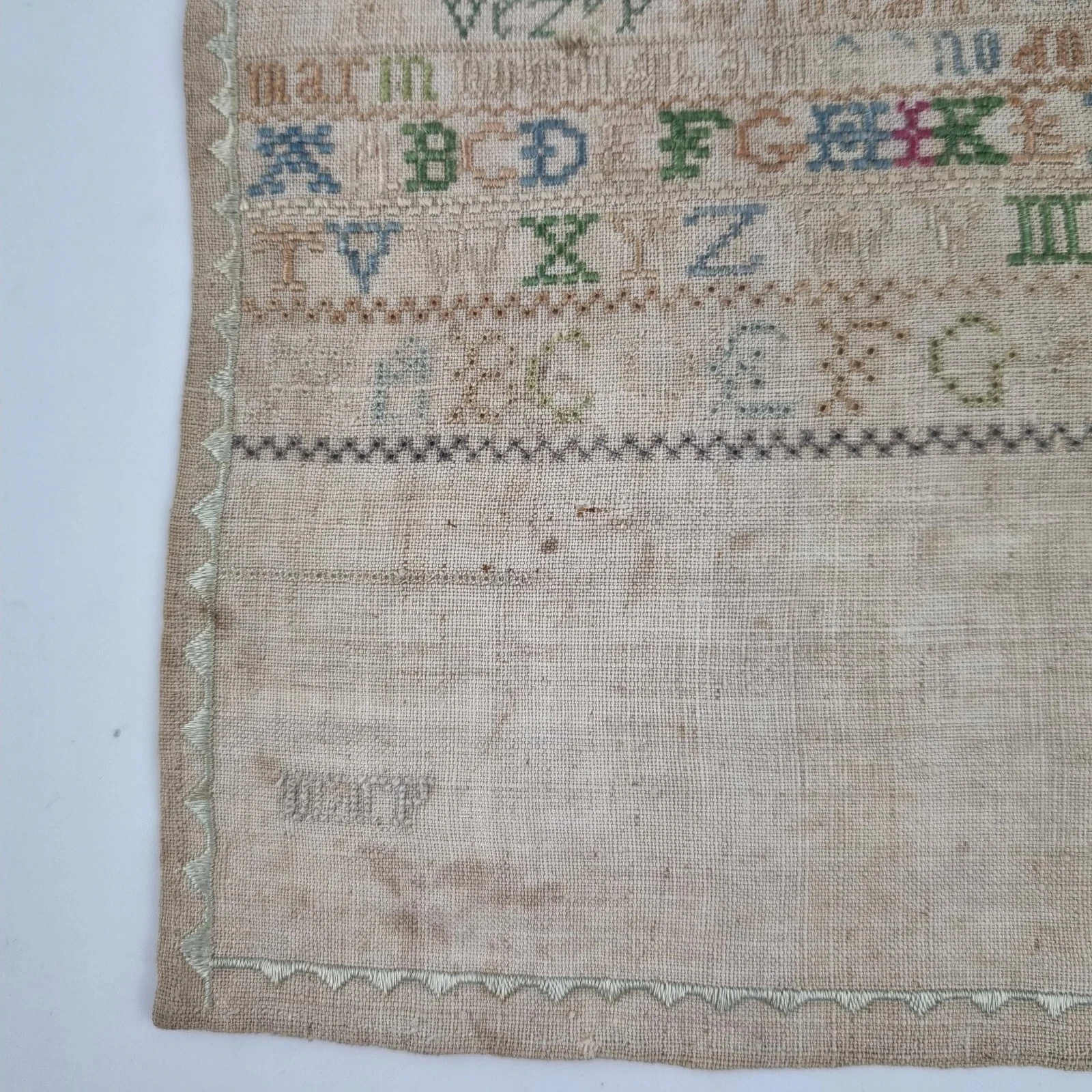
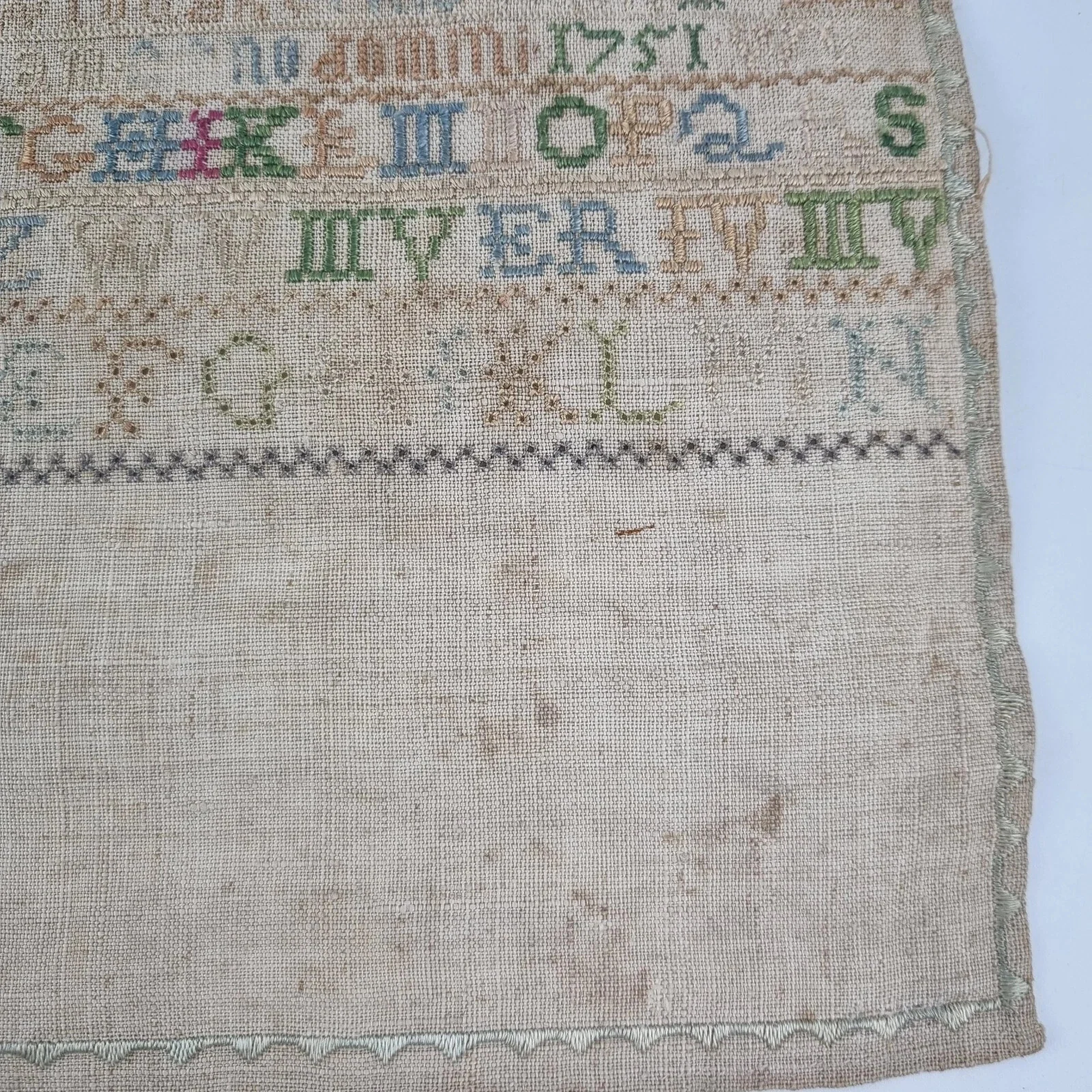
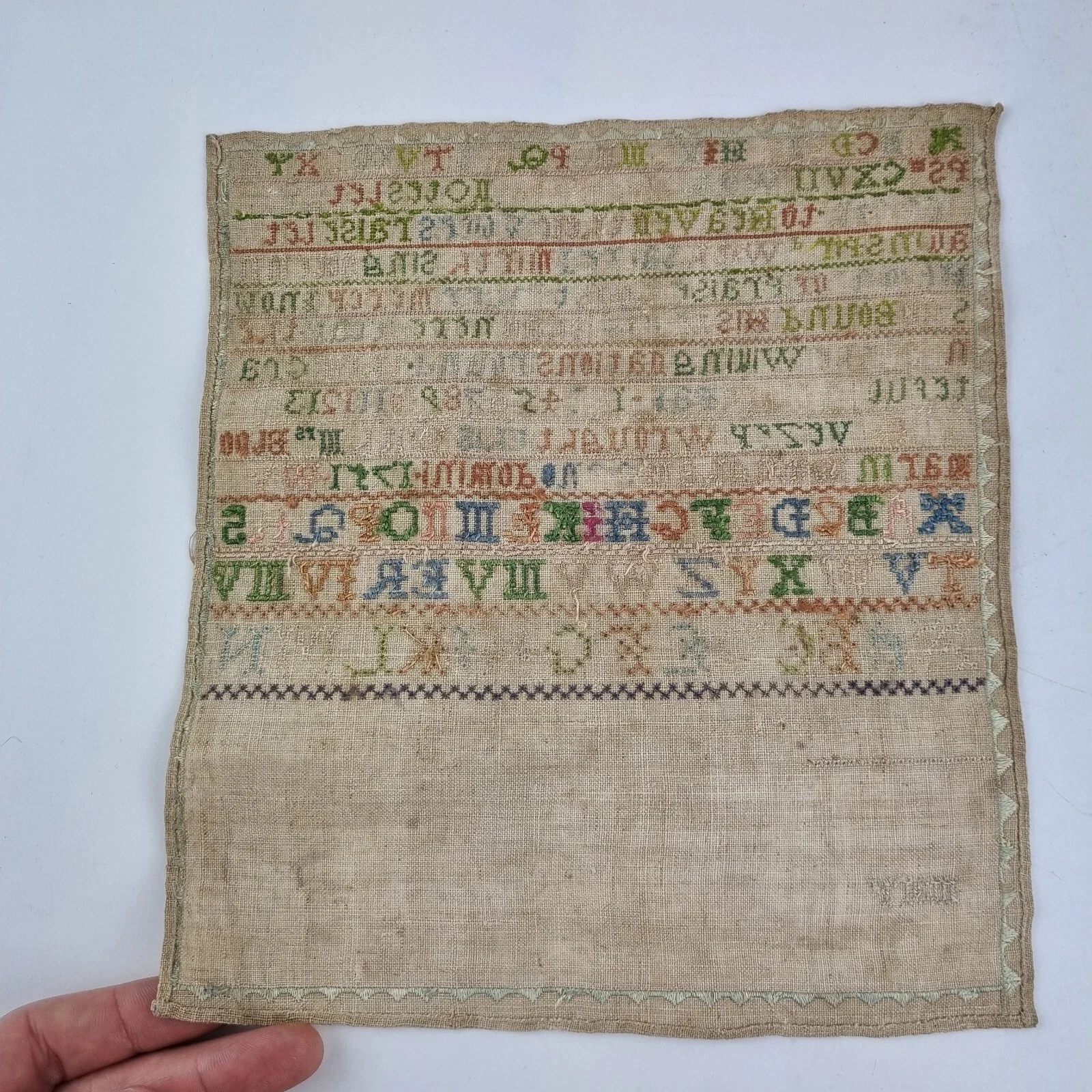
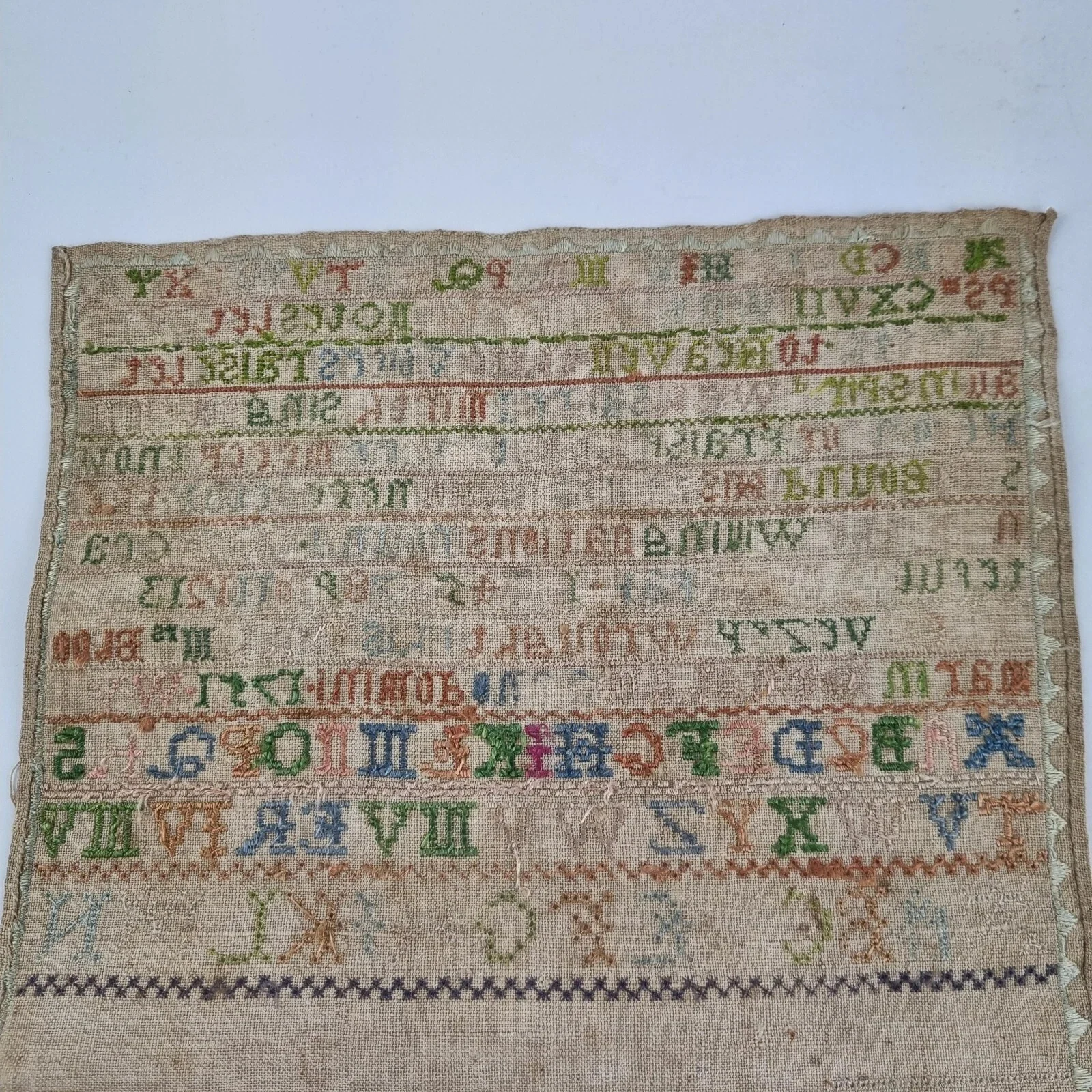


Delicate bands of multi-coloured cross stitch and eyelet work define this compact needlework sampler, executed in silk thread across a natural, loosely woven linen ground. The composition follows a structured linear format, opening at the top with sections of Psalm 117 and an accompanying religious hymn, neatly separated by stitched dividing bands. Below the devotional text, rows of upper and lowercase alphabets alternate with Arabic numerals, Roman numerals, and geometric motifs.
The central section incorporates the worker’s attribution and completion inscription, recorded as worked in 1751 under the reign of George II. Notable details include a fine variety of lettering styles, from solid block capitals worked in deep indigo blue, moss green, and terracotta silks to ornate eyelet stitches and delicate sawtooth dividers. The stitching extends along the outer perimeter with an undulating scallop-stitched edge, while the lower portion of the ground fabric is left unworked, highlighting the texture of the hand-woven linen.
Measuring 20.7 cm wide by 23.6 cm high, this textile survives unframed as an unmounted historical document. Typical of domestic education in Georgian Britain, such samplers served both as schoolroom exercises in literacy and needlecraft and as enduring records of moral diligence. The muted palette retains contrasting accents of blue, green, and madder red among the aged neutral ground.
Condition is consistent with age and domestic survival. The linen displays overall toning, areas of light foxing, and surface spotting, particularly evident across the unstitched lower reserve. Thread retention remains strong across the central lettering, with minor fading to the lighter silks and general softening along the fabric edges.
Condition Unframed. Shows age-related ground toning, scattered foxing spots, and light thread fading throughout, with structural integrity intact.
Dimensions 20.7 cm x 23.6 cm
| Dimensions | 20.7 × 23.6 cm |
|---|---|
| Period | 18th Century |
| Style | George II |
| Colour | Blue, Brown, Green |
| material | Linen, silk |
| Origin | United Kingdom |
| Price range | Under £2000 |
| Collection Era | Antique & Vintage |
Only logged in customers who have purchased this product may leave a review.


Reviews
There are no reviews yet.