


Enquire Today!
If you have any questions, requests or general enquiries, please do not hesitate to email us and we will get back to you as soon as possible regarding your enquiry.
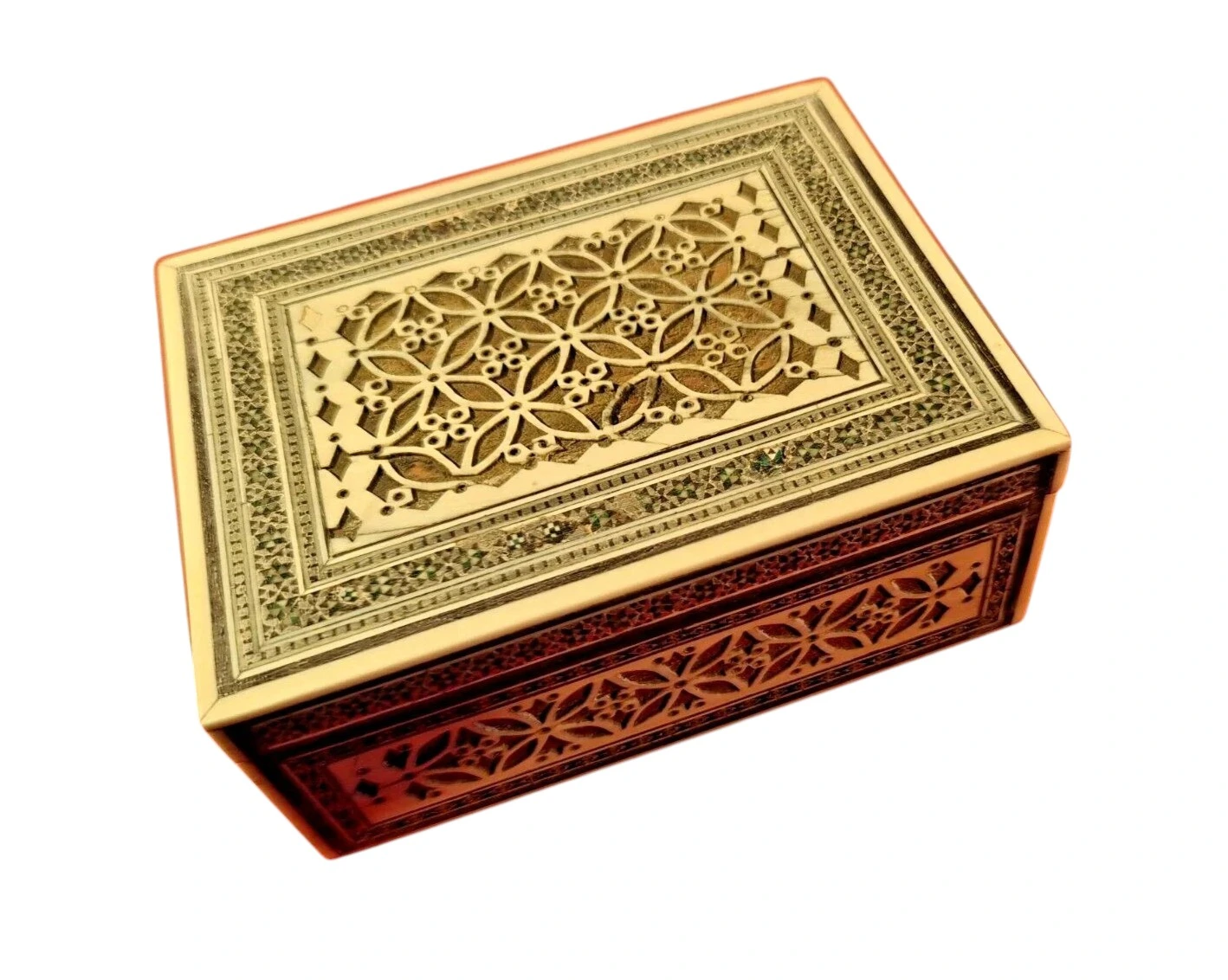

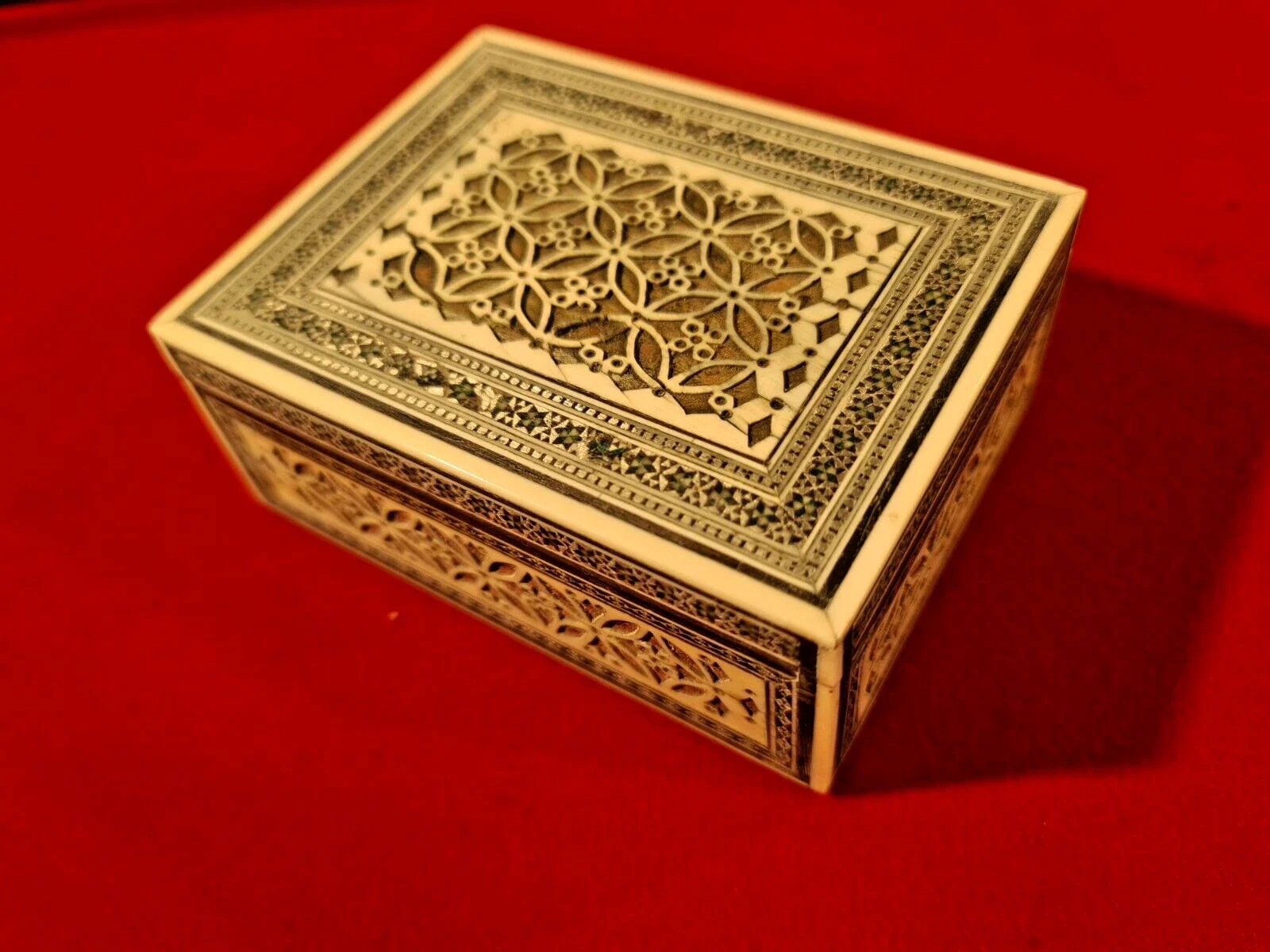
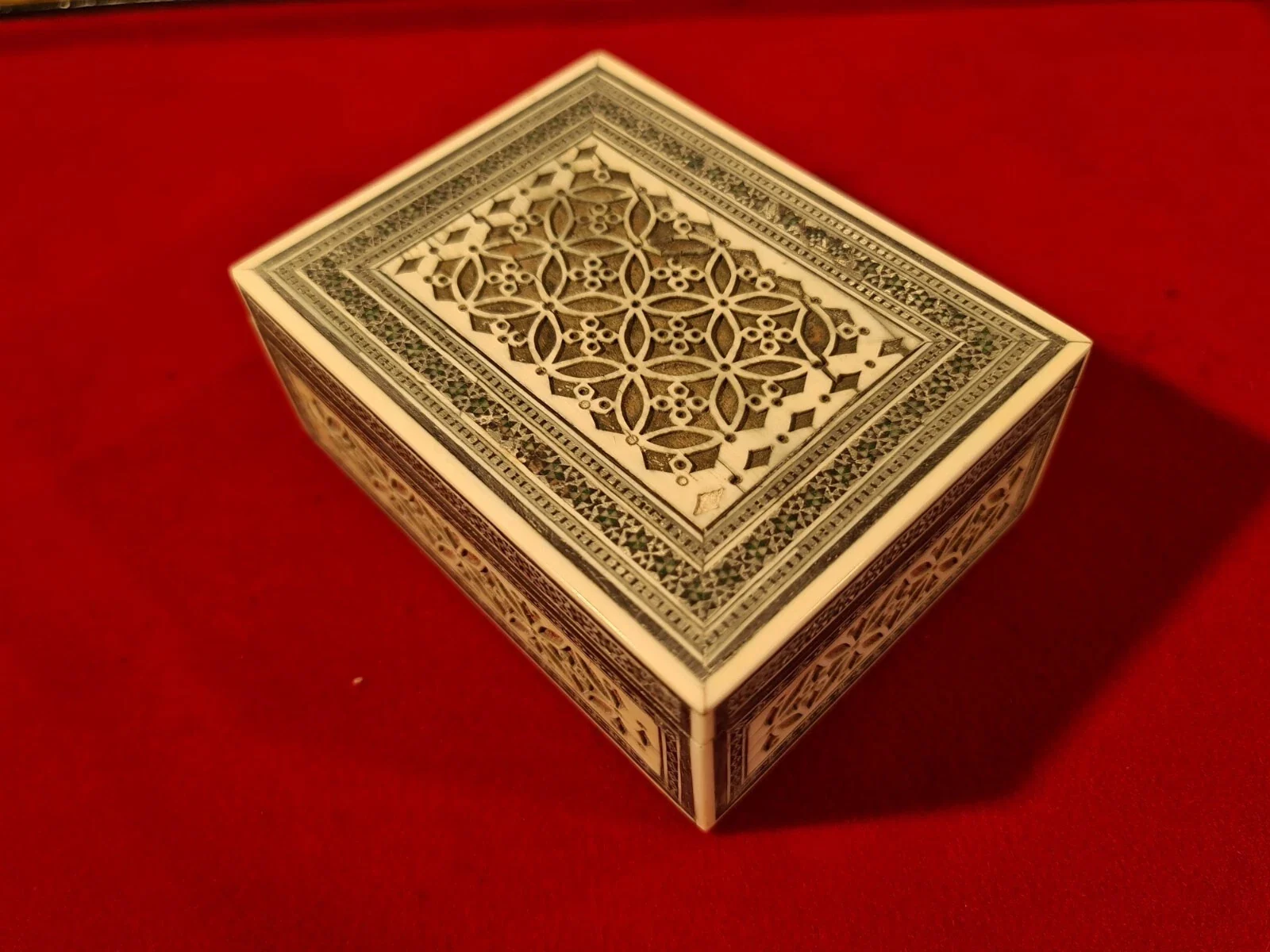
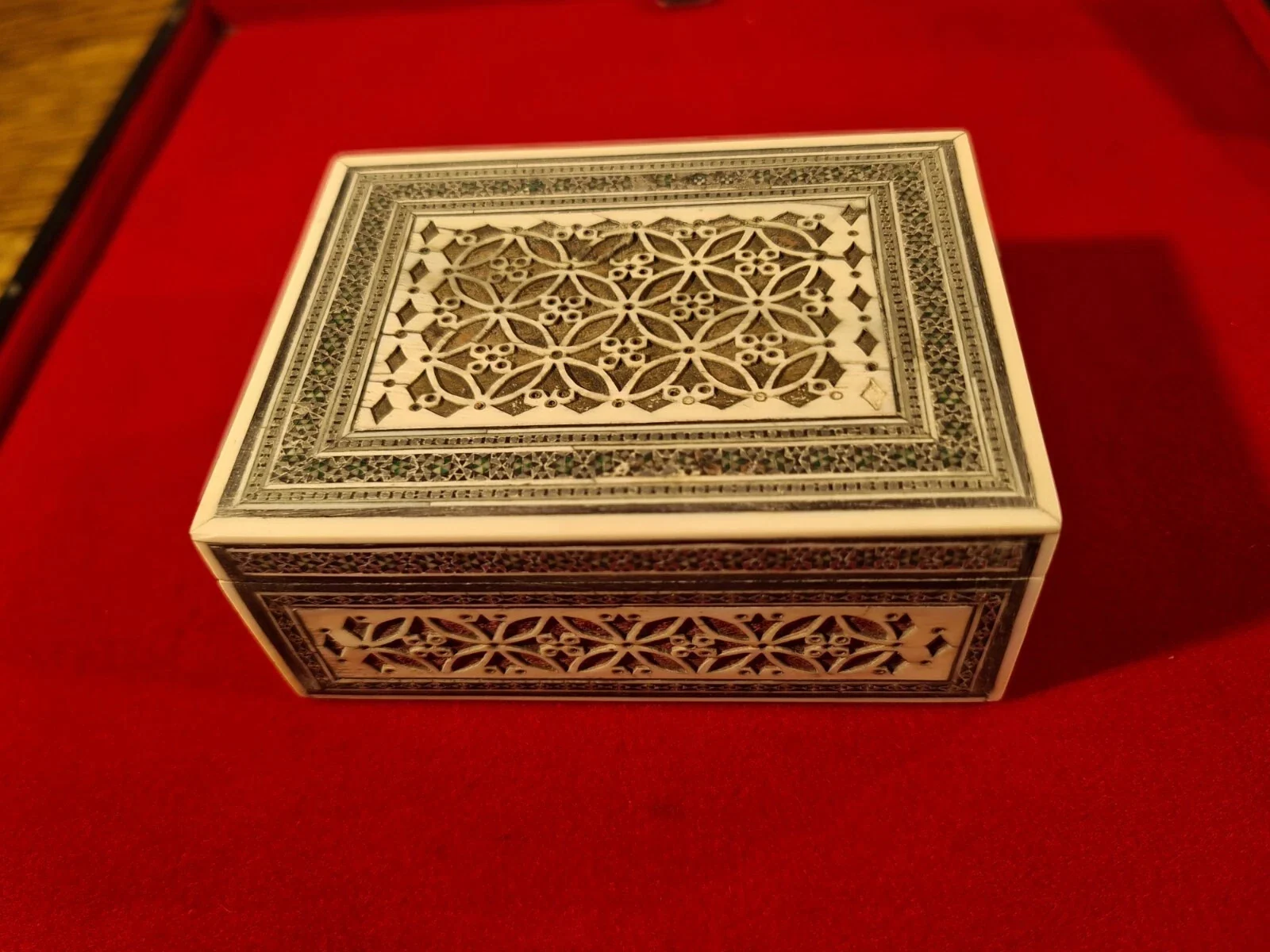
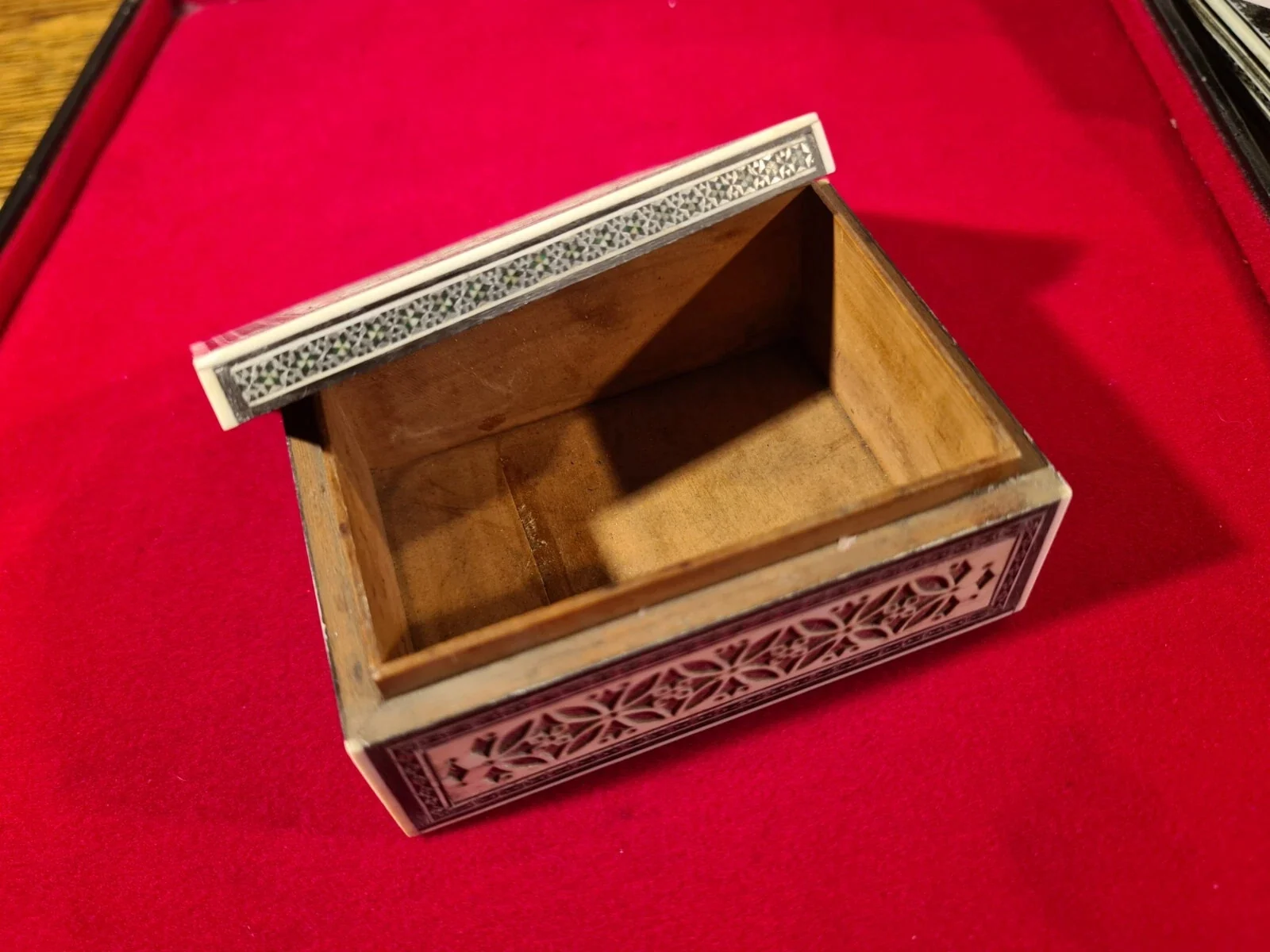
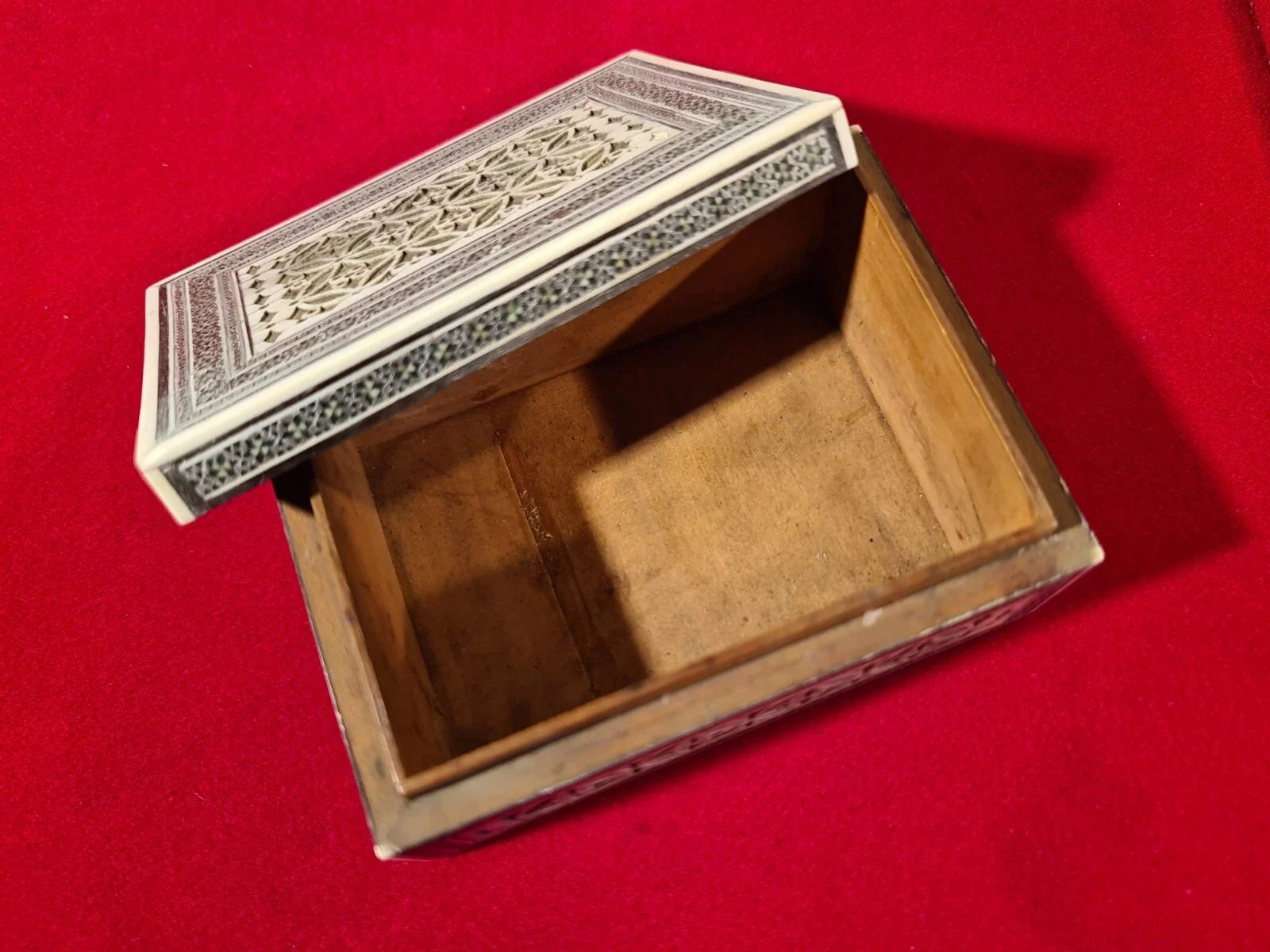

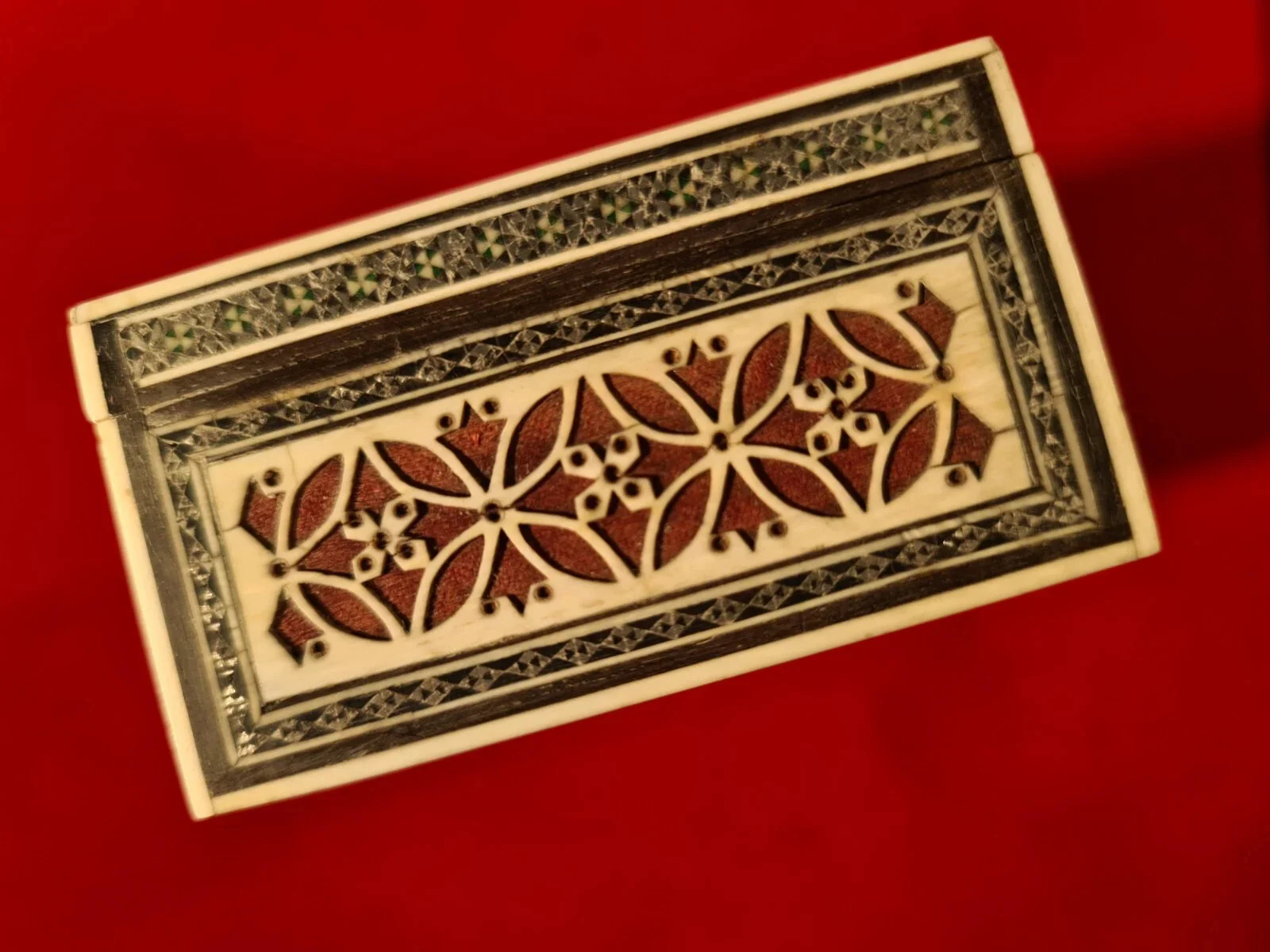


Pierced bone fretwork forms the centrepiece of this rectangular Anglo-Indian trinket box, crafted in the Bombay Presidency region around 1880. The lid features a central carved panel of interlocking foliate rosettes and geometric roundels bordered by diamond motifs. Set beneath the delicate openwork carving, a textured shimmering backing catches the light to accentuate every cut-out detail, framed securely within polished bone borders.
Surrounding the upper openwork panel is a broad band of fine sadeli micro-mosaic work. This traditional mosaic technique incorporates hundreds of microscopic polygons made from metals, contrasting dark horn, and dyed bone assembled into intricate repeating stars and chevrons. The perimeter is edged with smooth bone stringing, creating clean lines that define the box’s architectural proportions and showcase the remarkable precision required by the craftsman.
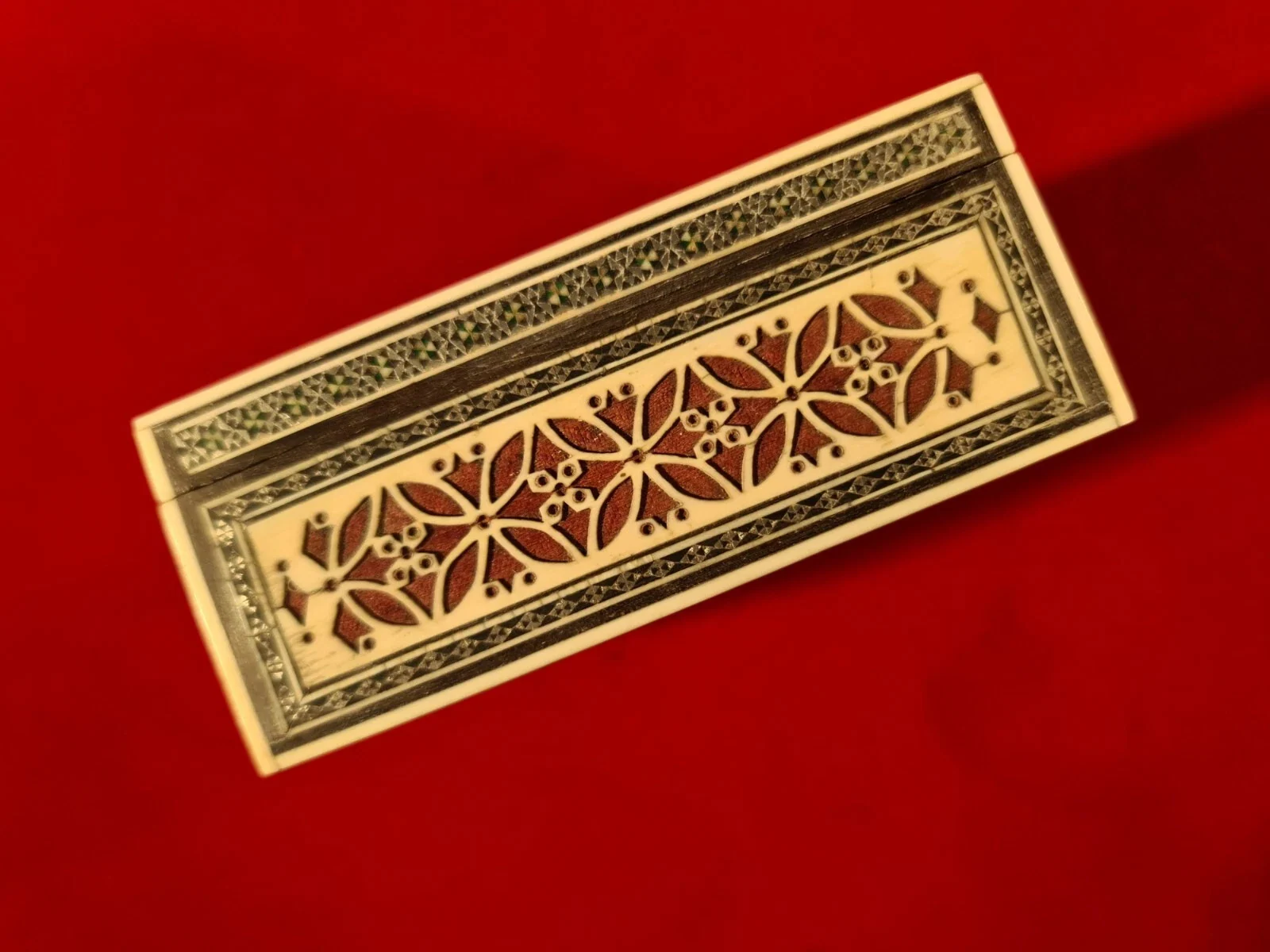
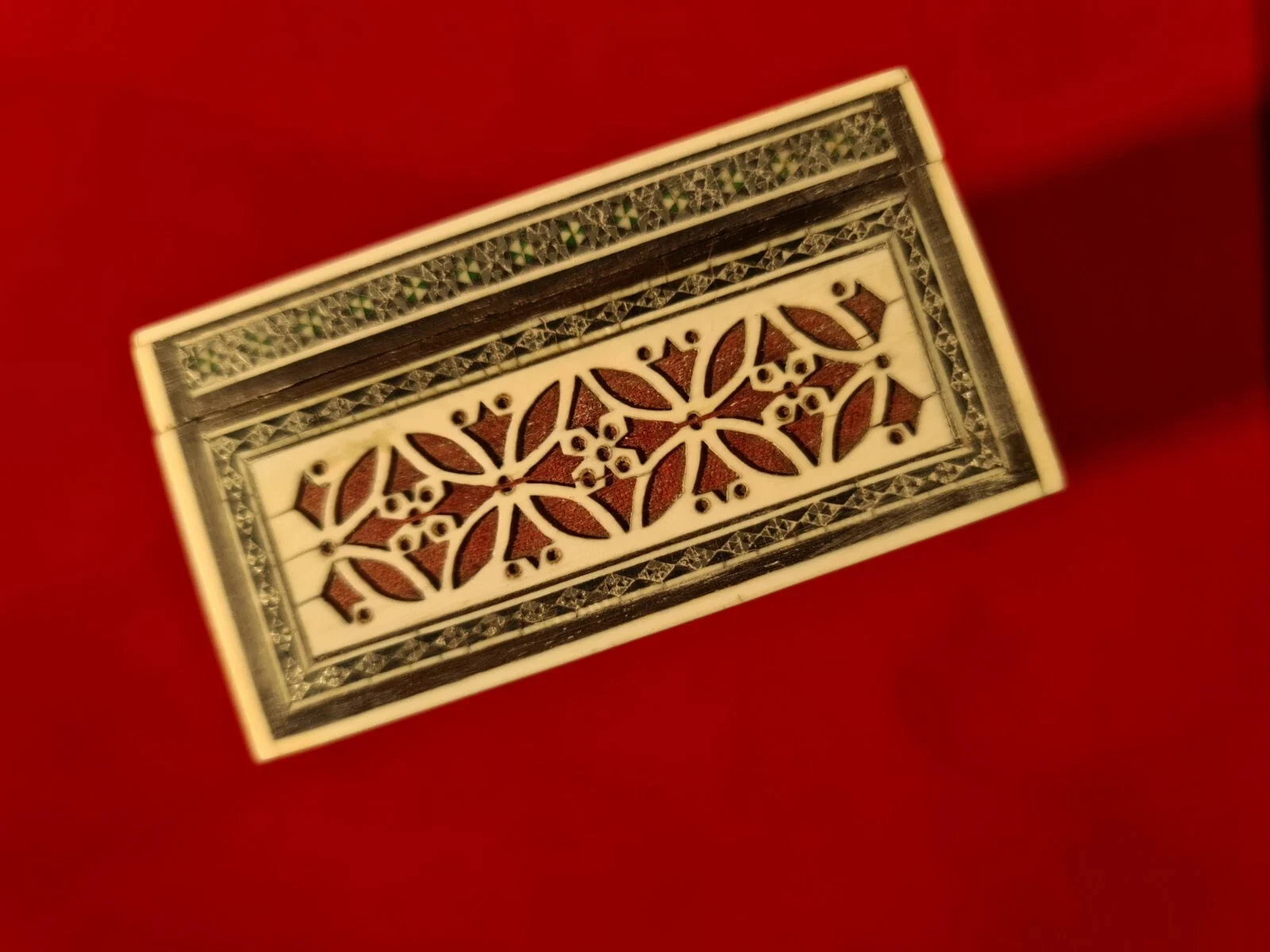
The four exterior sides continue this elaborate scheme with horizontal carved bone fretwork panels. Each side section displays stylised floral sprigs and foliate scrolls set against a rich red ground, providing a warm visual contrast to the paler ivory-toned bone. Thin multi-strand sadeli borders encapsulate each side panel, meeting neat bone-capped mitred corners that protect the fragile mosaic edges.
Constructed over a solid hardwood carcass, the interior reveals clean, unlined timber surfaces showing natural grain and aged honey tones. The hinged lid lifts smoothly to reveal a single open compartment suitable for small jewellery, cufflinks, or desk keepsakes. In all, the box measures 10.2 cm wide by 7.8 cm deep and stands 4.2 cm high, making it a tactile, highly decorative example of late nineteenth-century Indian craftsmanship.
The underside remains in its natural wooden state with smooth hand-finished surfaces, while the exterior bone and micro-mosaic veneers remain firmly seated throughout. The combination of delicate pierced bone trellis work, rich polychrome mosaic inlays, and vibrant underlays reflects the distinctive aesthetic developed for the nineteenth-century colonial and export markets.
Condition Good antique condition with light age-related surface wear. The fretwork and micro-mosaic inlays remain intact and well-seated, and the hinges operate smoothly. The underside and plain wooden interior display minor handling marks consistent with age.
Dimensions 10.2 cm x 7.8 cm x 4.2 cm
| Dimensions | 7.8 × 10.2 × 7.8 cm |
|---|---|
| Period | 19th Century |
| material | and horn, bone, Hardwood, metal |
| Origin | India |
| Price range | Under £1000, Under £2000 |
| Collection Era | Antique & Vintage |
| Style | Anglo-Indian |
| Colour | Brown, Cream, Green, Red |
Only logged in customers who have purchased this product may leave a review.
Reviews
There are no reviews yet.