


Enquire Today!
If you have any questions, requests or general enquiries, please do not hesitate to email us and we will get back to you as soon as possible regarding your enquiry.
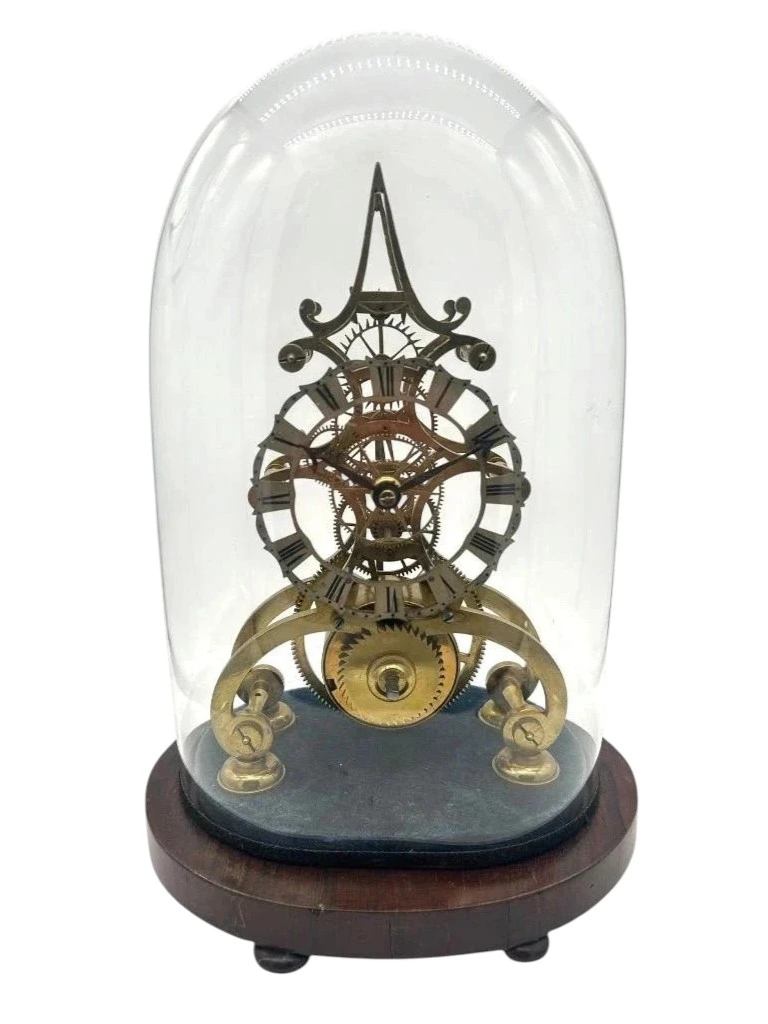

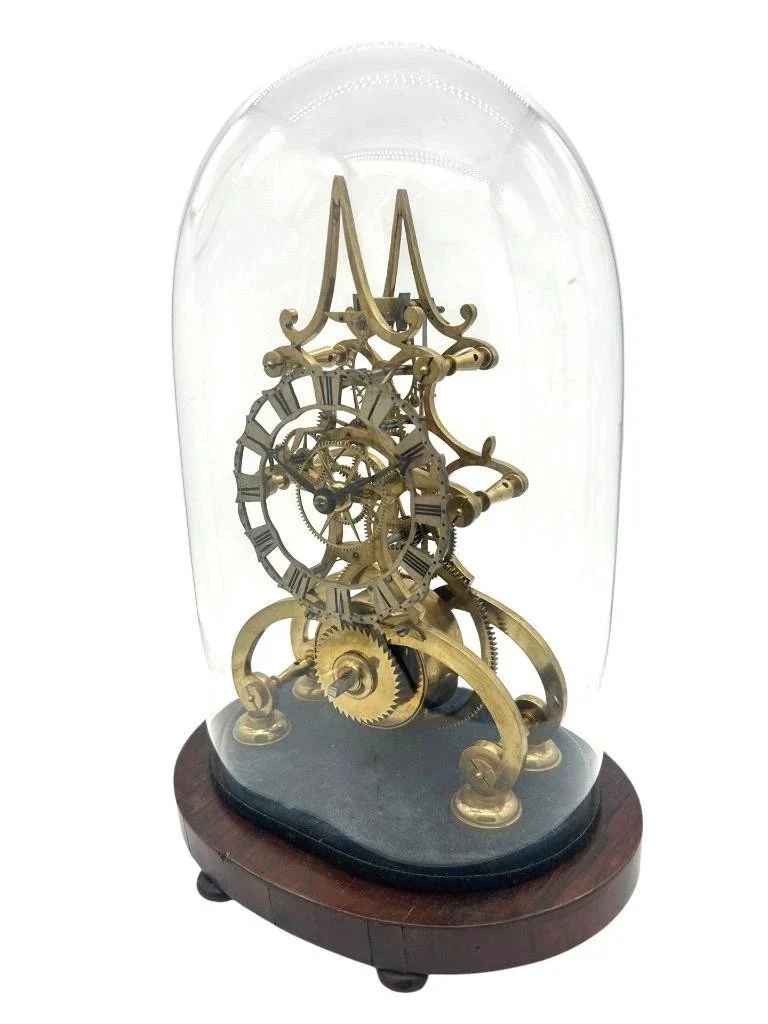
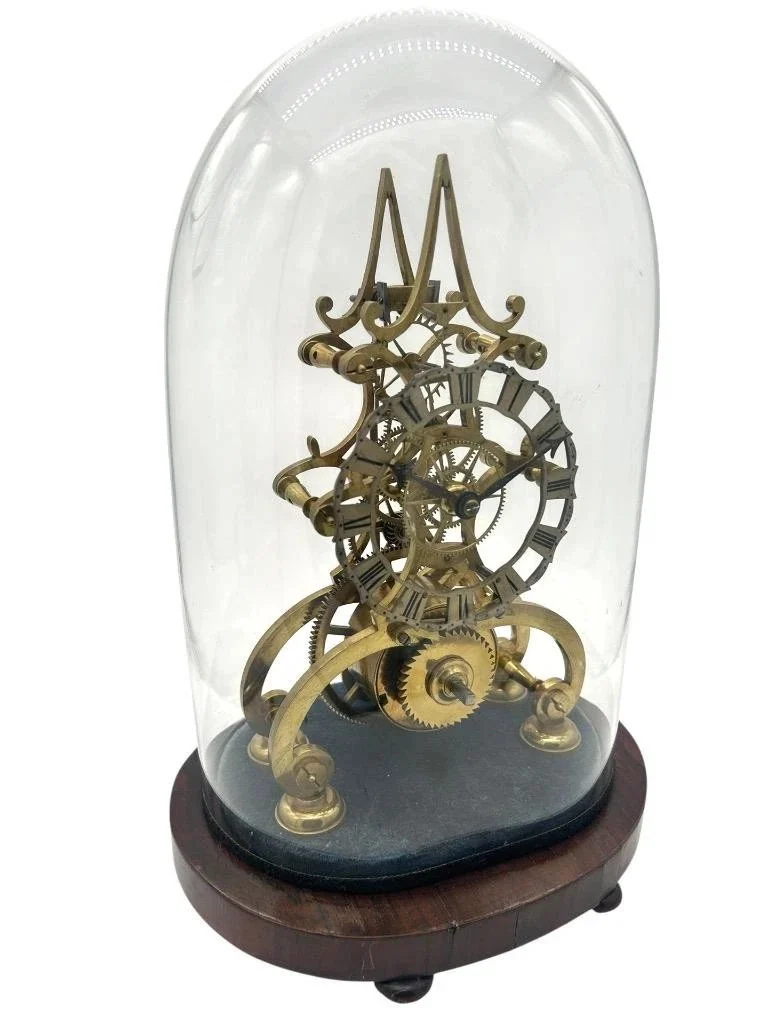
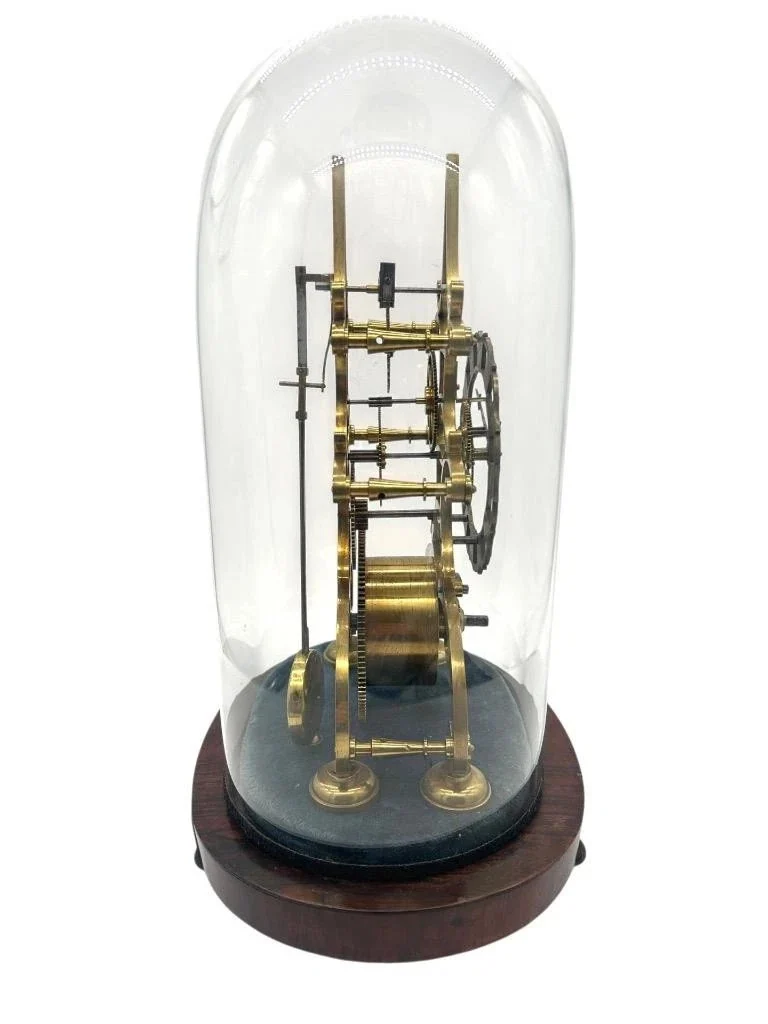
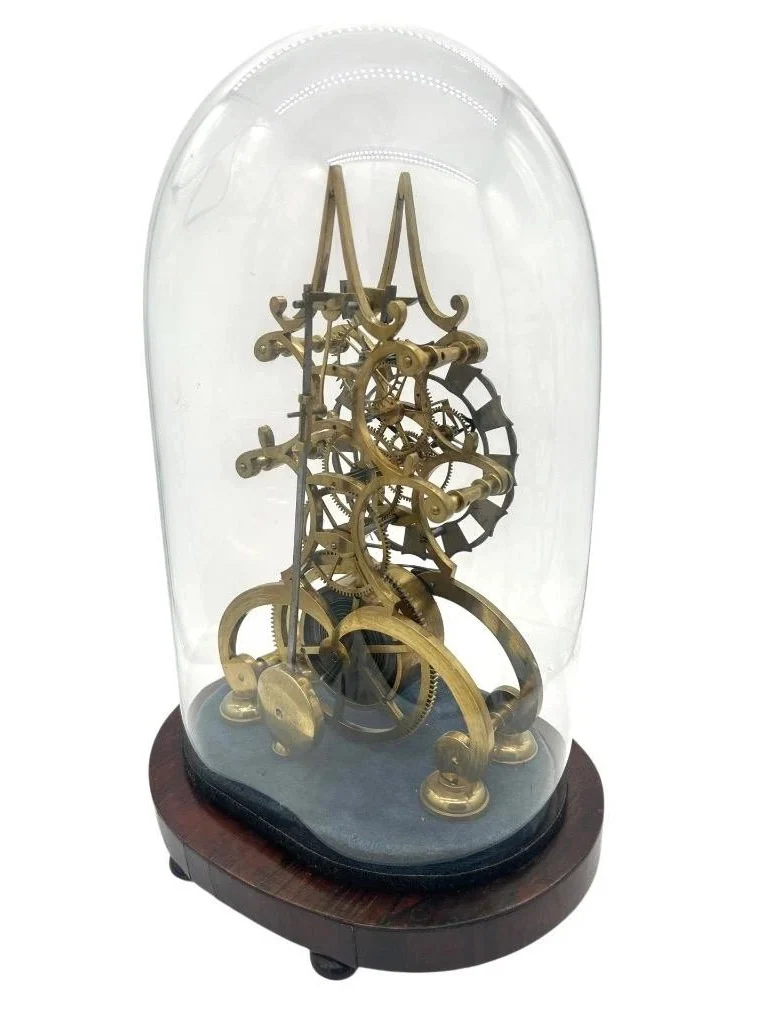
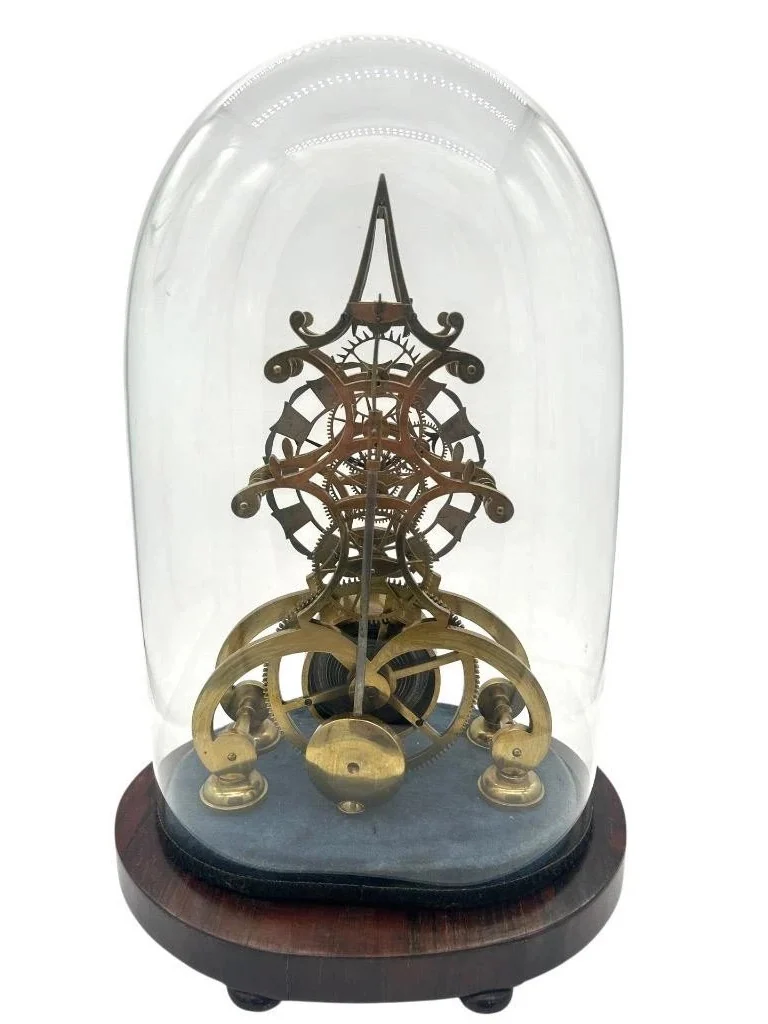


Pierced brass framework with gothic-style architectural cresting forms the open skeleton plates of this tabletop clock. The openwork chapter ring displays engraved black Roman numerals, flanked by delicate outer minute track markings and traversed by blued steel arrowhead hands. Fretted throughout, the architectural brass plates leave every arbor, wheel and pinion open to view from all sides. At the centre of the plates sits a single-train movement characterised by distinct six-spoke wheelwork and a deadbeat escapement. Designed to run for a full month duration from a substantial spring barrel, the wheel train drives a rear-mounted rod pendulum suspended behind the movement frame. The mechanism is reported to be in working order following servicing, and a suitable winding key is included. Produced in Britain around 1870, the clock stands on robust scroll-form brass legs with turned footpads. These rest upon an oval rosewood plinth fitted with a velvet-covered bed, raised off the tabletop by small turned wooden feet. The movement and dial are enclosed by a fitted blown-glass dome with a rounded top, keeping dust away from the exposed gears while preserving clear sightlines. When measured beneath the glass dome, the clock stands 32 cm in overall height, with a base width of 21 cm and a depth of 18 cm. The polished brass surfaces show an even mellow tone with gentle cosmetic patina and age-related marks across the plates and plinth, while the rosewood base retains a warm, deep grain.
Condition Reported in good working order following recent servicing. Shows light surface wear and minor cosmetic signs of age to the brass components and wooden base, with the glass dome intact.
Dimensions 32 cm high x 21 cm wide x 18 cm deep
| Dimensions | 18 × 21 × 32 cm |
|---|---|
| Period | 19th Century |
| Style | Victorian |
| Colour | Brown, Gold |
| material | Brass, Glass, Rosewood |
| Origin | United Kingdom |
| Price range | £2000+ |
| Collection Era | Antique & Vintage |
Only logged in customers who have purchased this product may leave a review.
Reviews
There are no reviews yet.