


Enquire Today!
If you have any questions, requests or general enquiries, please do not hesitate to email us and we will get back to you as soon as possible regarding your enquiry.
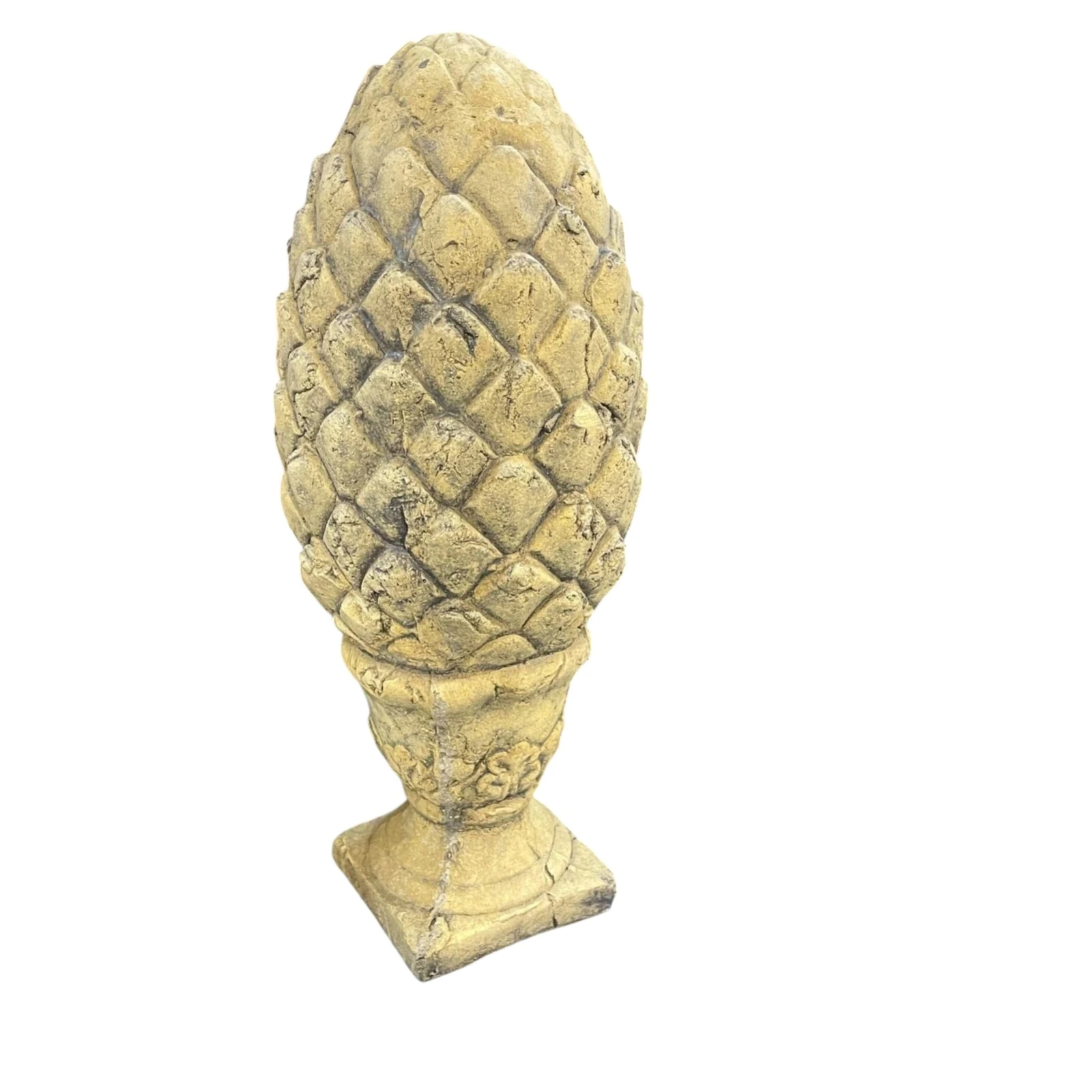
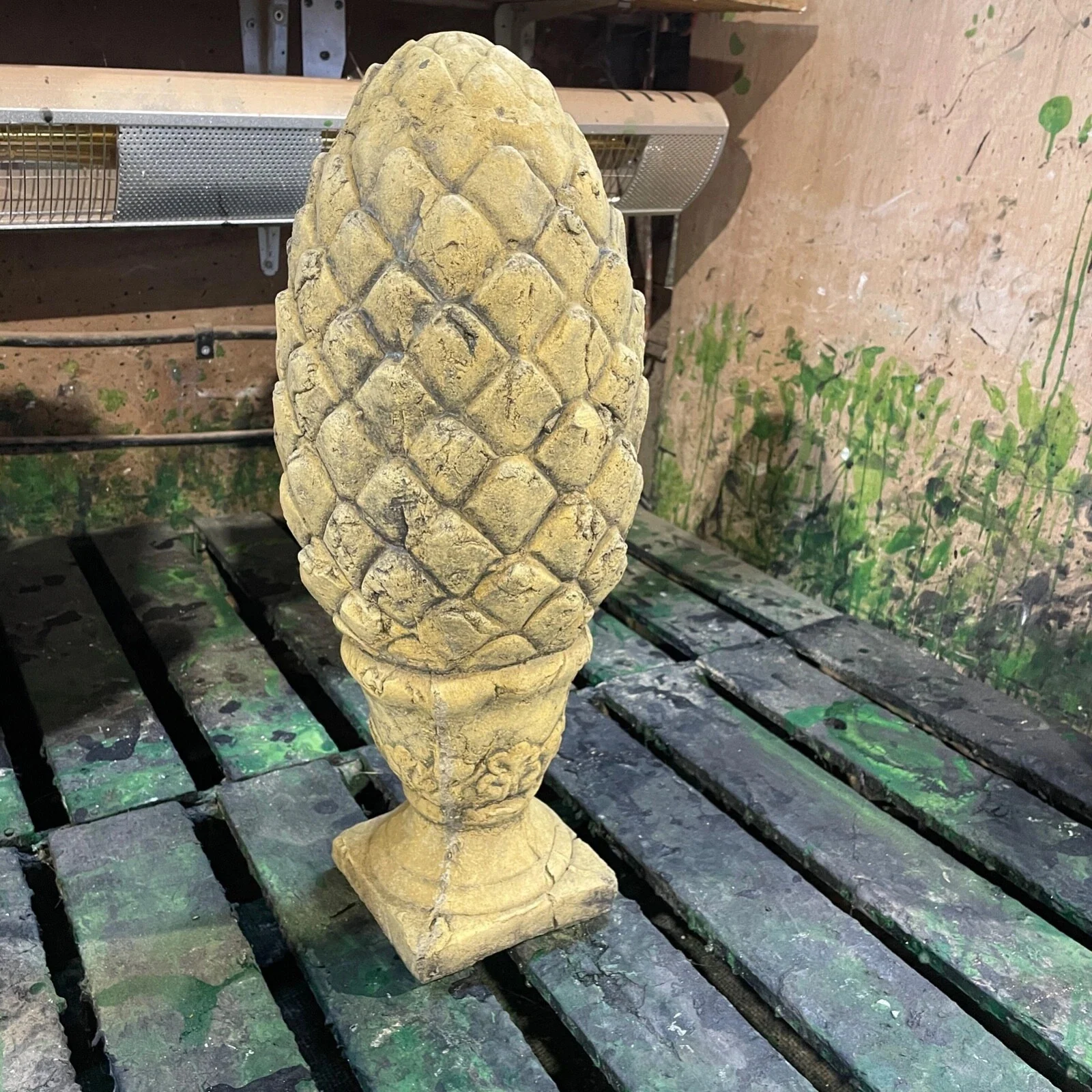

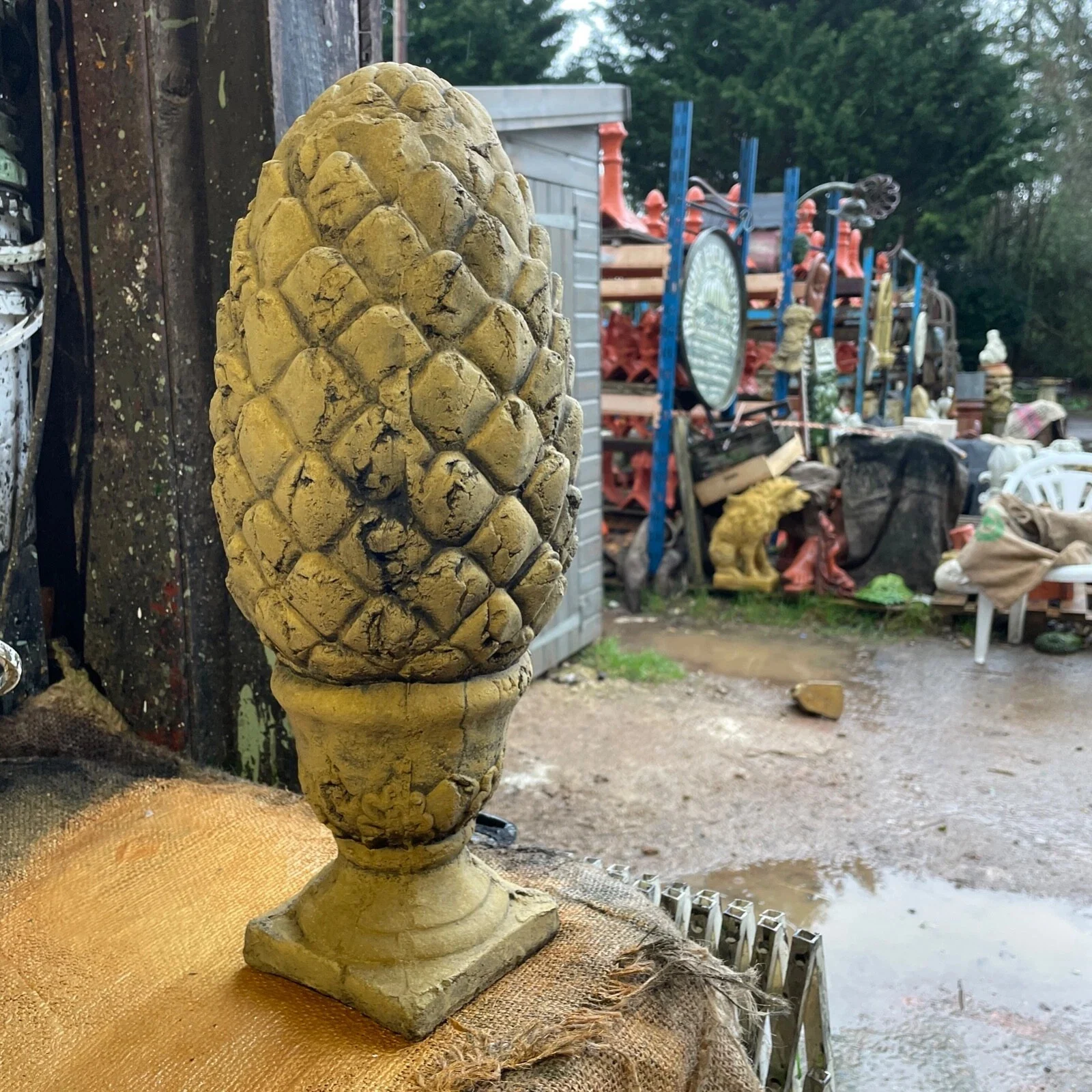
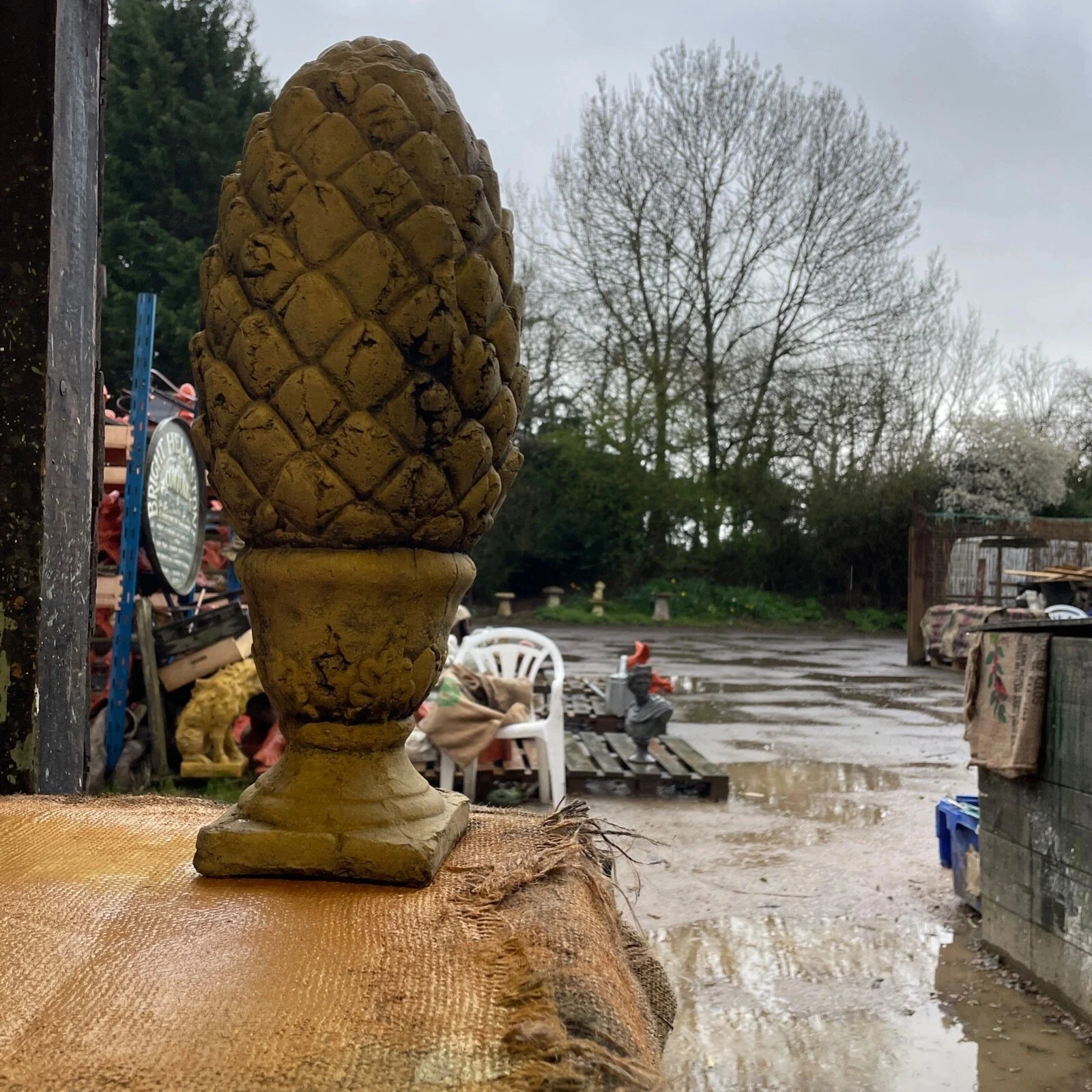
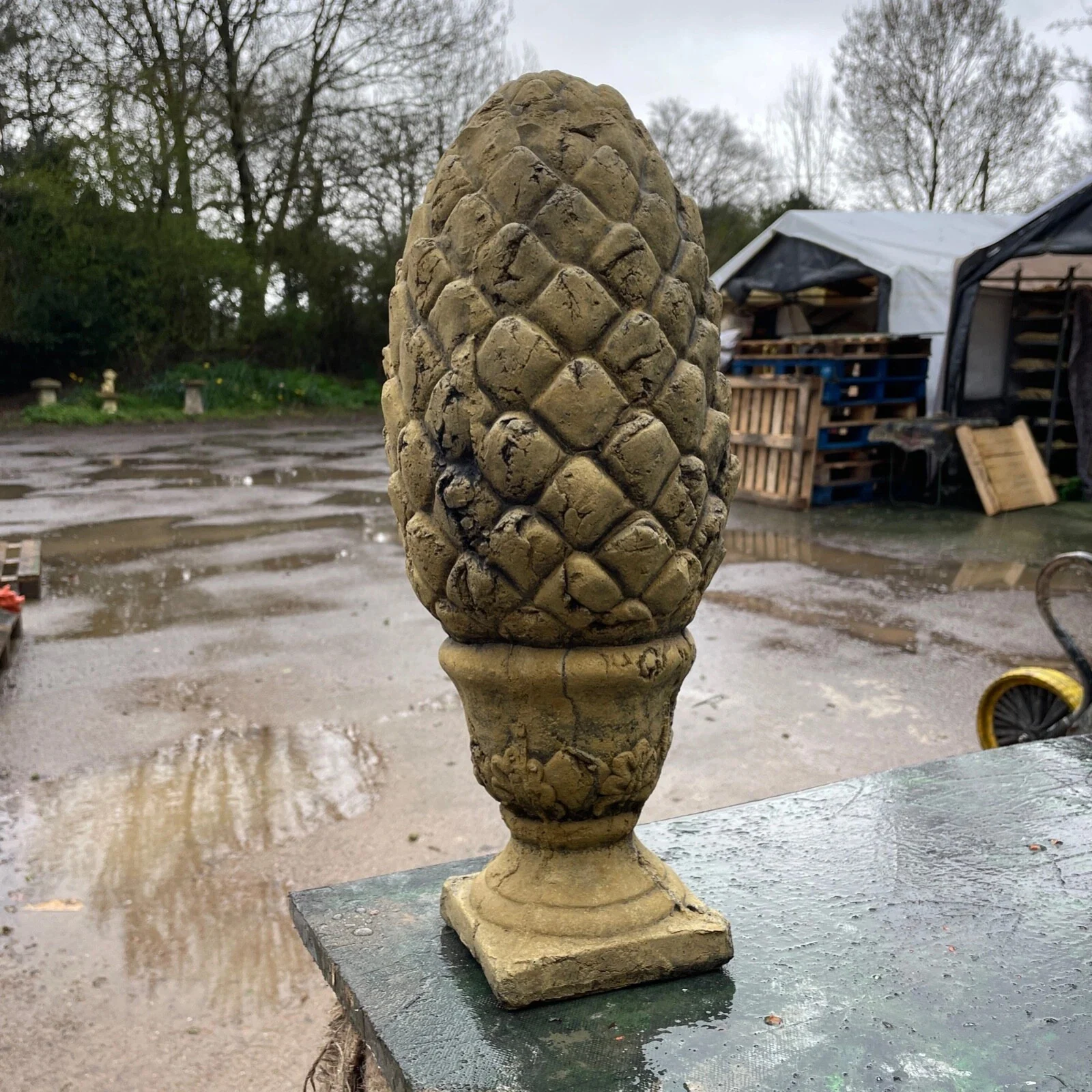


Deeply textured diamond scales define the ovoid fruit of this architectural finial, culminating in a blunt conical tip. The pineapple sits directly in an urn-style cup decorated with moulded classical foliate garlands, resting on a spreading circular stem over an integral square plinth. Cast in reconstituted stone, the piece carries substantial weight, offering stability when positioned atop masonry pillars or garden walls.
Pineapple finials became prominent across British country estate architecture during the eighteenth century as emblems of hospitality, wealth, and welcome. Placed symmetrically at driveway entrances, carriage gates, and terrace steps, the motif remained a staple of Georgian and classical revival design throughout the twentieth century. This example continues that tradition, scaled appropriately for intermediate gate posts, balustrades, or freestanding plinths in a courtyard.
The casting incorporates a fine aggregate mix that replicates the tone and granular surface of natural limestone. Fine casting seam lines run along the opposing flanks, characteristic of multi-part sectional moulds used in reconstituted stone manufacture. The finish is an applied weathered buff-yellow patination, with darkened tones settled into the deep crevices between the raised scales and around the base mouldings, giving the piece the appearance of matured architectural salvage.
Measuring 18 inches (45.7 cm) in height and approximately 5 inches (12.7 cm) square at the base, the finial is proportioned to sit on standard brick or stone capping stones. It can be secured using exterior mortar or resin adhesive for permanent outdoor architectural use, or displayed unmounted as an ornamental accent within a conservatory or walled garden.
Produced in the United Kingdom during the post-1940 period, this unbranded architectural element remains structurally sound and intact, ready for installation or standalone decorative display.
Condition Intact throughout with no structural breaks or major losses. Surface shows deliberate aged patination, light superficial rubbing, and minor casting irregularities along the mould seams.
Dimensions Height: 18 in (45.7 cm), Width: 5 in (12.7 cm), Depth: 5 in (12.7 cm)
| Dimensions | 12.7 × 12.7 × 45.72 cm |
|---|---|
| Period | 20th Century |
| material | Reconstituted stone |
| Origin | United Kingdom |
| Maker | Unbranded |
| Price range | Under £1000, Under £2000, Under £500 |
| Collection Era | Antique & Vintage |
Only logged in customers who have purchased this product may leave a review.
Reviews
There are no reviews yet.