


Enquire Today!
If you have any questions, requests or general enquiries, please do not hesitate to email us and we will get back to you as soon as possible regarding your enquiry.
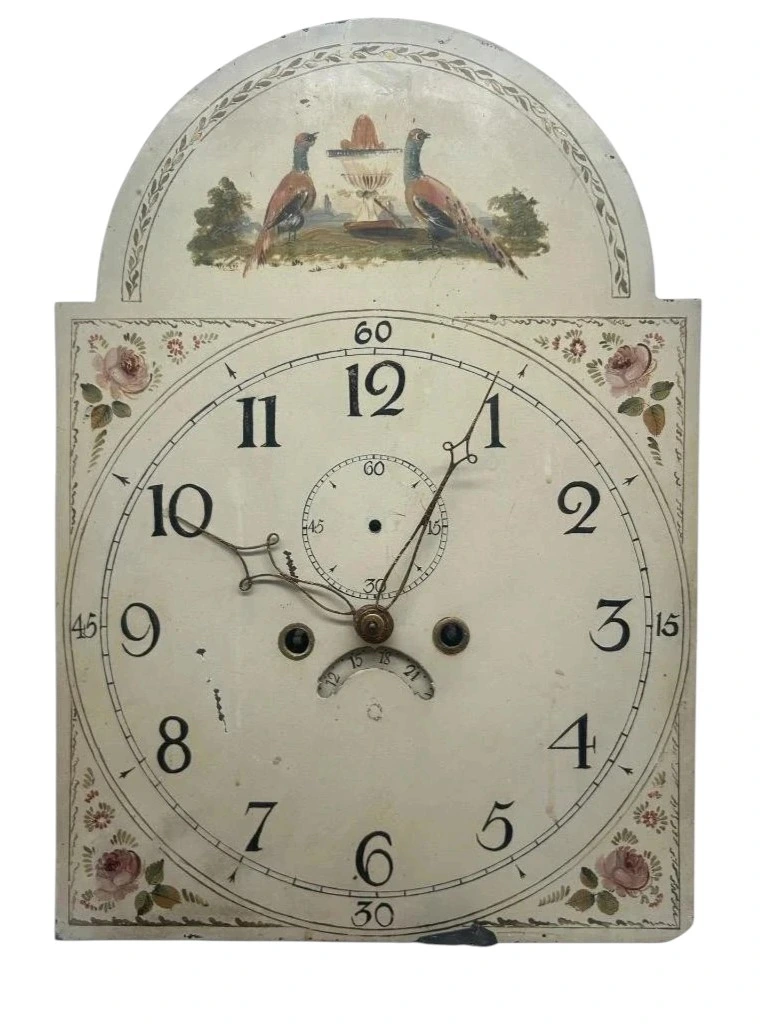
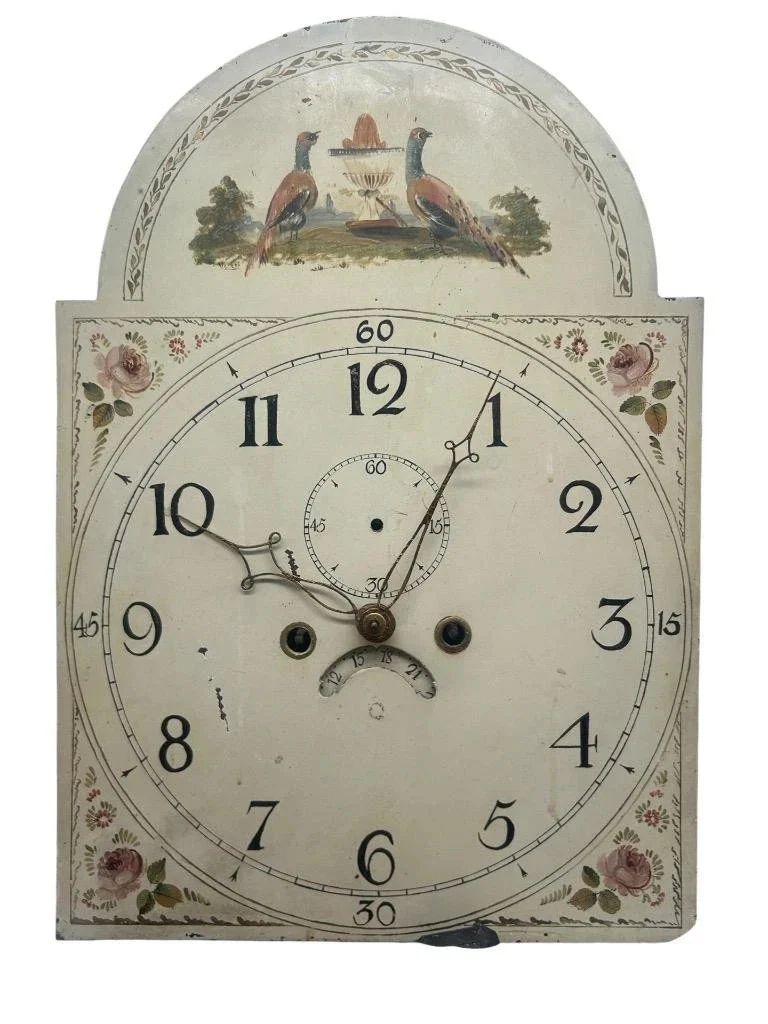
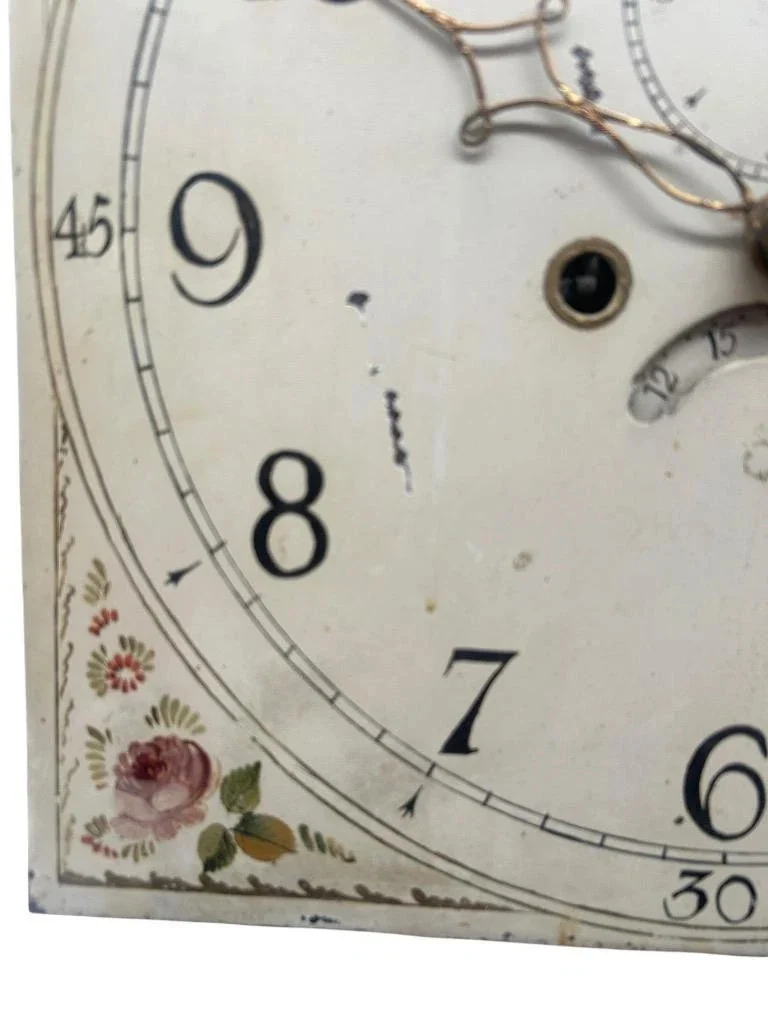
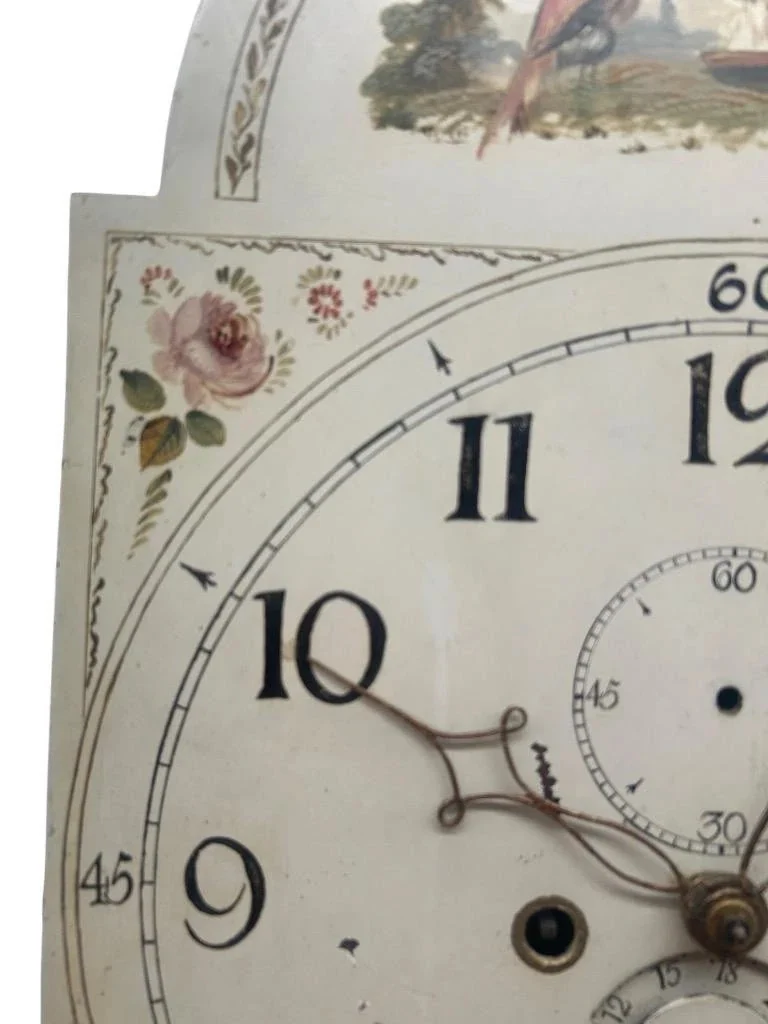

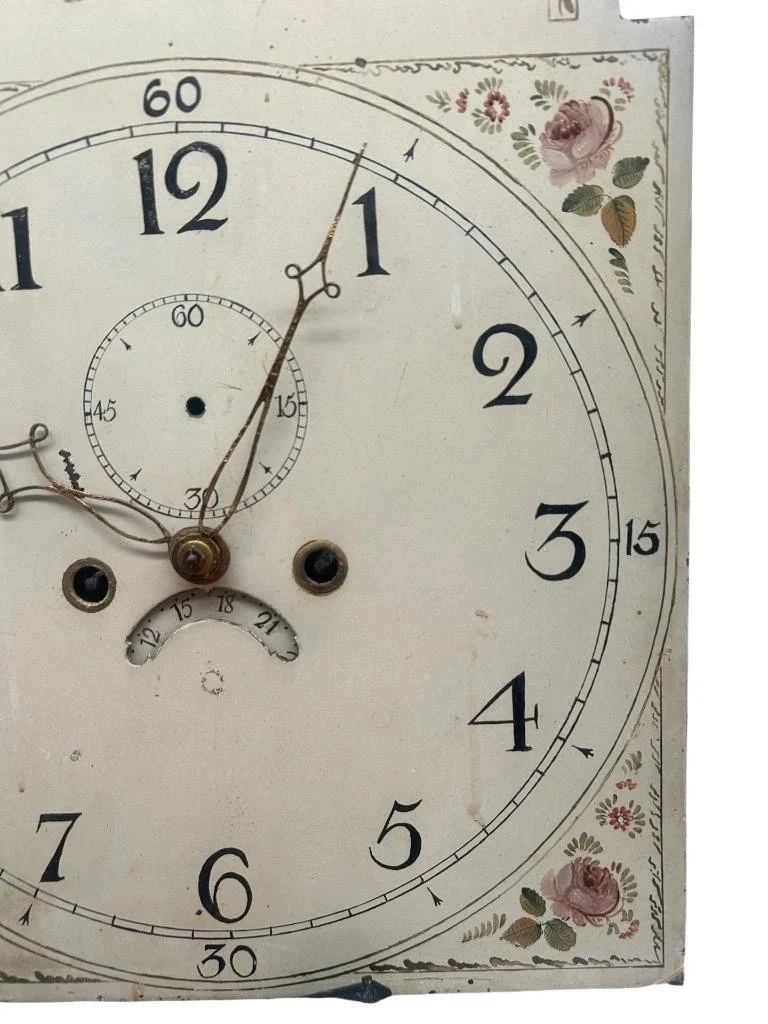




A hand-painted arch depicting a pair of game birds beside an ornamental fountain crowns this traditional longcase clock dial. The white enamelled metal dial face displays bold black Roman hour numerals encircled by an outer minute track with Arabic intervals. Delicate pink cabbage roses with green foliage adorn each of the four spandrels, framed within a pale border. Pierced hands mark the time, accompanied by a subsidiary seconds dial below the twelve and a semicircular calendar aperture displaying date numerals above the six.
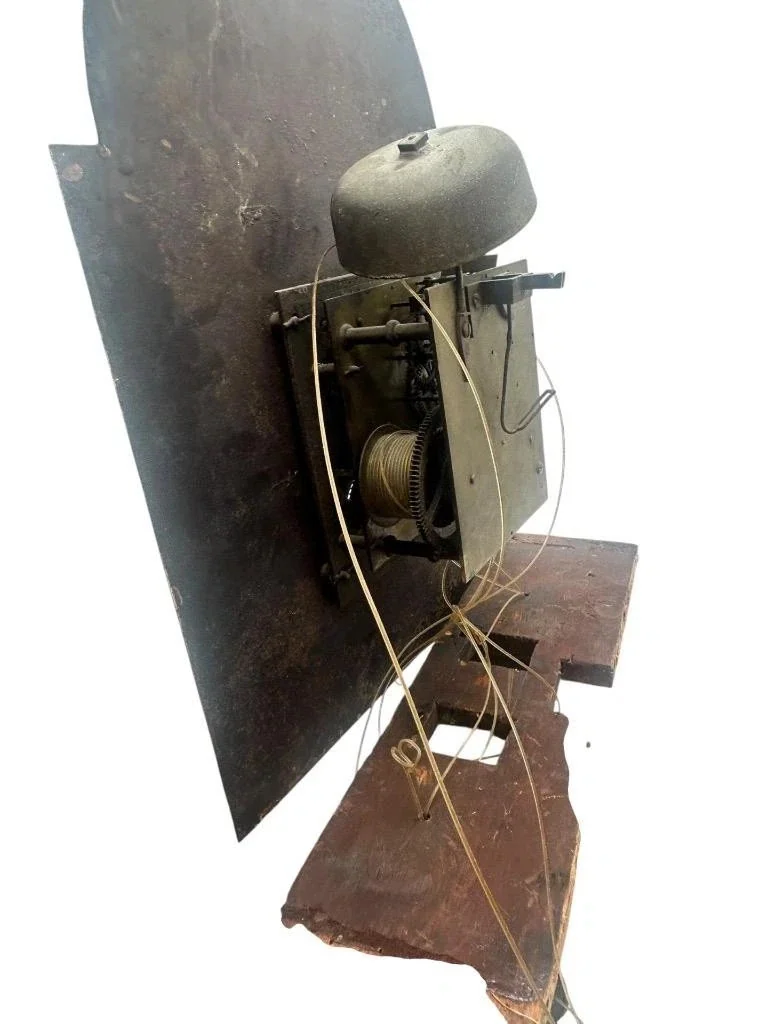
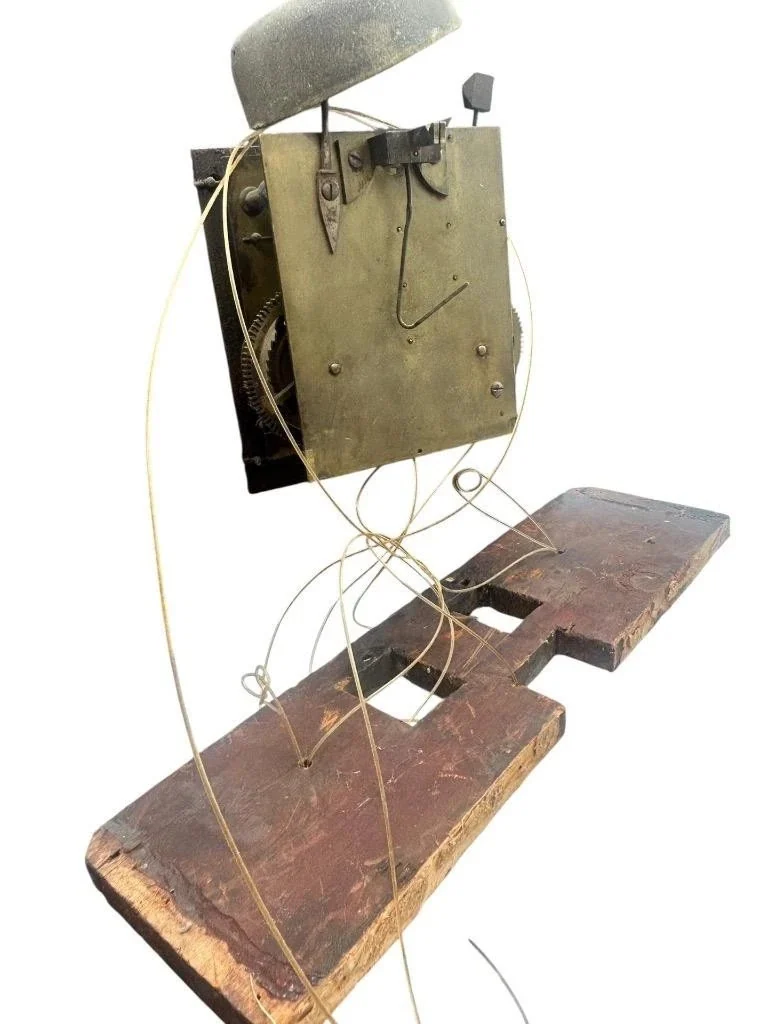
Behind the dial plate sits a twin-train brass movement fitted with four pillars, designed for an eight-day striking tallcase clock. The mechanism retains its top-mounted cast bell and striking hammer, alongside grooved winding barrels threaded with lines. An iron falseplate secures the movement directly to the painted sheet, which rests on an old notched pine seatboard prepared for fitting into a clock case hood.
Produced around 1840, this movement represents typical British provincial clockmaking of the early Victorian period. While the dial face is unsigned, the charming rural scene in the arch reflects the strong popular taste of the era for country sports and natural history motifs on domestic longcase clocks.
Overall the dial and movement assembly measures 50.8 cm high, 33.5 cm wide, and 14 cm deep to the back of the seatboard. The dial plate exhibits minor paint loss and flaking typical of age, while the brass movement shows an uncleaned patina. Pendulum, weights, and winding key are not present.
Condition The painted dial shows surface wear, light discolouration, and small paint chips around the winding holes and dial margins. The brass movement is uncleaned with age-appropriate surface oxidation. Pendulum, weights, and subsidiary seconds hand are missing; the timber seatboard has rough cut-outs and wear.
Dimensions 50.8 cm H x 33.5 cm W x 14 cm D
| Dimensions | 14 × 33.5 × 50.8 cm |
|---|---|
| Period | 19th Century |
| Style | Victorian |
| Colour | Gold, Multicoloured, White |
| material | Brass, iron, timber |
| Origin | United Kingdom |
| Price range | Under £1000, Under £2000 |
| Collection Era | Antique & Vintage |
Only logged in customers who have purchased this product may leave a review.
Reviews
There are no reviews yet.