


Enquire Today!
If you have any questions, requests or general enquiries, please do not hesitate to email us and we will get back to you as soon as possible regarding your enquiry.
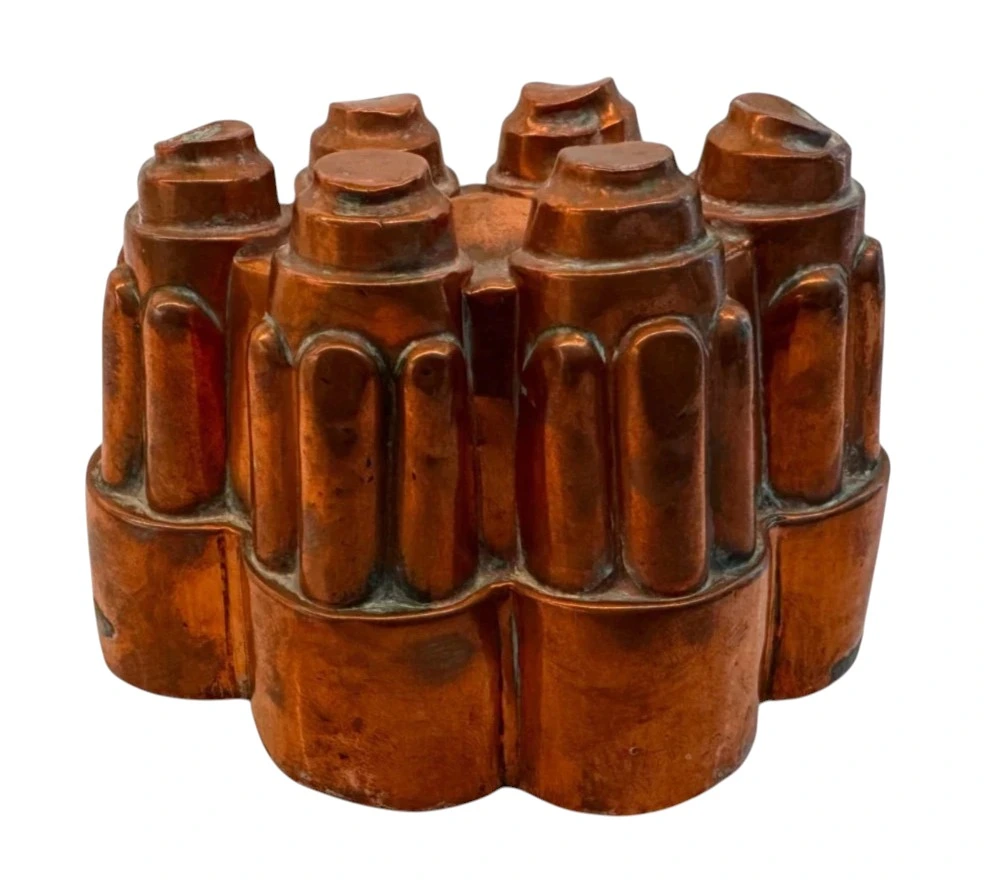

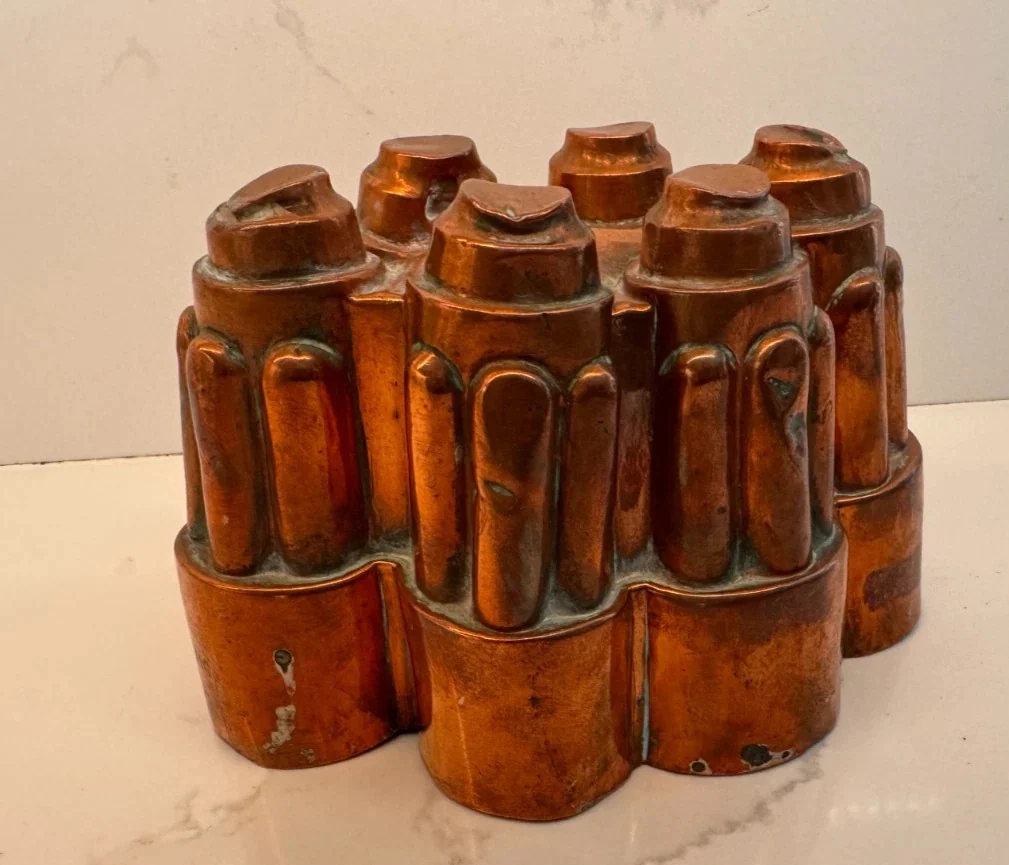



Eight architectural turrets rise from a lobed perimeter, giving this copper mould the appearance of a miniature fortified castle or pavilion. Each vertical column features bold recessed fluting surmounted by a stepped, two-tier cylindrical crown. The complex profile creates deep external channels that served both an ornamental and functional purpose, distributing the chilled mass effectively while casting striking relief onto the finished table dish.
Dating from around 1880, this piece belongs to the height of late Victorian culinary ambition, when elaborate gelatin desserts, cold blancmanges, and savoury aspics served as indispensable centrepieces for formal dinner parties. Copper was the supreme material for confectioners and household cooks due to its outstanding thermal conductivity. Submerging the filled mould in an ice bucket allowed cold to penetrate quickly, while a momentary dip into warm water before service softened the outermost layer just enough to let the set dessert slide out cleanly onto a serving platter.
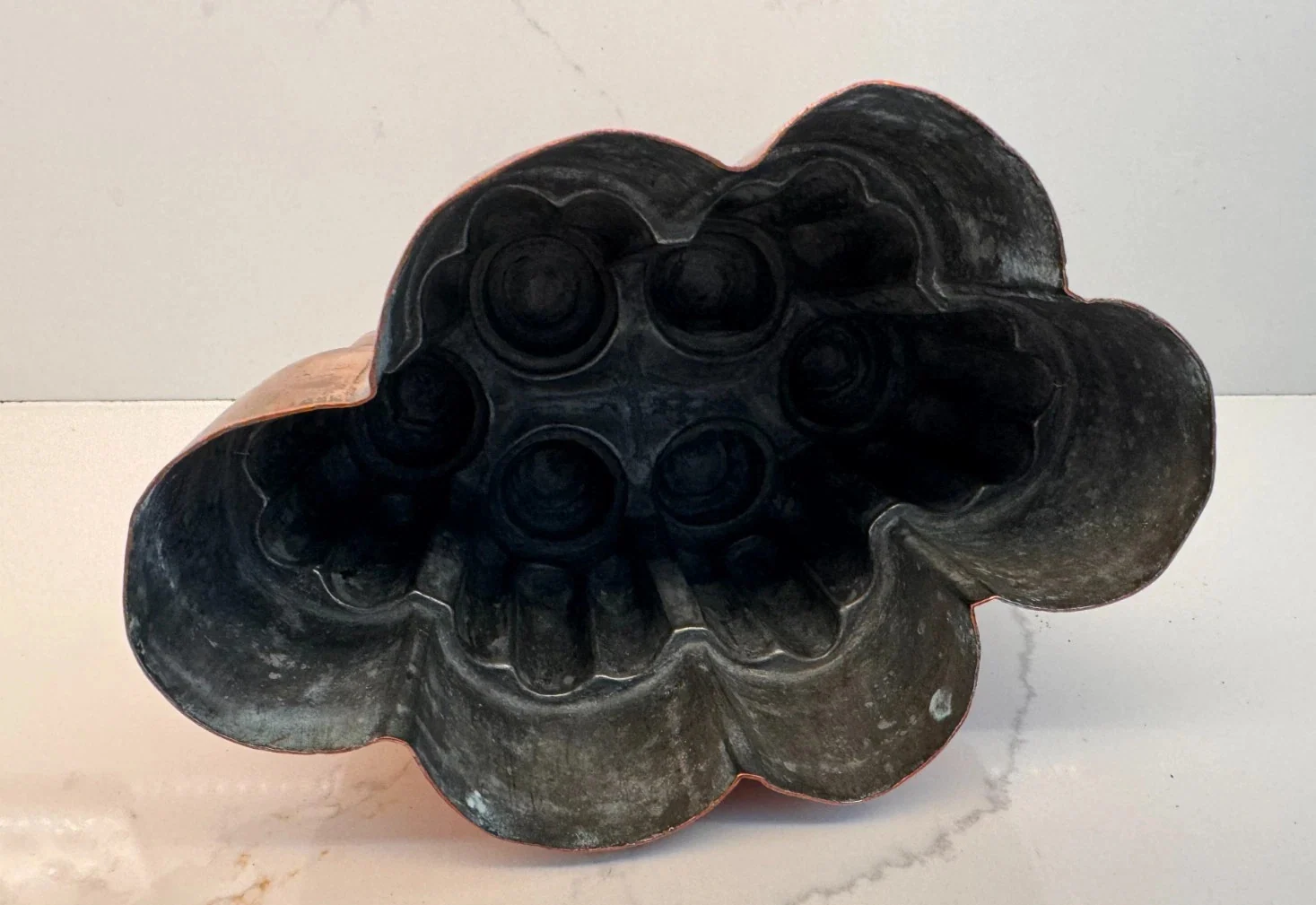
The structure is shaped from durable sheet copper, shaped with defined stamped contours and joined with solder along the rim. Within the cavity, the mould retains its traditional hand-wiped tin lining. In Victorian kitchen practice, copper cookware and dessert moulds required an interior layer of molten tin to prevent fruit acids and vinegar from reacting with bare copper and forming toxic verdigris. Over more than a century, this internal tin wash has patinated to a dark grey tone, showing honest oxidation and wear.
The exterior surface displays an unpolished, mellow copper colour with natural shading, soft surface scuffs, and small traces of verdigris residue nestled deep within the fluted crevices. Measuring 14 cm in length, 11 cm in width, and 11 cm in height, it stands firmly upright on its scalloped base, offering an evocative piece of historic kitchenalia suitable for display on a dresser rack or farmhouse shelf.
Presented in uncleaned country-house condition, the mould preserves its original proportions without structural tears or major deformation. Its tactile weight, warm metallic glow, and crisp period geometry make it an engaging survivor of nineteenth-century domestic metalwork.
Condition Good antique condition with expected age wear, scattered surface abrasions, minor dents, and traces of verdigris in the crevices. The interior tin lining is heavily patinated and worn to a dark grey. Solder lines remain sound.
Dimensions 14 cm x 11 cm x 11 cm
| Dimensions | 11 cm |
|---|---|
| Period | 19th Century |
| Colour | Bronze |
| material | Copper |
| Origin | United Kingdom |
| Price range | Under £1000, Under £2000, Under £500 |
| Collection Era | Antique & Vintage |
| Style | Victorian |
| Maker | Unbranded |
Only logged in customers who have purchased this product may leave a review.
Reviews
There are no reviews yet.