


Enquire Today!
If you have any questions, requests or general enquiries, please do not hesitate to email us and we will get back to you as soon as possible regarding your enquiry.

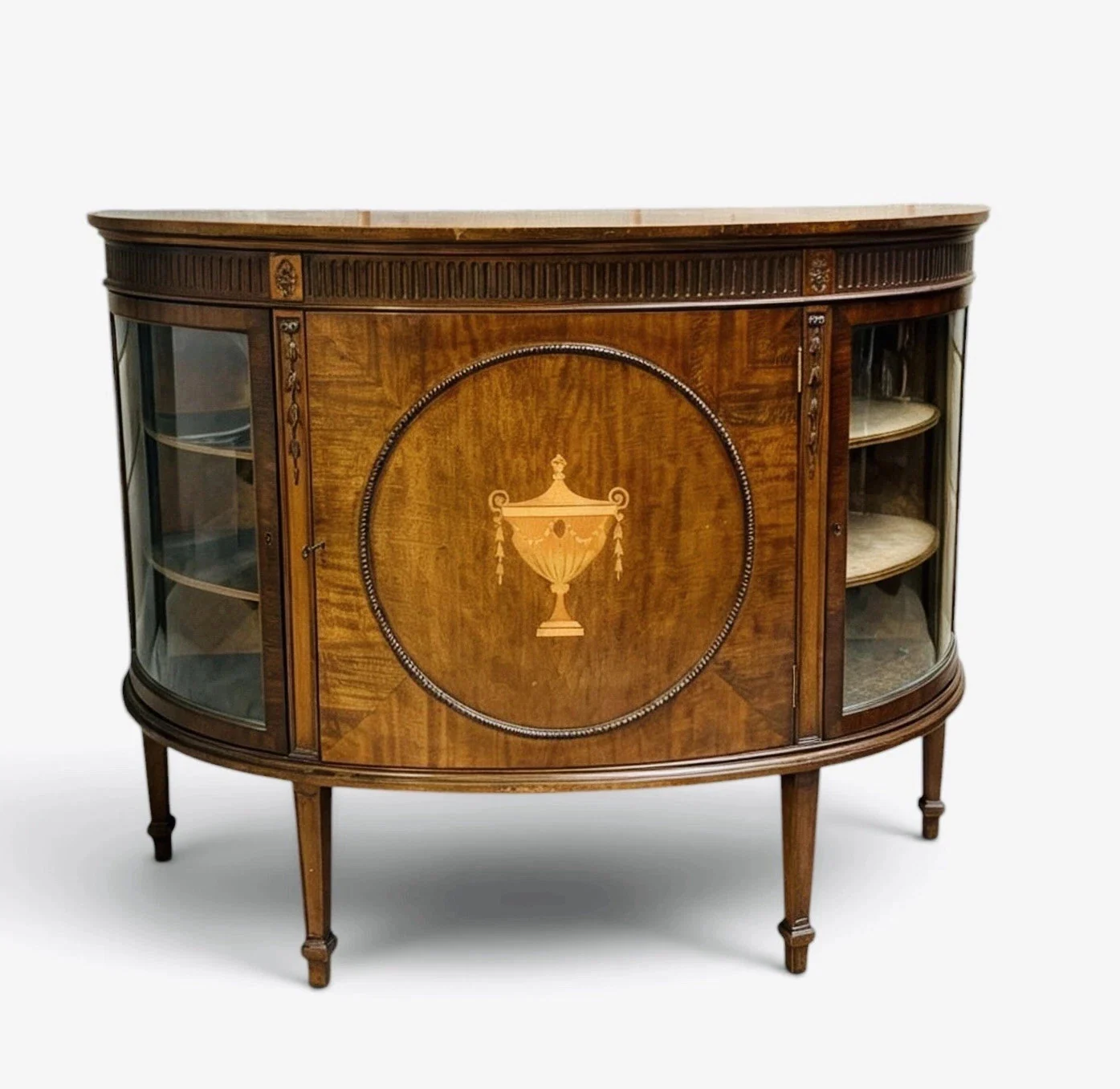

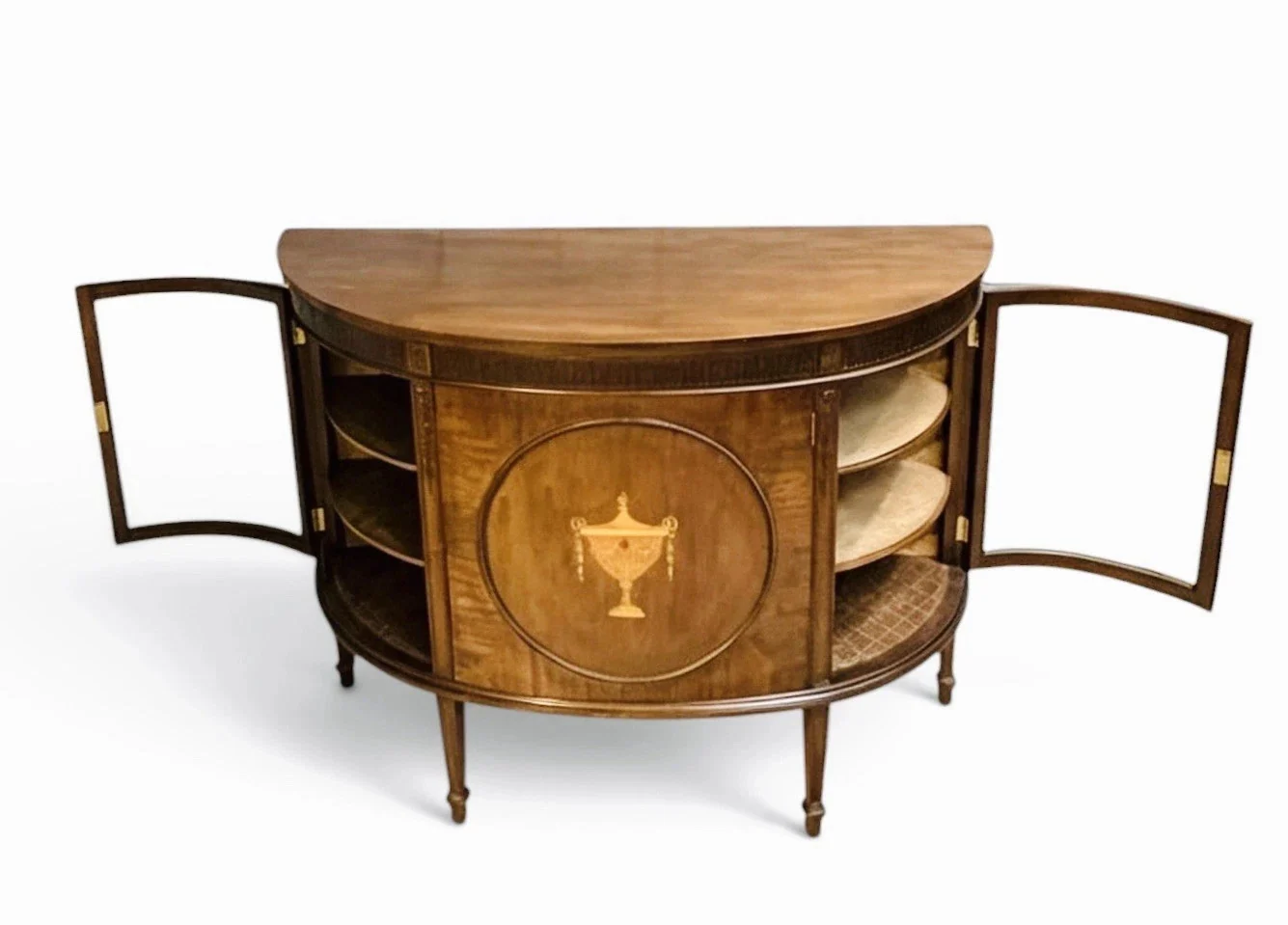
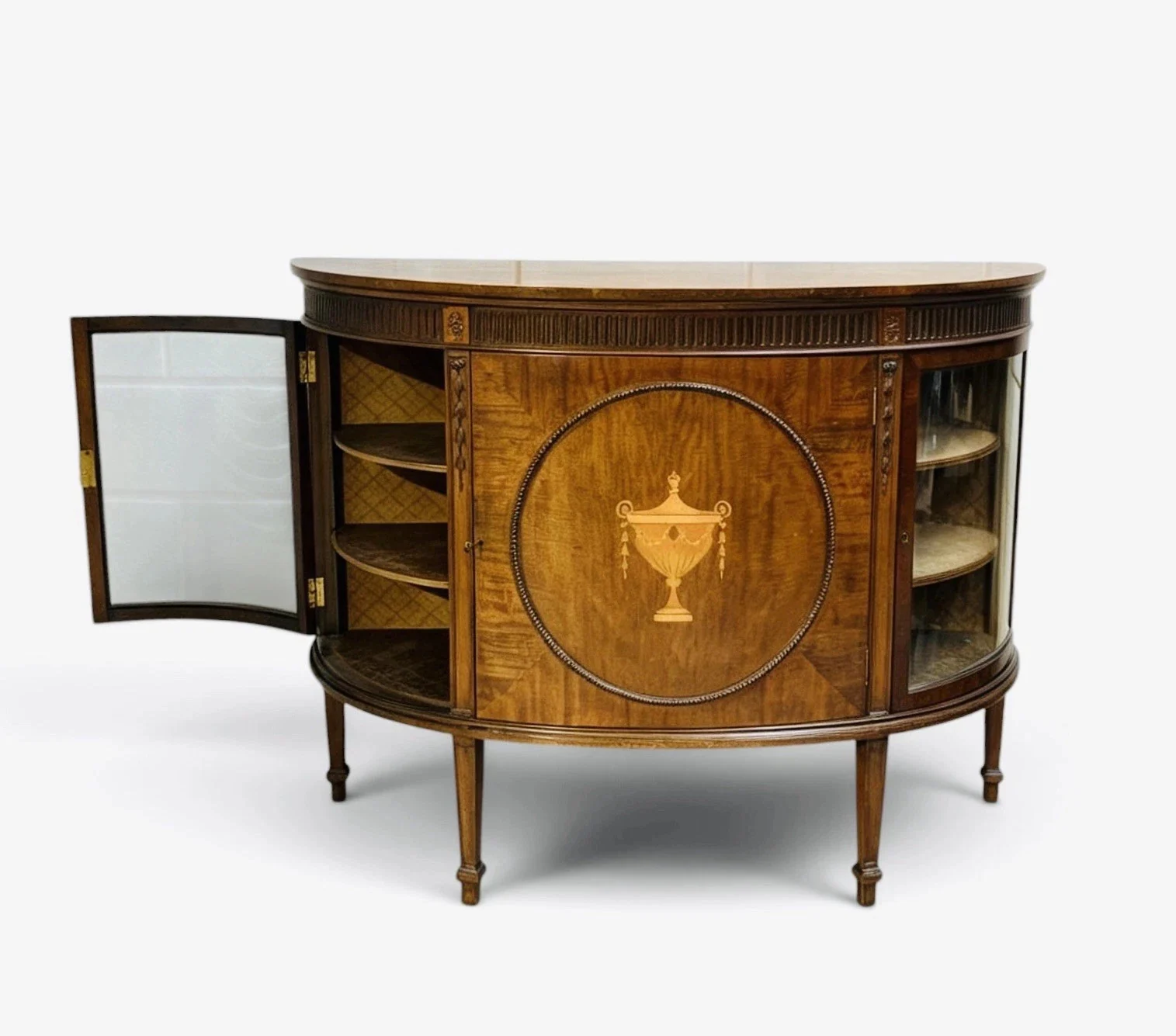
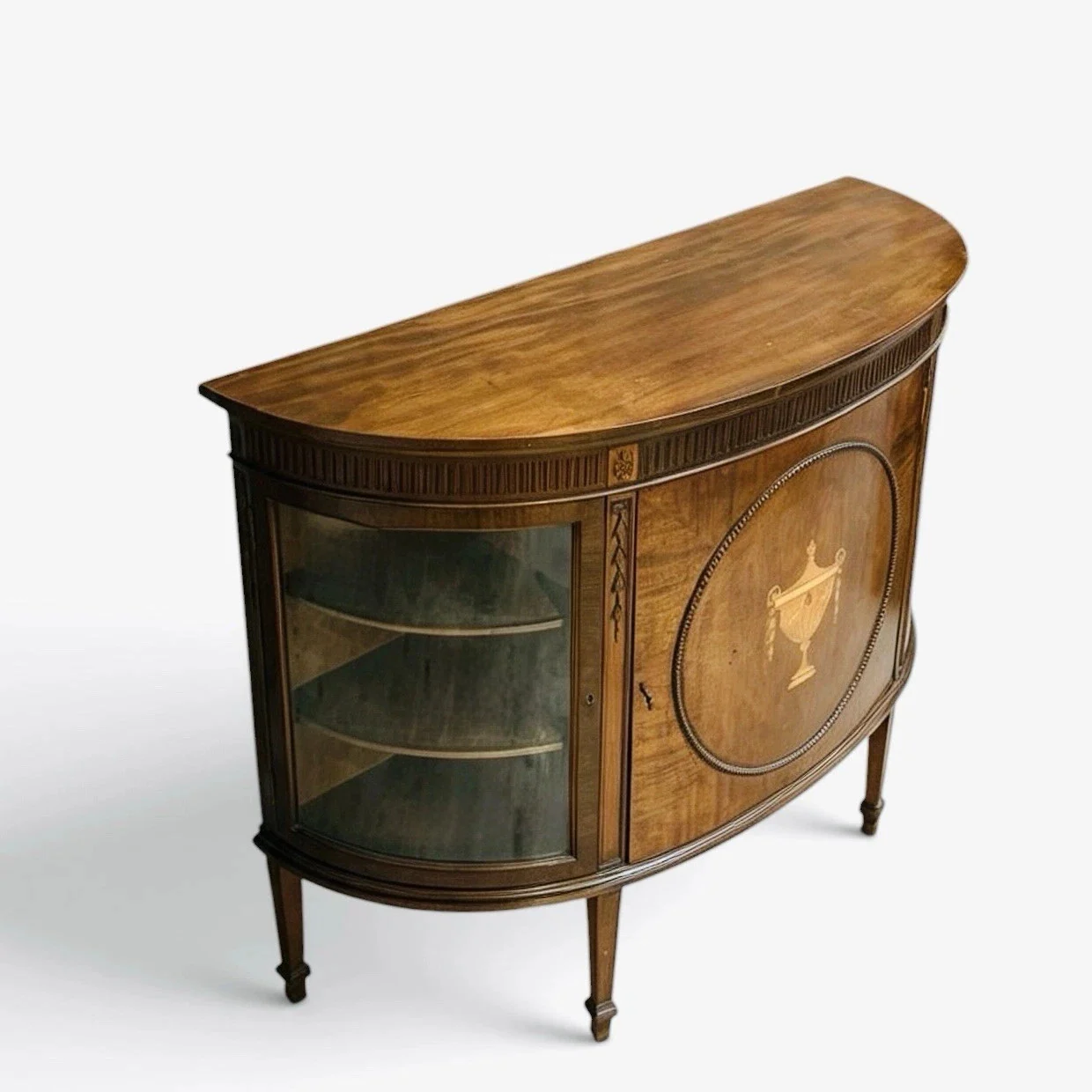
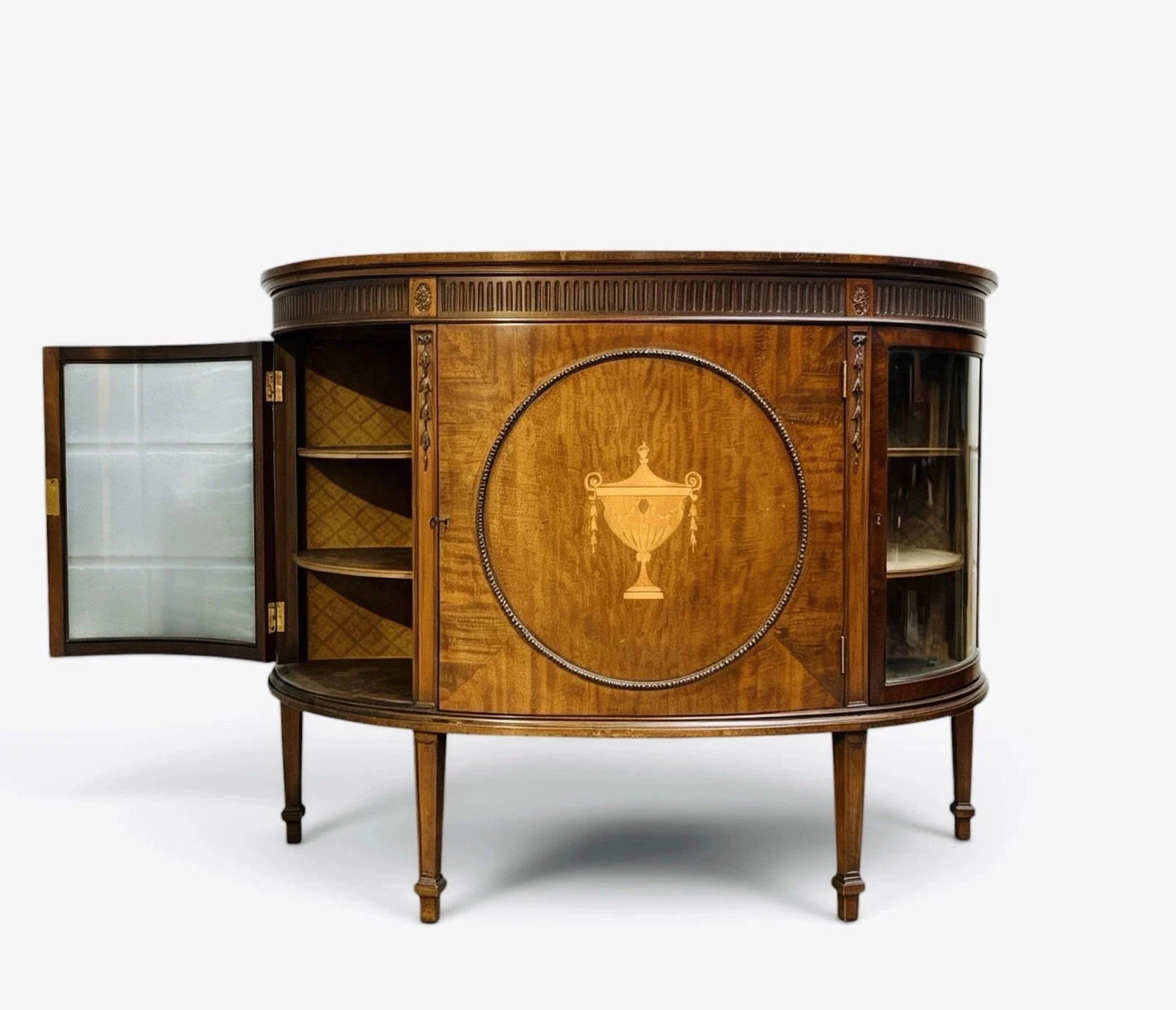
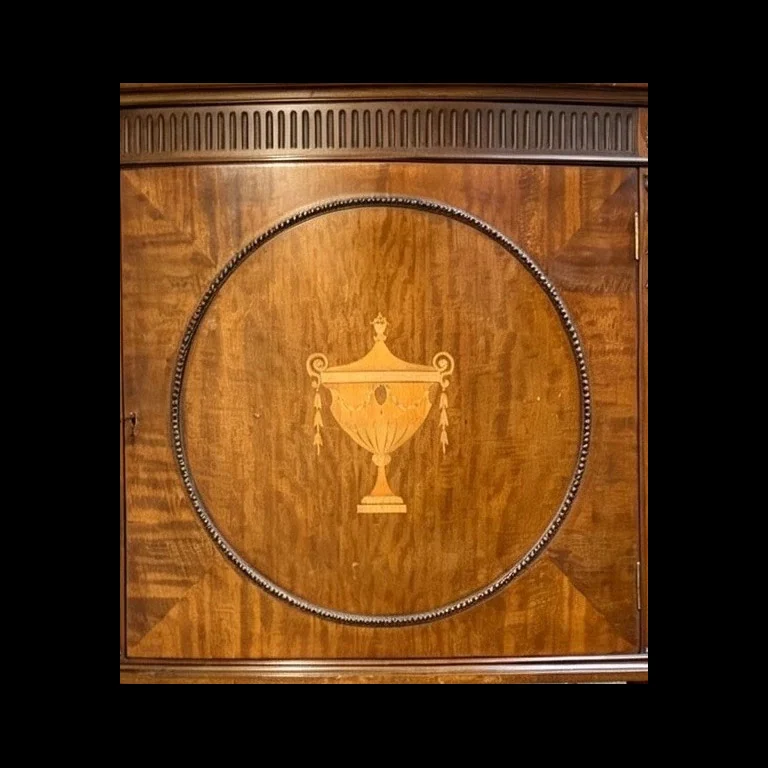


An inlaid classical urn in sycamore and contrasting timbers set within a beaded roundel commands the front of this demi-lune commode. Reflecting the refined aesthetic of the late Georgian neoclassical revival, the cabinet was made in the United Kingdom around 1910. The rich figuring of the walnut veneer is accented by delicate boxwood and sycamore stringing across the central door and flanking pilasters.
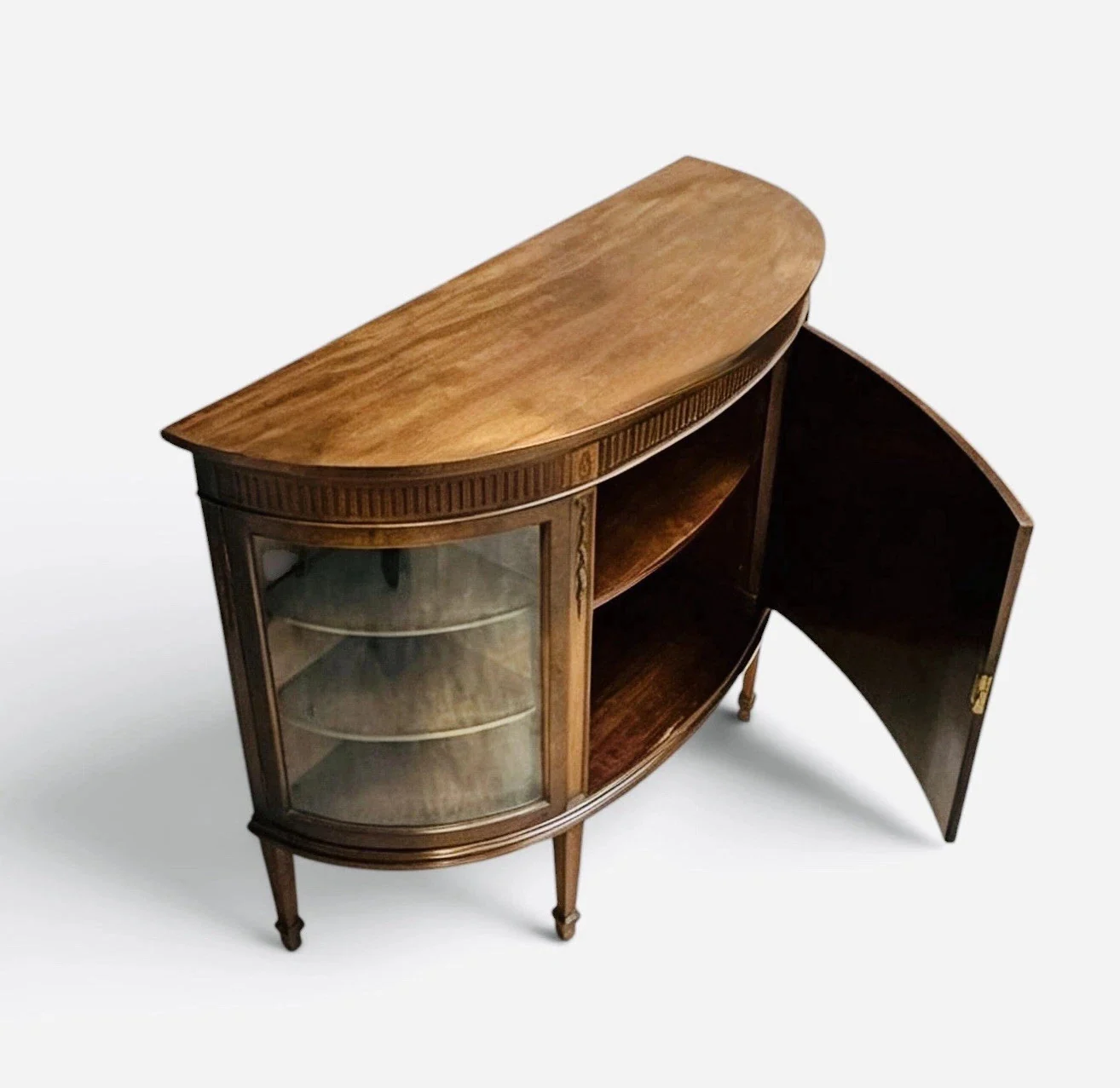
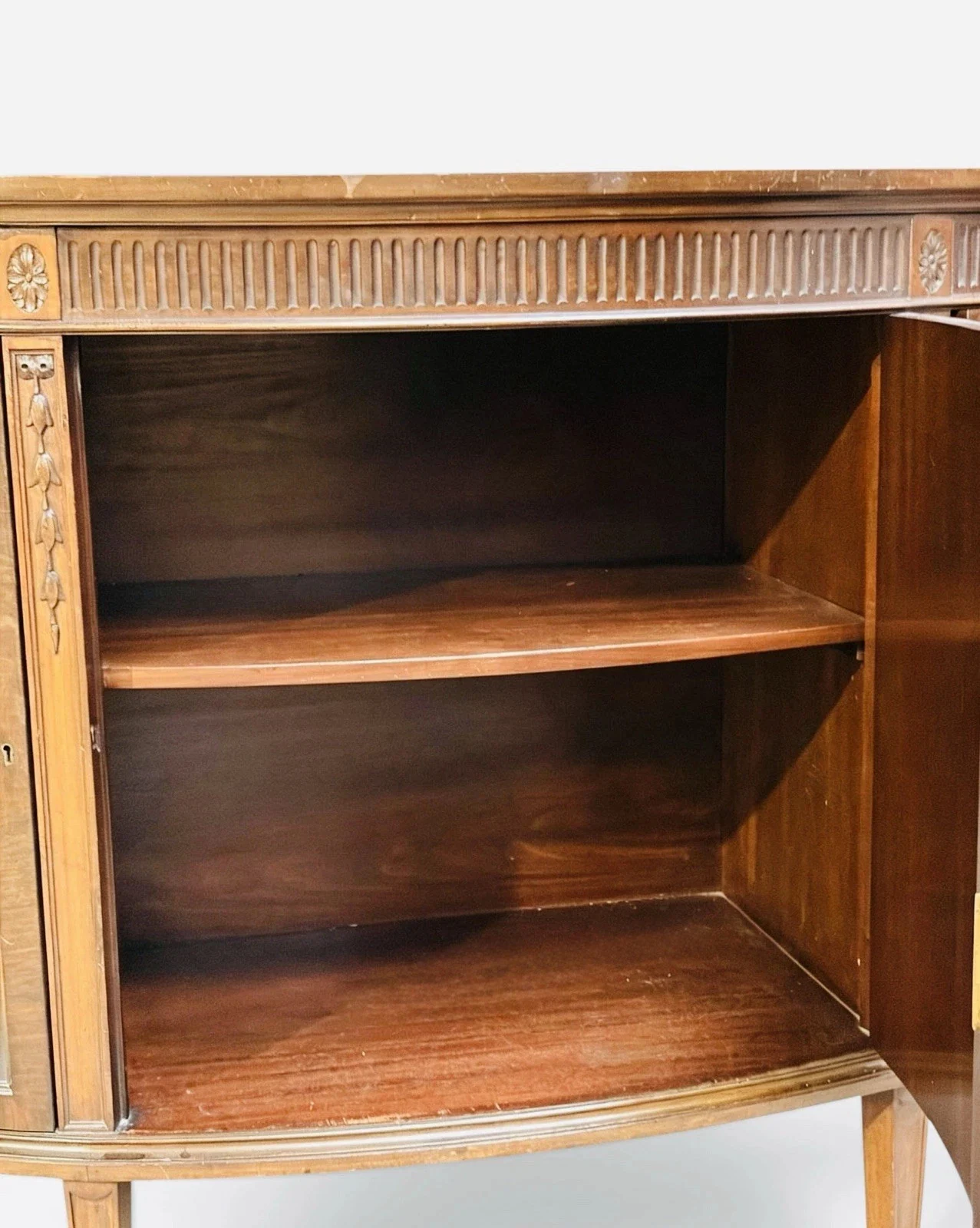
Beneath the rounded, crossbanded top surface sits a continuous frieze decorated with vertical fluting, punctuated over each upright by carved rosette roundels and trailing foliate drops. The curved structure is cleanly engineered, providing a smooth semicircular profile designed to sit flat against a drawing room or hallway wall while presenting an elegant sweep into the room.
Practical storage is split between three distinct compartments. Flanking the centre are two bowed glazed display doors enclosing corner-curved display shelves lined for porcelain or glassware. The central cupboard opens to reveal a deep curved compartment with fitted shelving for concealed storage. Brass hardware, including hinges and an original working key, secures the compartments.
The whole piece is raised on four slender, square-tapered legs terminating in spade feet, giving the substantial commode a light, elevated stance. It measures 94 cm in height, 123 cm in width, and 45 cm in depth, offering generous display and cupboard capacity within a neat architectural footprint.
Condition Very good antique condition, with faint surface marks, light edge wear to the top rim, and minor historic handling marks consistent with age.
Dimensions 94 cm H x 123 cm W x 45 cm D
| Dimensions | 45 × 123 × 94 cm |
|---|---|
| Period | 20th Century |
| Style | Sheraton Revival |
| Colour | Brown |
| material | Brass, Glass, Sycamore, Walnut |
| Origin | United Kingdom |
| Price range | £2000+ |
| Collection Era | Antique & Vintage |
Only logged in customers who have purchased this product may leave a review.
Reviews
There are no reviews yet.