


Enquire Today!
If you have any questions, requests or general enquiries, please do not hesitate to email us and we will get back to you as soon as possible regarding your enquiry.


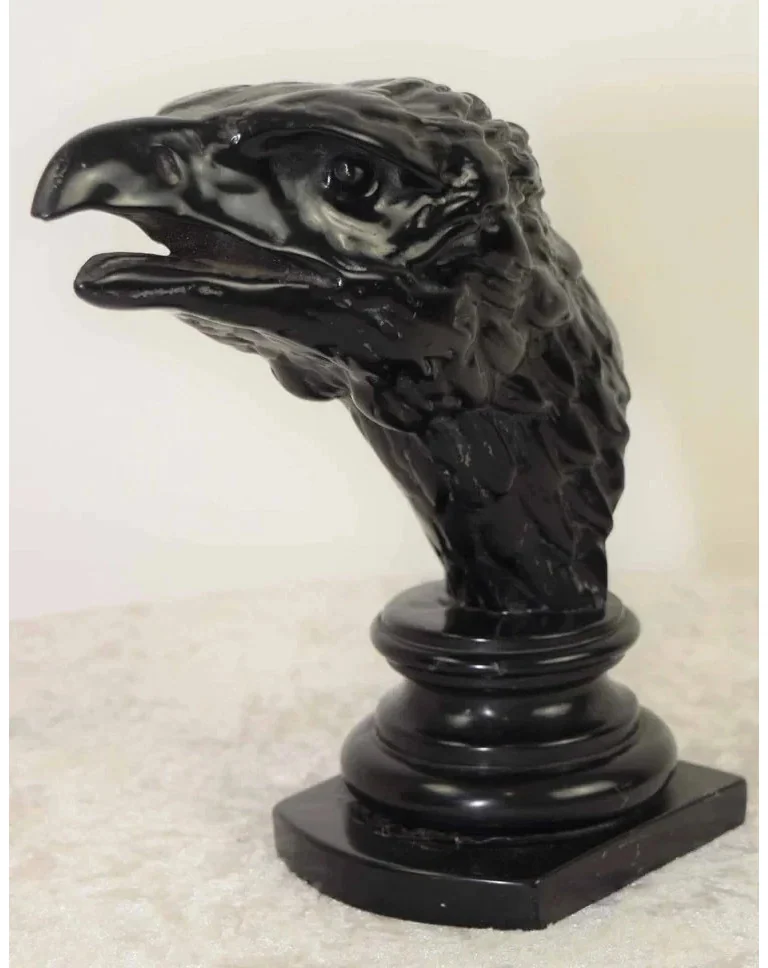
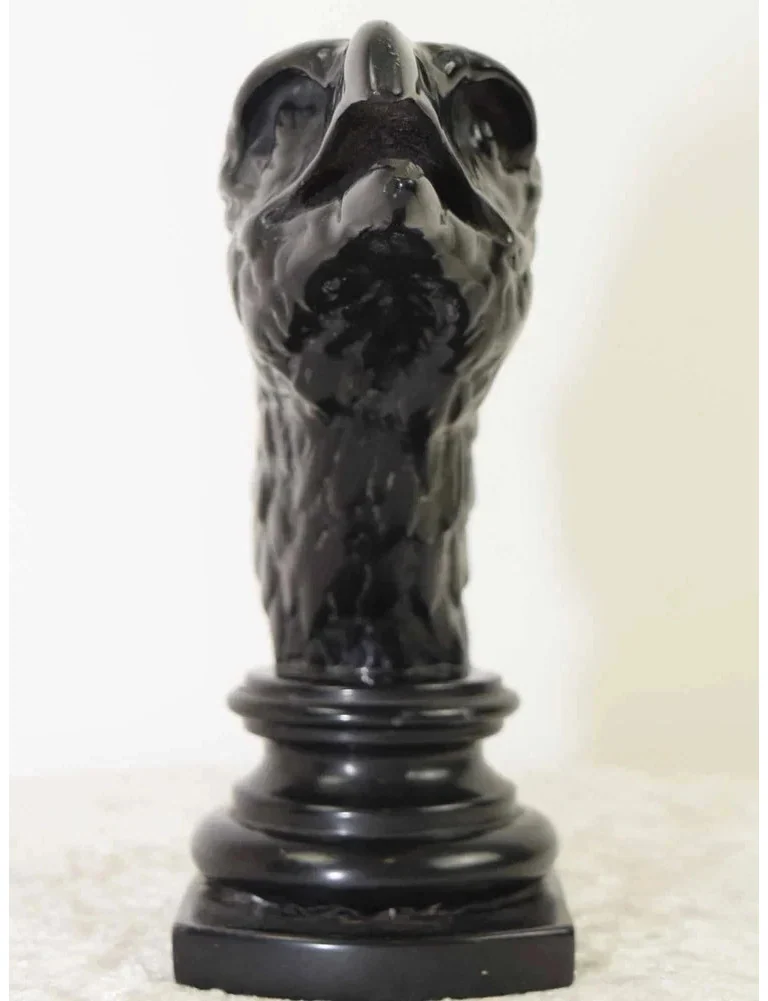

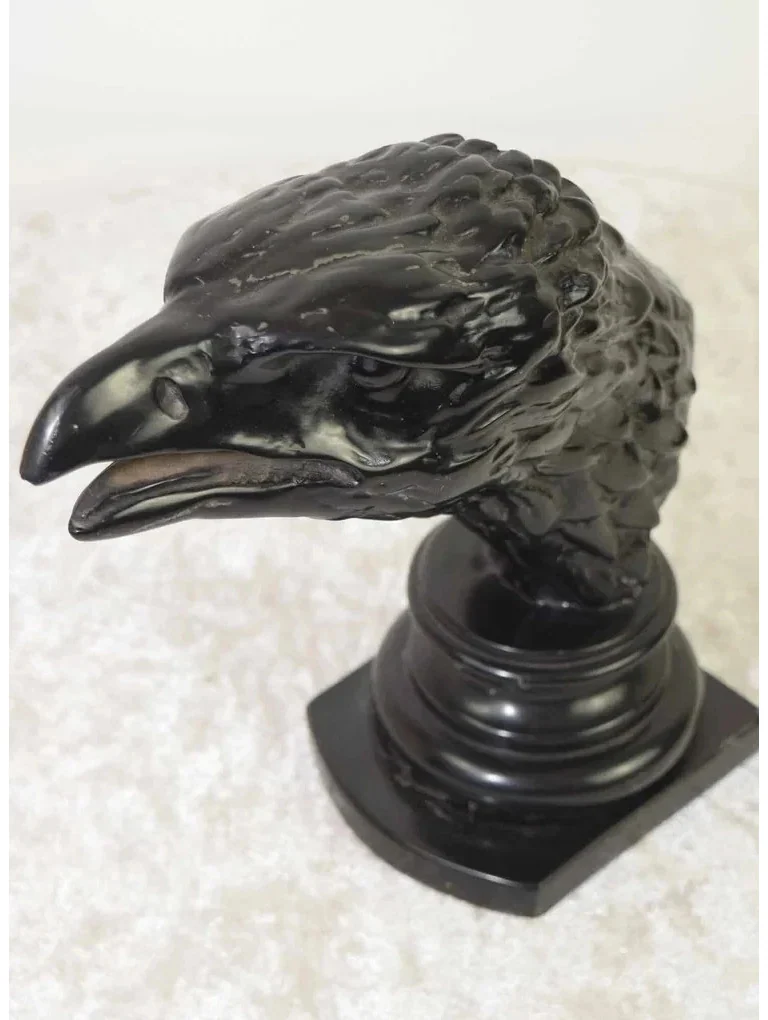


A sharply modelled eagle head projects horizontally forward with an open, downward-curving beak, revealing a hollowed interior cavity and defined beak edges. A pronounced supraorbital ridge overhangs the incised eye, creating an alert profile characteristic of classical raptor carvings. Layered feathering envelopes the cranium and throat, rendered in overlapping scale-like plumage around the crown that gradually lengthens into broader, chiselled quills towards the rear nape and lower neck.
The lower neck terminates cleanly into an integral turned pedestal socle, embellished with concentric rounded mouldings above a square stepped base. This pedestal configuration draws directly on late Georgian and Regency decorative forms, where fierce avian heads were widely adopted for architectural furniture, mirror crestings, and bronze mounts. The stepped plinth provides effective counterweight to the forward-reaching beak, ensuring stability on tabletop surfaces.
Cast in a dense synthetic composition, likely bakelite or an early cast phenolic resin, the figure simulates the appearance of polished black slate or basalt. The surface presents a soft semi-gloss sheen, accented by subtle pale greyish highlights along the beak contours, brow edges, and plumage recesses that evoke the natural patina of weathered stone. The smooth, lustrous rings of the socle provide a clean visual contrast against the deeply textured modelling of the plumage.
Produced in the early to mid 20th century, the sculpture functions as an eye-catching library ornament, study desk paperweight, or bookcase bust. Its compact footprint makes it adaptable for mantelpiece or shelving arrangements, offering the visual presence of antique carved stone or patinated bronze in a durable composite medium.
Overall proportions measure 20 cm in height, with an overall depth of 20 cm from the tip of the hooked beak to the back of the head, and a width of 9 cm across the square base. The flat, weighted underside rests securely on flat furniture surfaces.
Condition Minor age-related surface wear, faint scuffs, and small nicks along the plinth base corners, with light pale residue in the crevices consistent with age.
Dimensions 20 cm high x 9 cm wide x 20 cm deep
| Dimensions | 20 × 9 × 20 cm |
|---|---|
| Period | 20th Century, Early To Mid-20Th Century |
| Colour | Black |
| material | resin |
| Price range | Under £1000, Under £2000, Under £500 |
| Collection Era | Antique & Vintage |
| Style | Regency Style |
Only logged in customers who have purchased this product may leave a review.
Reviews
There are no reviews yet.