


Enquire Today!
If you have any questions, requests or general enquiries, please do not hesitate to email us and we will get back to you as soon as possible regarding your enquiry.
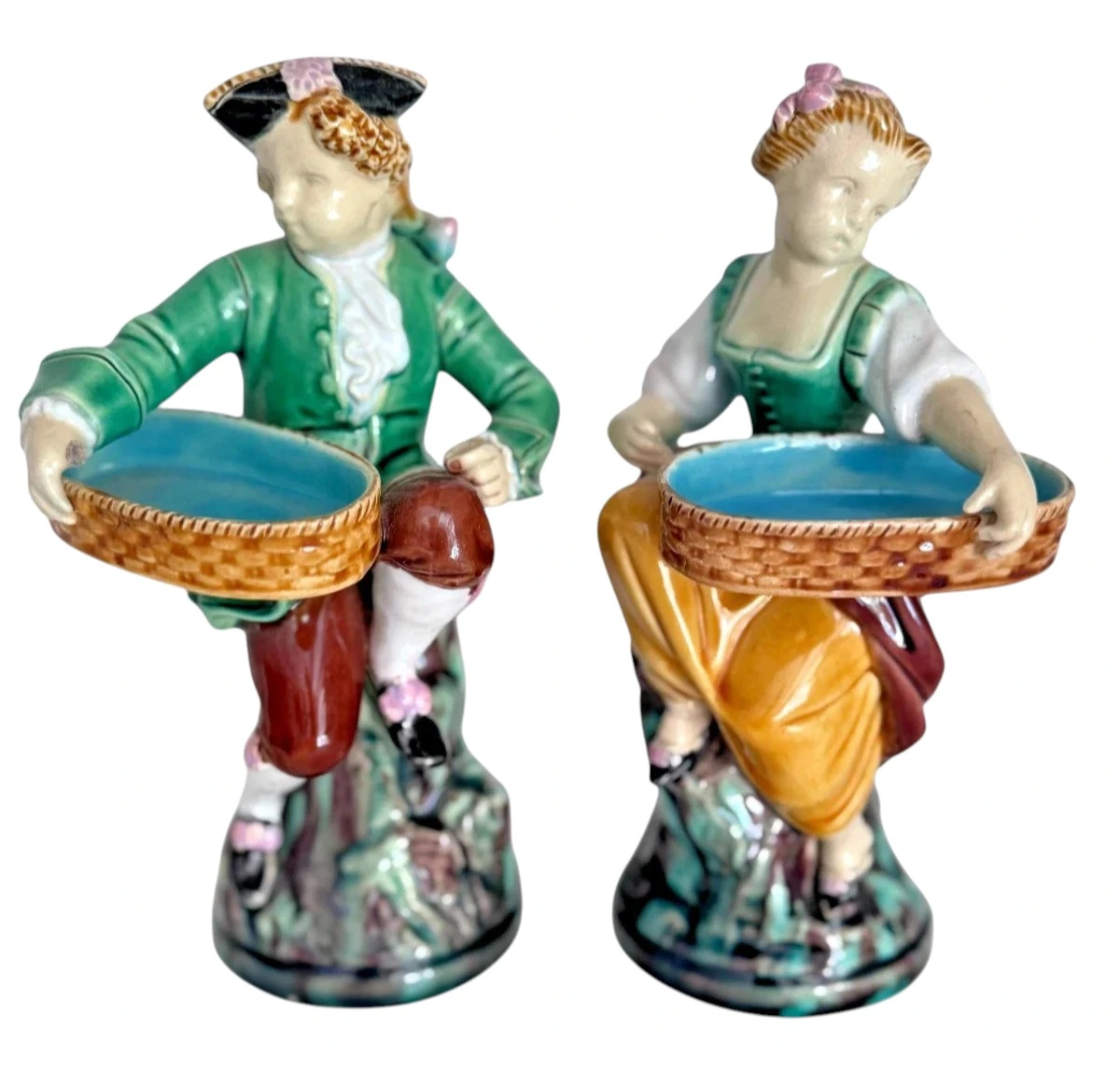
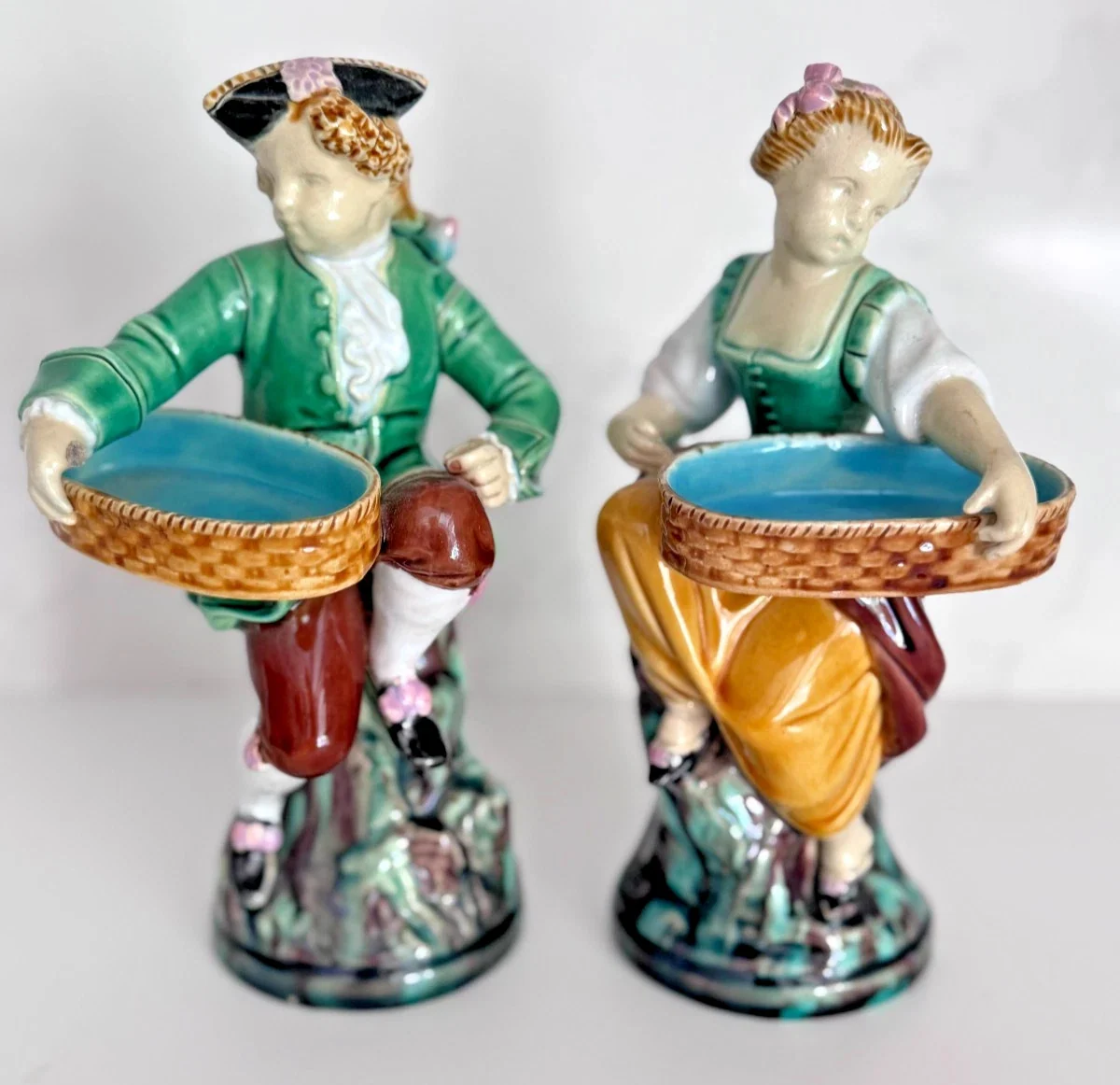

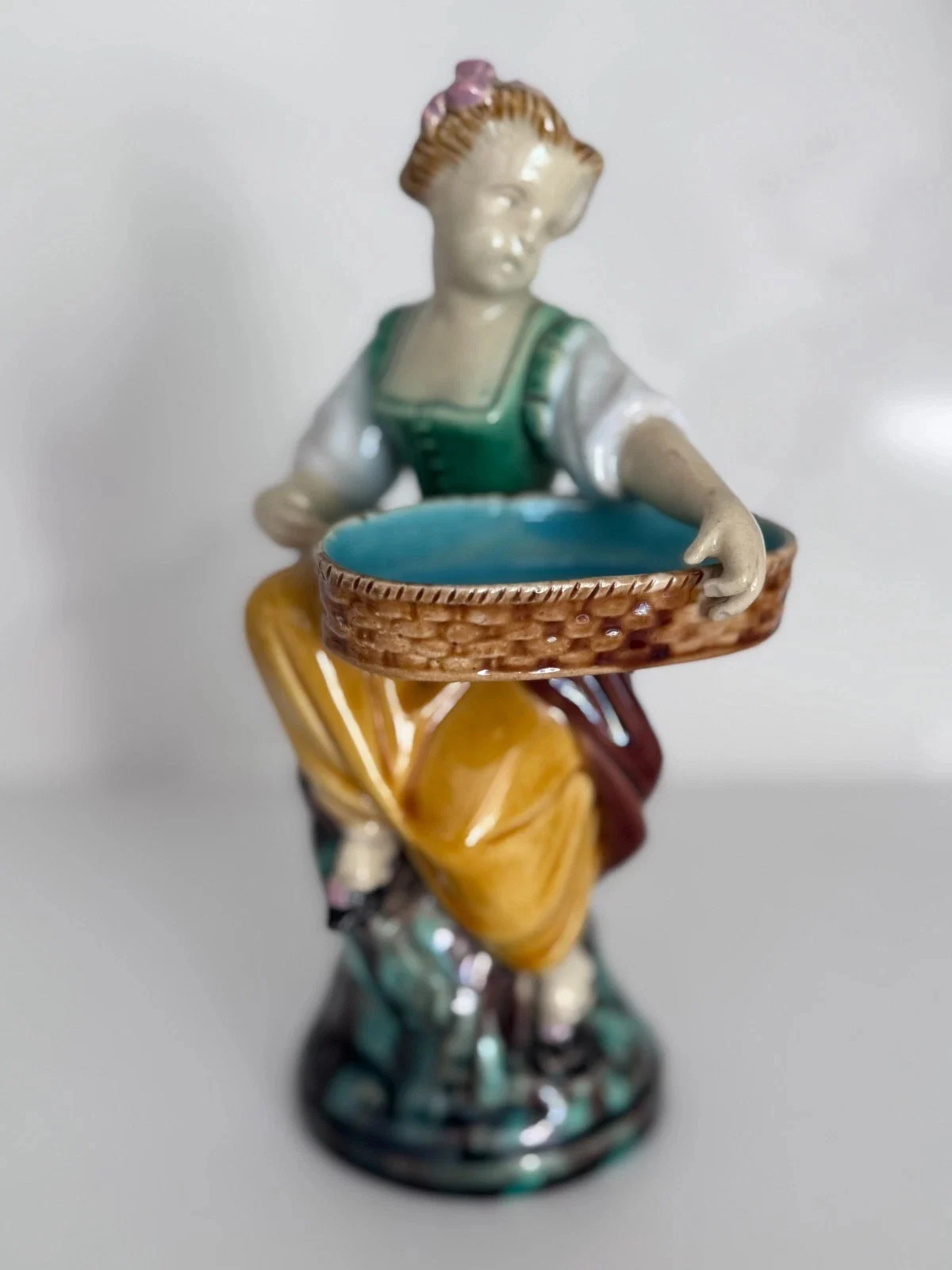
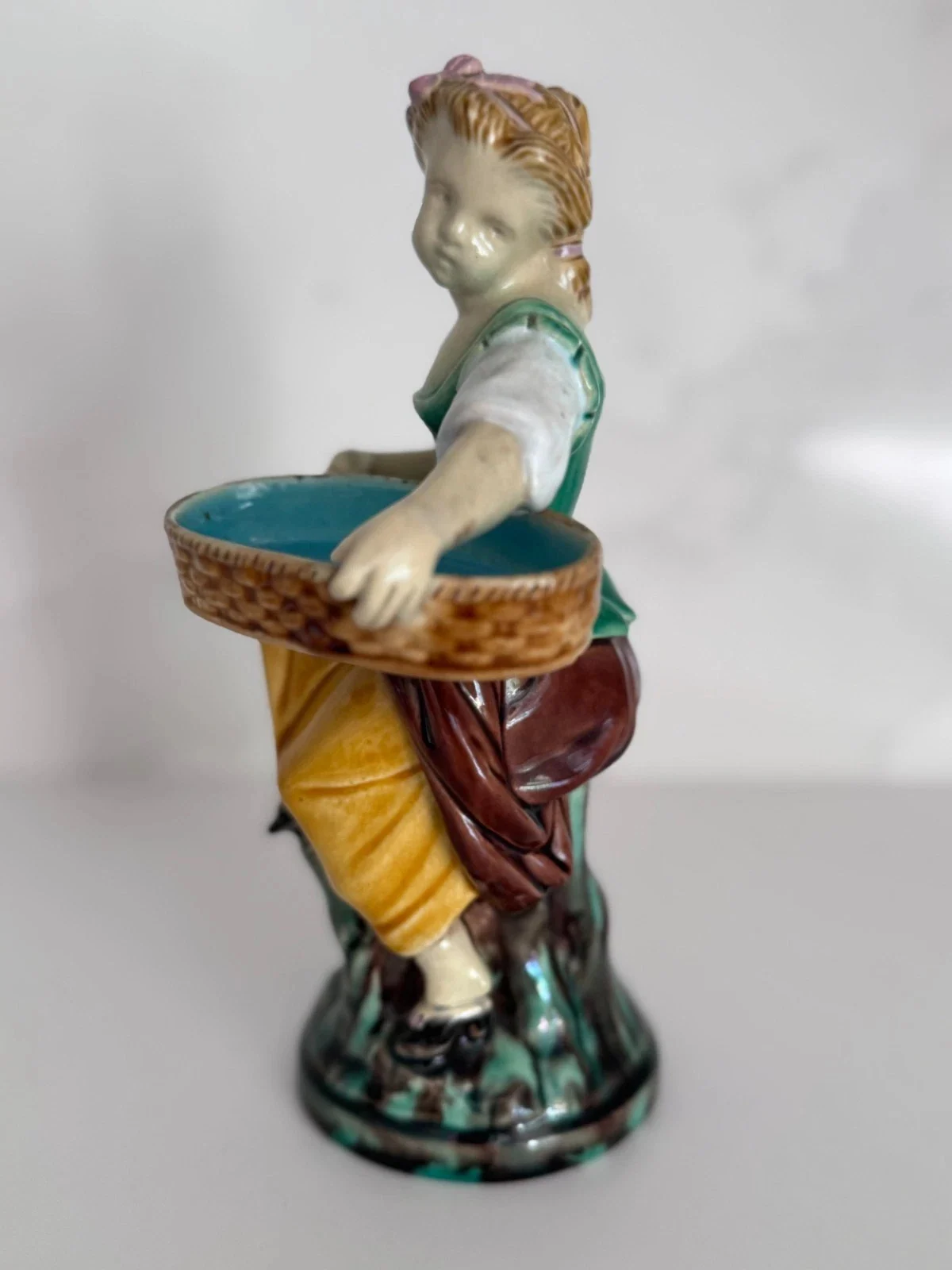


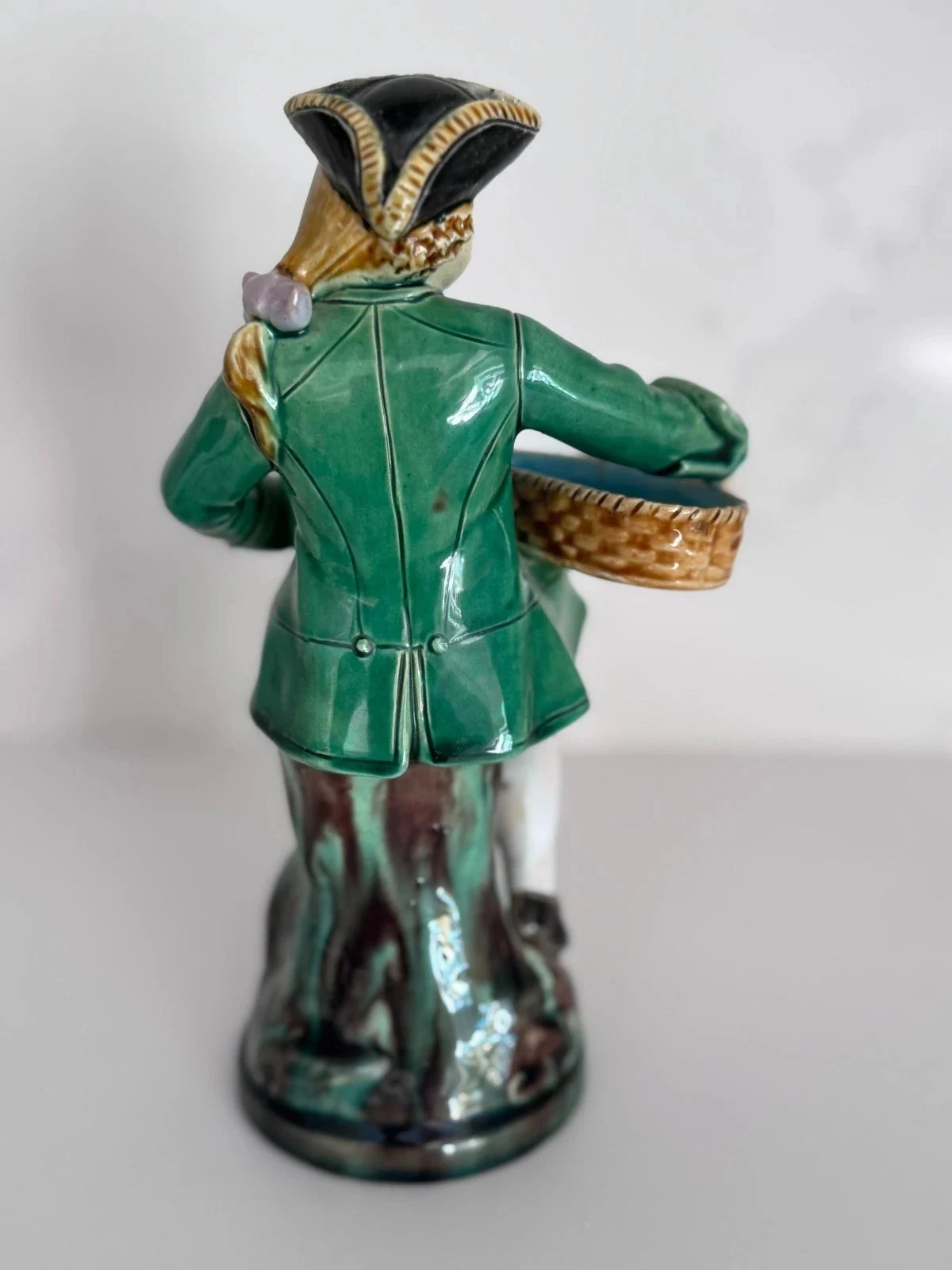
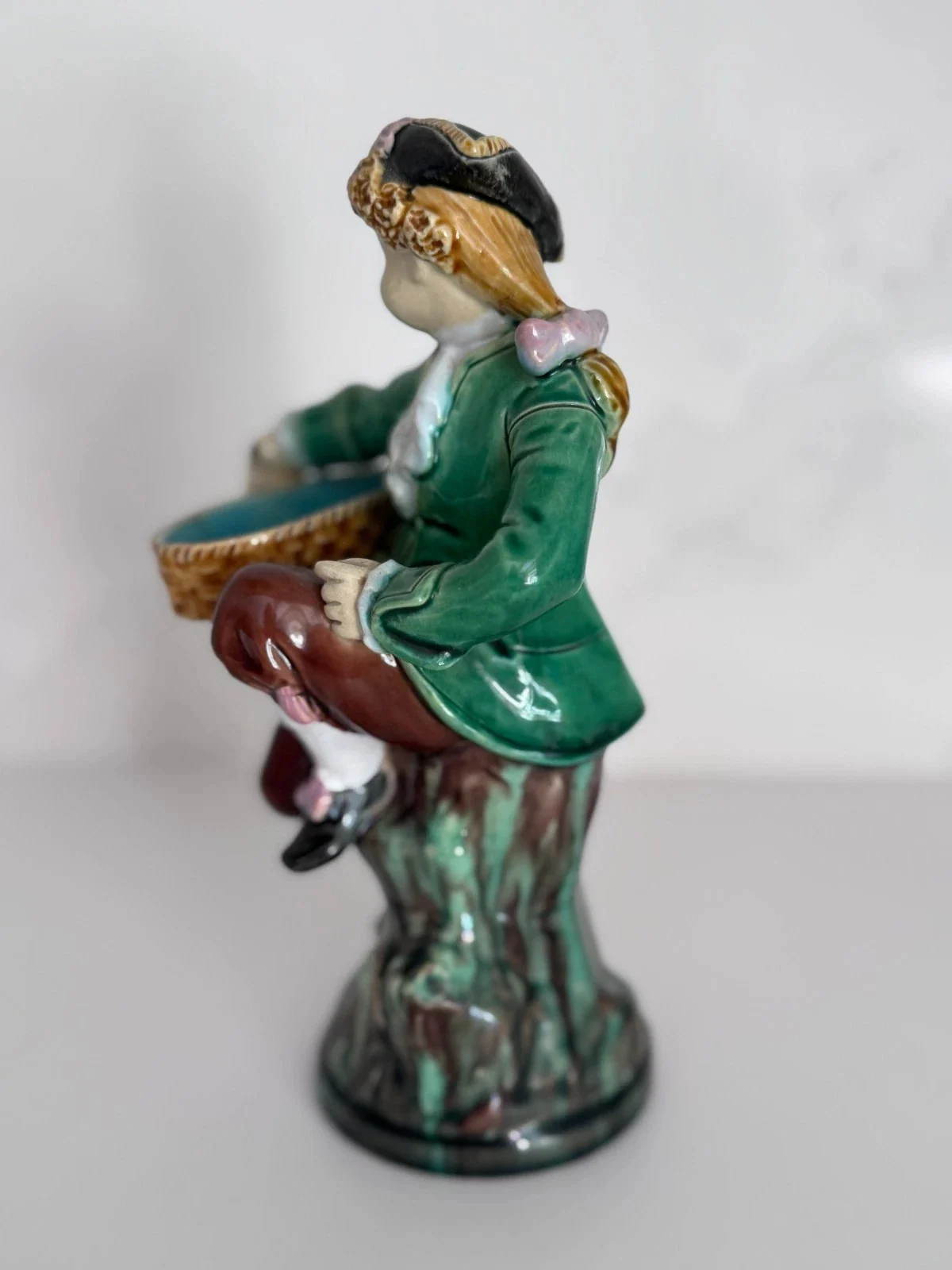
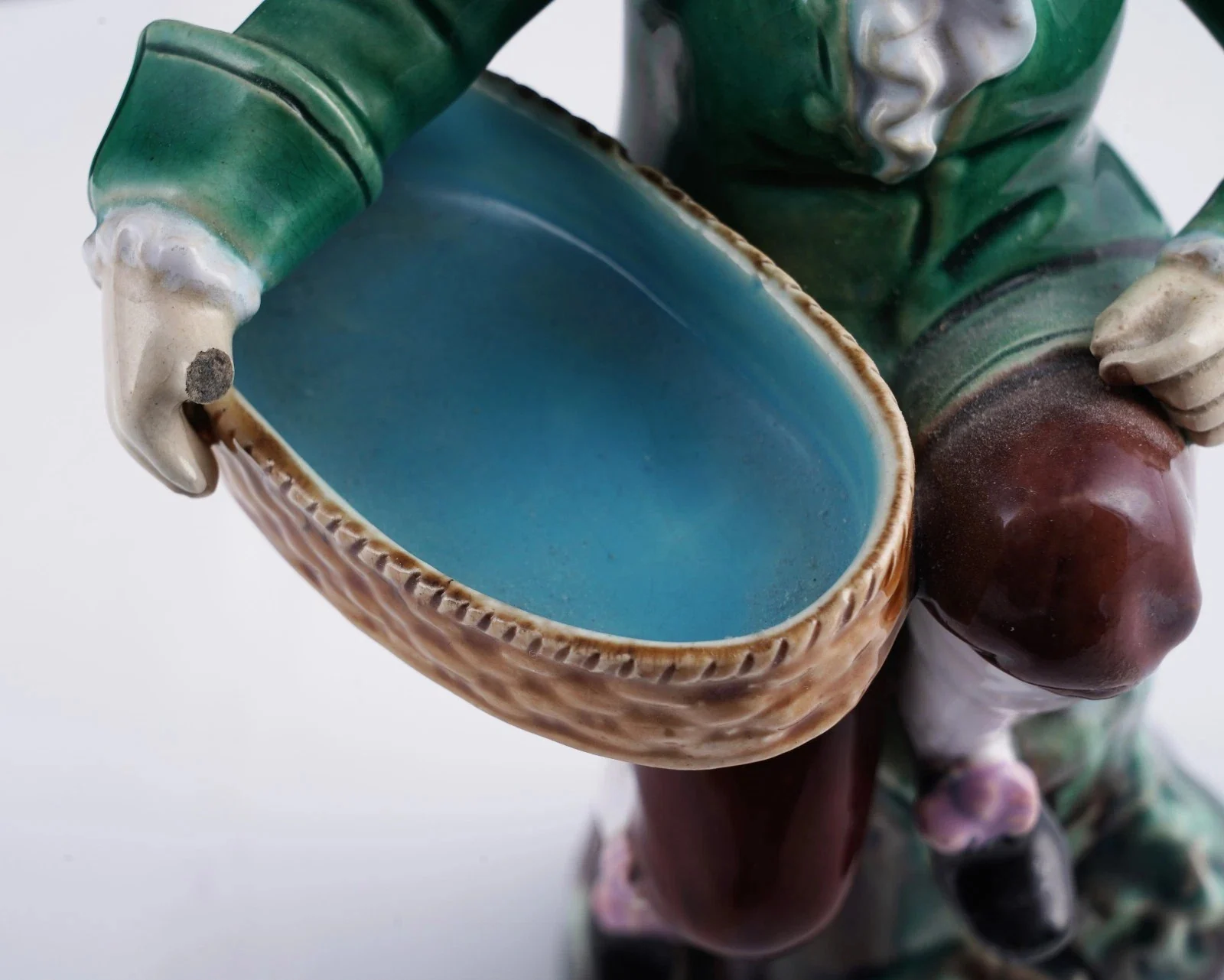


Moulded in lead-glazed earthenware, this pair of figural sweetmeat dishes depicts a young boy and girl dressed in stylised 18th-century attire. Each youth is seated beside a naturalistic tree stump, extending both hands to support an open oval basket. Traditionally identified as the ‘Hogarth’ boy and girl, the models were created by the French sculptor Albert-Ernest Carrier-Belleuse during his tenure in England.
The ceramic displays the vibrant, translucent coloured glazes characteristic of Victorian majolica. Both figures wear rich emerald-green bodices and jackets over white linen shirts, accented with warm ochre and chocolate-brown drapery. The rustic tree-trunk bases are washed in mottled moss-green and brown glazes, while the interiors of the woven-textured baskets are pooled with vivid turquoise enamel.
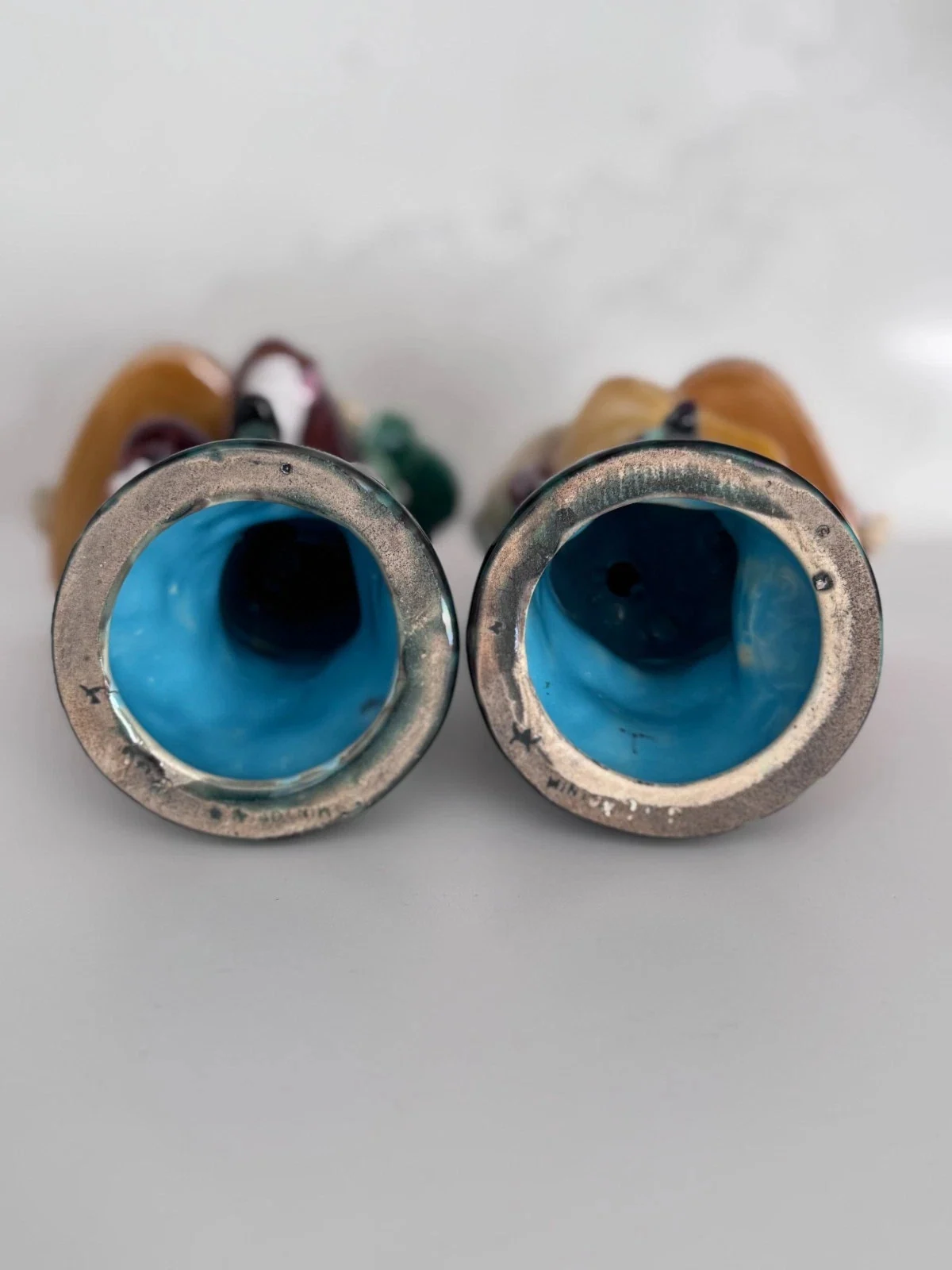
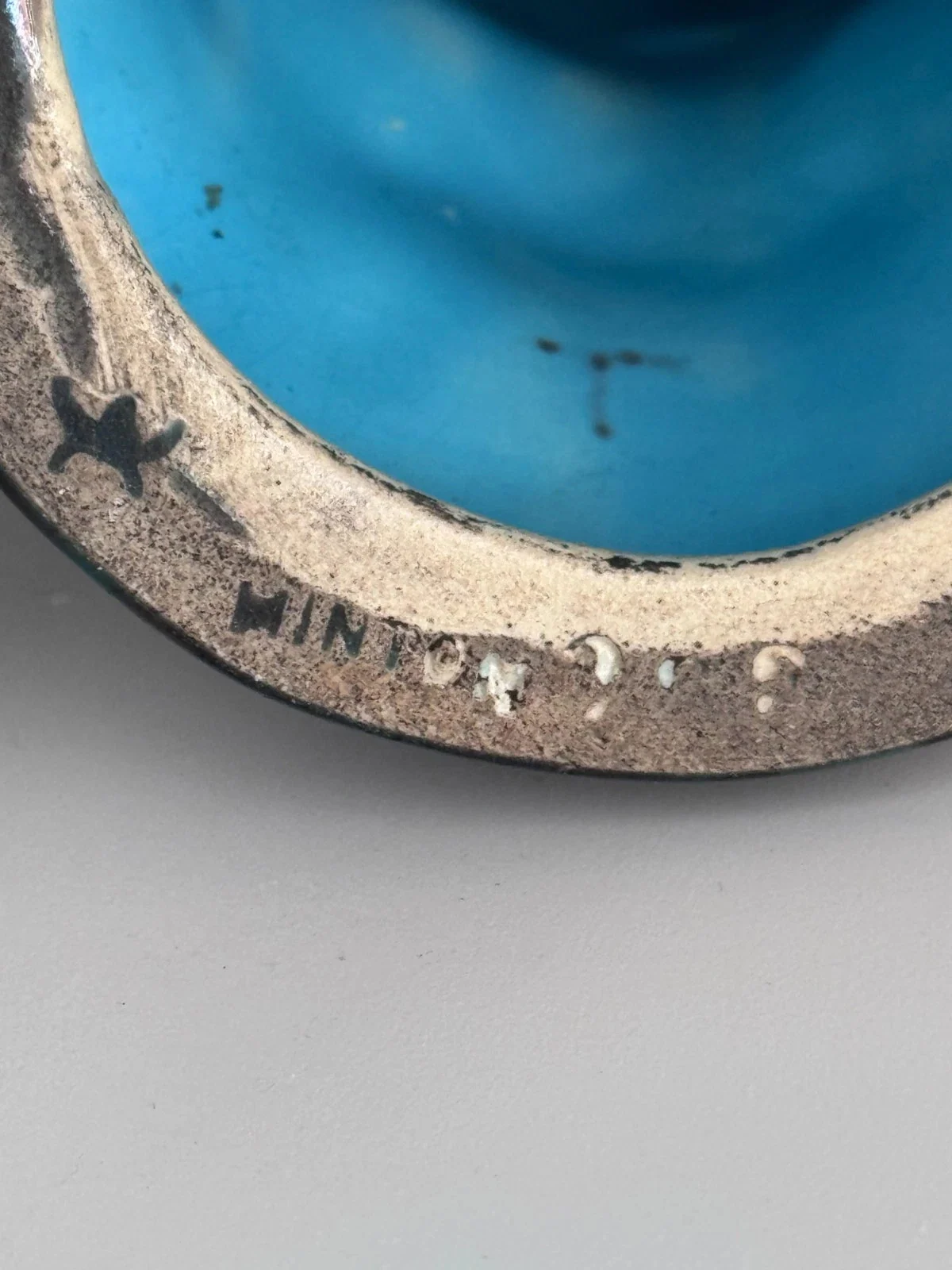
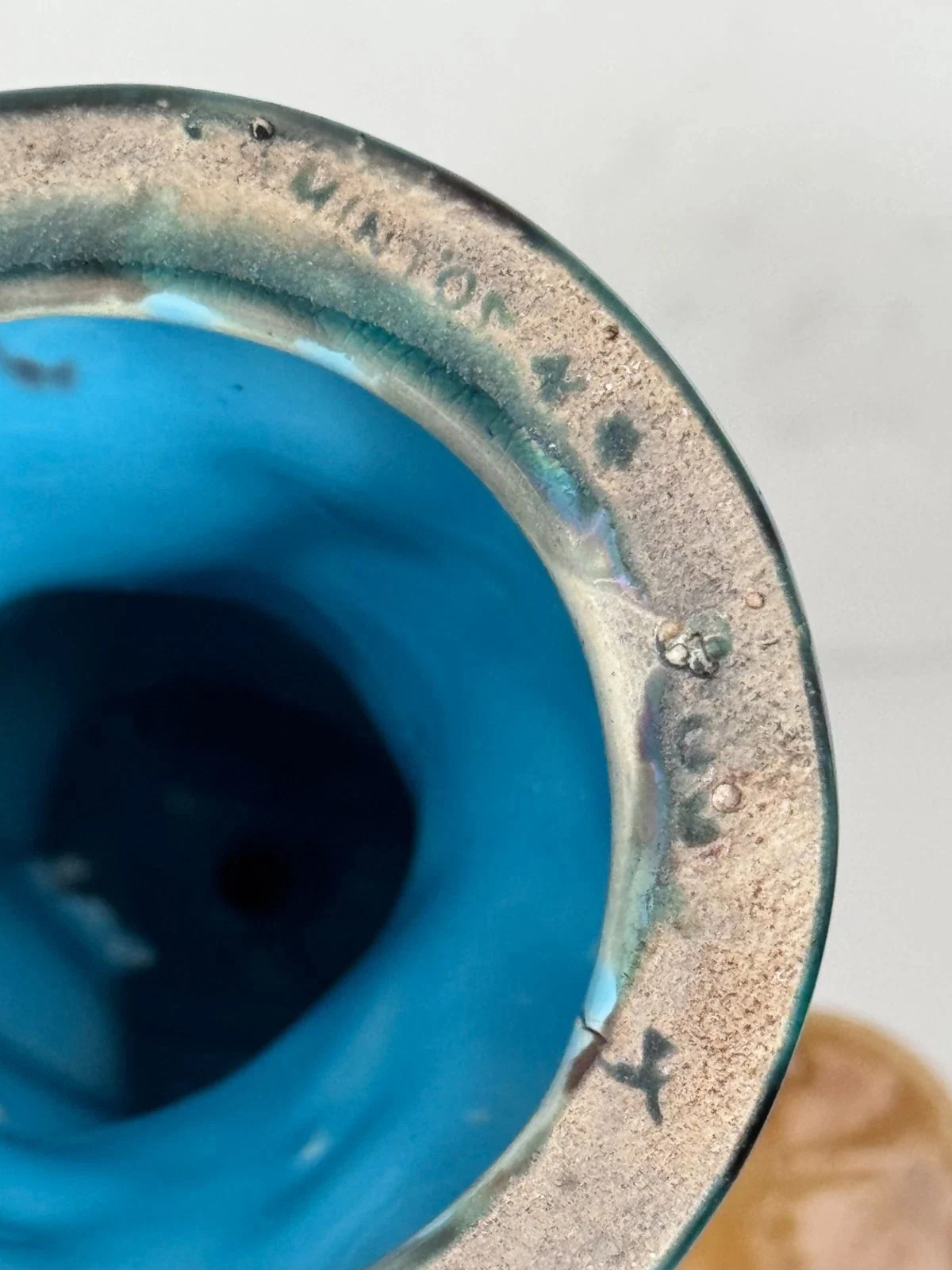
Both hollow bases reveal turquoise-glazed interiors surrounded by an unglazed resting rim. Impressed factory markings on the underside edge include the standard uppercase ‘MINTON’ stamp alongside individual date cyphers and potter’s tally marks indicative of production during the mid-to-late Victorian period. The dishes were designed for the dessert table, functioning as individual servers for sugared fruits, nuts, or confectionery.
Each figure stands approximately 18 cm in height. The ceramic body retains bright glaze colour and sharp moulding throughout, though the boy figure has lost the tip of his right thumb beside the basket rim. Both bases remain stable and intact with minimal surface wear appropriate to age.
Condition The boy figure is missing the thumb on his right hand where it meets the basket rim. Both figures show light handling wear and minor surface marks consistent with age, with stable bases and no further structural chips or cracks.
Dimensions Height: 18 cm
| Dimensions | 18 cm |
|---|---|
| Period | 19th Century |
| Style | Victorian |
| Colour | Multicoloured |
| material | ceramic |
| Origin | United Kingdom |
| Maker | Minton |
| Price range | Under £1000, Under £2000 |
| Collection Era | Antique & Vintage |
Only logged in customers who have purchased this product may leave a review.
Reviews
There are no reviews yet.