


Enquire Today!
If you have any questions, requests or general enquiries, please do not hesitate to email us and we will get back to you as soon as possible regarding your enquiry.
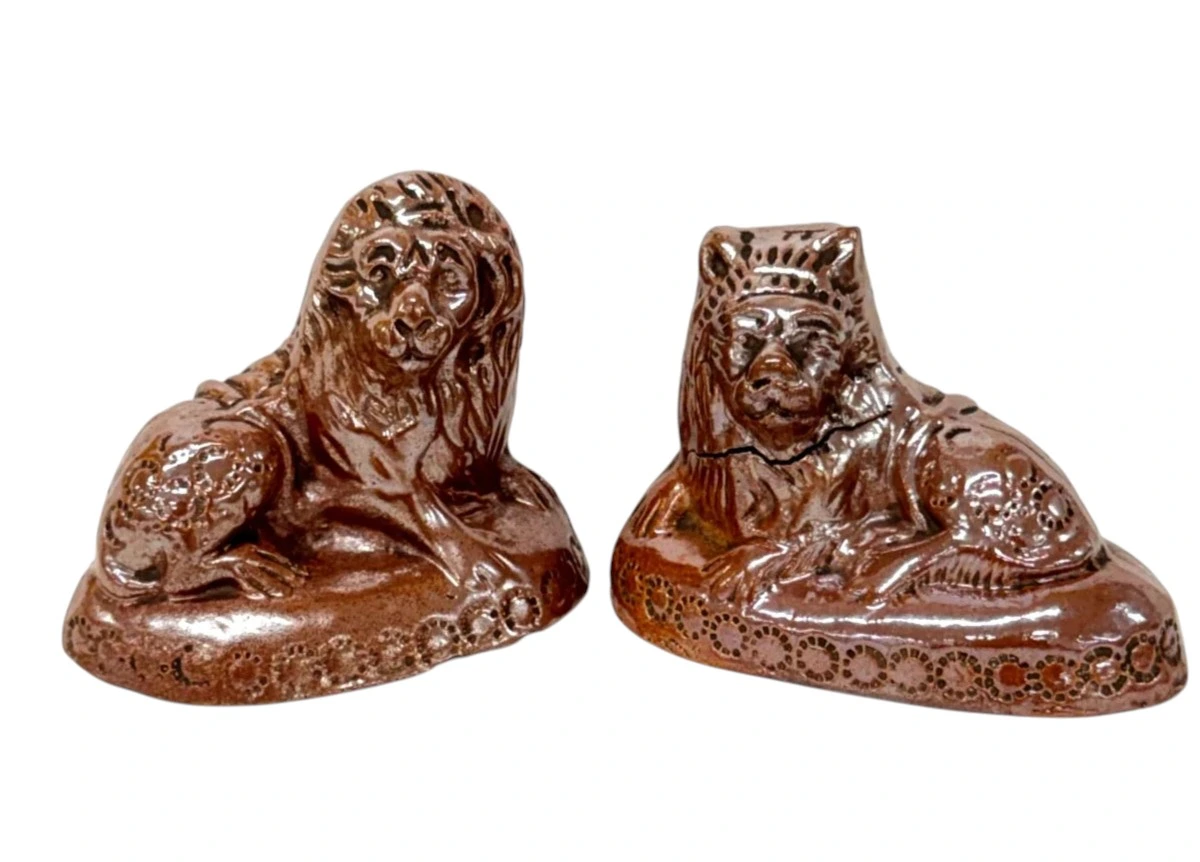
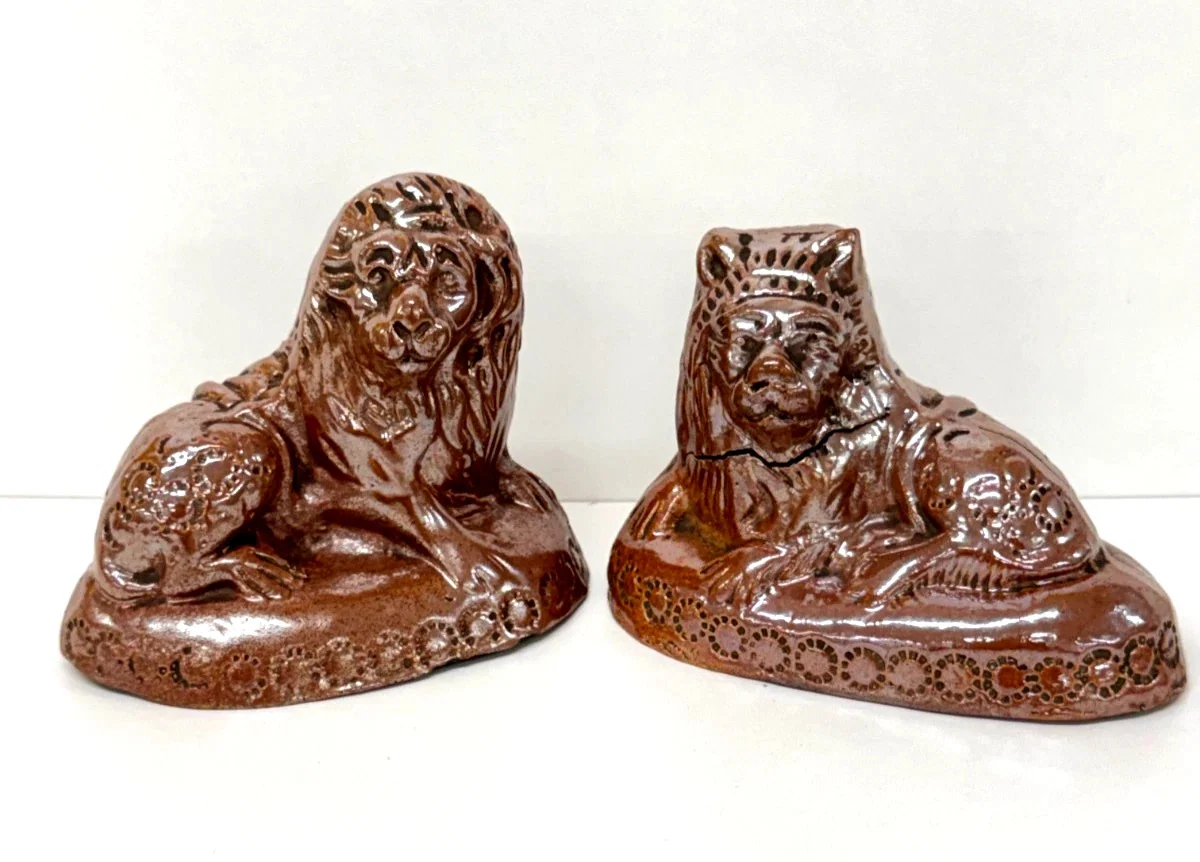


Impressed circular punch marks encircle the hollow oval plinths of these press-moulded stoneware figures, which depict recumbent lions in complementary resting poses. Each animal lies with paws tucked forward, characterised by incised mane details, moulded facial features, and stamped rosette roundels across the flanks that echo the decorative border running around the footrim.
The pair is finished in a lustrous, dark chocolate to treacle-brown salt glaze that exhibits the classic fine orange-peel texture associated with high-temperature salt firing. Underneath, both hollow bases reveal an unglazed, warm buff-terracotta clay body, showing clear manual impressions from where slabs of stoneware were pressed firmly into multi-part moulds.
Dating to circa 1820, these figures reflect the vernacular pottery traditions of Staffordshire and the East Midlands during the late Georgian period. Recumbent lions drawn from heraldic emblems were favoured mantle ornaments, made in sturdy salt-glazed stoneware alongside more fragile pearlware and porcelain examples of the period.
Each model stands 9 cm in height. Both figures remain structurally sound, with an original kiln separation crack extending horizontally across the neck and upper chest of one lion. This manufacturing flaw occurred during firing contraction in the kiln and is completely stable, displaying no modern restoration or later losses.
Neither figure bears an impressed maker’s backstamp, which is typical for press-moulded utility and ornamental stoneware of this date.
Condition Good antique condition with an original horizontal kiln firing crack across the neck and chest of one lion; structurally stable with no later repairs.
Dimensions Height: 9 cm
| Dimensions | 9 cm |
|---|---|
| Period | 19th Century |
| Colour | Brown |
| material | Stoneware |
| Origin | England, Staffordshire |
| Price range | Under £1000, Under £2000 |
| Collection Era | Antique & Vintage |
| Style | Georgian |
Only logged in customers who have purchased this product may leave a review.
Reviews
There are no reviews yet.