


Enquire Today!
If you have any questions, requests or general enquiries, please do not hesitate to email us and we will get back to you as soon as possible regarding your enquiry.

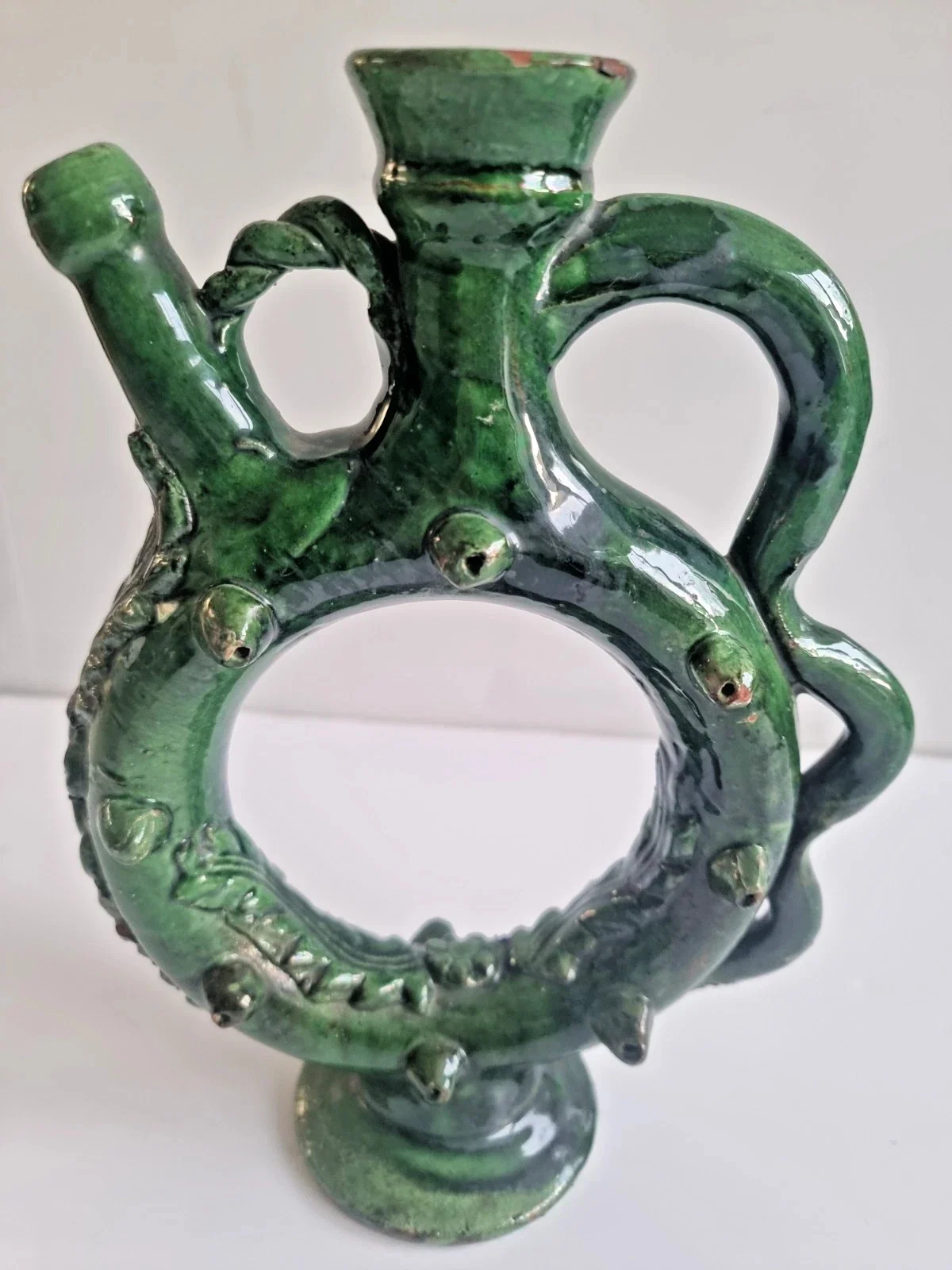
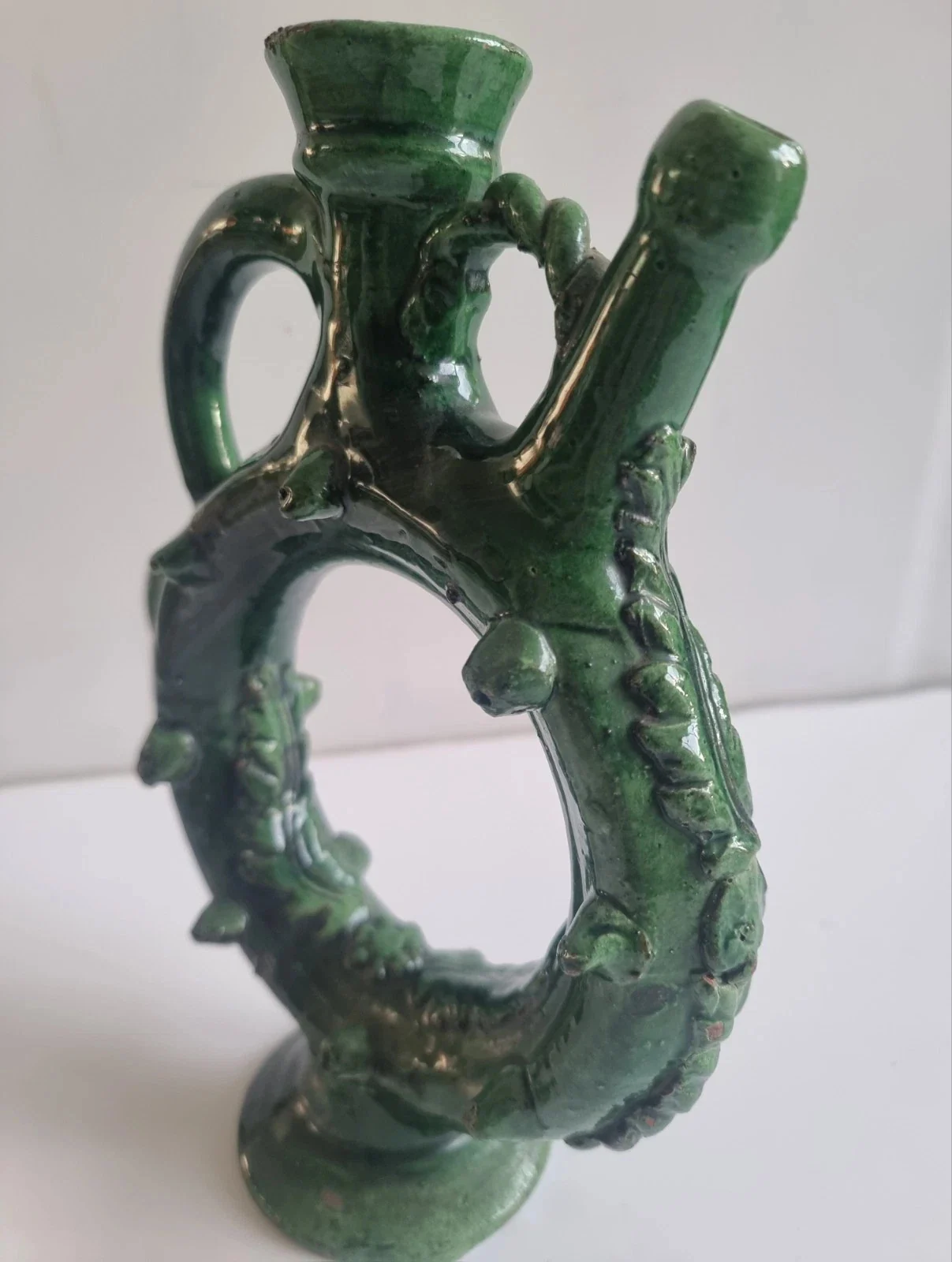
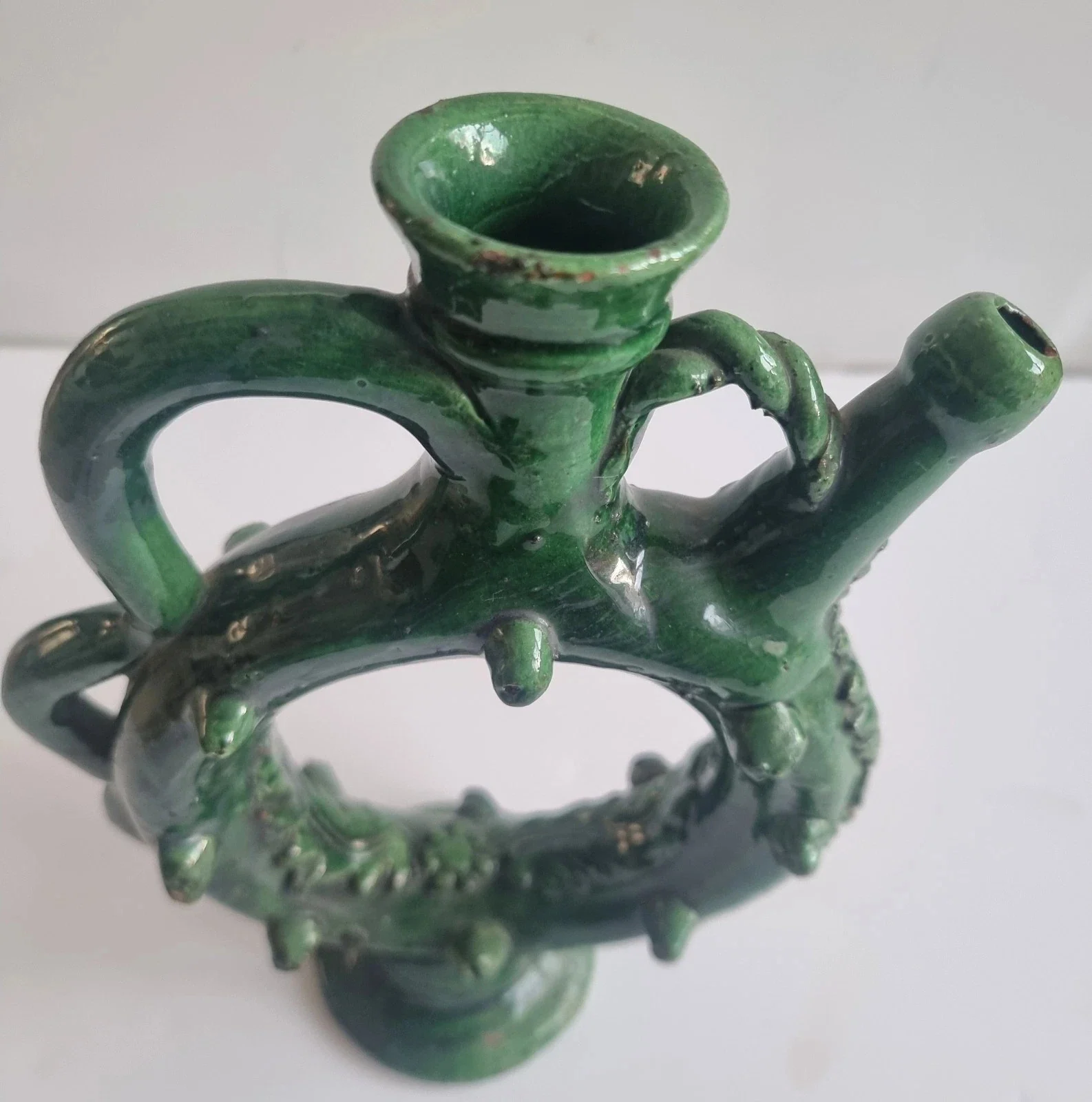


An open circular ring body forms the core of this Çanakkale earthenware vessel, raised on a stable, spreading pedestal foot. The upper section integrates a flared central filling neck alongside an angled tubular spout, joined by an applied rope-twist ceramic strut. A curving loop handle arches smoothly from the neck to the ring shoulder, accompanied by an undulating serpent-like strap running down the outer flank. Pointed conical bosses project at regular intervals around both faces of the hollow torus, bordered by applied relief foliage, leaf trails and rosette motifs along the outer perimeter. The entire exterior is finished in a rich, glassy emerald-green lead glaze that displays natural pooling around the applied mouldings and subtle variations in depth across the surface. Originating from the Dardanelles pottery centre of Çanakkale during the nineteenth century, ceramics of this annular form drew upon regional folk craft and Ottoman metalwork prototypes. These lively ewers were fashioned by workshop potters primarily as ornamental display wares and celebratory vessels, reflecting a distinctive vernacular tradition in late Ottoman ceramic art. Light surface abrasions and tiny glaze flakes along the upper rim and raised bosses reveal the warm underlying terracotta body, consistent with genuine vernacular earthenware of the period. The base remains unglazed at the resting edge, showing typical kiln placement marks from the firing process. The ewer stands 24 cm tall, measures 17 cm in diameter across the ring, and weighs approximately 750 grams.
Condition Minor surface glaze flaking and small rubs to the rim and pointed bosses, revealing the underlying terracotta body, consistent with age and earthenware firing.
Dimensions 24 cm high, 17 cm diameter
| Weight | 0.75 kg |
|---|---|
| Dimensions | 17 × 24 cm |
| Period | 19th Century |
| Colour | Green |
| material | Earthenware |
| Origin | Turkey |
| Maker | Çanakkale |
| Price range | Under £1000, Under £2000 |
| Collection Era | Antique & Vintage |
| Style | Ottoman |
Only logged in customers who have purchased this product may leave a review.


Reviews
There are no reviews yet.