


Enquire Today!
If you have any questions, requests or general enquiries, please do not hesitate to email us and we will get back to you as soon as possible regarding your enquiry.

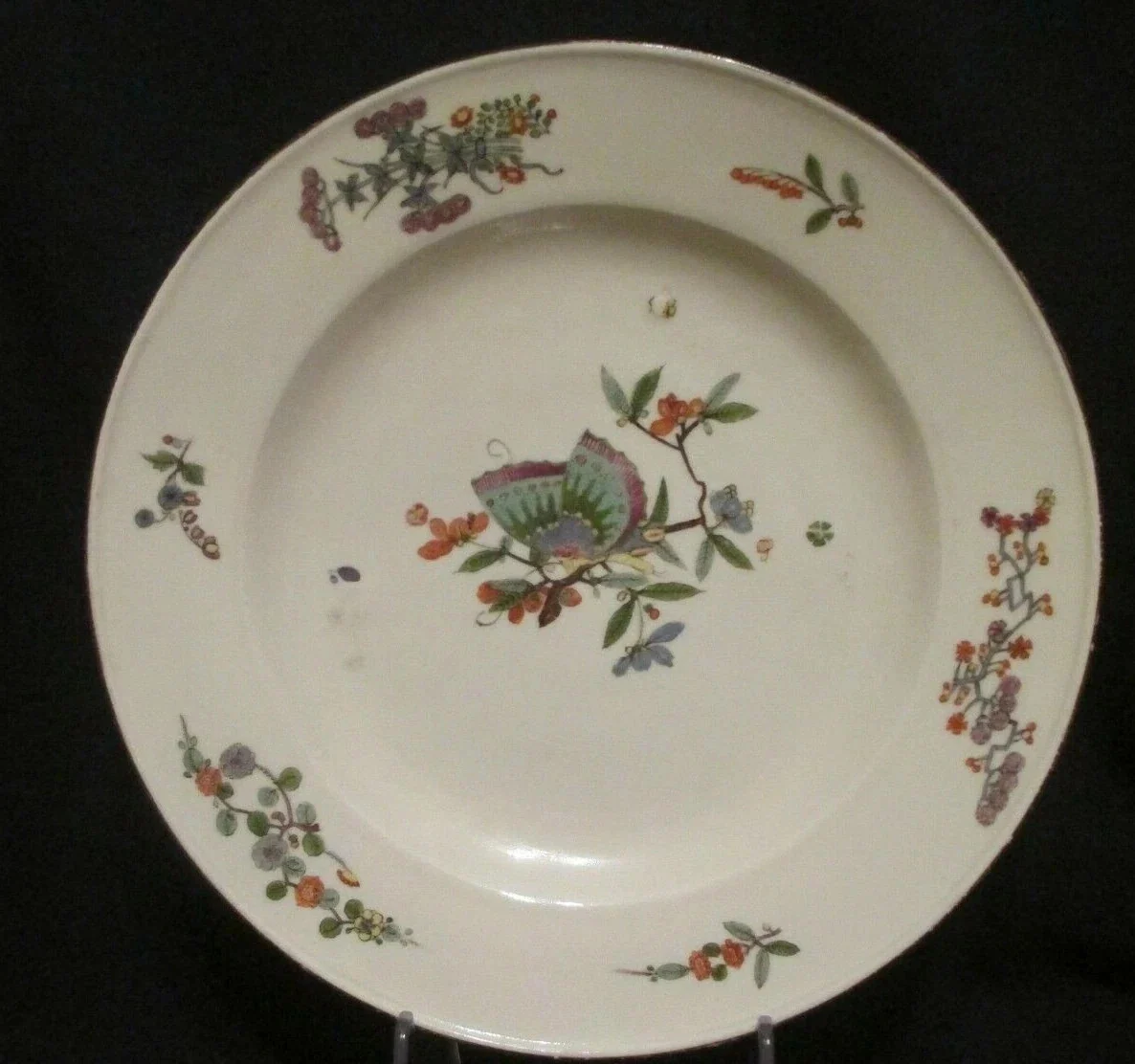
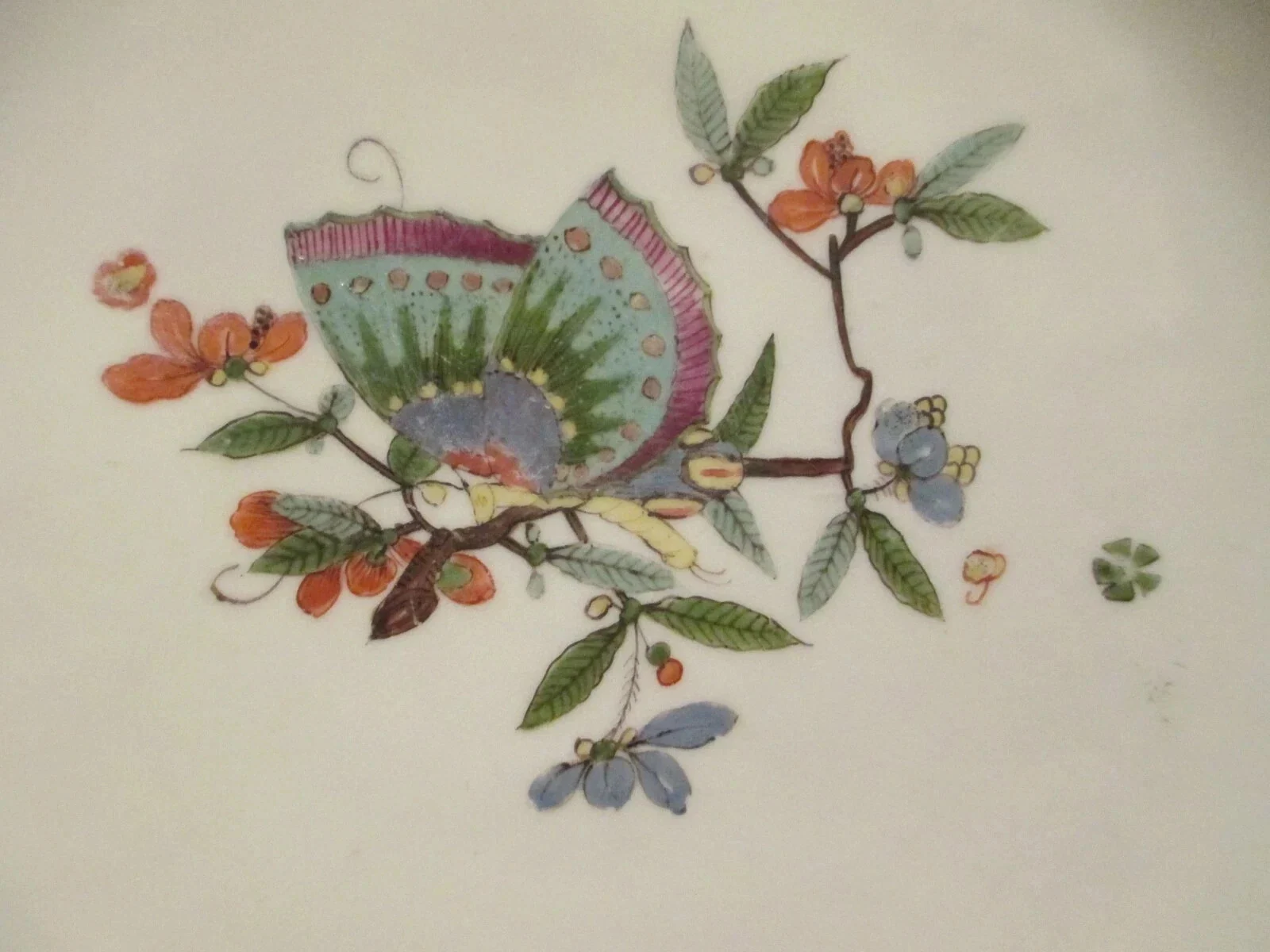



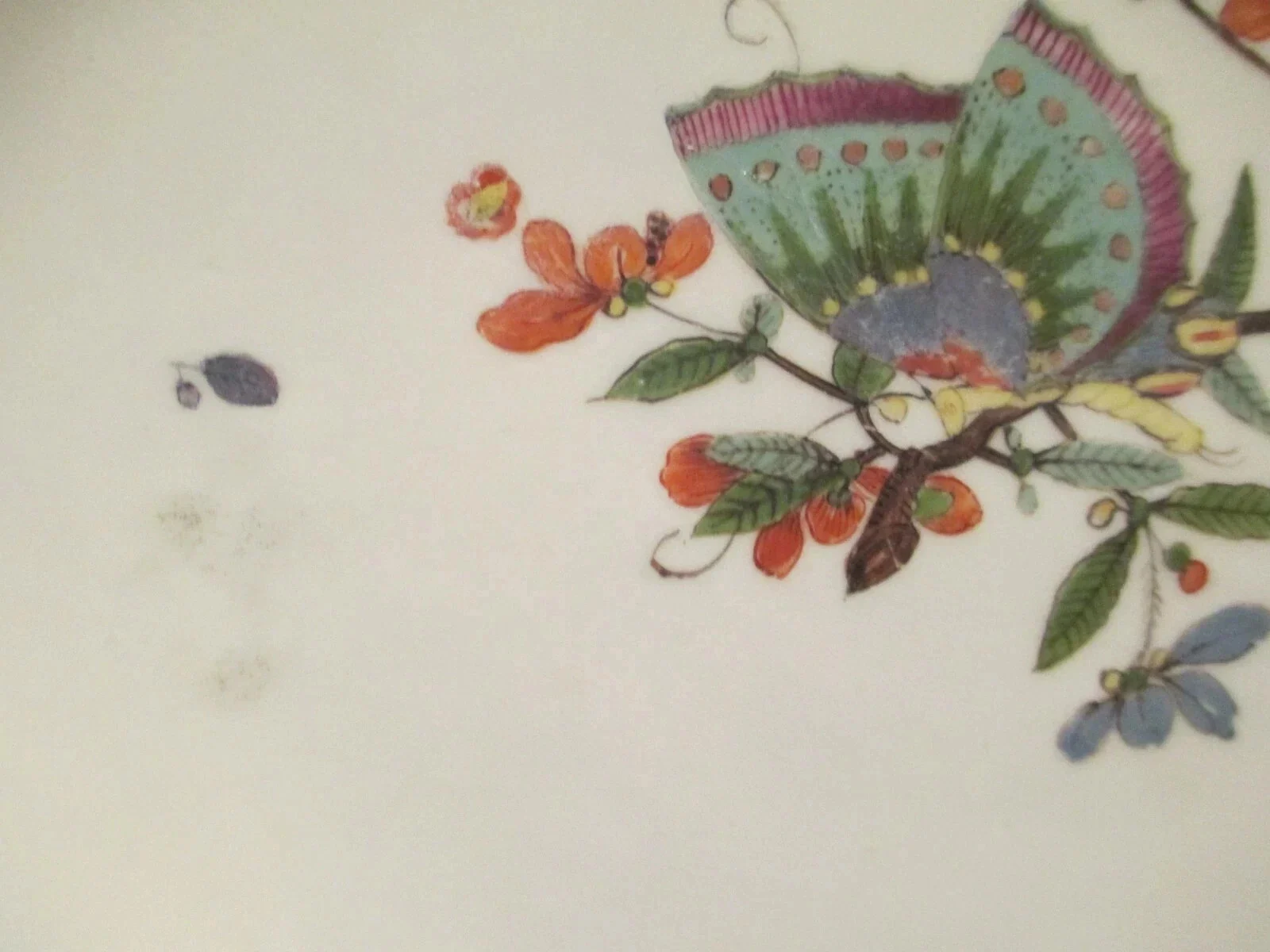


A hand-painted butterfly with turquoise, mauve, and green wings perches centrally upon flowering branches in the well of this hard-paste porcelain soup plate. The composition draws directly upon Japanese Kakiemon prototypes, displaying the refined asymmetrical balance favoured at the Meissen manufactory during the early decades of European porcelain production. A slender iron-brown line defines the circular rim, framing the luminous white porcelain body.
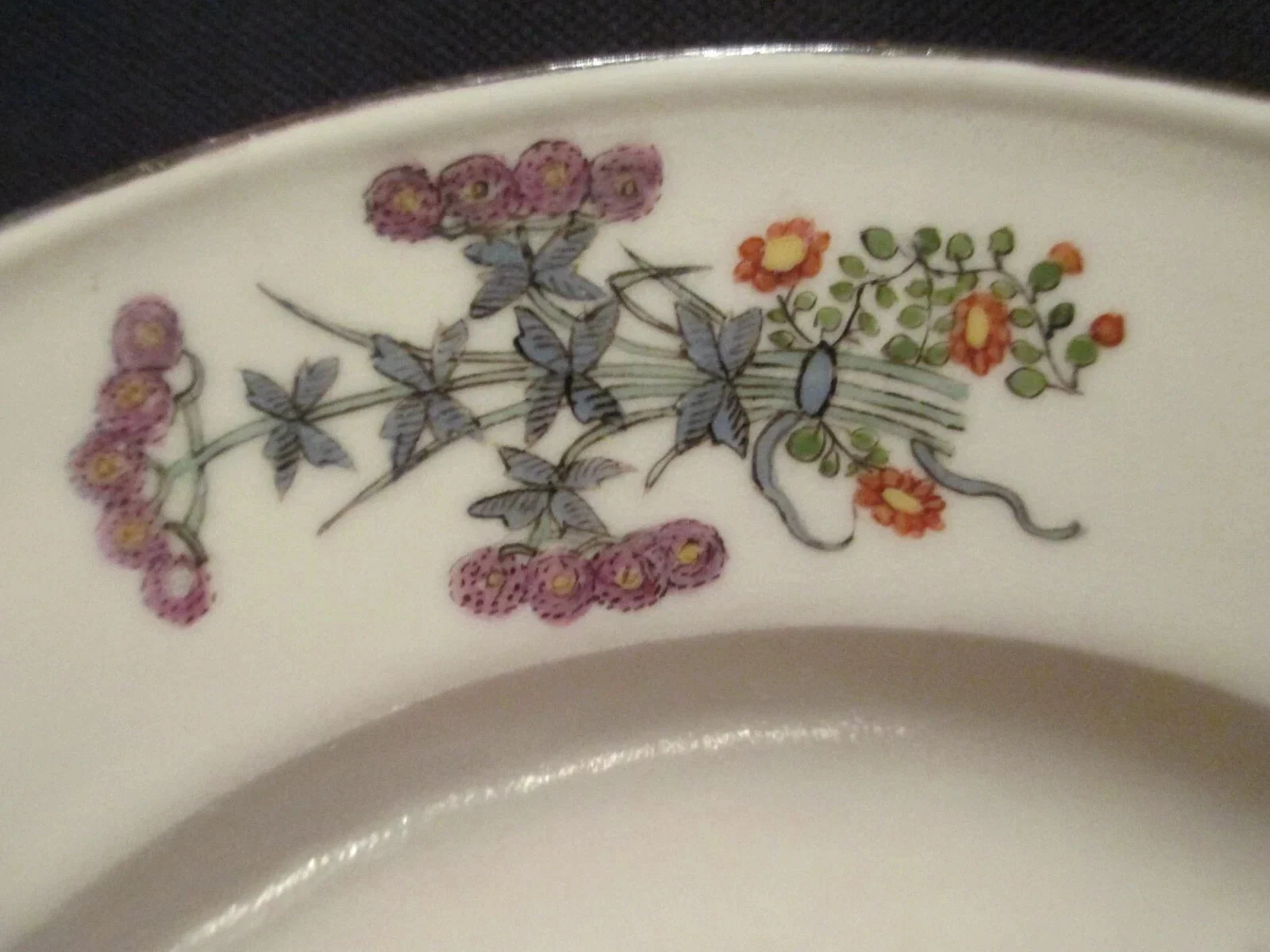
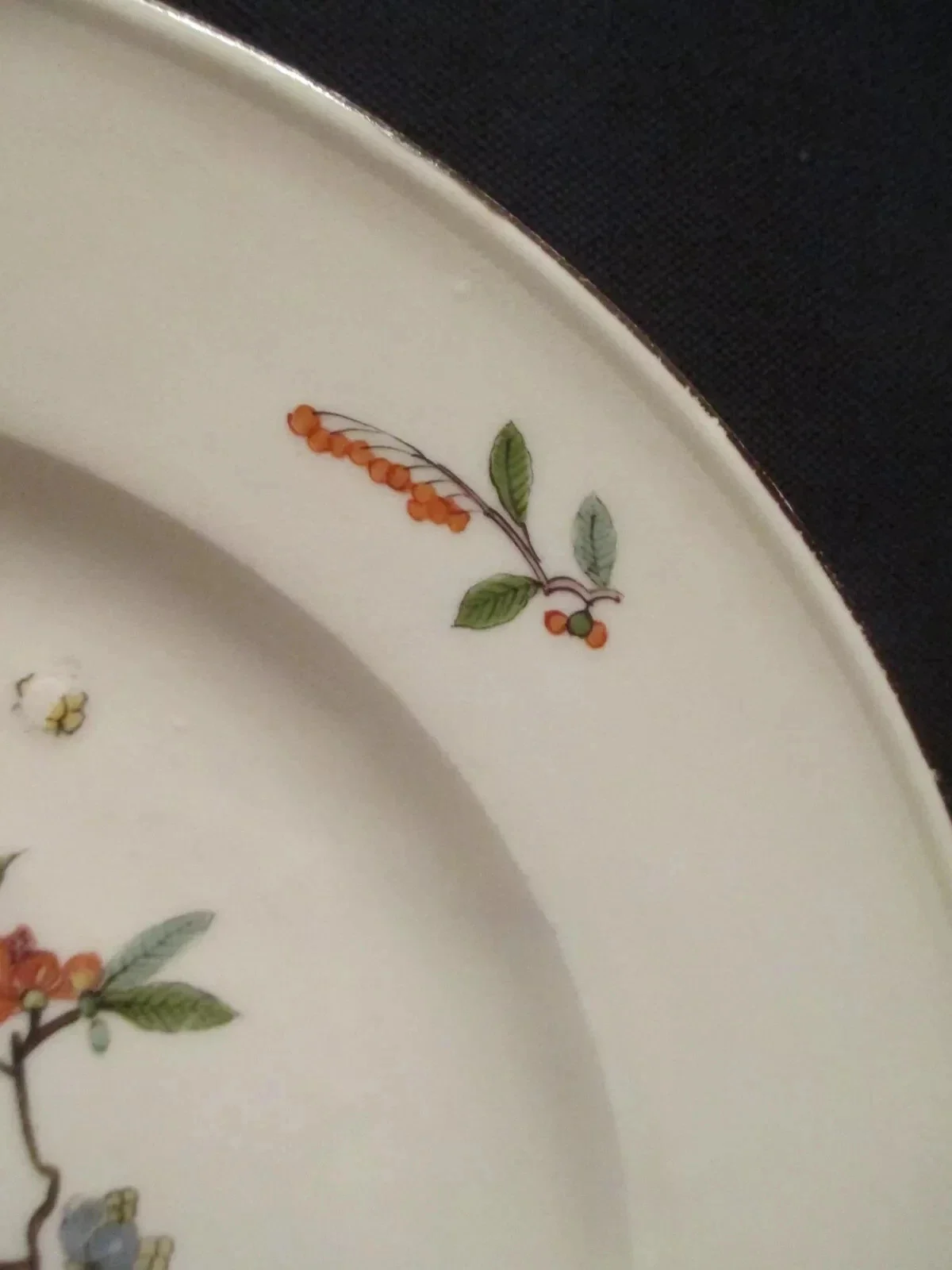
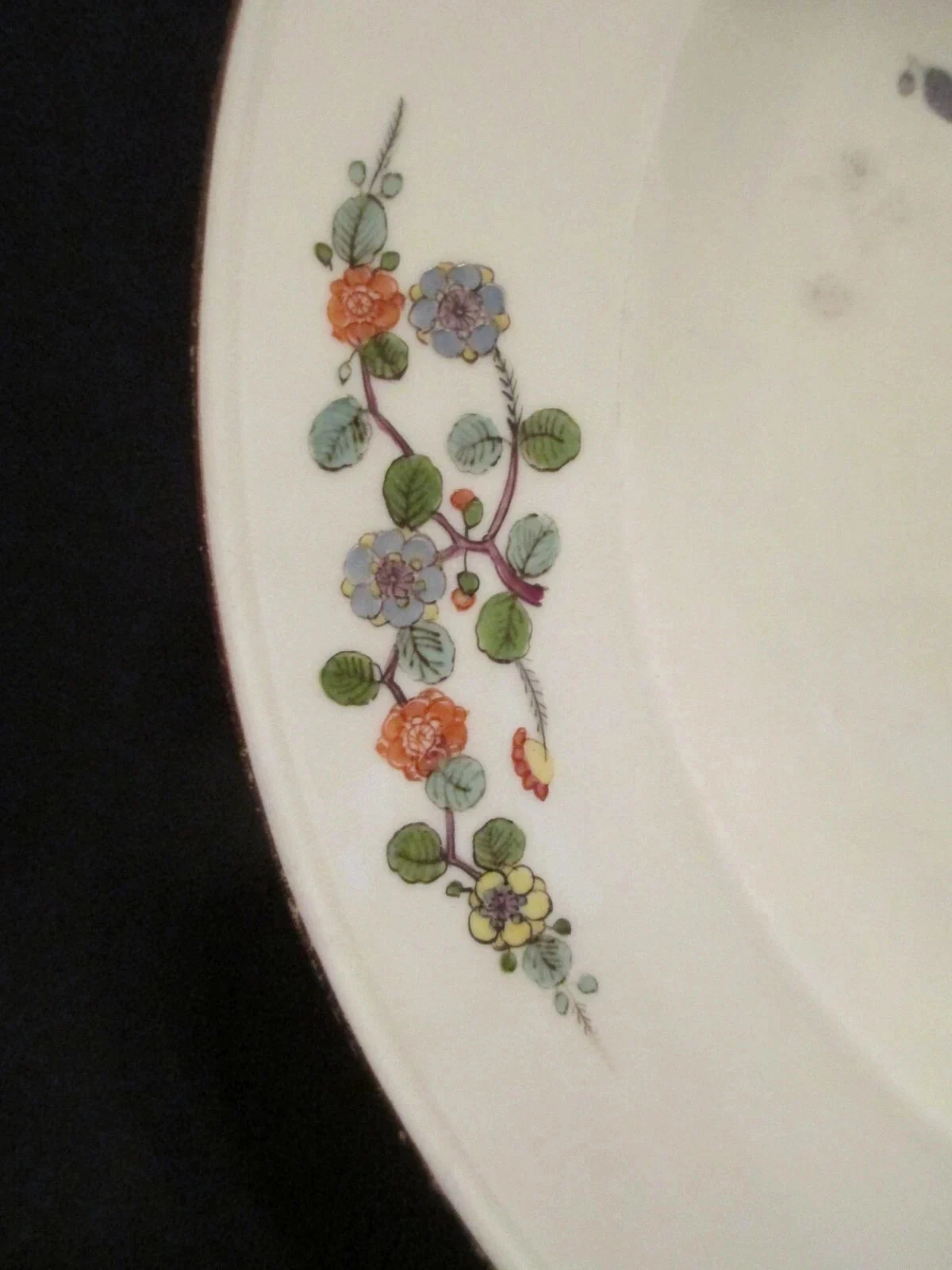
Arranged around the wide border are distinct polychrome botanical vignettes. These include a tied posy of stylised florets bound with a blue ribbon, an angular zig-zagging branch laden with blossoms, and delicate leafy trails painted in iron red, puce, soft blue, and yellow enamels. Scattered single florets sit lightly in the intervening white space, capturing the clean clarity of eighteenth-century Japanese-inspired decoration.
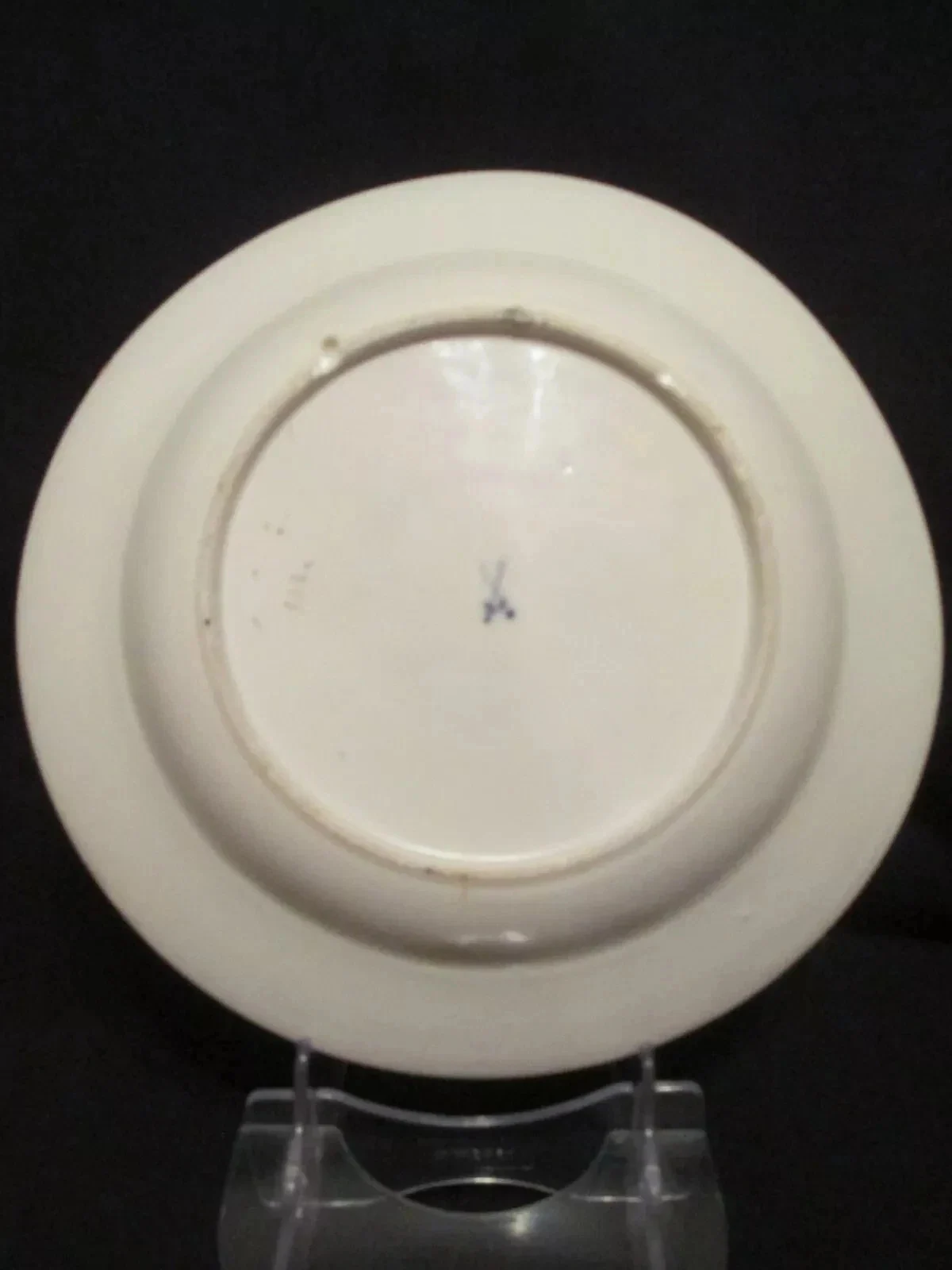
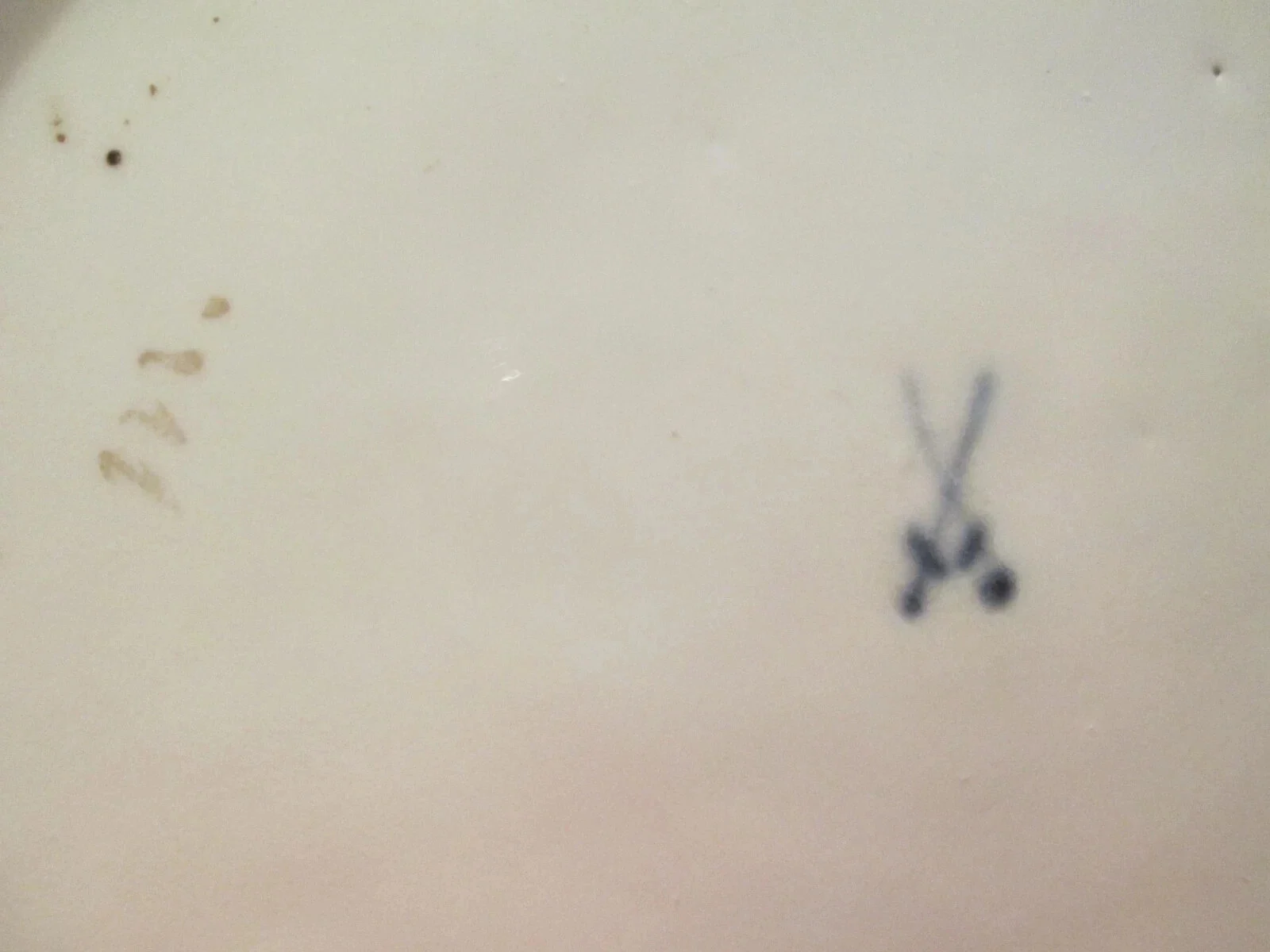
The plate was produced in Saxony circa 1735, a pivotal period of artistic maturity under director Johann Gregorius Höroldt’s decorative influence. On the underside, the unglazed footrim encloses a smooth glazed base bearing the factory’s crossed swords mark in underglaze blue, alongside an impressed numeral. The form measures 24 cm in diameter with a broad flange and a gently recessed interior bowl.
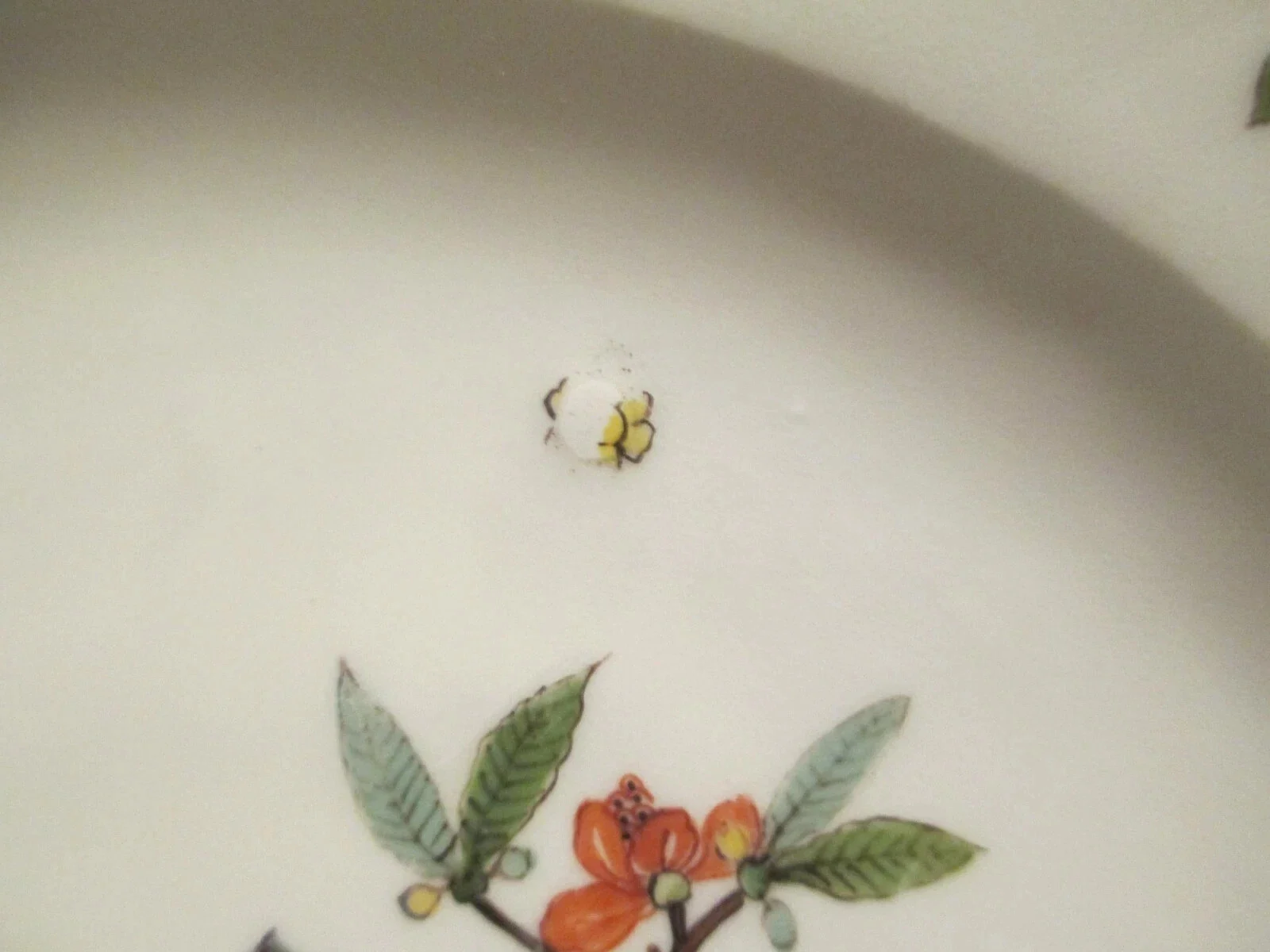
Condition is consistent with early eighteenth-century porcelain that has seen handling. Minor surface abrasions and small spots of enamel loss are visible to the face, including rubbing to a small floral detail above the central branch. The underside reveals an old chip and associated chipping along the footrim, while the main edge remains intact without hairline cracks or restoration.
Condition Minor surface abrasions and localised enamel wear to the face, along with an old chip to the unglazed footrim.
Dimensions 24 cm diameter
| Dimensions | 24 × 24 cm |
|---|---|
| Period | 18th Century |
| Colour | Multicoloured |
| material | Porcelain |
| Origin | Germany |
| Maker | Meissen |
| Price range | Under £2000 |
| Collection Era | Antique & Vintage |
Only logged in customers who have purchased this product may leave a review.
Reviews
There are no reviews yet.