


Enquire Today!
If you have any questions, requests or general enquiries, please do not hesitate to email us and we will get back to you as soon as possible regarding your enquiry.


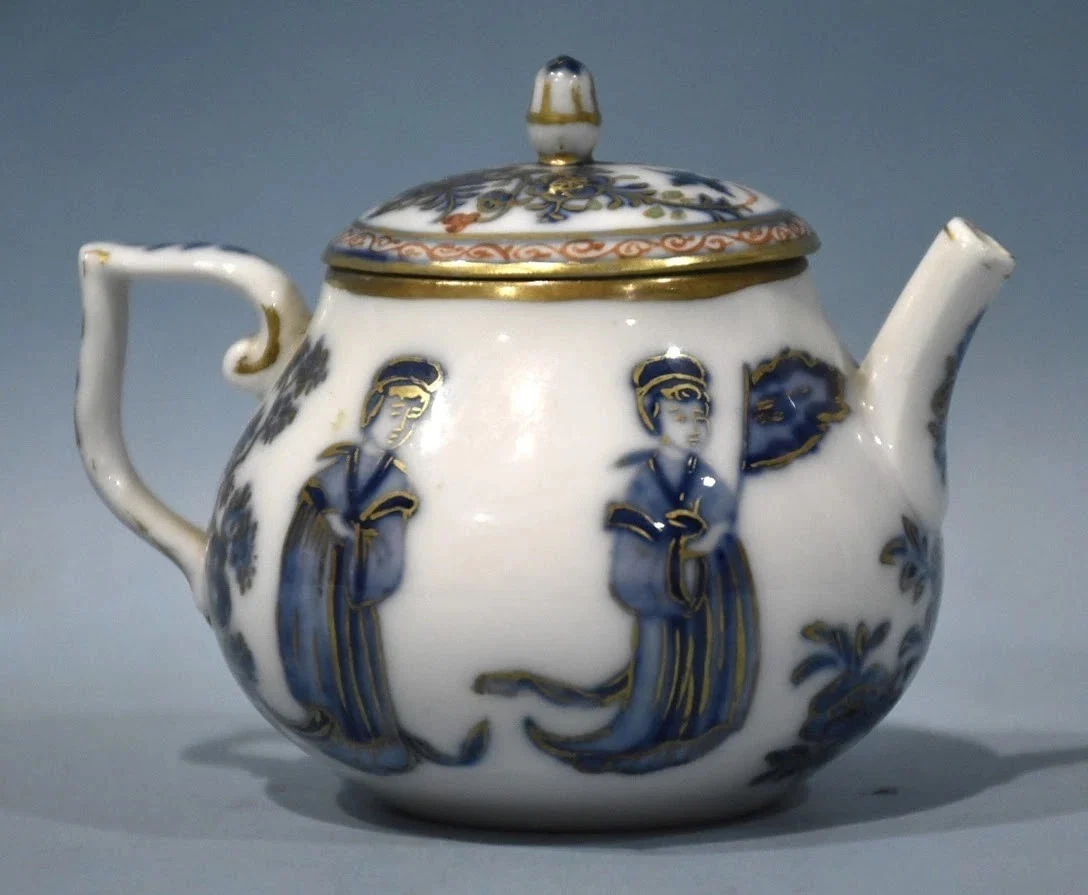
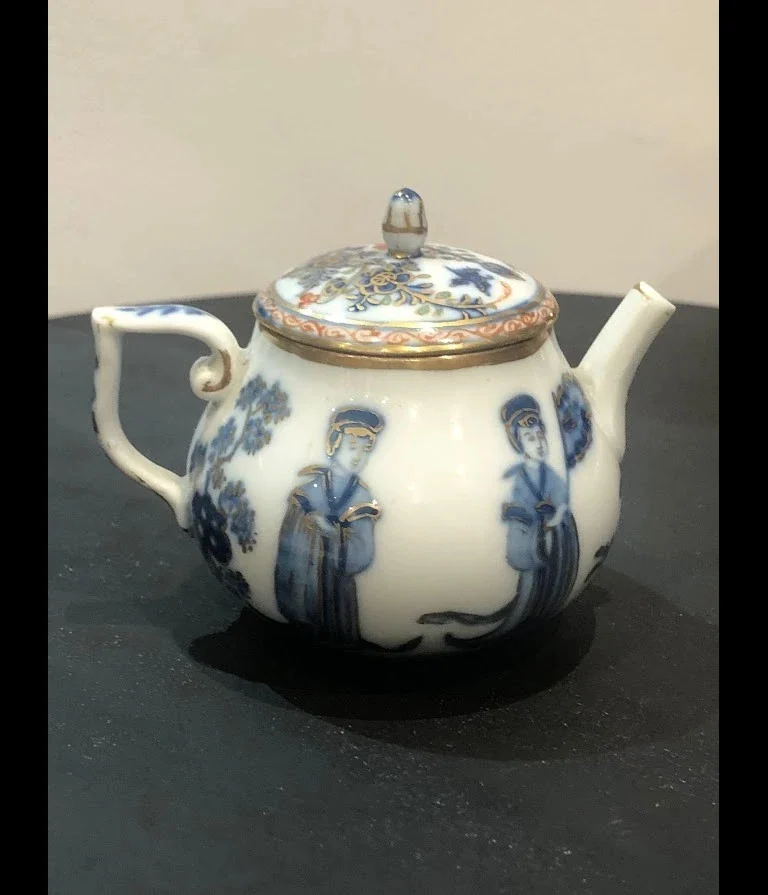
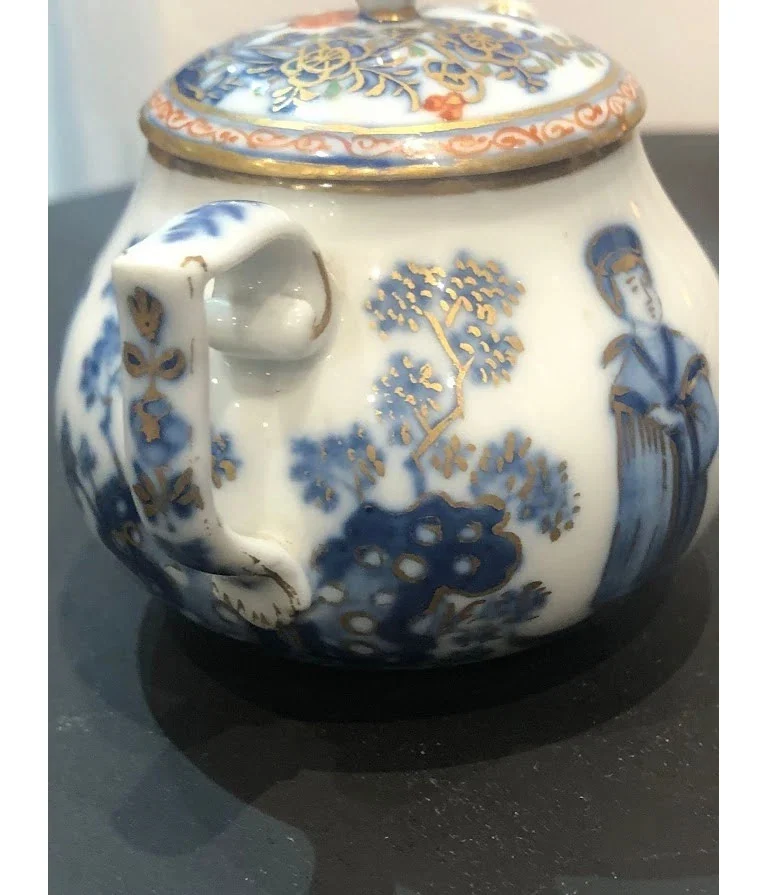
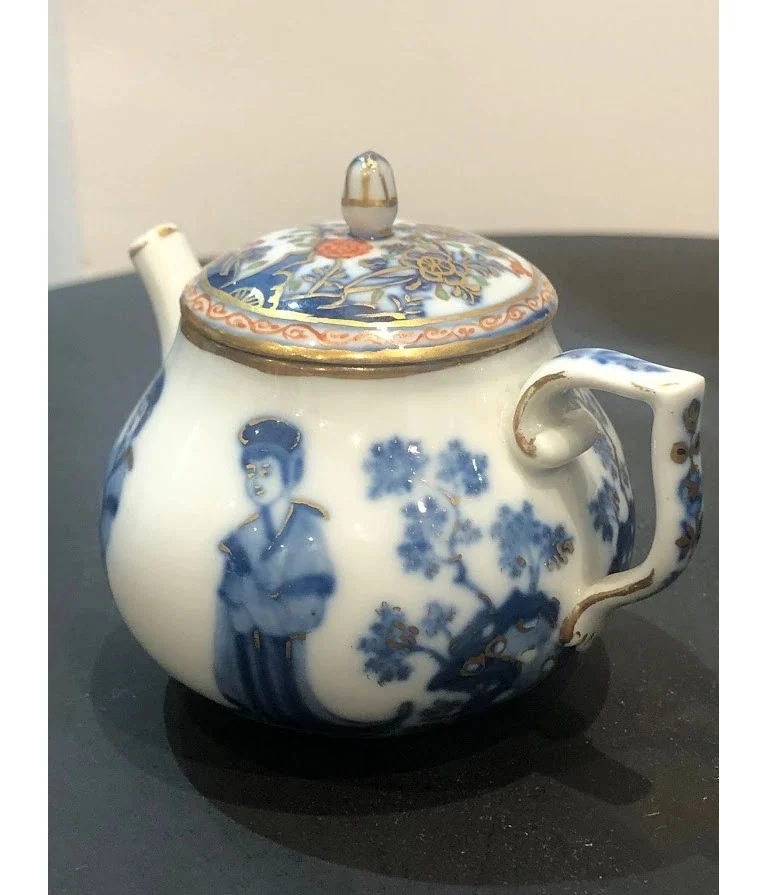
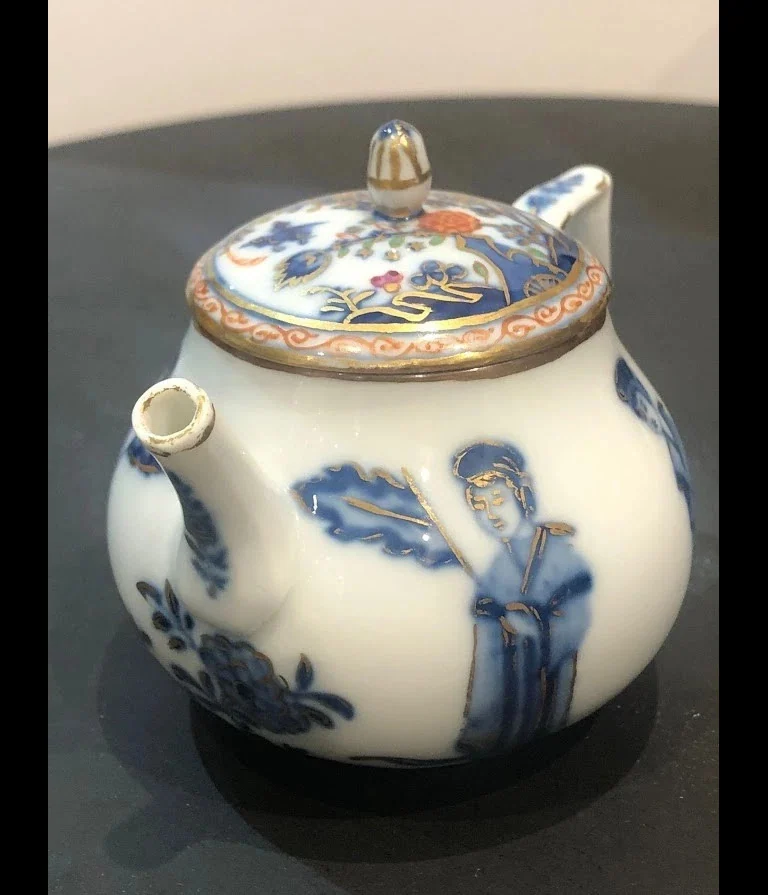




Slender Chinese maiden figures, traditionally known in European trade as Long Eliza, stand amid stylised trees and flowering foliage across the rounded body of this miniature teapot. Painted in underglaze blue with delicate gilt accents, the decorative scheme reflects the European fascination with imported East Asian porcelain during the Rococo period.
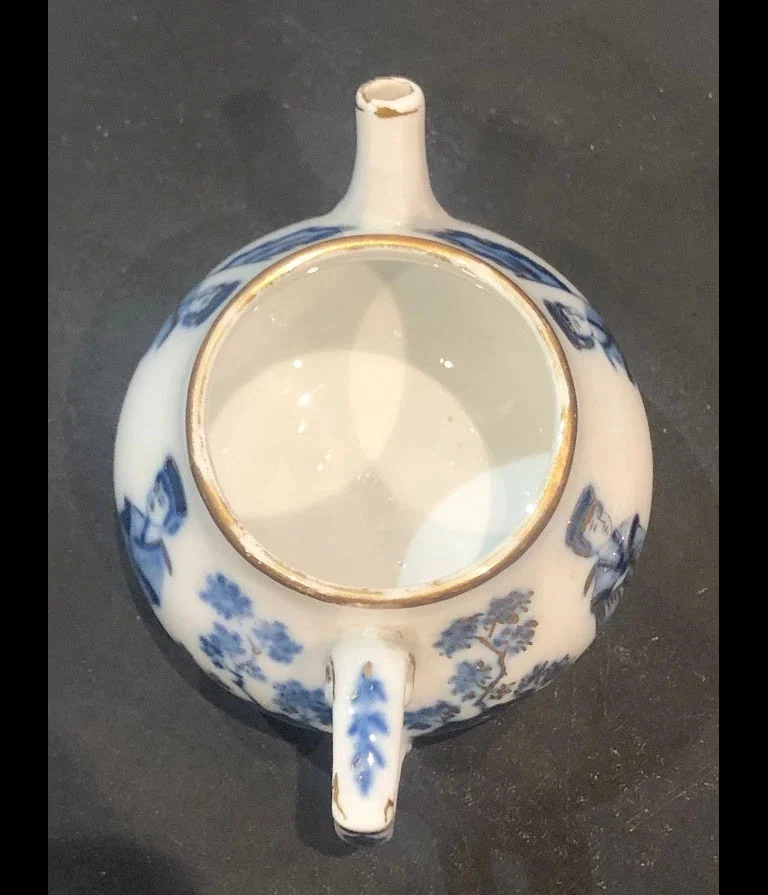
The pot features a globular, compressed body standing 8 cm high, flanked by a simple loop handle and a short, tapering spout. Inside, the junction between the spout and the vessel wall is pierced with three small strainer holes to filter loose tea leaves. The flat-rimmed aperture accommodates a domed lid surmounted by a pointed finial, painted with complementary floral motifs and iron-red foliate scrolls.
While the lid matches the overall palette and period style of the vessel, it may represent a contemporary marriage rather than the original factory match, though it fits the aperture neatly. Produced in Saxony around the mid-18th century, the vessel is made from fine white hard-paste porcelain finished in a bright, vitreous glaze.
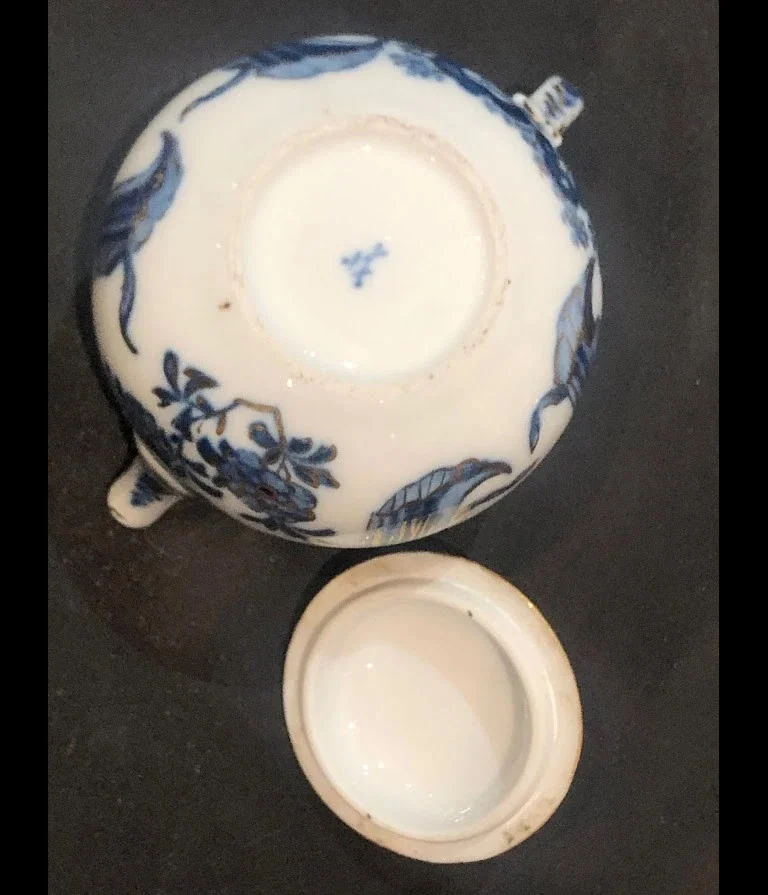
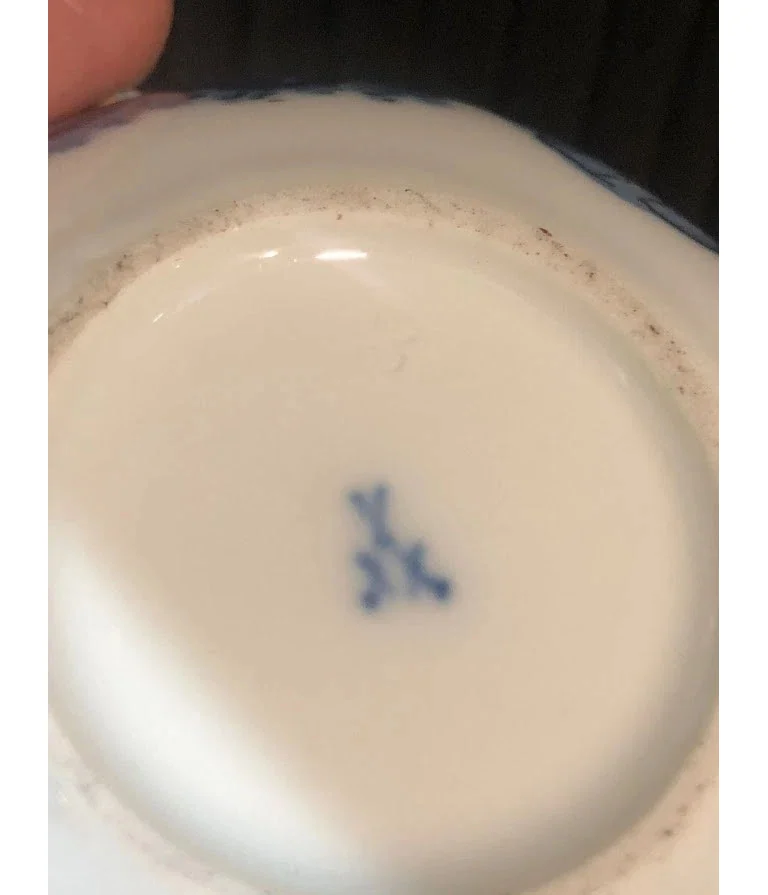
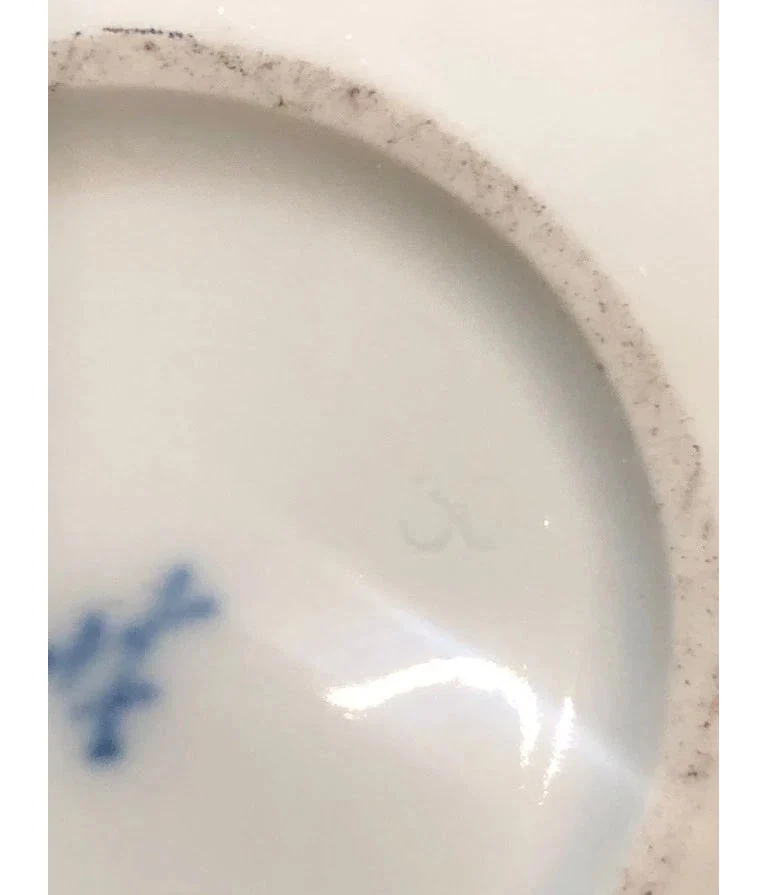
Underneath, the recessed base bears the painted underglaze blue Meissen crossed swords mark alongside faint impressed workshop numerals. Preservation is very good overall, displaying only light surface rubbing to the gilt borders around the rim, spout, and cover rim consistent with careful handling and age.
Condition Minor rubbing to the gilt highlights at the spout, rim, and lid; the lid is possibly a period marriage.
Dimensions Height: 8 cm
| Dimensions | 8 cm |
|---|---|
| Period | 18th Century |
| material | Porcelain |
| Origin | Dresden, Germany |
| Maker | Meissen |
| Price range | £2000+ |
| Collection Era | Antique & Vintage |
| Style | Rococo |
| Colour | Blue, Red, White |
Only logged in customers who have purchased this product may leave a review.
Reviews
There are no reviews yet.