


Enquire Today!
If you have any questions, requests or general enquiries, please do not hesitate to email us and we will get back to you as soon as possible regarding your enquiry.
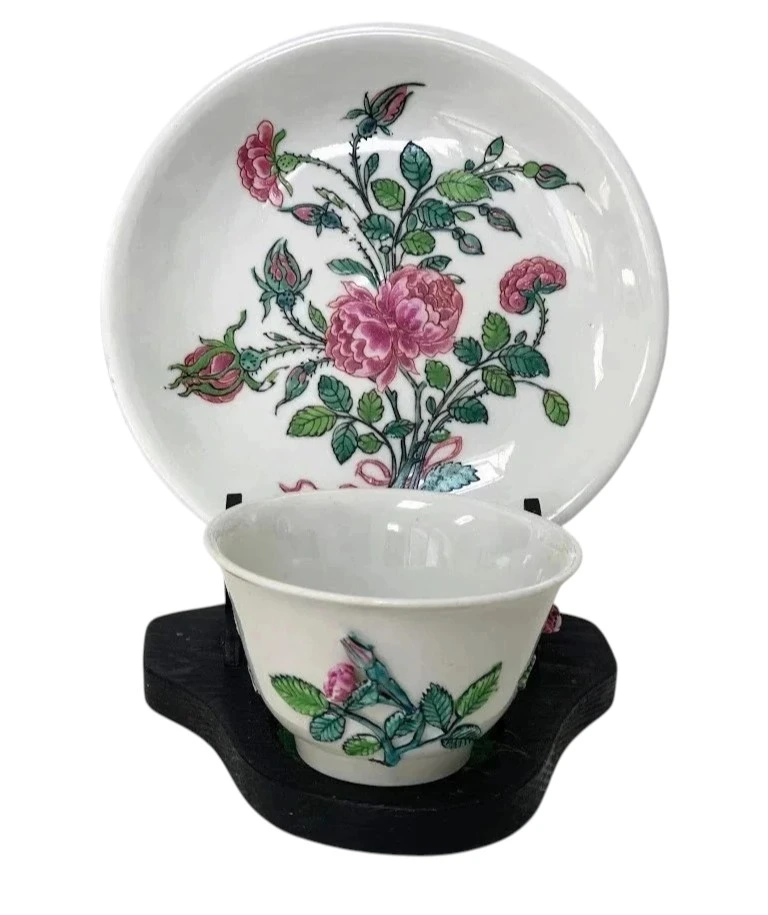


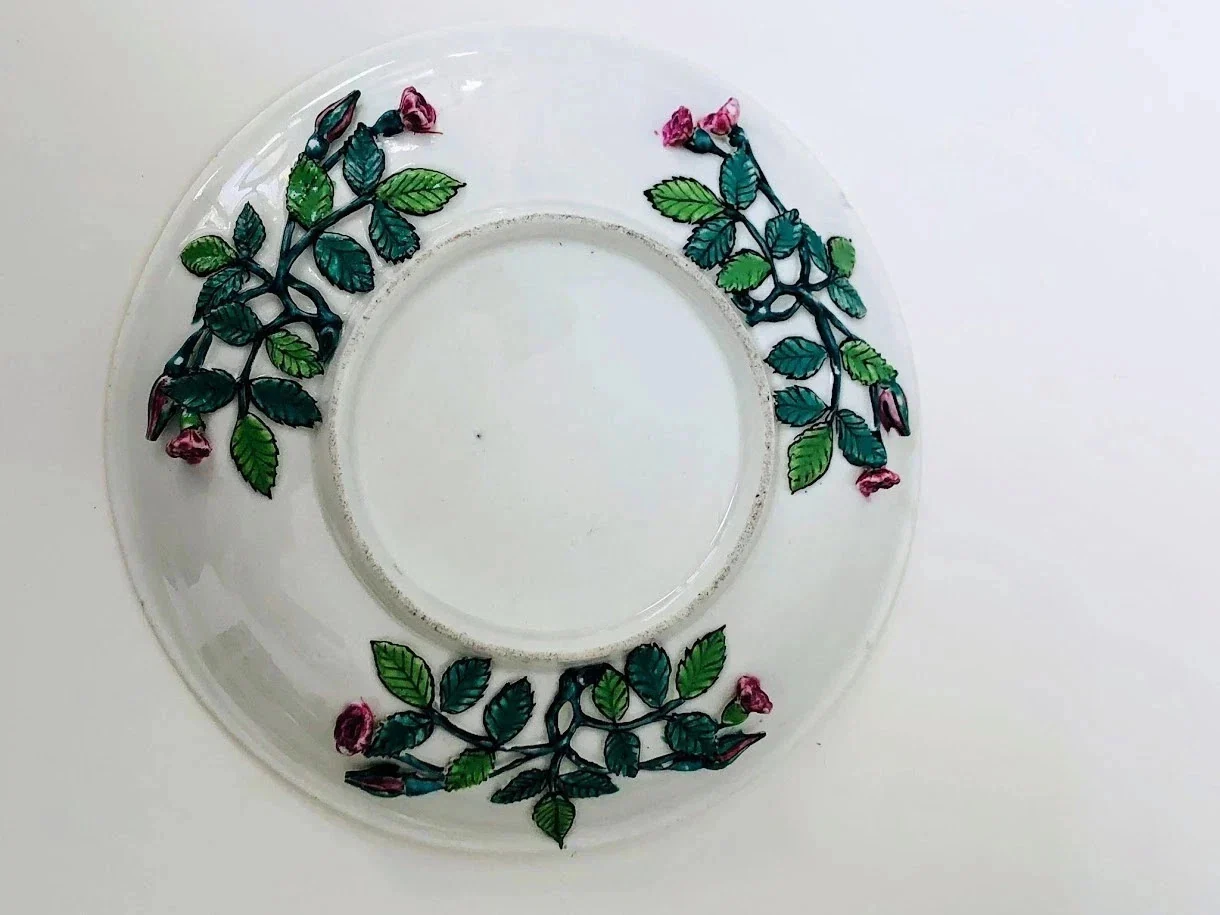


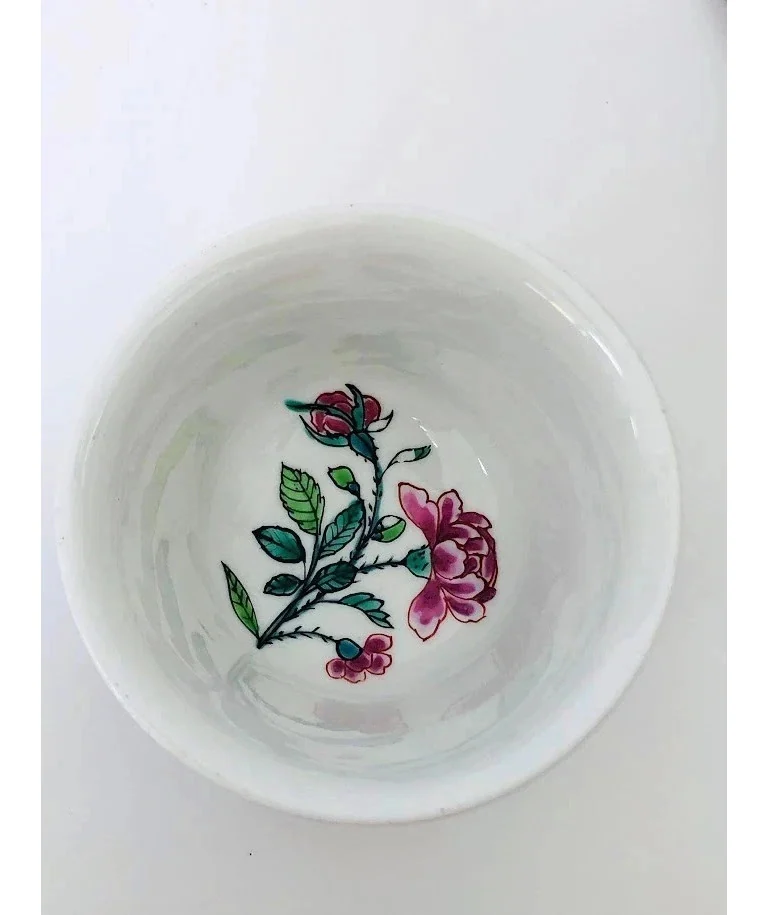

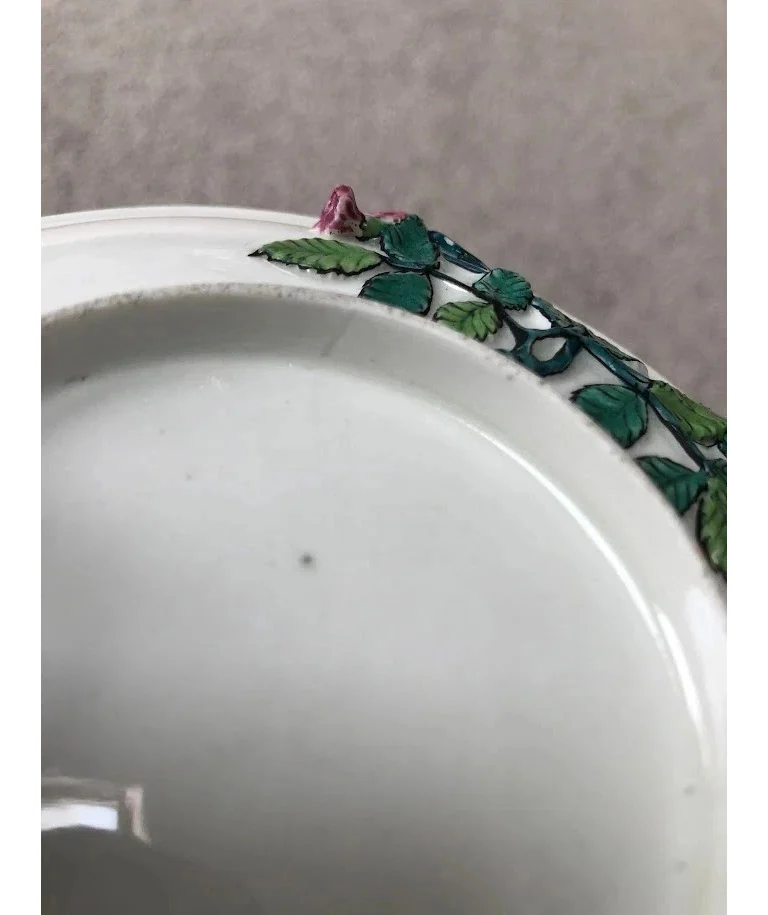


Moulded rose branches with budding flowers spread across the exterior walls of this early hard-paste porcelain tea bowl and the reverse of its saucer. Known as the Rosen-Laub (rose foliage) pattern, these sprigs were individually applied to the leather-hard body before firing. The handleless bowl features gently flaring sides on a small turned foot, paired with a deep circular saucer designed to catch and cool hot tea.
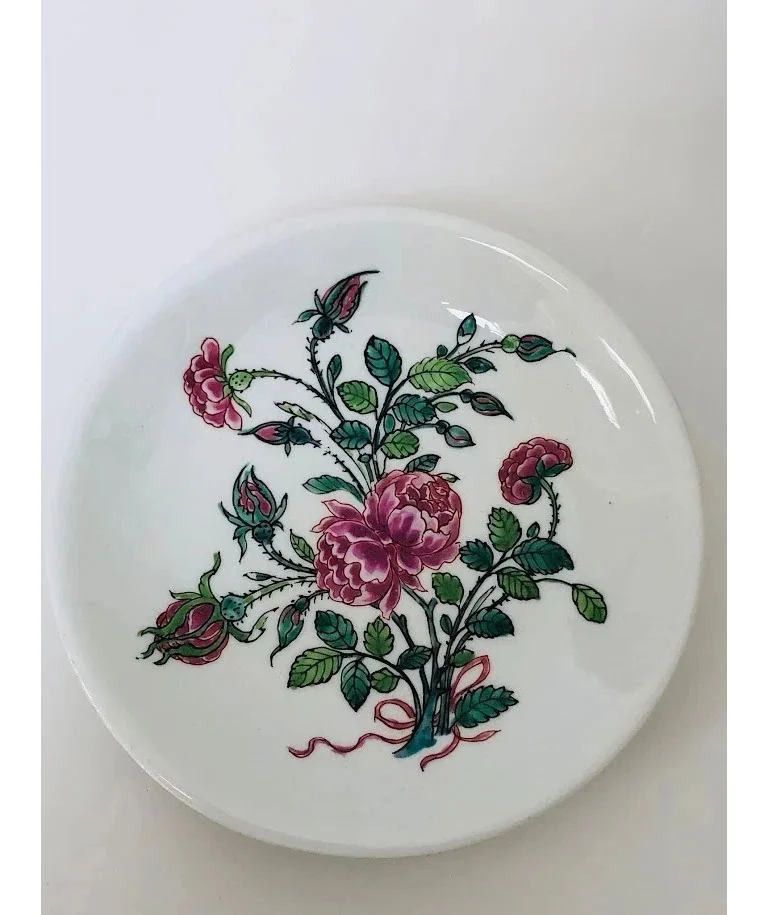
Produced originally as plain white porcelain, the pieces subsequently received vibrant polychrome enamel embellishment, executed by independent Dutch decorators. A tied spray of cabbage roses, thorny stems, and unopened buds adorns the basin of the saucer in rose-carmine and soft green enamels defined with precise black outlines. Similar overglaze colours highlight the applied three-dimensional sprigs around the exterior of the cup and the saucer underside.
Manufactured in Saxony between around 1713 and 1715, the forms date from the pioneering tenure of Johann Friedrich Böttger at the fledgling Meissen manufactory. At this early stage, Meissen had not yet perfected its own on-site polychrome palette, leading white blanks to be exported or traded to outside decorators, notably in the Netherlands, where Japanese and Chinese styles inspired local enamellers.
Neither piece bears the underglaze blue crossed swords, which were introduced later; instead, each piece features an incised Dreher’s mark cut into the inner foot rim by the porcelain thrower. In size, the saucer measures 13 cm across, while the tea bowl measures 8 cm in diameter by 4.5 cm in height.
Condition Minor wear consistent with age, with enamels and relief moulding well preserved.
Dimensions Saucer: 13 cm diameter; Tea bowl: 8 cm diameter x 4.5 cm height
| Dimensions | 13 × 13 × 4.5 cm |
|---|---|
| Period | 18th Century |
| Colour | Multicoloured |
| material | Porcelain |
| Origin | Germany |
| Maker | Meissen |
| Price range | £2000+ |
| Collection Era | Antique & Vintage |
Only logged in customers who have purchased this product may leave a review.
Reviews
There are no reviews yet.