


Enquire Today!
If you have any questions, requests or general enquiries, please do not hesitate to email us and we will get back to you as soon as possible regarding your enquiry.


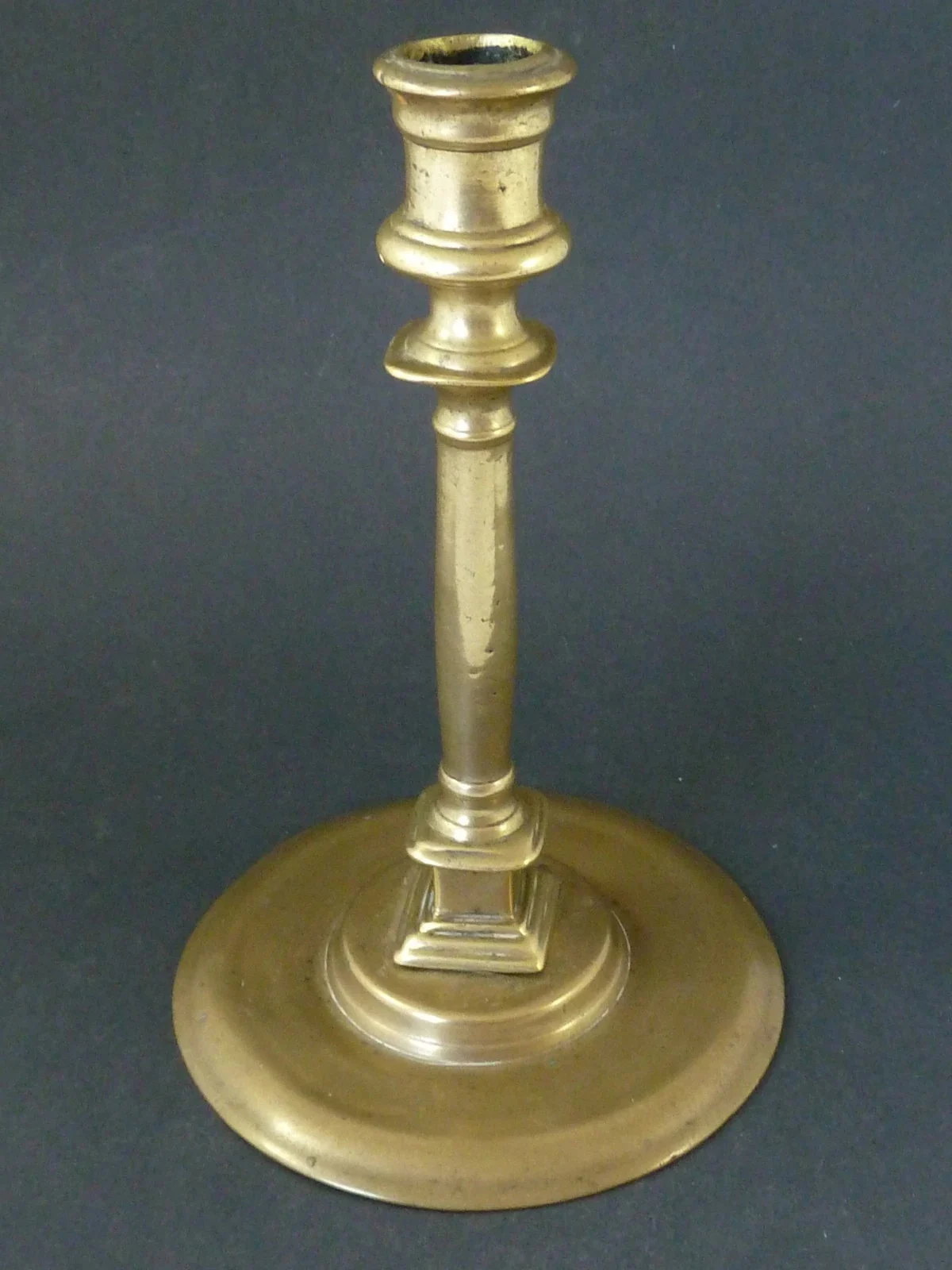

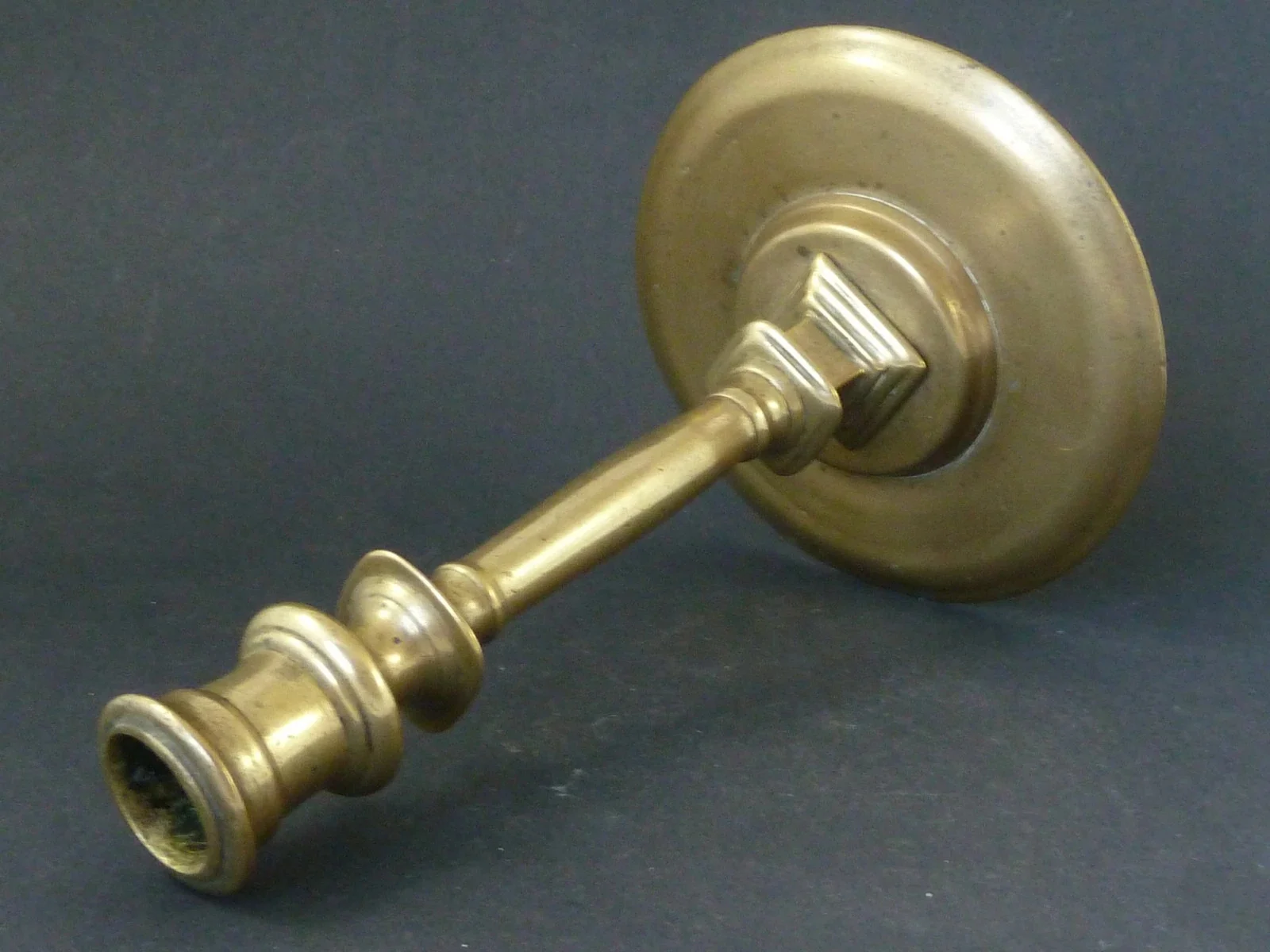


A pierced extraction aperture perforates the upper candle cup, set above moulded annular collars and a tapering cylindrical column. The lateral opening provided practical access for levering out wax stubs and spent wicks with a bodkin or small blade. Beneath the cylindrical stem, the casting transitions sharply into an architectural square plinth detailed with stepped, canted mouldings.
The plinth anchors into a broad, low-profile circular dish base. Concentric lathe-turned rings define the upper surface of the foot, which spreads out widely to stabilise the tall upright and act as an integrated drip pan during candle burning. Underneath, the base is cast hollow, displaying concentric turning marks radiating out from the central peened mounting tenon.
Cast in a dense brass with a warm, copper-rich alloy tone, this candlestick reflects sixteenth-century French metalwork, known for combining classical architectural column profiles with robust cast components. The shaft and base are joined through the underside using a heavy peened tang, typical of early European foundry assembly methods.
An unpolished aged patina covers the brass surface, showing natural mellowing, scattered pin-prick pitting, minor historical rim bruises, and oxidised wax remnants inside the socket. Structurally sound throughout, the large central joint beneath the base has had adhesive added in the past to consolidate and firm the peened union against movement.
Overall dimensions measure 215 mm (8 1/2 inches) in height and 142 mm (5 5/8 inches) across the base diameter, with a substantial total weight of 893 grams.
Condition Sound structural condition with wear, surface marks, and patina appropriate for an early cast brass piece. The peened joint on the underside has had adhesive applied to consolidate and tighten the fit.
Dimensions Height: 215 mm (8 1/2 in); Base diameter: 142 mm (5 5/8 in); Weight: 893 g
| Weight | 0.893 kg |
|---|---|
| Dimensions | 14.2 × 21.5 cm |
| Period | 16th Century |
| Style | Renaissance |
| Colour | Gold |
| material | Brass |
| Origin | France |
| Price range | Under £2000 |
| Collection Era | Antique & Vintage |
Only logged in customers who have purchased this product may leave a review.


Reviews
There are no reviews yet.