


Enquire Today!
If you have any questions, requests or general enquiries, please do not hesitate to email us and we will get back to you as soon as possible regarding your enquiry.
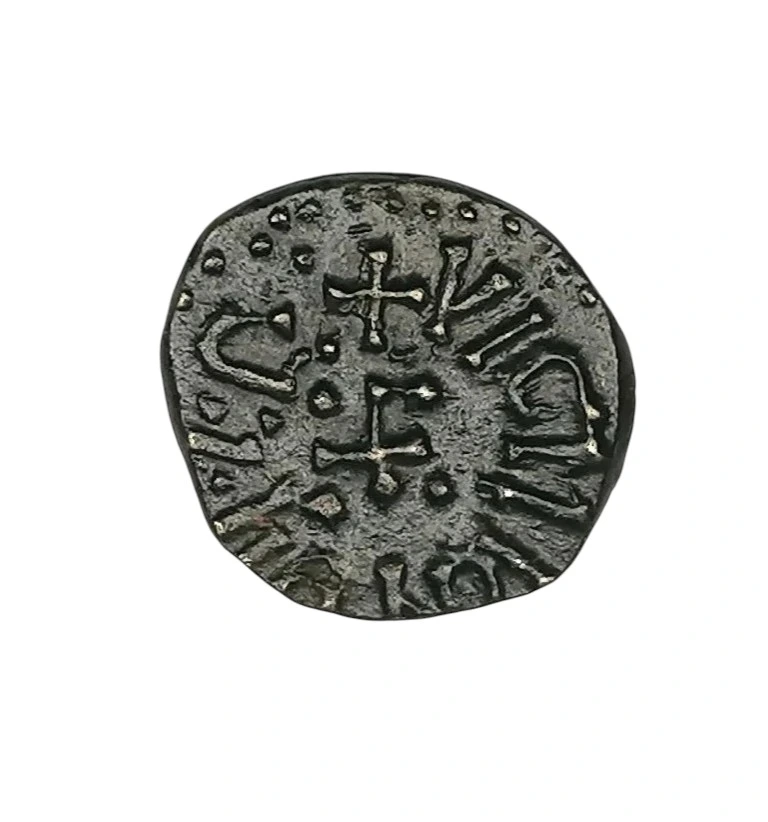


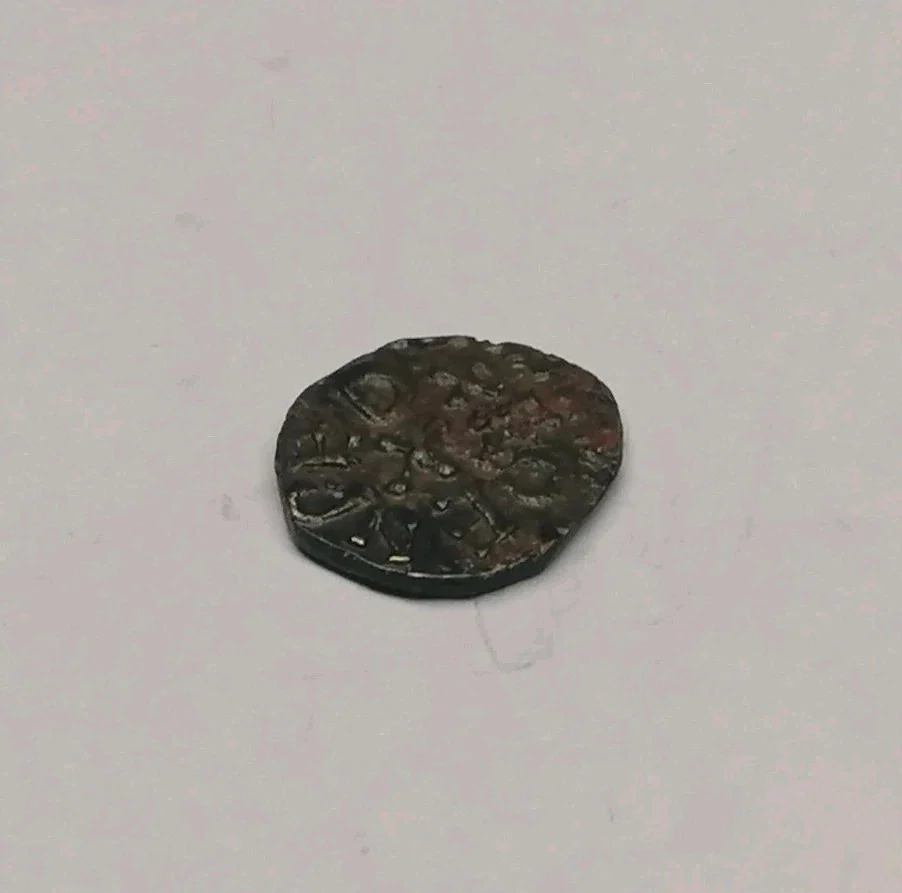


Struck with a central pelleted cross motif within an inner circle, this Anglo-Saxon styca represents the distinctive base-metal currency minted in the Kingdom of Northumbria. The coin was produced during the archiepiscopate of Wigmund, who held the see of York between 837 and 850.
The obverse features the archbishop’s name arranged circumferentially around the central device, enclosed by an outer border. The reverse presents the moneyer’s name encircling a matching cross design, executed in characteristic early medieval lettering with wedge-shaped serifs and pellet punctuation.
Unlike the contemporary silver pennies circulating across southern Anglo-Saxon kingdoms such as Wessex and Mercia, Northumbrian stycas were struck in debased silver and base copper alloys. These compact, thick coinages served as small-denomination currency for everyday local trade throughout northern England until the Viking capture of York brought the native series to an end.
The flan measures 12.5 mm in diameter, with a thickness of 1.2 mm and a weight of 1.00 g. Produced by manual hammering between engraved dies, the coin displays the slight off-centre alignment and irregular circular contour characteristic of early medieval minting. Both faces retain well-defined central symbols and legible letter forms against an aged, dark-toned surface.
This piece illustrates the independent episcopal minting privileges exercised by the archbishops of York during the ninth century, operating alongside the Northumbrian royal coinage.
Condition Intact hammered flan with honest circulation wear, clear lettering, well-preserved central motifs, and an aged dark brown patina.
Dimensions 1.25 cm diameter, 0.12 cm thickness, 1.00 g weight
| Weight | 0.001 kg |
|---|---|
| Dimensions | 1.25 × 1.25 cm |
| Period | Unknown |
| Style | Anglo-Saxon |
| Colour | Brown |
| material | Copper alloy |
| Origin | United Kingdom |
| Maker | Archbishop Wigmund |
| Price range | Under £2000 |
Only logged in customers who have purchased this product may leave a review.
Reviews
There are no reviews yet.