


Enquire Today!
If you have any questions, requests or general enquiries, please do not hesitate to email us and we will get back to you as soon as possible regarding your enquiry.
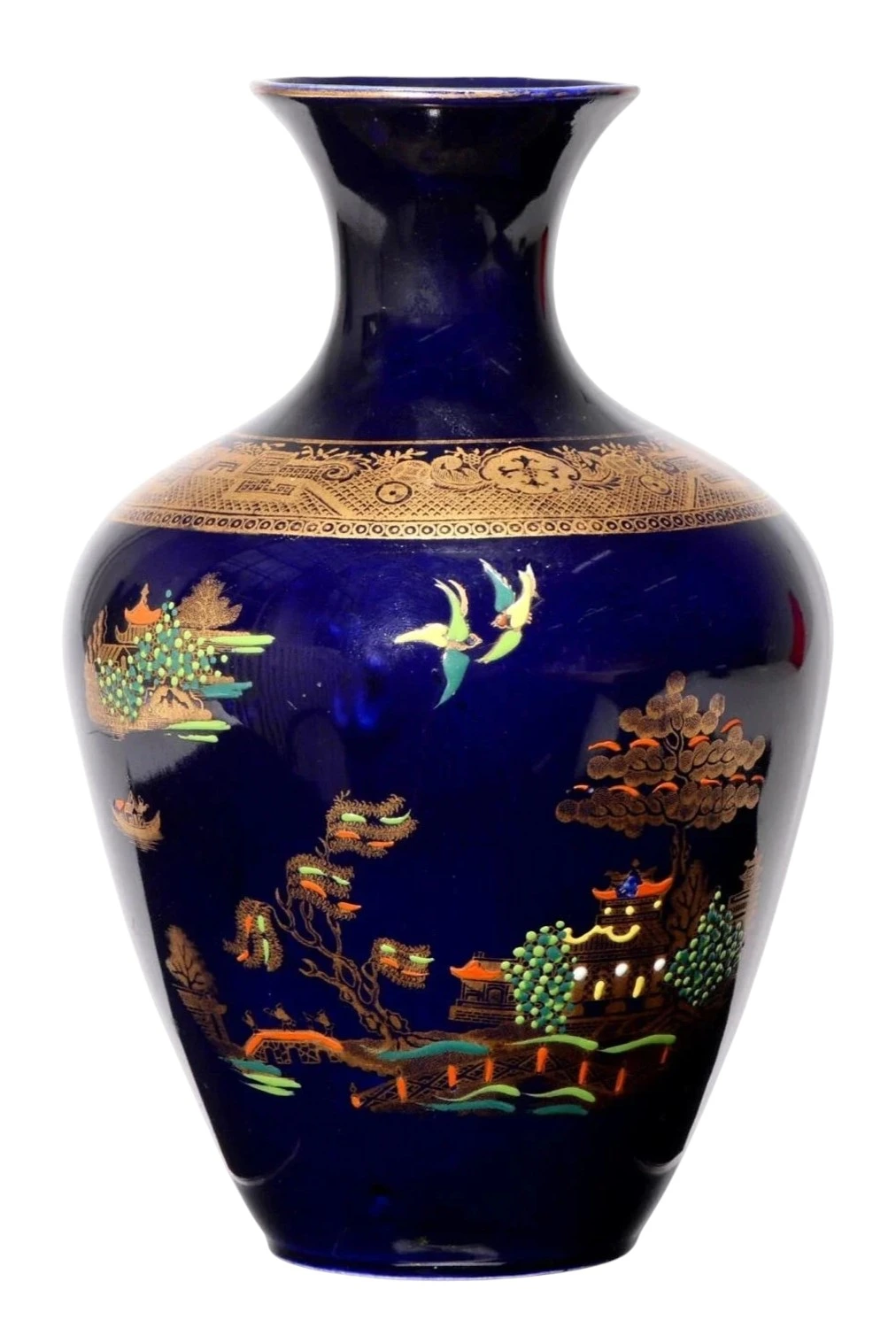

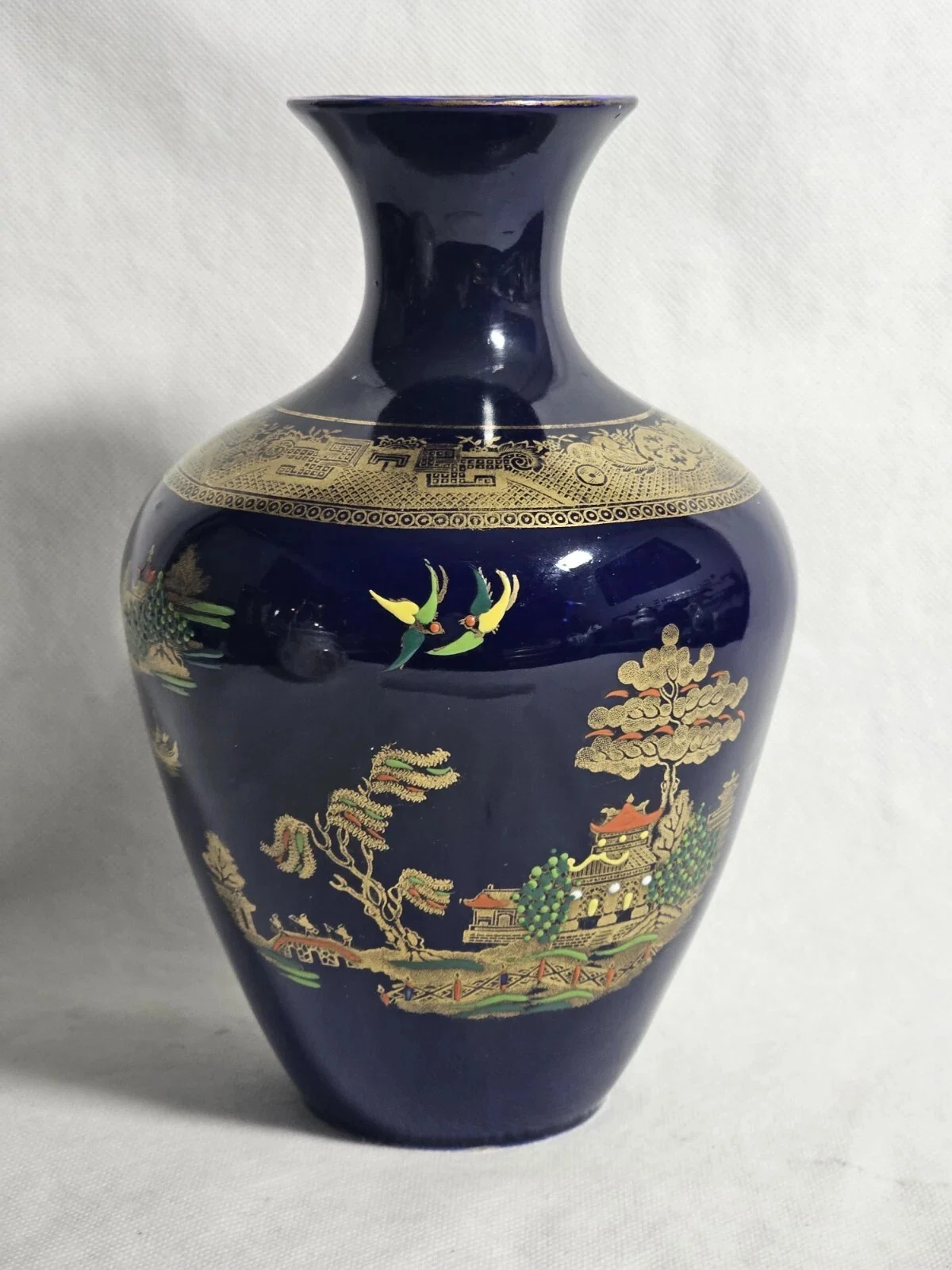
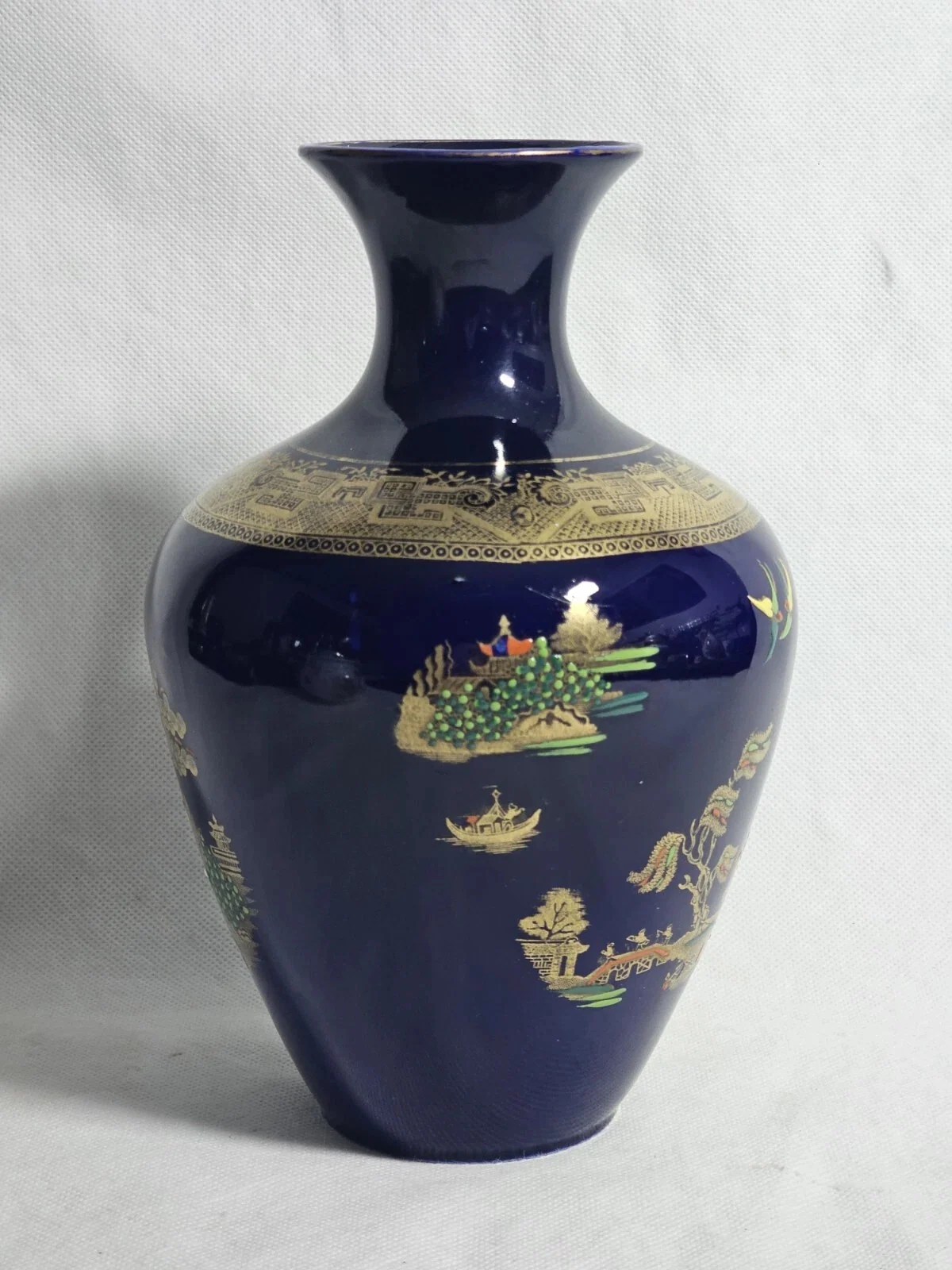
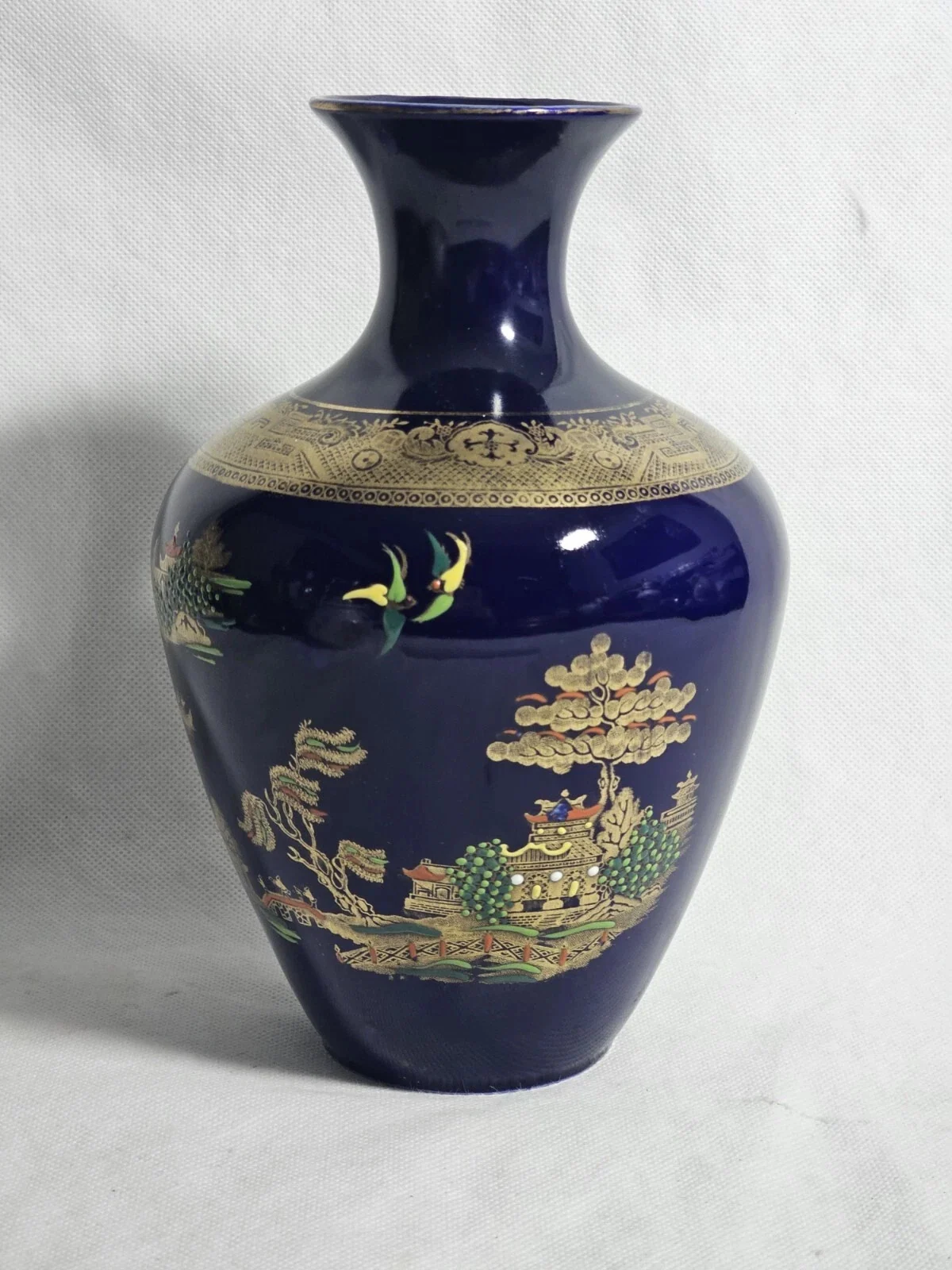

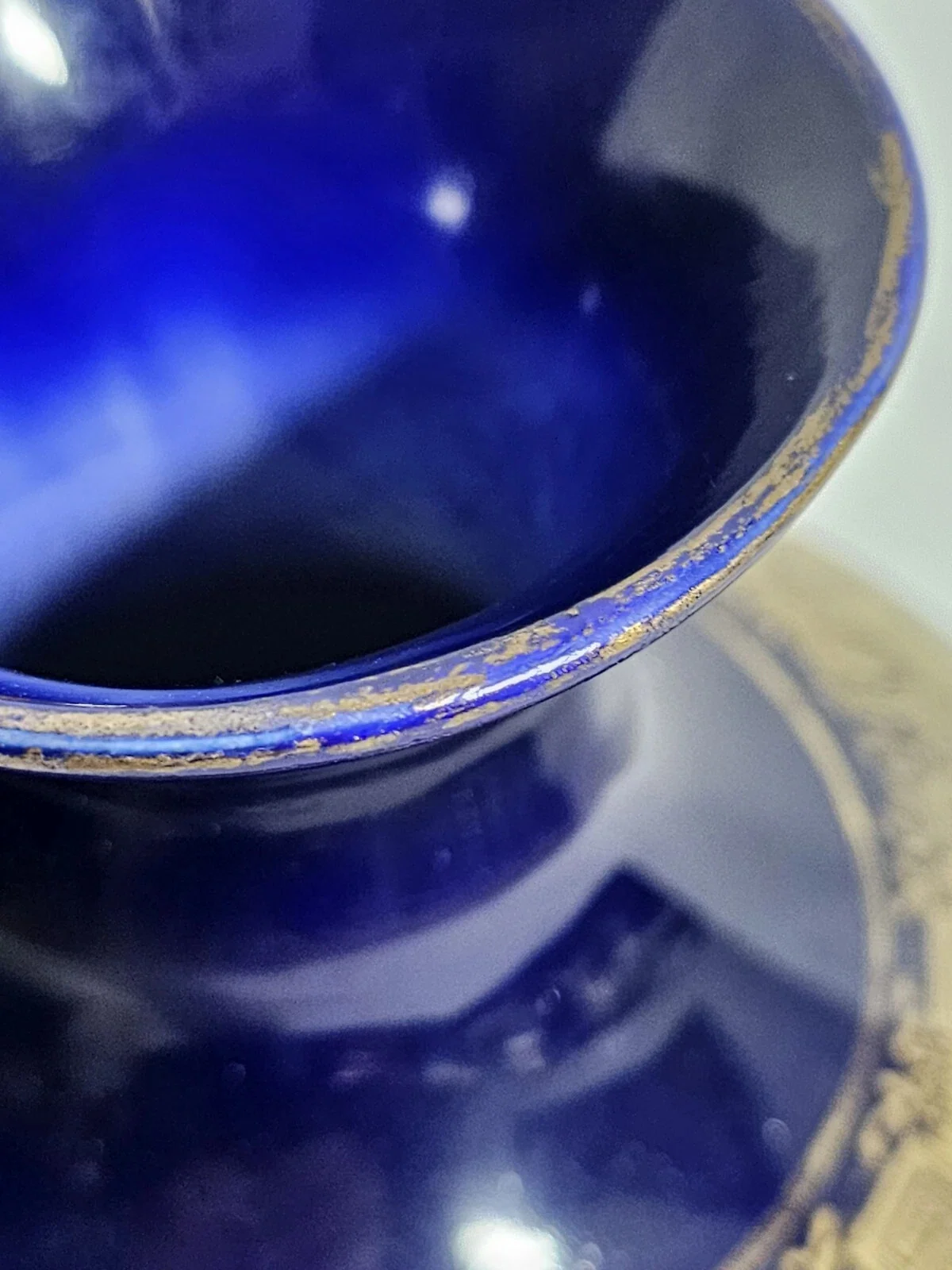
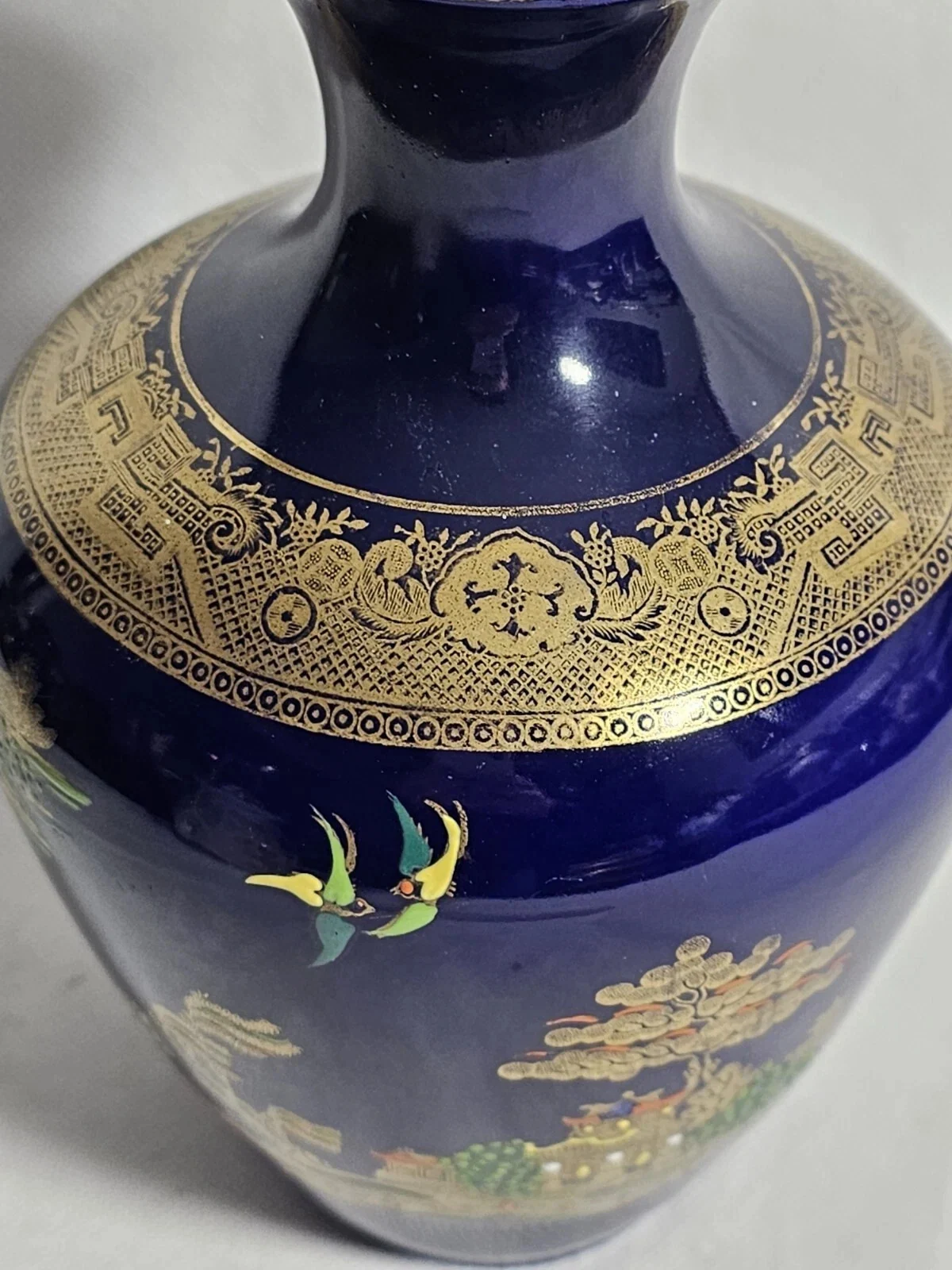
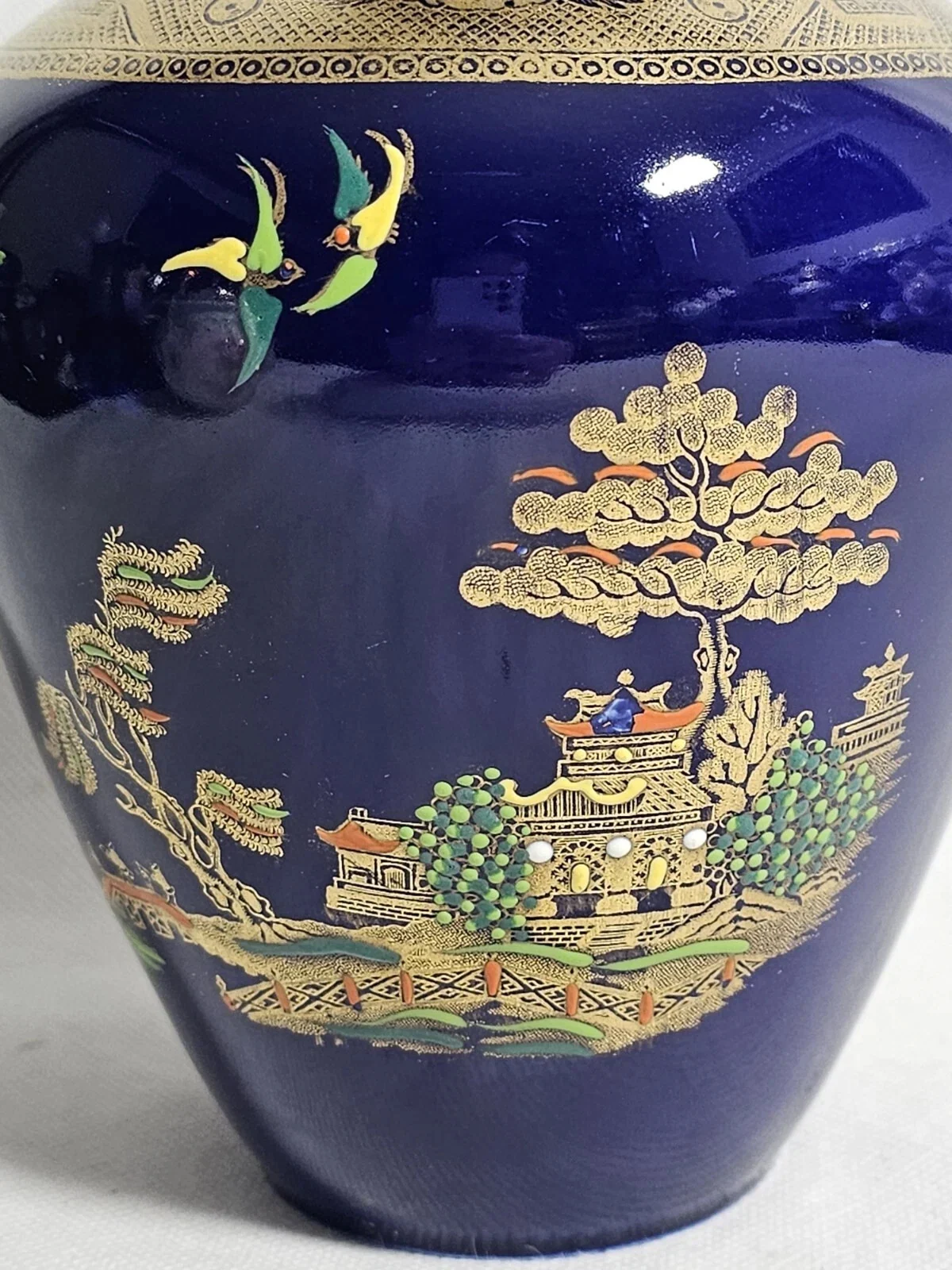


Rich cobalt blue glaze covers the baluster body of this earthenware vase, tapering downwards from rounded shoulders to a circular foot and rising to a flared trumpet neck. The dark ground provides a glossy, reflective surface for the detailed gilded decoration and raised enamel colours applied across the exterior.
The central decoration interprets traditional Willow pattern elements in an orientalist, Chinoiserie landscape. Transfer-printed gilding depicts pagodas, garden pavilions, arched bridges, fenced shorelines, floating sampans, and stylized willow and fruit trees. Vivid polychrome enamels in green, orange, yellow, and white have been hand-applied over the gilt outlines to accentuate the foliage, architectural rooftops, and a pair of swallows in flight above. Around the shoulder, an intricate repeating geometric border incorporating scrollwork and roundels frames the top of the scene.
The underside of the base features clear black printed factory marks identifying the piece as ‘Ye Olde Willow’, manufactured under patent by John Tams Ltd in Longton, Stoke-on-Trent, England. Beneath the maker’s stamp, the base carries the classic eight-line mnemonic rhyme narrating the legendary story of the willow pattern, beginning with ‘Two pigeons flying high’ and concluding with the apple tree and garden fence.
Standing 21 cm in height, this vase was produced around 1930 during the interwar revival of decorative earthenware chinoiserie. The combination of transfer-printed gilding and hand-enamelled accents creates notable textural contrast against the rich blue ground, making it an engaging ceramic display piece from the Staffordshire potteries.
Condition Rubbing and wear are evident to the gilt band around the rim. The printed verse on the base shows light surface wear with partial loss to a few characters, while the glazed body and enamelling remain well preserved.
Dimensions Height: 21 cm
| Dimensions | 21 cm |
|---|---|
| Period | 20th Century |
| Style | Chinoiserie |
| Colour | Blue, Gold, Multicoloured |
| material | Earthenware |
| Origin | England |
| Maker | John Tams Ltd |
| Price range | Under £1000, Under £2000, Under £500 |
| Collection Era | Antique & Vintage |
Only logged in customers who have purchased this product may leave a review.
Reviews
There are no reviews yet.