


Enquire Today!
If you have any questions, requests or general enquiries, please do not hesitate to email us and we will get back to you as soon as possible regarding your enquiry.
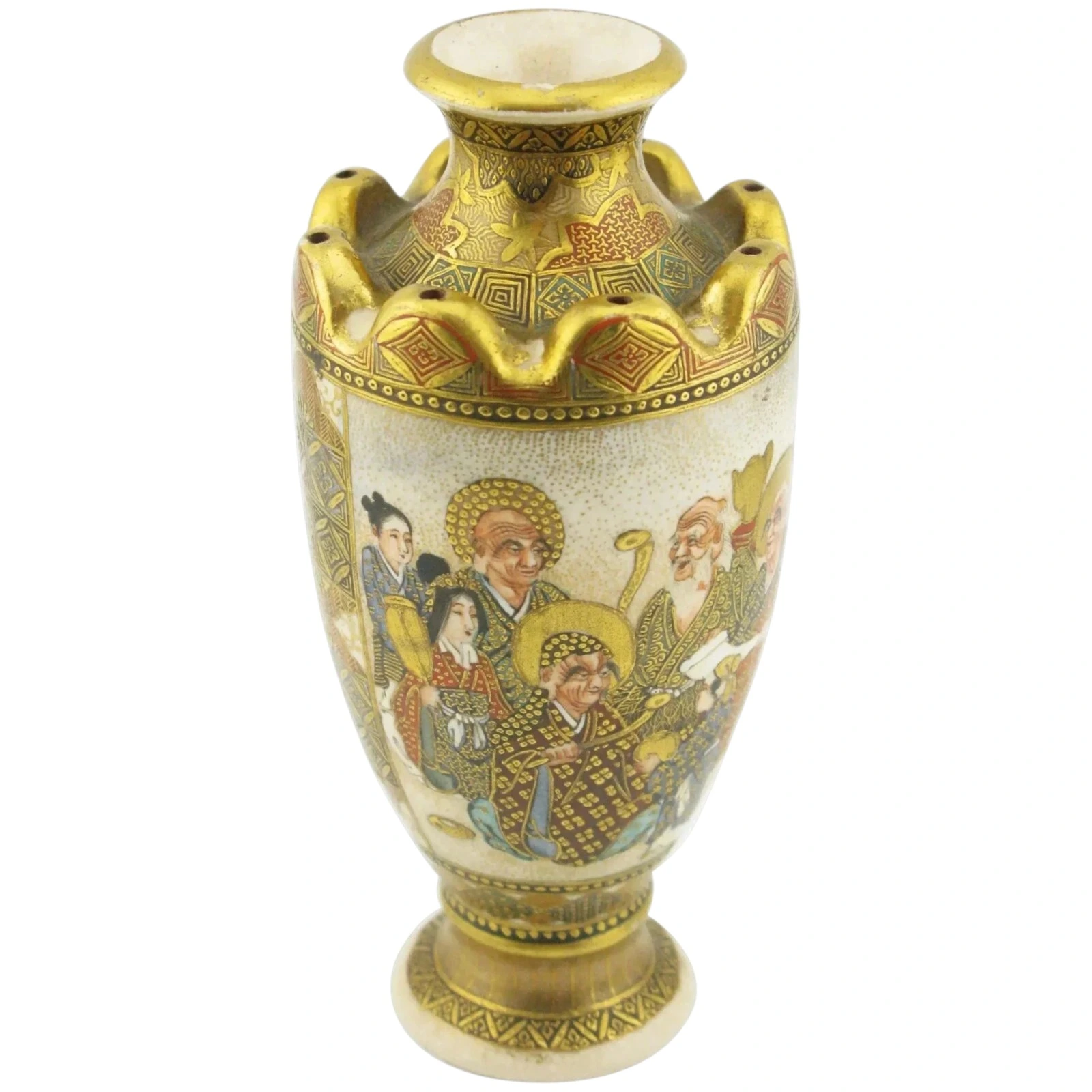
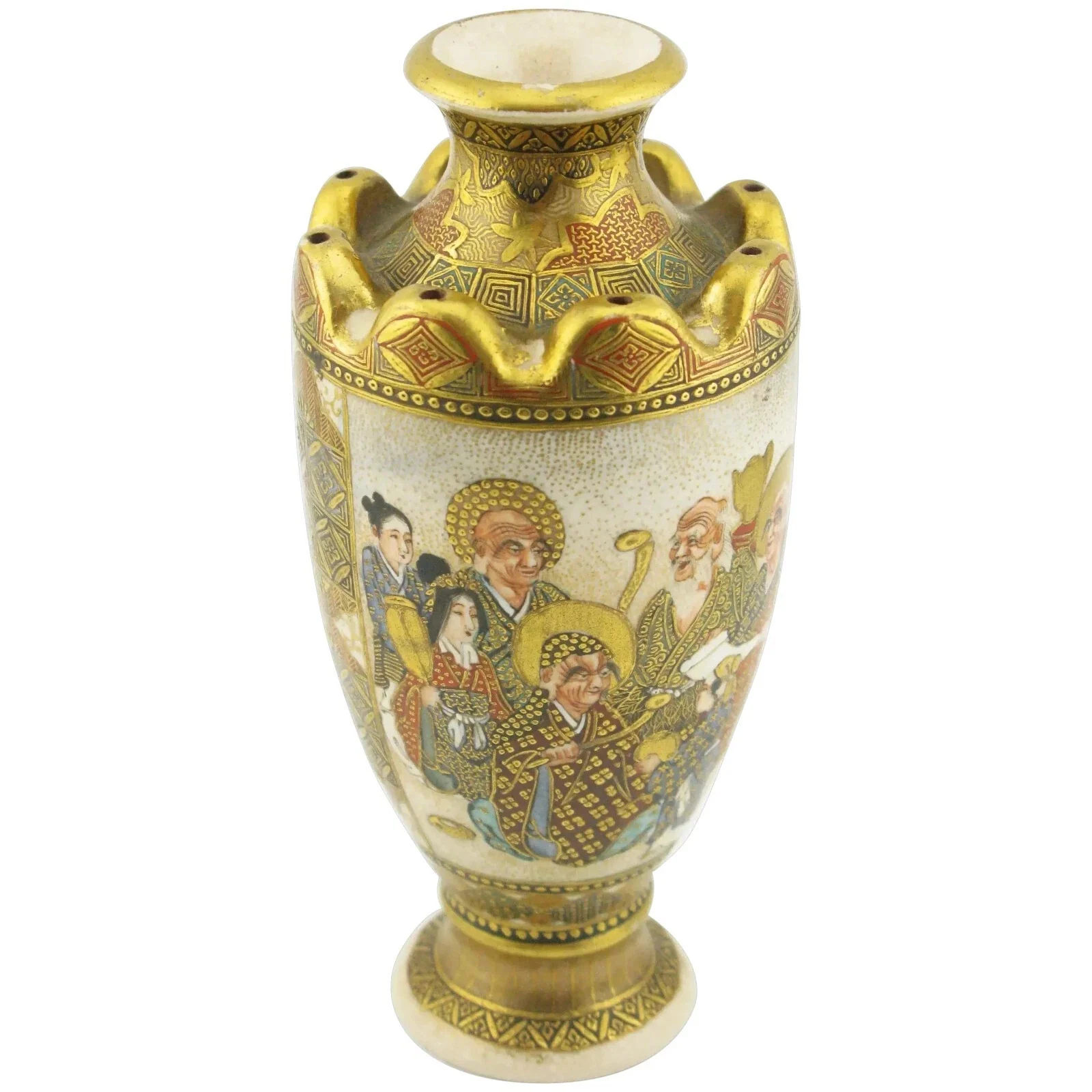

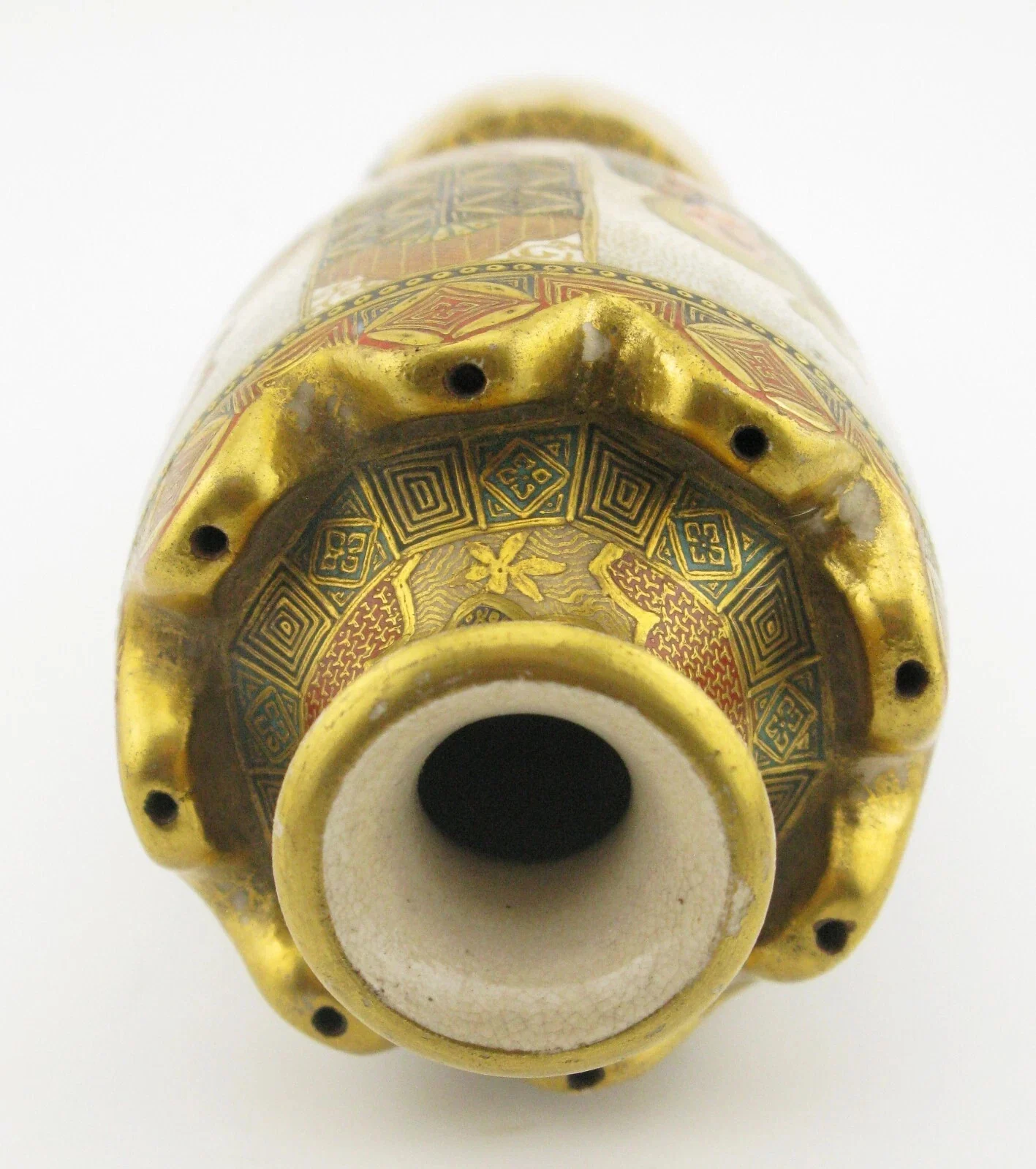


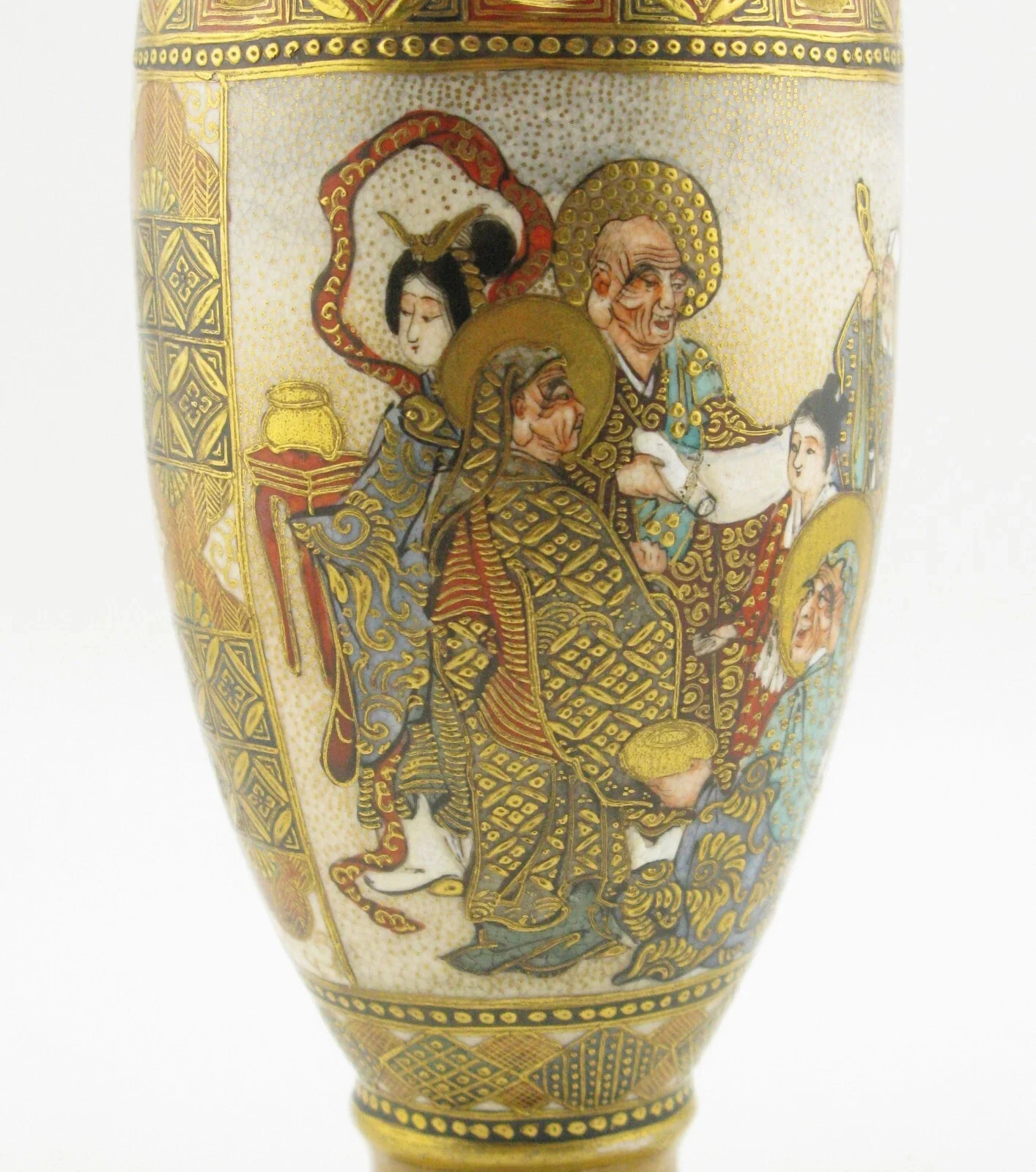

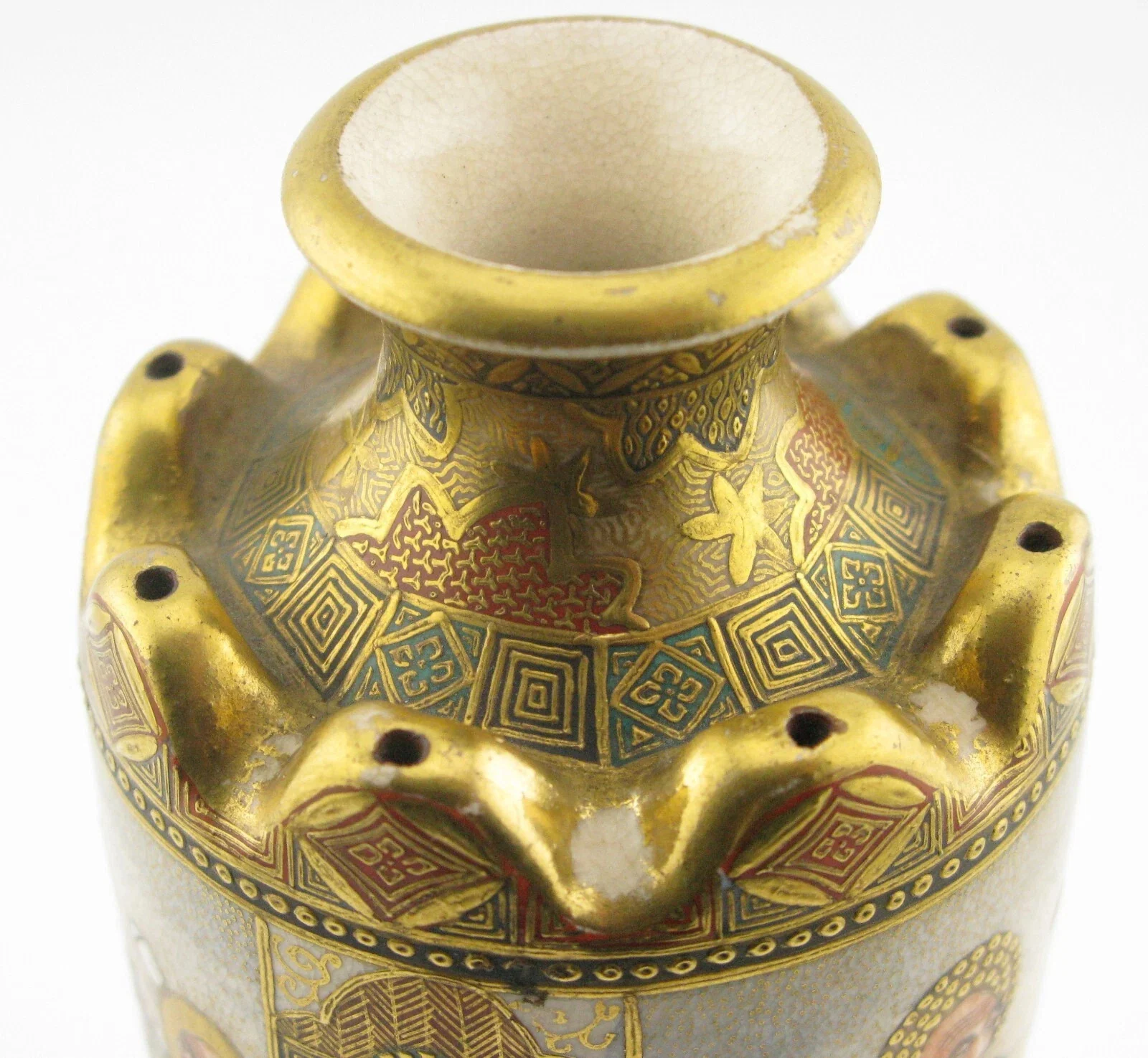

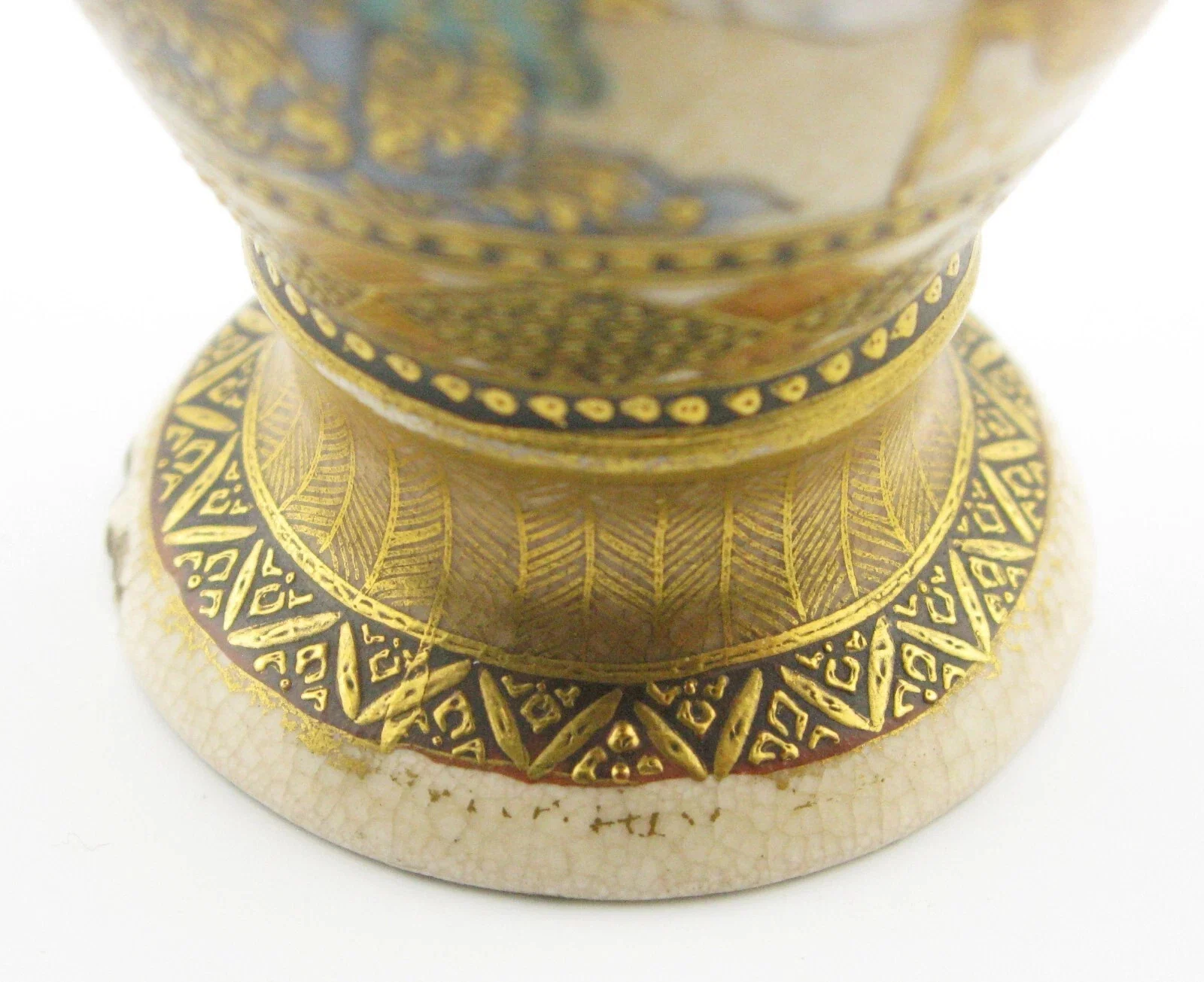
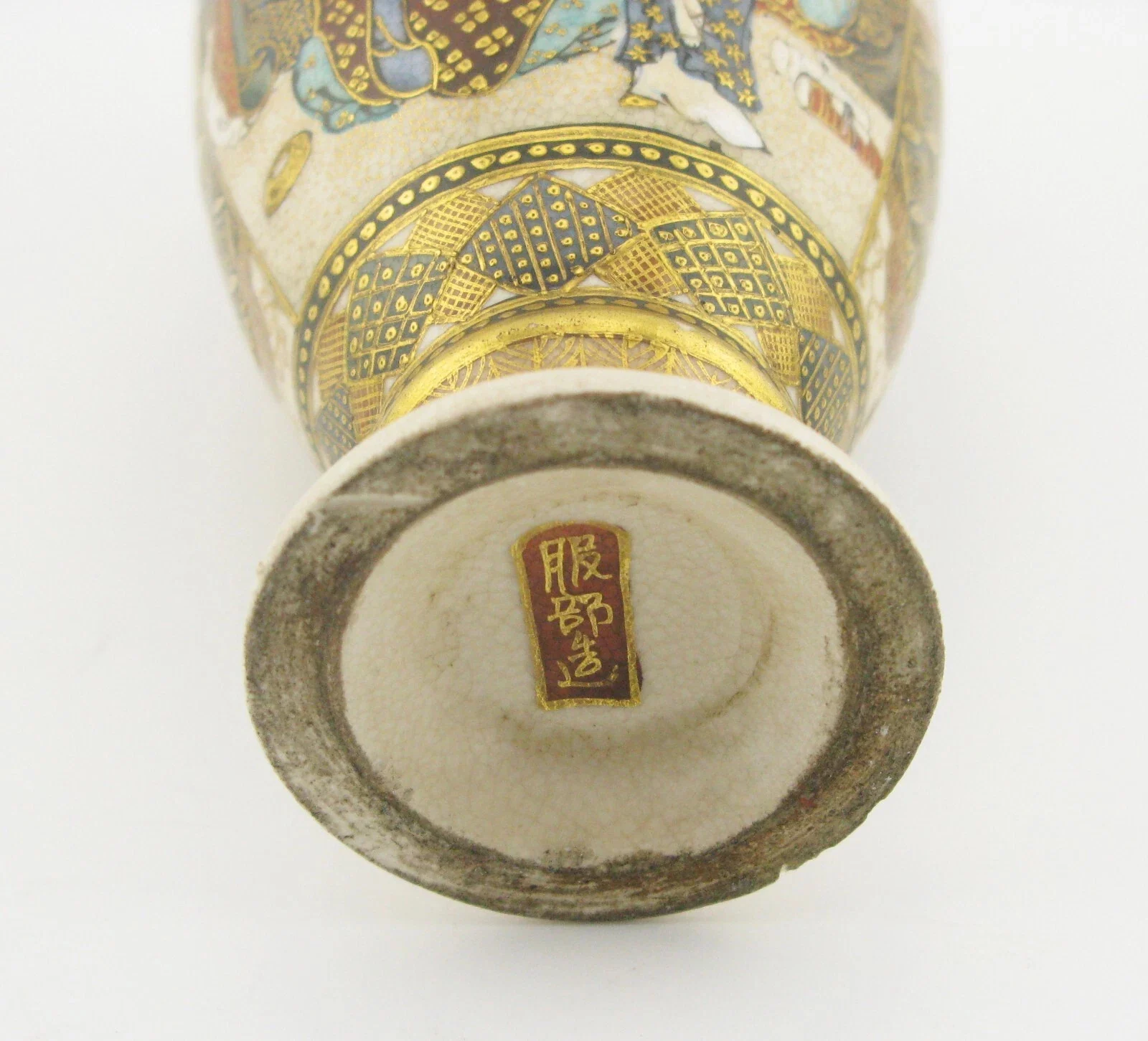
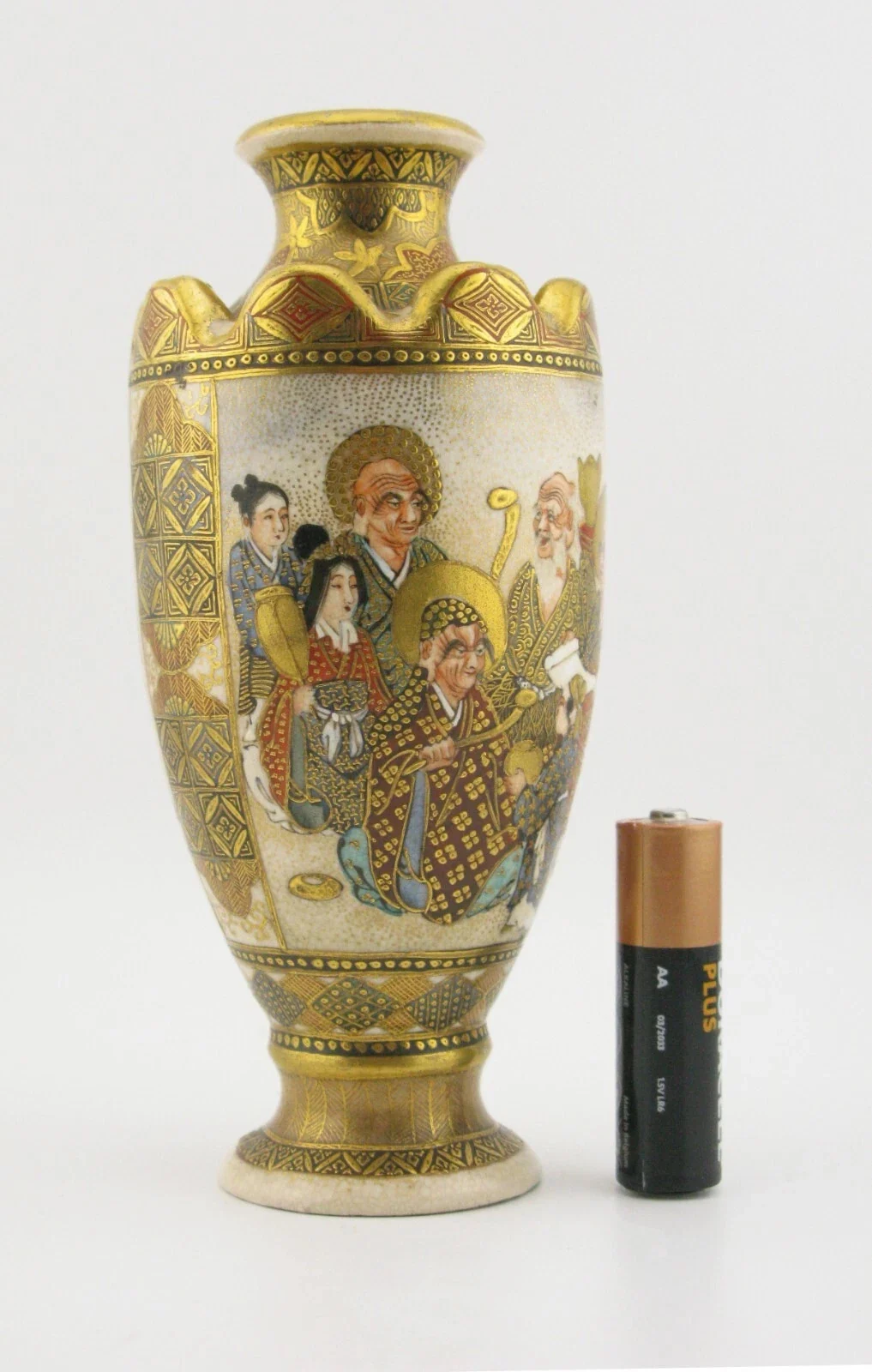


Pierced apertures encircle the undulating, scalloped shoulder of this earthenware vase, drilled to a shallow depth of around one to two centimetres to support burning incense sticks. The body assumes an elongated baluster profile, rising from a raised, flared pedestal foot to a waisted neck and gently rolled cup mouth.
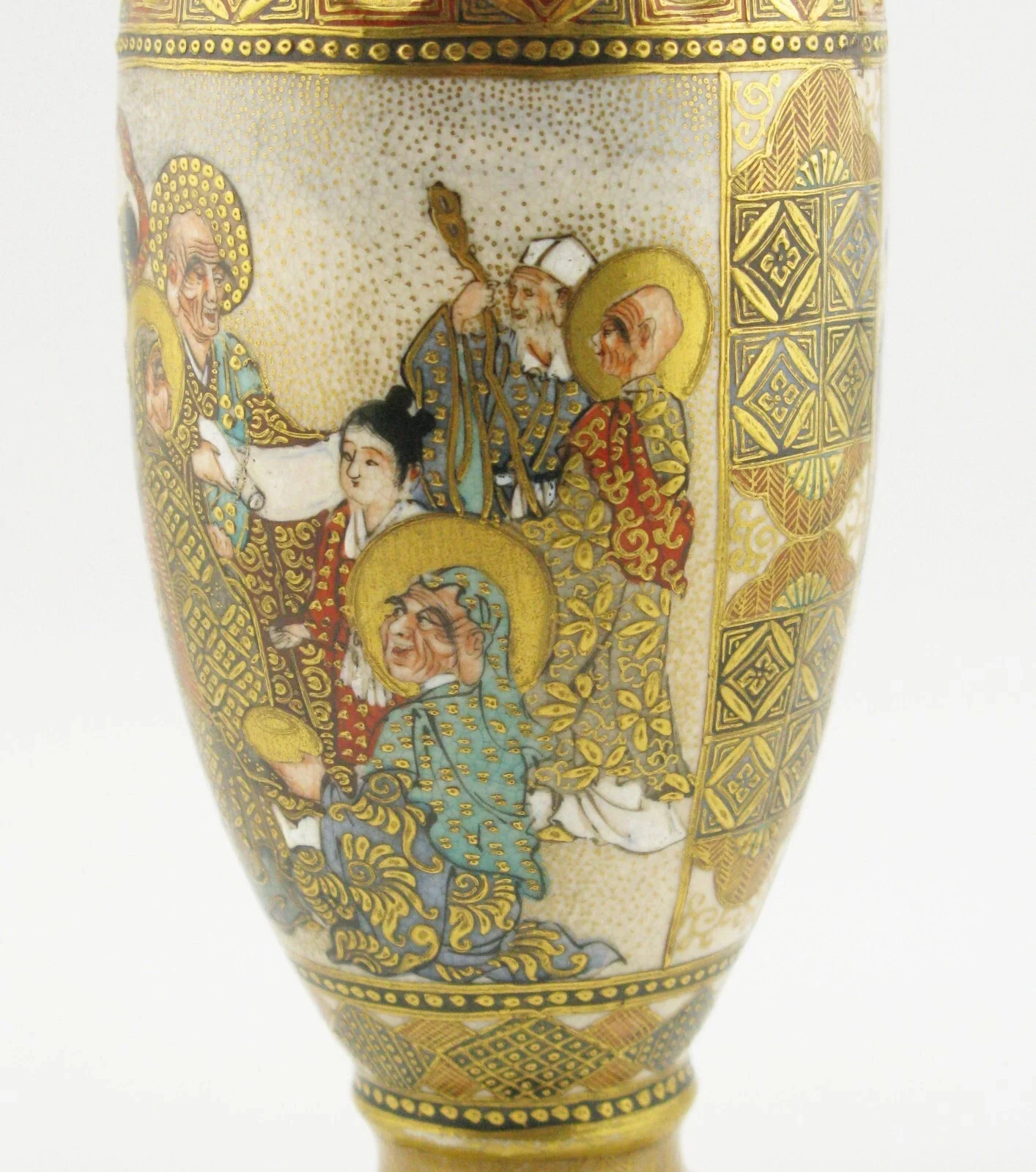
Painted across the finely crackled cream ground are traditional Buddhist figures, including holy men or rakan depicted with textured golden haloes, expressive features, and patterned robes. They are shown in conversation alongside attendants and geisha holding traditional fans and scrolls. Raised gilding and moriage dots define the halos, textile garments, and the stippled background haze.
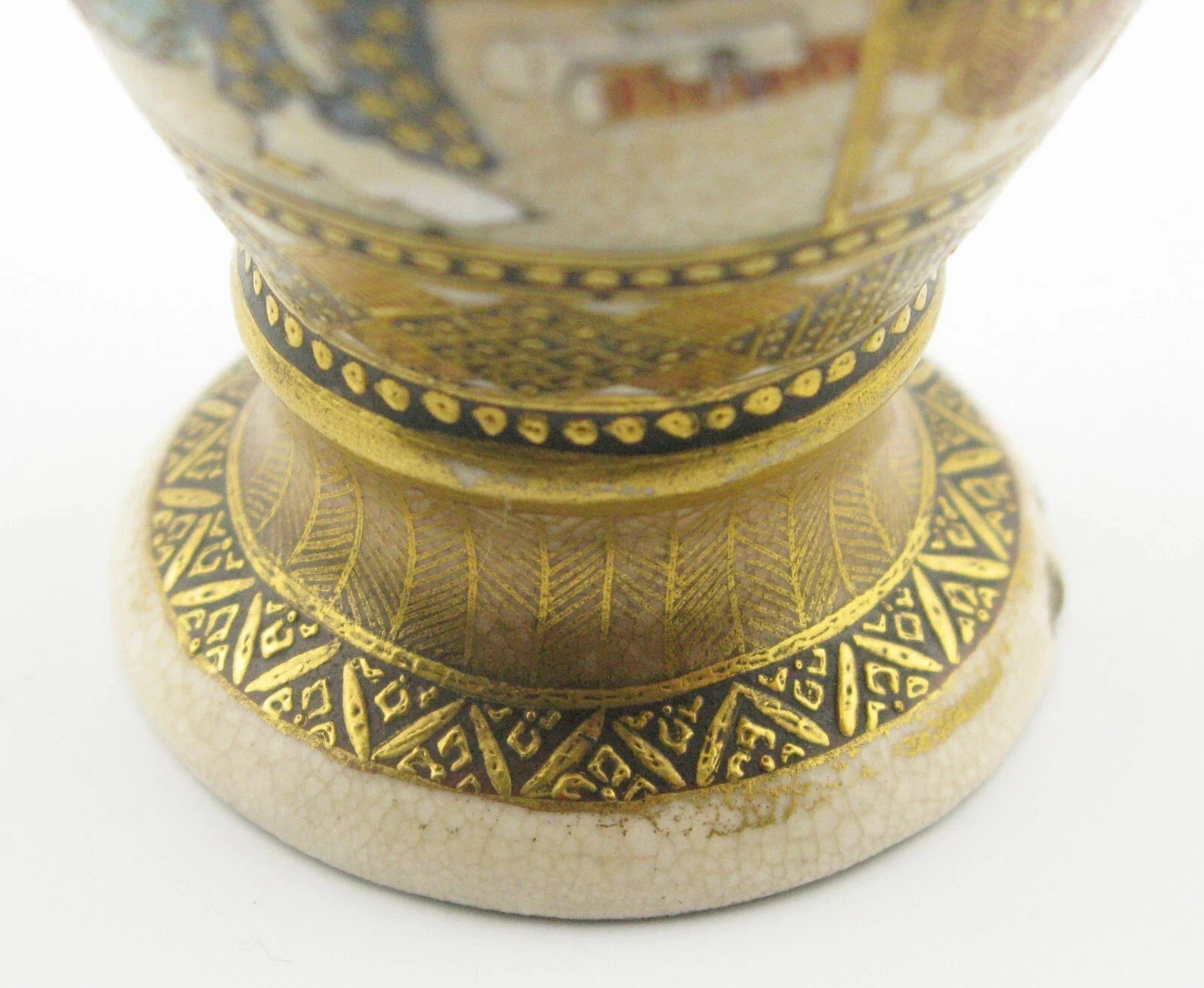
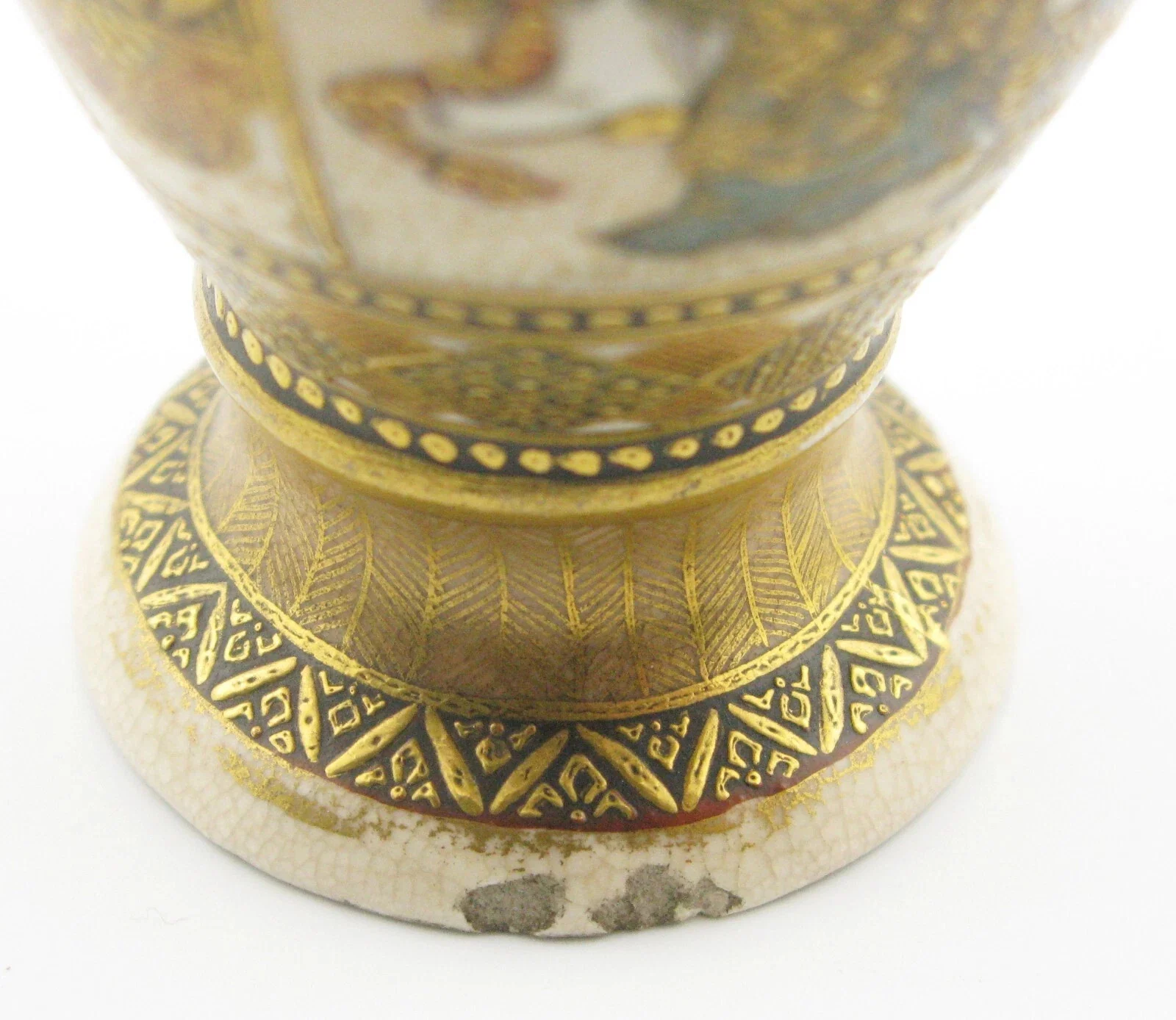
Surrounding the figurative panels are complex brocade borders rendered in iron red, black, and extensive gilding. The undulating collar displays geometric lozenges, square fretwork, and stylised foliage, whilst the lower foot is banded with interlocking chevrons and gilt beading. The entire earthenware surface carries the characteristic dense, pale crackle beneath a clear protective glaze.
Produced in Japan during the Meiji period in the late nineteenth century, this piece bears the signature of the Hattori workshop. Measuring 14.2 cm in height, the vessel combines decorative display with dedicated tabletop function, showing typical high-relief craftsmanship on a miniature cabinet scale.
Condition Light wear and minor rubbing to the gilt rims, with typical fine age crazing across the cream glaze. The base foot shows small nibbles and surface marks consistent with age.
Dimensions Height: 14.2 cm
| Dimensions | 2 × 14.2 cm |
|---|---|
| Period | 19th Century, Late 19Th Century |
| Style | Meiji |
| Colour | Cream, Gold, Multicoloured |
| material | Earthenware |
| Origin | Japan |
| Maker | Hattori |
| Price range | Under £2000 |
| Collection Era | Antique & Vintage |
Only logged in customers who have purchased this product may leave a review.
Reviews
There are no reviews yet.