


Enquire Today!
If you have any questions, requests or general enquiries, please do not hesitate to email us and we will get back to you as soon as possible regarding your enquiry.
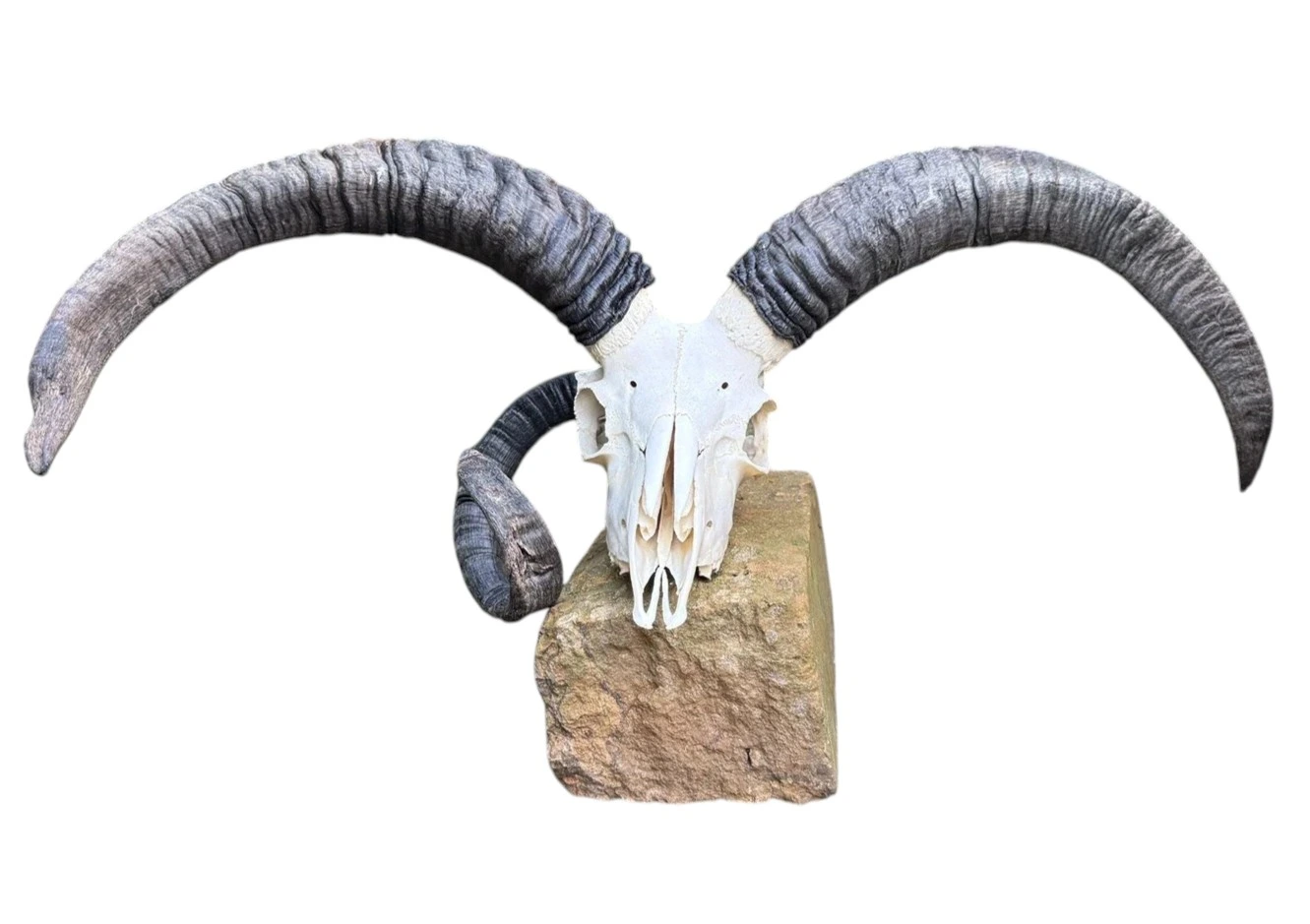
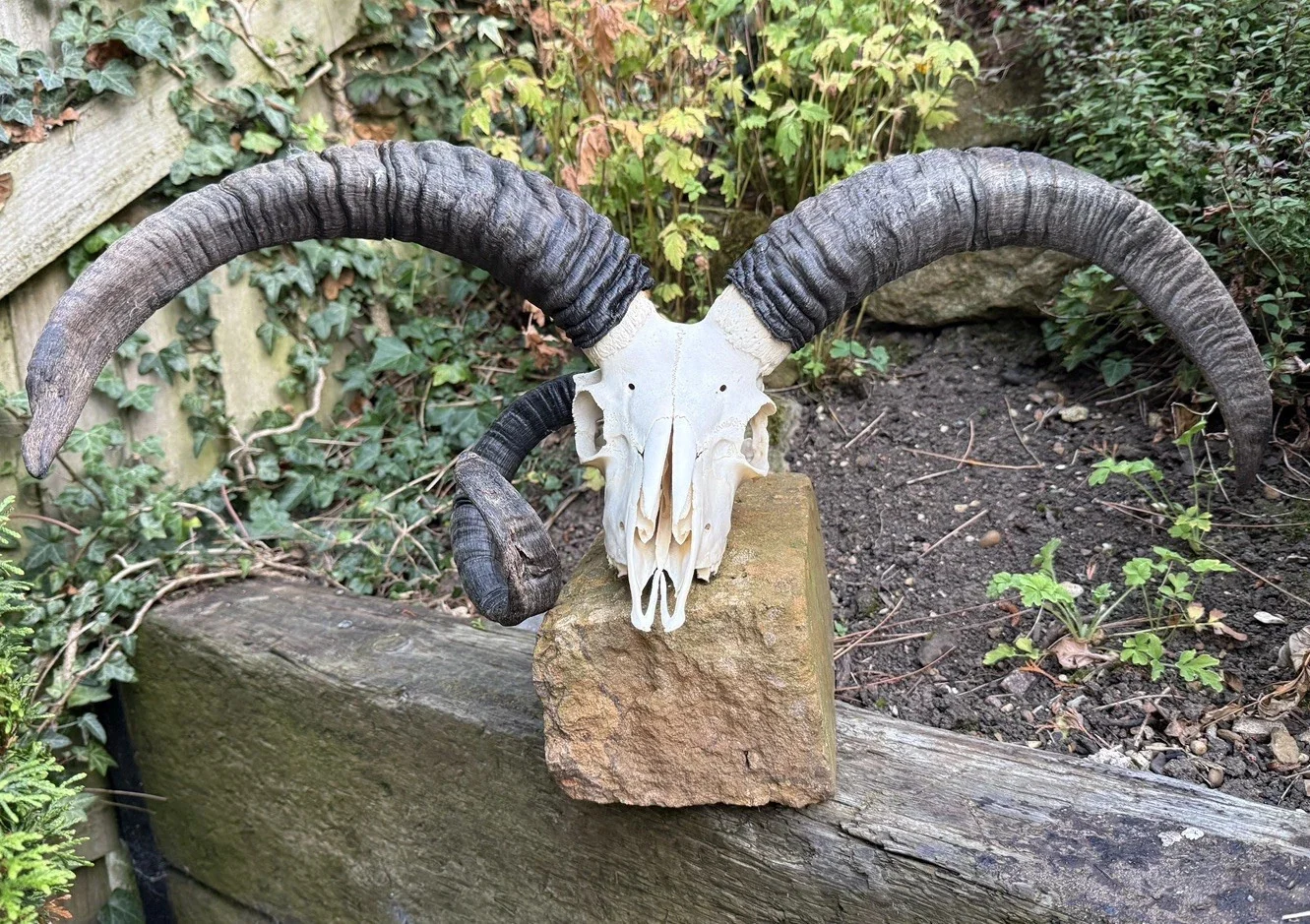

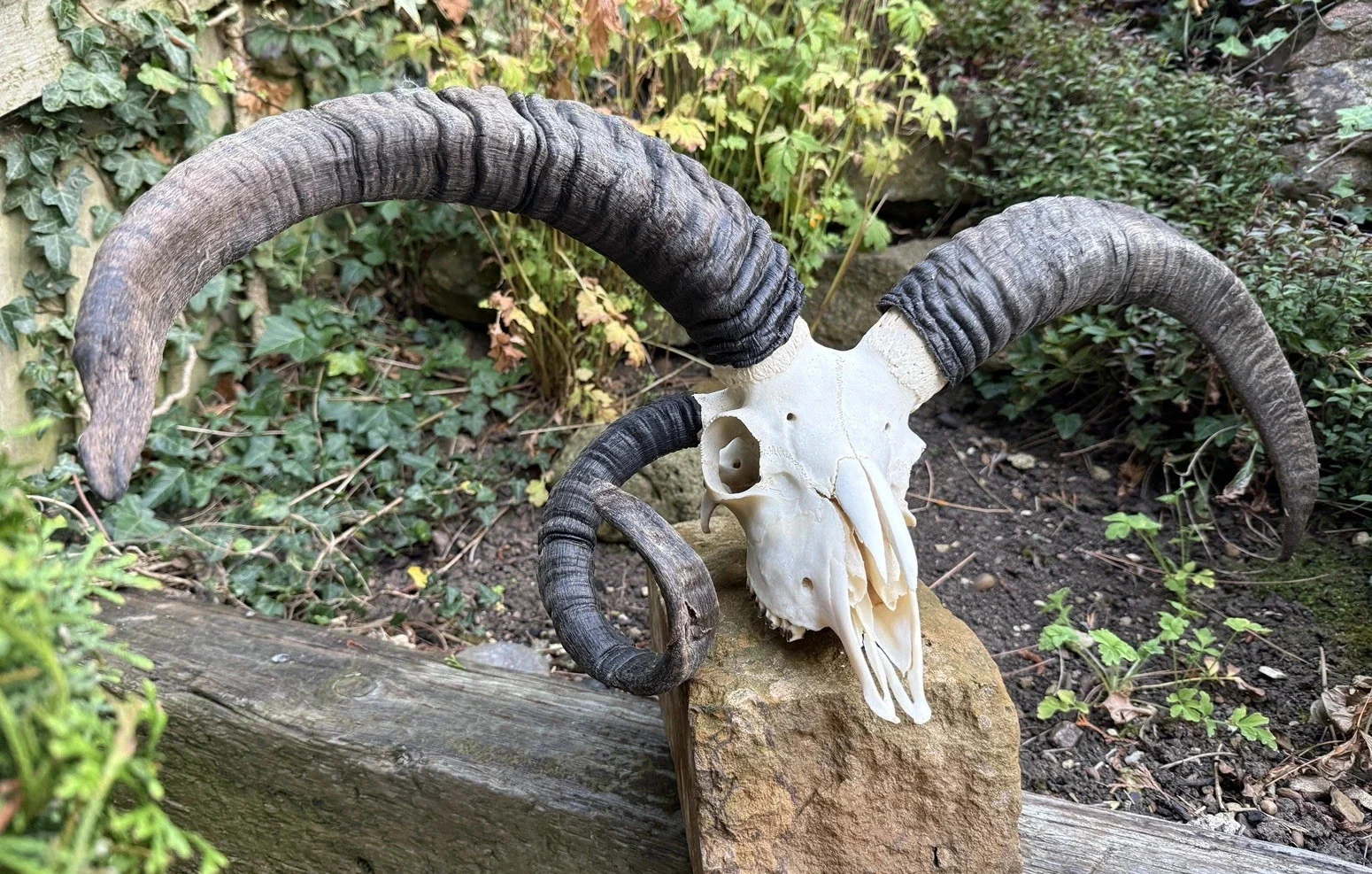




Two broad, laterally sweeping upper horns define the dramatic spread of this cleaned Jacob ram cranium, complemented by a tightly curled third horn descending beside the cheek. Jacob sheep are a traditionally polycerate breed known for carrying two to six horns, most commonly developing as balanced pairs. On this animal, juvenile horn damage on the opposite side appears to have arrested the development of the fourth horn, resulting in an asymmetrical trio of horns that grew with substantial breadth and deep transverse growth rings.
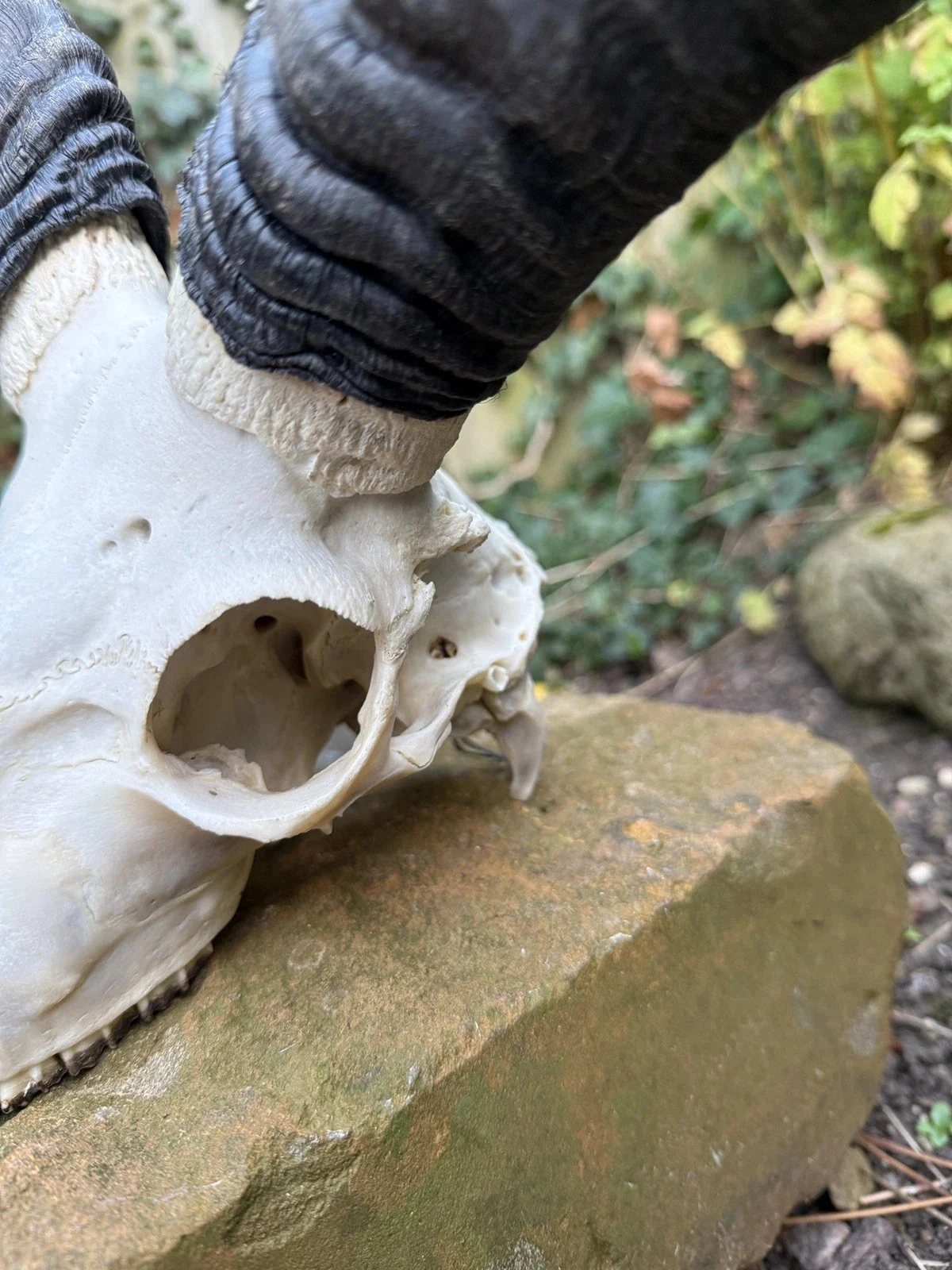
The cranial bone has been cleaned to an even off-white finish, preserving the delicate internal nasal turbinates, eye orbits, and suture lines intact. The lower maxillary region retains intact upper dentition, while the posterior cranium remains solid. As is standard in osteological taxidermy preparations, the dark keratin horn sheaths can slide off the porous underlying bony horn cores, illustrating the anatomical growth structure beneath.
A simple wire hanging loop is fitted to the rear base of the skull, allowing the specimen to be securely wall-mounted or displayed flat as a tabletop curiosity. The natural surface of the horn sheaths exhibits fine fibrous texture, weathered tips, and subtle earthy colour variations characteristic of mature ram horns.
Probably prepared in the late twentieth or early twenty-first century in the United Kingdom, this piece serves equally well for natural history study, comparative osteology collections, or country house interior display.
Condition Bone thoroughly cleaned and in good structural order with intact nasal bones and orbital arches. Missing fourth horn is due to natural developmental injury in life rather than preparation damage. Minor natural flaking and weathering to horn sheath tips.
| Period | 21st Century, Late 20Th To Early 21St Century |
|---|---|
| material | bone, Horn |
| Origin | United Kingdom |
| Price range | Under £2000 |
| Collection Era | Contemporary |
| Colour | Black, Brown, Cream |
Only logged in customers who have purchased this product may leave a review.
Reviews
There are no reviews yet.