


Enquire Today!
If you have any questions, requests or general enquiries, please do not hesitate to email us and we will get back to you as soon as possible regarding your enquiry.

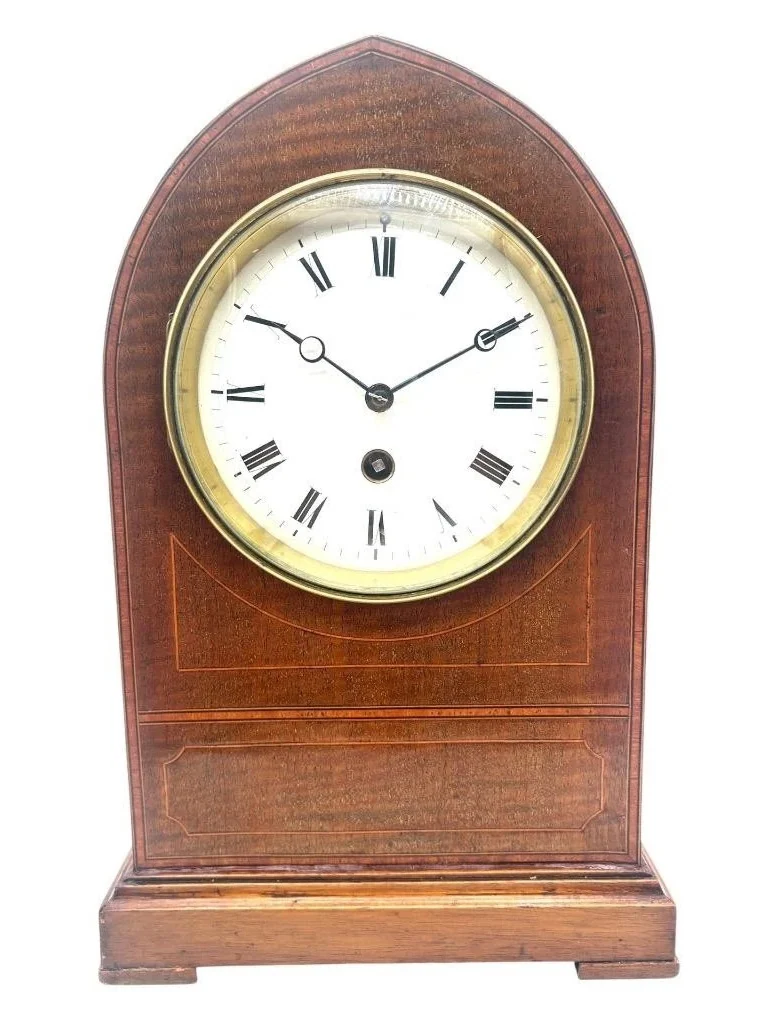
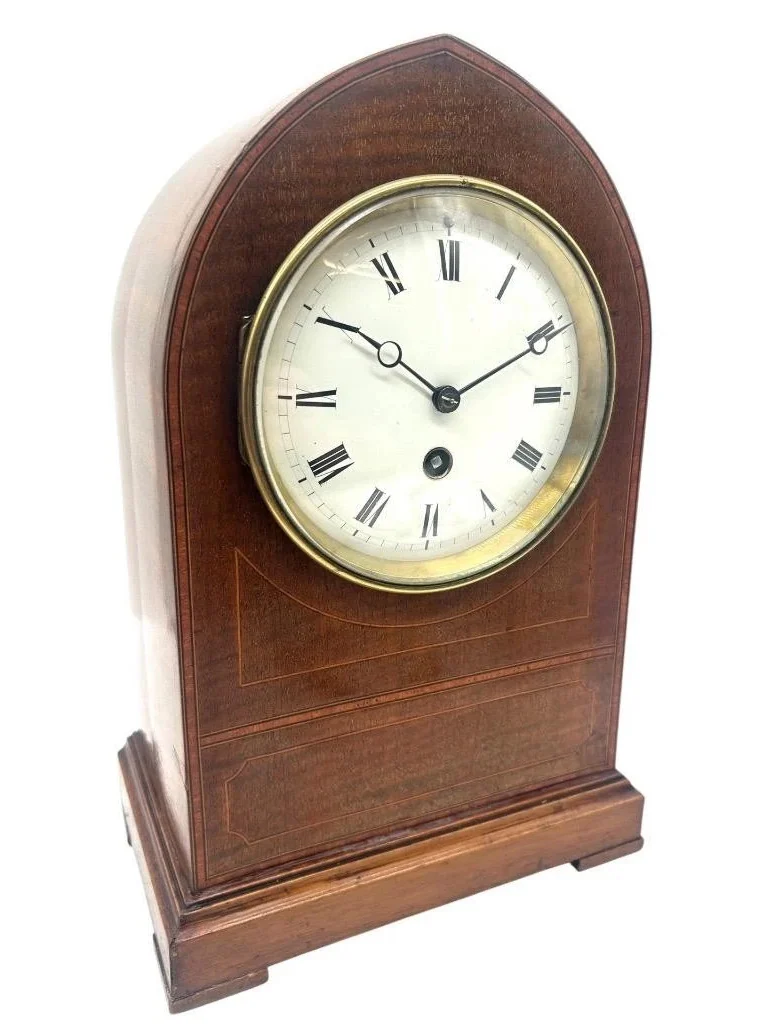


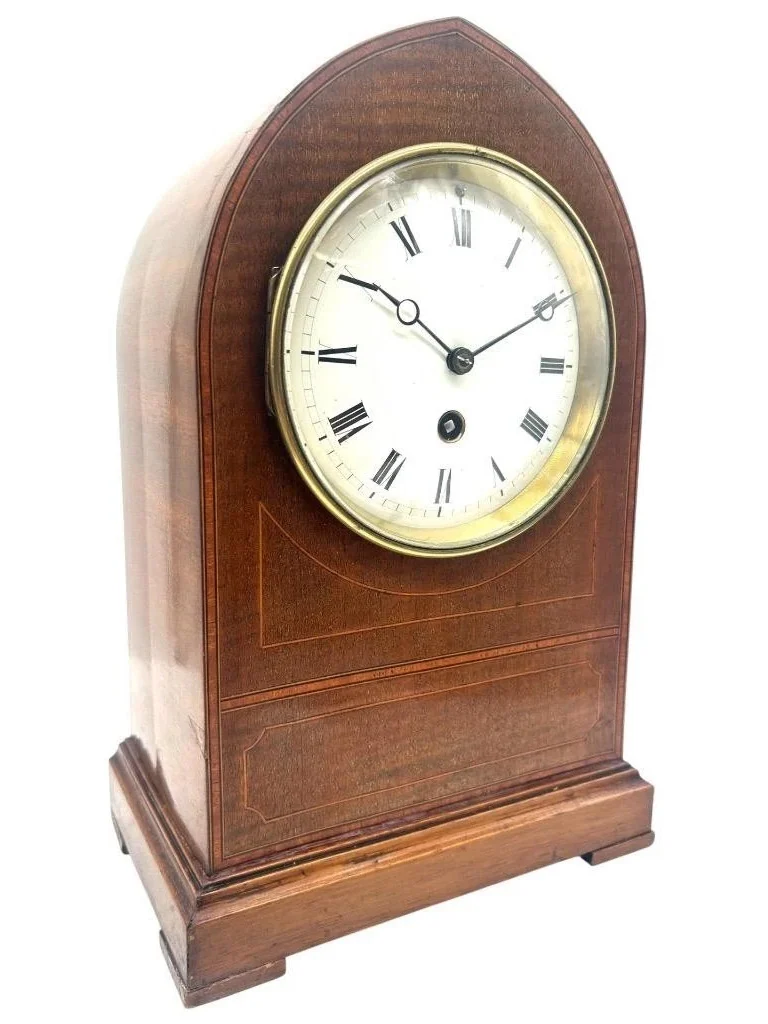
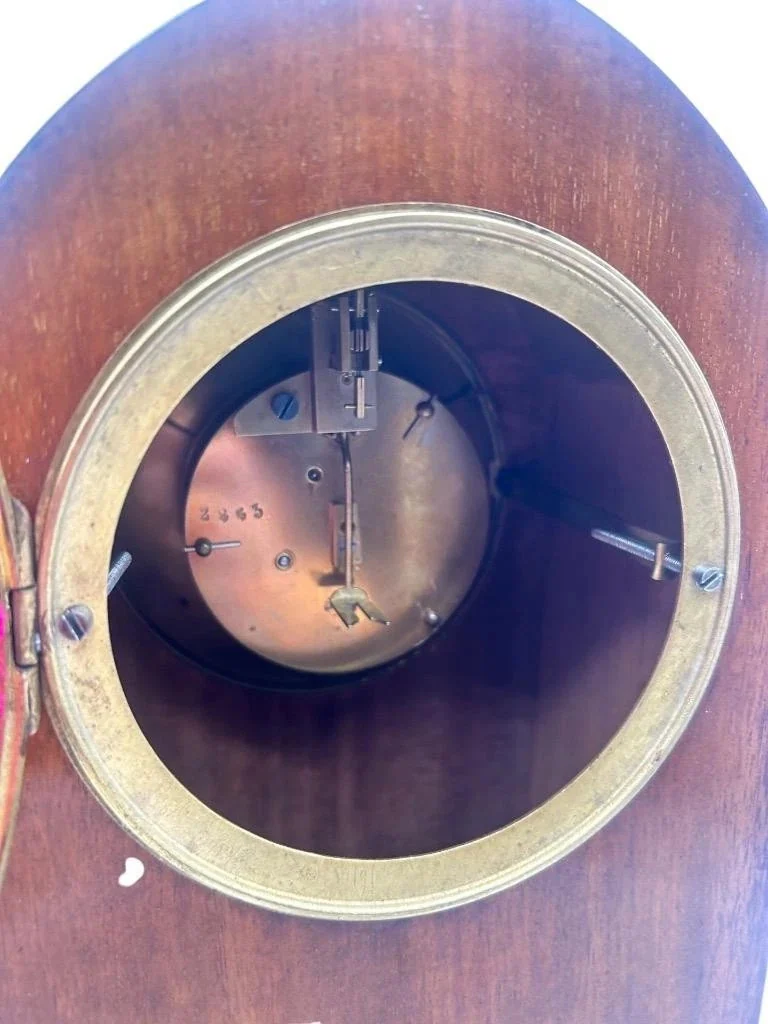
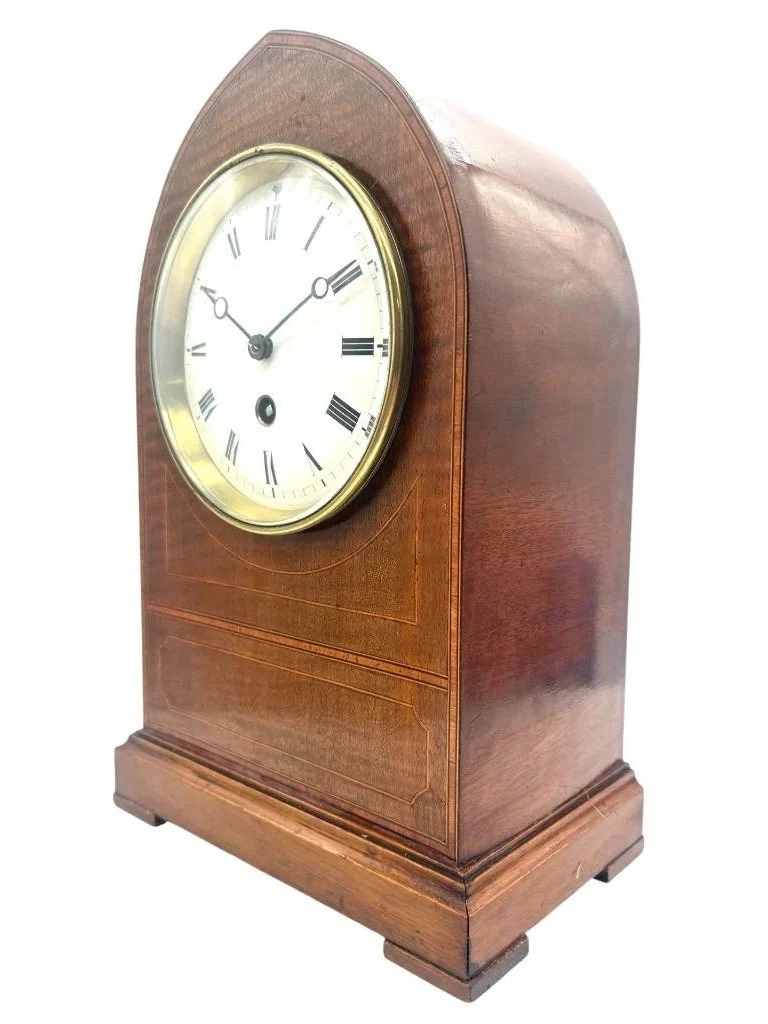
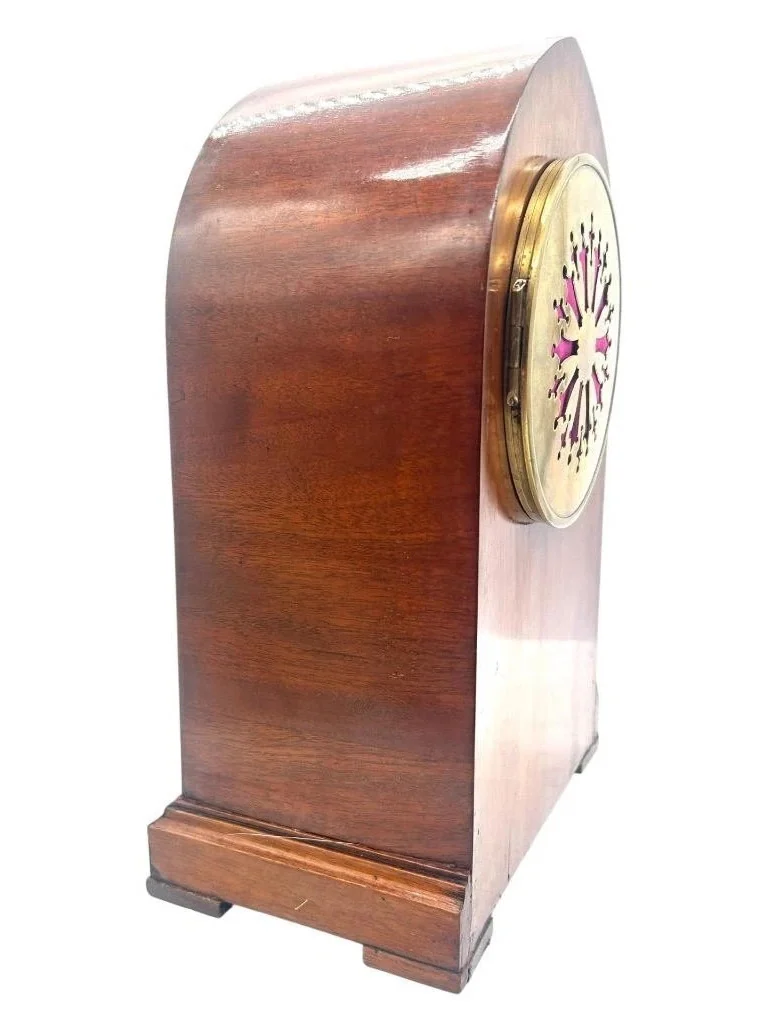
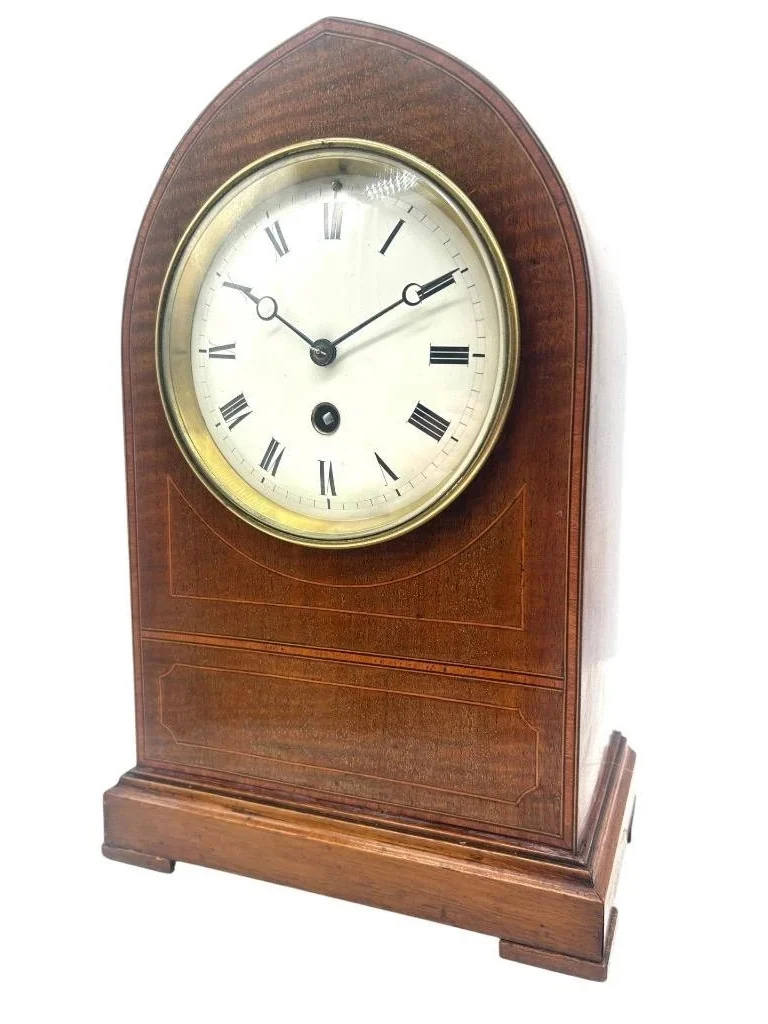


A pointed lancet arch crowns the solid mahogany case of this tabletop clock, creating an architectural silhouette influenced by early nineteenth-century design. The front face is embellished with delicate satinwood stringing that echoes the Gothic-inspired arch and frames the rectangular field beneath the dial. Below, an inverted stepped moulding transitions smoothly to a sturdy plinth supported on four low bracket feet. The circular white enamel dial measures 12.5 cm in diameter, presenting clear black Roman numerals, a fine outer minute track, and pierced steel hands with moon tips. It is protected by a convex bevelled glass lens set inside a milled brass bezel that sits flush against the timber front. A single winding arbor is positioned neatly above the six o’clock mark. At the rear, a circular brass aperture cover features an intricate openwork sound fret backed with deep magenta fabric, allowing the mechanism to breathe while shielding internal components. Housed within the case is a German spring-driven eight-day movement stamped with serial number 2863 on the brass backplate, reported to be in working order. Dating to circa 1900, the clock represents typical Edwardian cabinet making paired with reliable continental horological engineering. Overall, the case measures 30 cm in height, 19 cm in width, and 12 cm in depth, offering well-balanced proportions suitable for a fireplace mantel, bookcase, or console table.
Condition Minor surface wear and light scuffing consistent with age, with gentle softening to the timber polish and tarnishing across the brass bezel and rear sound fret.
Dimensions 30 cm high x 19 cm wide x 12 cm deep; dial 12.5 cm diameter
| Dimensions | 12 × 19 × 30 cm |
|---|---|
| Period | 19th Century |
| Style | Edwardian |
| Colour | Brown, Gold, White |
| material | Brass, enamel, Glass, Mahogany |
| Origin | Germany |
| Maker | Unbranded |
| Price range | Under £2000 |
| Collection Era | Antique & Vintage |
Only logged in customers who have purchased this product may leave a review.
Reviews
There are no reviews yet.