


Enquire Today!
If you have any questions, requests or general enquiries, please do not hesitate to email us and we will get back to you as soon as possible regarding your enquiry.
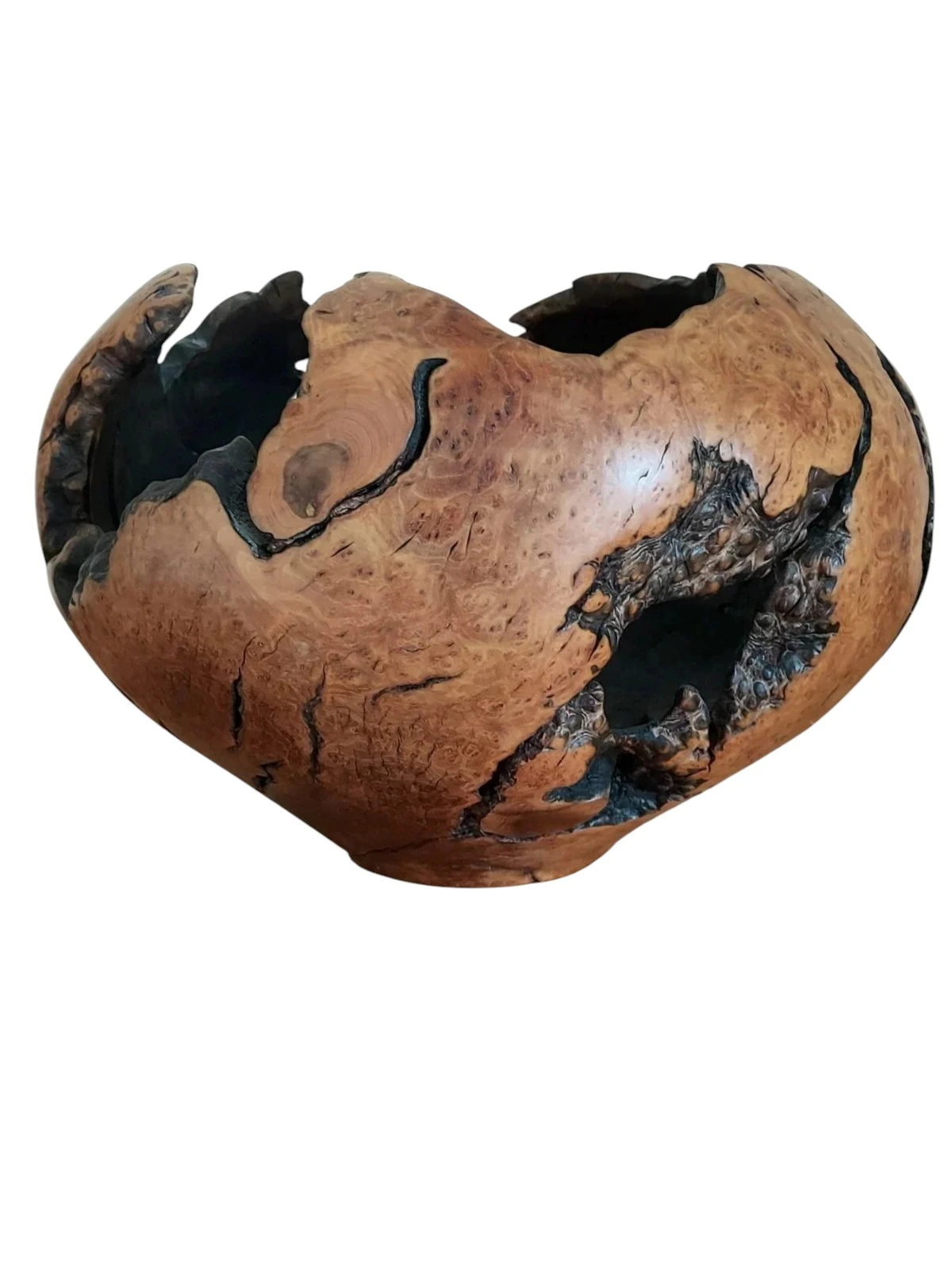
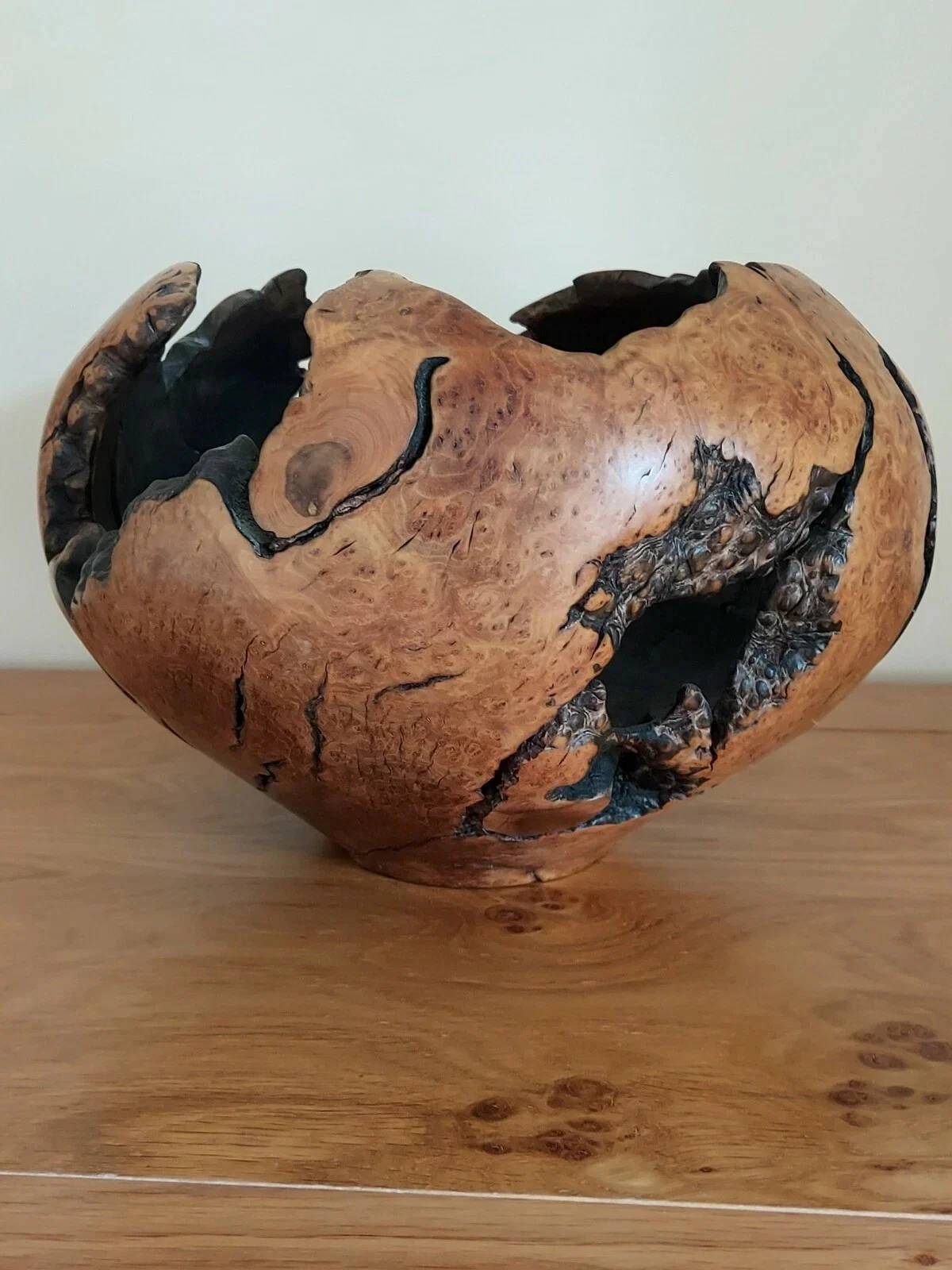

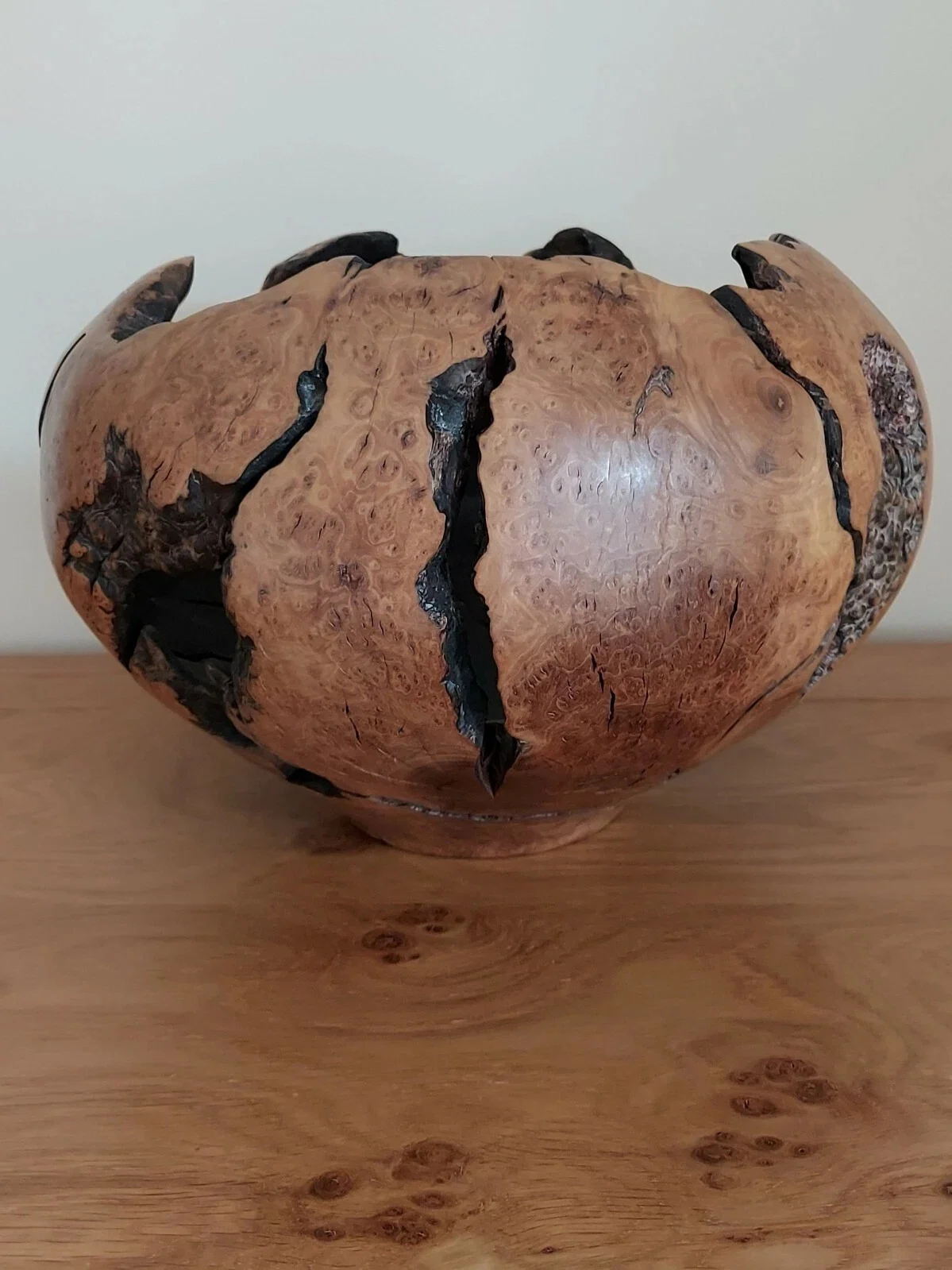


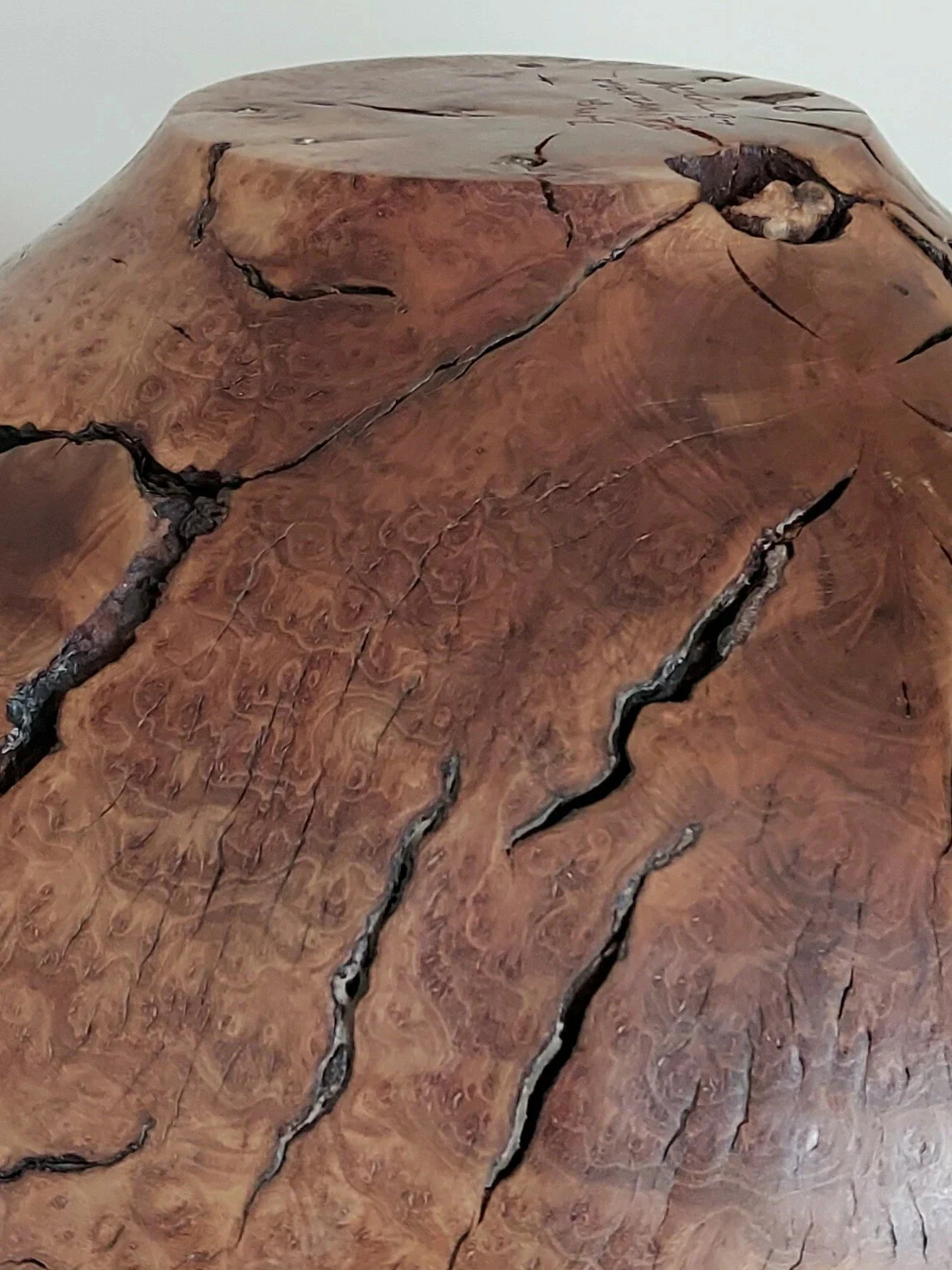
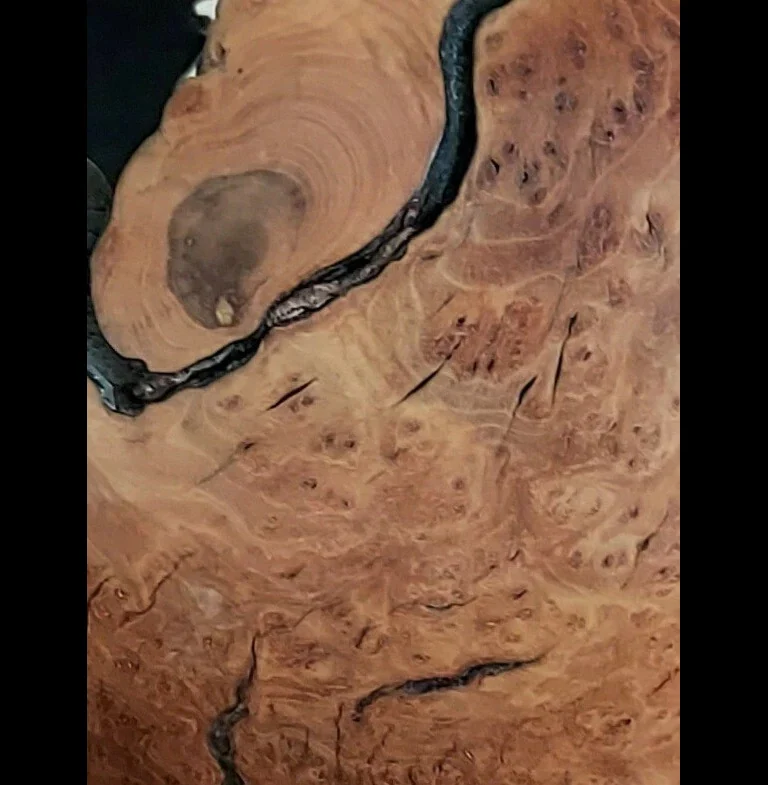
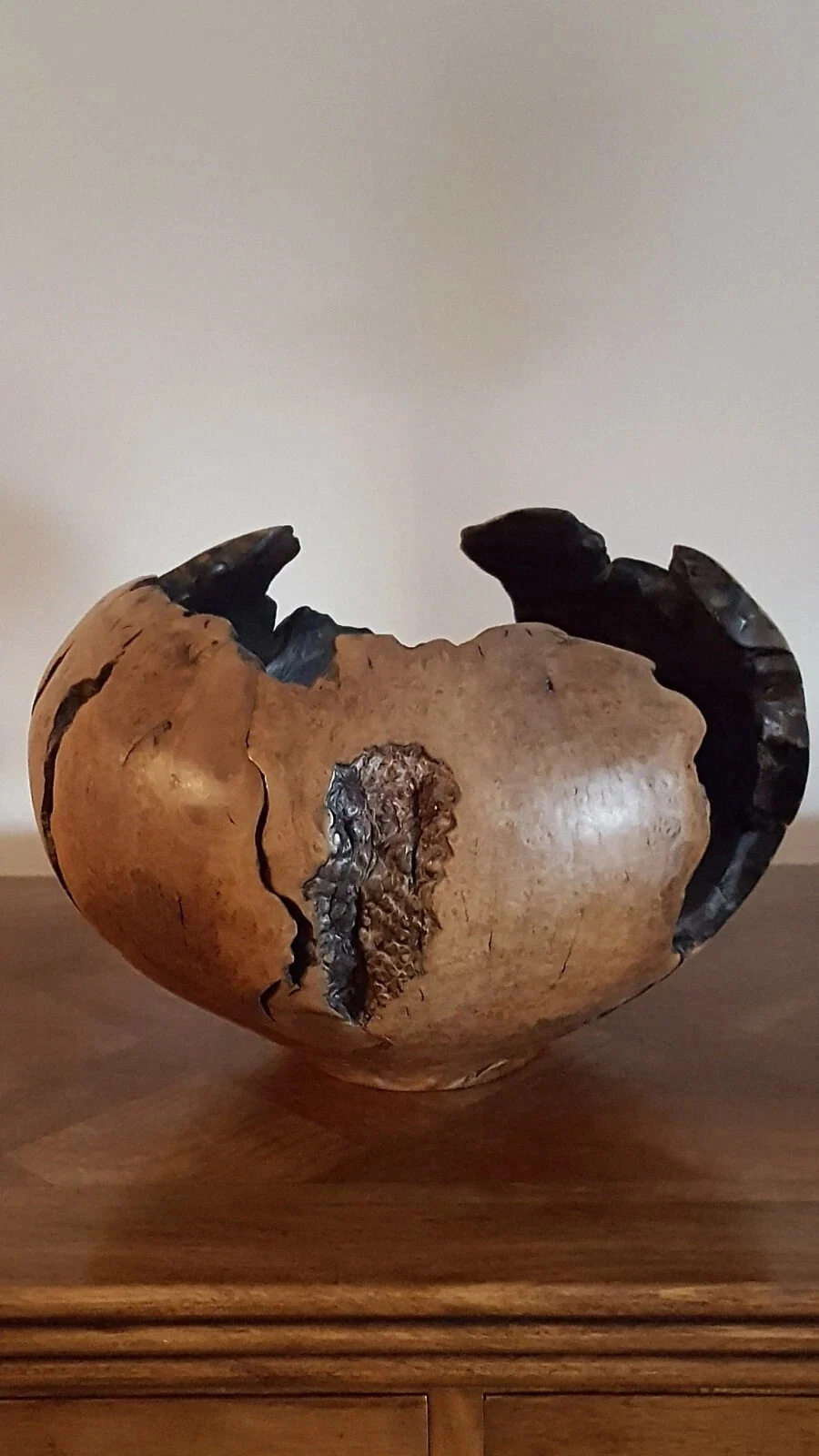
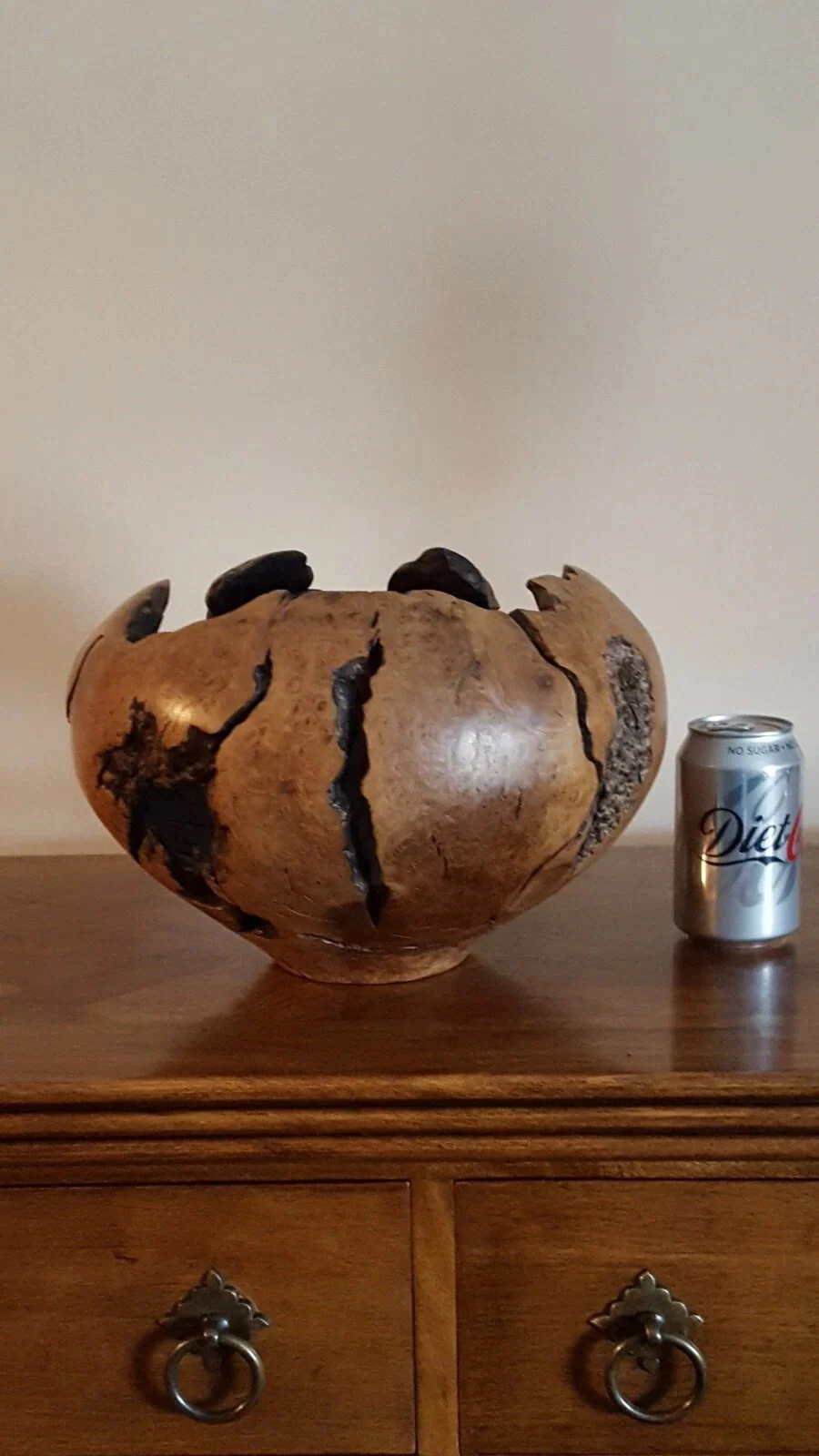
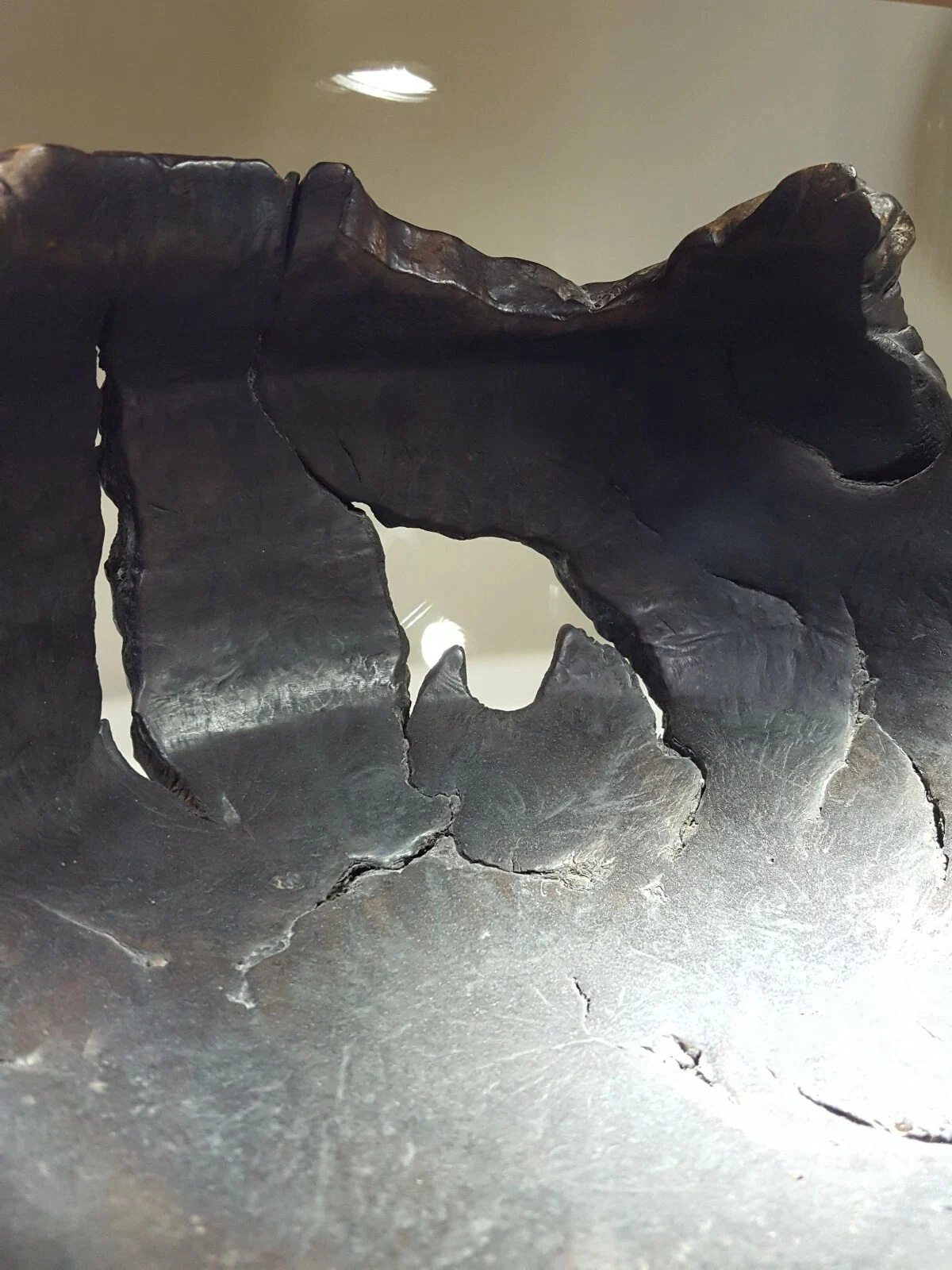


Dense eye-figured burl wood forms the fabric of this substantial turned vessel, showcasing the complex cellular growth characteristic of manzanita. Natural voids, fissures, and rough bark inclusions traverse the rounded walls, deliberately incorporated into the finished shape rather than filled or cut away.
The turning adopts a closed, globular profile that tapers gently to a raised circular foot. The upper rim follows the ragged, undulating perimeter of the raw timber, dipping into substantial apertures that pierce through the vessel wall and admit light directly into the interior.
A smooth, low-sheen satin finish across the exterior highlights the swirling grain, knots, and warm amber tones of the timber. In striking contrast, the entire interior hollow has been deliberately charred to an even carbon-black tone. This traditional scorched treatment seals the inner core against decay while creating a deep, dark backdrop that accentuates every crack and aperture across the outer face.
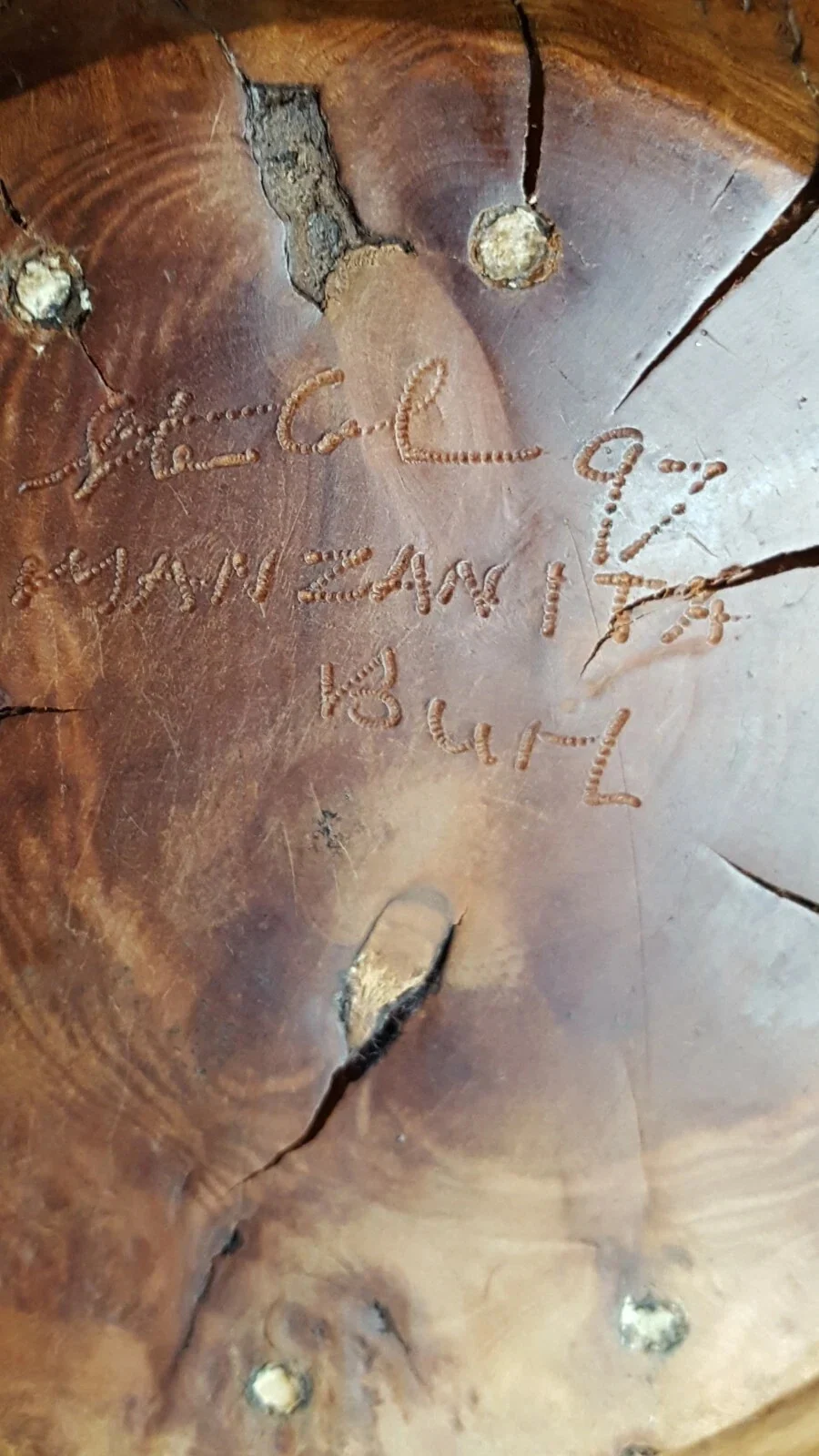
The base is constructed with a circular wooden disc inset flush into the turned foot and fixed with six miniature metal pins. The surface of this base pad is hand-inscribed and signed by the maker, noting the work was completed in 1997.
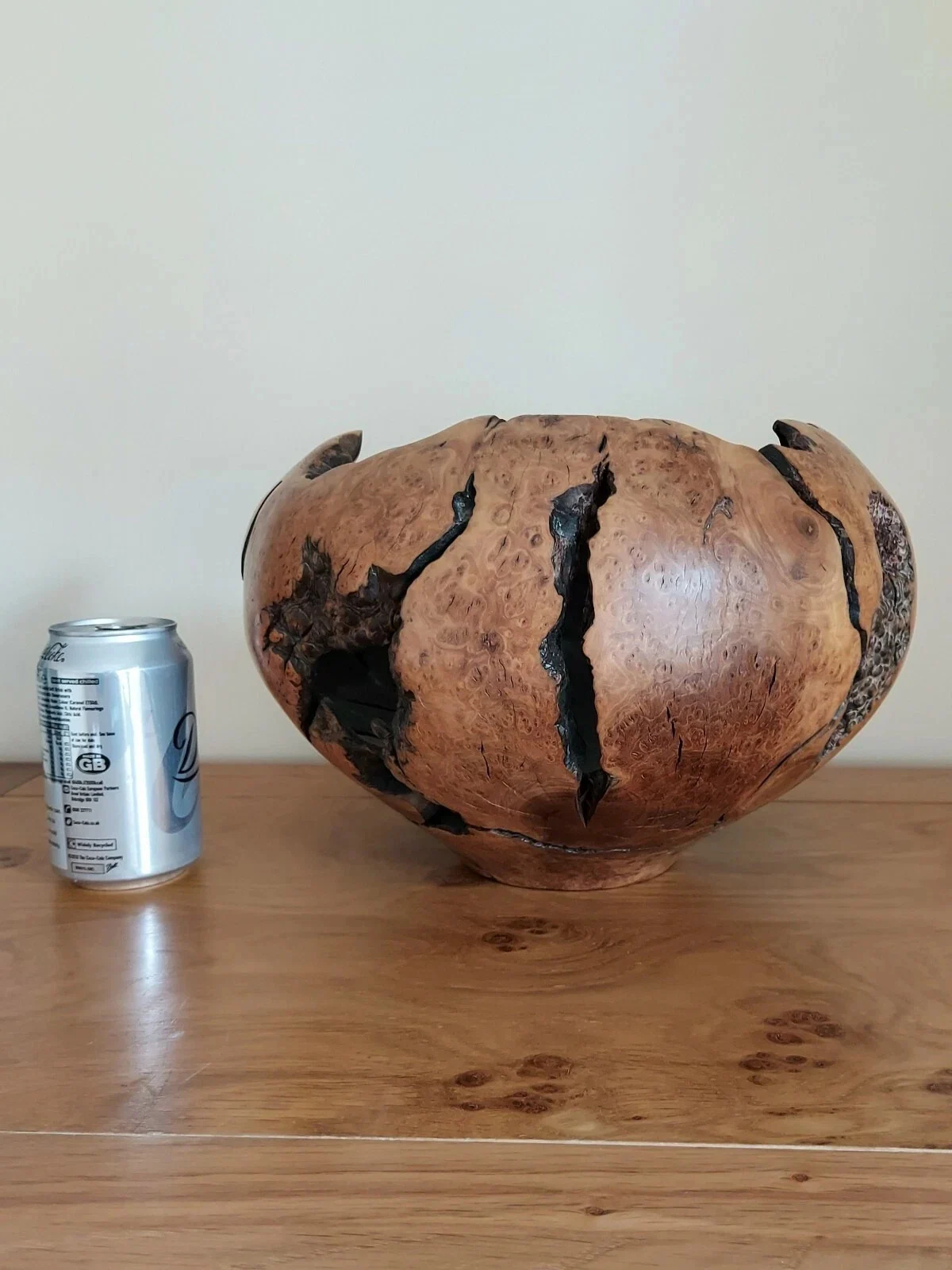
Displaying generous proportions, the piece stands slightly taller than a standard 330 ml beverage can, expanding into a broad, bulbous body that demonstrates seasoned studio woodturning.
Dimensions Height approximately 14 cm to 16 cm (estimated from 330 ml can scale); width unrecorded
| Period | 20th Century |
|---|---|
| Colour | Black, Brown |
| material | Manzanita burl |
| Origin | United States |
| Price range | Under £2000 |
| Collection Era | Modern |
Only logged in customers who have purchased this product may leave a review.


Reviews
There are no reviews yet.