


Enquire Today!
If you have any questions, requests or general enquiries, please do not hesitate to email us and we will get back to you as soon as possible regarding your enquiry.
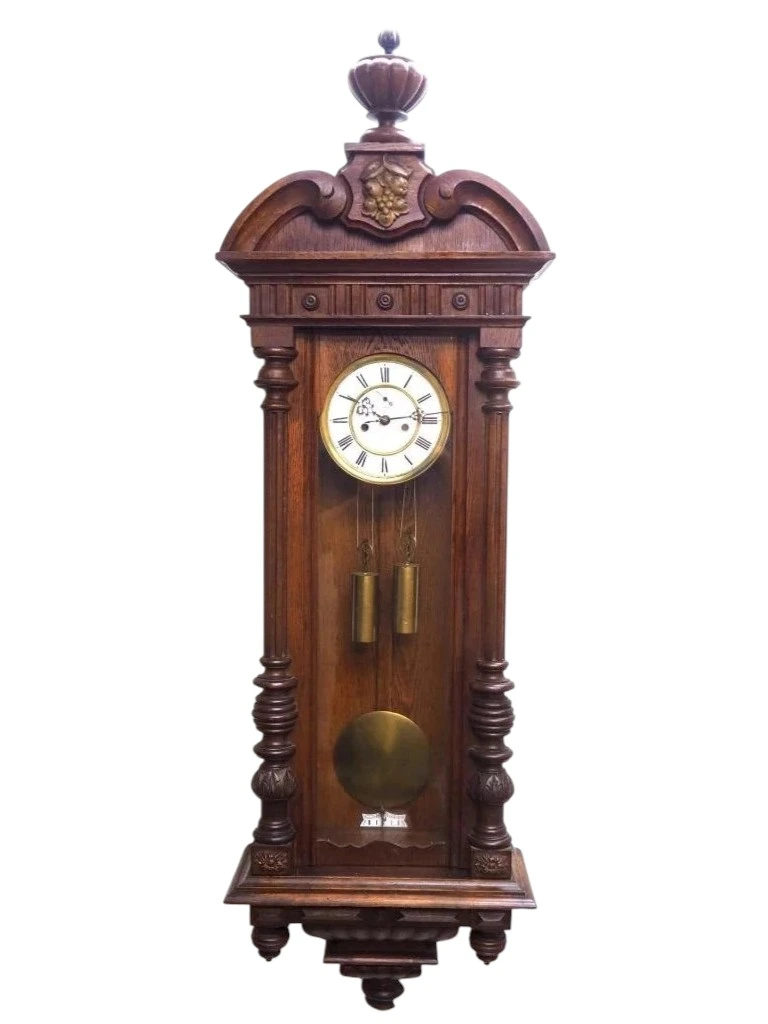

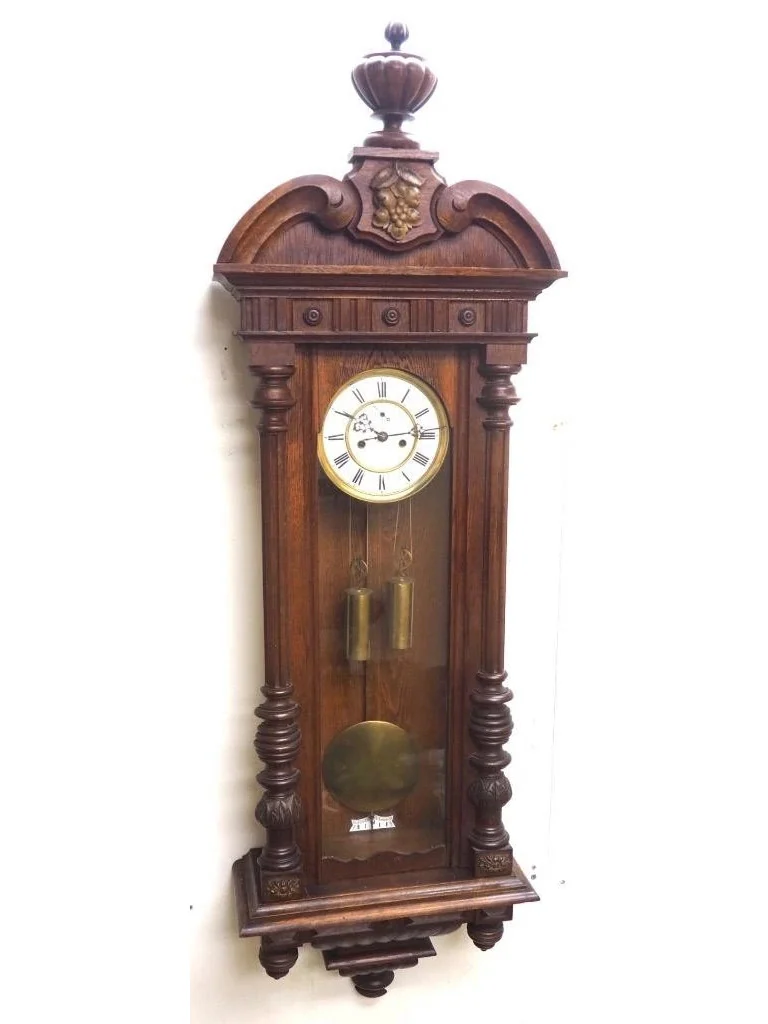
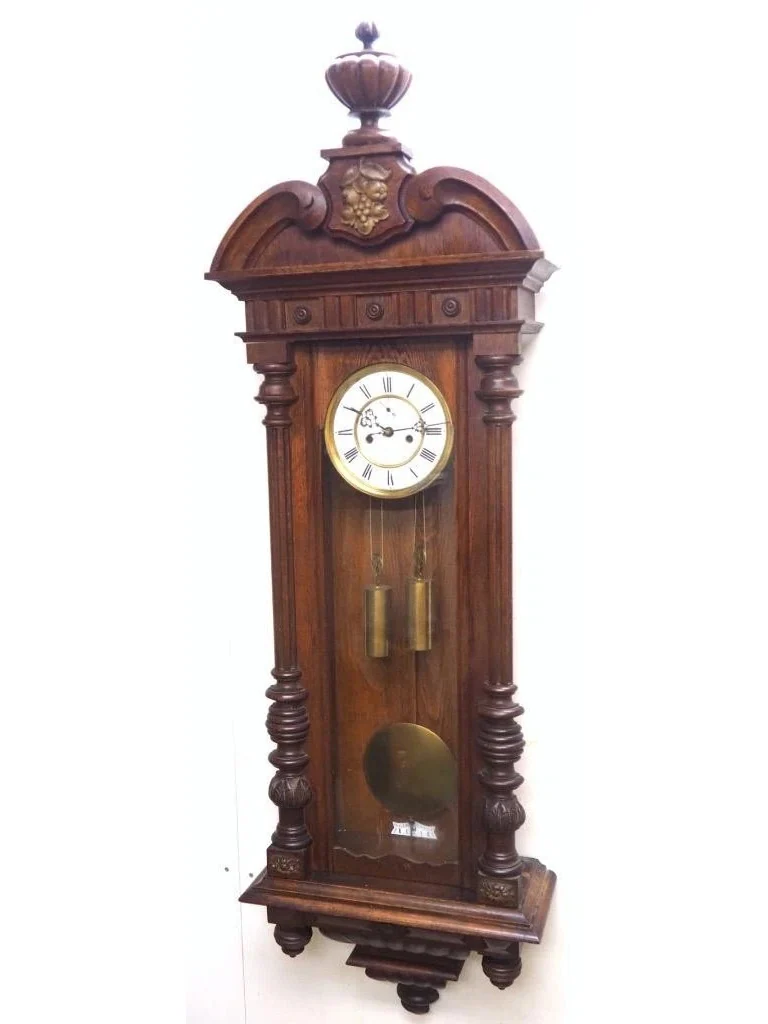
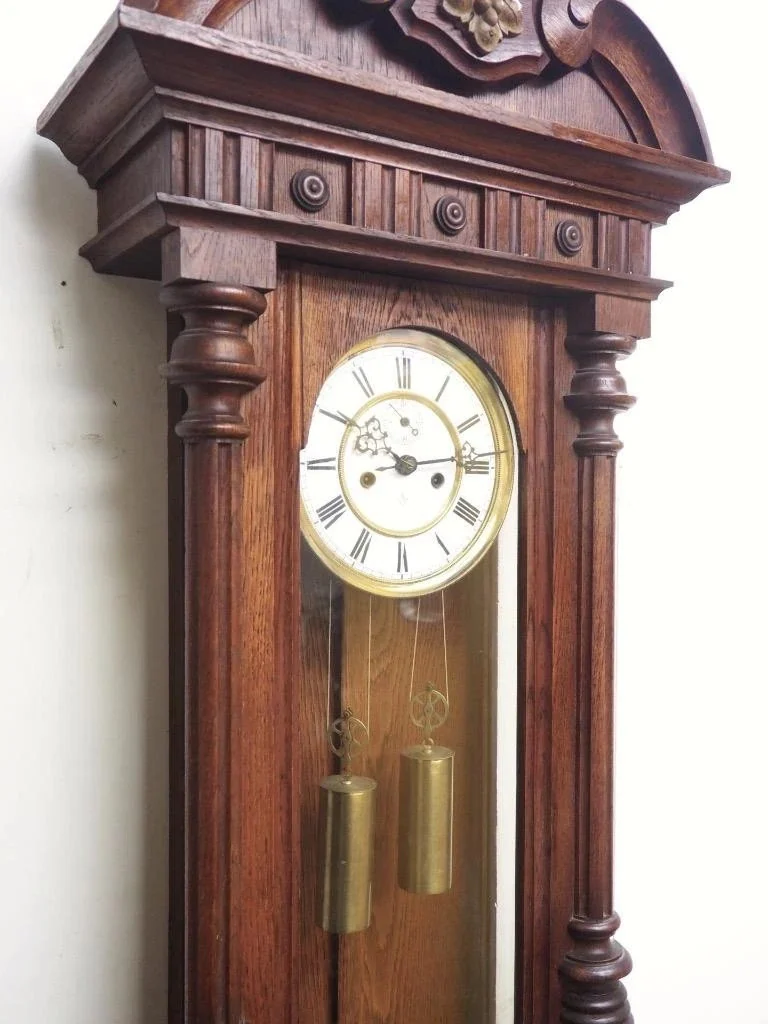
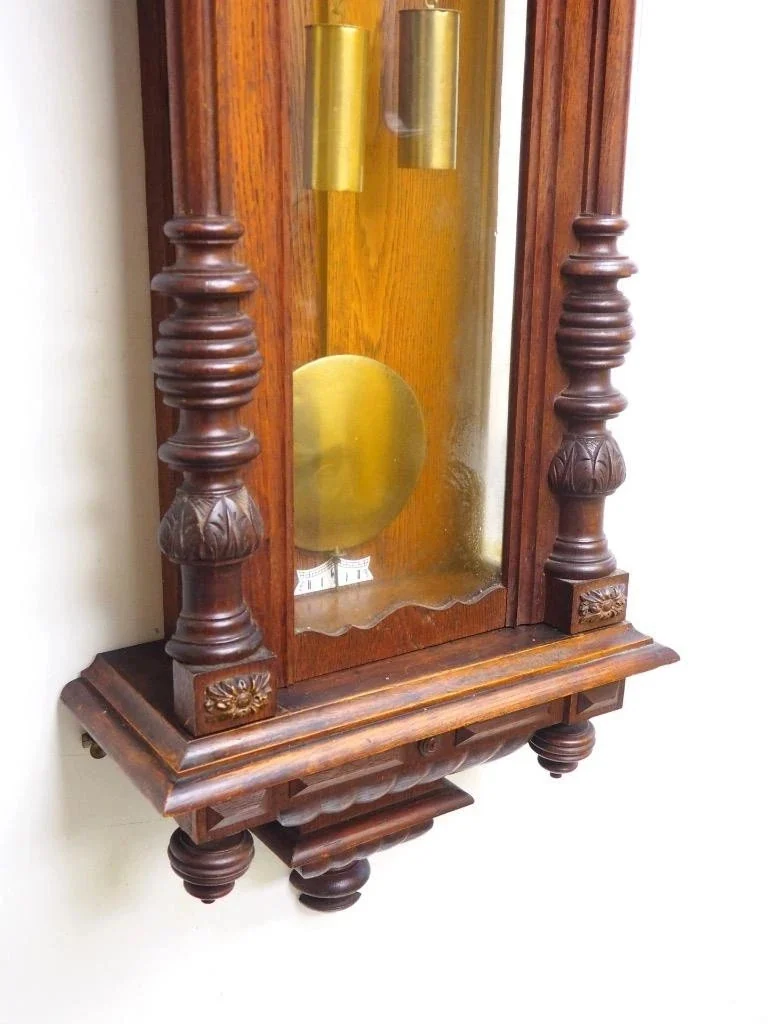
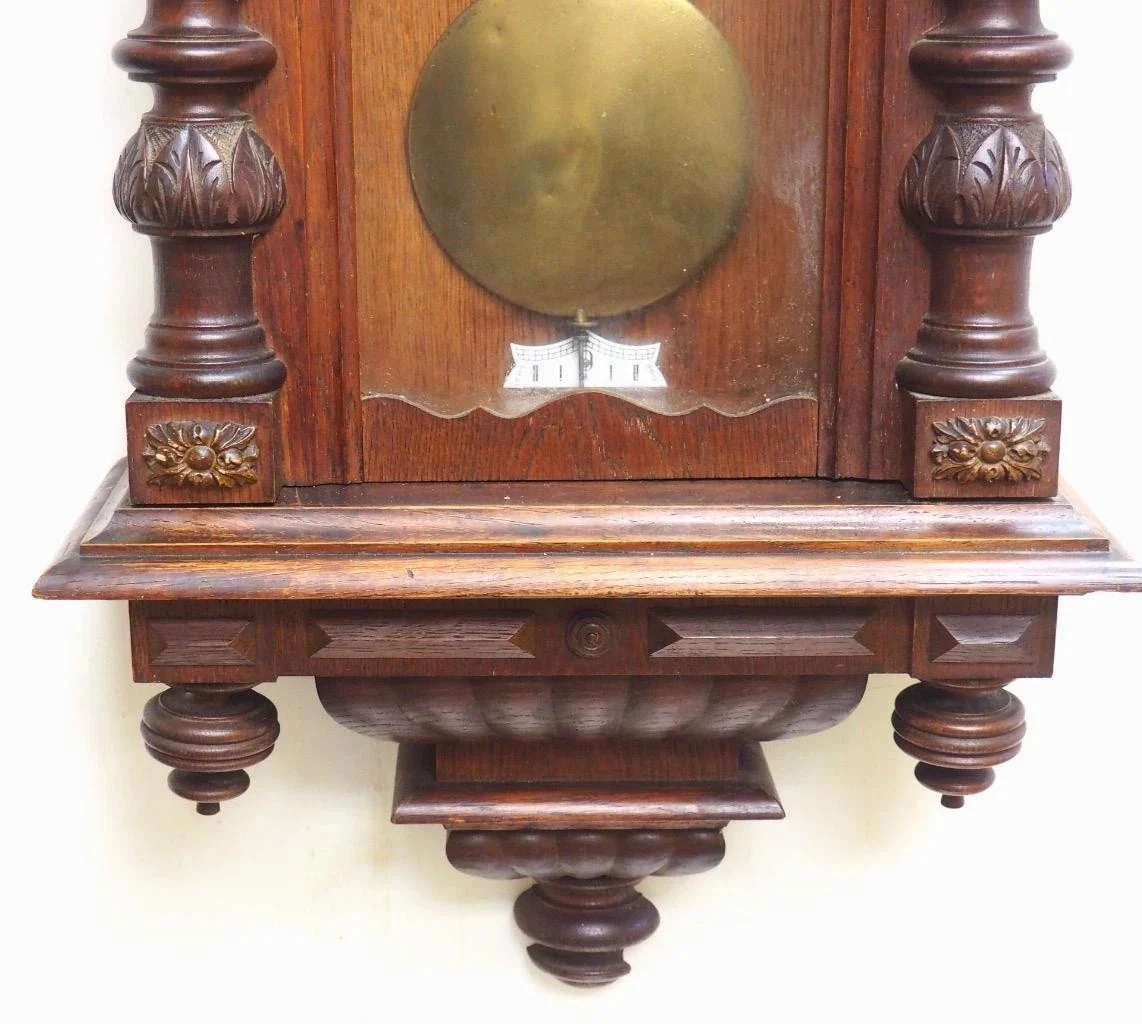
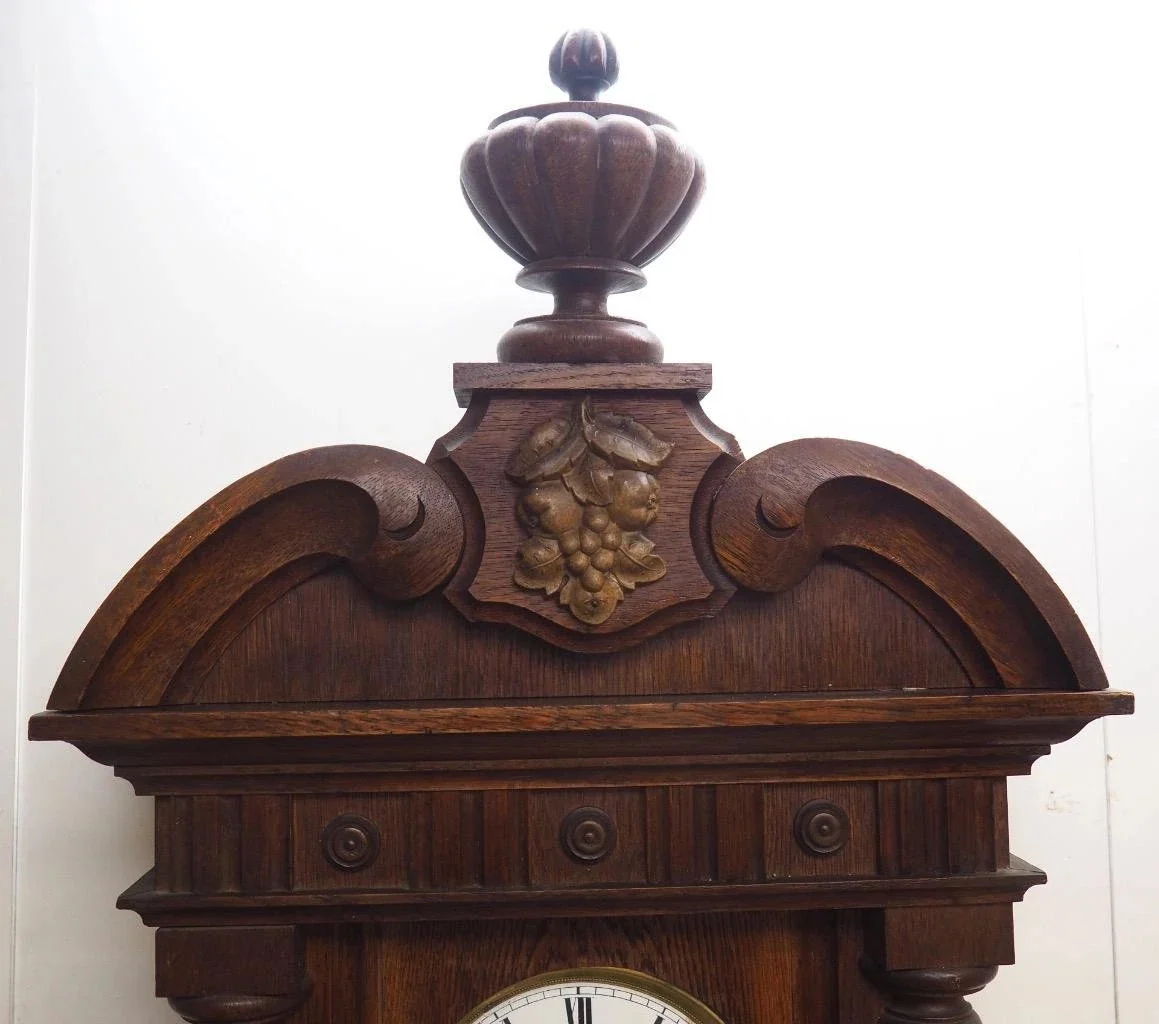
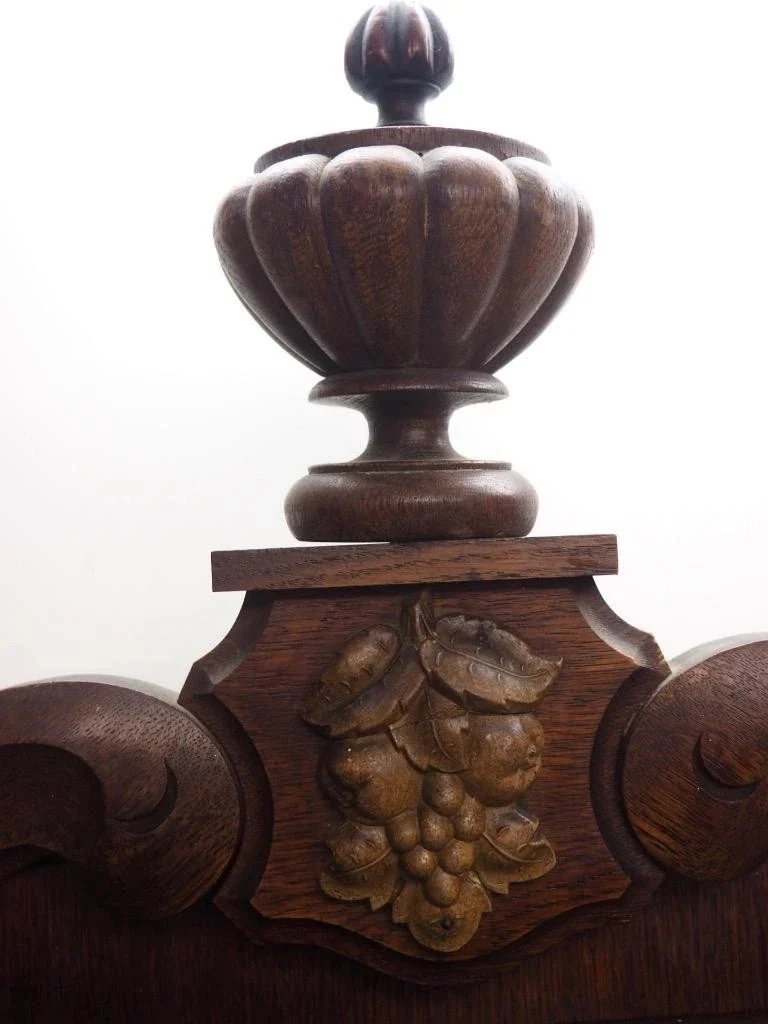


A carved pediment featuring an arched crest with relief fruit clusters and a turned fluted urn finial surmounts this architectural oak wall clock case. Fluted half-columns with turned capitals, reeded ring collars, and acanthus-carved bases flank the full-length glazed door, terminating at a stepped lower bracket embellished with pendant finials and shaped horizontal mouldings.
Behind the glazed front, the white enamelled dial measures 17 cm in diameter and presents crisp black Roman numerals, pierced steel hands, and twin winding arbors framed by an engine-turned brass bezel. Suspended beneath are twin cylindrical brass canister weights hung from spoked brass pulleys, alongside a polished brass pendulum bob that swings above a porcelain beat scale fixed to the backboard.
The eight-day striking movement is signed by Gustav Becker and driven by twin weights. Engineered for accurate regulation, the brass mechanism incorporates maintaining power alongside a Graham deadbeat escapement. It retains a turned crank winding key for servicing both trains, and the mechanism is reported to be in working order.
Crafted in Germany during the late Victorian era, around 1880, the solid oak cabinet displays quarter-sawn grain patterns, moulded cornices, and carved square floral bosses at the lower plinth. The complete case measures 147 cm in height, 43 cm in width, and 18 cm in depth, offering classic proportions suited to vertical wall mounting.
Condition The oak case and brass components show light signs of age and minor surface wear consistent with age. The movement is reported to be in working order and retains its crank winding key.
Dimensions Height: 147 cm | Width: 43 cm | Depth: 18 cm
| Dimensions | 18 × 43 × 147 cm |
|---|---|
| Period | 19th Century |
| Style | Victorian |
| Colour | Brown |
| material | Brass, enamel, Glass, Oak |
| Origin | Germany |
| Maker | Gustav Becker |
| Price range | £2000+ |
| Collection Era | Antique & Vintage |
Only logged in customers who have purchased this product may leave a review.
Reviews
There are no reviews yet.