


Enquire Today!
If you have any questions, requests or general enquiries, please do not hesitate to email us and we will get back to you as soon as possible regarding your enquiry.
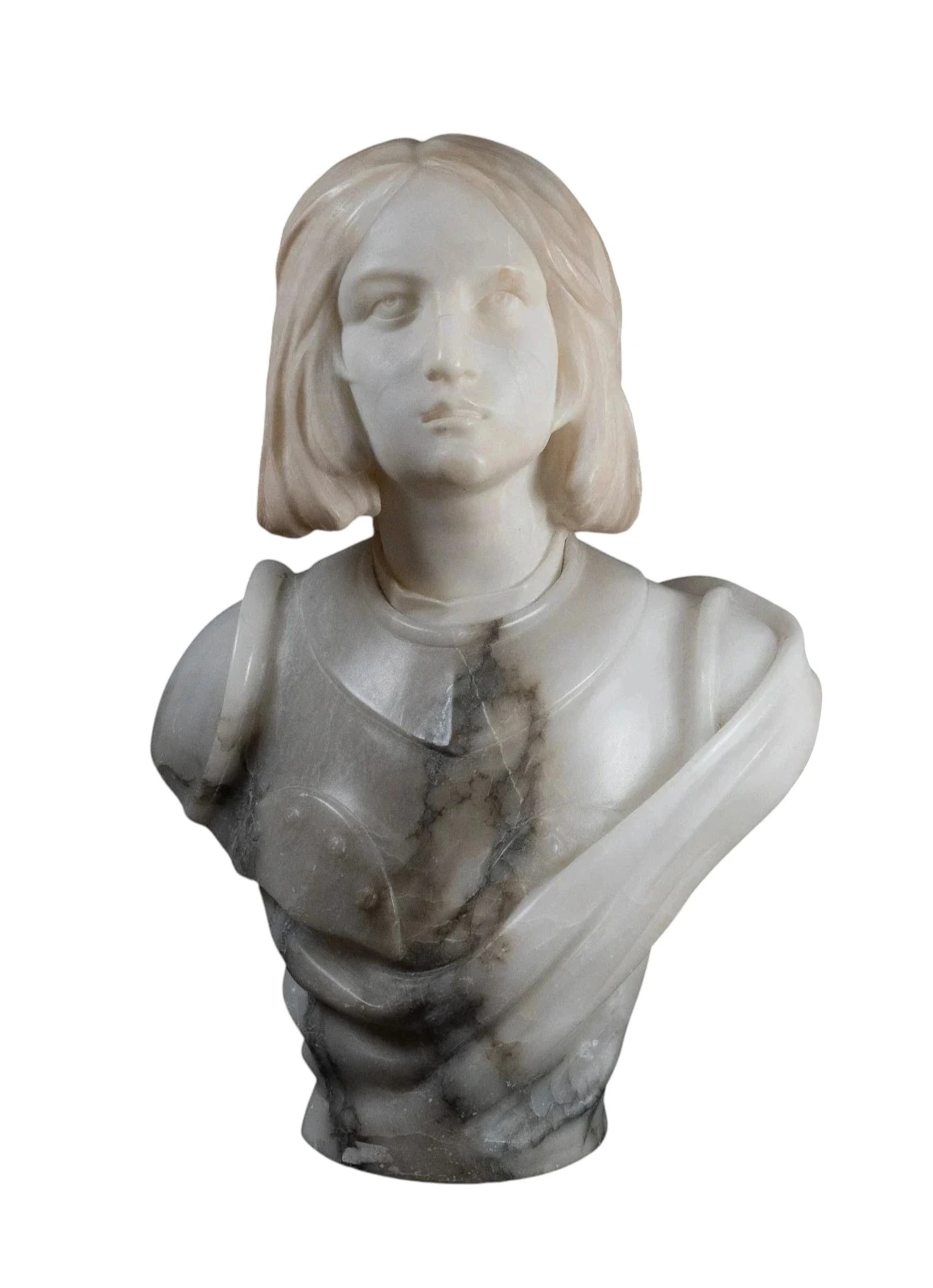

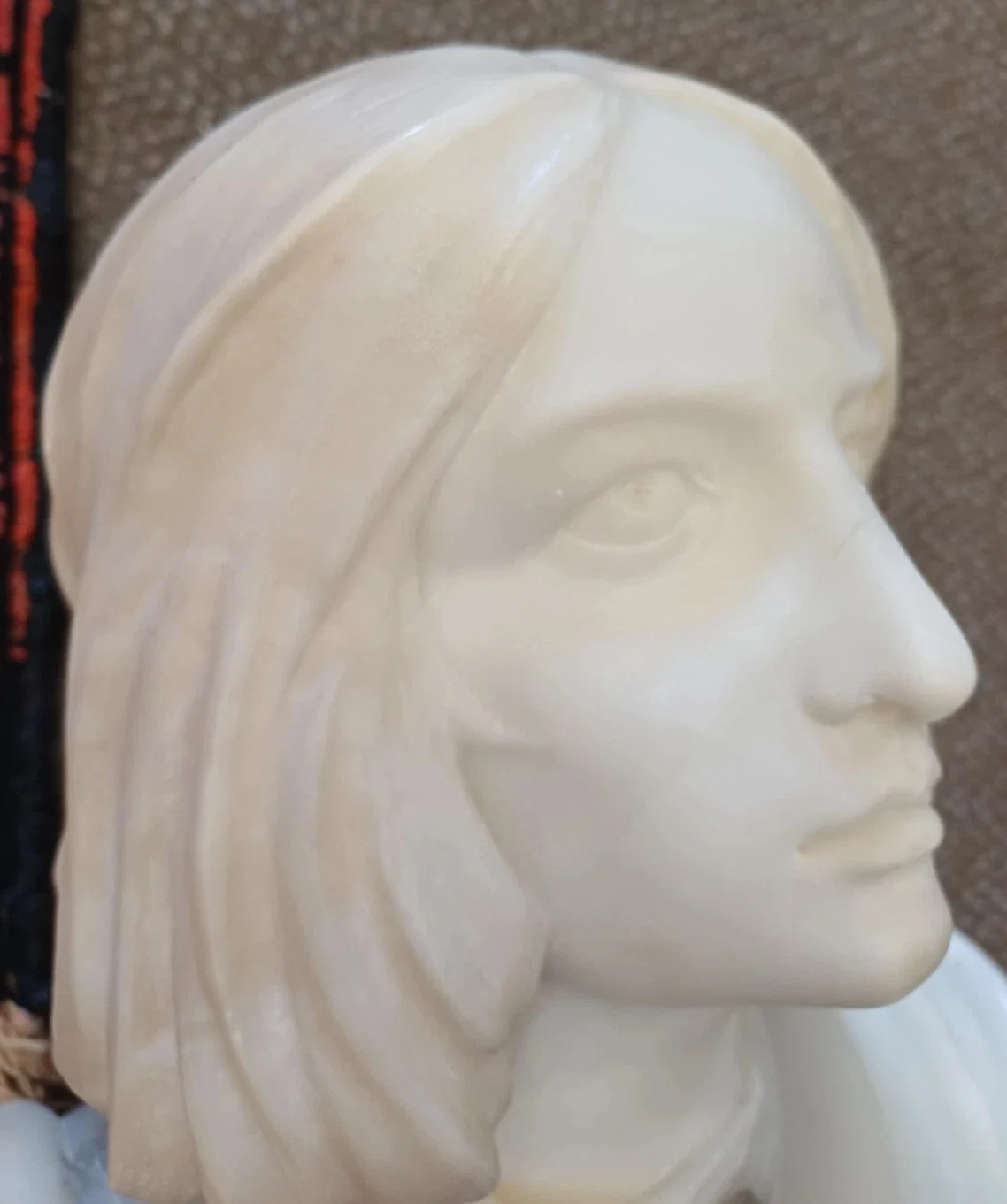
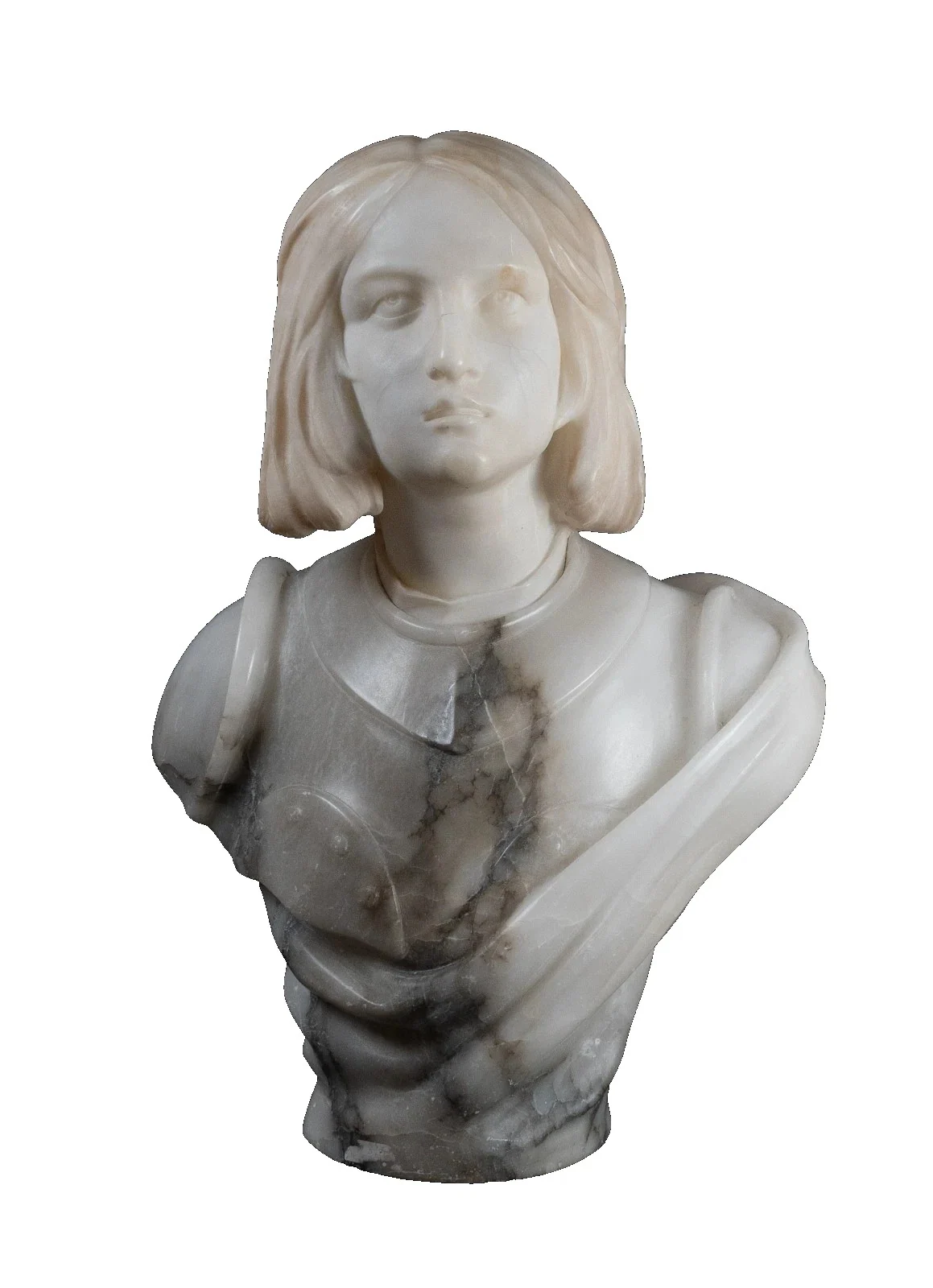


Carved from natural translucent white alabaster, this portrait bust depicts the French heroine Joan of Arc clad in fifteenth-century plate armour. The figure is posed facing forward with the chin held level and the head turned subtly, framed by soft chin-length bobbed hair parted down the centre. The armour is rendered with clear structural detail, showing an articulated gorget protecting the throat, rounded shoulder pieces, and a contoured breastplate. A heavy length of drapery folds over the left shoulder, falling diagonally across the cuirass to soften the rigid metallic lines of the plate armour.
The alabaster selected for the piece displays striking natural coloration. While the head, neck, and upper face are carved from clear, milky-white stone that permits gentle light transmission, the lower torso and breastplate incorporate pronounced dark grey, brown, and charcoal mineral veins running through the geological strata. Rather than concealing these natural fault lines and inclusions, the sculptor positioned them across the torso to create contrast between the pale flesh of the face and the shadowed surfaces of the battle harness.
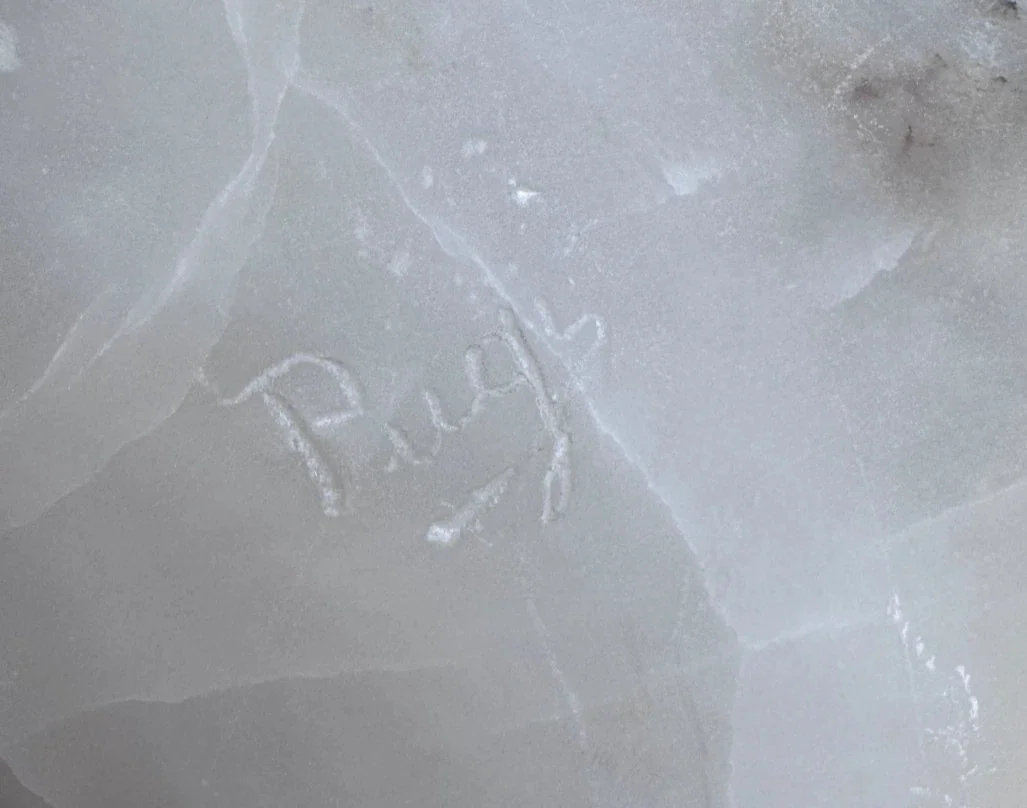
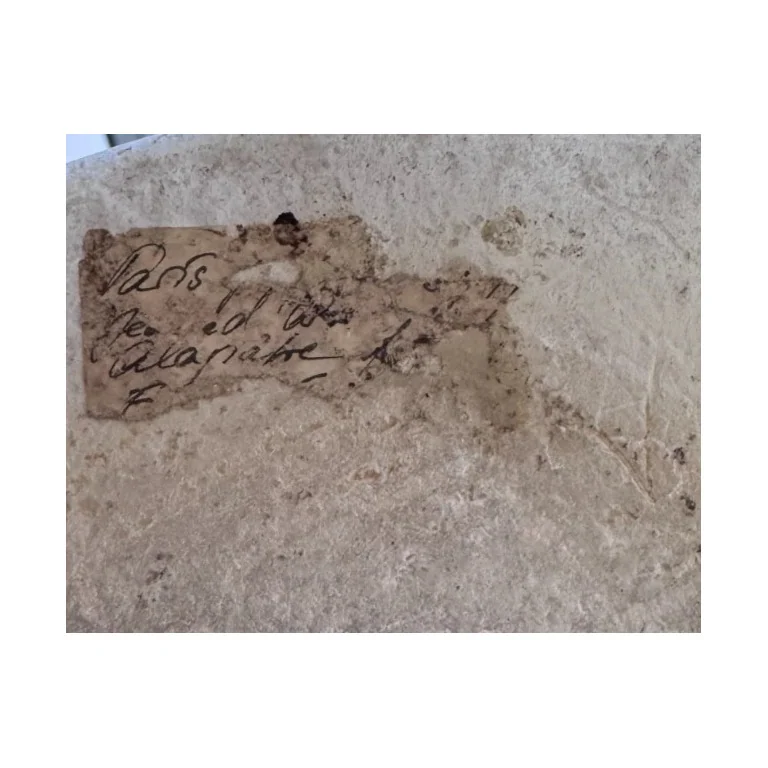
On the reverse of the sculpture, the stone carries an incised signature inscribed ‘Pugi’, cut directly into the polished alabaster. The underside retains an aged, fragmentary handwritten paper label bearing early ink script that includes the location ‘Paris’ alongside French text noting the alabaster material. Carved as a head-and-shoulders composition, the piece stands 46 cm high and rests securely on an integral waisted base, cut directly from the same single block of stone.
Guglielmo Pugi ran an active sculpture studio in Florence during the late nineteenth century, carving extensively in both Italian marble and local Volterra alabaster. His workshop produced a wide variety of romantic, allegorical, and historicist busts designed for private interiors and the export market. Joan of Arc was a popular subject across European decorative arts of this period, and Pugi produced several variations depicting her as a youthful warrior saint.
Tooling marks remain visible in the deeper recesses of the hair and drapery folds, while the exposed skin surfaces show a smooth, hand-buffed finish characteristic of Florentine stone carving. The natural mineral seams remain stable within the solid alabaster structure, and the edges of the carved drapery retain their defined contours.
Dimensions Height: 46 cm
| Dimensions | 46 cm |
|---|---|
| Period | 19th Century, Late 19Th Century |
| Colour | White |
| material | alabaster |
| Origin | Italy |
| Maker | Guglielmo Pugi |
| Price range | £2000+ |
| Collection Era | Antique & Vintage |
Only logged in customers who have purchased this product may leave a review.


Reviews
There are no reviews yet.