


Enquire Today!
If you have any questions, requests or general enquiries, please do not hesitate to email us and we will get back to you as soon as possible regarding your enquiry.
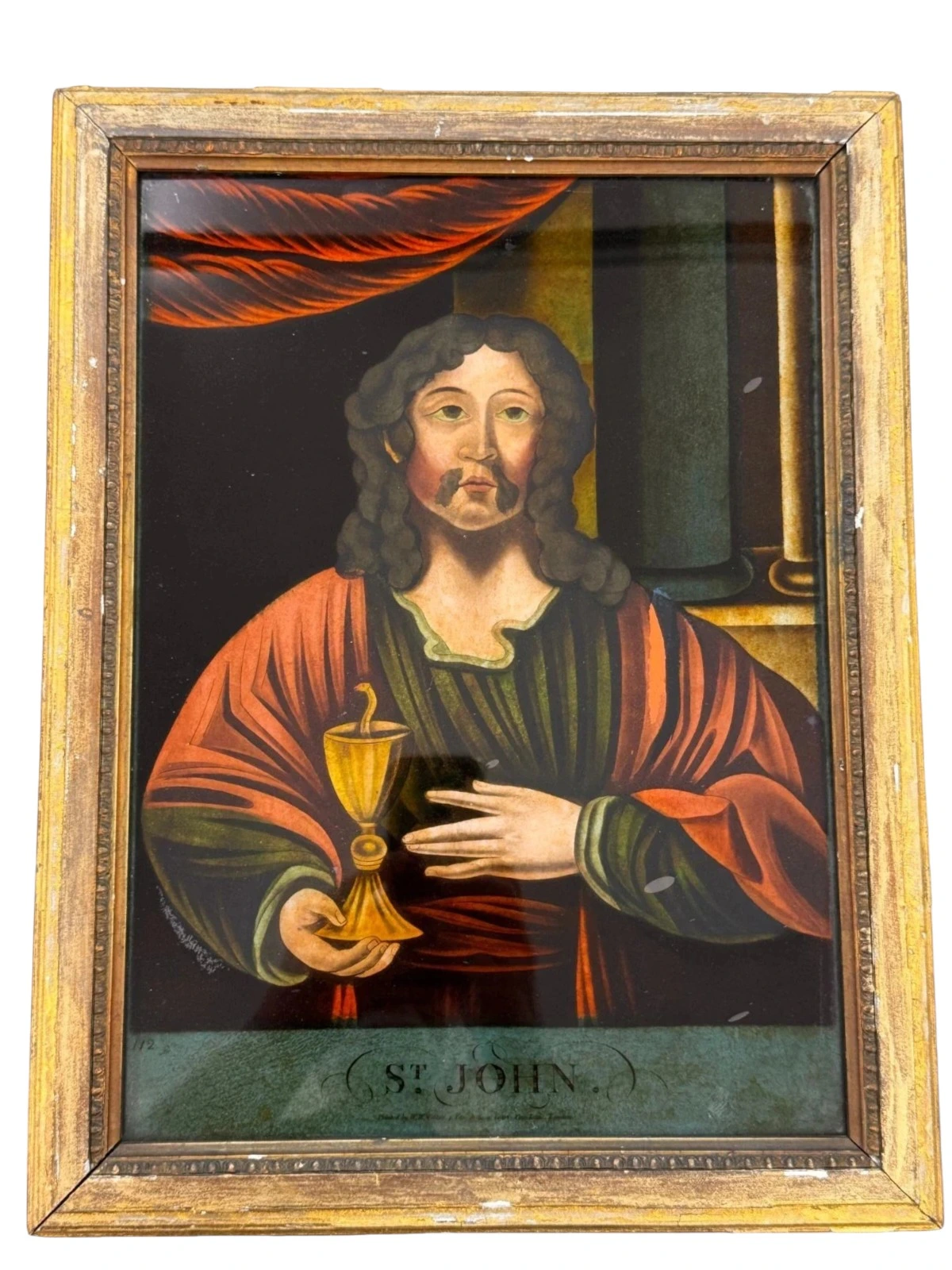
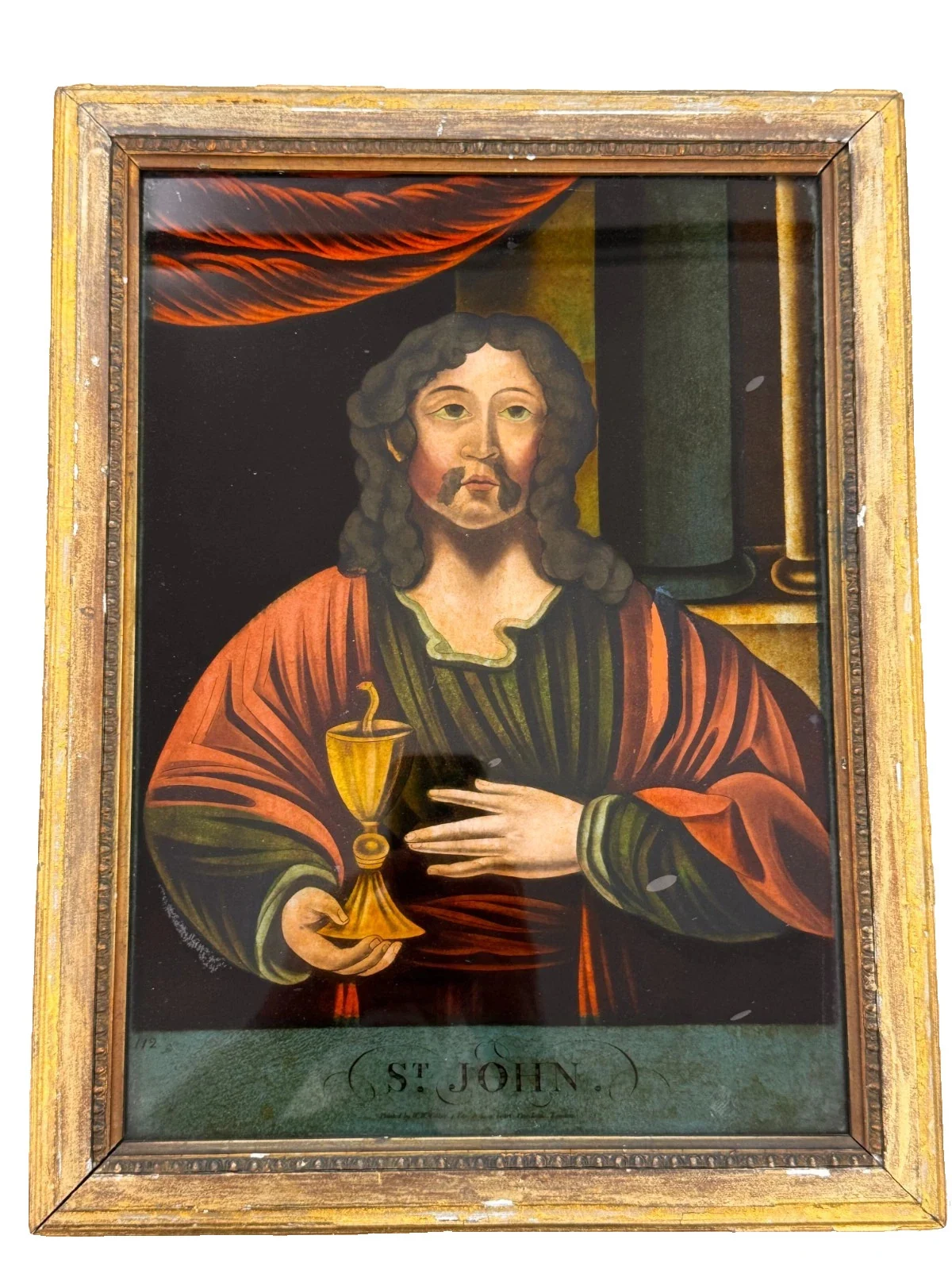
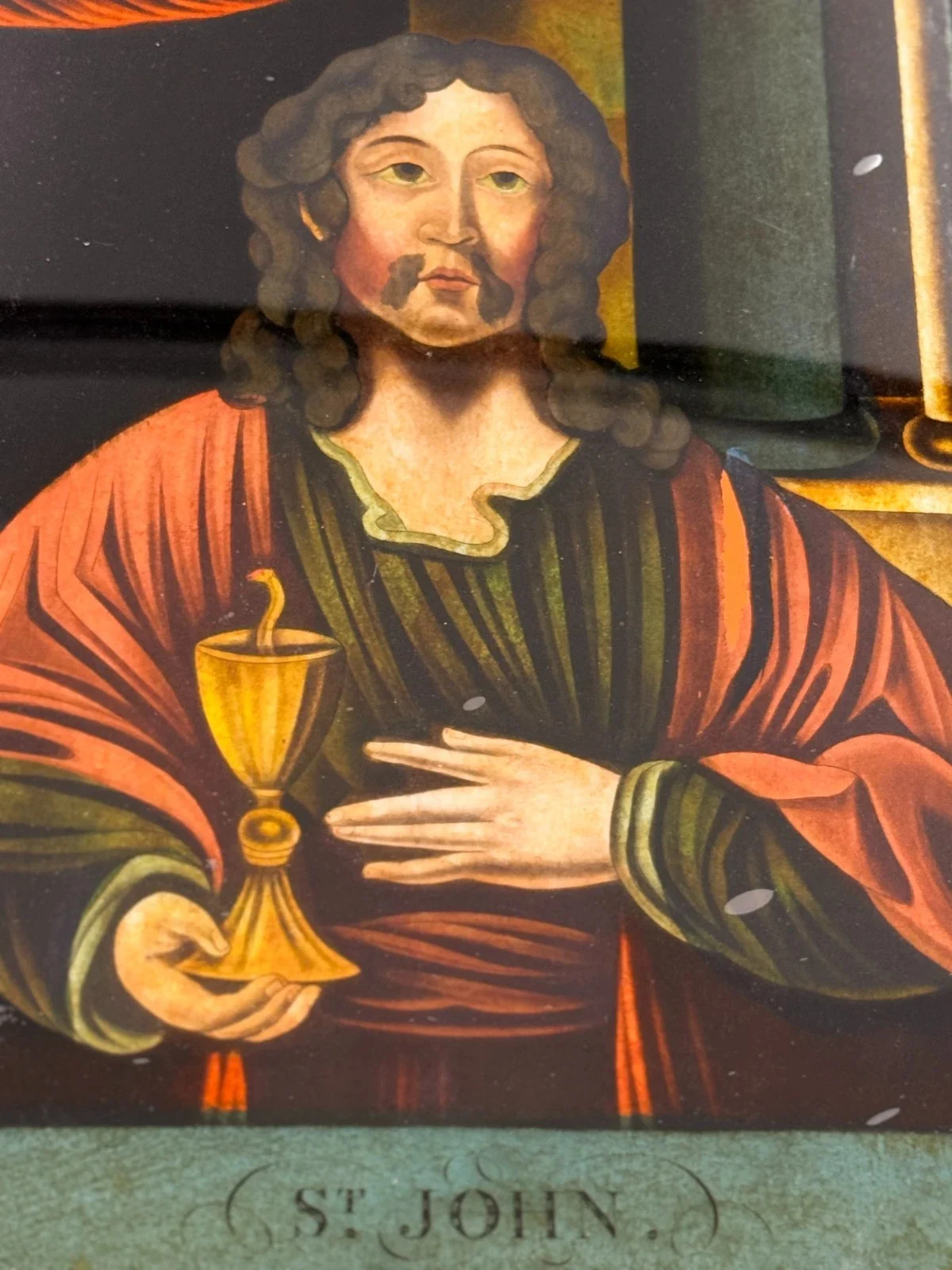


Richly saturated pigments laid over an engraved ground define this devotional portrait of Saint John the Evangelist. Executed using the reverse transfer process popularised throughout eighteenth-century Britain, the mezzotint image was adhered face down to clear sheet glass, rubbed thin from behind, and finished by hand in oil colours. The apostle is depicted half-length against a deep dark interior, flanked by classical masonry, an upright pillar, and a swag of crimson drapery.
His traditional iconographic attribute appears prominently in his right hand: a footed golden chalice from which a small coiled serpent emerges, commemorating the apocryphal narrative of his surviving a cup of poison unharmed. Saint John wears dark green robes beneath sweeping terracotta-red drapery, with warm flesh tones bringing character to his wavy hair and focused expression. Across the pale green lower margin, the subject is lettered ‘ST. JOHN.’ above a fine publication line crediting printmaker and publisher W. B. Walker of London.
Reverse glass transfer prints were produced during the later Georgian period for domestic chapels, bedchambers, and parlour displays. Because the pigments were applied behind the protective plane of glass, the colours maintain an unusual freshness and optical brilliance compared to untreated paper prints exposed to smoke and sunlight.
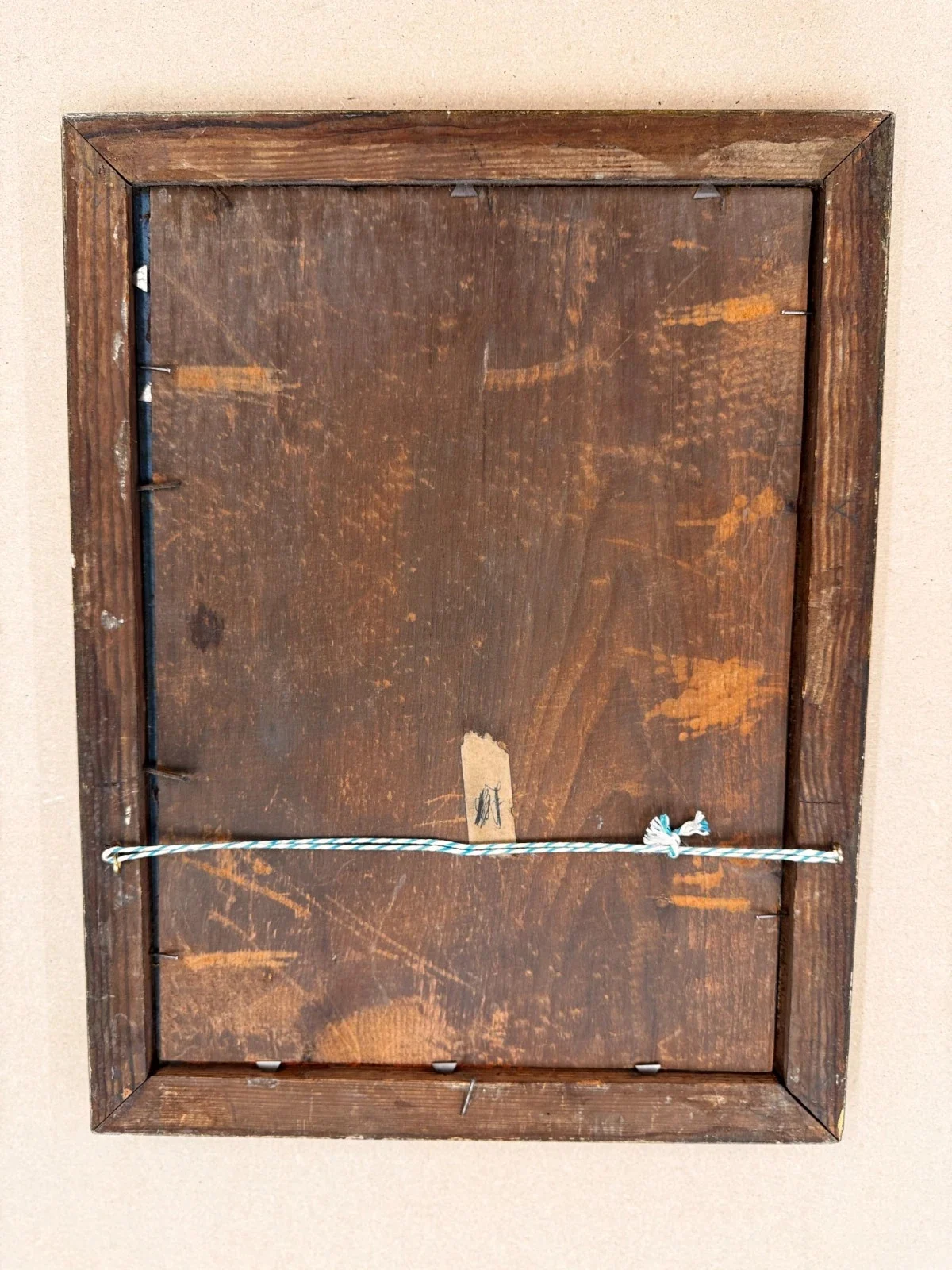
The picture remains housed in its moulded timber frame finished in worn gilding with a beaded inner sight edge. At the rear, an early solid wooden backboard is secured into the rebate by hand-driven iron brads and fitted with a twisted hanging cord. Overall measurements including the outer frame are 32 cm wide by 42 cm high.
Condition The glass panel appears intact. Minor flaking and light surface spotting to the applied pigments on the reverse, with rubbing and historic losses to the gilding across the wooden frame.
Dimensions 32 cm x 42 cm (frame)
| Period | 18th Century, Late 18Th Century |
|---|---|
| Colour | Multicoloured |
| material | Glass |
| Origin | United Kingdom |
| Maker | W.B. Walker |
| Price range | Under £1000, Under £2000 |
| Collection Era | Antique & Vintage |
| Style | Georgian |
Only logged in customers who have purchased this product may leave a review.
Reviews
There are no reviews yet.