


Enquire Today!
If you have any questions, requests or general enquiries, please do not hesitate to email us and we will get back to you as soon as possible regarding your enquiry.
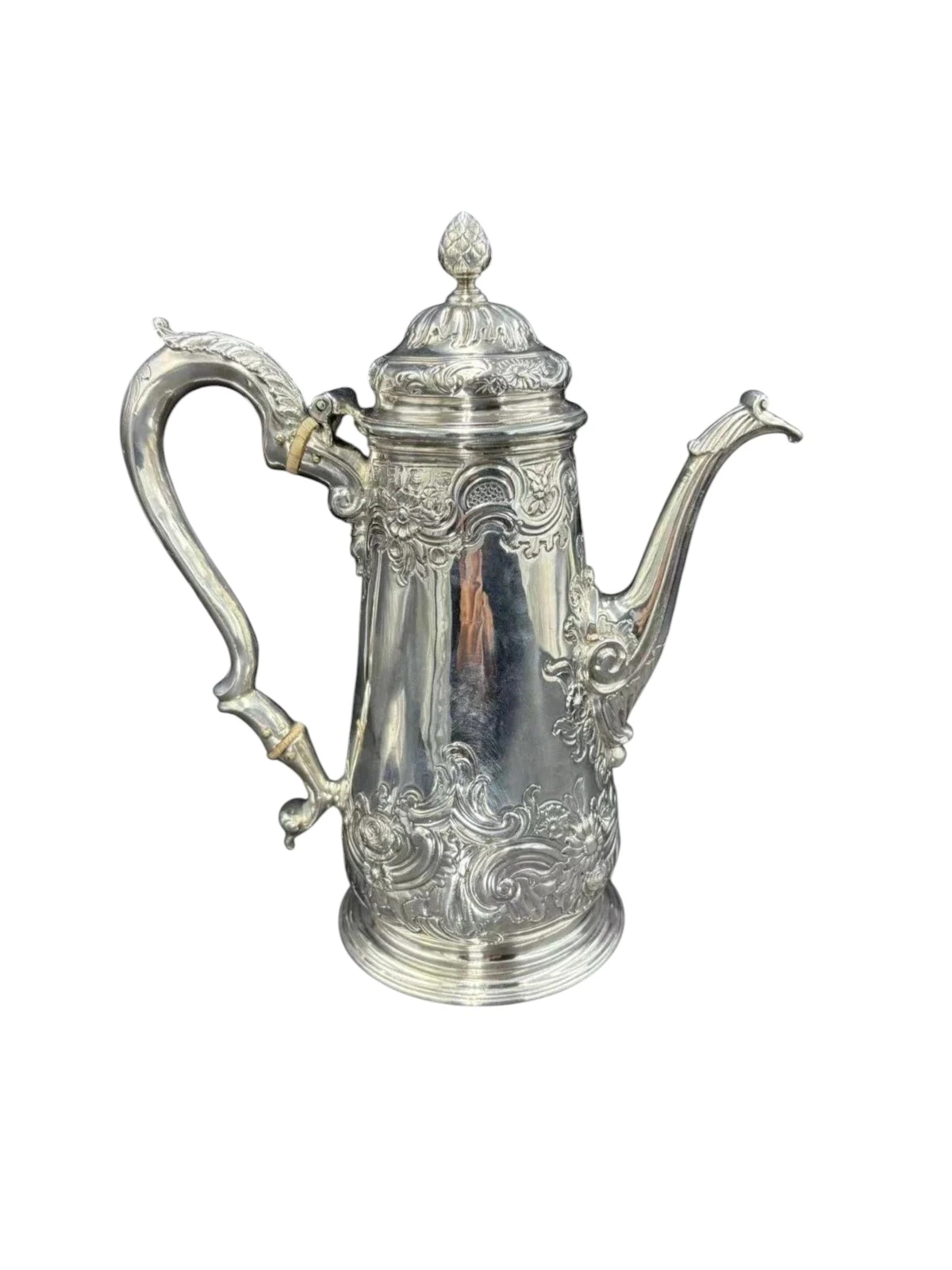
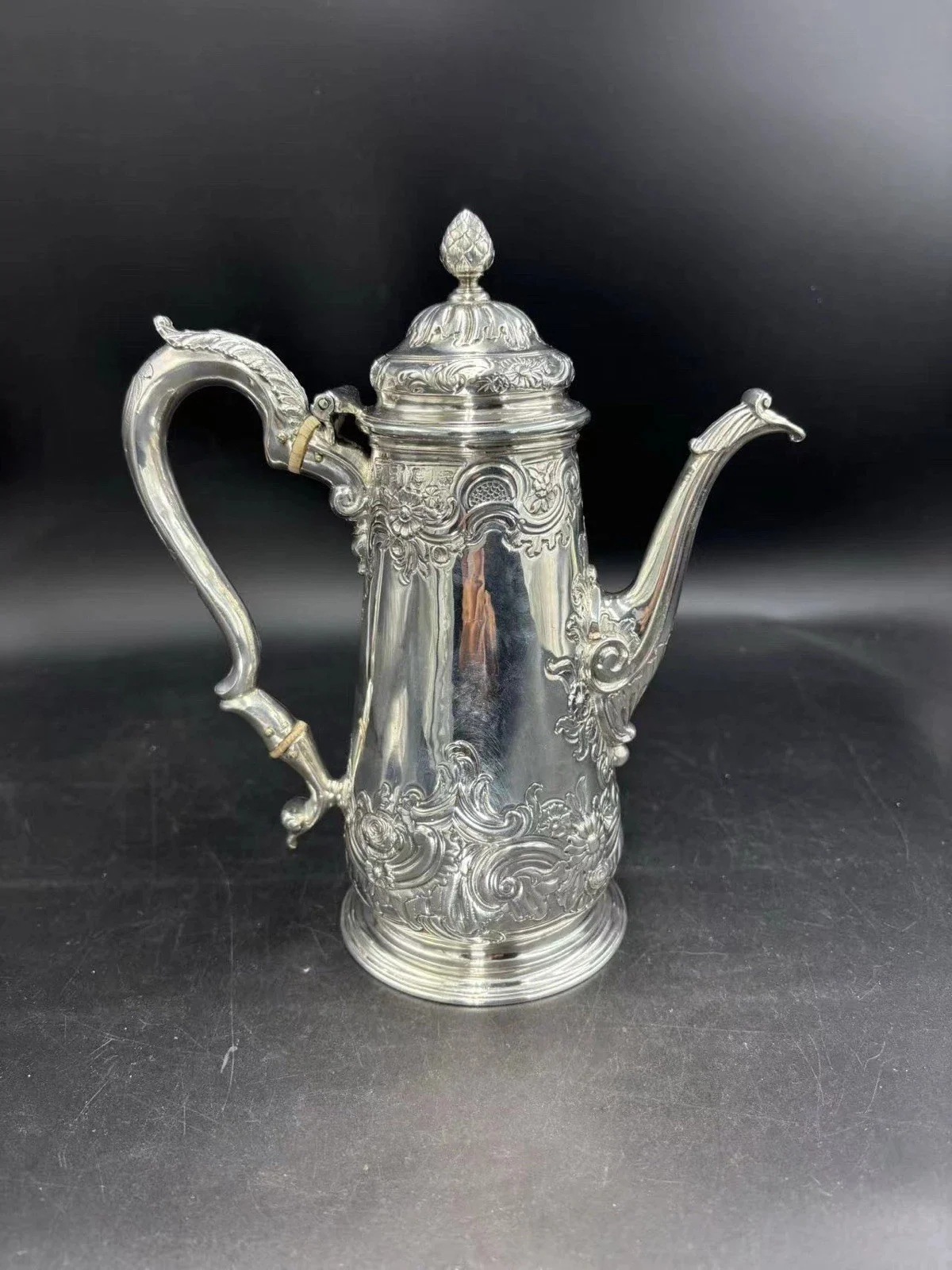
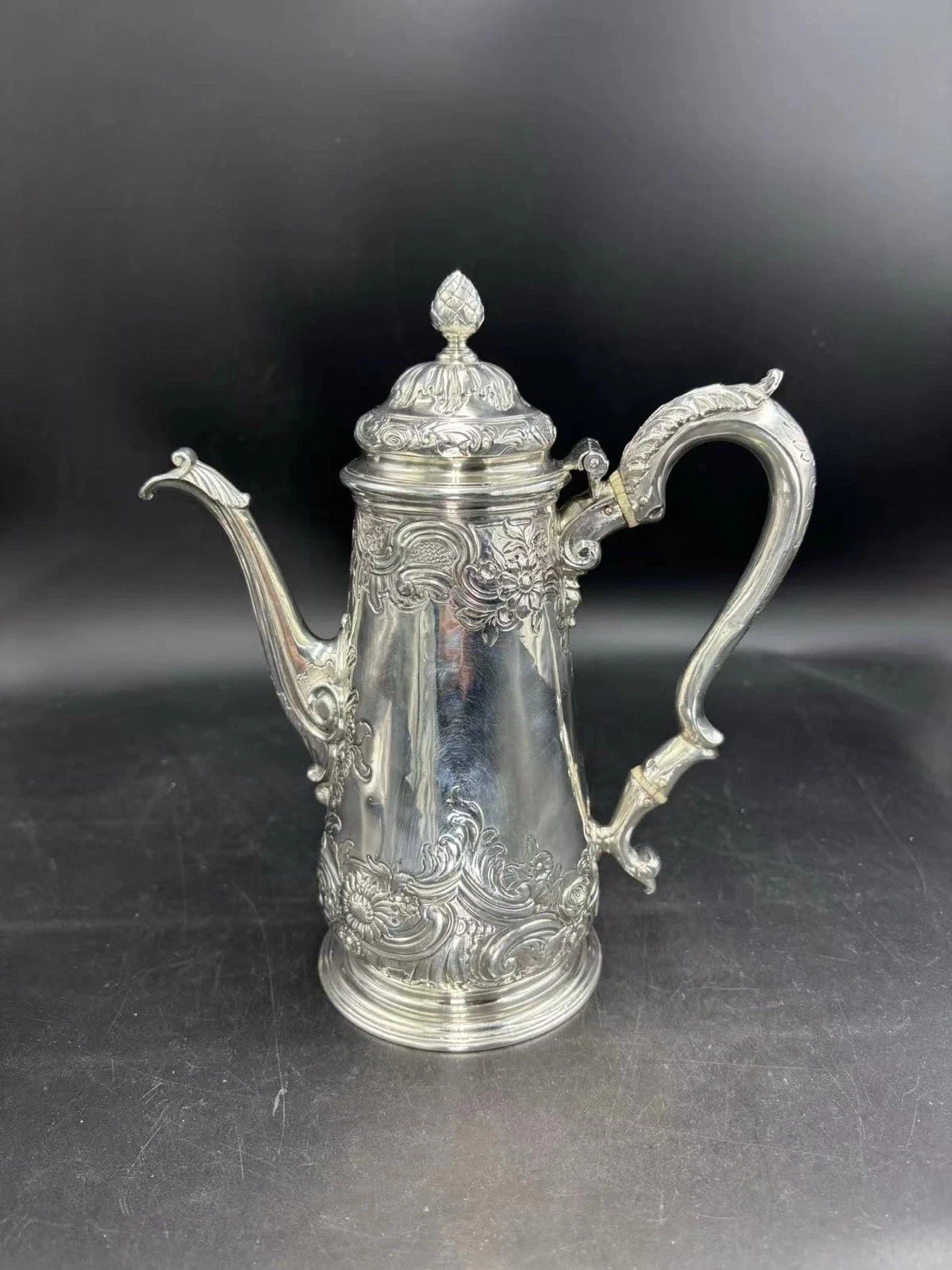


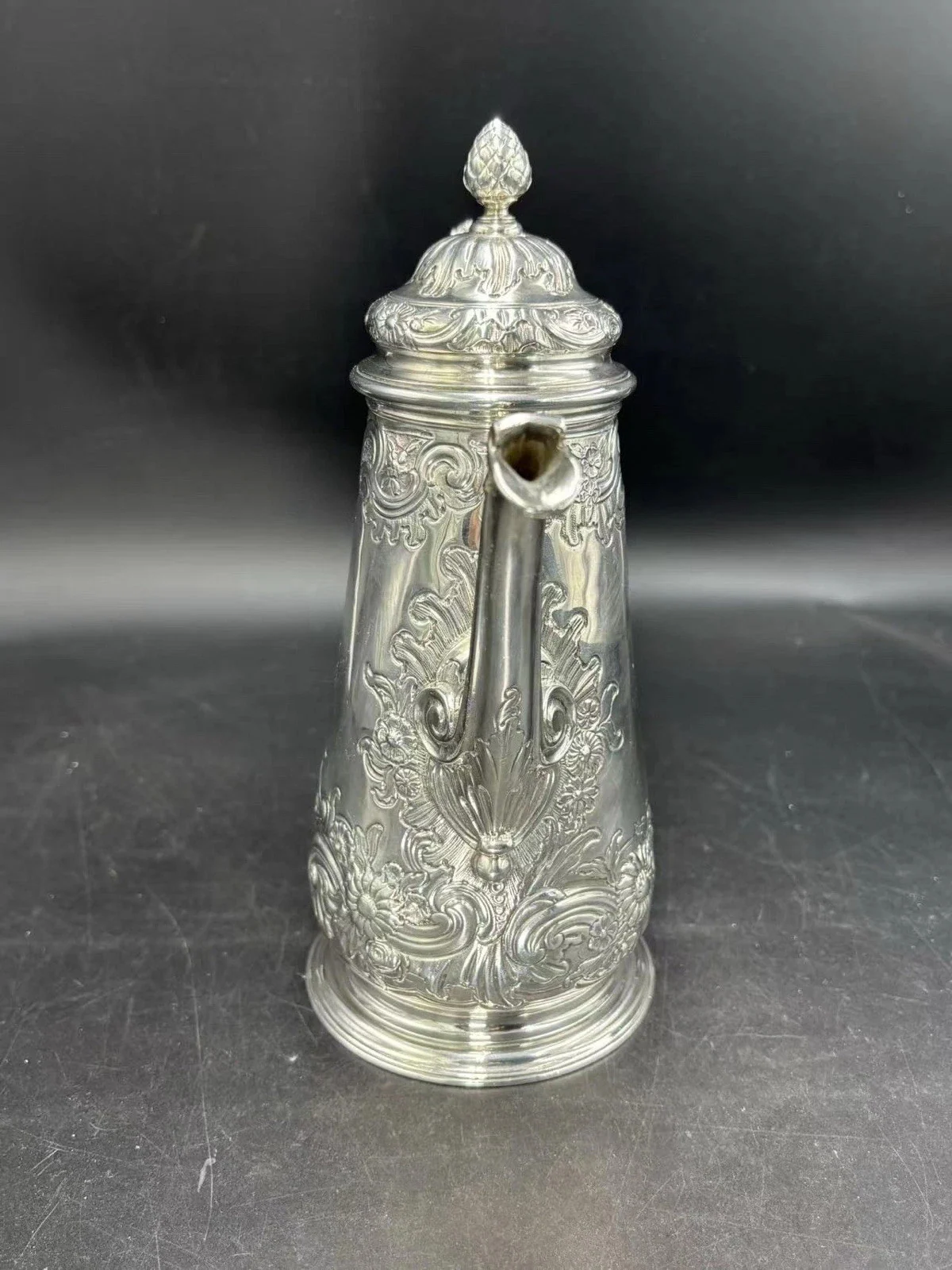


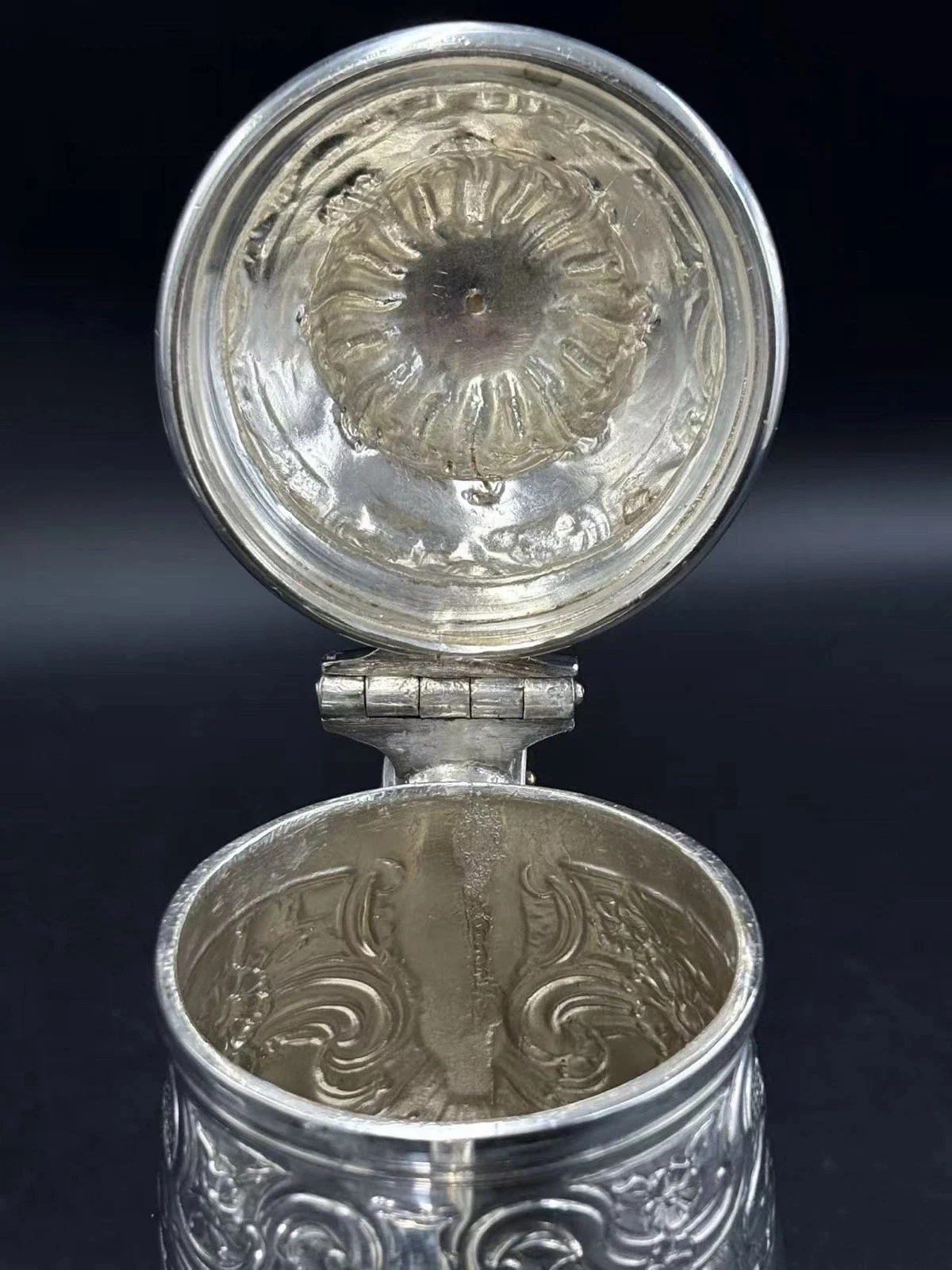

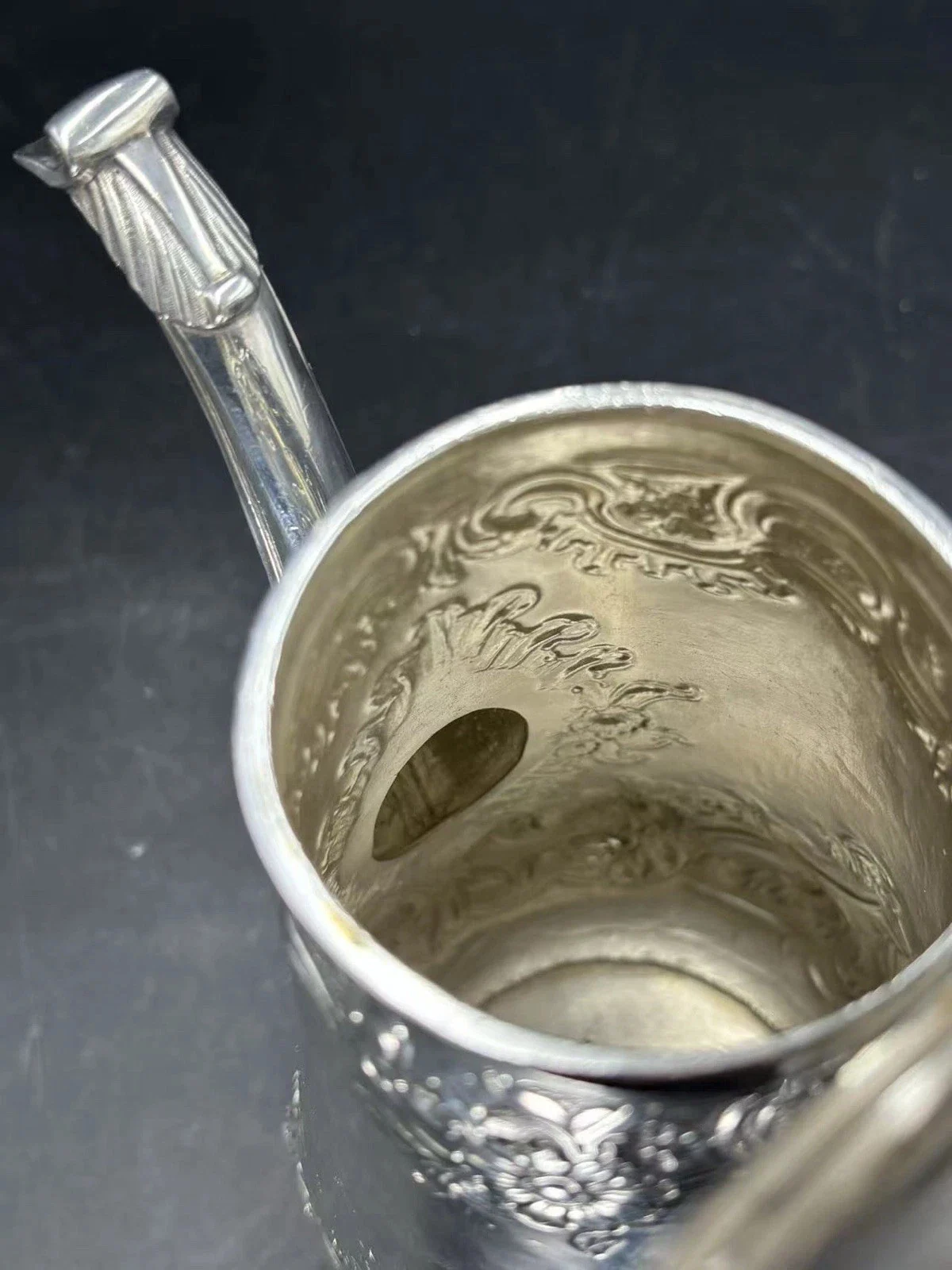
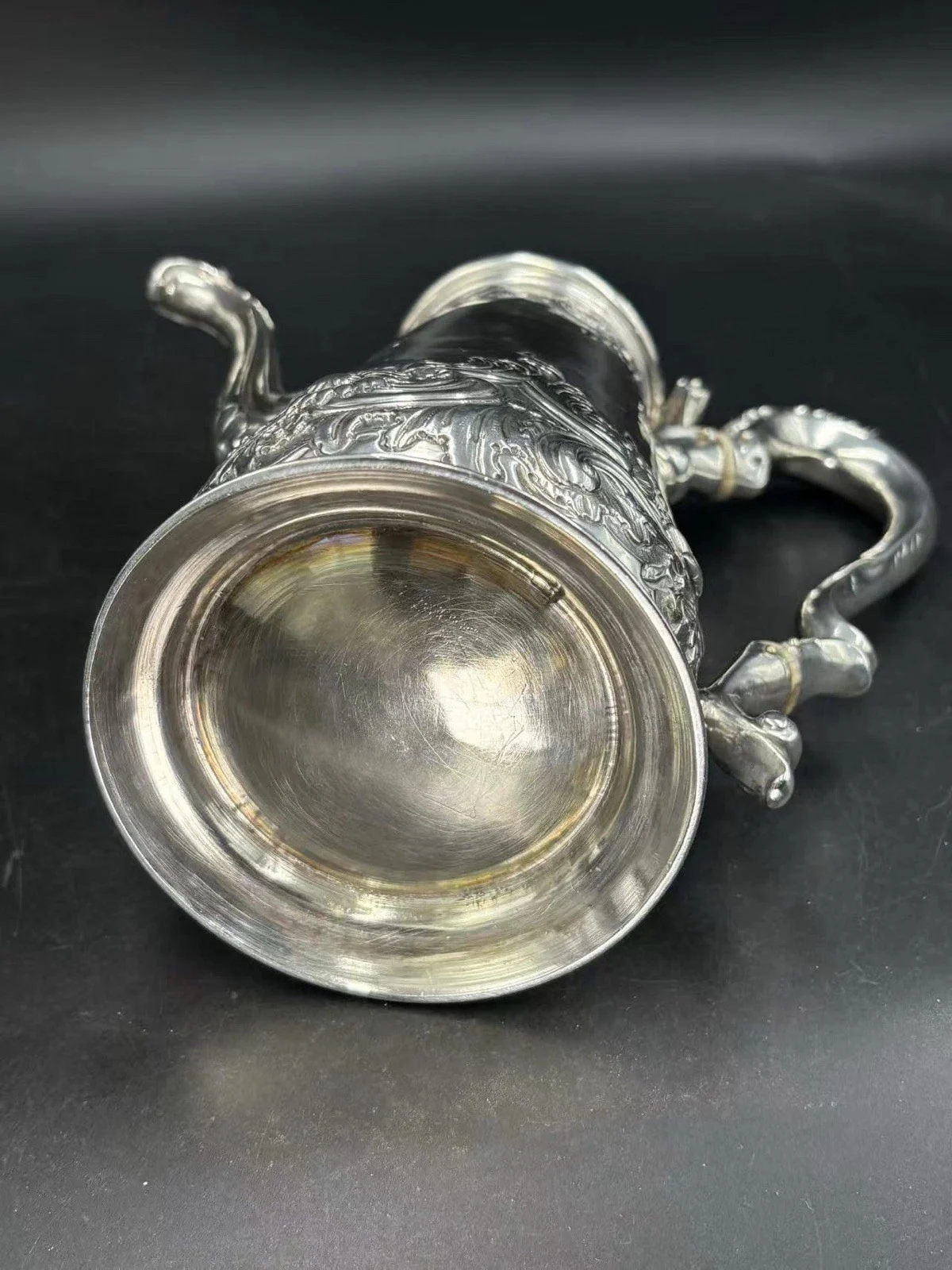


Richly chased floral sprays, scrollwork, and Rococo shell motifs cover the tapered body of this solid sterling silver coffee pot. Produced in London in 1747 during the reign of King George II, the vessel illustrates the mid-eighteenth-century enthusiasm for elaborate surface ornament. The repoussé and chased decoration remains remarkably crisp, demonstrating exceptional workshop skill in raising and chasing silver. Hallmarks struck clearly beneath the upper rim identify the maker as London silversmith Thomas Whipham. The design closely reflects the high Rococo fashion popularised across Britain by master goldsmith Paul de Lamerie, translating fluid natural foliage and asymmetrical scrolls into functional tableware. Alongside Whipham’s maker mark, the punch marks show the lion passant and the crowned leopard’s head of the London assay office. The vessel is assembled with a moulded spreading foot and a domed cover surmounted by a cast pineapple finial. A leaf-capped spout projects outwards from the neck, counterbalanced by a sweeping double-scroll handle fitted with insulating spacers to buffer the server from hot liquids. Lifting the sturdy five-part hinge reveals the interior, displaying the hammer depressions from the chasing alongside the original vertical body seam. With a total height of 23 cm and a substantial weight of approximately 768 grams, the pot has an authoritative presence on the table. The sharp preservation of the chasing, combined with sound construction, makes this a standout surviving example of London silversmithing.
Condition The chased decoration retains sharp definition throughout. The surface shows expected light micro-scratching and polishing wear consistent with age, while the hinge, handle insulators, and foot remain solid and stable.
Dimensions Height: 23 cm
| Weight | 0.768 kg |
|---|---|
| Dimensions | 23 cm |
| Period | 18th Century |
| Style | Georgian |
| Colour | Silver |
| material | Sterling silver |
| Origin | England |
| Maker | Thomas Whipham |
| Price range | £2000+ |
| Collection Era | Antique & Vintage |
Only logged in customers who have purchased this product may leave a review.


Reviews
There are no reviews yet.