


Enquire Today!
If you have any questions, requests or general enquiries, please do not hesitate to email us and we will get back to you as soon as possible regarding your enquiry.

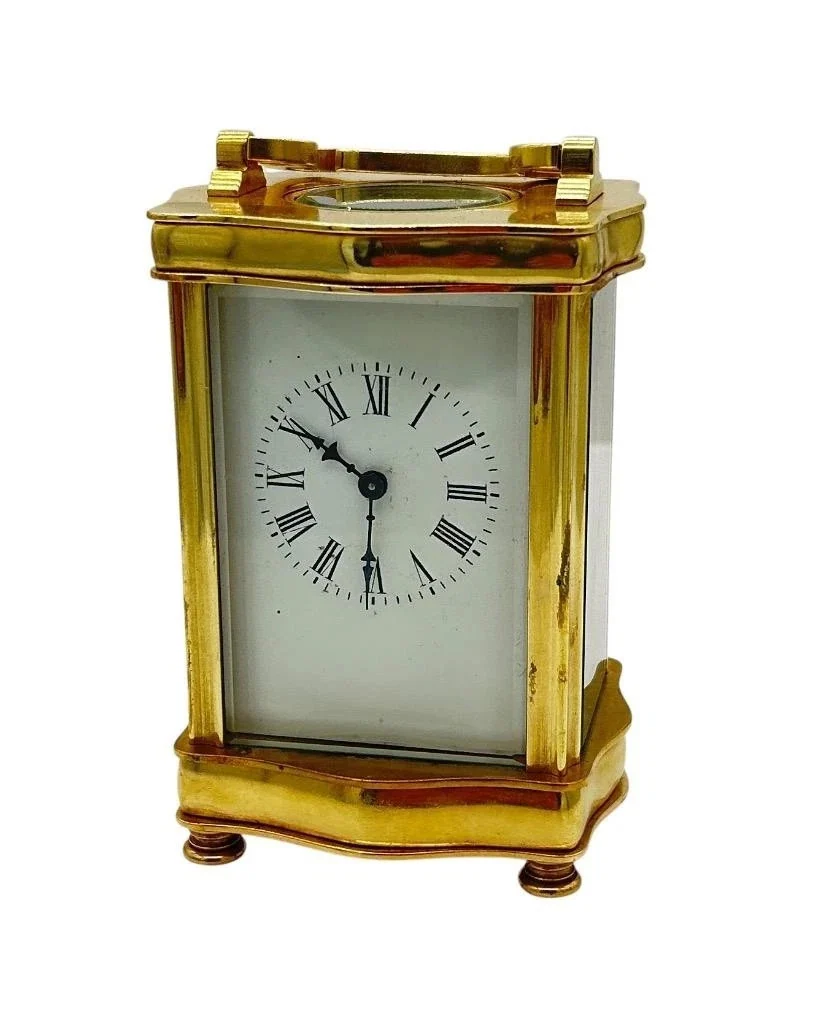


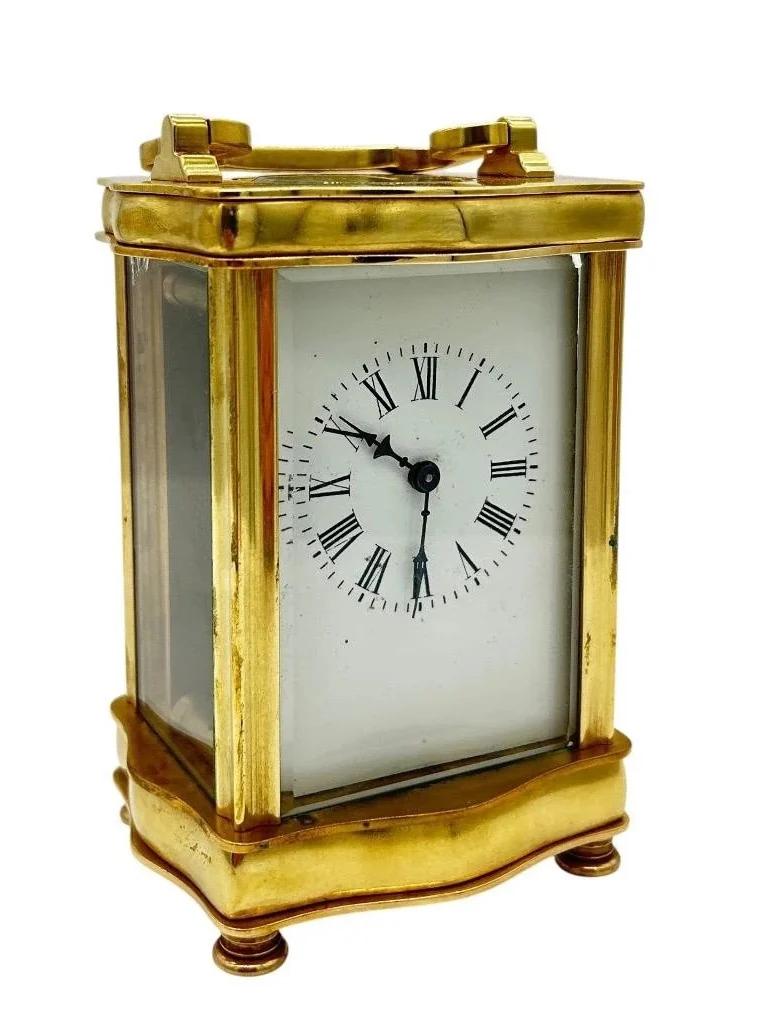
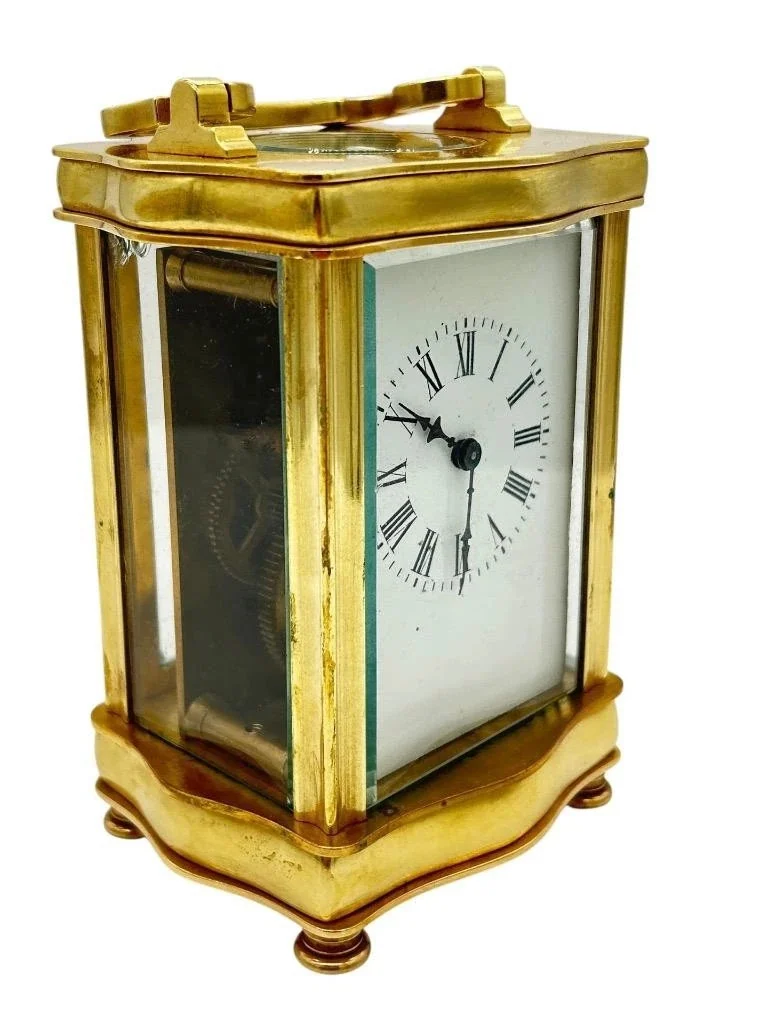
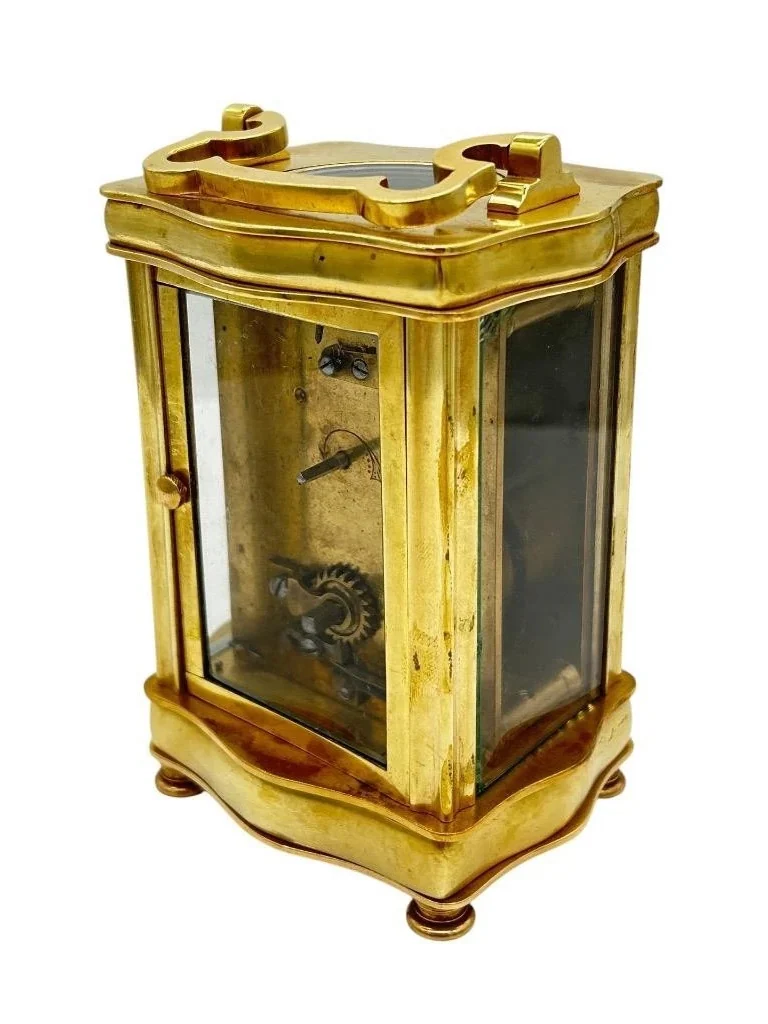

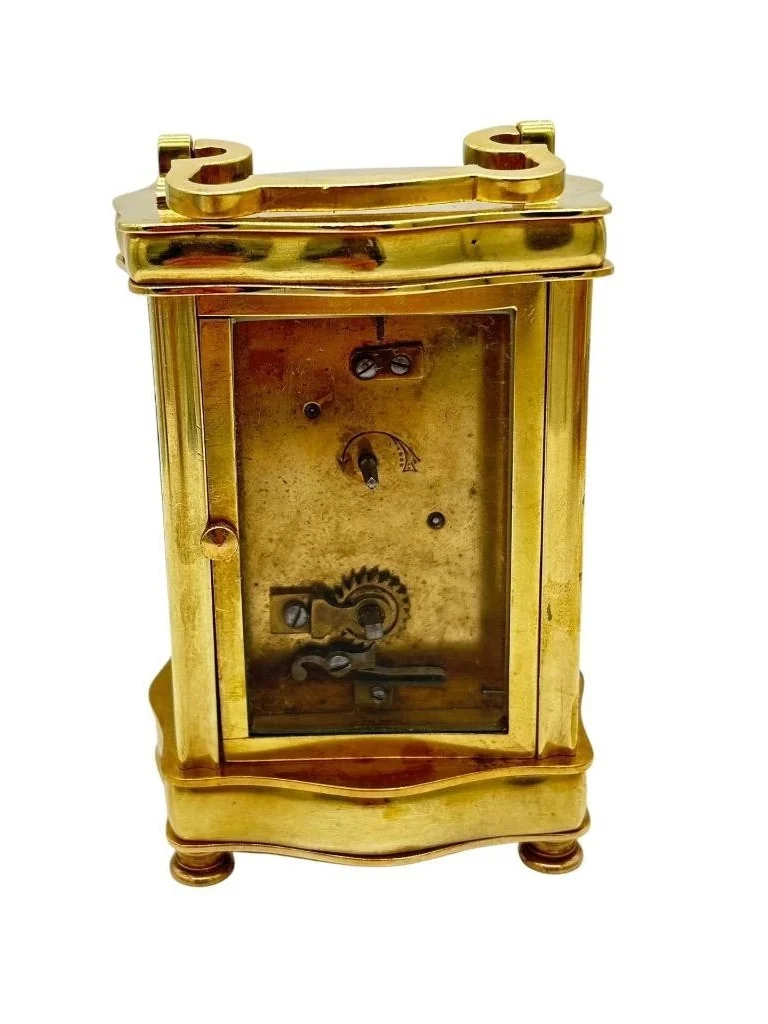


Sinuous mouldings define the serpentine brass case of this portable timepiece, setting it apart from standard rectilinear designs. The top plate incorporates an oval bevelled glass aperture that reveals the active platform escapement, while flat bevelled panels enclose the sides and glazed rear access door. A shaped folding handle conforms to the undulating contours of the upper cornice, and the clock rests upon turned disc feet.
A crisp white enamel dial is set behind the front glass, presenting clear black Roman numerals framed by an outer minute track and delicate blued steel spade hands. The glazed rear door opens to expose the brass mechanical movement with winding and hand-setting arbors, accompanied by a double-ended winding key.
The clock houses an eight-day spring-driven movement, produced in France around 1900. It measures 16 cm in height with the carrying handle raised, 9 cm across the widest points of the plinth, and 7.5 cm in depth.
The brass surfaces display an aged gilt-tone finish throughout, showing light surface tarnish, small contact marks, and minor edge softening consistent with domestic handling over time. The movement is reported to be in working order and keeps reliable time, retaining its original platform balance and cleanly preserved enamel dial.
Condition The case shows light surface wear, small marks, and natural age-related tarnishing to the brass. Glass panels and white enamel dial appear well preserved. The movement is reported to be running and keeping time, complete with a double-ended winding key.
Dimensions 16 cm high (handle up) x 9 cm wide x 7.5 cm deep
| Dimensions | 7.5 × 9 × 16 cm |
|---|---|
| Period | 19th Century |
| material | Brass and Glass |
| Origin | France |
| Maker | Unbranded |
| Price range | £2000+ |
| Collection Era | Antique & Vintage |
| Style | Belle Époque |
| Colour | Gold, White |
Only logged in customers who have purchased this product may leave a review.
Reviews
There are no reviews yet.