


Enquire Today!
If you have any questions, requests or general enquiries, please do not hesitate to email us and we will get back to you as soon as possible regarding your enquiry.

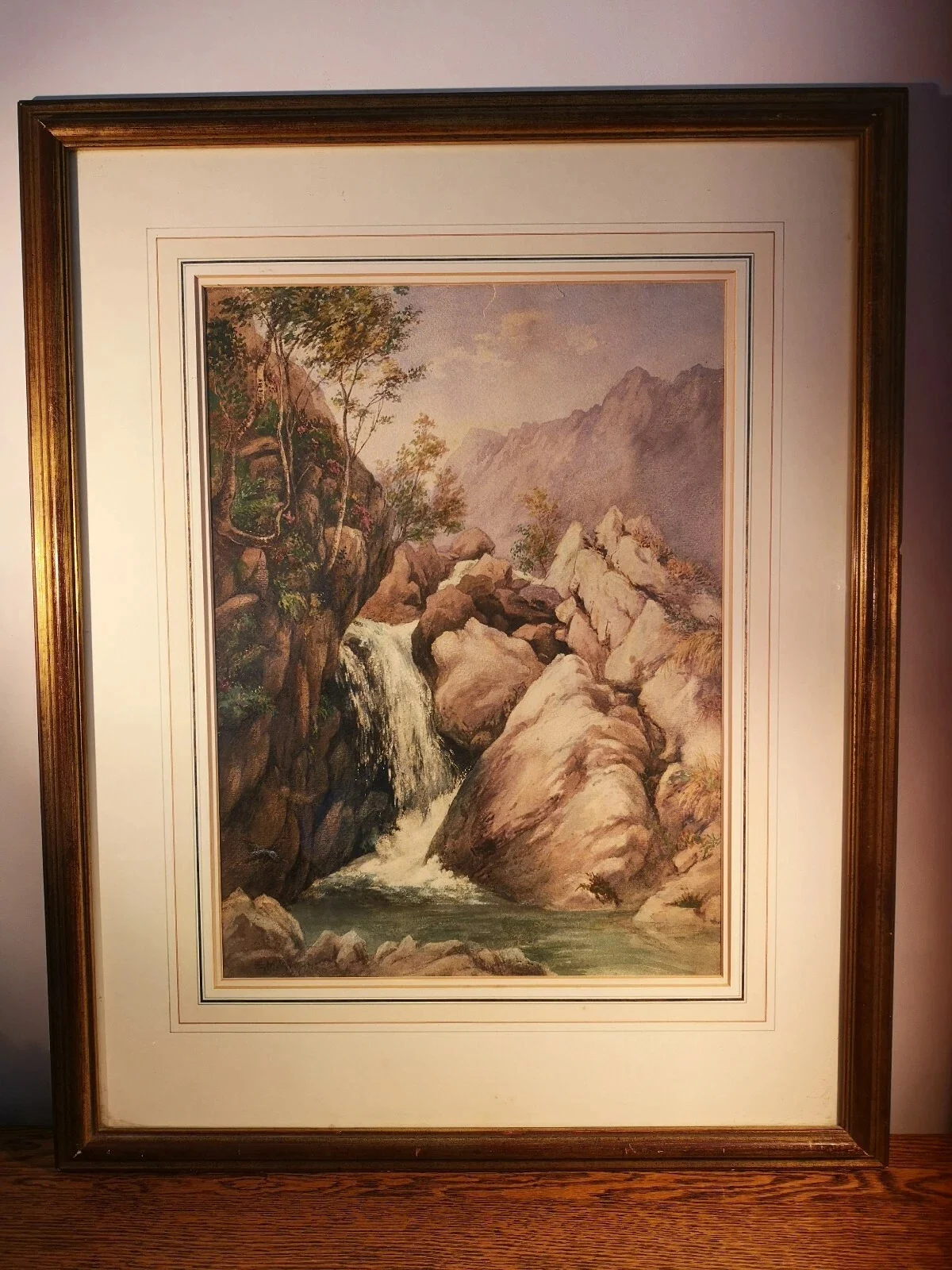

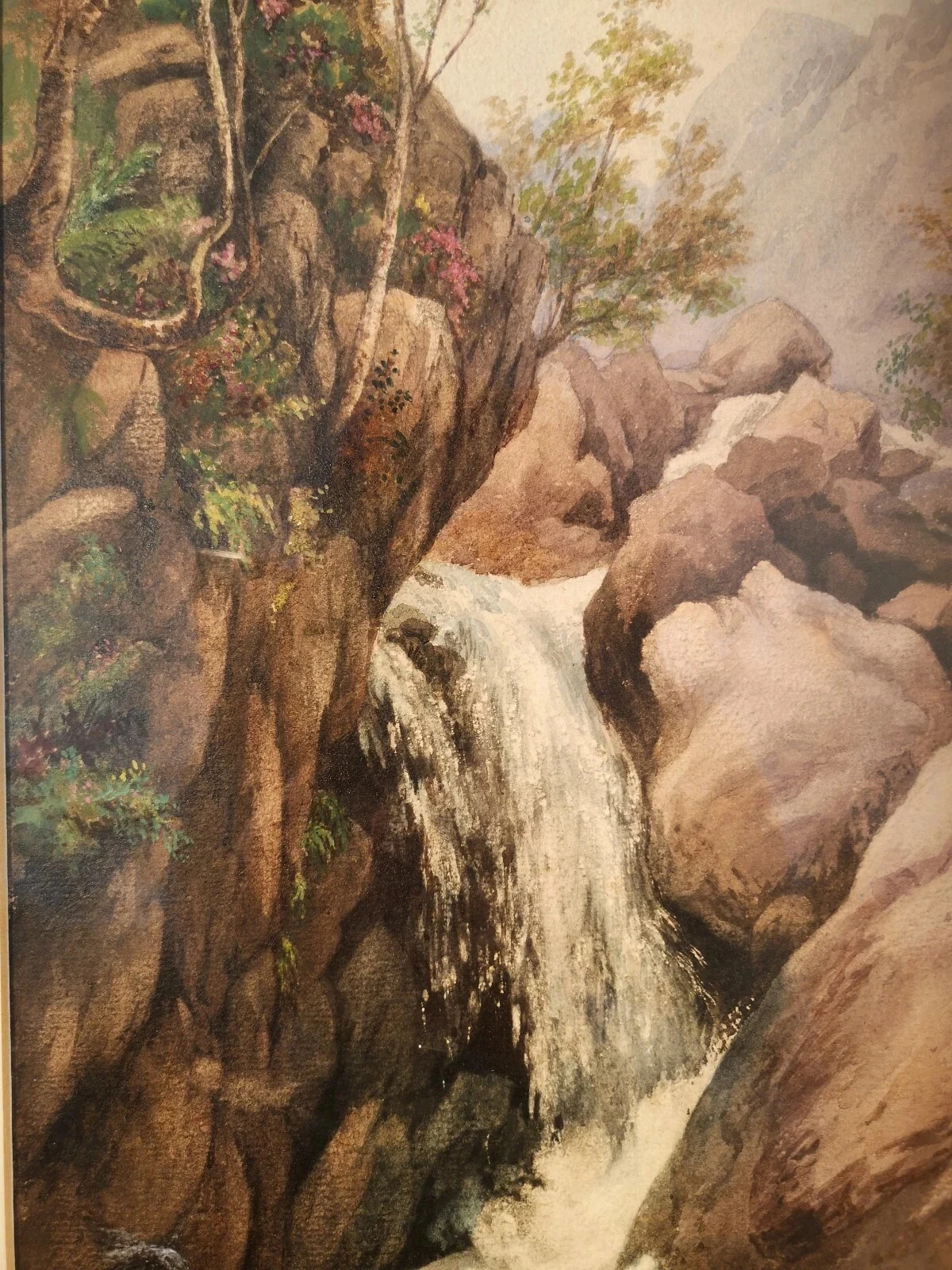

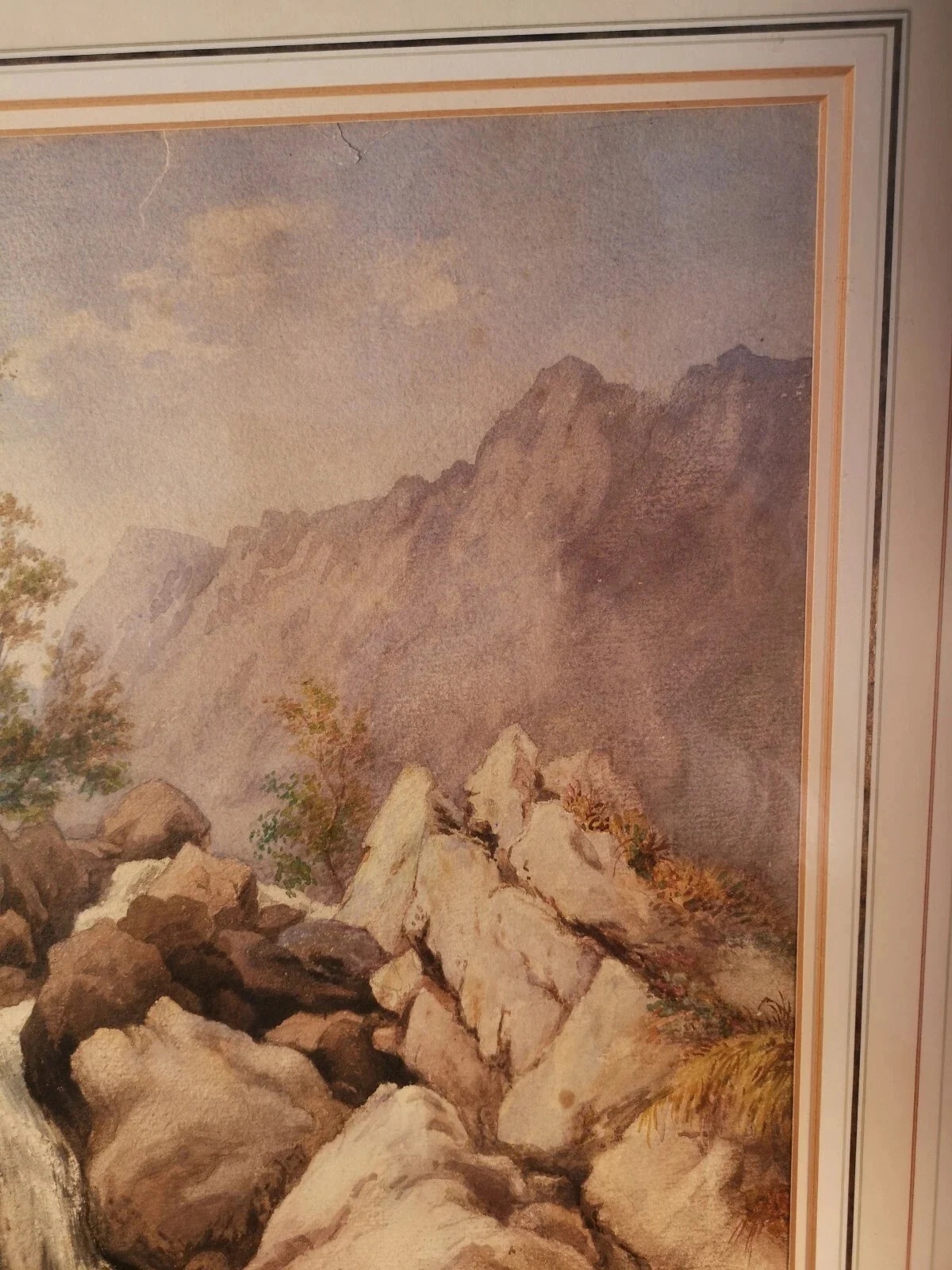
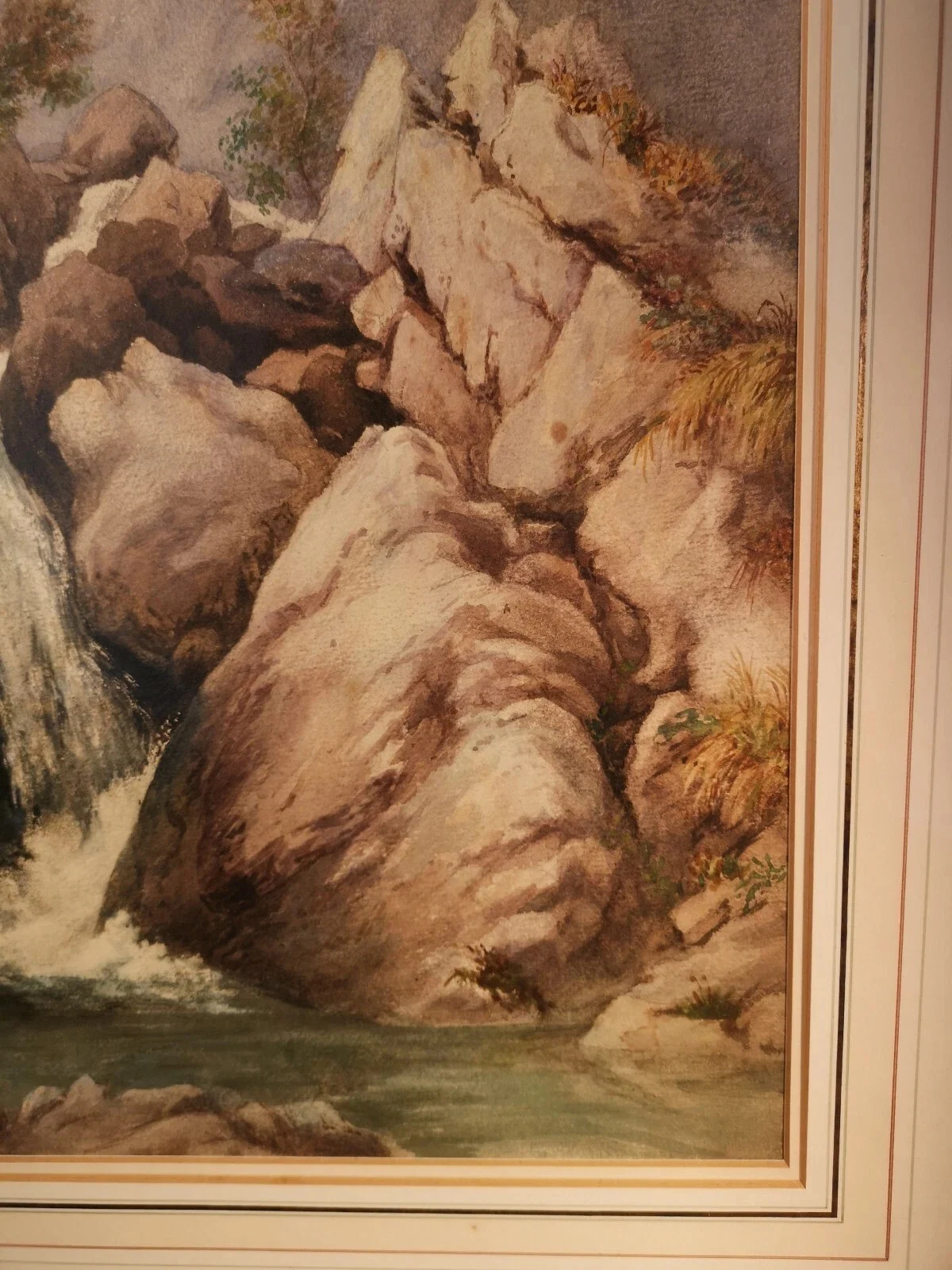
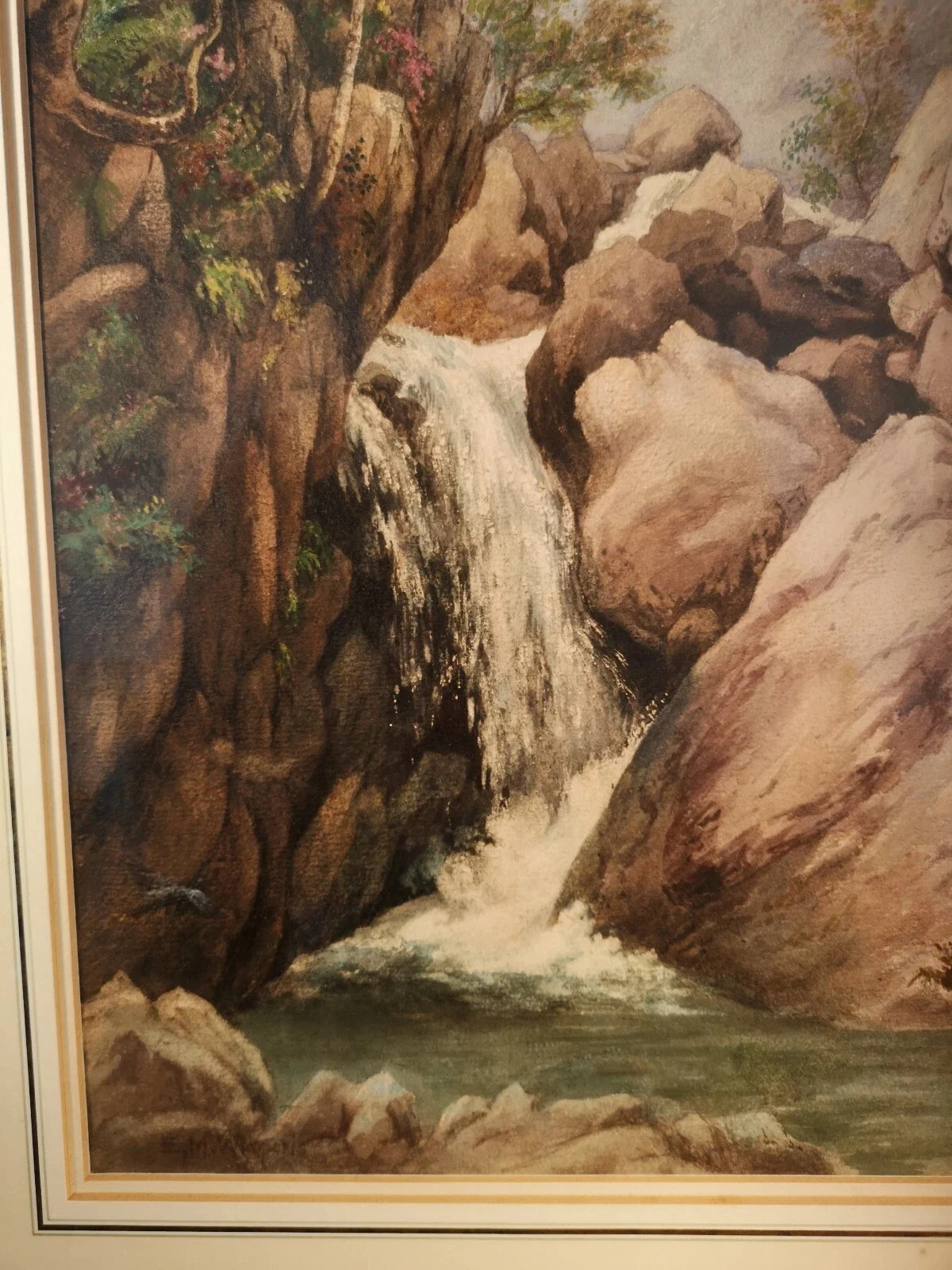


A torrent of white water cascades between rugged crags into a clear mountain pool, forming the primary focal point of this landscape composition. On the left flank, steep rocky bluffs rise dramatically, clad in twisted birch branches, flowering heather, and small alpine shrubs. To the right, pale fractured boulders catch the direct daylight, while shadowy mountain crests recede into a soft, hazy sky in the background. Wimperis executes the scene using layered washes of watercolour with delicate brushwork to define the textured rock faces, foaming spray, and upland foliage, creating a balanced and naturalistic study of wilderness scenery.
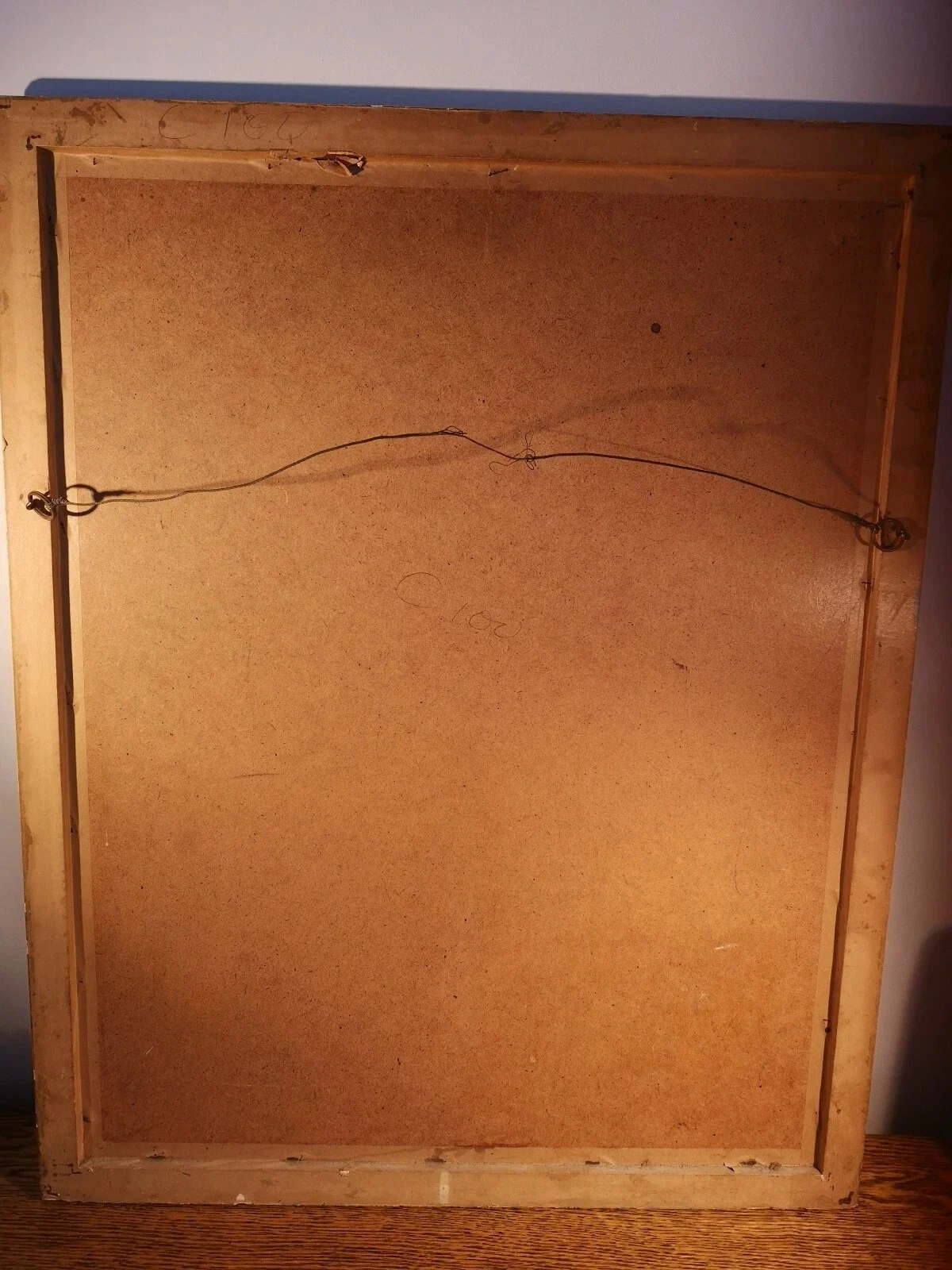
The painting is signed towards the lower left corner and is presented in a stepped cream mount bordered with double ruled lines and an inner gilt fillet. It is framed within a moulded gilt wooden frame with classical cove profiling, measuring 71.0 cm high by 56.5 cm wide overall, with the visible image area measuring 45.0 cm by 32.5 cm. The reverse retains a sturdy backing board secured with framing pins, fitted with screw eyes and a horizontal hanging wire ready for immediate wall mounting.
Edmund Morrison Wimperis was born in Chester in 1835, the eldest son of Mary and Edmund Richard Wimperis, who served as a cashier at a local lead works. Raised in an artistically gifted household with ties to Canon Charles Kingsley and the Bronte family through Maria Branwell, he began a seven-year apprenticeship under the London wood-engraver Mason Jackson around 1851. During this formative period, he also received direct artistic instruction from the celebrated watercolour painter Myles Birket Foster. Wimperis later produced illustrations for publisher Joseph Cundall and the Illustrated London News from 1863, eventually turning his primary attention to professional landscape painting alongside his contemporary Thomas Collier.
Admitted to the Society of British Artists around the age of thirty-eight, he was elected to the Royal Institute of Painters in Water Colours in 1874, later serving as its Vice-President from 1895 until his death at Southbourne, Hampshire, on Christmas Day in 1900. Between 1879 and 1880, he visited Dunedin, New Zealand, with his sisters, though the rugged mountain passes, rivers, and waterfalls of North Wales remained enduring inspirations throughout his working life.
Executed during the late 19th century, this composition highlights the Victorian tradition of topographical landscape watercolour, characterised by careful observation of natural rock formations, rushing mountain torrents, and atmospheric highland light. The work survives in its original watercolour medium on paper, securely mounted and preserved behind glass within a classically proportioned gilt moulding suitable for domestic or gallery display.
Dimensions Overall: 71.0 cm x 56.5 cm; Image: 45.0 cm x 32.5 cm
| Dimensions | 56.5 × 71 cm |
|---|---|
| Period | 19th Century, Late 19Th Century |
| Style | Victorian |
| Colour | Multicoloured |
| material | Glass, Watercolour on paper, Wood |
| Origin | United Kingdom |
| Maker | Edmund Morrison Wimperis |
| Price range | Under £2000 |
| Collection Era | Antique & Vintage |
Only logged in customers who have purchased this product may leave a review.
Reviews
There are no reviews yet.