


Enquire Today!
If you have any questions, requests or general enquiries, please do not hesitate to email us and we will get back to you as soon as possible regarding your enquiry.


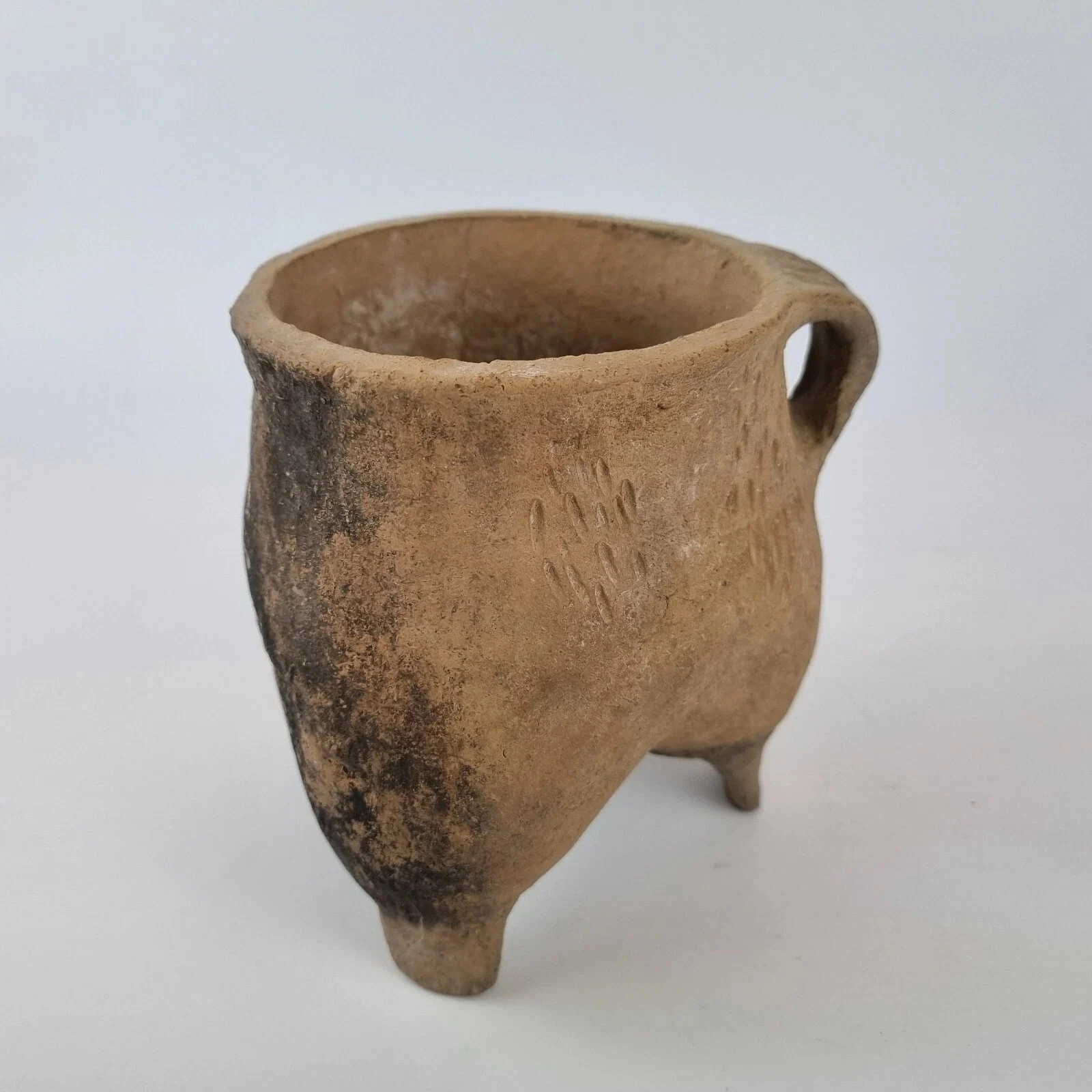
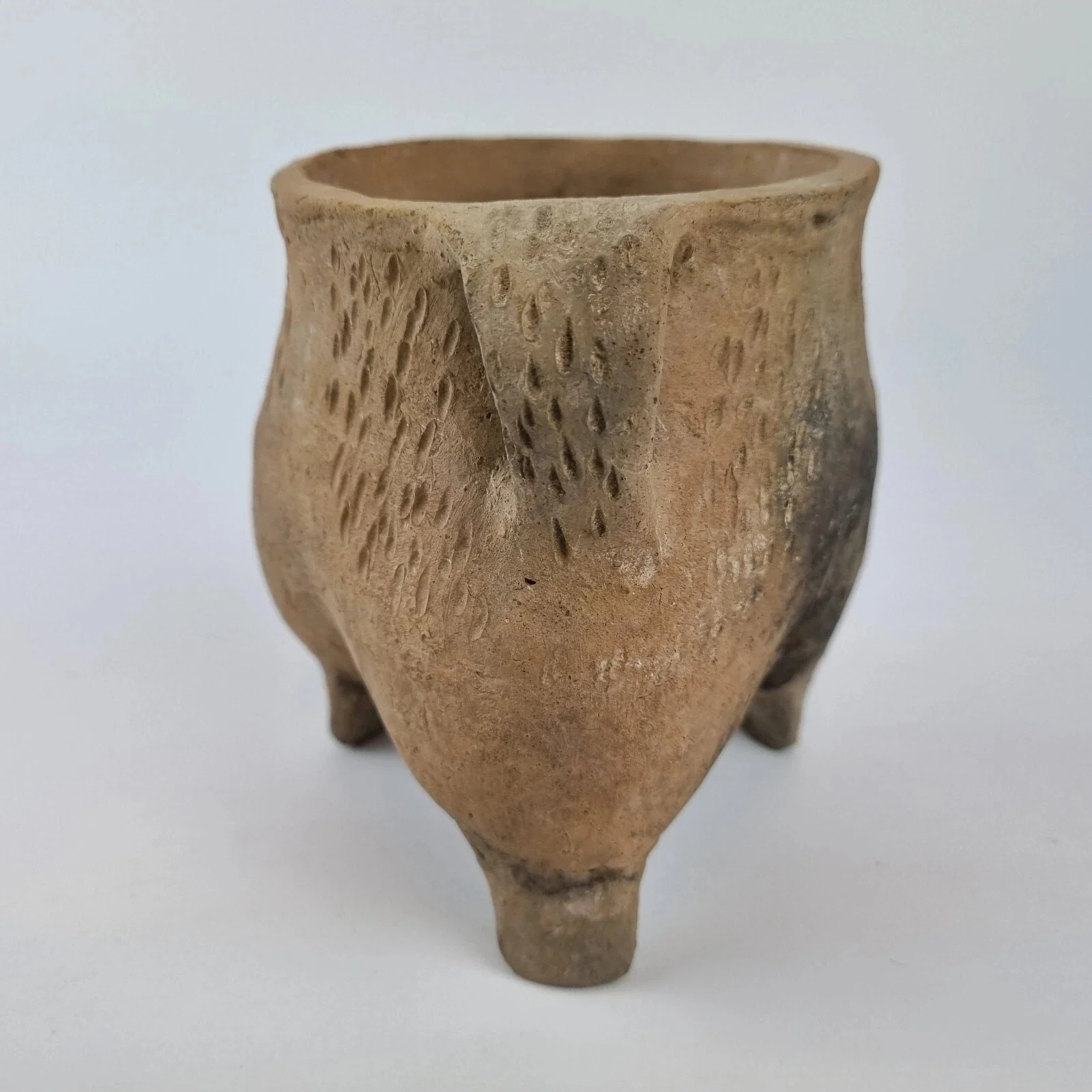

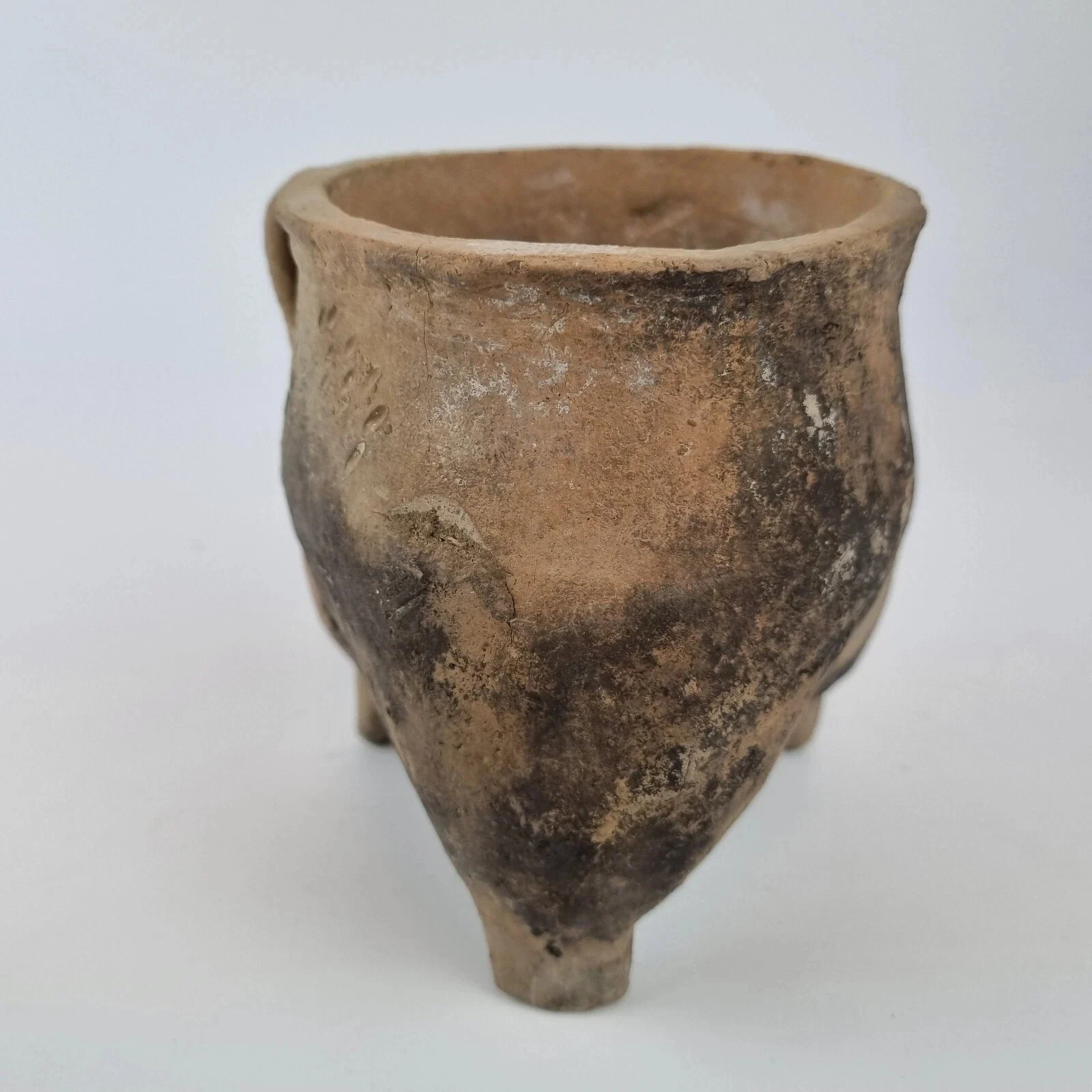
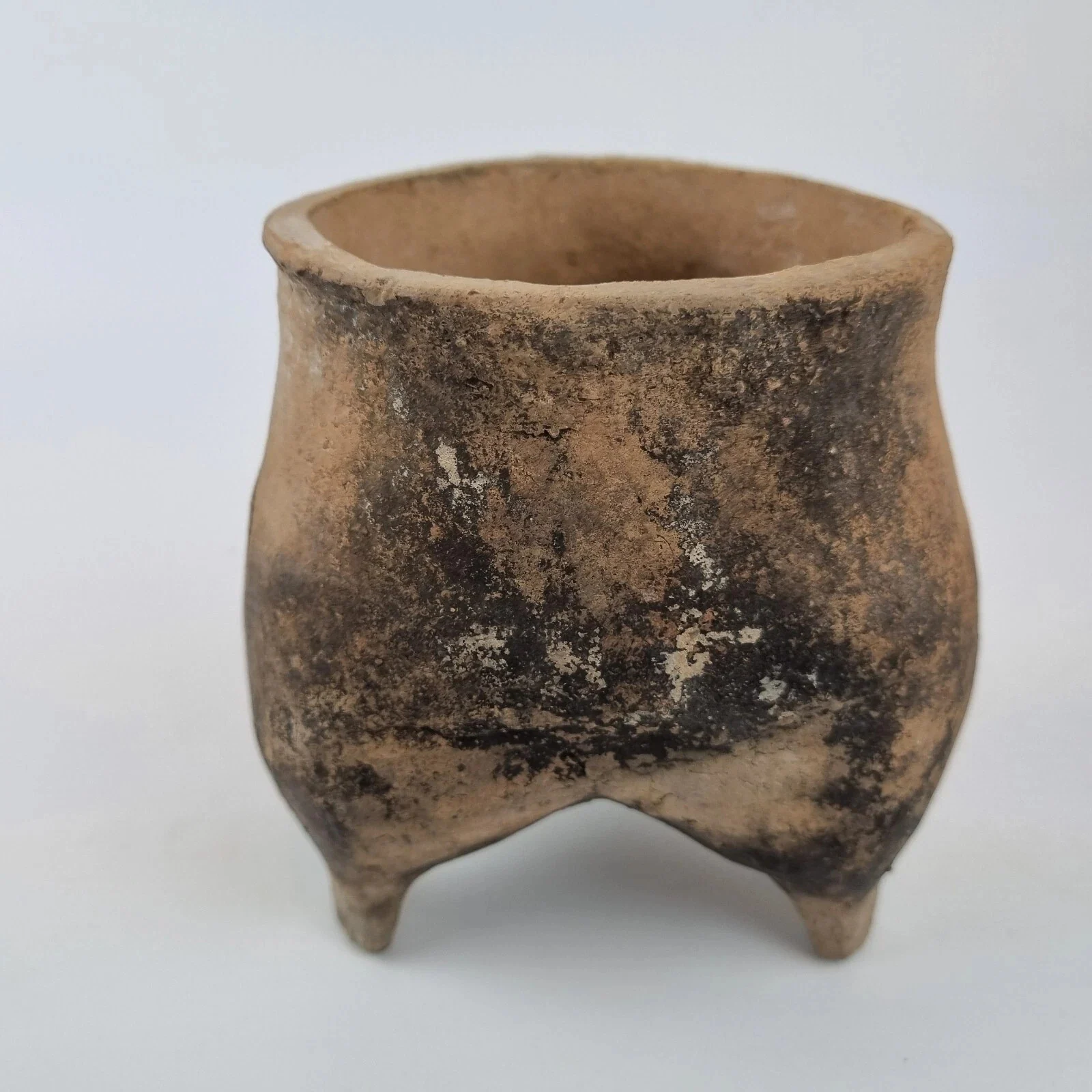


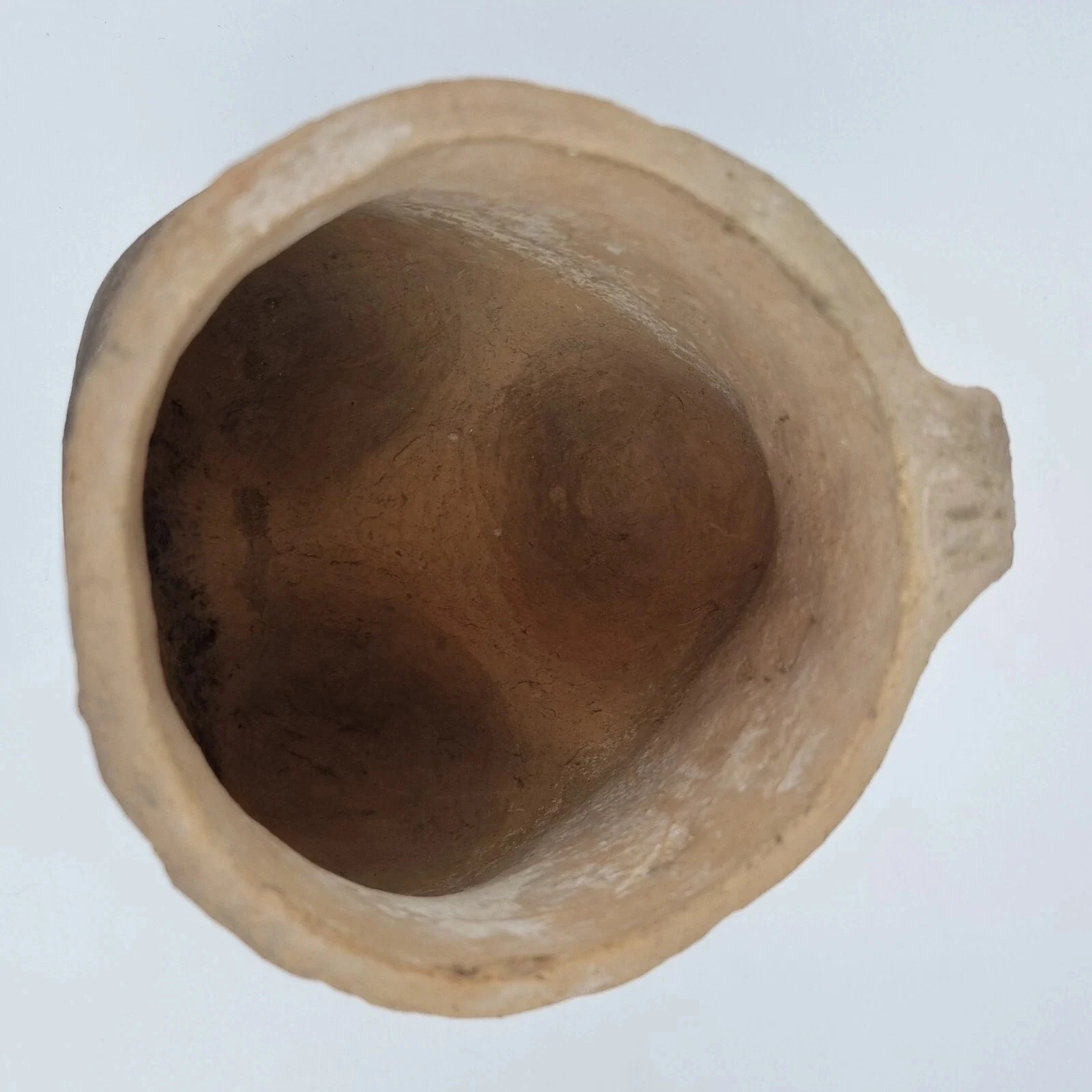


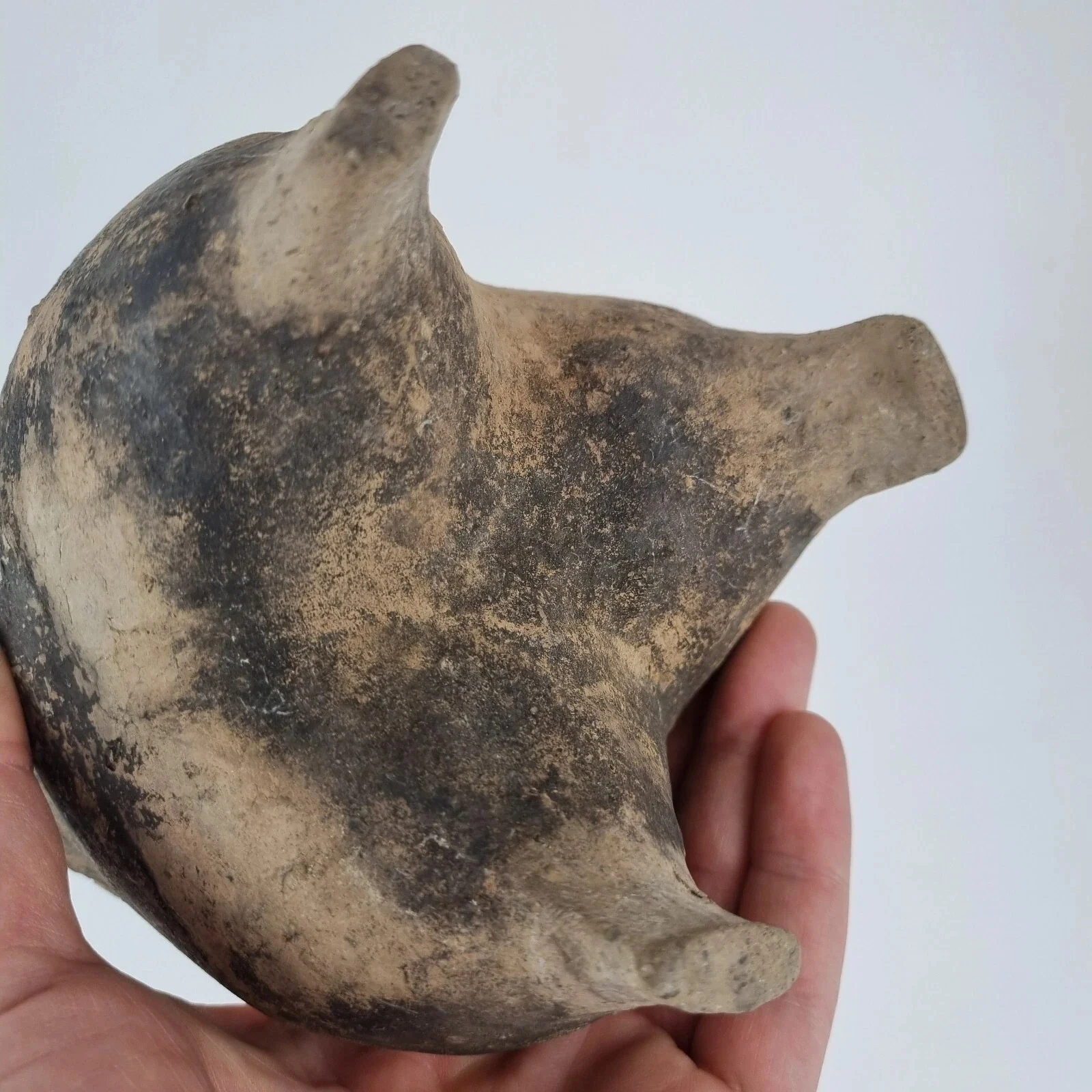


Three hollow mammiform feet support this hand-shaped earthenware tripod vessel, broadening upwards into a rounded lobed body with a slightly flaring cylindrical neck and plain rounded rim. A single thick strap handle arches from just below the rim to the upper shoulder, balancing the tripod profile and providing a functional grip for lifting.
Rows of small punctate slashes and dash-like impressions decorate the exterior shoulder, stamped into the damp clay before firing. The coarse pottery displays a natural pale buff to biscuit terracotta tone, modulated by dark grey carbon clouds and smoky patches formed during bonfire firing. On the interior, the deep cavities of the hollow feet extend straight through from the vessel chamber to maximise heat transfer.
Probably dating from the late Neolithic period, hollow-legged tripods of this distinctive form, closely related to early li vessels, are amongst the defining ceramic types of ancient Chinese material culture. Standing approximately 13 cm high by 12.5 cm wide, such vessels were designed for heating broths directly over embers, allowing heat to circulate freely beneath each lobed foot.
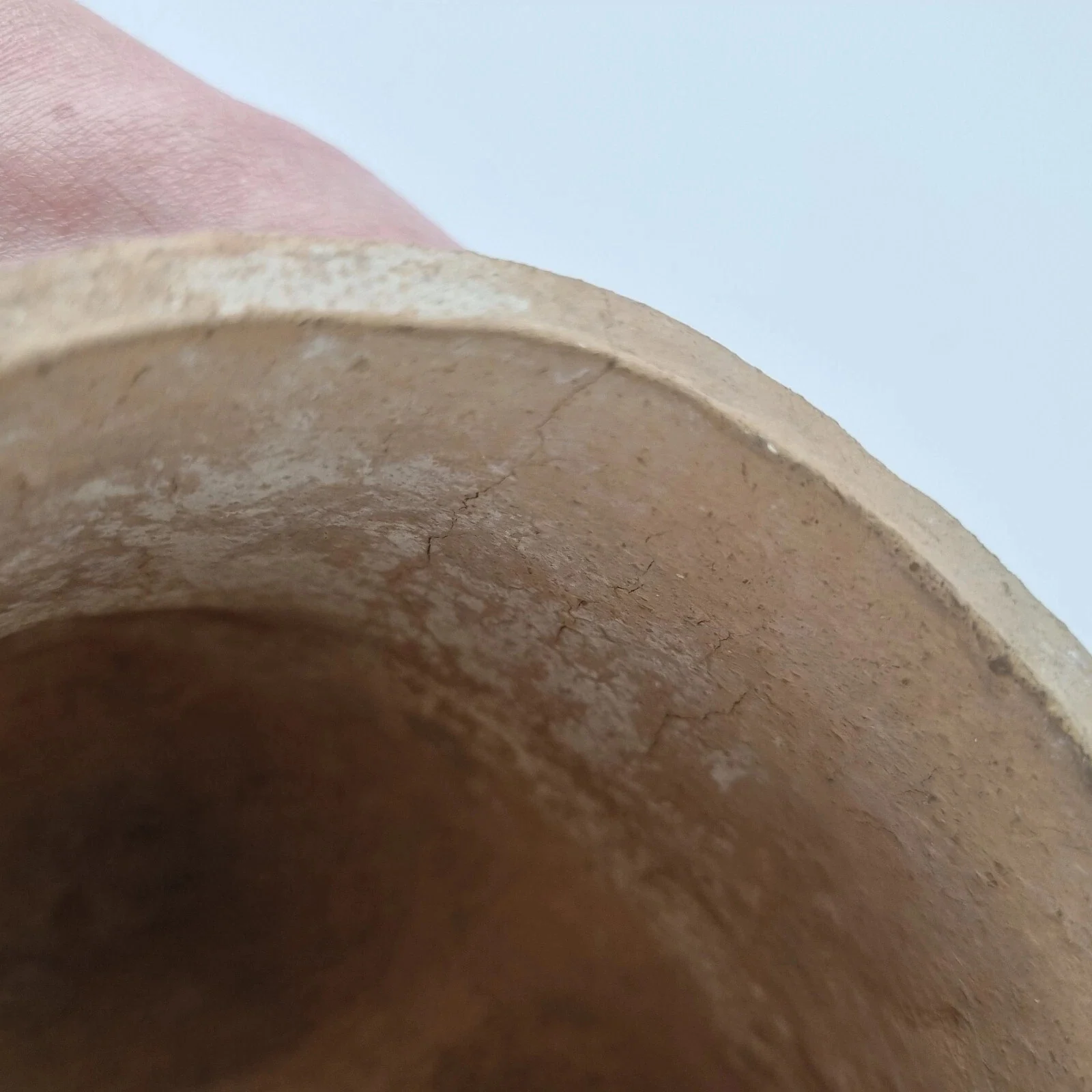
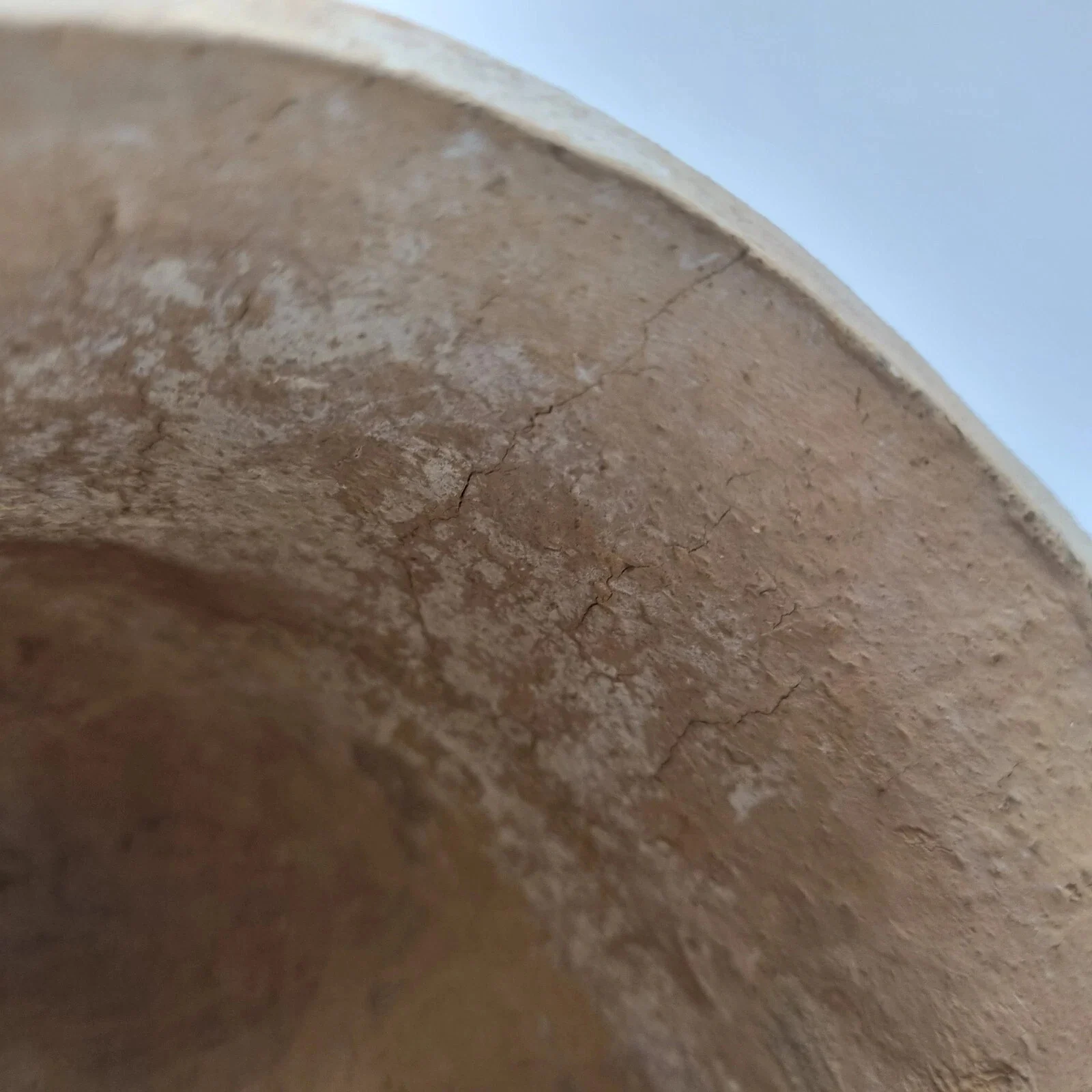
The piece survives in honest condition consistent with ancient burial and age. Fine hairline cracking is visible extending downward from the inner rim, accompanied by historic nibbles along the rim edge and widespread mineral encrustation and soot staining. Provenance is noted to the Roger Moss Collection.
Condition Intact overall with stable historic hairline cracking descending from the rim, minor edge nibbles, surface abrasion, and widespread burial patination and firing cloud marks.
Dimensions 13 cm high x 12.5 cm wide
| Dimensions | 12.5 × 13 cm |
|---|---|
| Period | Unknown |
| Style | Neolithic |
| material | Terracotta |
| Origin | China |
| Price range | Under £2000 |
Only logged in customers who have purchased this product may leave a review.
Reviews
There are no reviews yet.