


Enquire Today!
If you have any questions, requests or general enquiries, please do not hesitate to email us and we will get back to you as soon as possible regarding your enquiry.

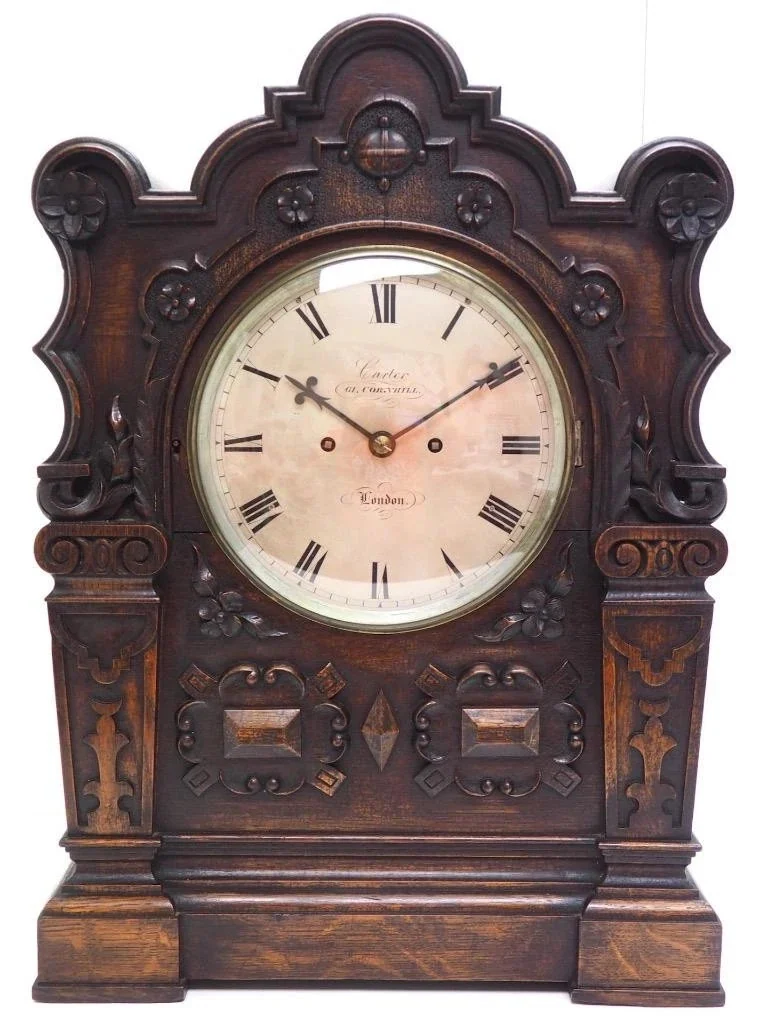


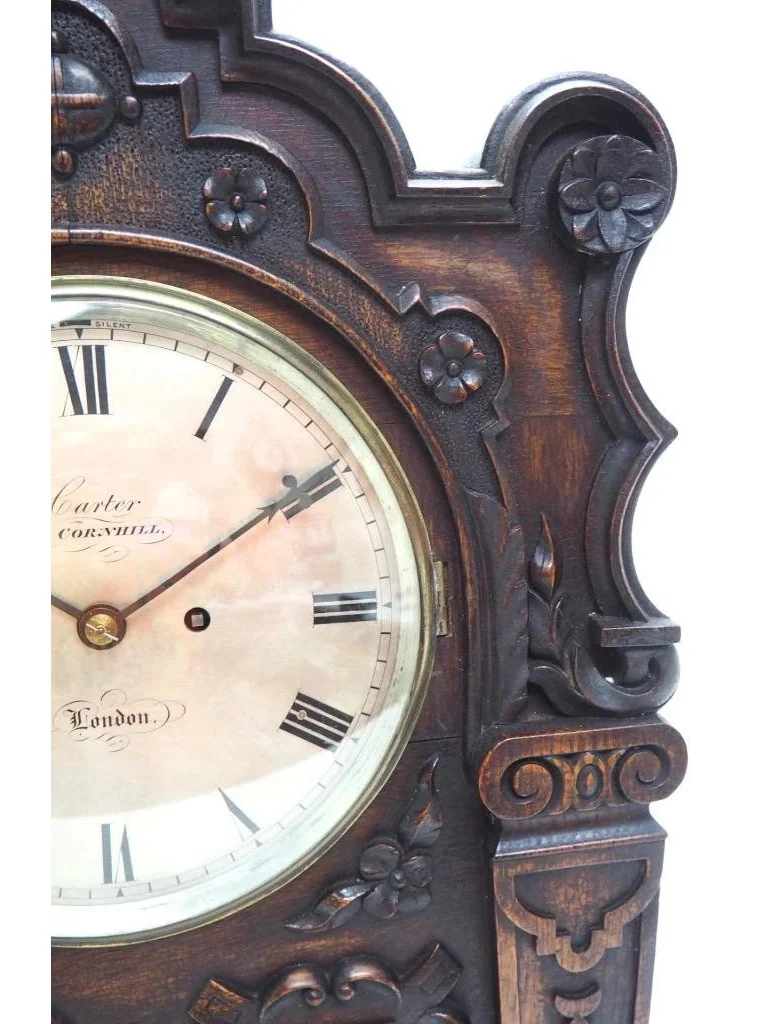
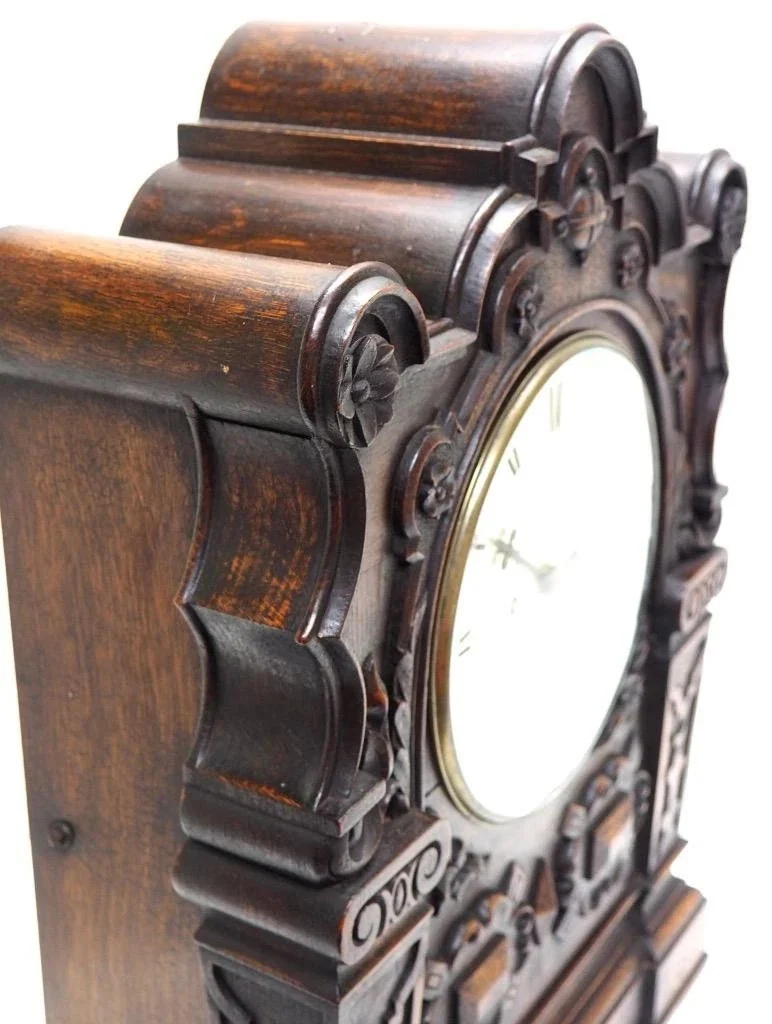
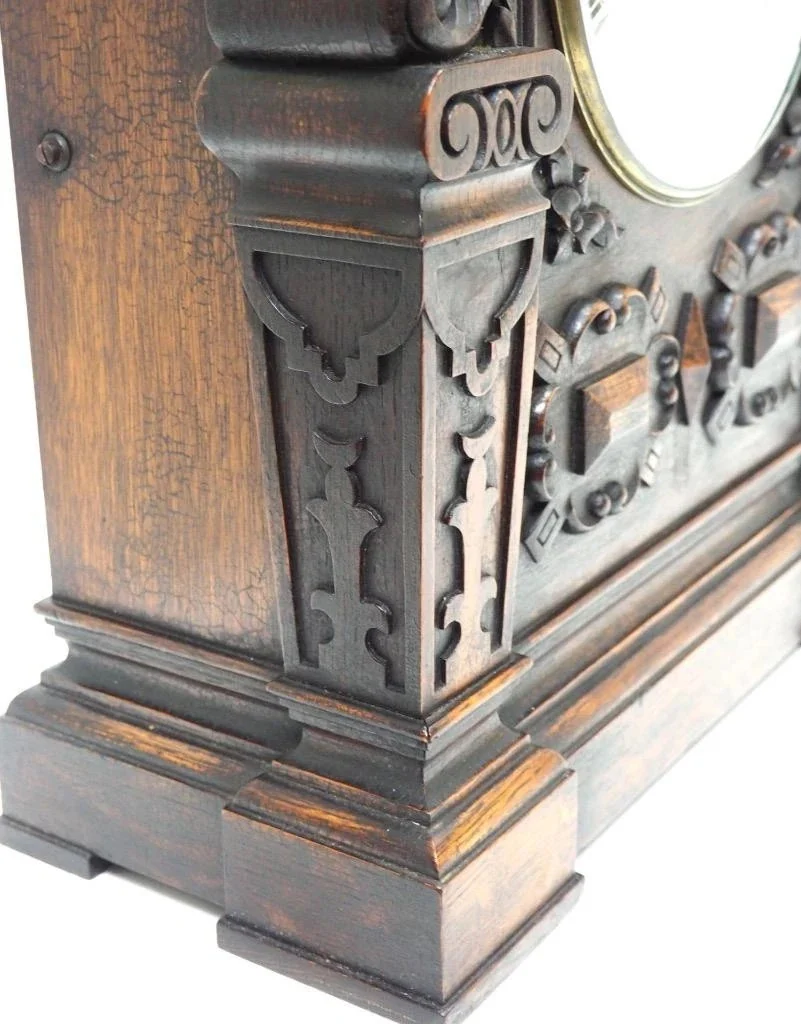
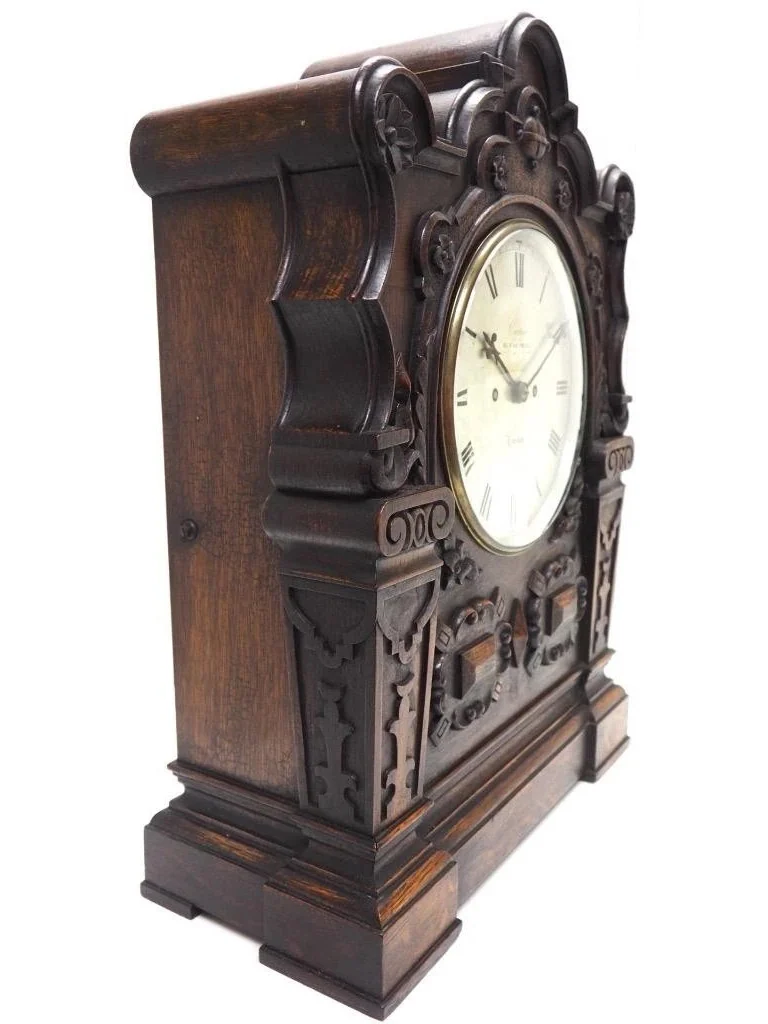



Architectural strapwork carving and stepped mouldings define the heavy solid oak case of this Victorian bracket clock. The shaped cresting is centred with a roundel boss flanked by carved floral paterae and scrolling ears. Tapering pilasters with recessed strapwork panels flank the front, while the lower section below the chapter ring features twin faceted raised lozenges surrounded by carved scrolls and a central diamond motif. The entire case rests upon a substantial stepped plinth base.
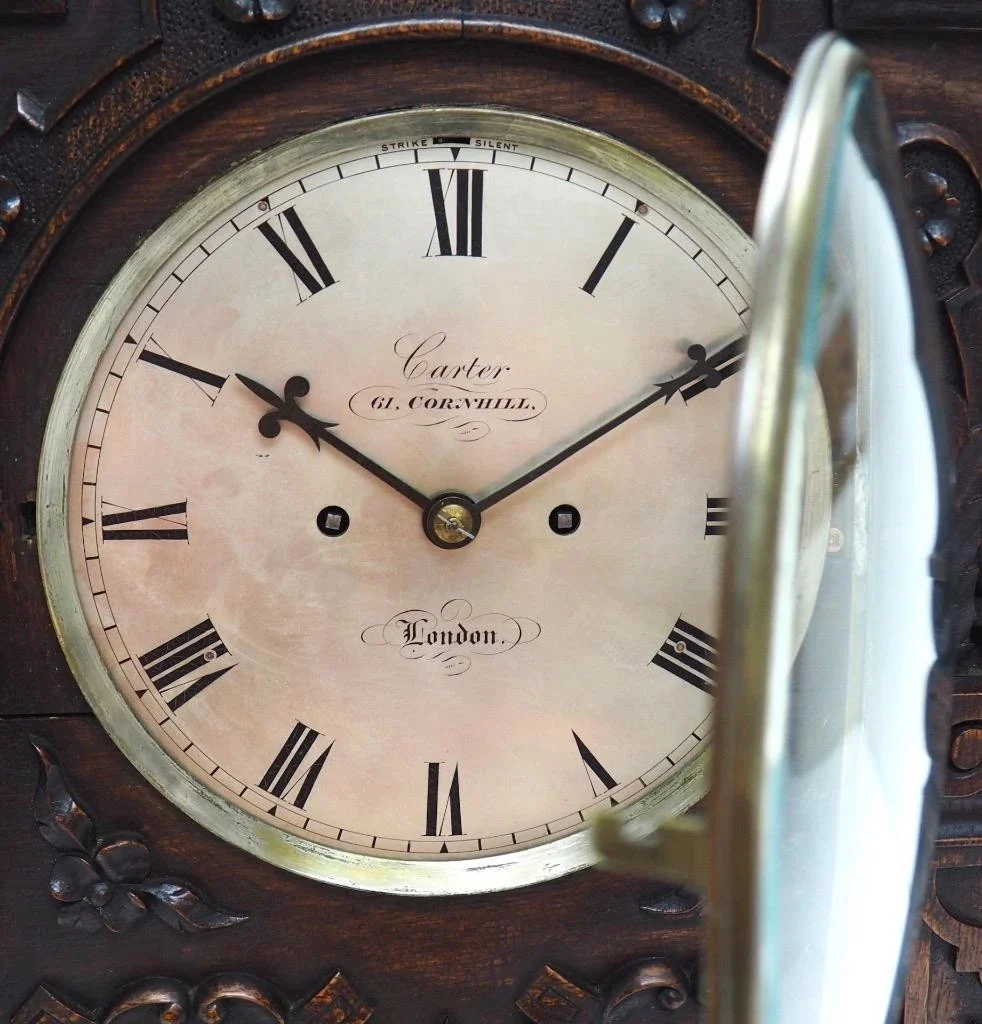
The 20 cm diameter silvered dial is signed ‘Carter, 61, Cornhill, London’ in flowing script across the centre. It features black Roman hour numerals, an outer minute track, and a strike/silent lever situated above the XII position. Pierced hands indicate the time beneath a convex glass lens mounted in a hinged brass bezel. Two winding arbors pierce the lower dial to power the twin fusee trains.
Housed inside is an eight-day twin fusee brass movement with an anchor escapement. The striking train sounds the hours on a coiled wire gong mounted within the back of the case. Both the dial and backplate bear the signature of the London maker, confirming the movement and presentation case belong together. The clock is reported to be in running and striking order.
Constructed in England circa 1850, this substantial timepiece stands 55 cm high, 40 cm wide, and 19.5 cm deep. The oak timber displays an aged, warm patina with fine crazing and softening to the polish along the side panels and base moulding, consistent with period domestic use.
Condition Good antique condition with light age-related surface wear, craquelure to the lacquer on the oak side panels, and mild patination to the silvered dial. Reported to be in running order.
Dimensions 55 cm H x 40 cm W x 19.5 cm D
| Dimensions | 19.5 × 40 × 55 cm |
|---|---|
| Period | 19th Century |
| Style | Victorian |
| Colour | Brown, Silver |
| material | Brass, Glass, Oak |
| Origin | England |
| Maker | Carter |
| Price range | £2000+ |
| Collection Era | Antique & Vintage |
Only logged in customers who have purchased this product may leave a review.
Reviews
There are no reviews yet.