


Enquire Today!
If you have any questions, requests or general enquiries, please do not hesitate to email us and we will get back to you as soon as possible regarding your enquiry.

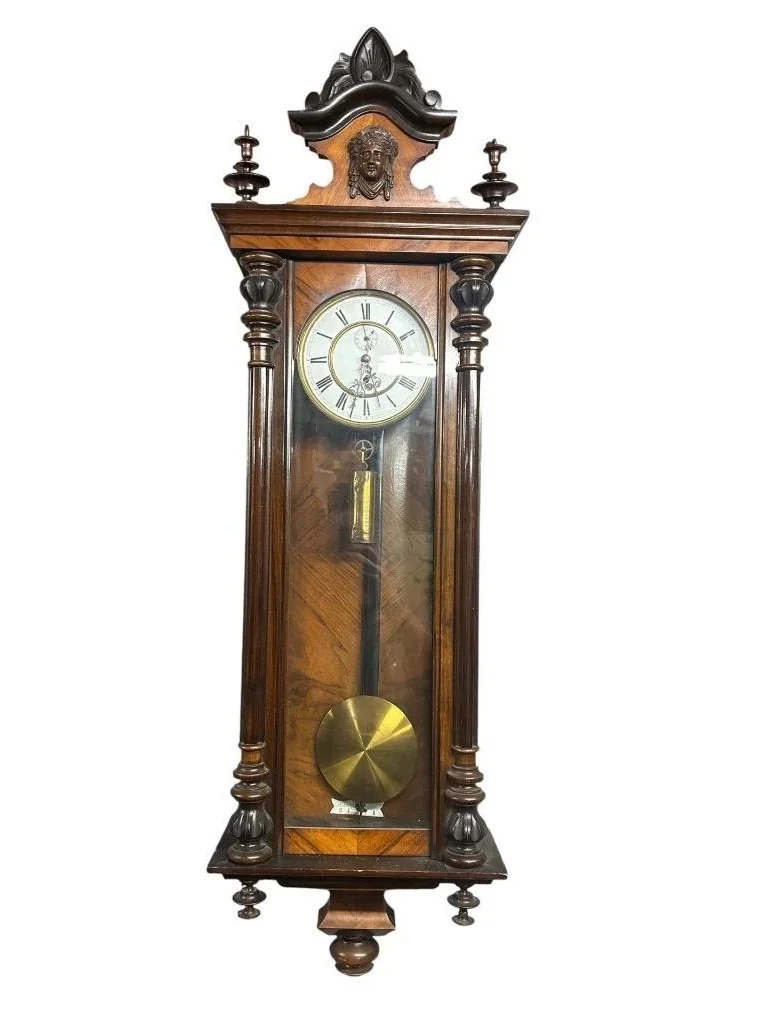



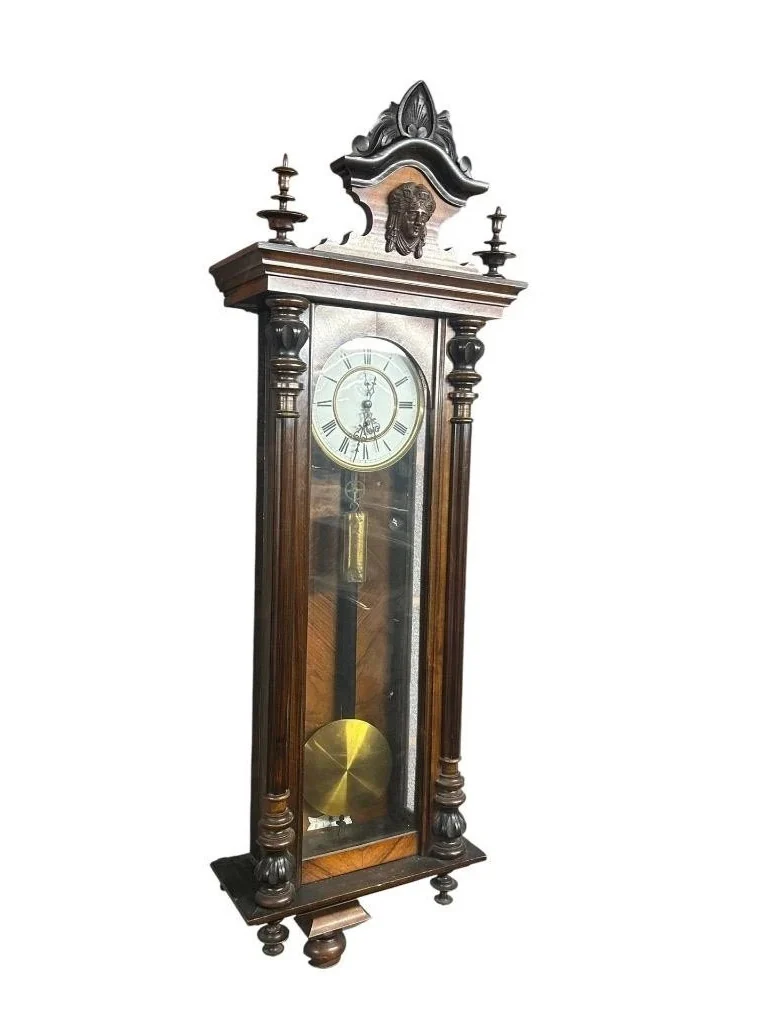


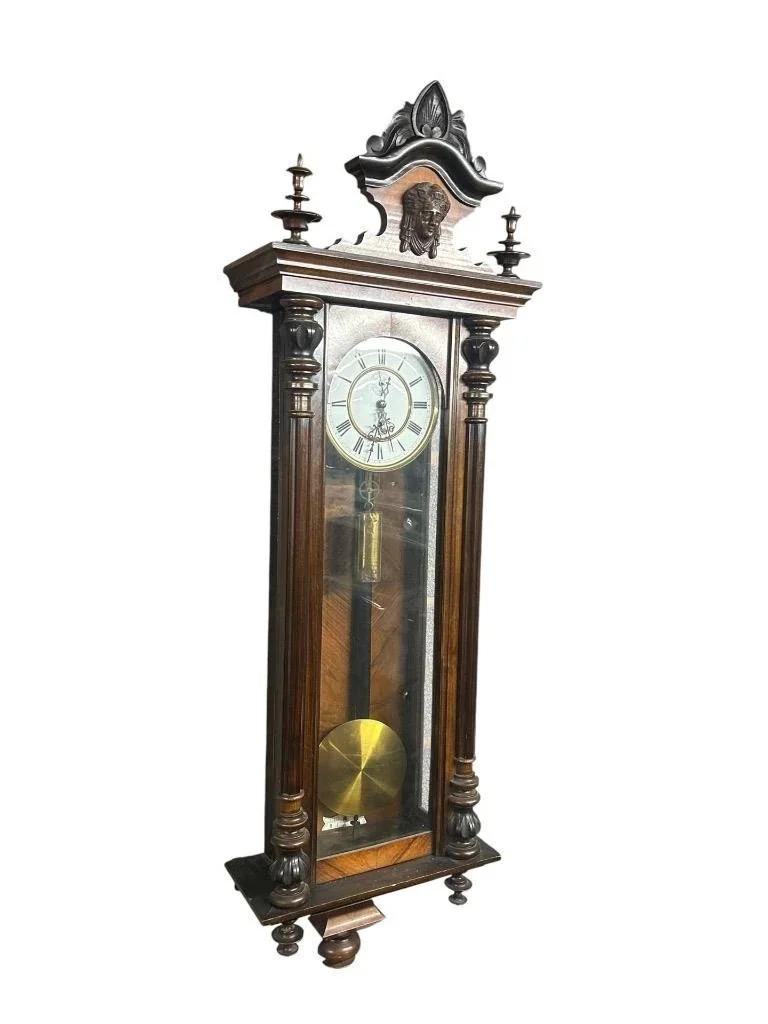


A carved female mask presides over the arched cresting of this wall clock, flanked by classical urn finials and supported on an architectural walnut case made circa 1880. The pediment sits above a stepped cornice and a pair of substantial turned, fluted columns, framing a long glazed door that displays the movement and pendulum.
The case is faced in warm walnut veneers, highlighted by bookmatched parquetry backboards arranged in a chevron pattern behind the pendulum rod. Slender glazed side apertures allow ambient light to flood the interior, illuminating the polished brass components. Turned drop finials and a tapering pendant beneath the lower shelf complete the traditional architectural composition, together with adjustable stabilizing screws beneath the base.
The two-piece white dial is set with crisp Roman hours, an outer minute track, and finely pierced metal hands. Driven by a single cylindrical brass weight on a line and pulley, this time-only mechanism exemplifies the classic Austrian regulator design favoured for its uncluttered aesthetic and dependable timekeeping. Below the weight, a large circular brass pendulum bob swings before a curved porcelain beat scale at the floor of the case.
With its balanced proportions and rich timber finish, this handsome clock offers dignified late Victorian presence for an entrance hall, drawing room, or library. The single-weight configuration keeps the dial and case clean and uncluttered compared to multi-train chiming regulators.
| Period | 19th Century |
|---|---|
| Style | Victorian |
| Colour | Brown |
| material | Brass, enamel, Glass, Walnut |
| Origin | Austria |
| Price range | £2000+ |
| Collection Era | Antique & Vintage |
Only logged in customers who have purchased this product may leave a review.
Reviews
There are no reviews yet.