


Enquire Today!
If you have any questions, requests or general enquiries, please do not hesitate to email us and we will get back to you as soon as possible regarding your enquiry.
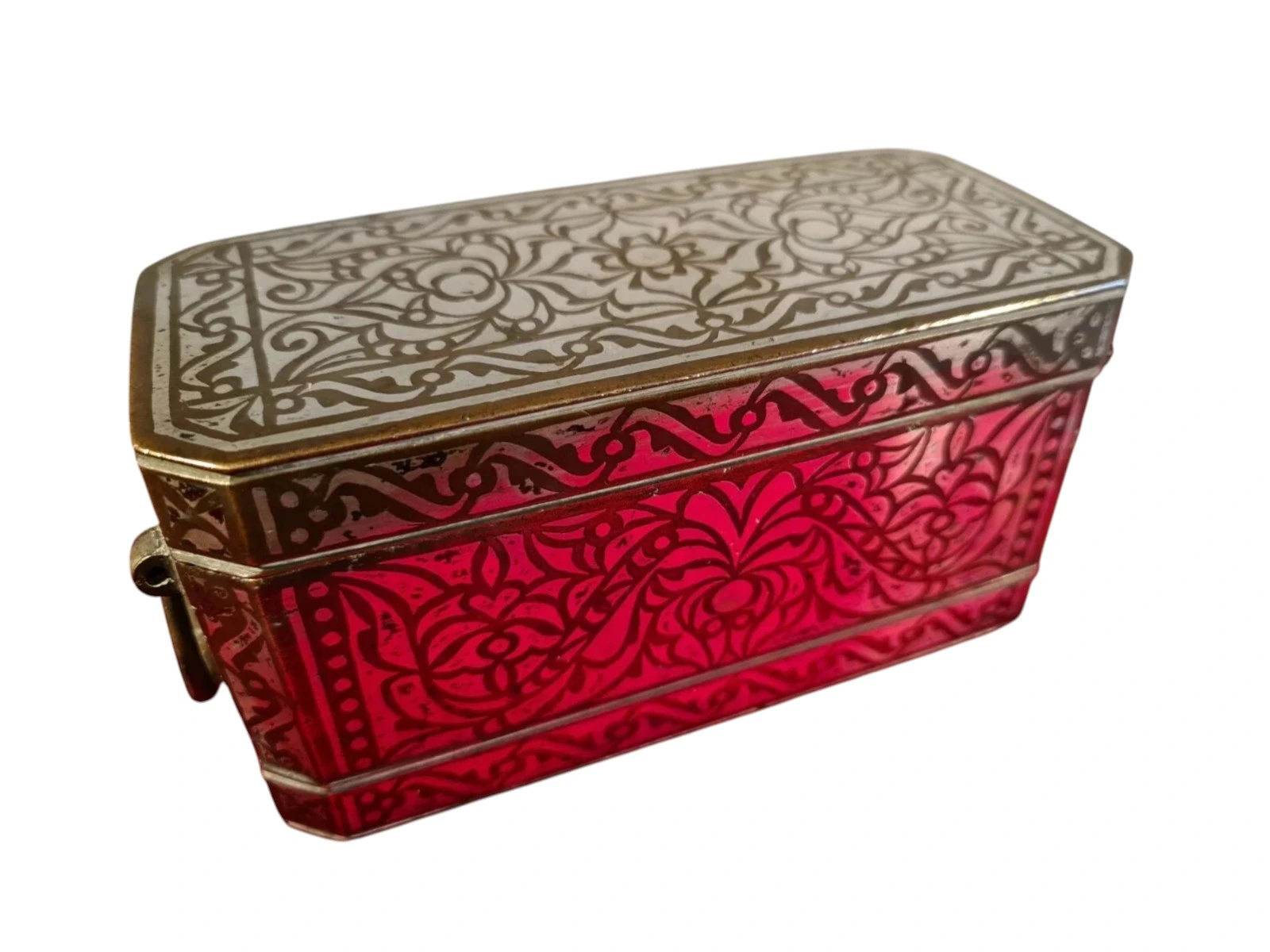
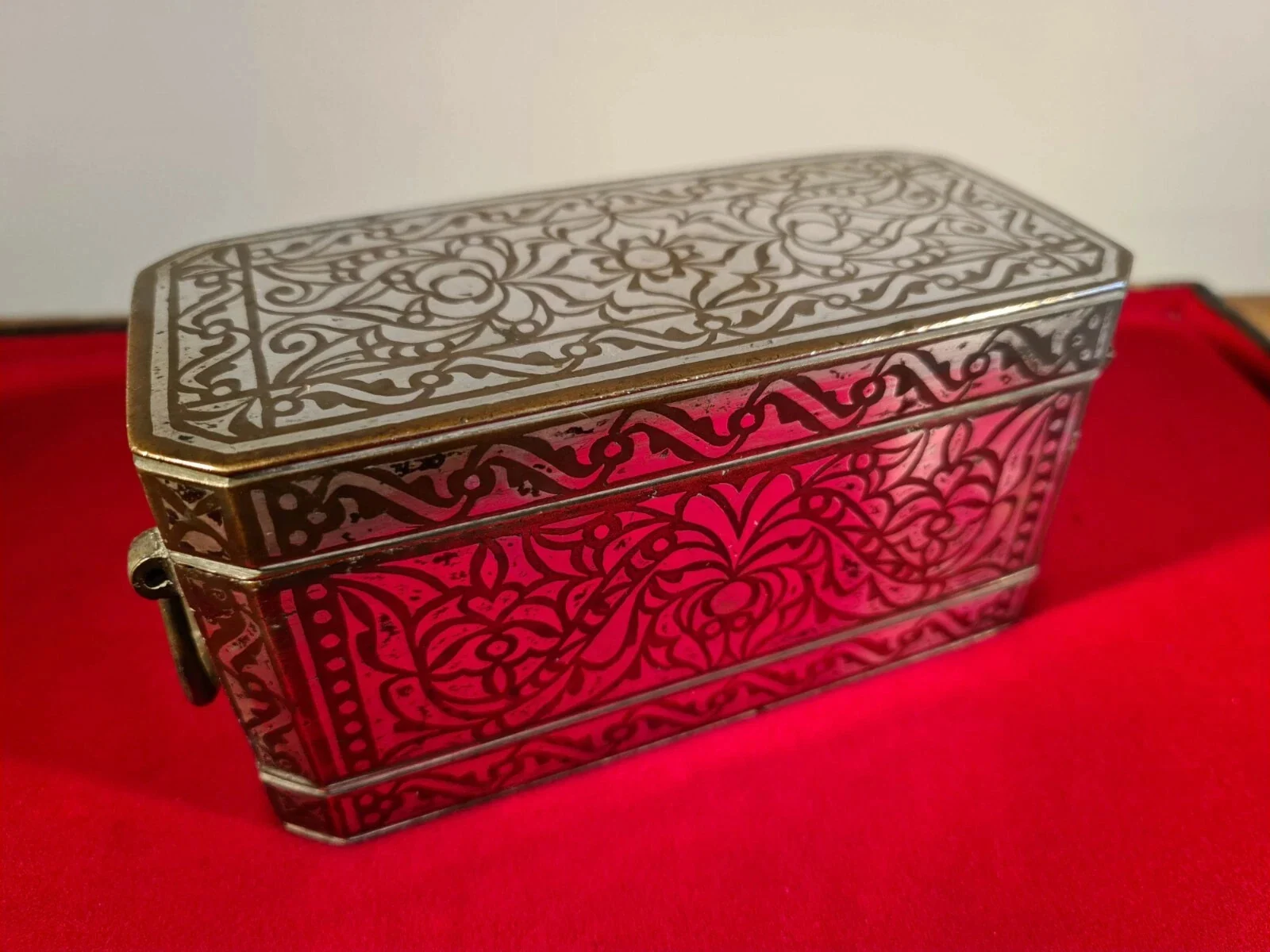
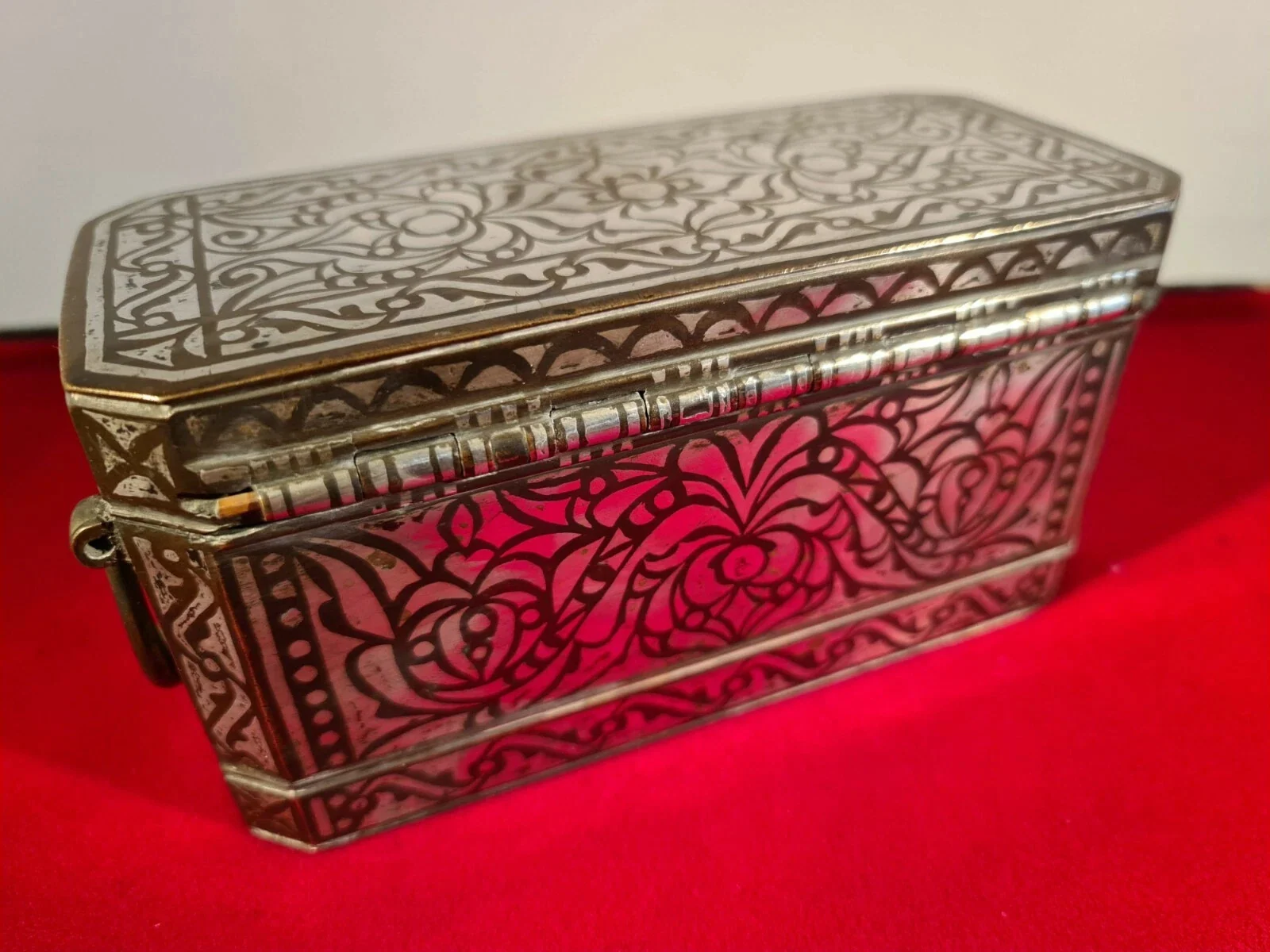
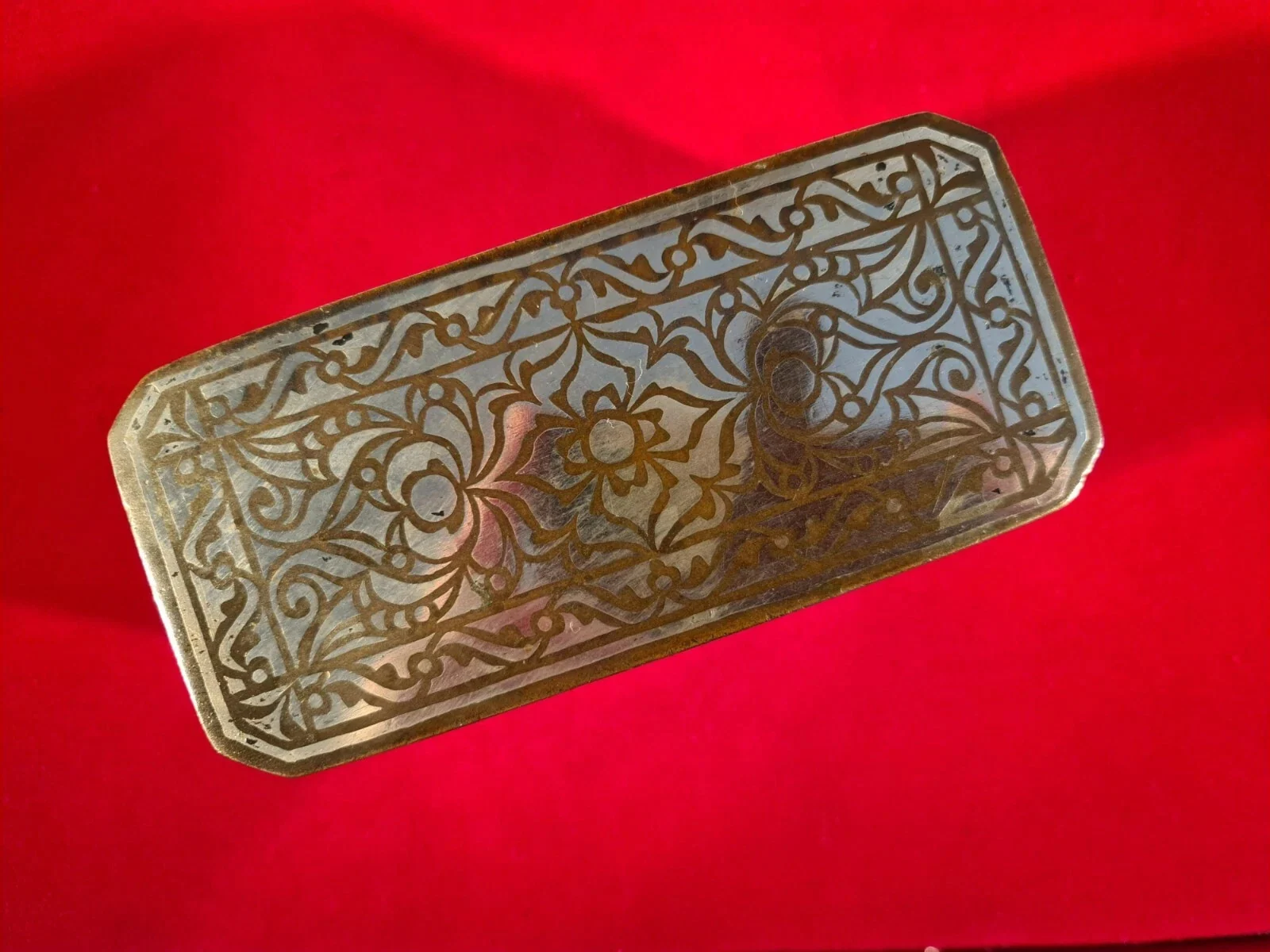
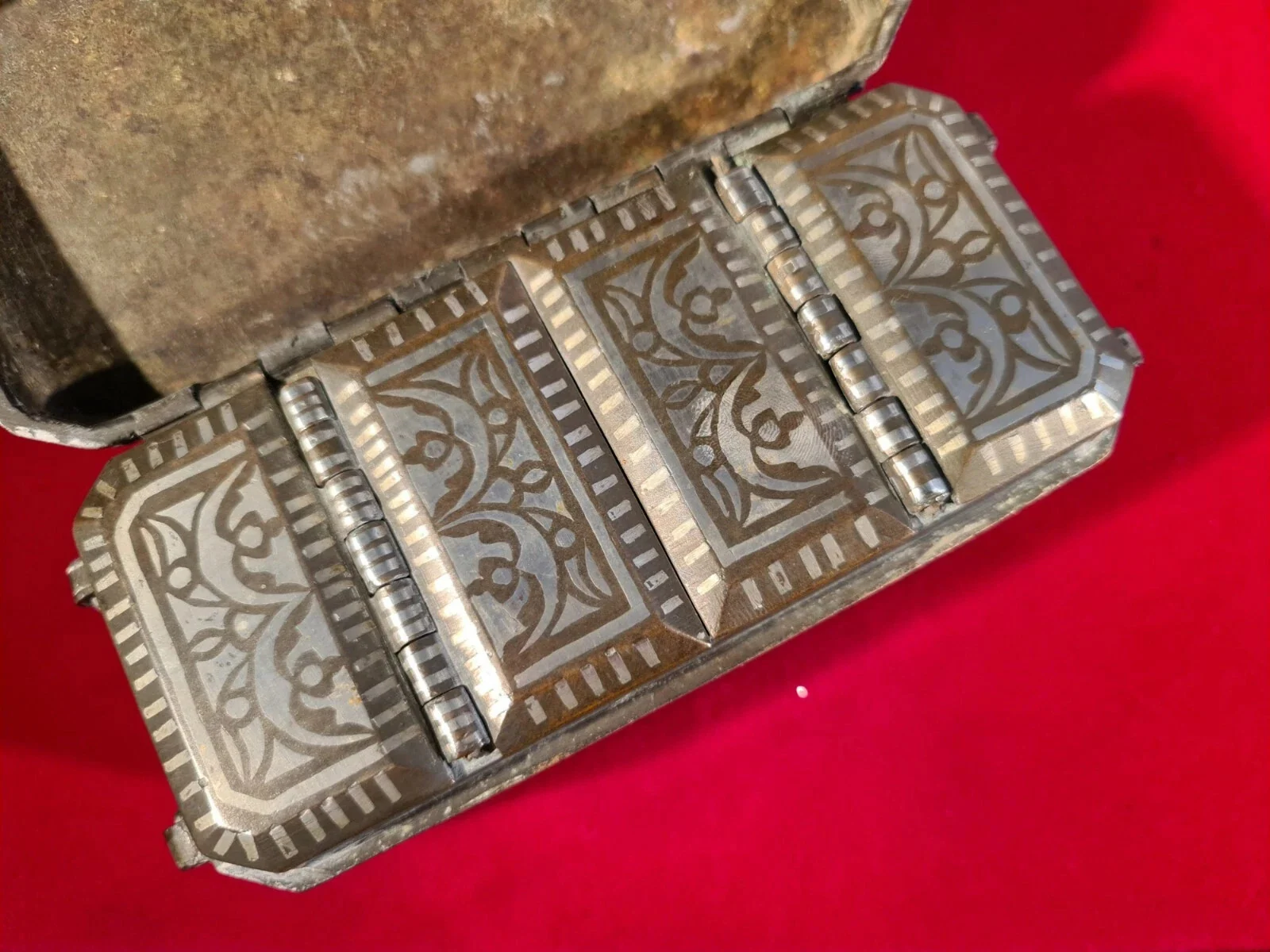


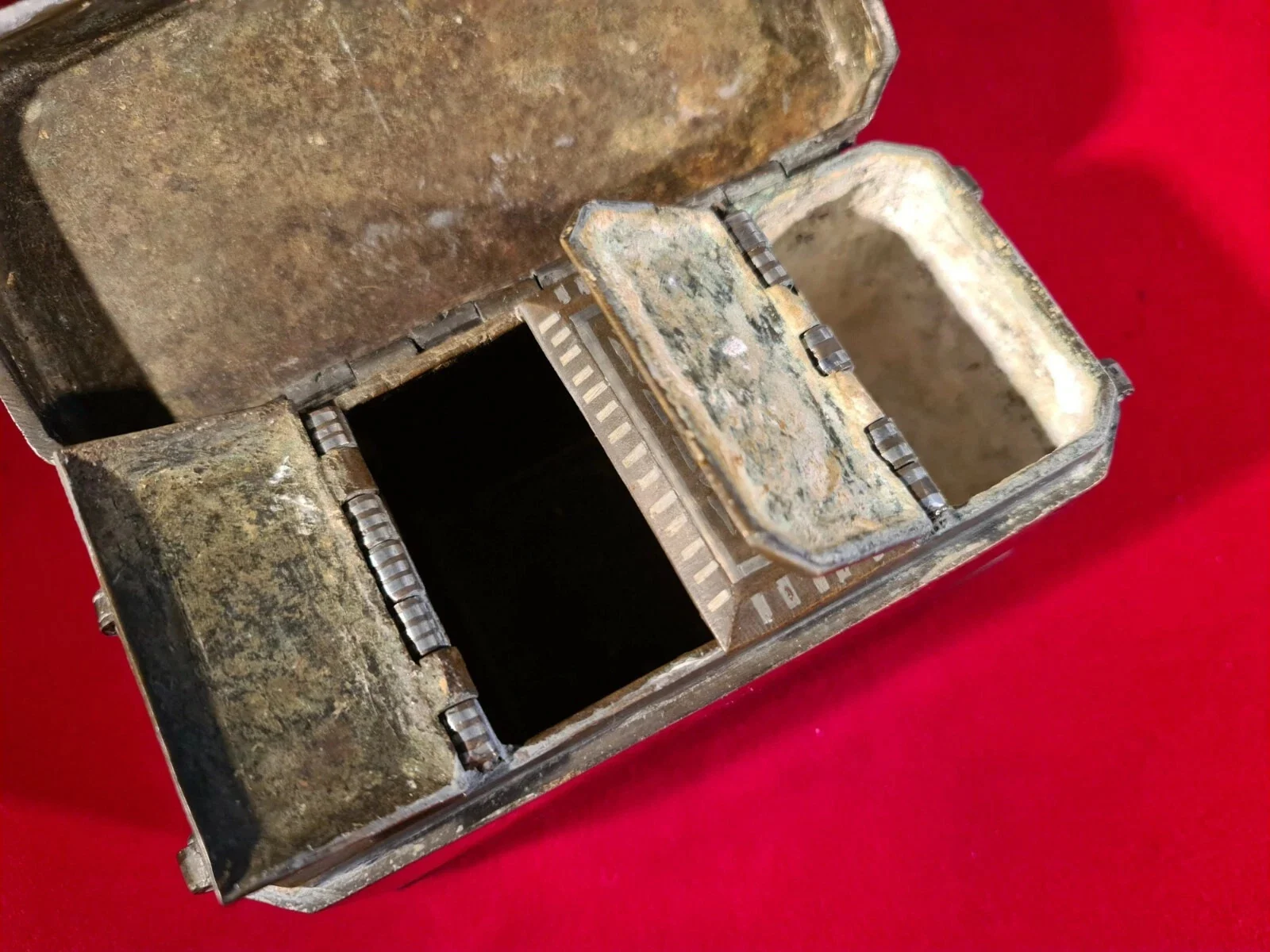
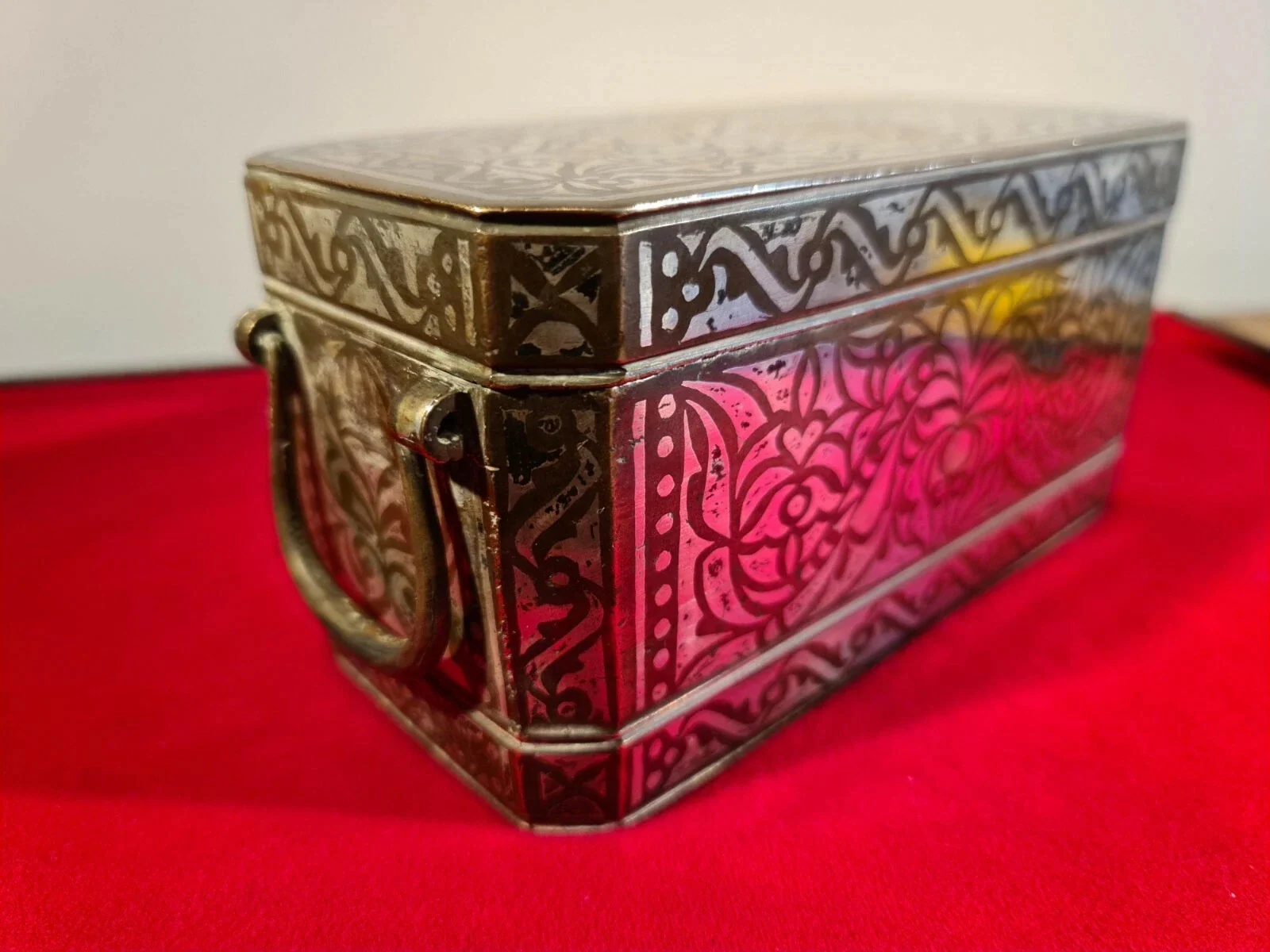
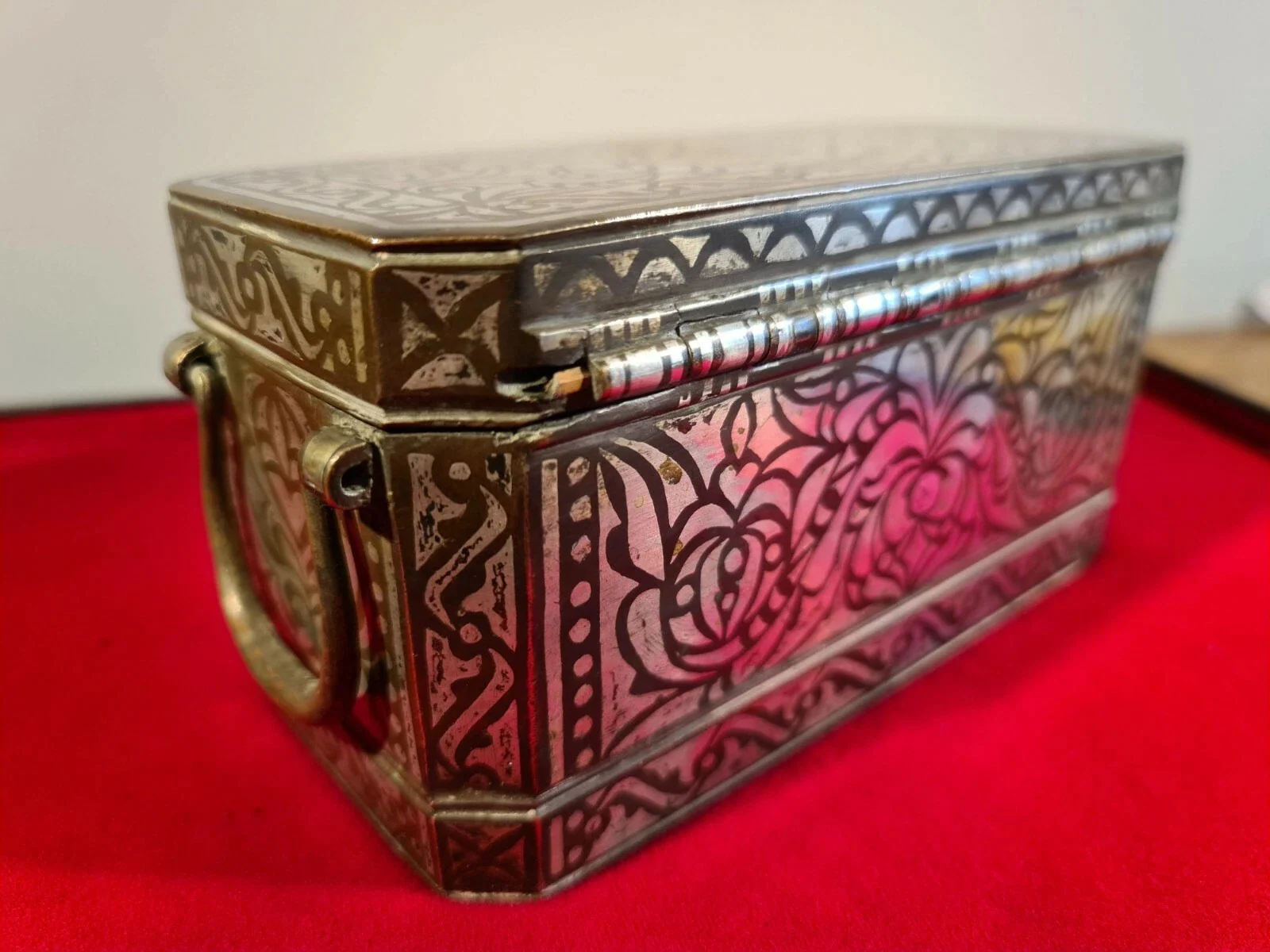


An elongated octagonal bronze casket forms the body of this traditional betel container, featuring canted corners and dense silver metal inlay across all exterior faces. The flat hinged lid is decorated with an expansive foliate scroll pattern framed by repeating geometric running borders. Each side panel carries corresponding intertwined leafy arabesques and petal motifs, creating a striking contrast between the bright inlaid silver metalwork and the darker patinated bronze ground. Heavy cast brass or bronze drop loop handles are mounted to each narrow end, hung from integral cast lugs to assist carrying the heavy vessel. The main lid is secured along the reverse by a robust full-length, multi-knuckle pinned hinge that operates smoothly. The casket rests on an integral stepped foot rim with bevelled corners precisely matching the profile of the upper rim, providing steady balance for the substantial metal structure. Lifting the primary cover reveals an interior divided into three distinct compartments, each enclosed by its own individually hinged inner lid. These interior covers are likewise embellished across their upper faces with inlaid silver scrolling foliage, dashed borders, and segmented bands, linked by transverse brass hinge barrels. Inside, the open compartments show the unpolished cast surfaces alongside authentic age-related verdigris, residue, and patination typical of prolonged contact with historic contents. Caskets of this design served a vital function in the betel-chewing customs of the southern Philippines, closely associated with the celebrated metalworking heritage of the Maranao people of Mindanao. Preparing the chew required segregated containment for chopped areca nut, powdered or slaked lime, and folded leaves or aromatic spices. Richly inlaid boxes acted as prominent social display items and prestigious personal accoutrements, publicly demonstrating the rank, hospitality, and standing of the household. Measuring approximately 17.5 cm in width, 8.0 cm in depth, and 8.5 cm in height, this late nineteenth-century piece dates to around 1890. The casket retains its original drop handles, internal dividers, and hinged sub-covers, presenting a complete functional assembly with the decorative silver inlay remaining remarkably crisp across all panels.
Condition Very good antique condition with light exterior surface wear, tarnish, and verdigris inside the compartments and on the underside consistent with age and traditional use.
Dimensions 17.5 x 8.0 x 8.5 cm
| Dimensions | 8 × 17.5 × 8.5 cm |
|---|---|
| Period | 19th Century |
| Colour | Bronze, Silver |
| material | Bronze, silver metal |
| Origin | Philippines |
| Price range | Under £2000 |
| Collection Era | Antique & Vintage |
Only logged in customers who have purchased this product may leave a review.


Reviews
There are no reviews yet.