


Enquire Today!
If you have any questions, requests or general enquiries, please do not hesitate to email us and we will get back to you as soon as possible regarding your enquiry.
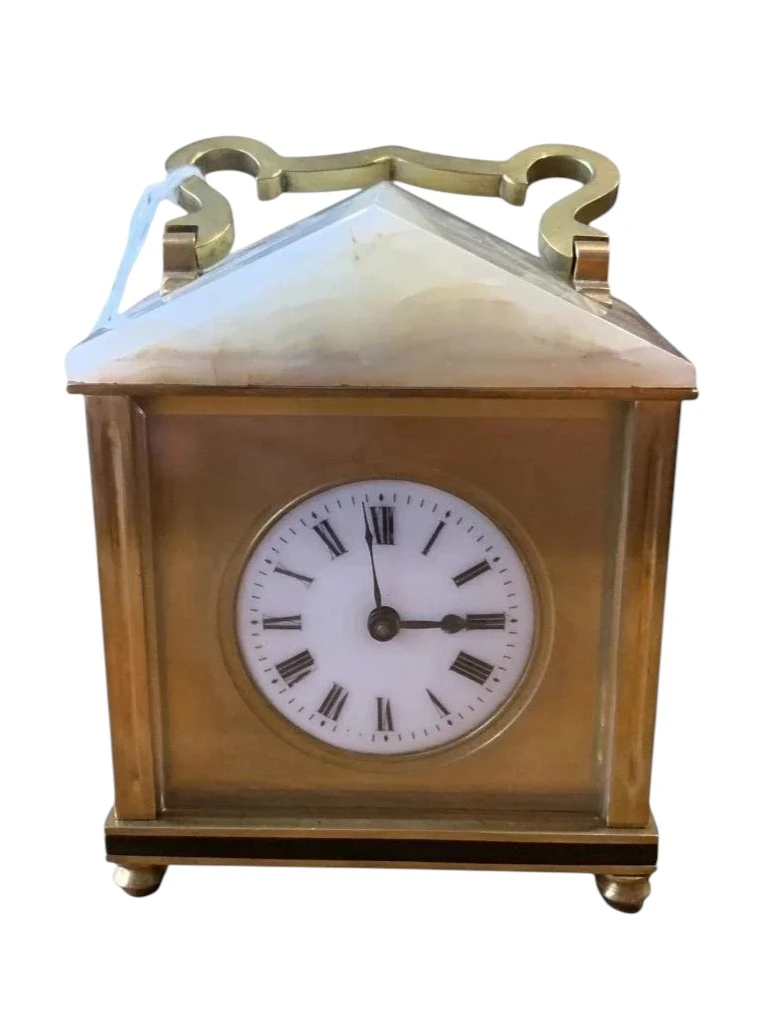
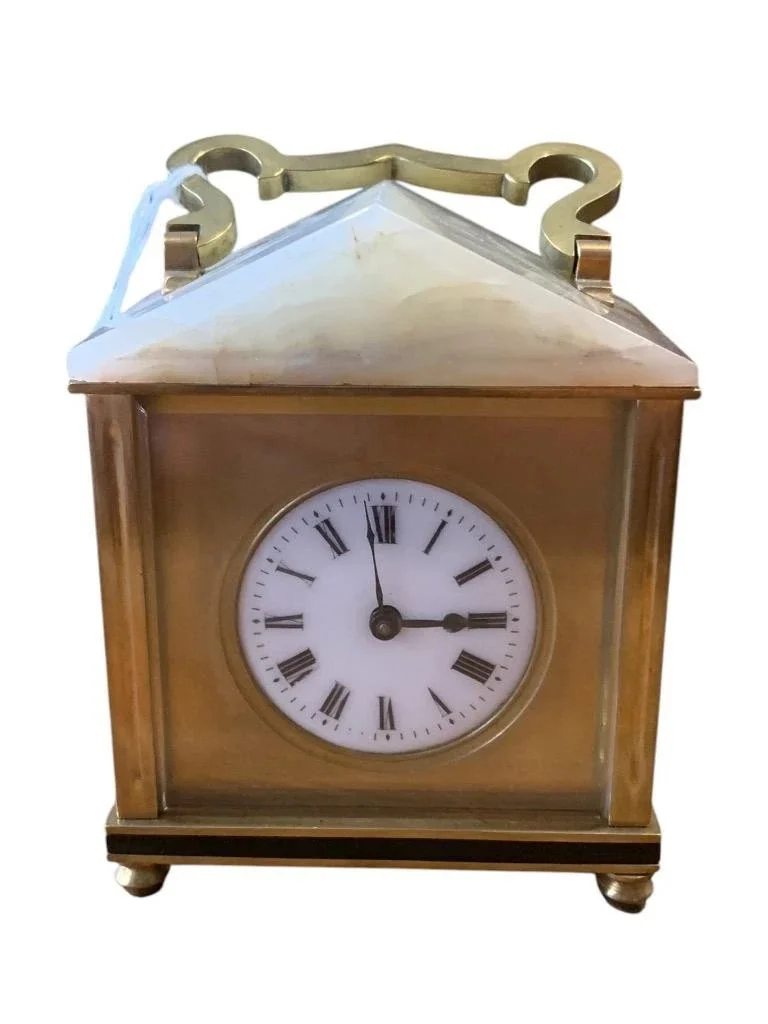

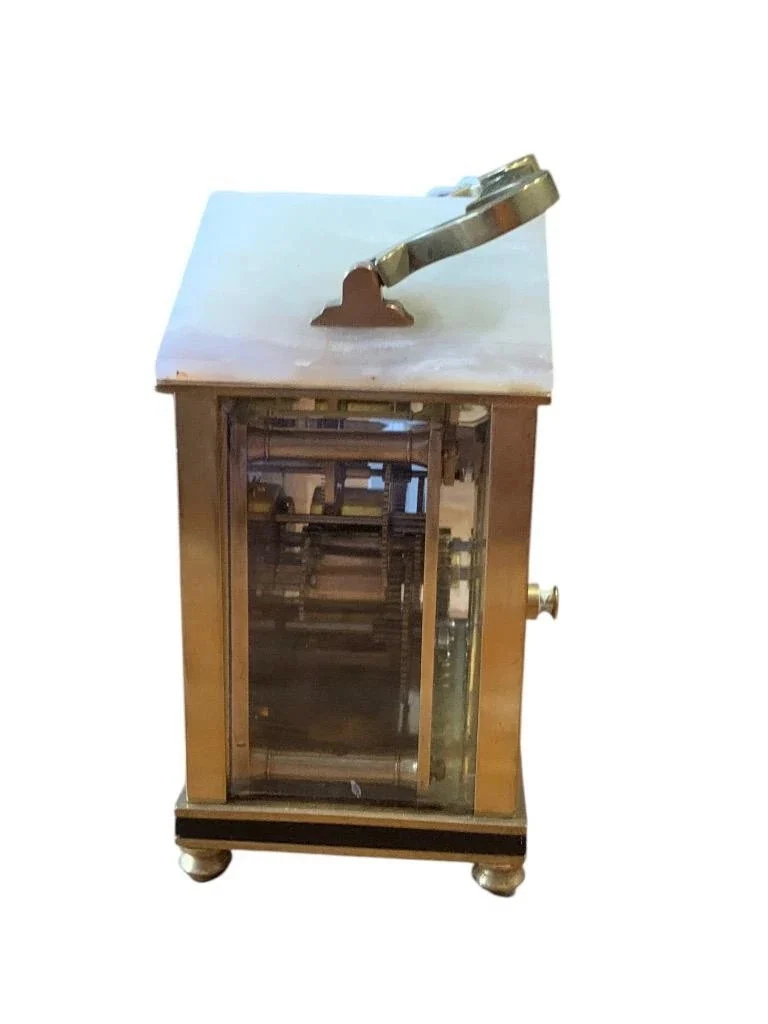
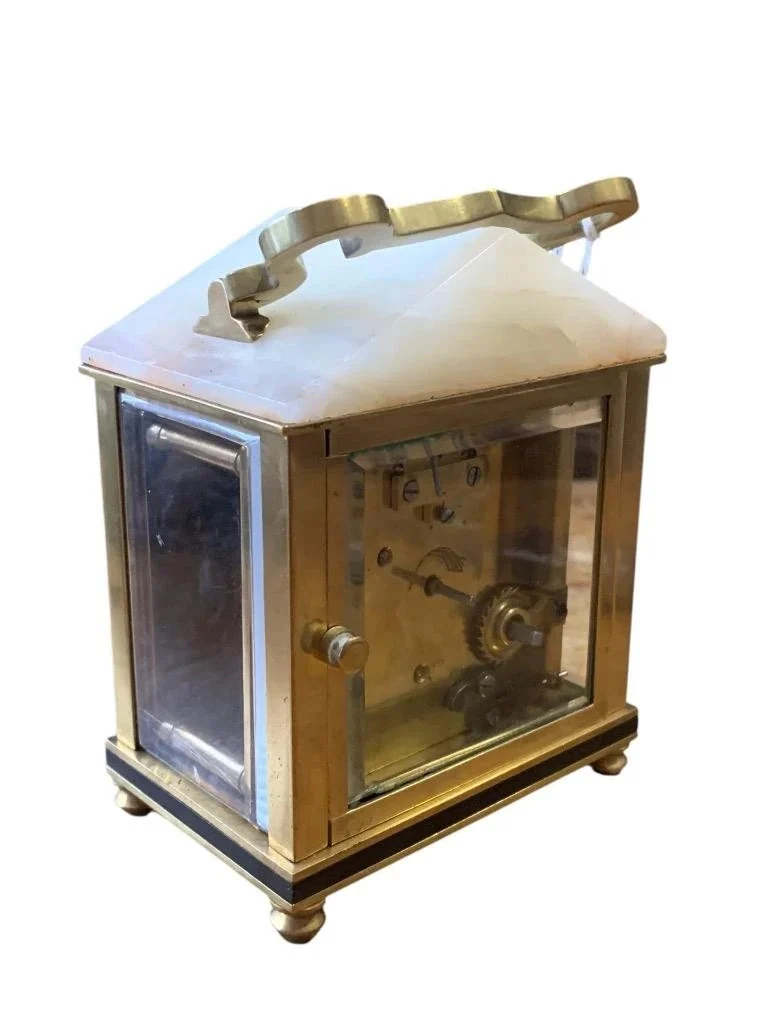
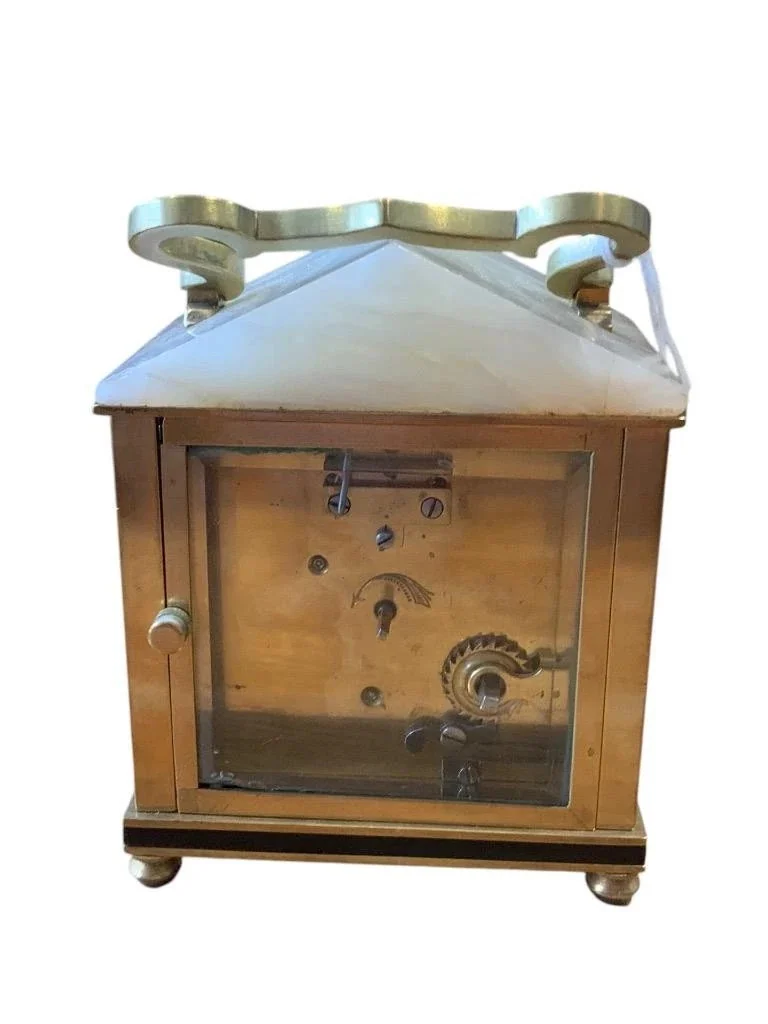
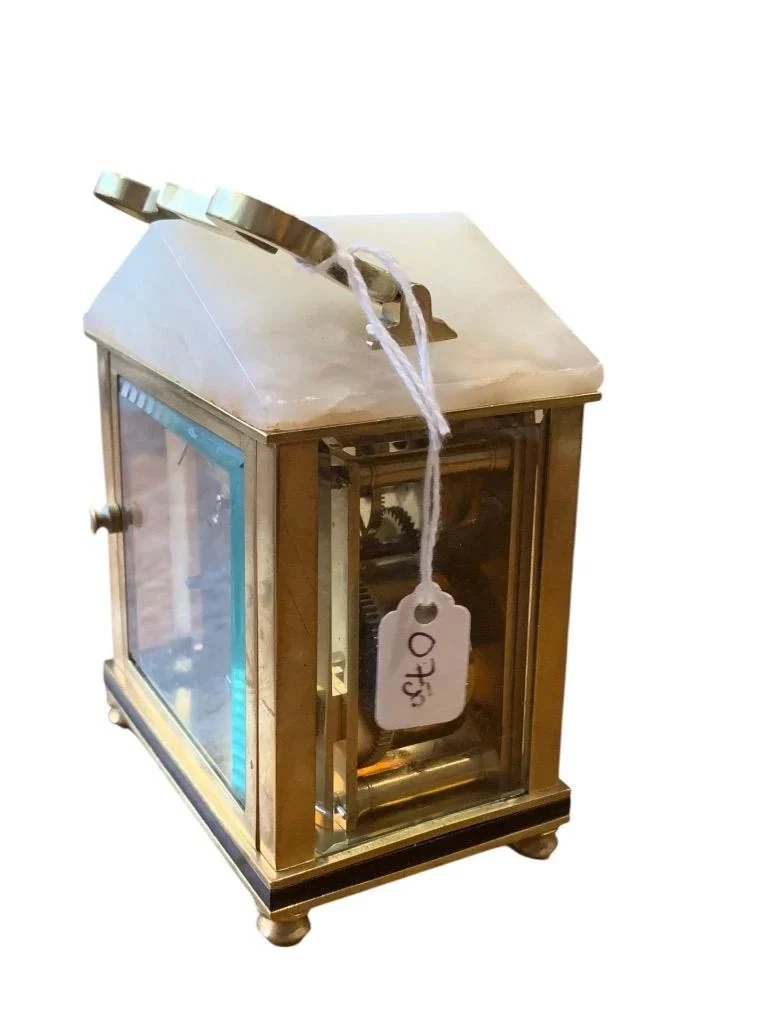
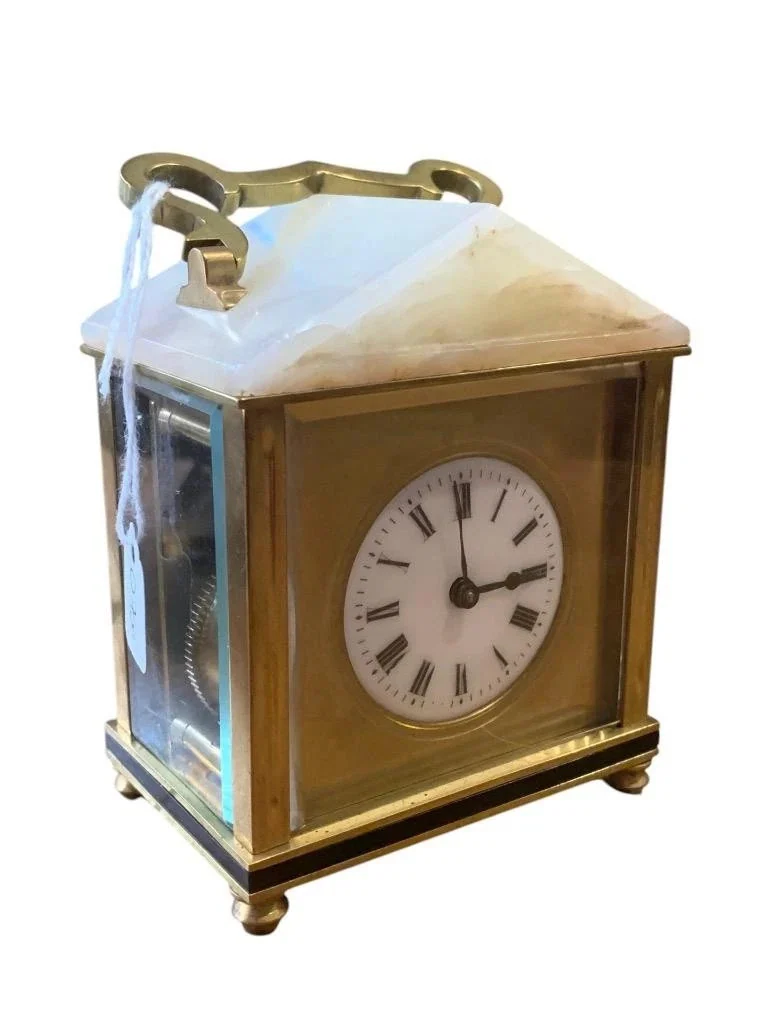
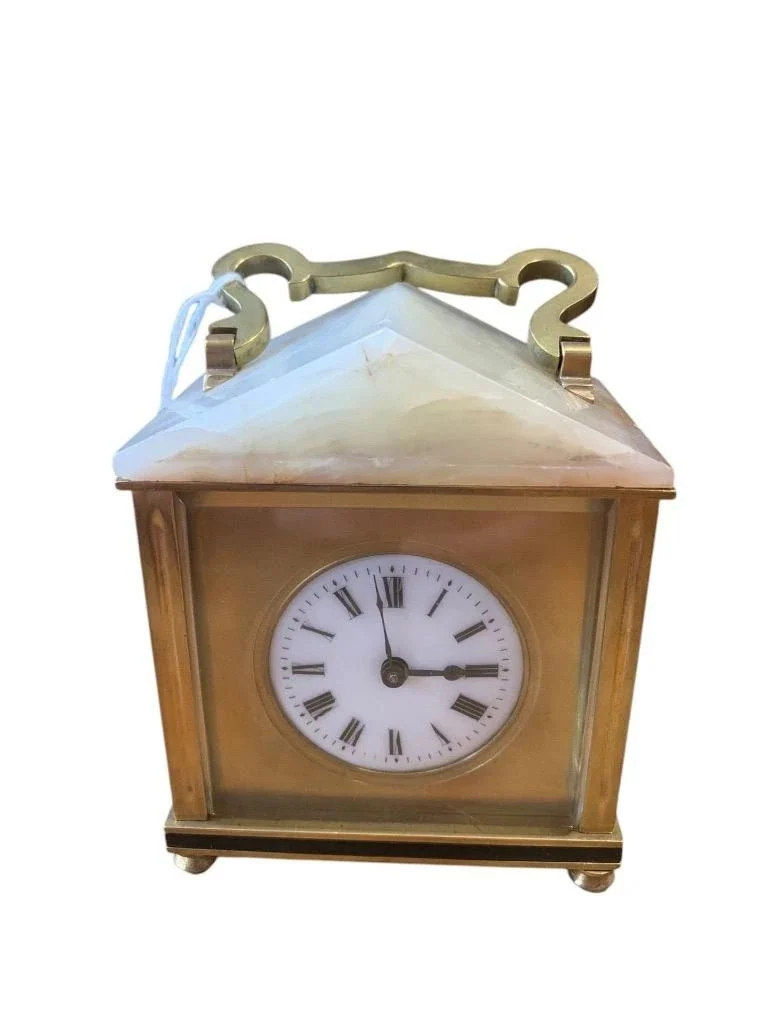

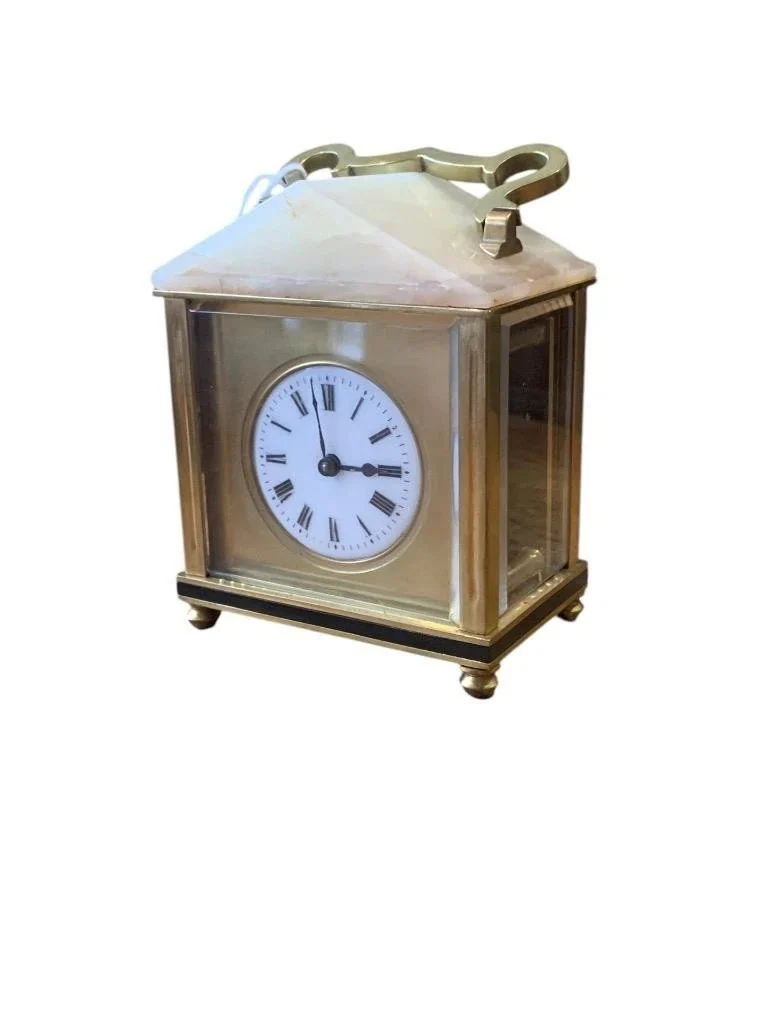
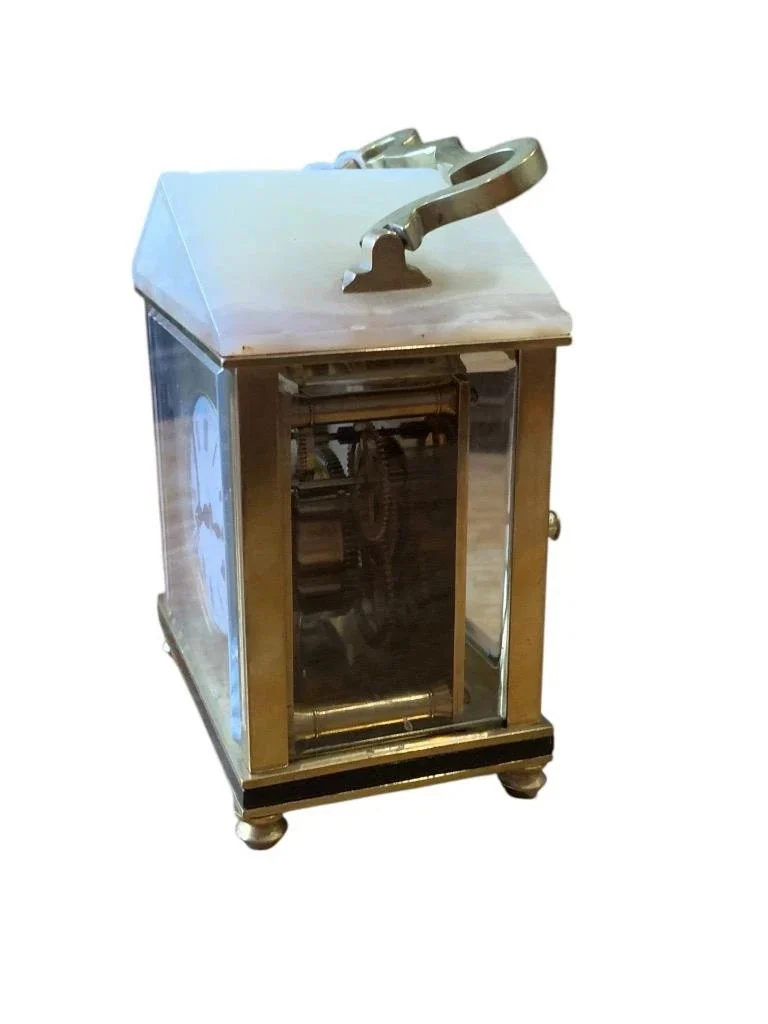


A pitched roof carved from pale, translucent veined marble defines the architectural profile of this French carriage clock, setting it apart from standard flat-topped glazed cases. Mounted directly across the ridge of the stone roof, a solid brass carrying handle is shaped to follow the gable contours. The rectangular brass case below features polished upright pillars, inset bevelled glass side apertures, and a sturdy matching plinth.
The front presentation centres on a circular white enamel dial framed within a satin gilt-brass mask. Clear black Roman numerals denote the hours, enclosed by a finely graduated outer minute track and indicated by blackened hands. Below the main body, a narrow contrasting dark inlay borders the plinth, which rests upon four squat turned bun feet.
Access to the mechanical movement is provided by a hinged rear brass door fitted with a bevelled glass viewing pane and a knurled release latch. Inside, the brass movement plates enclose the gear train, which remains visible through both the back door and the flanking side apertures, alongside the platform escapement and cylindrical corner pillars. A winding arbor and a curved regulating index are positioned neatly on the rear backplate for adjustments.
Constructed in France around 1900, the clock adapts traditional carriage horology into an ornamental mantle timepiece suitable for a study, library desk, or side table. The combination of carved natural stone with engineered brass work demonstrates the decorative versatility of French domestic clockmaking, resulting in an appealing yet functional object.
Condition The brass case displays light surface wear, minor tarnishing, and small edge marks consistent with age. The marble roof appears structurally sound with natural veining. Glass panels and enamel dial appear intact; mechanical operation is untested and no winding key is present.
| Period | 19th Century |
|---|---|
| Style | Edwardian |
| Colour | Gold, White |
| material | Brass, enamel, Glass, Marble |
| Origin | France |
| Price range | Under £2000 |
| Collection Era | Antique & Vintage |
Only logged in customers who have purchased this product may leave a review.
Reviews
There are no reviews yet.