


Enquire Today!
If you have any questions, requests or general enquiries, please do not hesitate to email us and we will get back to you as soon as possible regarding your enquiry.
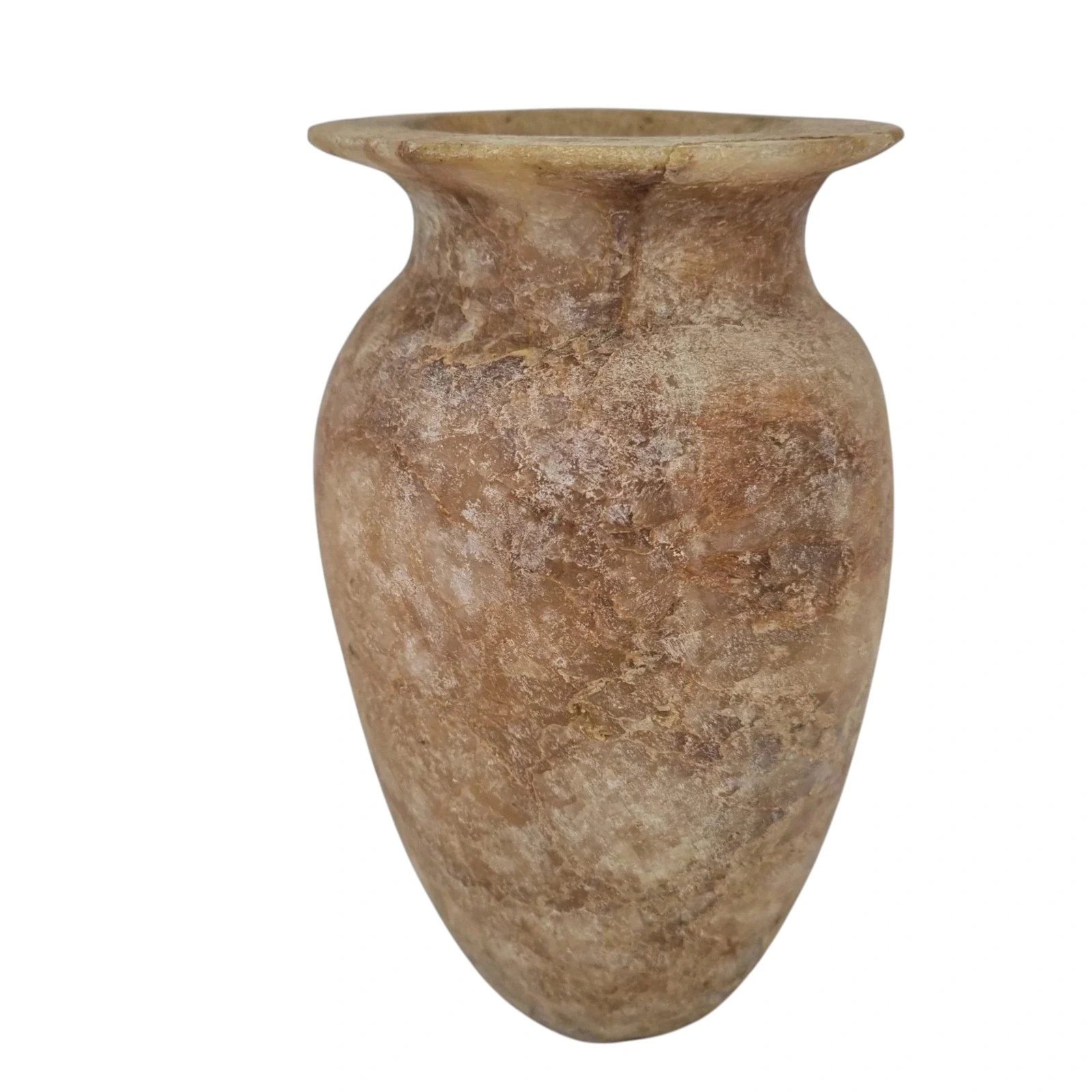
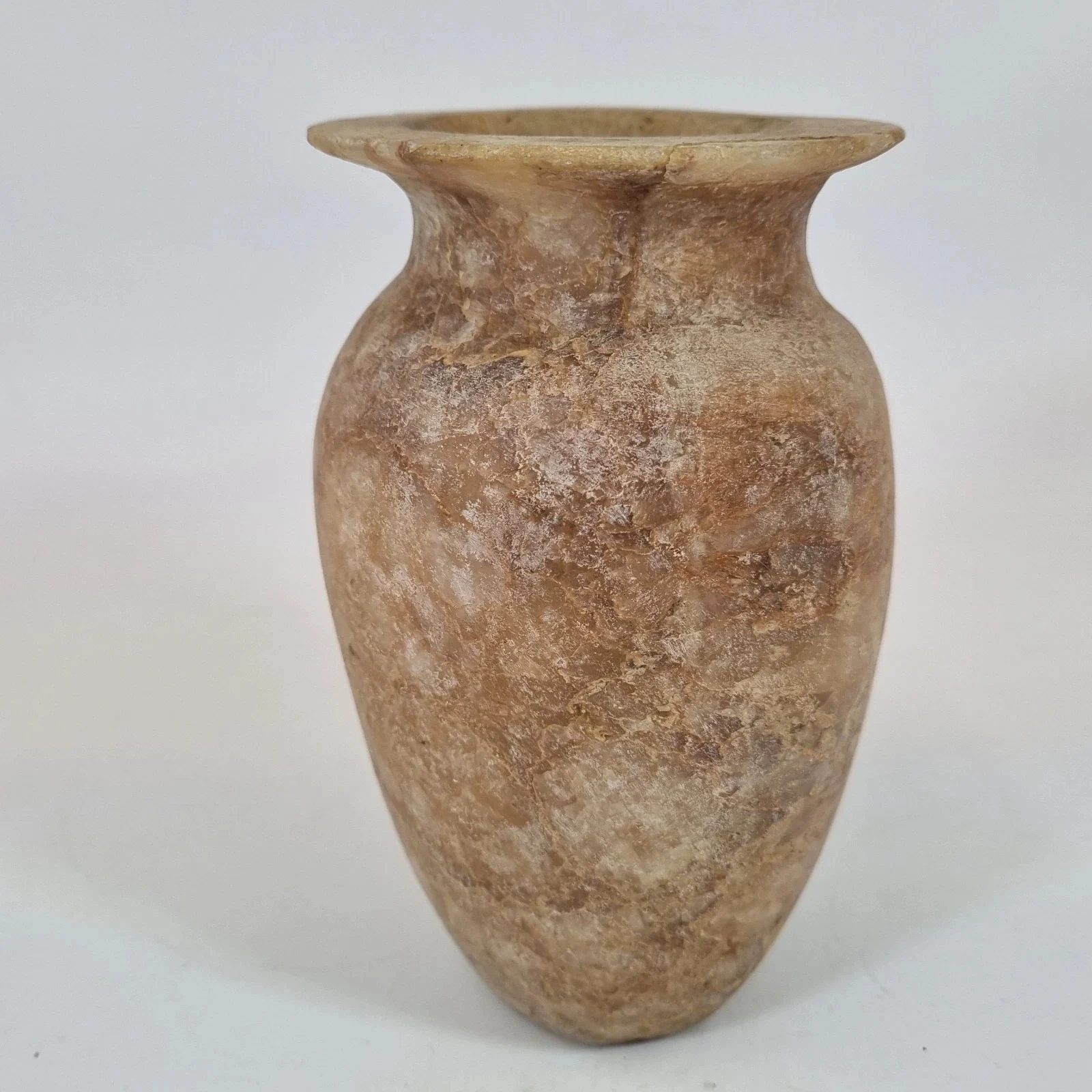
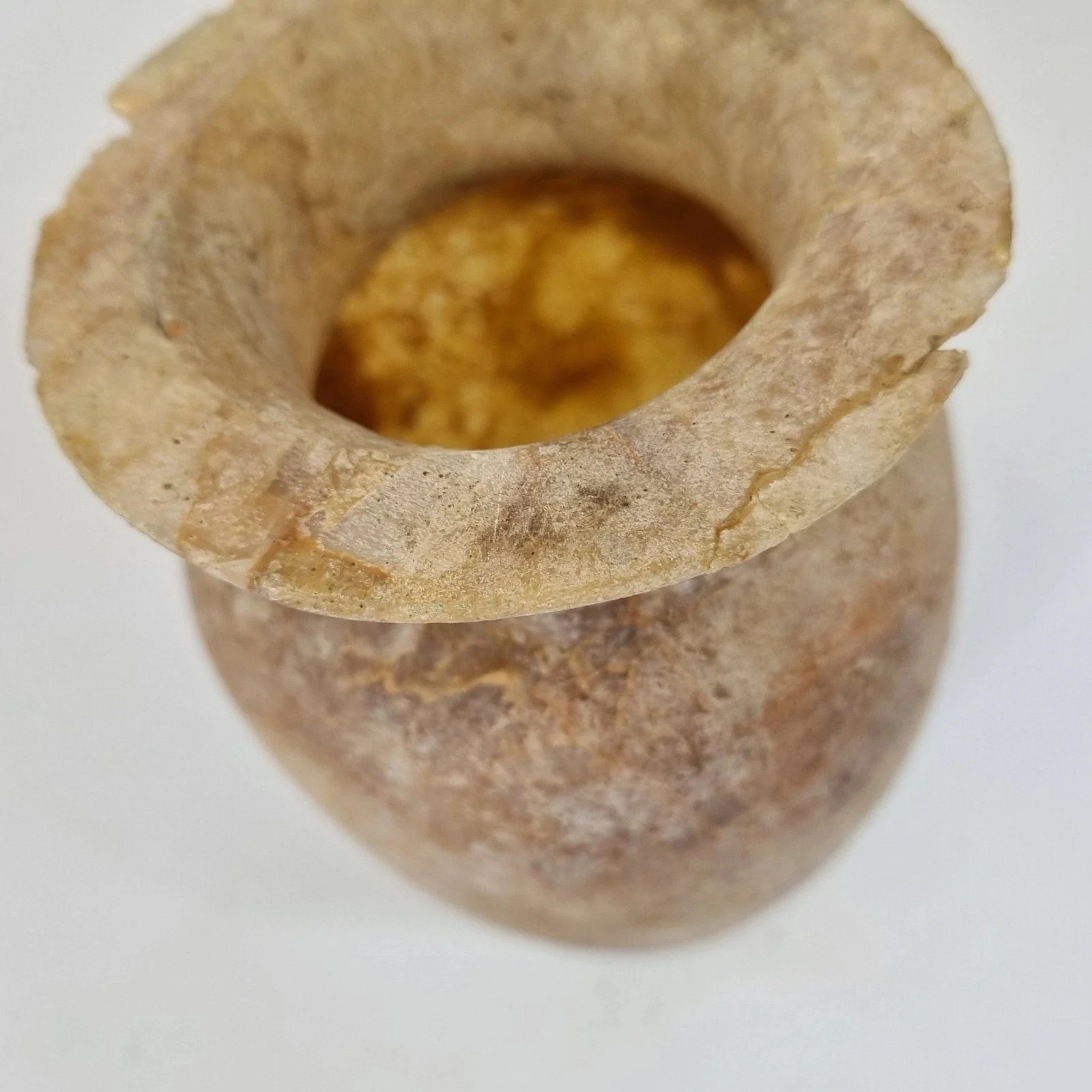
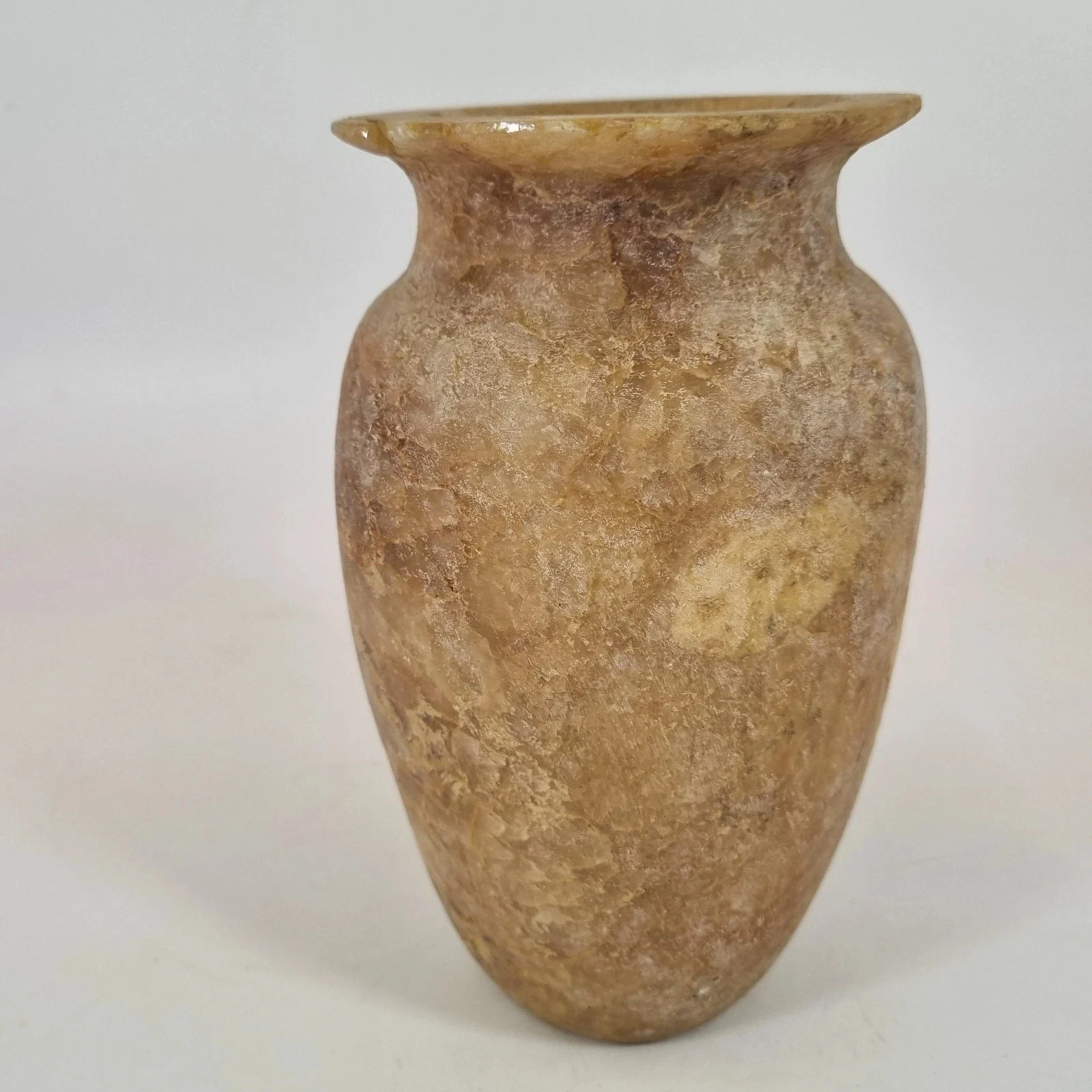


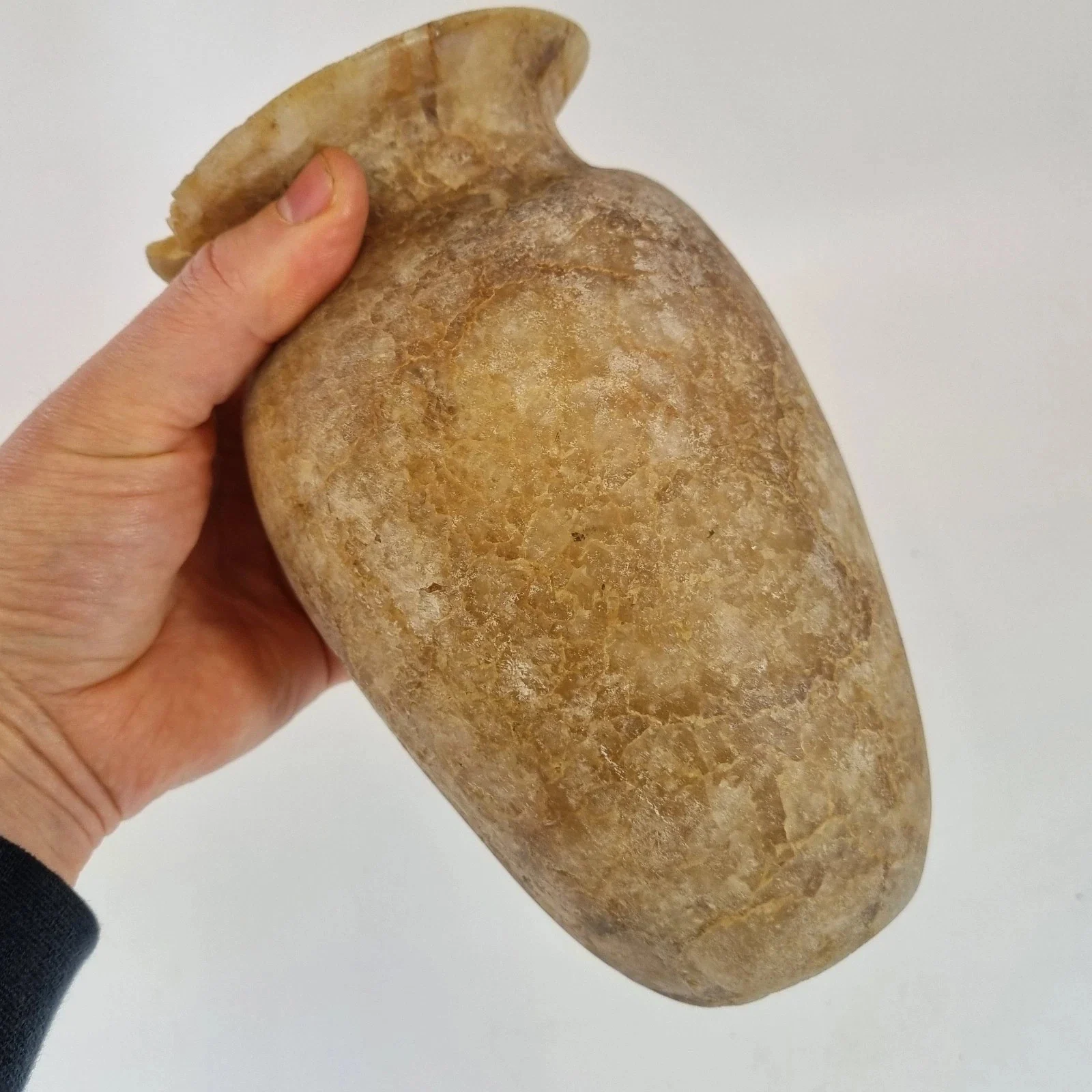

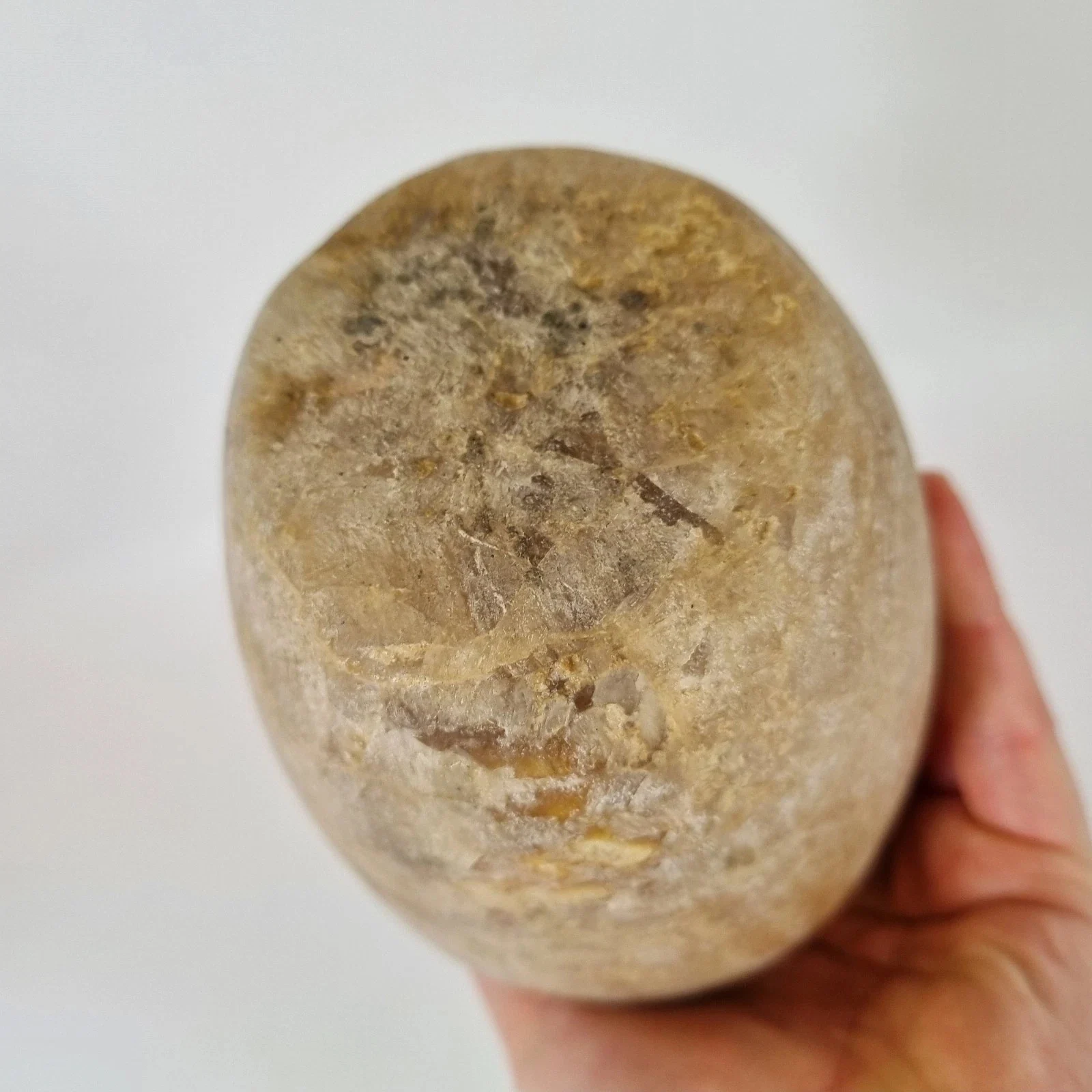


Carved from a solid block of dense, translucent calcite alabaster, this substantial vessel displays the classic tapered ovoid form associated with ancient Egyptian unguent jars. The stone shows a mottled palette of warm honey, pale amber, and cream tones, with natural crystalline veining running throughout the body. When held against light, the mineral exhibits attractive translucency beneath its aged, weathered exterior.
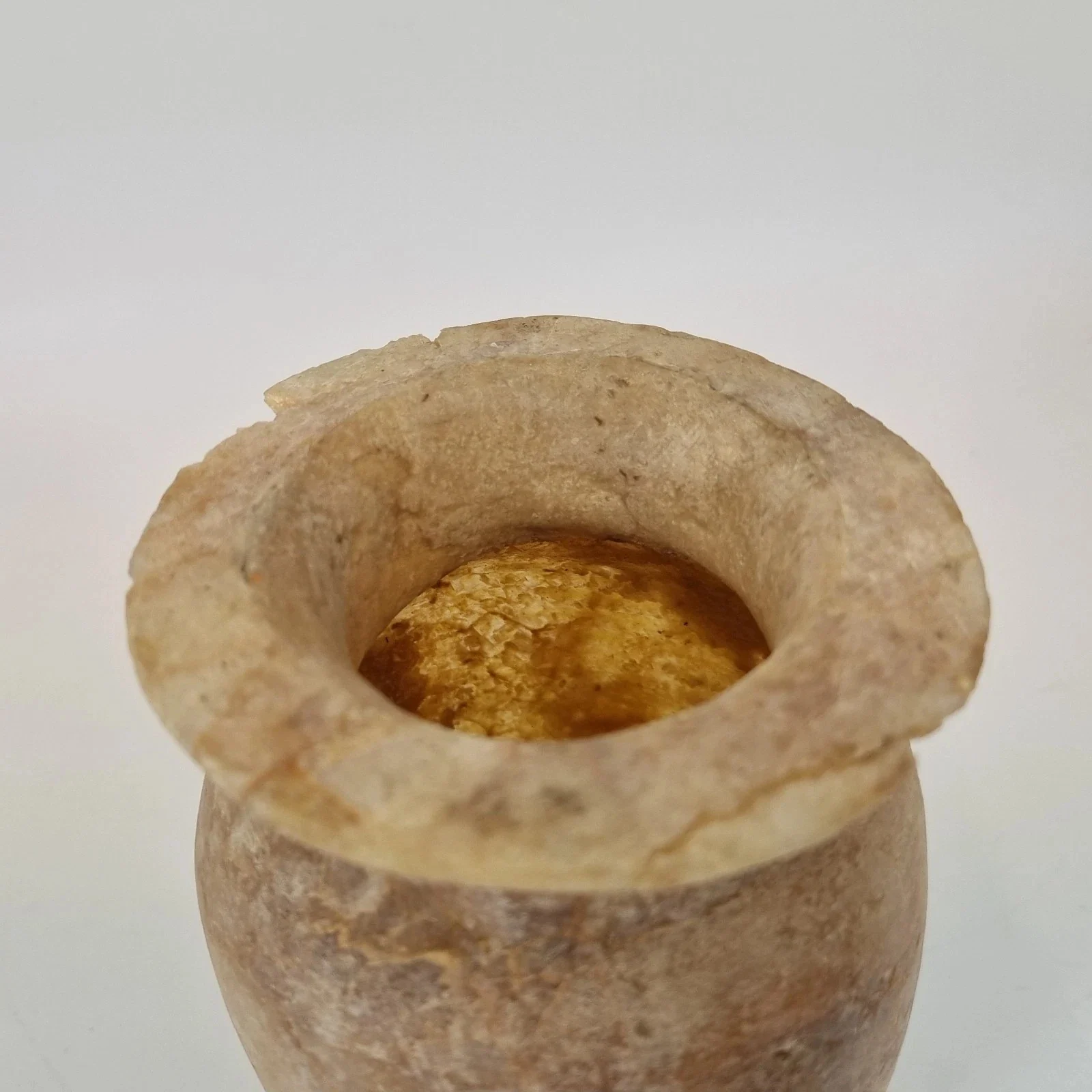
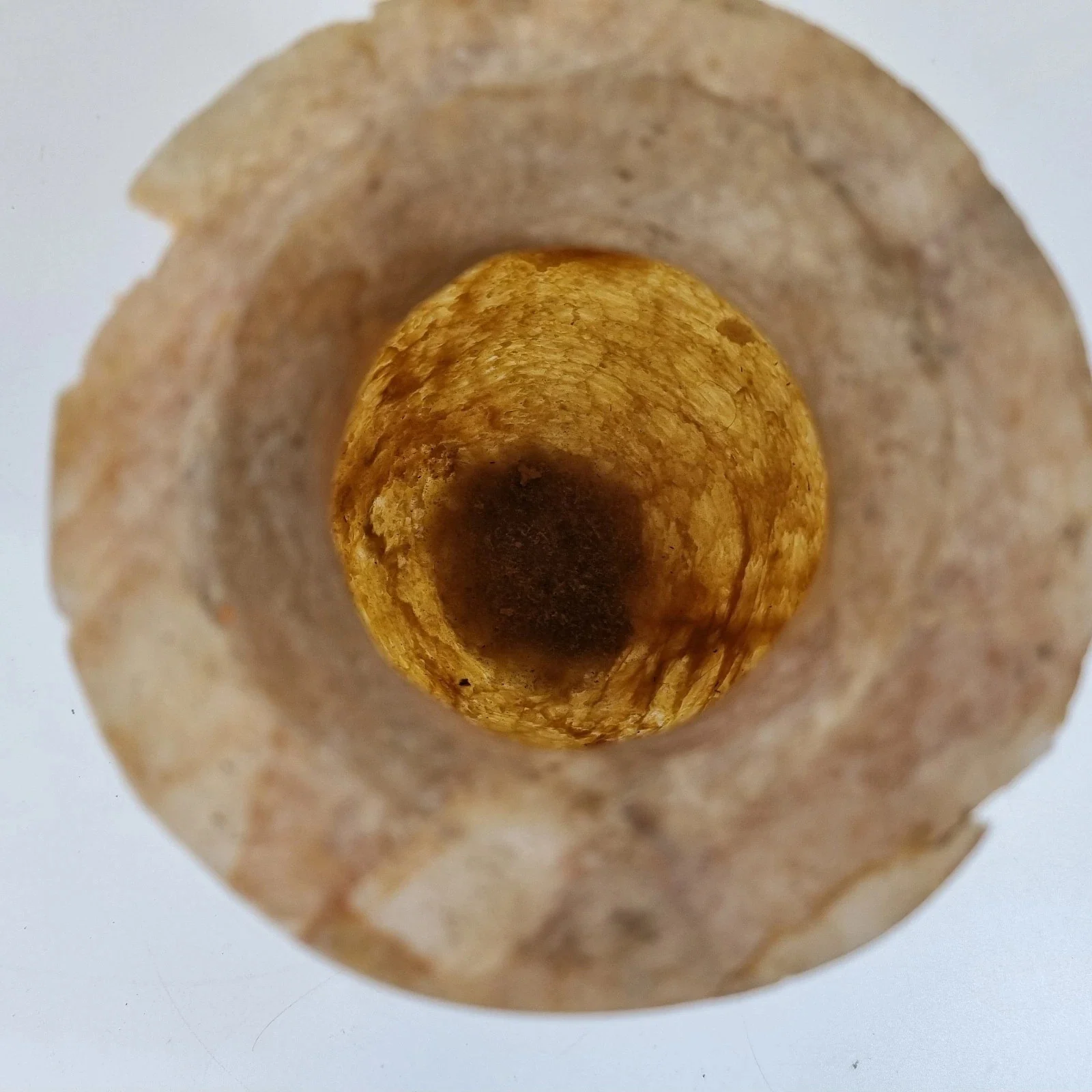
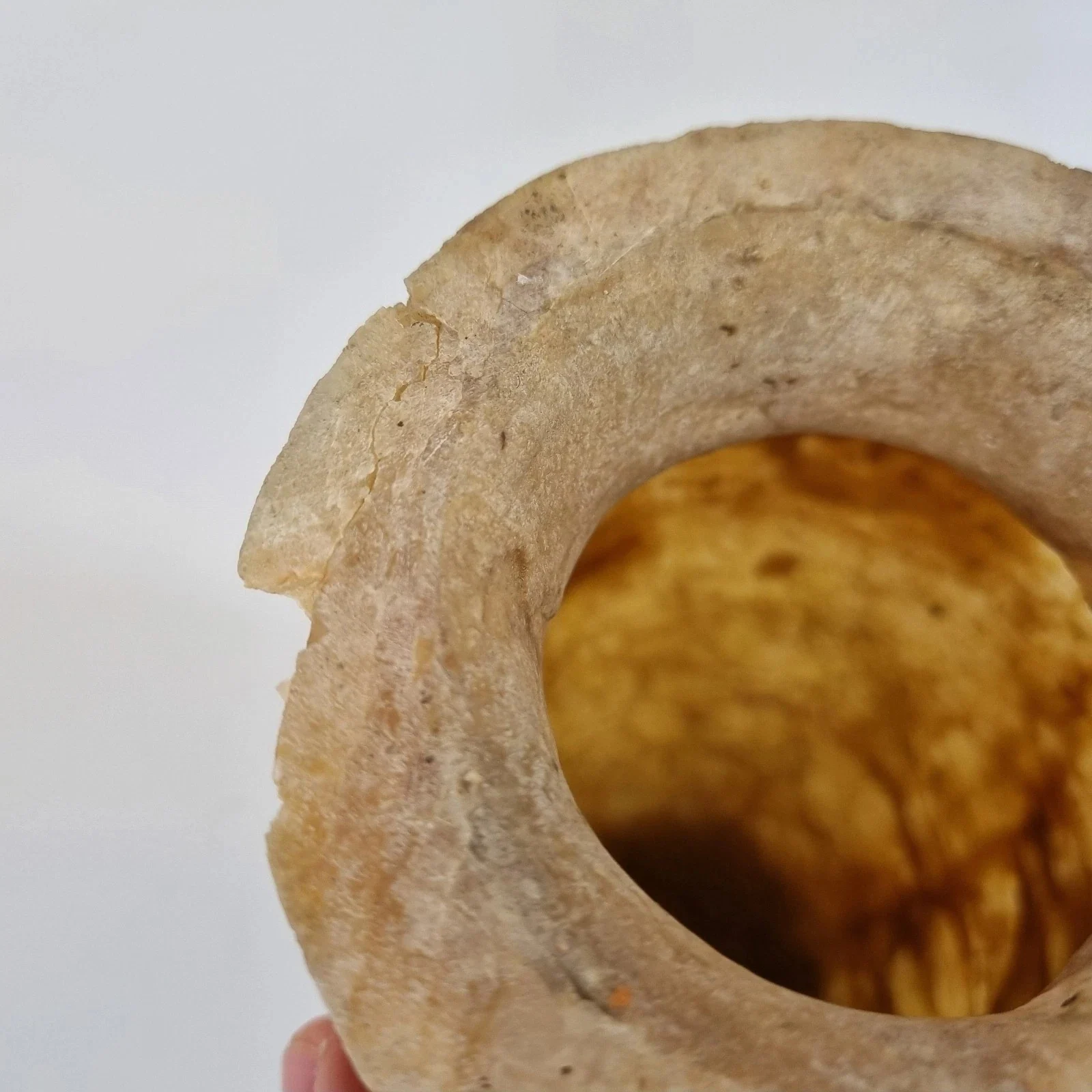
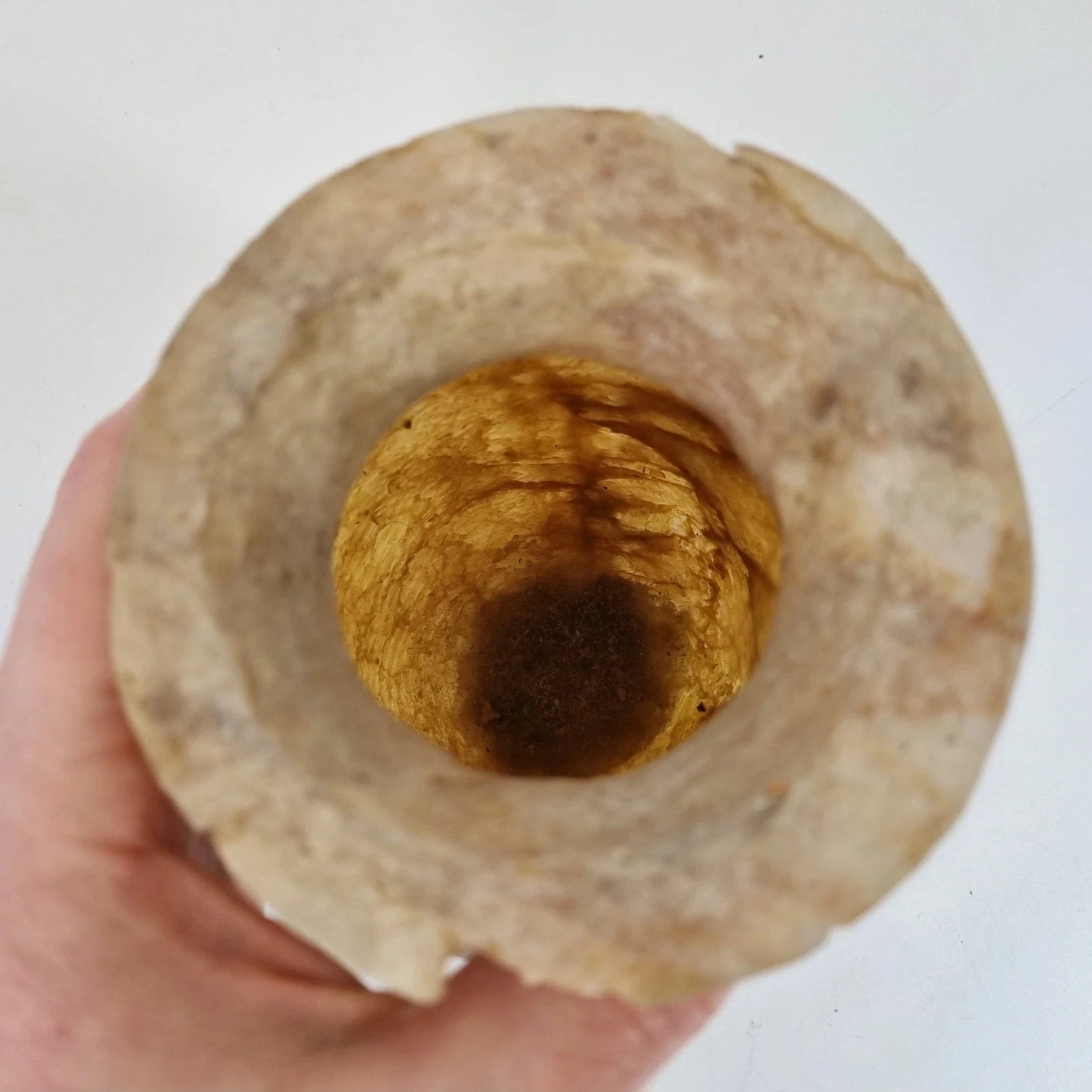
The vase is shaped with broad shoulders tapering down to a narrow, rounded base, surmounted by a short neck and an expansive, flat-topped horizontal lip. Looking down through the mouth reveals deep concentric tooling marks and gouges where the interior cavity was hollowed out by hand, demonstrating traditional carving techniques.
Likely produced in Egypt during the nineteenth or early twentieth century, pieces of this type were frequently acquired as Grand Tour souvenirs and collector’s specimens by European travellers fascinated by antiquity. The stone has accumulated a dry, unpolished surface patina consistent with significant handling and age.
Standing 19 cm high with a maximum rim diameter of 13.5 cm, the vase makes a striking decorative piece for a shelf or display cabinet. Substantial in weight and presence, it exemplifies traditional stone carving in native Egyptian alabaster.
Condition shows heavy surface wear throughout, reflecting its history. There are several chips, hairline cracks, and old glued repairs visible around the fragile flanged rim, alongside natural fissures and scuffs to the body.
Condition Heavy wear throughout with surface scuffs and weathering. The rim has multiple chips, visible cracks, and old glued repairs.
Dimensions Height: 19 cm; Diameter: 13.5 cm
| Dimensions | 13.5 × 13.5 × 19 cm |
|---|---|
| Period | 19th Century |
| Style | Grand Tour |
| material | alabaster |
| Origin | Egypt |
| Price range | Under £1000, Under £2000 |
| Collection Era | Antique & Vintage |
Only logged in customers who have purchased this product may leave a review.
Reviews
There are no reviews yet.