


Enquire Today!
If you have any questions, requests or general enquiries, please do not hesitate to email us and we will get back to you as soon as possible regarding your enquiry.
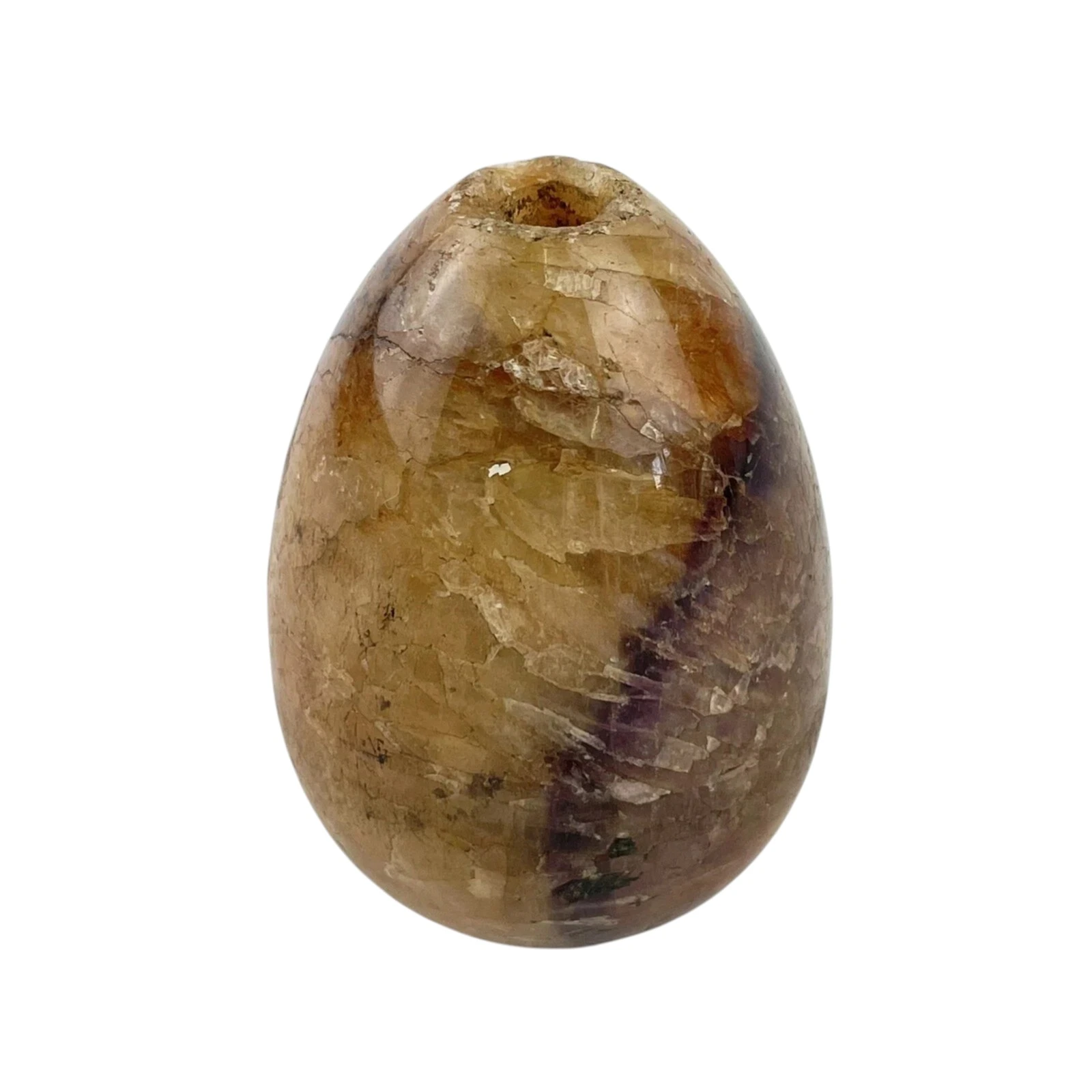
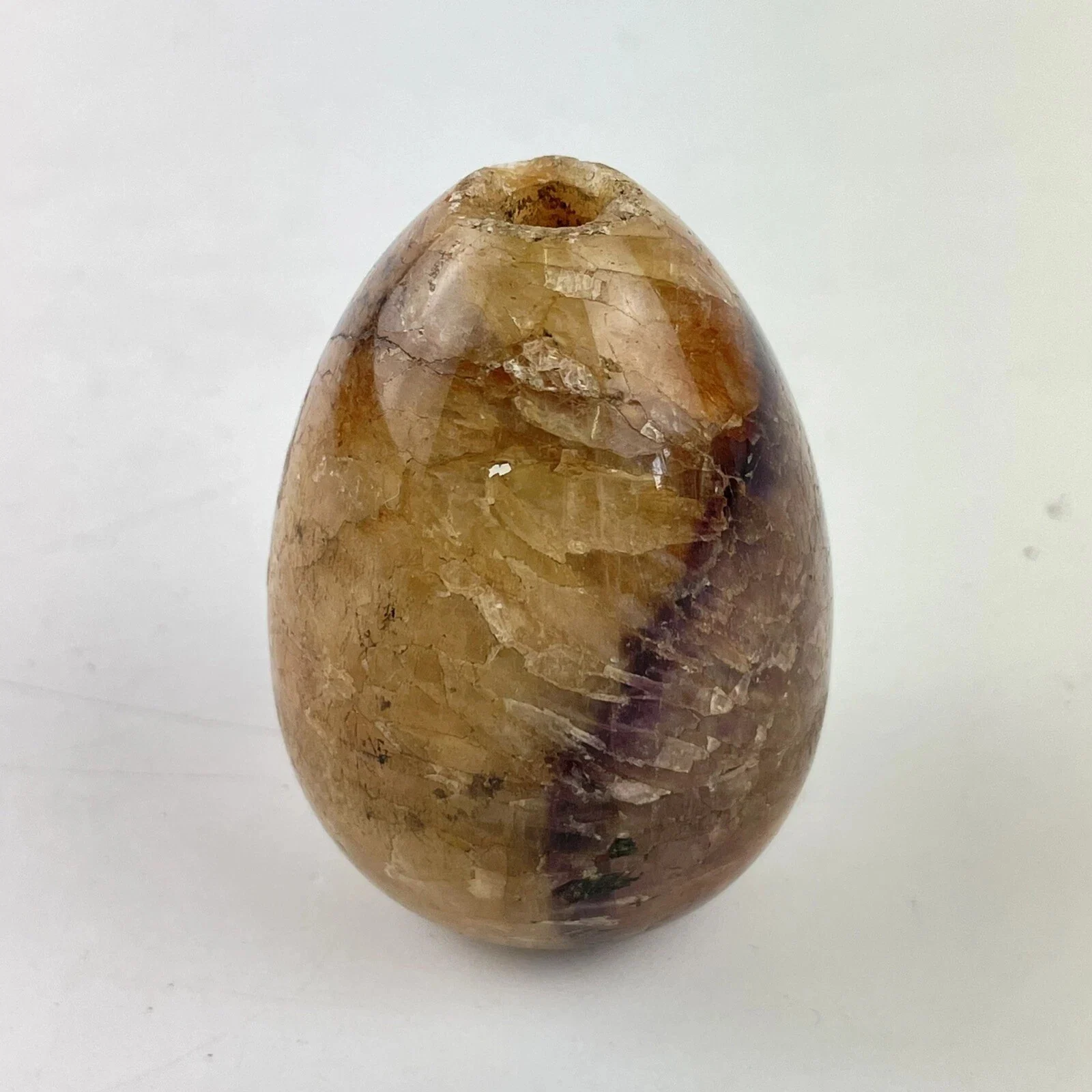
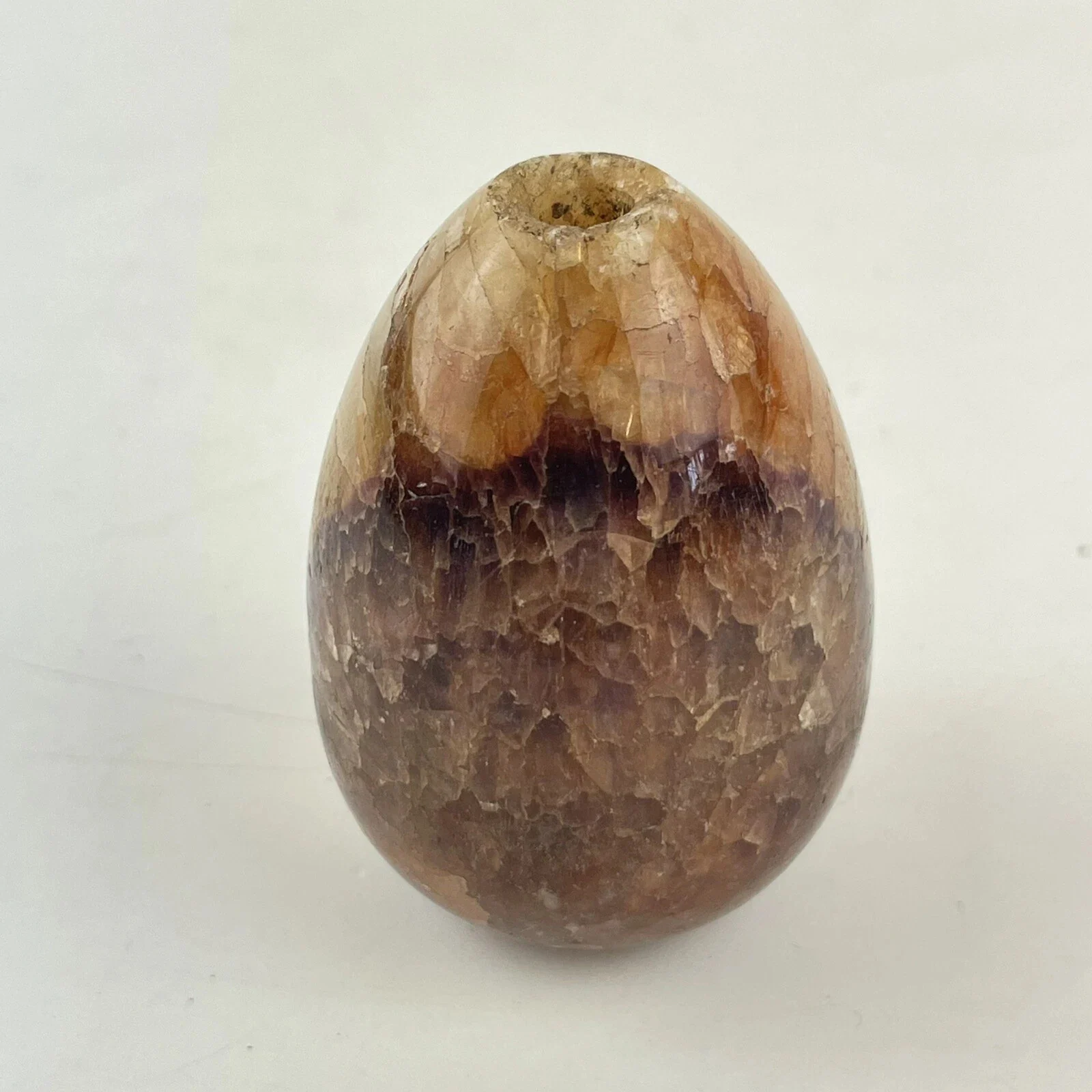


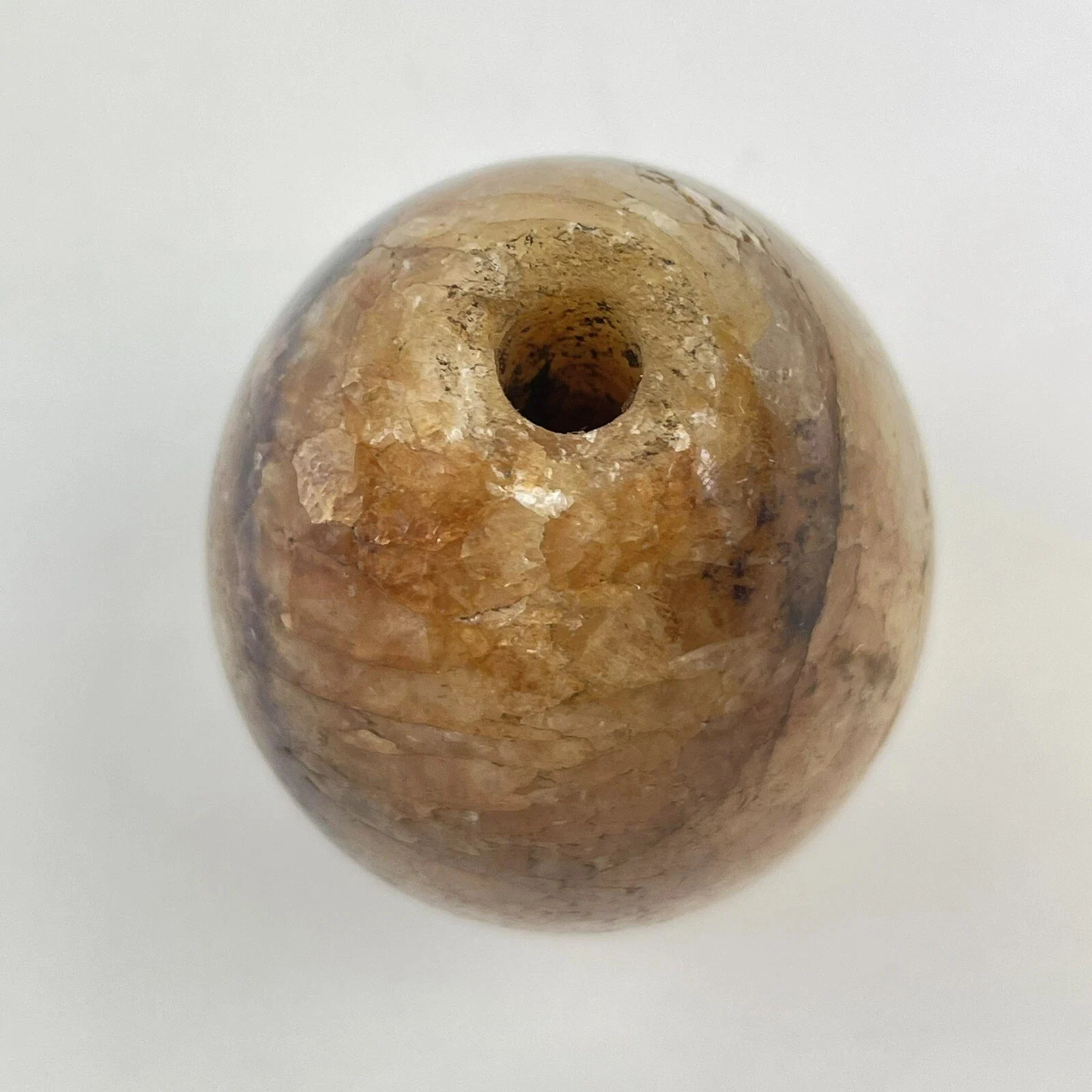


Richly variegated Derbyshire fluorite, known historically as Blue John, is turned and polished here into an ovoid specimen egg. The mineral displays the classic interplay of golden-honey tones, translucent creamy patches, and deep violet-purple crystalline veins characteristic of Castleton deposits in the Peak District. Measuring 5.3 cm in height and 3.5 cm across its widest diameter, this solid mineral turning weighs 132.6 grams. A continuous circular aperture is bored vertically through the centre from apex to base, a feature typical of pieces mounted as decorative finials, newel caps, or elevated upon a brass stem in a Victorian curiosity cabinet. Blue John fluorite was prized by British lapidaries from the eighteenth through the late nineteenth century for its striking banding and natural crystallisation. Turning such brittle mineral on a lathe required considerable skill, often involving pine resin impregnation to prevent the cleavage planes from shattering under the chisel. The polished surface here highlights the natural internal fractures, crystalline reflections, and contrasting dark fluorite bands. Dating probably from the late nineteenth century, the piece retains an intact form with expected historical wear. Small chips and nibbles surround the drill aperture at the top apex, alongside fine surface abrasions and internal natural fissures intrinsic to the stone. It remains a tactile and decorative geological example from the British lapidary tradition.
Condition Presents with light age-related surface wear, chipping around the upper rim of the drilled aperture, and natural internal cleavage lines and fissures typical of fluorite.
Dimensions Height: 5.3 cm, Width: 3.5 cm, Weight: 132.6 g
| Weight | 0.1326 kg |
|---|---|
| Dimensions | 3.5 × 5.3 cm |
| Period | 19th Century, Late 19Th Century |
| Colour | Cream, Purple |
| material | Blue John Fluorite |
| Origin | United Kingdom |
| Price range | Under £1000, Under £2000 |
| Style | Victorian |
| Collection Era | Antique & Vintage |
Only logged in customers who have purchased this product may leave a review.
Reviews
There are no reviews yet.