


Enquire Today!
If you have any questions, requests or general enquiries, please do not hesitate to email us and we will get back to you as soon as possible regarding your enquiry.

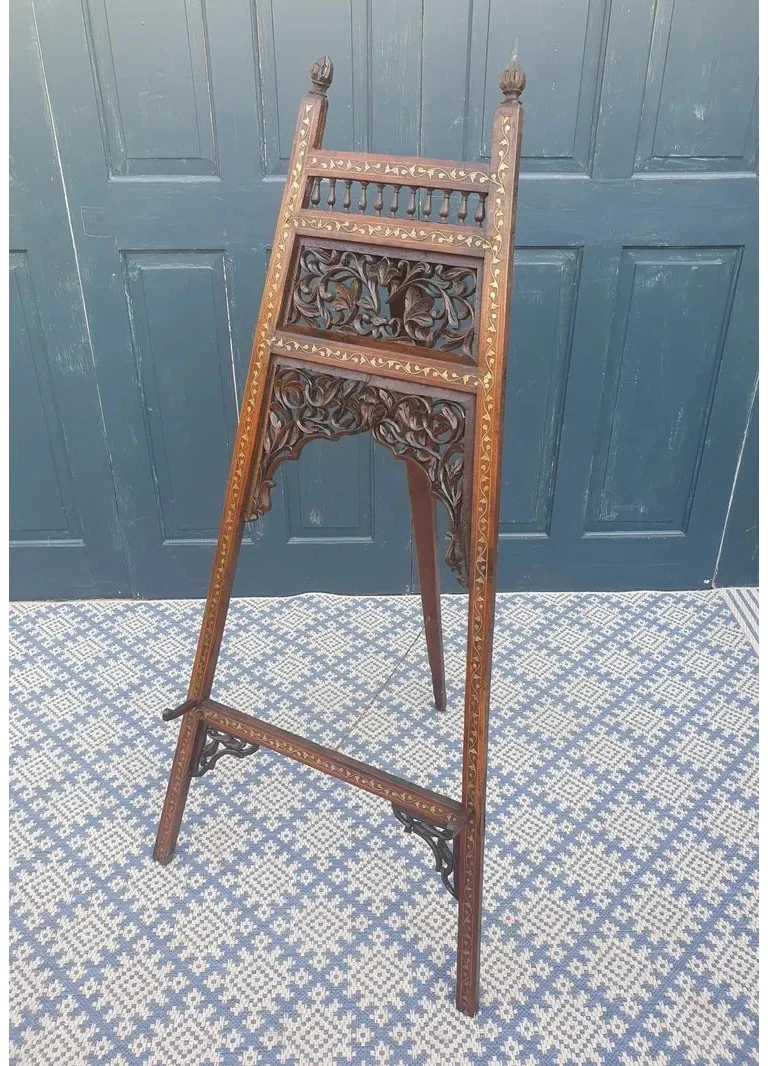
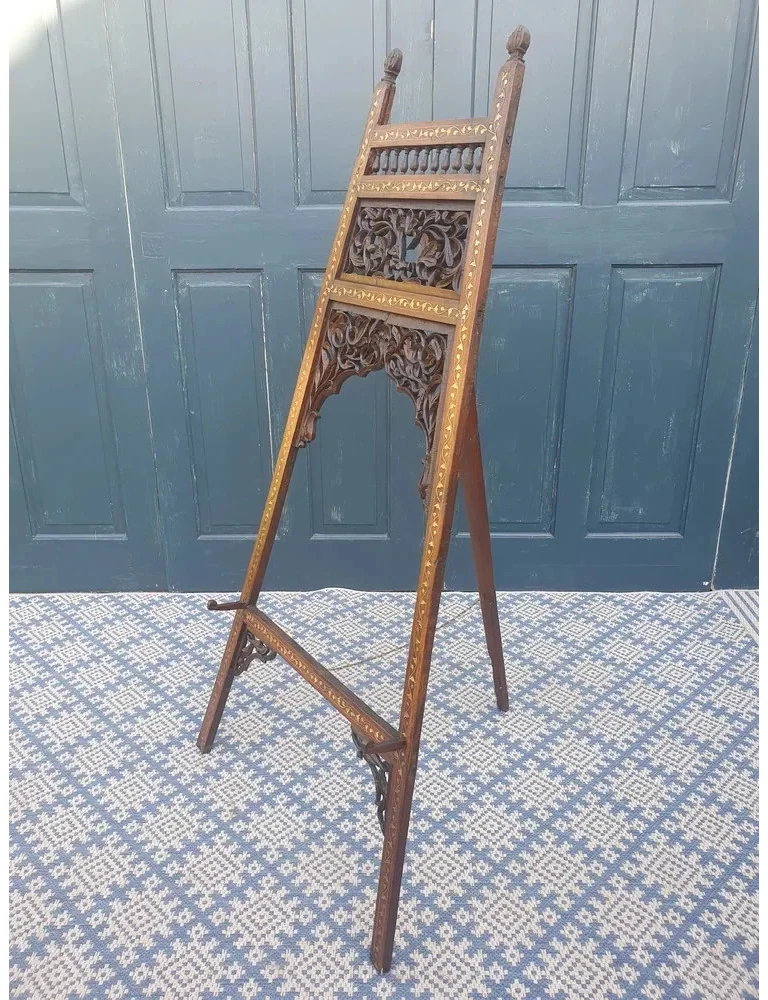
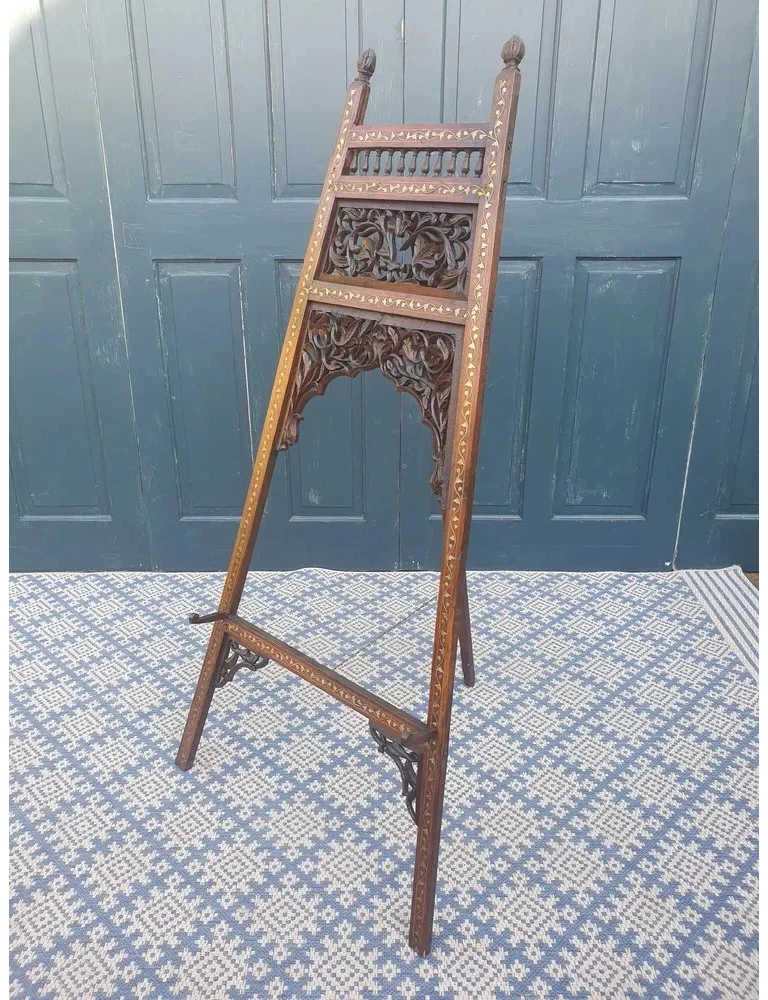
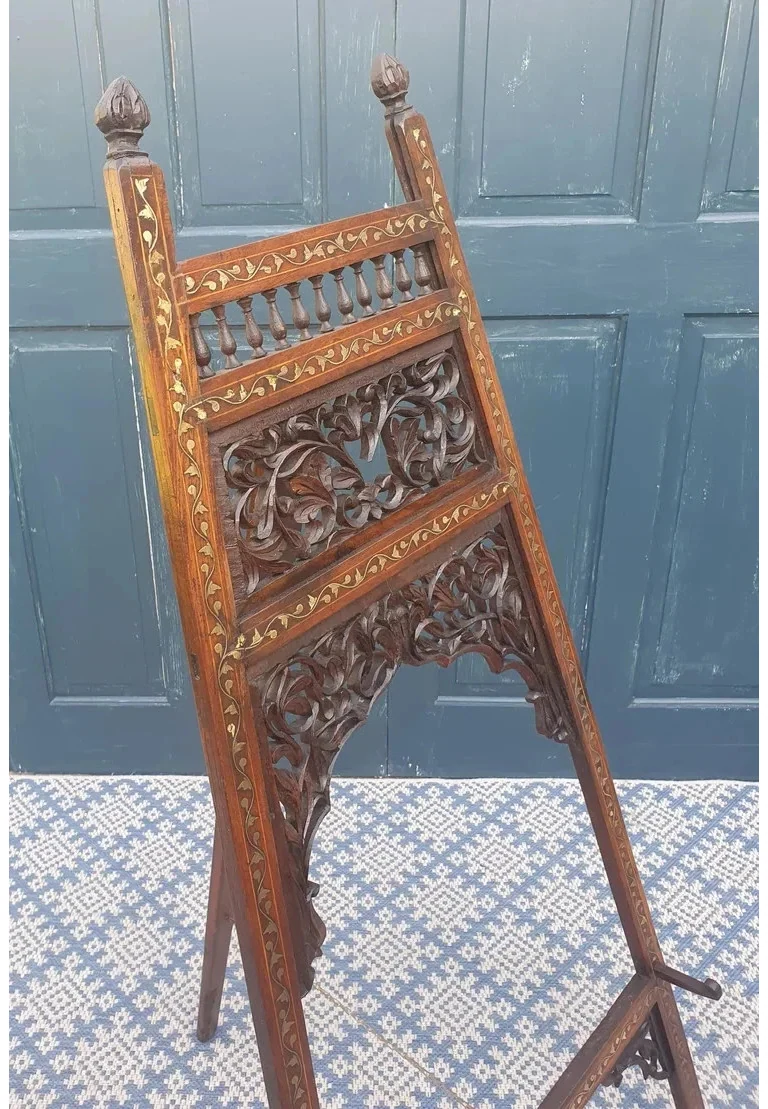
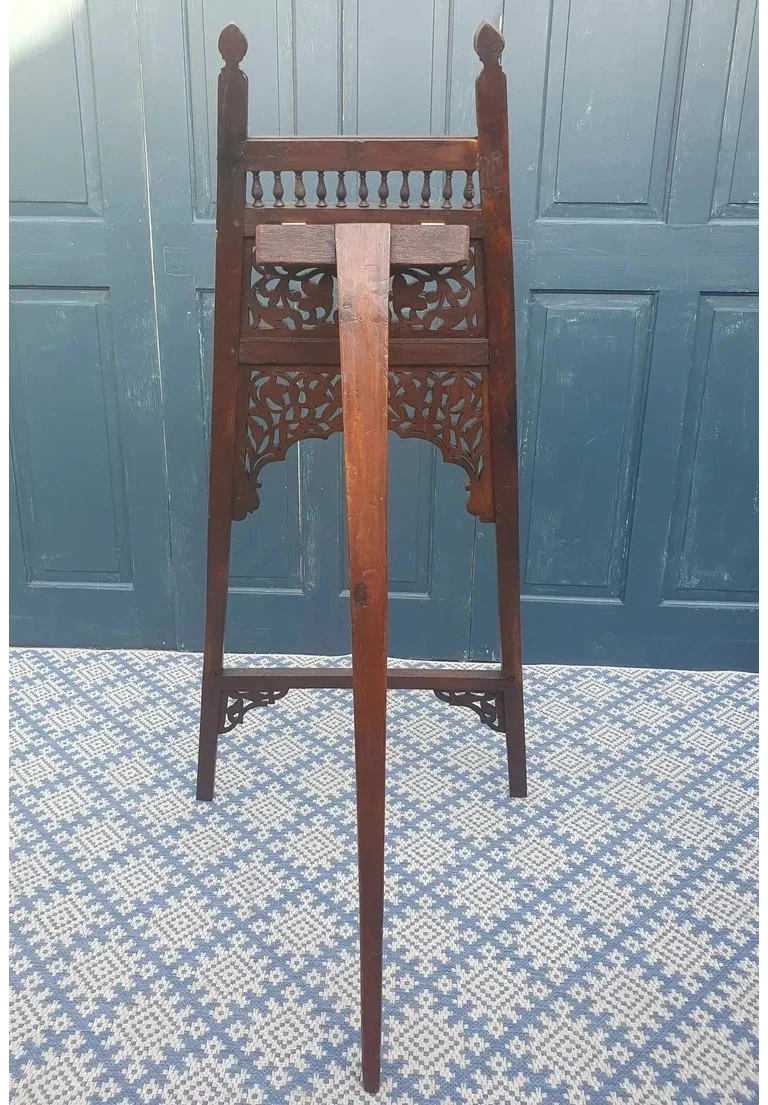


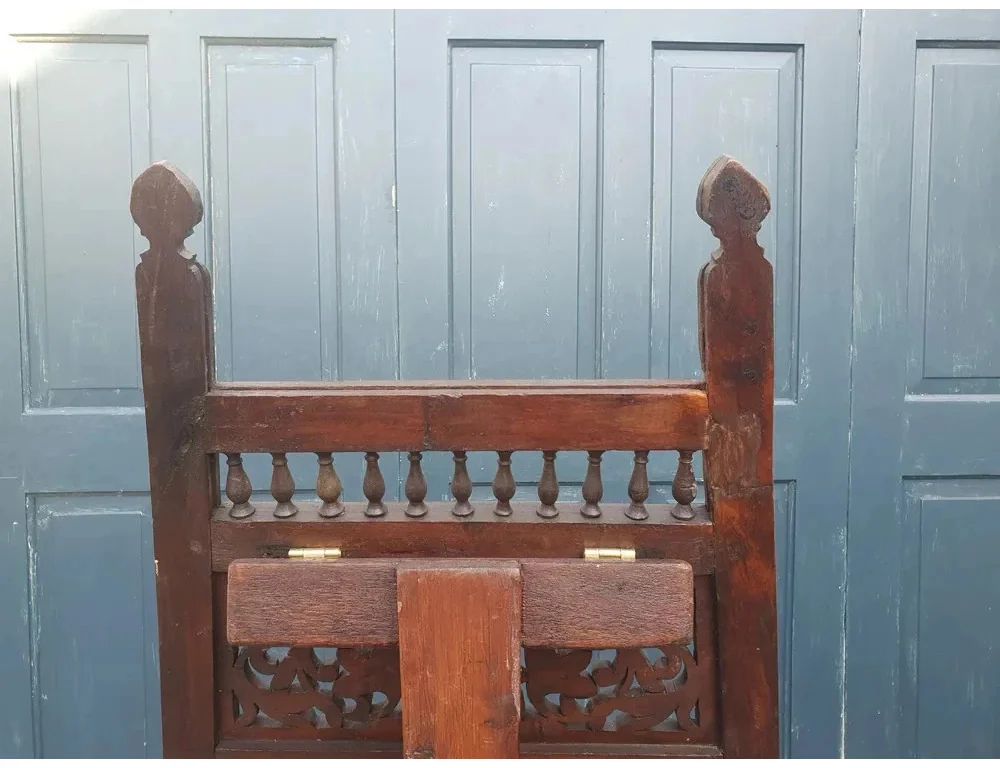



Flowing foliate openwork and delicate metalwork define this tripod floor easel, designed to support framed pictures, books, or portfolios. The A-frame structure features twin raked stiles terminating at the summit in carved bud finials. Connecting the uprights is an elaborate tier of decorative elements, beginning beneath the finials with an open baluster gallery of slender turned spindles. Below this gallery sits a rectangular panel deeply carved and pierced with symmetrical scrolling leaf tendrils, anchored beneath by a shaped fretwork arch that echoes traditional Indian architectural forms.
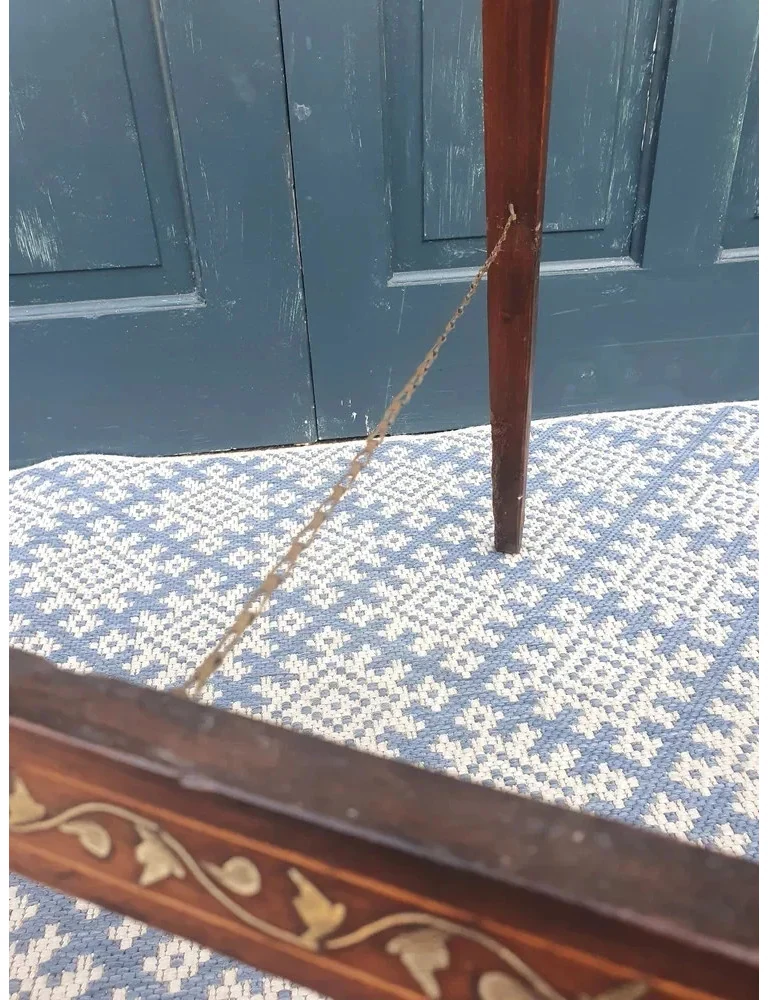
Fine floral brass wire inlay runs along the face of the outer uprights and horizontal cross-rails, depicting continuous scrolling stems with pointed leaf sprigs. Worked into a rich, dark-stained indigenous hardwood—likely shisham or padauk—the reflective brass provides a sharp contrast against the deep grain. The lower display ledge, intended to cradle paintings or prints, is similarly inlaid across its front face and terminates on either side with upturned retaining horns to secure displayed items safely.
Constructed during the nineteenth century for export or display within colonial residences, the easel is engineered to fold flat for transport or storage. The rear tapered prop leg is hinged directly behind the upper panel block, held at a steady incline by a brass retaining link chain anchored to the back of the picture shelf. Underneath the display ledge, pierced scrollwork brackets reinforce the shelf against downward load while echoing the fretwork ornament above. When set open for presentation, the easel measures 120 cm high by 60 cm wide, extending to a depth of 57 cm, and folds down compactly to 125 cm high by 11 cm deep.
Overall the easel retains a sound structure and attractive surface patina. A historic glued repair is present to the reverse of one upper finial, alongside one small section of loss within the pierced carving and minor, isolated losses to short sections of the inlaid brass wire. These age-related markings do not compromise stability, leaving the easel ready to exhibit art, mirrors, or decorative presentation pieces. The back leg swings smoothly, allowing the easel to be set up or stored away with ease.
Condition Historic repair to the reverse of one top finial. One minor element missing from the carved fretwork and scattered tiny losses to the brass wire inlay, consistent with age and use.
Dimensions Folded: 125 cm x 60 cm x 11 cm; Open: 120 cm x 60 cm x 57 cm
| Dimensions | 60 × 125 cm |
|---|---|
| Period | 19th Century |
| Style | Anglo-Indian |
| Colour | Brown, Gold |
| material | Brass, Hardwood |
| Origin | India |
| Price range | Under £2000 |
| Collection Era | Antique & Vintage |
Only logged in customers who have purchased this product may leave a review.
Reviews
There are no reviews yet.